
Senkō-ji Temple
千光寺
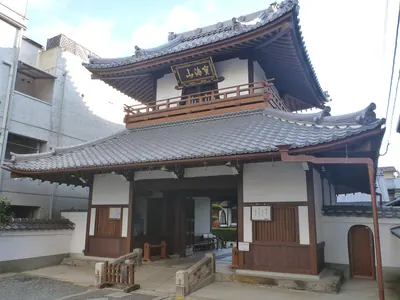
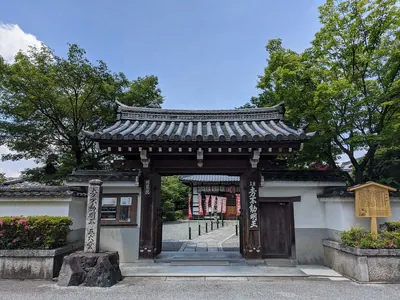
This Buddhist temple, founded in 1614, is worth visiting for its unique connection to the abacus.
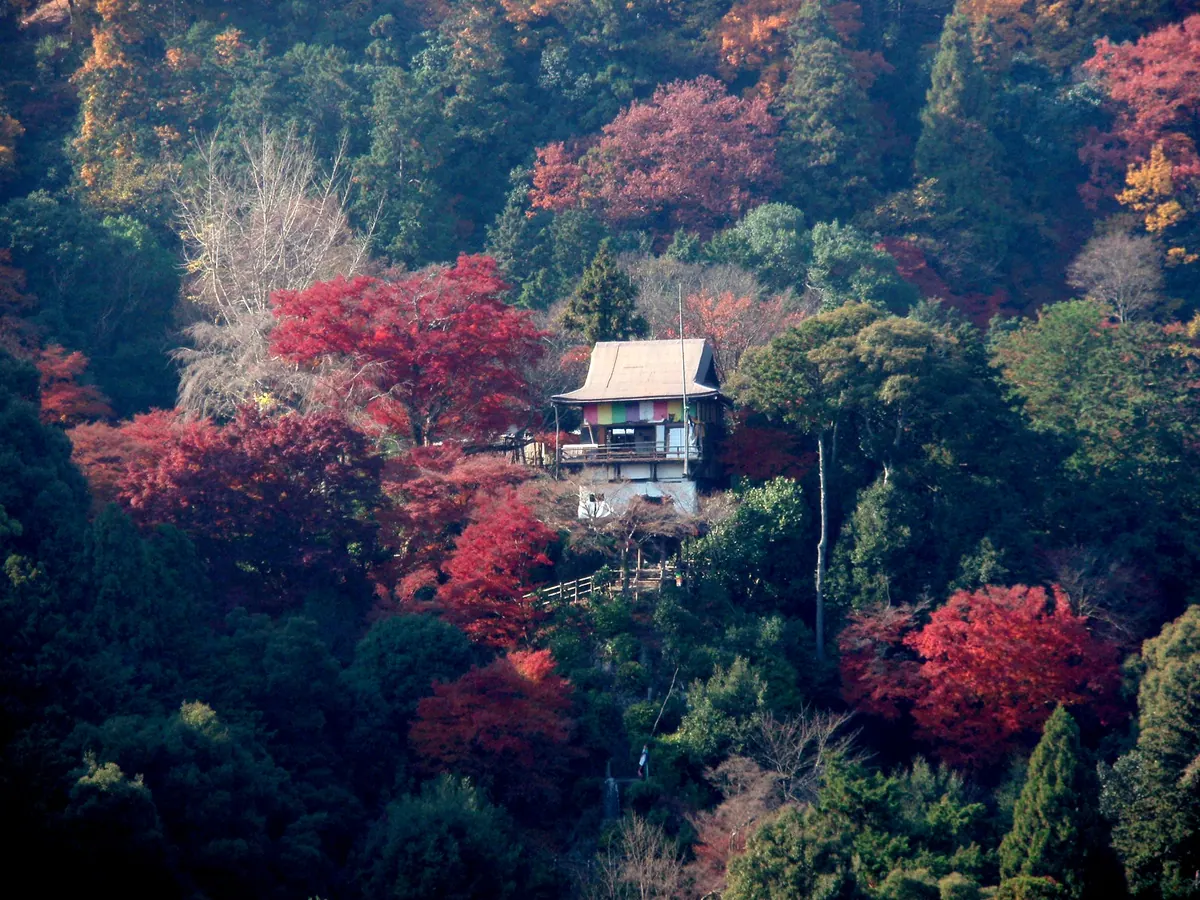
What it is
- Buddhist temple, originally Tendai sect, now nonsectarian.
- Established in 1614 by a monk from Nison-in Temple.
- Moved to current location by merchant Suminokura Ryōi.
- Also known as Abacus Temple (Sorobanji).
What to see
- Principal image: Ryōi’s personal statue of Thousand-Armed Kannon.
- Statue said to be work of tenth-century monk Genshin.
- 1.1-meter-tall model of a three-story pagoda made of abacuses.
In detail
In 1614, Daihikaku Senkōji was established as a temple of the Tendai sect by a monk from Nison-in Temple, also in Kyoto. Senkōji, as the temple is popularly known, was originally part of a different temple complex until it was moved to its current location by Kyoto merchant Suminokura Ryōi (1554–1614). The principal image at the temple is Ryōi’s personal statue of the Thousand-Armed Kannon, said to be the work of the tenth-century monk Genshin (942–1017). In 1808, Senkōji underwent another renovation, this time funded by one of Ryōi’s descendants, and it was reestablished under the Ōbaku sect. Today, the Buddhist temple is considered nonsectarian, and the lectures given by its head abbot incorporate multiple Zen traditions.
Daihikaku Senkōji has a unique connection to the abacus, a tool used to keep track of numbers when performing calculations. The abacus was brought to Japan from China at the beginning of the Muromachi period (1392–1573), but it was not widely used until Yoshida Mitsuyoshi (1598–1672), a relative of the Suminokura family, published a book on mathematics in 1627. Entitled Jinkōki, meaning “treatise on numbers great and small,” Mitsuyoshi’s book gave clear instructions on how to use an abacus to solve everyday problems, such as making change, and it subsequently became the most popular book on mathematics during the Edo period (1603–1867).
In 2013, the head abbot of Senkōji wrote a number of sermons connecting the abacus to Buddhist theory. That same year, the temple received a 1.1-meter-tall model of a three-story pagoda made entirely of abacuses. Senkōji is sometimes referred to as Abacus Temple (Sorobanji).
Text: 観光庁 地域観光資源の多言語解説文データベース. Reproduced unchanged. The notes above were written from that text by Japan Gems.
Where it is
京都府京都市西京区嵐山中尾下町62 Open in Google Maps
この施設の関係者の方へ
このページは公開情報をもとに Japan Gems が作成し、訪日外国人向けに英語で掲載しています。 写真や情報の追加・修正を承っています。お店の写真に差し替えることもできます。
このページの情報を更新する