
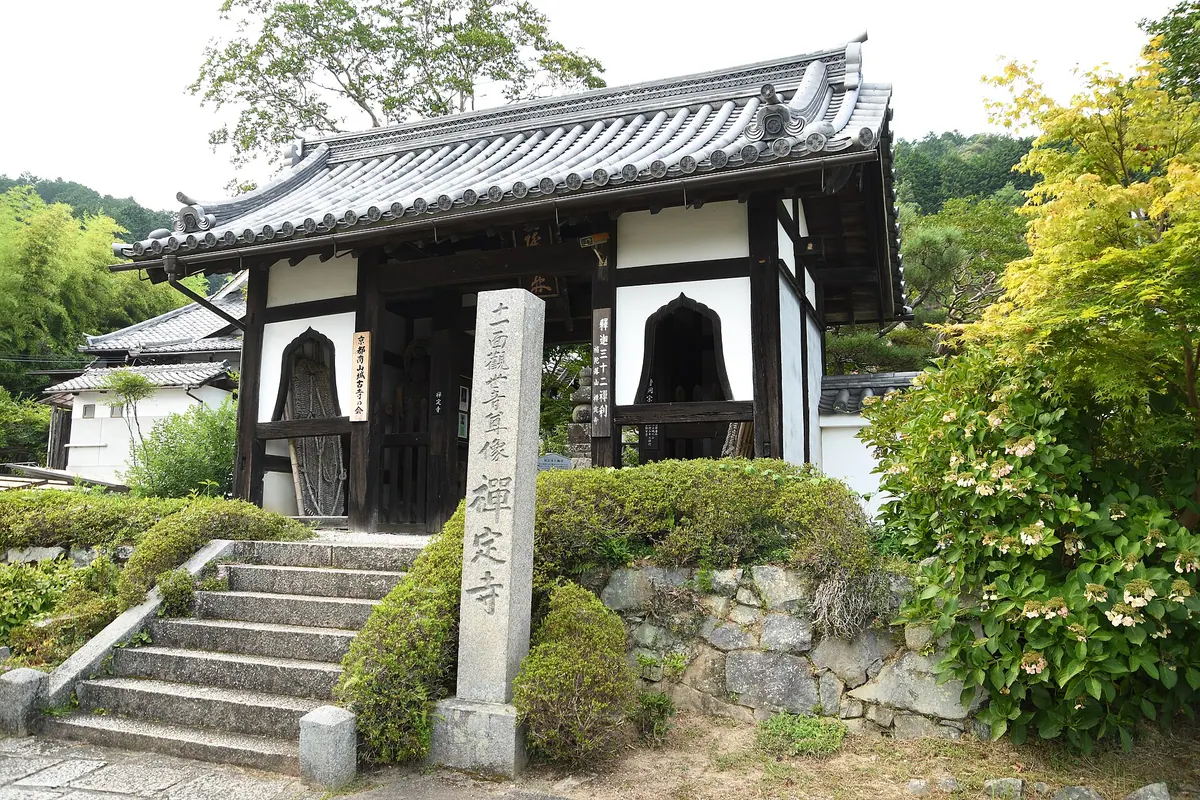
Zenjō-ji Temple
禅定寺
This Buddhist temple, over a thousand years old, offers rare cultural properties and remarkable architecture.
What it is
- Buddhist temple founded in 991.
- Originally a summer villa for the Fujiwara clan.
- Became a Soto Zen Temple in 1680.
What to see
- Rare collection of Important Cultural Properties.
- Historically famous Buddhist statues.
- Noteworthy historical documents.
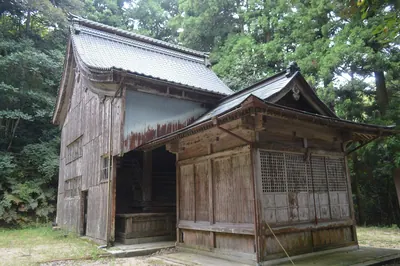
- Main hall with a large thatched roof.
- Lush grounds with persimmon trees.
- Wooden Standing Eleven-Headed Kannon statue.
Getting there
- Located in the town of Ujitawara, Tsuzuki, Kyoto.
In detail
Zenjoji Temple is a Buddhist temple that dates back over one thousand years. Located in the town of Ujitawara, an area between Nara and Kyoto known for its beautiful tea fields (now designated a Historical Natural Conservation Area), it has throughout history been referred to as the “temple just beyond the mountains of Ujitawara.” Today, it is known for its rare collection of Important Cultural Properties that includes historically famous Buddhist statues and noteworthy historical documents relating to the temple. The temple’s architecture and grounds are also remarkable. The main hall is an excellent example of seventeenth-century temple design, built with a large thatched roof, and the grounds are lush with persimmon trees.
History
The grounds of Zenjoji Temple originally served as a summer villa for the Fujiwara clan that ruled Japan during the Heian period (794–1185). In response to a request by a pious member of the Fujiwara family, however, an imperial edict later established Zenjoji Temple in 991 (construction completed in 995) as a subtemple of the larger, more famous Todaiji Temple in Nara. Several wooden Buddhist statues were created and enshrined at the temple on this occasion. These statues have been designated Important Cultural Properties.
In the latter half of the twelfth century, Zenjoji Temple was converted into a subtemple of Byodoin Temple, a World Heritage Site located in Uji, Kyoto. The temple subsequently fell into disuse for a few centuries before it was converted into a Soto Zen Temple in 1680. Under the management of an influential head priest named Gesshu (1618–1696), the grounds were rebuilt and a new main hall with a meditation and training hall (zendo) was added. The main hall remains to this day and maintains the massive thatched roof characteristic of the temple architecture of the time. The present temple complex consists of a garden, five halls, living quarters, and a repository.
Zenjoji Temple is located in the town of Ujitawara, in Tsuzuki, Kyoto. Since ancient times, it has often been called “the temple just beyond the mountains of Ujitawara.” The old road by Zenjoji Temple was linked to the Tokaido, one of the main roads of Japan before modern times that was used by travelers since the Heian period (794–1185). The road by Zenjoji Temple was used as a shortcut between Kyoto’s Yamashiro area and the Omi area (present-day Shiga Prefecture).
Treasures and Artifacts
In Zenjoji Temple’s repository are several Important Cultural Properties of Japan that date back to the Heian period (794–1185). Of these, the most important is the wooden Standing Eleven-Headed Kannon statue. The other consecrated Buddhist statues designated as Important Cultural Properties are as follows:
Nikko Bosatsu (Sunlight Bodhisattva)
Gakko Bosatsu (Moonlight Bodhisattva)
Shitenno (Four Heavenly Kings)
Monju Bosatsu kishizo (Manjusri Bodhisattva riding a lion)
Jizo Bosatsu fumisagezo (Life-Prolonging Jizo Bodhisattva)
Daiitoku Myo-o (Conqueror of Death)
Text: 観光庁 地域観光資源の多言語解説文データベース. Reproduced unchanged. The notes above were written from that text by Japan Gems.
Where it is
京都府綴喜郡宇治田原町禅定寺庄地100 Open in Google Maps
この施設の関係者の方へ
このページは公開情報をもとに Japan Gems が作成し、訪日外国人向けに英語で掲載しています。 写真や情報の追加・修正を承っています。お店の写真に差し替えることもできます。
このページの情報を更新する