
Fudarakusan-ji Temple
補陀洛山寺
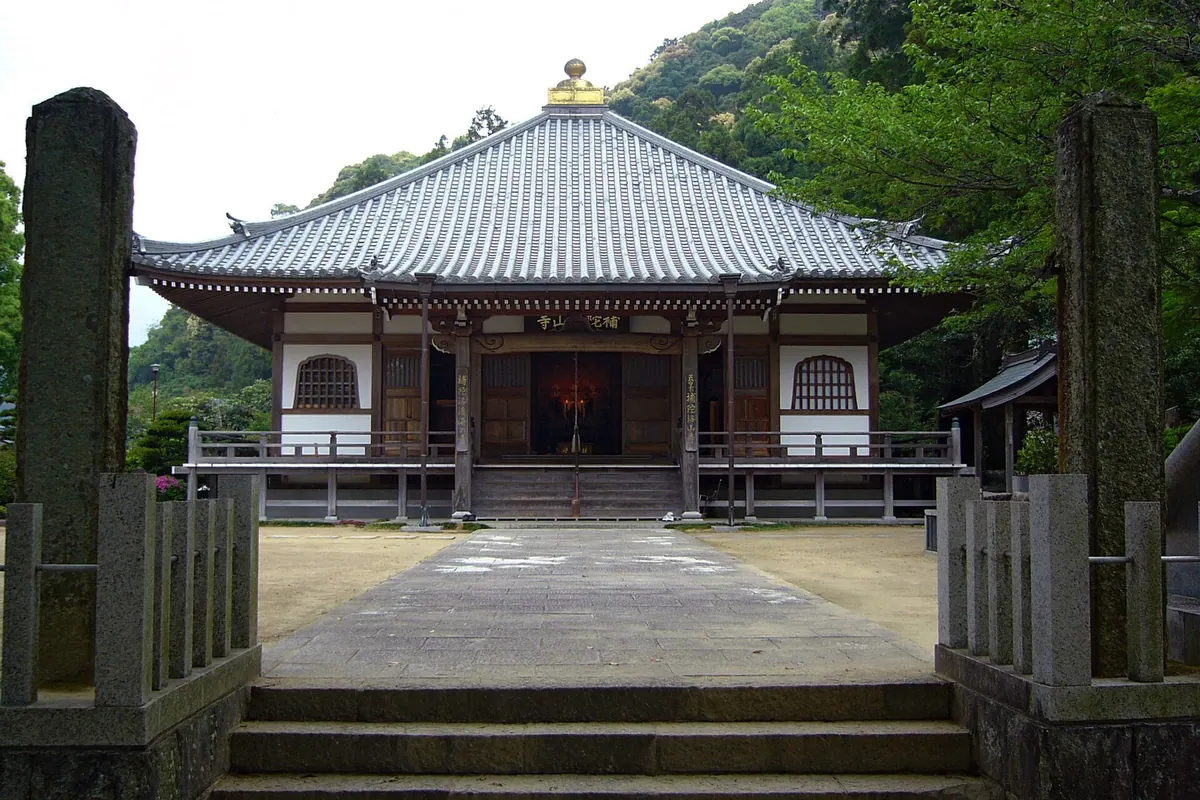
This Tendai Buddhist temple, known for a unique Kannon statue and historical self-martyrdom ritual, links mountains and sea.
What it is
- Tendai Buddhist temple.
- Founded by ascetic Ragyo from India in the fourth century.
- Known for Fudaraku-tokai ritual of self-martyrdom.
- Part of Kumano's spiritual landscape, linking mountains and sea.
What to see
- Wooden statue of Thousand-Armed Kannon, 170 cm tall.
- Heian period Kannon statue is an Important Cultural Property.
- Kannon statue has three faces and 44 arms, a rarity.
- Kumano Sansho Omiwa-yashiro, a Shinto shrine next to the temple.
- Furiwake-ishi (Parting Stone) marking Kumano Kodo pilgrimage routes.
When to go
- Kannon statue displayed publicly on January 27.
- Kannon statue displayed publicly on May 17.
- Kannon statue displayed publicly on July 10.
In detail
(427 ww [251-500], web)
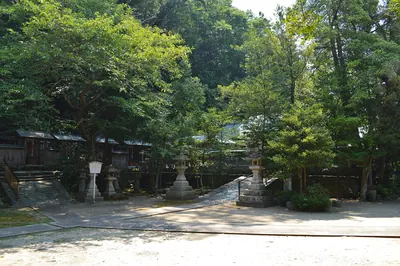
Fudarakusan-ji is a Tendai Buddhist temple that was built facing the Pacific Ocean across a white sandy beach. Recent urban development has obscured this view, but the temple retains its position in Kumano’s spiritual landscape as a link between the mountains and the sea. It shares the same history of Buddhist-Shinto syncretism as the three grand shrine-and-temple complexes that lie at higher altitudes.
The temple traces its founding to Ragyo, an ascetic said to have arrived in Kumano from India in the fourth century. It later became known for the practice of Fudaraku-tokai (Crossing the Sea to Fudaraku). This was a ritual of self-martyrdom in which a monk would set sail alone with limited supplies in the hopes of reaching Fudaraku, a Pure Land far to the south presided over by Kannon, bodhisattva of compassion.
Thousand-Armed Kannon
The temple houses a wooden statue of its chief enshrined deity, Thousand-Armed Kannon. Around 170 centimeters tall, the statue was sculpted during the Heian period (794–1185), although the current halo made of lighter-colored wood was added in the seventeenth century. The statue is an Important Cultural Property of Japan, and is only displayed publicly three times a year, during rituals on January 27, May 17, and July 10.
Like most sculptures of Thousand-Armed Kannon, the temple’s statue does not have a thousand individually carved arms. Apart from the four arms held in front of the body—two hands joined in a gesture of reverence and two forming a mudra (symbolic hand position) of meditation—there are twenty arms on each side. Each of these is said to render aid to beings in twenty-five different worlds, for a total of one thousand. Many of the statue’s arms bear tools or ritual objects symbolizing Kannon’s powers to intercede on behalf of worshipers.
The statue also has three faces. Two are partially hidden, and the most visible one bears a mild, compassionate expression. Because most sculptures of Thousand-Armed Kannon have eleven faces and forty-two arms, the statue’s design is a rarity in Buddhist art.
Kumano Sansho Omiwa-yashiro Shrine and the Parting Stone
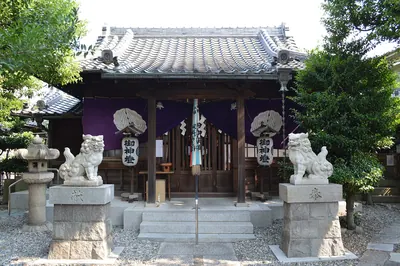
Beside the temple stands Kumano Sansho Omiwa-yashiro, a Shinto shrine. It was originally an oji (subsidiary shrine) called Hamanomiya-oji, and was celebrated for the same ocean views as Fudarakusan-ji. At one time, Fudarakusan-ji and Hamanomiya-oji formed a single syncretistic religious complex, but they were separated in the late nineteenth century on the orders of the new Meiji government.
Standing on the grounds of the shrine is a stone pillar called the Furiwake-ishi (Parting Stone) that marks the junction of the three main Kumano Kodo pilgrimage routes.
Text: 観光庁 地域観光資源の多言語解説文データベース. Reproduced unchanged. The notes above were written from that text by Japan Gems.
Where it is
和歌山県東牟婁郡 那智勝浦町大字浜の宮348 Open in Google Maps
この施設の関係者の方へ
このページは公開情報をもとに Japan Gems が作成し、訪日外国人向けに英語で掲載しています。 写真や情報の追加・修正を承っています。お店の写真に差し替えることもできます。
このページの情報を更新する