
Futai-ji Temple
不退寺
Futai-ji Temple offers history, a Kannon statue, and 500 species of flowers and plants.
What it is
- Buddhist temple founded in 847.
- Associated with poet Ariwara no Narihira.
- Originally land of Emperor Heizei.
What to see
- Wooden statue of Kannon, bodhisattva of compassion.
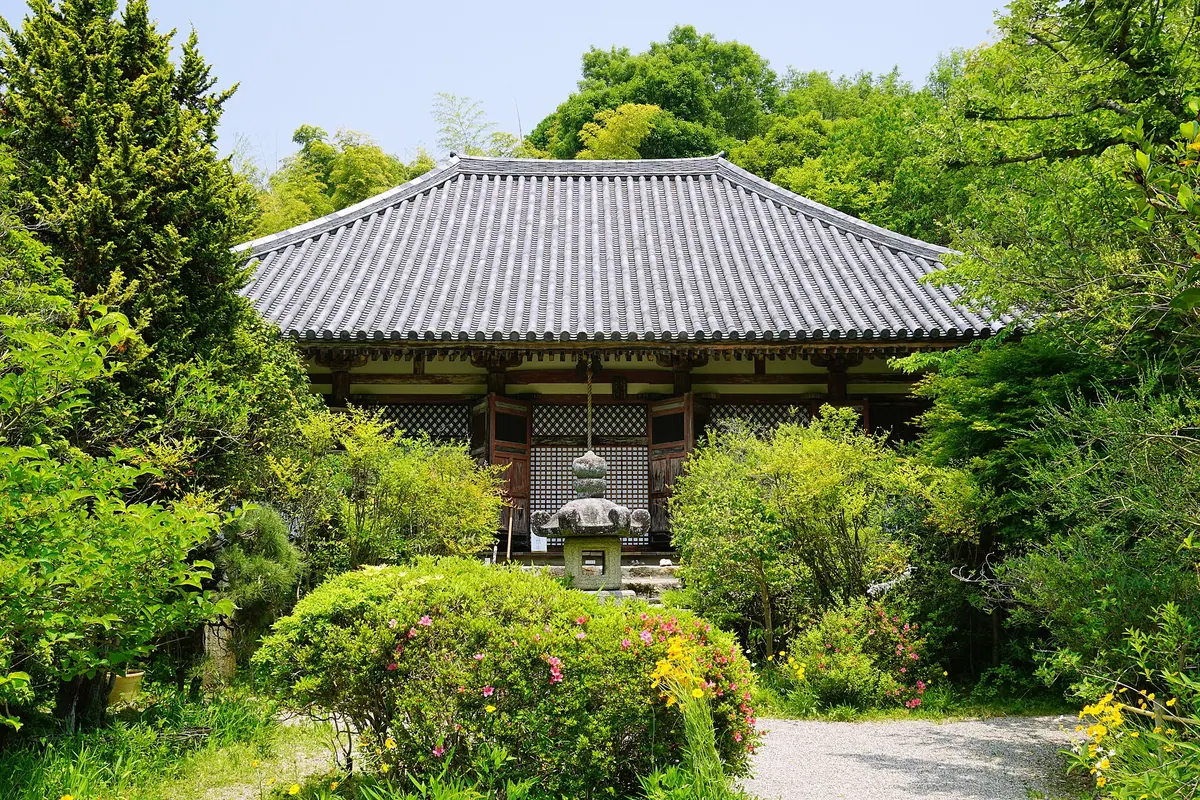
- Temple's pagoda, southern gate, and main hall.
- Main hall houses Kannon and other statues.
- Verdant grounds with 500 species of flowers and plants.
In detail
This Buddhist temple was founded in 847 by Ariwara no Narihira (825–880), a member of the imperial court and famous poet of the early Heian period (794–1185). Futaiji is best known for its association with Narihira and for its wooden statue of Kannon, the bodhisattva of compassion, which was allegedly carved by Narihira himself. The temple’s three main structures—its pagoda, southern gate, and main hall, which houses the Kannon and other statues—were built in the Kamakura period (1185–1333).
Prior to the founding of Futaiji, this land belonged to Emperor Heizei (773–824), who reigned from 806 until 809, when sudden illness forced him to step down. After a failed attempt to regain the throne in 810, Heizei withdrew to Nara, where he built a private residence, became a Buddhist priest, and retreated from the world of the courts. His residence was passed down to his son, Prince Abo (792–842), and then to his grandson, Ariwara no Narihira. Narihira is one of the most famous historical figures of the Heian period. He is remembered for his waka poetry, which is still quoted today, as well as for his debonair good looks and numerous romantic exploits.
In addition to its history and statuary, the temple is known for its verdant grounds, which are home to some 500 species of flowers and plants.
Text: 観光庁 地域観光資源の多言語解説文データベース. Reproduced unchanged. The notes above were written from that text by Japan Gems.
Where it is
奈良県奈良市法蓮町517 Open in Google Maps
この施設の関係者の方へ
このページは公開情報をもとに Japan Gems が作成し、訪日外国人向けに英語で掲載しています。 写真や情報の追加・修正を承っています。お店の写真に差し替えることもできます。
このページの情報を更新する