
Heian Jingū
平安神宮
Heian Jingu gardens offer four distinct historical Japanese garden styles with diverse plants and water features.
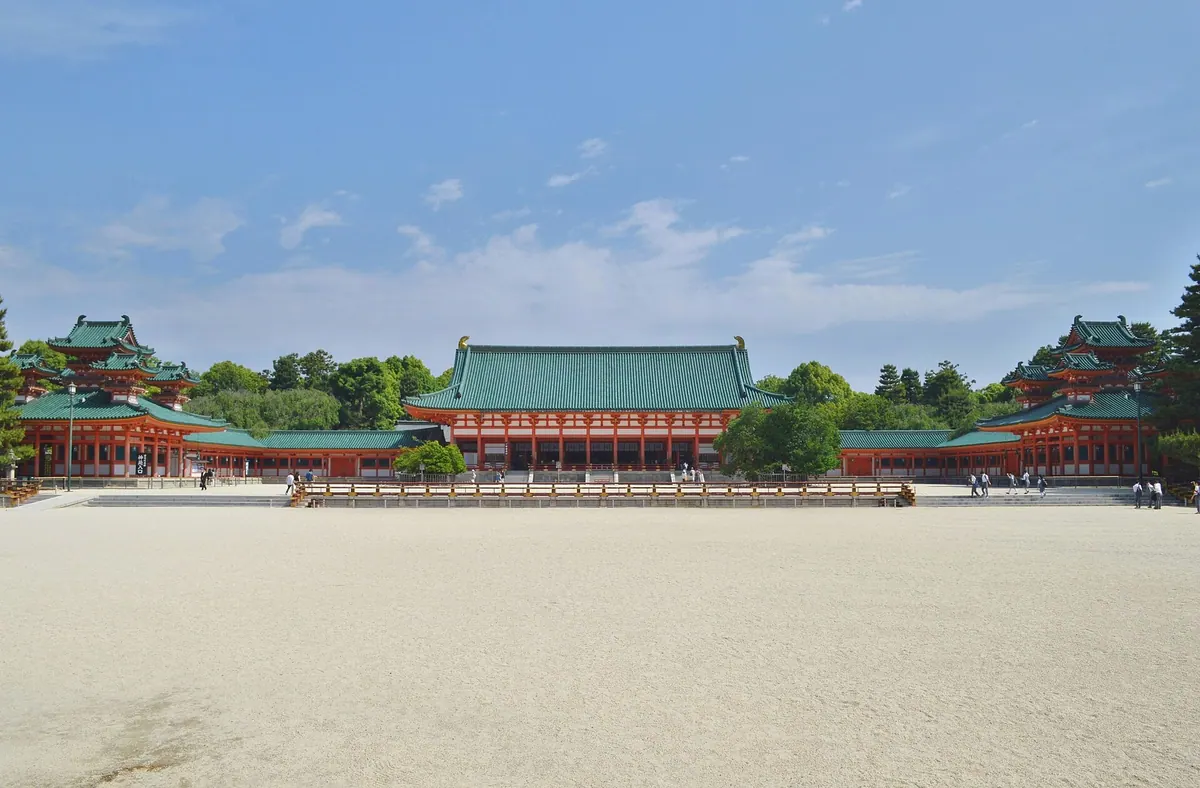
What it is
- Four gardens, each reflecting a different period of Japanese history.
- Features large ponds and meandering streams.
What to see
- South Garden: classic stroll garden with weeping cherries.
- West Garden: tranquil, Zen-inspired with a large pond and rock placement.
- Middle Garden: wabi-sabi aesthetic, pond with island and stepping-stones.
- Middle Garden: rustic hut serving tea and refreshments.
- East Garden: grand design with wooden structures from Kyoto Imperial Palace.
- East Garden: large pond surrounded by plum, cherry, maple, and pine trees.
When to go
- April through July for irises, water lilies, and azaleas in West Garden.
In detail
The gardens of Heian Jingu are divided into four areas, each showcasing the aesthetic sensibilities and design features of a different period of Japanese history. With large ponds and meandering streams, water features extensively in their design. The hundreds of varieties of flowering plants provide diverse habitats for wildlife.
South Garden (Minami Shin’en)
The South Garden is a classic stroll garden with narrow winding paths and a meandering stream in a style inspired by the Heian period (794–1185). The plants and flowers include double-petaled weeping cherries often mentioned in classical literary works of the Heian period.
West Garden (Nishi Shin’en)
The West Garden is tranquil and Zen-inspired, centering around a large pond. A key feature of this garden is the artful placement of rocks. Irises, water lilies, and azaleas bloom in succession here from April through July.
Middle Garden (Naka Shin’en)
The Middle Garden is inspired by the wabi-sabi (beauty in imperfection) aesthetic of the Muromachi period (1336–1573). It features a large pond with a small island and stepping-stones crossing the pond, as well as a rustic hut serving tea and refreshments.
East Garden (Higashi Shin’en)
The East Garden is the grandest in design, following a style popular in the Edo period (1603–1867). It features elegant wooden structures relocated from the Kyoto Imperial Palace and a large pond surrounded with plum trees, cherry trees, maples, and pines.
Text: 観光庁 地域観光資源の多言語解説文データベース. Reproduced unchanged. The notes above were written from that text by Japan Gems.
Where it is
〒606-8341 京都市左京区岡崎西天王町 Open in Google Maps
この施設の関係者の方へ
このページは公開情報をもとに Japan Gems が作成し、訪日外国人向けに英語で掲載しています。 写真や情報の追加・修正を承っています。お店の写真に差し替えることもできます。
このページの情報を更新する