
Hodosan Shrine
宝登山神社
Hodosan Shrine, founded by Yamato Takeru, offers protection from disasters and features unique carvings.
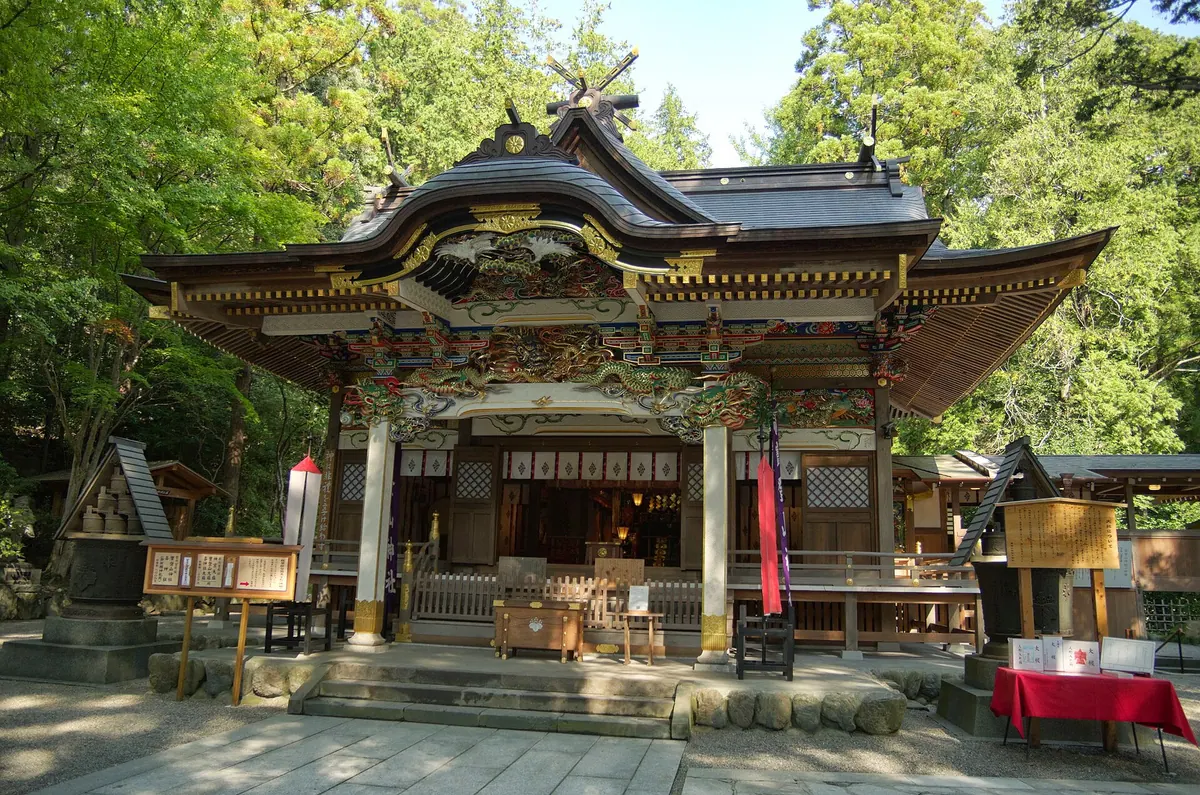
What it is
- One of Chichibu’s three major Shinto shrines.
- Founded in 110 CE by Yamato Takeru no Mikoto.
- Dedicated to Emperor Jinmu, Ōyamazumi no Kami, and Homusubi no Kami.
- Originally merged Shinto and Buddhist practices until 1868.
What to see
- Main shrine complex at the base of Mt. Hodo.
- Worship hall, main sanctuary, and offering hall in an “H” shape.
- Stunning carvings from 1874 renovations.
- Carvings depict Chinese mythological figures and auspicious creatures.
- Inner shrine on the summit, established by Yamato Takeru.
- Views from the summit of Mt. Hodo.
When to go
- Reitaisai, the main annual festival, on April 3.
- Other festivals are held throughout the year.
Getting there
- Inner shrine on summit is an hour walk from the base.
- Cable car departs just outside the main complex to the summit.
In detail
Hodosan Jinja Shrine, located on Mt. Hodo in the north of Chichibu, is one of the district’s three major Shinto shrines. According to legend, it was founded in 110 CE by the folk hero Yamato Takeru no Mikoto after his life was saved from a raging fire.
Yamato Takeru was a son of Keikō, Japan’s legendary twelfth emperor. He had been dispatched from the powerful Yamato court, in what is now Nara Prefecture, to suppress uprisings in the northeast. On his return, the prince and his retinue passed near Mt. Hodo, and he decided to climb it. On their way up the mountain, they were trapped by a sudden wildfire. Just as their lives seemed lost, black and white wolves appeared as if from nowhere and put out the fire. The wolves guided the prince and his men to the summit before vanishing as mysteriously as they had come.
Recognizing the creatures as divine messengers, Yamato Takeru established a simple shrine on the mountaintop in gratitude. He dedicated the shrine to Emperor Jinmu, Japan’s legendary first emperor, to Ōyamazumi no Kami, one of the Shinto mountain deities, and to Homusubi no Kami, the Shinto fire deity.
In reference to his miraculous rescue, Yamato Takeru named the mountain “Hodo”—written with the characters for “fire” (ho) and “stop” (do)—but those characters were changed several centuries later, after a second miracle occurred. During the Kōnin era (810–824 CE), a shining sacred gem (hōju no tama) was seen soaring over the mountain’s summit. Subsequently, the name “Hodo” came to be written with its current name, “treasure” (ho) and “ascending” (do).
In the twelfth century, the Buddhist monk Kūen (d. 1121) established Gyokusenji at the base of Mt. Hodo. That temple was eventually incorporated into the existing shrine complex, merging Shinto and Buddhist practices on the mountain. This form of worship, in which Shinto kami were regarded as manifestations of Buddhist deities, was common throughout Japan for many centuries. It continued until 1868, when new national policies of the Meiji era (1868–1912) mandated the separation of all Buddhist and Shinto institutions and practices.
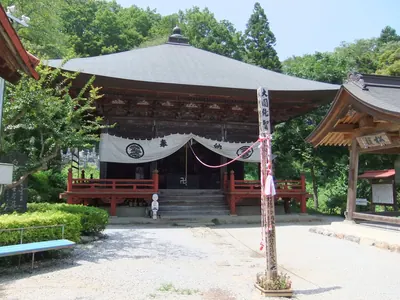
The main shrine complex now lies at the base of Mt. Hodo. The worship hall, main sanctuary, and offering hall are laid out in the shape of an “H,” an architectural style known as gongen-zukuri. The current buildings, including their stunning carvings, date to renovations completed in 1874. The carvings depict Chinese mythological figures such as the “24 Filial Exemplars” (on the right-side transom of the worship hall) and “Queen Mother of the West” (on the transom of the main sanctuary), as well as auspicious creatures like dragons and cranes.
The inner shrine remains on the summit, at the site established by Yamato Takeru. It can be reached by foot in about an hour, or by a cable car that departs just outside the main complex.
Over one million worshippers visit Hodosan Jinja Shrine each year. Prayers to its deities are considered particularly effective against fires and other disasters, but people also pray for their families’ safety, success in school or business, and protection from traffic accidents and theft. The main annual festival, Reitaisai, takes place on April 3, and other festivals are held throughout the year.
Text: 観光庁 地域観光資源の多言語解説文データベース. Reproduced unchanged. The notes above were written from that text by Japan Gems.
Where it is
埼玉県秩父郡長瀞町長瀞1828 Open in Google Maps
この施設の関係者の方へ
このページは公開情報をもとに Japan Gems が作成し、訪日外国人向けに英語で掲載しています。 写真や情報の追加・修正を承っています。お店の写真に差し替えることもできます。
このページの情報を更新する