
Hōjū-ji Temple
法住寺
This temple, once a large complex, is worth visiting for its Fudō Myō-ō statue and fire ritual.
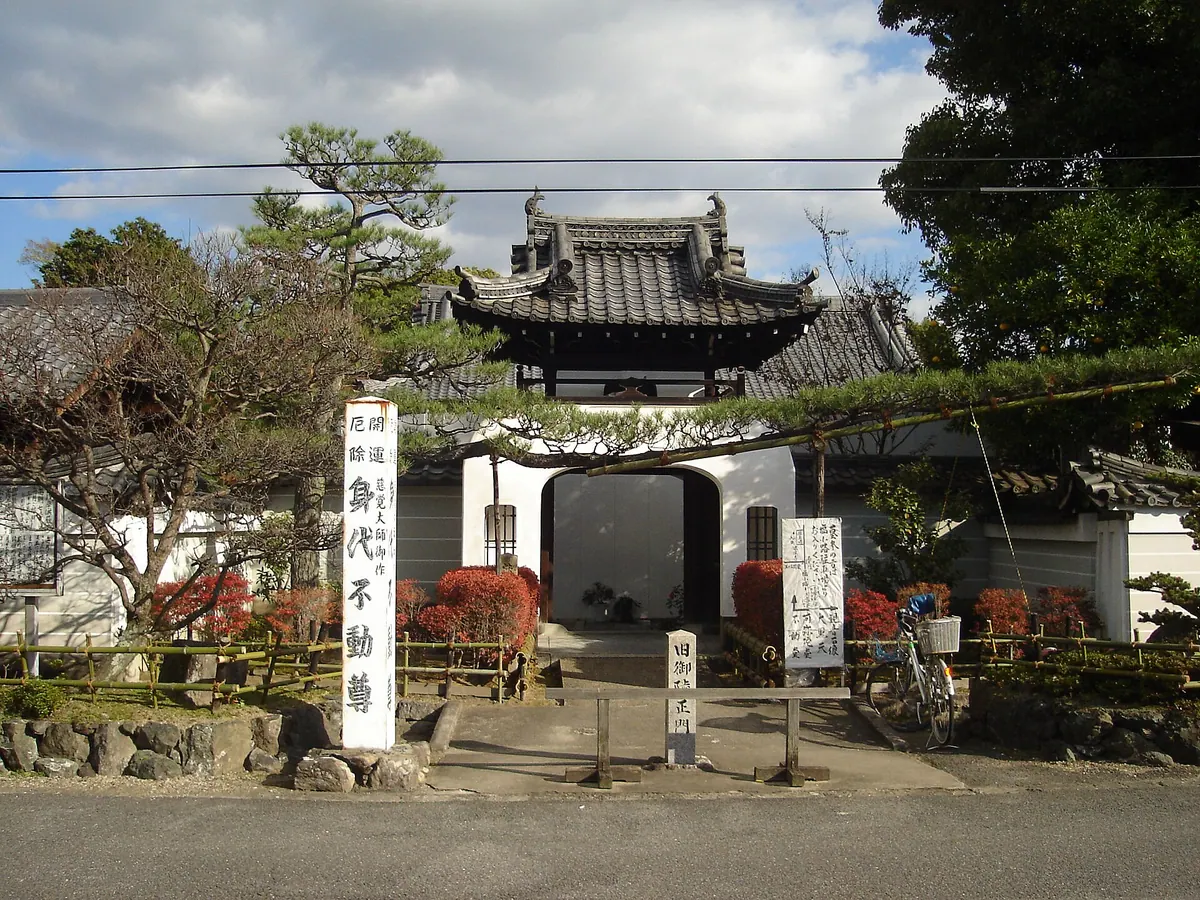
What it is
- Temple founded in the mid-twelfth century.
- Originated from a large temple-palace complex.
- Dedicated to Fudō Myō-ō, a deity of compassion.
What to see
- Principal icon of Fudō Myō-ō.
- Amida Hall with a statue of Emperor Goshirakawa.
- Statue believed carved by craftsman Unkei.
- Grave of Emperor Goshirakawa visible from the temple.
- Small garden and low wall near Amida Hall.
When to go
- 28th day of every month for a fire ritual.
- Rituals in Main Hall enhanced by sunlight through crystals.
In detail
History
The Hōjūji Temple originated in the sprawling Hōjūjidono temple-palace complex built in the mid-twelfth century by retired emperor Goshirakawa (1127–1192). The original complex covered well over 14 hectares (about 10 soccer fields) in the Shichijō area between the Kamo River and Kyoto’s eastern hills. It encompassed several residential palaces and numerous Buddhist temples, including the famous Sanjūsangedō.
Worship at Hōjūji
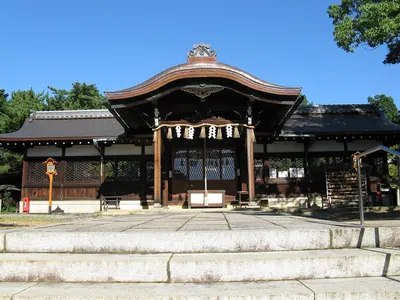
The majority of visitors to Hōjūji are local community members who visit frequently to pray before treasures of inestimable value and powerful religious efficacy. The most important of these is the principal icon of Fudō Myō-ō, a deity whose fierce appearance stands in stark contrast to his limitless compassion. The statue at Hōjūji is thought to have the special power of transferring afflictions from the faithful to itself. On the 28th day of every month, a dramatic fire ritual is held before Fudō Myō-ō during which timber planks inscribed with prayers are burned as offerings. This and all of the rituals that take place within the Main Hall are enhanced by rays of sunlight that shine through crystals embedded into the Japanese cypress walls.
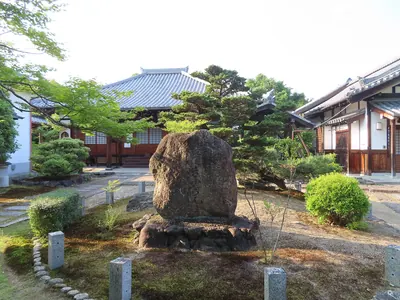
The Amida Hall is located beyond the Main Hall, near the center of the temple complex. Inside is a statue of Retired Emperor Goshirakawa that is thought to have been carved by the revered craftsman Unkei (1150–1223). This statue is enshrined by Kokei Eri at Heian-Bussho. The other statue at the grave of Goshirakawa is said to be enshrined within a gilded cabinet and is hidden from public view. Reportedly, the 1,001 statues of Kannon, the bodhisattva of compassion, at Sanjūsangendō all face this single statue. There is a similar alignment with the grave of Goshirakawa, which is located immediately to the east of Hōjūji. The former sovereign’s grave was originally part of the temple grounds and was ceded to the Imperial Household Agency during the Meiji era (1868–1912). The grave can still be seen from Hōjūji, just beyond a small garden and low wall to the east of the Amida Hall.
Text: 観光庁 地域観光資源の多言語解説文データベース. Reproduced unchanged. The notes above were written from that text by Japan Gems.
More photos
Where it is
京都府京都市東山区三十三間堂廻り町655 Open in Google Maps
この施設の関係者の方へ
このページは公開情報をもとに Japan Gems が作成し、訪日外国人向けに英語で掲載しています。 写真や情報の追加・修正を承っています。お店の写真に差し替えることもできます。
このページの情報を更新する