
Jūrin-ji Temple
十輪寺
This temple offers gardens, art, and a famous cherry tree, known for conception prayers and a poet's retirement.
What it is
- Temple founded in 850 by Emperor Montoku.
- Known for prayers for conception and safe childbirth.
- Retirement temple of 9th-century poet Ariwara no Narihira.
- Rebuilt in the 17th century by the Kasanoin family.
What to see
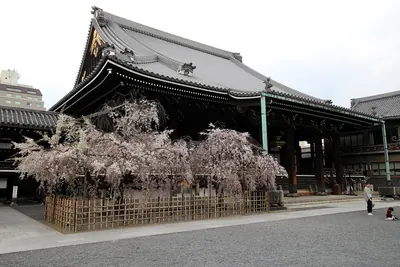
- Early blooming Narihira-zakura cherry tree.
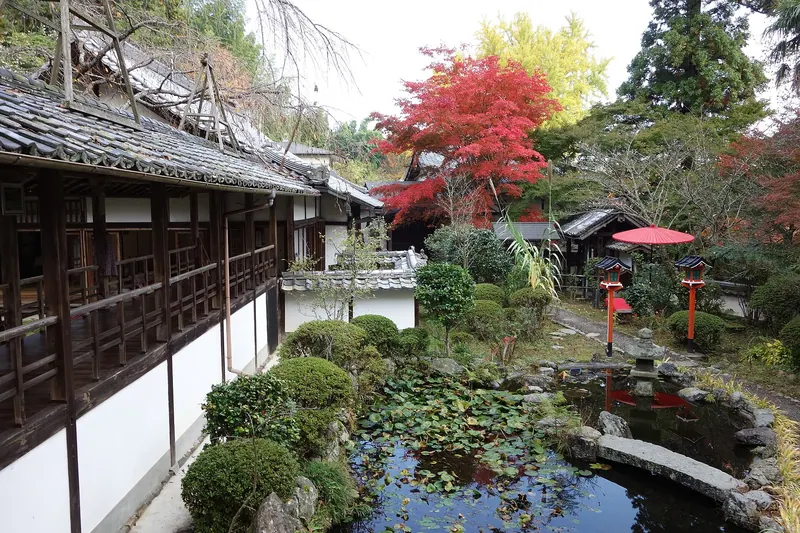
- Two gardens, including Sanpo Fukan Garden.
- Painted sliding panels depicting scenes from The Tales of Ise.
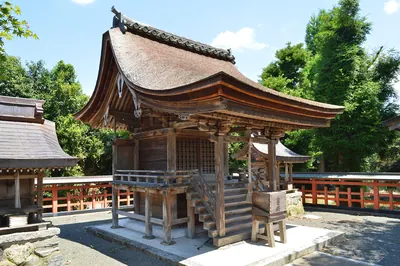
- Small memorial pagoda dedicated to Narihira.
- Replica of a traditional salt kiln (shiogama).
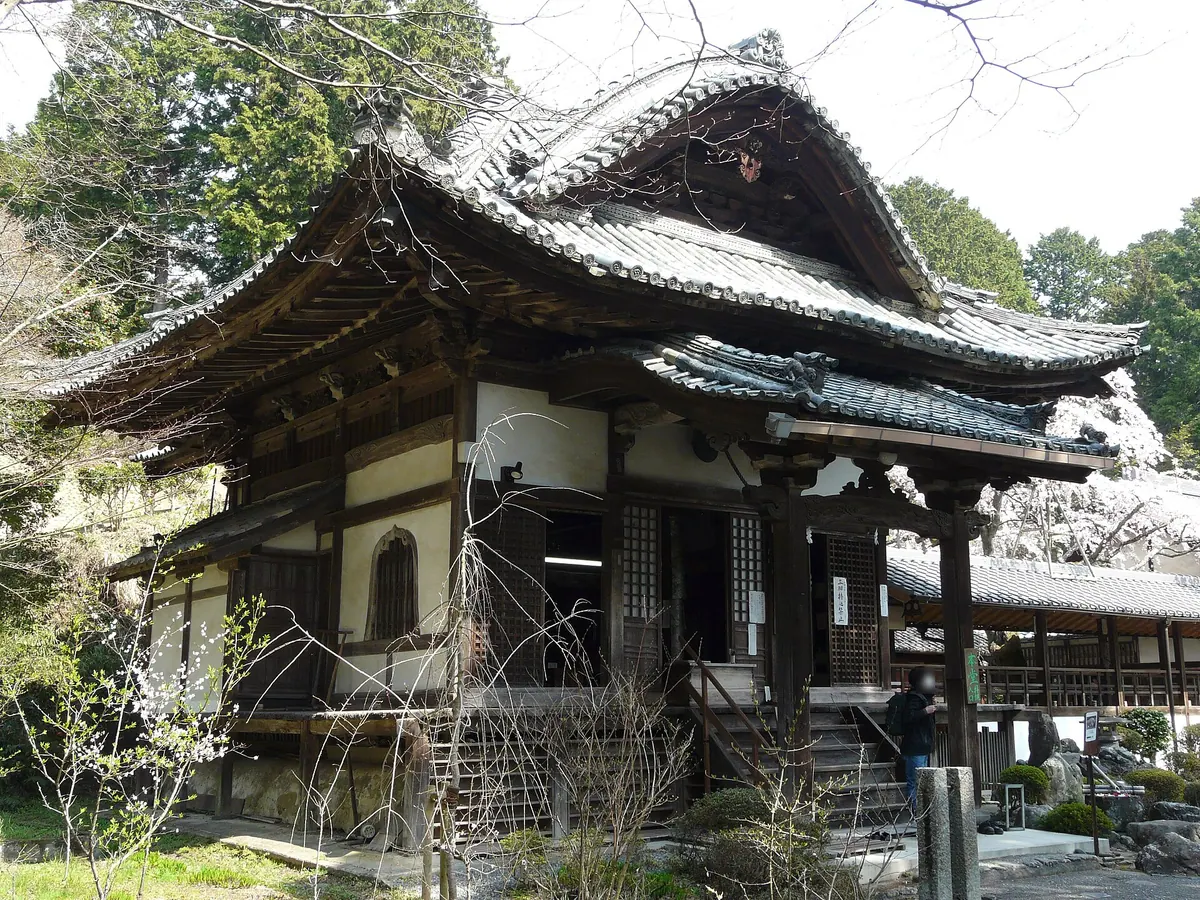
- Hondo (Main Hall) with a rare “palanquin-style” roof.
When to go
- Early spring for the Narihira-zakura cherry tree.
- August 23rd to see the Enmei Jizo statue.
- November 23rd for the Shiogama Kiyomesai purification ceremony.
In detail
Jurinji Temple in the foothills of the Nishiyama mountain range along Kyoto’s western border is known as a place to pray for conception and safe childbirth. It once served as the retirement temple of Ariwara no Narihira (825–880), a prominent ninth-century poet. In addition to its famous early blooming cherry tree, other attractions in the quiet, secluded temple include two gardens, painted sliding panels in one of the halls depicting scenes from Ise monogatari (The Tales of Ise), a small memorial pagoda dedicated to Narihira, and a traditional salt kiln.
Brief History
The temple was founded in 850 by Emperor Montoku (827–858), who enshrined a wooden statue of Enmei Jizo Bodhisattva (“Jizo of long life”) to pray for the safe birth of his child with his consort Fujiwara no Akirakeiko (829–900). The emperor’s prayers were answered, and their son later ascended the throne. The Jizo statue is said to have been carved by Saicho (Dengyo Daishi, 767–822), the founder of Tendai Buddhism in Japan.
Jurinji burned down during the Onin War (1467–1477), a conflict over shogunate succession that damaged most of Kyoto. The temple lay in ruins until the Kanbun era (1661–1673), when it was rebuilt by the noble Kasanoin family. Jurinji became their family memorial temple (bodaiji), tasked with holding burial rituals, caring for family graves, and praying for their souls after death.
Retirement Temple of Ariwara no Narihira
Narihira was born a prince, the grandson of two emperors. When his father was implicated in an attempted coup, the infant Narihira was stripped of his rank and given a commoner name. Despite this, he served in various positions at court and was considered a competent official, capable warrior, skilled horseman, and talented waka poet. He was also known for his good looks, and his many rumored affairs, including romances with an emperor’s consort and a high priestess of Ise Jingu Grand Shrine, are thought to have inspired The Tales of Ise, a classic collection of poems and related narratives in prose.
According to temple legend, Narihira spent his later years in seclusion at Jurinji. His last poem was among many of his works chosen for the tenth-century anthology Kokin Wakashu (Collection of Poems Ancient and Modern), in which he was also named one of the Six Immortal Poets.
Long ago I heard
That this is the road we must all
Travel in the end,
But I never thought it might
Be yesterday or today.
(Translated by Donald Keene)
Temple Grounds
The Hondo (Main Hall), built in 1750, is a designated Tangible Cultural Property of Kyoto Prefecture. It has a rare “palanquin-style” roof, shaped like the curved roofs of litters once used to transport high-ranking members of court. The Enmei Jizo statue is hidden from view in a miniature altar flanked by several other sculptures and is only accessible for public viewing once a year, on August 23rd. There are two more Buddhist statues on either side of the main altar, and many oshie (“padded cloth picture”) offerings are displayed throughout the hall.
A roofed walkway connects the Hondo to the Kuri (monks’ quarters and kitchen). Two tatami-mat rooms are used to exhibit temple treasures and art, such as copies of The Tales of Ise and the late-eighteenth-century guidebook Miyako meishozue (Famous Sights of the Capital). The sliding screen panels in the rooms are decorated with large paintings of scenes from The Tales of Ise depicting nobles in rich robes, musicians, and servants.
Between the Hondo and the Kuri is the Sanpo Fukan (“three-way view”) Garden, thought to have been created by Kasanoin Tsunemasa (1700–1771), the 27th head of the Kasanoin family. The courtyard garden is designed to appear slightly different depending on whether the viewer is standing, sitting, or lying down. It contains the famous Narihira-zakura, a 200-year-old weeping cherry tree that flowers in early spring, draping its branches over the tiled roofs. A tea room built in the style favored by Tsunemasa, with various objects of art displayed inside, also looks out onto the garden.
A path leading up the hill behind the temple halls offers a view of the unusual roof of the Hondo and Narihira-zakura cherry tree from above. A small stone pagoda located midway up the slope is said to mark Narihira’s gravesite. At the top of the hill is a shiogama, a stone salt-making kiln built in the center of a large earthen pit. It is a replica of the kiln that Narihira is said to have used when living at Jurinji. Aristocrats of the Heian period (794–1185) would boil seawater until only salt remained, enjoying the scent and the imagery of the sea, sometimes adding pigments to the roasting salt to color the smoke. Visitors can observe this elegant pastime, called shioyaki, during the Shiogama Kiyomesai purification ceremony held at Jurinji on November 23rd.
Text: 観光庁 地域観光資源の多言語解説文データベース. Reproduced unchanged. The notes above were written from that text by Japan Gems.
More photos
Where it is
京都府京都市西京区大原野小塩町481 Open in Google Maps
この施設の関係者の方へ
このページは公開情報をもとに Japan Gems が作成し、訪日外国人向けに英語で掲載しています。 写真や情報の追加・修正を承っています。お店の写真に差し替えることもできます。
このページの情報を更新する