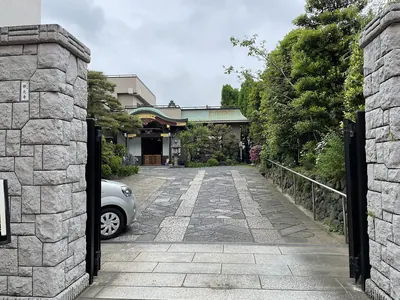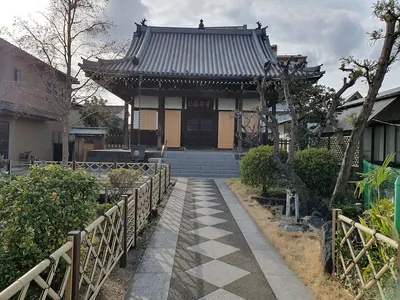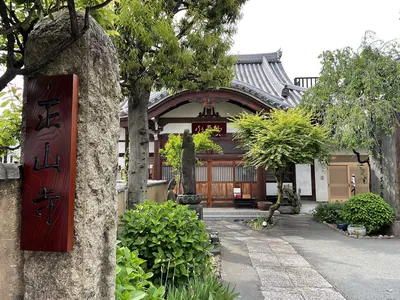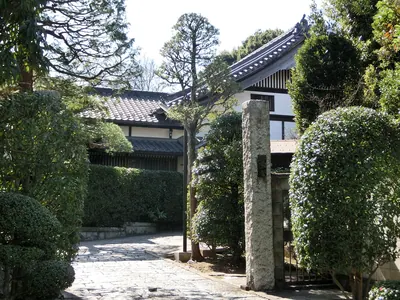

Kan'ei-ji Temple
寛永寺
Kan'eiji Temple, founded in 1625, was built to rival Kyoto's temples and is linked to the Tokugawa shogunate.
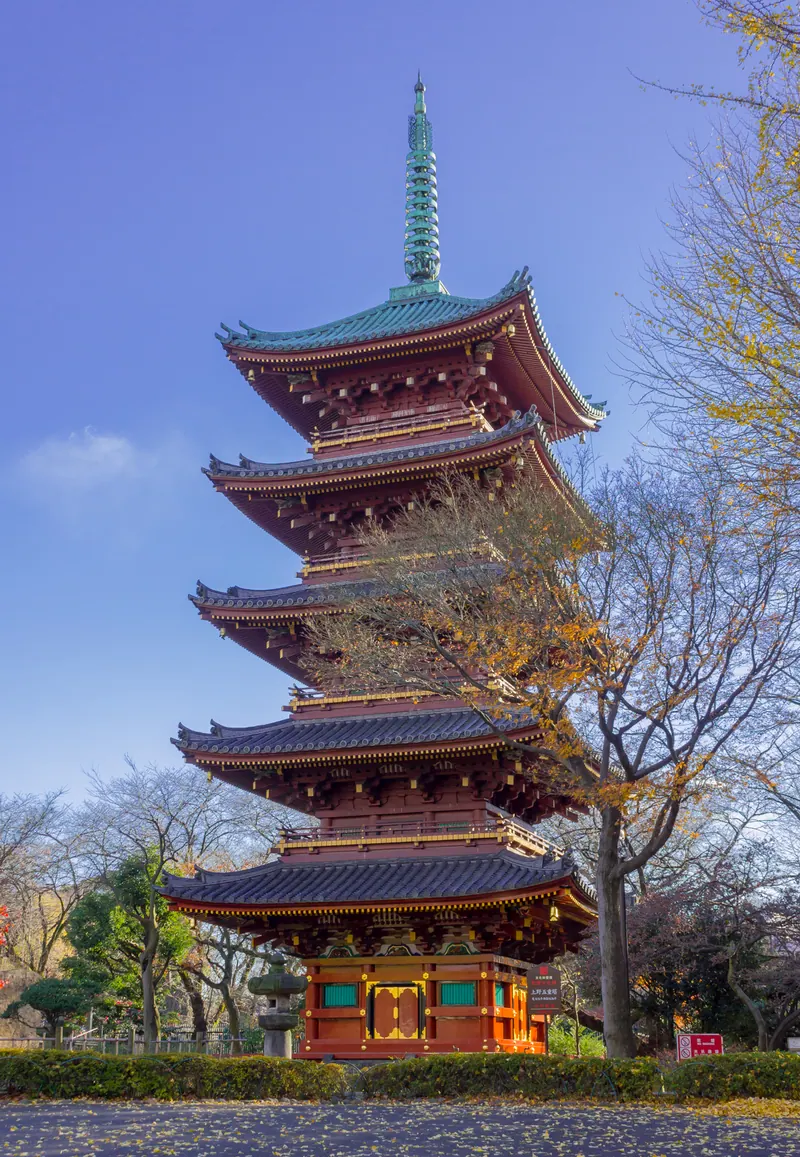
What it is
- Buddhist temple founded in 1625.
- Established by Tokugawa shogunate to rival Kyoto's temples.
- Named after the Kan'ei era.
What to see
- Graves of some Tokugawa shoguns.
Getting there
- Located on the north side of Ueno Park.
In detail
Kan’eiji Temple: History
The history of Kan’eiji Temple is inextricably linked to that of the Tokugawa shogunate, which ruled Japan from 1603 until 1867. After unifying the entire country under his banner, the first shogun Tokugawa Ieyasu (1543–1616) went on to elevate his stronghold of Edo (present-day Tokyo) to the status of de facto capital. Seeking to eclipse Kyoto, the ancient seat of the imperial court, the shogunate undertook a series of ambitious construction and public works projects to achieve its goal. These efforts were in full swing in the 1620s, when Ieyasu’s son and successor Tokugawa Hidetada (1579–1632) ordered land owned by three samurai lords in what is now the Ueno area to be used for a new Buddhist temple.
An icon of the east
The Ueno estates were donated to Tenkai (1536?–1643), one of the most prominent Buddhist priests in Japan at the time and a trusted advisor of the shogunate. Tenkai had close ties to Kyoto, where he had been the Edo government’s liaison to the court and had worked on rebuilding Enryakuji, once the most influential Buddhist institution in the country but destroyed in the war-ravaged decades before the emergence of the Tokugawa shogunate. Tasked with establishing a temple to rival all others, one that would signify Edo’s primacy, Tenkai went about founding an “Enryakuji of the East”—an Edo version of the Kyoto icon. He named the temple Toeizan Kan’eiji: Toeizan meaning “Mt. Hiei of the East” in reference to the mountain Enryakuji stands on, and Kan’eiji referring to the Kan’ei era (1624–1644) of the time—just as Enryakuji had been named after the Enryaku era (782–806) when it was founded.
The abbot’s residence at Kan’eiji was completed in 1625, which is considered the year the temple was founded, but construction on the vast complex continued for decades and incorporated influences from several famous temples in Kyoto. Tenkai’s disciple Kokai (1608–1695) picked up the torch after his master’s death, but eventually retired as abbot in favor of Prince Shucho (1634–1680), the son of the ruling emperor Go-Mizunoo (1596–1680). This arrangement served to increase the prestige of Kan’eiji.
A tomb fit for a shogun
Kan’eiji’s close ties to the shogunate allowed the temple to flourish and expand. At the height of its splendor, it encompassed an area greater than all of present-day Ueno Park and its abbot wielded significant religious and political influence. Kan’eiji’s importance grew further in the mid-1600s, when third shogun Tokugawa Iemitsu (1604–1651) expressed a desire to have his funeral conducted at the temple whose founding he had overseen. Iemitsu’s successors, Ietsuna (1641–1680) and Tsunayoshi (1646–1709), went even further, both ordering that they be buried in the Kan’eiji cemetery instead of at Zojoji, the Tokugawa family temple just south of Edo Castle. This break with tradition upset the priests at Zojoji, leading to subsequent shogun burials being alternated between the two temples until the end of Tokugawa rule.
Destruction and revival
The shogunate met its demise in 1867, when revolutionary forces loyal to the emperor overthrew the warrior-led government and installed Emperor Meiji (1852–1912) as the new head of state. The defeat of the Tokugawa also meant the fall of Kan’eiji: in July 1868, with Edo already in the hands of the revolutionaries, about 2,000 men loyal to the shogunate took up positions within the temple grounds to stage a last stand. These loyalists were soundly defeated, and the buildings they had occupied were burned to the ground. The new government did not look kindly on Kan’eiji, dismantling all but a few of the structures that were still standing and confiscating the temple’s precincts, which were later turned into Ueno Park. Kan’eiji was not reestablished until 1879 and has stood quietly on the north side of the park, close to some of the Tokugawa shoguns’ graves, ever since.
Text: 観光庁 地域観光資源の多言語解説文データベース. Reproduced unchanged. The notes above were written from that text by Japan Gems.
Where it is
東京都台東区上野桜木1-14-11 Open in Google Maps
この施設の関係者の方へ
このページは公開情報をもとに Japan Gems が作成し、訪日外国人向けに英語で掲載しています。 写真や情報の追加・修正を承っています。お店の写真に差し替えることもできます。
このページの情報を更新する