
Kōfuku-ji Temple
興福寺
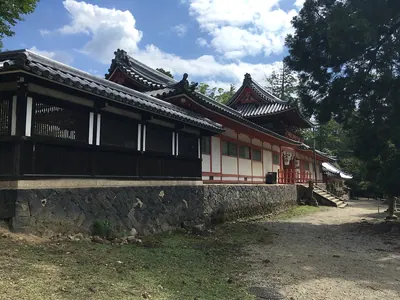
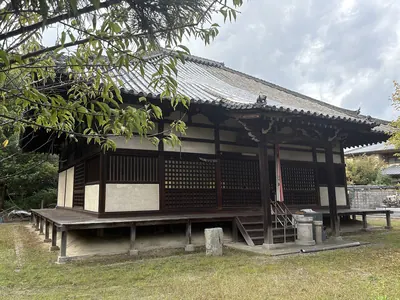
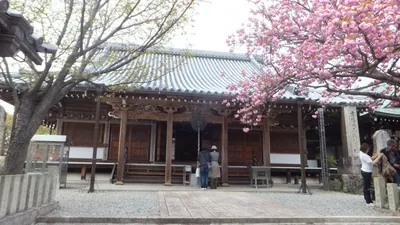
Kofukuji is an ancient Buddhist temple in Nara, significant for its long history and philosophical tradition.

What it is
- One of Japan’s oldest and most prominent Buddhist temples.
- Founded in 669 as Yamashina Temple.
- Renamed Kofukuji in 710, meaning 'Temple that Generates Blessings'.
- Head temple of the Hosso school of Buddhism.
What to see
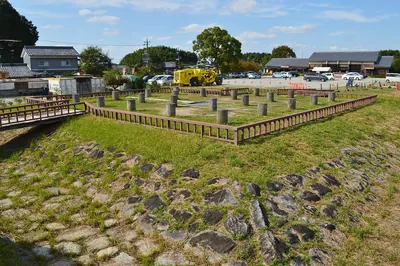
- Temple complex, rebuilt after a 1717 fire.
In detail
With a history of more than 1,300 years, Kofukuji is one of Japan’s oldest and most prominent Buddhist temples.
It was one of the Seven Great Temples of Nara, which was Japan’s capital during the Nara period (710–794). Its history begins in 669, when Kagami no Okimi (d. 683) founded a Buddhist chapel, Yamashina Temple, in modern-day Kyoto Prefecture to pray for her sick husband Fujiwara no Kamatari (614–669). The temple was moved to Umayasaka in Nara Prefecture in 673 (when it was renamed Umayasaka Temple) and then to its present location after the capital was established here in 710. Backed by founding patron Fujiwara no Fuhito (659–720), the temple was renamed Kofukuji, the Temple that Generates Blessings, a reference to the Vimalakirti Sutra.
Kofukuji was established as a leading center in the Hosso (Ch. Faxiang) philosophical tradition of Buddhism. It was spread by seventh-century Chinese monks and holds that all phenomena are representations created by the mind that appears to experience them. The monk Genbo (d. 746) introduced these teachings to Kofukuji, where they have been transmitted and practiced ever since.
The temple expanded rapidly under the patronage of the court and the Fujiwara clan, and merged with nearby Kasuga Taisha Shrine, the ancestral Shinto shrine of the Fujiwara clan. The temple became the dominant political force in the region. In the Kamakura (1185–1333) and Muromachi (1336–1573) periods, it had a shogunal mandate to oversee Yamato Province.
In the 15th century, Kofukuji entered a period of decline and in 1717 suffered a catastrophic fire that destroyed most of the complex. In the early Meiji era (1868–1912), Kofukuji was targeted by the anti-Buddhist policies of the central government, forcibly separated from Kasuga Taisha Shrine, and ultimately abandoned by its monks. Eventually Kofukuji obtained permission to reestablish itself as a religious institution, and flourishes today as the head temple of the Hosso school of Buddhism.
Text: 観光庁 地域観光資源の多言語解説文データベース. Reproduced unchanged. The notes above were written from that text by Japan Gems.
More photos


Where it is
奈良県奈良市登大路町48 Open in Google Maps
この施設の関係者の方へ
このページは公開情報をもとに Japan Gems が作成し、訪日外国人向けに英語で掲載しています。 写真や情報の追加・修正を承っています。お店の写真に差し替えることもできます。
このページの情報を更新する