
Matsunoo Taisha
松尾大社
This Shinto shrine, founded in 701, offers unique architecture, ancient statues, and three artistic gardens.
What it is
- Shinto shrine, also known as Matsuo-san.
- Founded in 701 by the Hata clan.
- Dedicated to gods of mountains, water travel, and the moon.
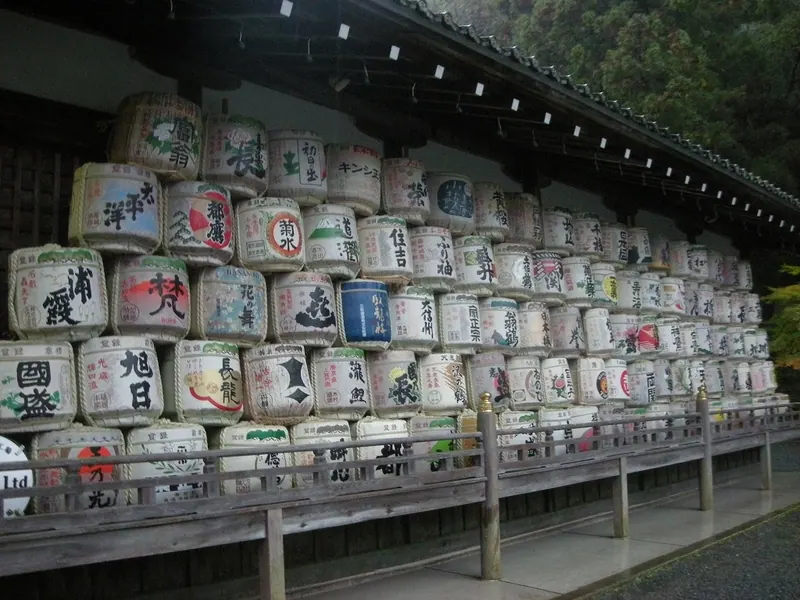
- Visited by sake and miso producers for prosperity.
What to see
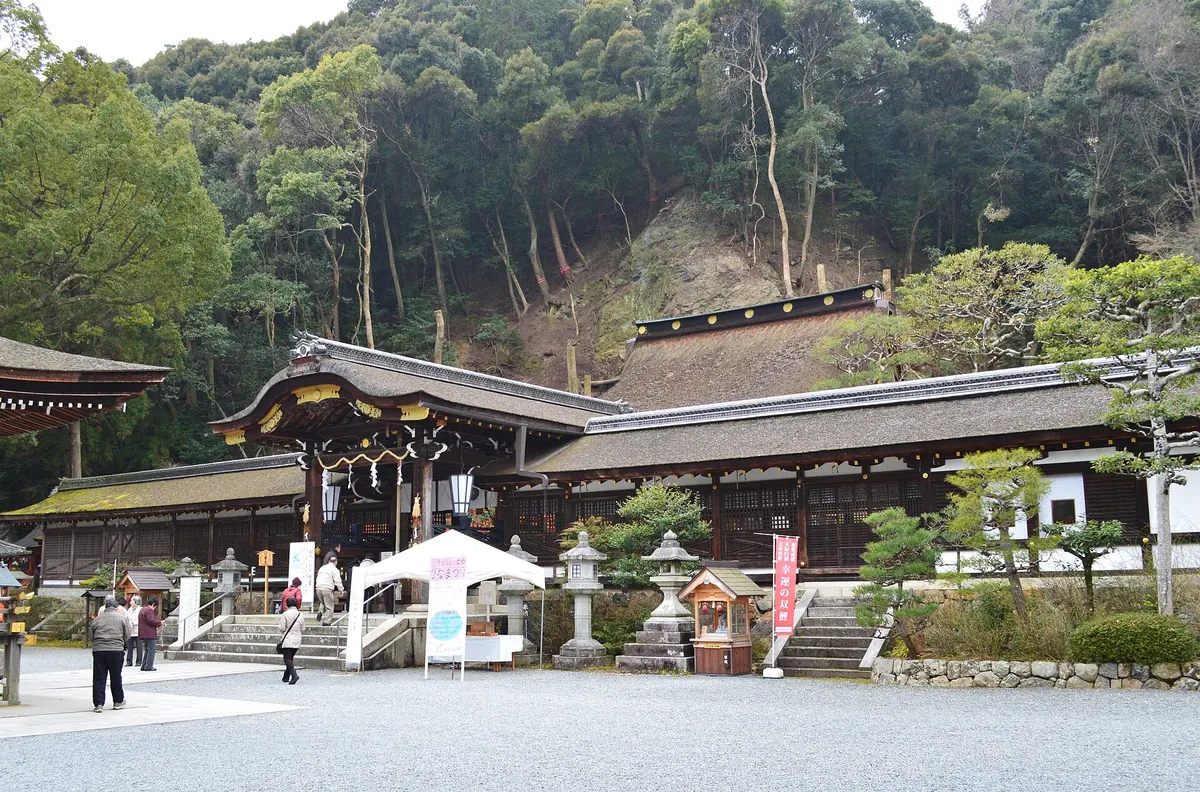
- Honden (Main Sanctuary) in matsuo-zukuri style.
- One of Kyoto's oldest wooden buildings, built 1394–1428.
- Turtle statuary throughout the grounds, including Nadekame-san.
- Three artistic gardens by Shigemori Mirei: Kyokusui, Joko, Horai.
- Shinzokan Statuary Hall with 21 sacred statues.
- Rare, ancient wooden statues of Shinto deities.
When to go
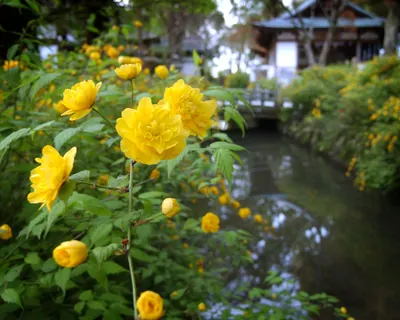
- Spring, for bright yellow yamabuki flowers.
In detail
Matsuno’o Taisha Shrine, often referred to as “Matsuo-san,” is a Shinto shrine that has long been visited by sake and miso producers to pray for prosperous business and to draw water from the sacred well on the grounds. Matsuno’o Taisha is said to have been founded in 701 by members of the influential Hata clan even before Kyoto became the capital of Japan in 794. Its main deities are Oyamagui no Kami, a god of mountains, and Ichikishimahime no Mikoto, a goddess of water travel; Tsukiyomi, a deity of the moon, is worshipped at an auxiliary shrine to the south. Matsuno’o Taisha is well known for turtle statuary, bright yellow yamabuki flowers that bloom in spring, three artistic gardens, and amulets related to producing and drinking sake.
Main Sanctuary
The shrine’s Honden (Main Sanctuary) is built in the distinctive matsuo-zukuri architectural style. It is characterized by a sweeping gabled roof that is equally long at the front and at the back of the structure, as opposed to the more common nagare-zukuri style, in which the roof is asymmetrical, longer in the front and shorter in the rear. Many ancient wooden buildings in Kyoto have been lost to fire over the centuries, but the Honden of Matsuno’o Taisha, constructed in the Oei era (1394–1428) and substantially repaired in 1542, avoided this fate, making it one of the oldest in the city. The building is a nationally designated Important Cultural Property.
Turtles as Sacred Messengers
According to legend, Oyamagui no Kami, the primary deity of the shrine, once traveled along a nearby river, alternating between riding a turtle and a koi carp. The two creatures are now regarded as his sacred messengers, and turtle imagery is particularly prominent throughout the shrine grounds. The prayer hall is flanked by small statues of a turtle and a koi, and other turtle sculptures are placed next to the water basin at the entrance and the Kame no I (“turtle well”) near the sacred waterfall. The most popular is the small black statue of a turtle on a rock, called “Nadekame-san,” which is believed to bring good luck to those who rub it.
Three Gardens by Shigemori Mirei
Matsuno’o Taisha has three distinct gardens designed by the renowned landscape architect Shigemori Mirei (1896–1975). They were completed in 1975, becoming the last of Shigemori’s many creations combining traditional garden aesthetics with contemporary elements. The Kyokusui (“winding stream”) Garden has a shallow stream meandering through an undulating, stone-paved “ground” decorated with rocks and artfully arranged satsuki azalea bushes. It is reminiscent of Heian-period (794–1185) gardens where nobles held lavish poetry banquets. Further along the path is the Joko (“ancient times”) Garden, which evokes the image of deities descending from heaven onto primeval mountaintops suggested by large, jagged rock formations. Just outside the shrine’s Romon Gate is the Horai (“Mt. Penglai”) Garden representing the Chinese paradise of eternal youth as a Kamakura (1185–1333) style pond garden, where large stones symbolize islands in a sea. The ticket to visit all three gardens includes entry to the Shinzokan Statuary Hall.
Shinzokan Statuary Hall
A small treasure hall between the Kyokusui Garden and the Joko Garden contains 21 sacred statues. The most notable are three large wooden sculptures believed to portray the shrine’s main deities: Oyamagui no Kami, Ichikishimahime no Mikoto, and Tsukiyomi. It is very rare for Shinto deities to be depicted in physical form as statues, as opposed to Buddhist images, which serve as objects of worship. The sculptures of the three deities at Matsuno’o Taisha were carved in the Heian period (794–1185) and are among the oldest and best-preserved examples of Shinto statuary.
Text: 観光庁 地域観光資源の多言語解説文データベース. Reproduced unchanged. The notes above were written from that text by Japan Gems.
More photos
Where it is
京都府京都市西京区嵐山宮町 Open in Google Maps
この施設の関係者の方へ
このページは公開情報をもとに Japan Gems が作成し、訪日外国人向けに英語で掲載しています。 写真や情報の追加・修正を承っています。お店の写真に差し替えることもできます。
このページの情報を更新する