
Nagaoka Tenmangū
長岡天満宮
This shrine is dedicated to the god of scholarship, popular with students, and features red azaleas in late April.
What it is
- Shrine dedicated to Sugawara no Michizane, deity of scholarship.
- Popular with students praying for exam success.
What to see
- Tall rows of bright red azaleas along pond path.
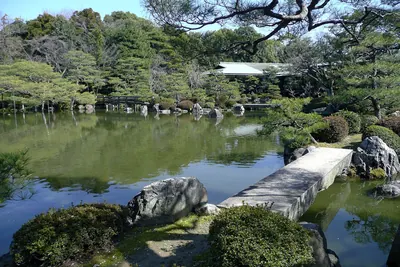
- Large Hachijogaike Pond, created in 1638.
- Elegant dining rooms on pillars over the water.
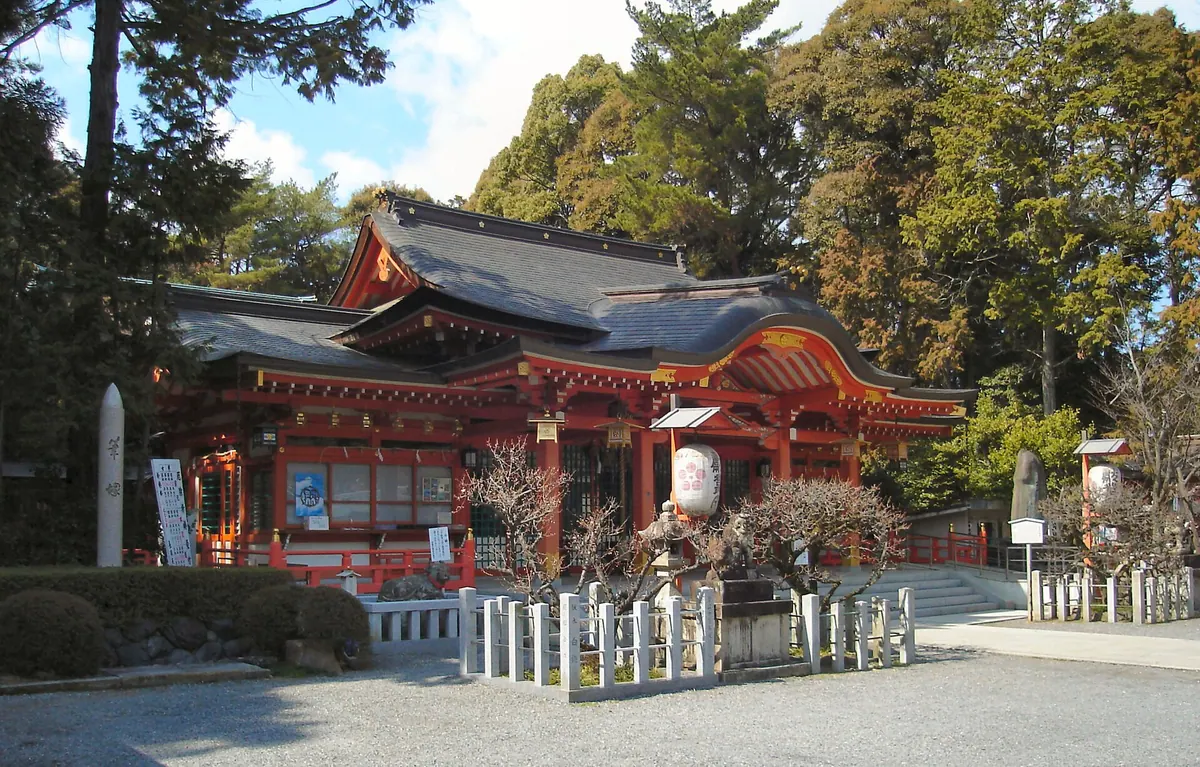
- Vermilion Honden (Main Sanctuary), a Tangible Cultural Property.
- Four ume plum trees flanking the Honden.
- Stone statue of an ox, divine messenger of Tenjin.
When to go
- Late April for bright red azaleas.
- Early March for plum grove blossoms.
- Spring for cherry trees, irises, and azaleas.
In detail
Nagaoka Tenmangu Shrine in the city of Nagaokakyo is dedicated to Sugawara no Michizane, a man now worshipped as a deity of scholarship called Tenjin. As a Tenjin shrine, it is particularly popular with students who come to pray for success before tests or university entrance exams. One of the best-known features of Nagaoka Tenmangu is the tall rows of bright red azaleas that bloom along the path across the shrine’s large pond in late April.
The Legend of Tenjin and Nagaoka Tenmangu
Sugawara no Michizane (845–903) was an accomplished scholar, poet, and high-ranking statesman. He was a favorite in the court of Emperor Uda (867–931), but after the emperor abdicated, Sugawara became vulnerable to the political schemes of his rivals at court and was exiled to a remote posting in Kyushu. On the way, he is said to have stopped by the Nagaokakyo area, where he had often spent time in leisure with friends, mournfully declaring, “May my soul remain here forever!”
After Sugawara passed away in exile, a series of natural disasters and other misfortunes that occurred in Kyoto led to the belief that the disgraced statesman became a vengeful spirit. When many attempts to pacify the raging spirit failed, the emperor’s court deified Sugawara as the god of scholarship Tenjin. Since then, numerous shrines dedicated to Tenjin have been founded throughout the country.
Hachijogaike Pond and Kirishima Azaleas
The path from the first torii gate to the main sanctuary crosses over the large Hachijogaike Pond, which was originally created for irrigation purposes in 1638. On one side of the pond, elegant dining rooms that belong to a neighboring kaiseki ryori (traditional Japanese cuisine) restaurant stand on pillars over the water. Cherry trees, irises, and azaleas bloom on the shrine grounds throughout spring, but the most popular seasonal flower is the vibrant red Kirishima azalea. The tall azaleas lining the path across the pond can exceed 2.5 meters in height and are thought to be around 170 years old.
Main Sanctuary and Plums
Further into the shrine grounds, up a flight of steps and past a small garden recently designed for the enjoyment of autumn foliage, is the Honden (Main Sanctuary). The vermilion building was transferred from Heian Jingu Shrine in 1941 and is a Tangible Cultural Property of Kyoto Prefecture. It is flanked by four ume plum trees, a species that was favored by Sugawara no Michizane. A stone statue of an ox, the divine messenger of Tenjin, is placed beside the Honden, and several other sculptures of oxen can be found nearby.
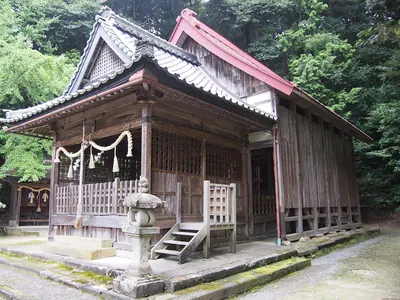
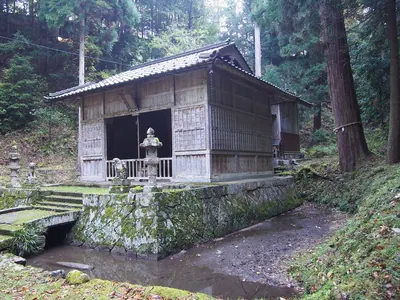
A path to the left of the main sanctuary leads to Nagaoka Inari Daimyojin, a subsidiary shrine dedicated to a deity of agriculture. Beyond it is the plum grove with approximately 300 trees, including double-flowered yae-ume, weeping shidare-ume, fragrant bungo-ume, fruit-bearing nanko-ume, pink- and white-flowering omoi no mama, cherry blossom-like sakurabai, vibrant beni-ume, and several other varieties. The flowers bloom around early March, and benches placed along the outer edge of the grove allow visitors to take in the sight at their own pace. Entrance to the shrine and the plum grove is free of charge.
Text: 観光庁 地域観光資源の多言語解説文データベース. Reproduced unchanged. The notes above were written from that text by Japan Gems.
Where it is
京都府長岡京市天神2丁目15-13 Open in Google Maps
この施設の関係者の方へ
このページは公開情報をもとに Japan Gems が作成し、訪日外国人向けに英語で掲載しています。 写真や情報の追加・修正を承っています。お店の写真に差し替えることもできます。
このページの情報を更新する