
Onsen-ji Temple
温泉寺
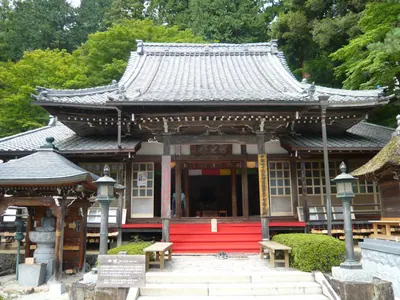
Onsenji Temple, dedicated to the Buddha of healing, offers town views and a hot spring source.
What it is
- Temple dedicated to Yakushi Nyorai, Buddha of healing and medicine.
- Established to remember the legend of the white egret and hot spring.
- Founded after 1265, when hot springs revived.
What to see
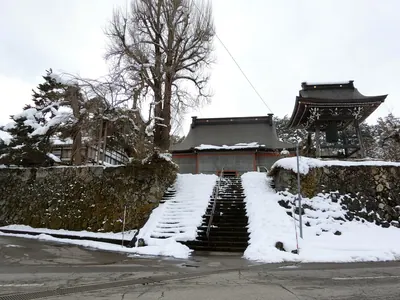
- 173 stone steps leading to the temple.
- Views over Gero town from the temple grounds.
- Statue of Yakushi Nyorai near the main hall.
- Votive plaques (ema) from the Edo period.
- Pillars in the main hall with prayer markings.
- Iokaku pavilion, accessible during November festival.
When to go
- Autumn, for vibrant red and yellow leaves.
- November, for the seasonal color festival.
- Evenings in November, for illuminated maple trees.
Getting there
- Located near the center of Gero’s hot spring district.
In detail
At the top of 173 stone steps is Onsenji, a temple dedicated to Yakushi Nyorai, the Buddha of healing and medicine. The temple is located near the center of Gero’s hot spring district, and its grounds offer views over the town.
A white egret offers salvation
Gero has been famed for its hot springs for more than a thousand years. However, it is said that the waters stopped flowing for a period in 1265. The revival of the hot springs is attributed to a white egret that villagers noticed flying to the Hida River every day. Upon following the bird, they discovered a new hot spring source where the bird was bathing. The egret then took to the sky and landed on the branch of a pine tree on the hillside where Onsenji now stands. Beneath the tree, the villagers uncovered a statue of Yakushi Nyorai, the Buddha of medicine and healing, and believed the deity had assumed the form of the white egret. Onsenji was established to remember this legend and dedicated to Yakushi Nyorai.
Pilgrimages of healing
During the Edo period (1603–1867), up to 30,000 people a year visited Gero to bathe in its famed waters. Today, a hot spring source still exists beneath the main hall of Onsenji Temple. Water also flows from the Yakushi Nyorai statue near the main hall and is said to have healing powers when applied to the body.
The temple retains many votive plaques from the Edo period, attesting to the hot springs’ popularity. The plaques are called ema, on which visiting worshippers wrote their requests. Some of the pillars in the main hall have markings that appear to be such prayers. It is thought that those who could not afford ema, which require a donation, wrote their requests directly on the pillars.
Onsenji’s seasonal scenery
The grounds of Onsenji Temple are beautiful year-round, especially during autumn, when the leaves turn vibrant hues of red and yellow. For a few weeks each November, the temple holds a festival to celebrate the seasonal colors, illuminating maple trees in the evening and allowing access to areas usually off-limits, such as the ornate Iokaku pavilion.
Text: 観光庁 地域観光資源の多言語解説文データベース. Reproduced unchanged. The notes above were written from that text by Japan Gems.
Where it is
岐阜県下呂市湯之島680 Open in Google Maps
この施設の関係者の方へ
このページは公開情報をもとに Japan Gems が作成し、訪日外国人向けに英語で掲載しています。 写真や情報の追加・修正を承っています。お店の写真に差し替えることもできます。
このページの情報を更新する