
Murō-ji Temple
室生寺
This temple, known as "Women's Koya," offers historical buildings and natural beauty.
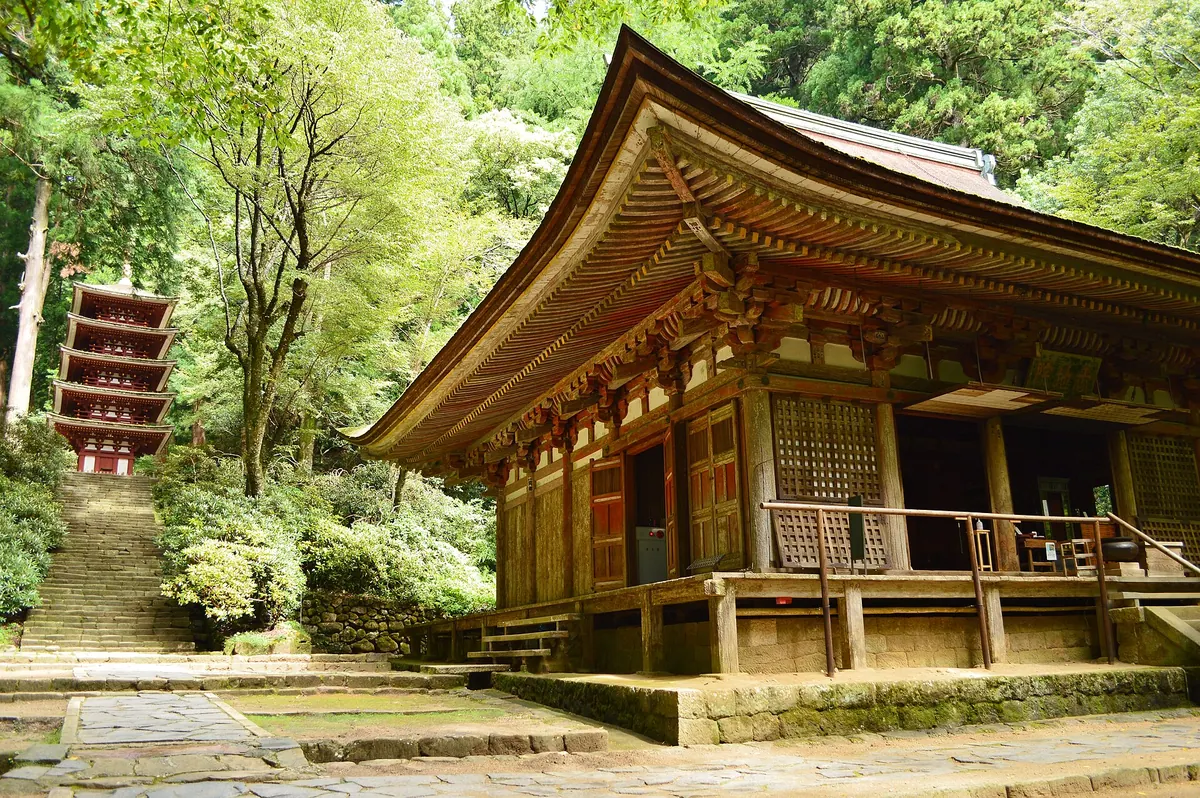
What it is
- Head temple of the Muroji branch of Shingon Buddhism.
- Founded in the late eighth century.
- Known as the “Women’s Koya” since the Kamakura period.
What to see
- Statue of the Eleven-Headed Kannon (National Treasure).
- Statue of the Shakyamuni Buddha (National Treasure).
- Kondo Hall (National Treasure).
- Five-Story Pagoda (National Treasure).
- Lush natural setting with seasonal flowers and leaves.
When to go
- Spring for cherry blossoms.
- Early summer for rhododendrons.
- Autumn for maple leaves.
In detail
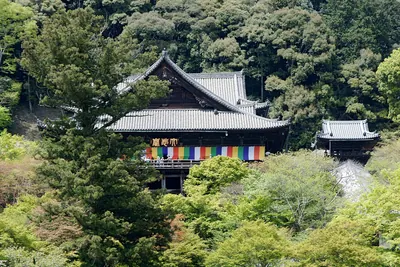
Located at the foot of Mount Muro, Muroji is the head temple of the Muroji branch of the Shingon sect of Buddhism. This area had been regarded as a spiritual location since ancient times, when people worshipped the Dragon God, said to live in a cave on the mountain. In times of drought, emperors would send messengers to pray to the Dragon God for rain.
The temple’s official history began in the late eighth century, when a prayer service was held here for the ailing Prince Yamanobe (later Emperor Kanmu, 737–806). Following an imperial order, high priest Kenkei (705–793) established the temple site, and his disciple Shuen (771–835) had several buildings erected in the compound.
Muroji is also celebrated as a place of worship for women. Females were barred from the major Shingon Buddhist temple complex at Mount Koya, but as Muroji welcomed them, it has been known as the “Women’s Koya” since the Kamakura period (1185–1333). Even today, women make up about 80 percent of visitors to the temple. Muroji houses a number of National Treasures, including statues of the Eleven-Headed Kannon and the Shakyamuni Buddha, the Kondo Hall, and the Five-Story Pagoda. Another attraction is the temple’s lush natural setting, highlighted seasonally by cherry blossoms, rhododendrons, and maple leaves.
Text: 観光庁 地域観光資源の多言語解説文データベース. Reproduced unchanged. The notes above were written from that text by Japan Gems.
Where it is
奈良県宇陀市室生78 Open in Google Maps
この施設の関係者の方へ
このページは公開情報をもとに Japan Gems が作成し、訪日外国人向けに英語で掲載しています。 写真や情報の追加・修正を承っています。お店の写真に差し替えることもできます。
このページの情報を更新する