
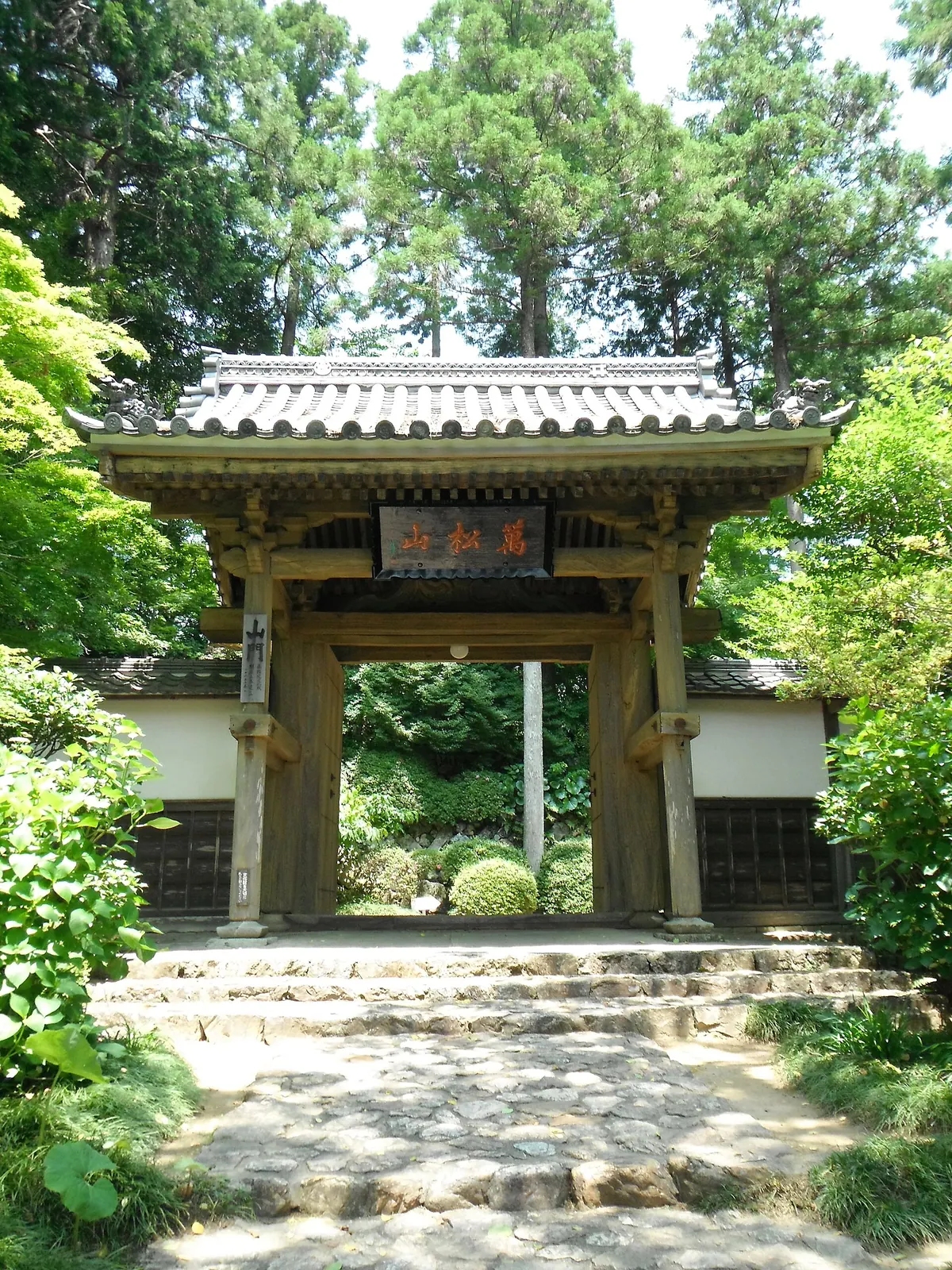
Ryōtan-ji Temple (Hamamatsu)
龍潭寺
Ryōtan-ji Temple features a unique garden designed in the shape of a turtle and a crane.
What it is
- Temple garden designed by Kobori Enshu.
- Designed in the chisen kansho or "pond-appreciation" style.
What to see
- Pond shaped like the kanji character for "heart."
- Traditional Zen temple garden elements: water and stones.
- Rock formations representing mountain ranges.
- Large stone in the center, symbol of the garden.
- Nio stone on the western edge of the pond.
- Horai ganto stone in the center of the pond.
When to go
- Late spring for brilliant pink azalea bushes.
- Spring for delicate white flowers of heather shrubs.
- Autumn for deep red leaves of heather shrubs.
In detail
Ryotanji’s garden was designed by Kobori Enshu (1579–1647) in the chisen kansho or “pond-appreciation” style, a design best viewed from one spot––in this case, the main hall. The pond is designed in the shape of the kanji character for “heart” or “spirit.” The garden features a number of traditional elements of Zen temple gardens such as water and stones, as well as a variety of plants placed around rock formations that represent mountain ranges.
These miniature mountain ranges are three mounds of grass-covered earth and are surrounded by stones from the local mountains. In the center of the garden near the base of the central mound is a large stone that is the symbol of the garden. Flanking this on the western edge of the pond is the nio stone, which protects the garden. In the center of the pond is the horai ganto stone, which symbolizes Horai, the legendary home of the eight immortals in Chinese mythology.
The round azalea bushes in the composition bloom a brilliant pink in late spring. These are complemented by heather shrubs (dodan tsutsuji) with delicate white flowers in spring and deep red leaves in the autumn. The entire garden is designed in the shape of a turtle and a crane, which are recurring motifs in Japanese culture that symbolize longevity and happiness, respectively.
Text: 観光庁 地域観光資源の多言語解説文データベース. Reproduced unchanged. The notes above were written from that text by Japan Gems.
Where it is
静岡県浜松市浜名区引佐町井伊谷1989 Open in Google Maps
この施設の関係者の方へ
このページは公開情報をもとに Japan Gems が作成し、訪日外国人向けに英語で掲載しています。 写真や情報の追加・修正を承っています。お店の写真に差し替えることもできます。
このページの情報を更新する