
Sanbō-in Temple
English 繁體中文
三宝院
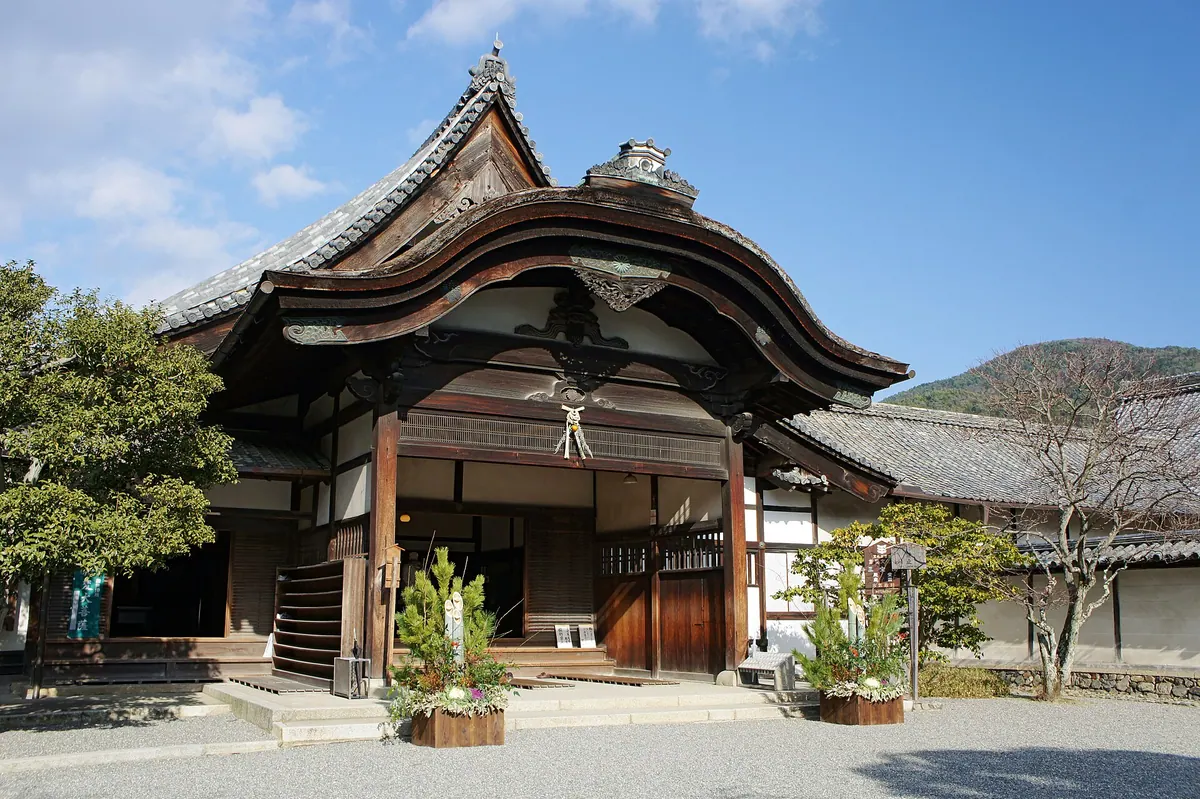
Sanbō-in Temple, rebuilt in 1598, offers a Momoyama period drawing room and a garden designed for cherry blossom viewing.
What it is
- Historical residence of abbots.
- Built in 1115 by Shōkaku.
- Current structure dates to 1598 reconstruction.
- Name means "Three Jewels" in Buddhism.
What to see
- Several buildings and a garden.
- Drawing Room Omote-Shoin, Momoyama period architecture.
- Sliding door panels with gold-leaf paintings.
- Garden with stones, ponds, waterfalls, and moss.
- Cherry blossoms in spring.
When to go
- Spring for cherry blossoms.
In detail
Sanbō-in, the historical residence of the abbots, was built in 1115 by Shōkaku (1057–1129), the 14th head of Daigo-ji. The current structure dates to 1598, when it was reconstructed as a part of the 16th-century renovation program by Toyotomi Hideyoshi. The name Sanbō-in derives from sanbō, the Japanese translation of the Sanskrit term triratna and the Buddhist concept of the Three Jewels’ that refers to the Buddha, the Dharma (the law as taught by Buddha), and the Sangha (or monastic community).
The Sanbō-in residence is composed of several buildings and a garden that extends over more than 5,000 m2 (ca. 5980 yd). The stately Drawing Room Omote-Shoin is a classic example of the architecture and interior design from the Momoyama period (1568–1600). The sliding door panels here are decorated with paintings on gold-leaf, a departure from the more somber adornments favored in earlier periods.
The garden of the residence is carefully designed to allow for greatest visual impact when viewed from inside. This design is attributed to Toyotomi Hideyoshi himself, who famously held an opulent banquet during the cherry blossom season in 1598, rebuilding Sanbō-in especially for this occasion. The garden has remained a popular spot for viewing the blossoms in spring to this day, featuring stones, ponds, waterfalls and moss, all of which represent an idealized nature and act as traditional elements of Japanese horticultural design.
Text: 観光庁 地域観光資源の多言語解説文データベース. Reproduced unchanged. The notes above were written from that text by Japan Gems.
Where it is
京都府京都市伏見区醍醐東大路町22 Open in Google Maps
この施設の関係者の方へ
このページは公開情報をもとに Japan Gems が作成し、訪日外国人向けに英語で掲載しています。 写真や情報の追加・修正を承っています。お店の写真に差し替えることもできます。
このページの情報を更新する