
Shiogama Shrine
鹽竈神社
This ancient shrine complex offers historical buildings, gardens, and unique festivals overlooking Matsushima Bay.
What it is
- Two Shinto shrines, Shiogama Jinja and Shiwahiko Jinja, on shared grounds.
- Shiogama Jinja founded before the Nara period, exact year unknown.
- Shiogama Jinja venerates three deities, including a salt-making protector.
- Shiwahiko Jinja dedicated to the god of agriculture, guardian of Shiogama area.
What to see
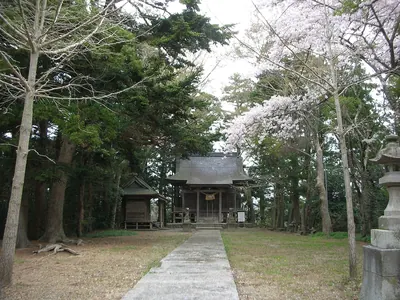
- Main shrine buildings from 1704, nagare-zukuri style.
- Lavish black- and vermillion-lacquered Shiwahiko Jinja main building, rebuilt 1938.
- 202-step stone stairway lined with lanterns and cryptomeria trees.
- Stately Zuishinmon Gate from the 1700s.
- 14 shrine buildings designated Important Cultural Properties.
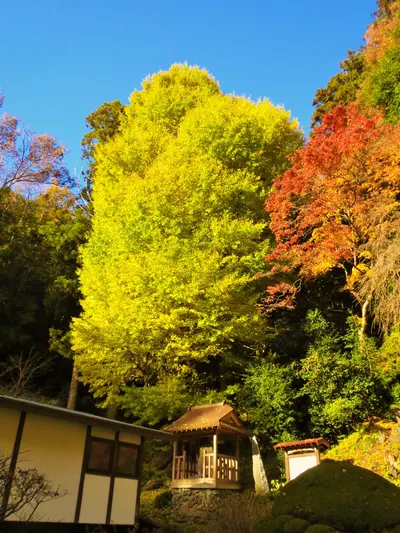
- Serene Japanese-style gardens and 300 cherry trees of 40 varieties.
When to go
- Late April to early May for fluffy double-flowered Shiogama zakura cherry blossoms.
- Spring for illuminated cherry blossoms after dark.
- Hote Matsuri festival for 1-ton mikoshi carried down steps.
- Summertime Minato Matsuri for mikoshi on boats in Matsushima Bay.
Getting there
- Located on a hill overlooking the city of Shiogama and Matsushima Bay.
In detail
Shiogama Jinja Shrine is thought to have been founded before the Nara period (710–794), although the exact year is unknown. Shiwahiko Jinja Shrine was moved to its present location more recently in 1874. Today, these two Shinto shrines share the same grounds and some festivals.
Shiogama Jinja venerates three deities. Shiotsuchi Oji no Kami, who protects the ocean and taught people the secret of salt-making, is enshrined in the detached sanctuary (betsugu). The warrior deities Takemikazuchi no Kami and Futsunushi no Kami are respectively enshrined in the left and right sanctuaries (sagu and ugu). The main shrine buildings, from 1704, are constructed in the nagare-zukuri style, which has an asymmetrical sloping roof, longer at the front than at the back.
Shiwahiko Jinja is dedicated to Shiwahiko no Kami, the god of agriculture, who is also the guardian deity of the Shiogama area. The lavish black- and vermillion-lacquered main shrine building was rebuilt in 1938.
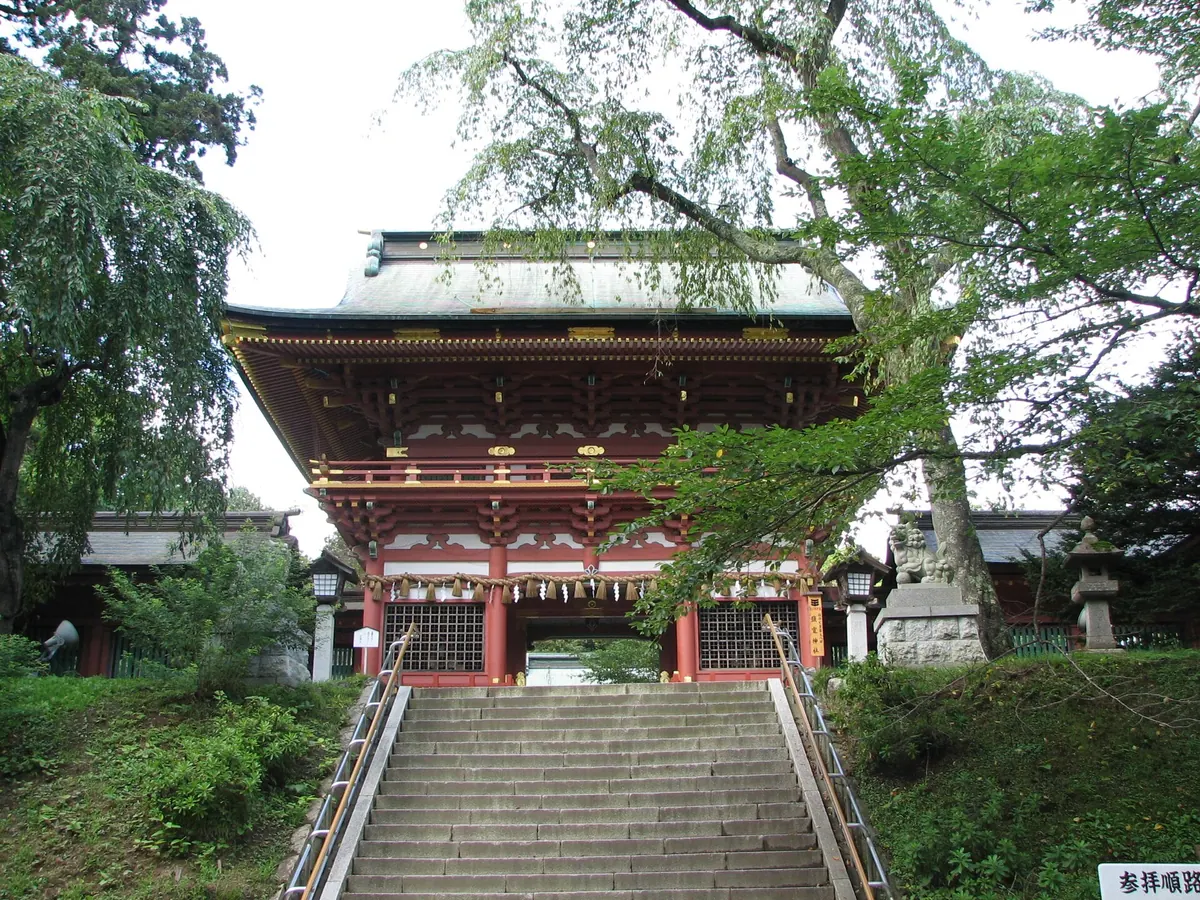
Visitors approach the shrines by climbing a 202-step stone stairway, lined with stone lanterns and flanked by a thick grove of cryptomeria (sugi) trees. The stairs end at the stately Zuishinmon Gate (erected in the 1700s), which leads into the main complex.
The shrine grounds cover around 30,000 square meters of a hill overlooking the city of Shiogama and the islands of Matsushima Bay. In addition to 14 shrine buildings designated Important Cultural Properties, the grounds include serene Japanese-style gardens and around 300 cherry trees of 40 different varieties, including many Shiogama zakura, which are designated Natural Monuments of Japan. The fluffy blooms of these double-flowered cherry trees appear in late April to early May.
The shrines celebrate several festivals throughout the year. In the spring, the cherry blossoms are illuminated after dark, and during the Hote Matsuri festival, 16 men carry a 1-ton mikoshi portable shrine down the 202 steep stone steps. For the summertime Minato Matsuri (Port Festival), mikoshi for both shrines are loaded onto elaborate dragon- and phoenix-shaped boats and then floated around Matsushima Bay. During the Hatsuhohiki Harvest Festival, held on November 23, the plaza in front of Shiogama Jinja is filled with barrels of rice, huge fish, and vegetables, in gratitude for a bountiful catch and harvest. In early February, the shrines host a massive Setsubun Festival, with the bean-throwing custom (mamemaki), said to drive away evil, that marks the arrival of spring.
Text: 観光庁 地域観光資源の多言語解説文データベース. Reproduced unchanged. The notes above were written from that text by Japan Gems.
Where it is
宮城県塩竈市一森山1番1号 Open in Google Maps
この施設の関係者の方へ
このページは公開情報をもとに Japan Gems が作成し、訪日外国人向けに英語で掲載しています。 写真や情報の追加・修正を承っています。お店の写真に差し替えることもできます。
このページの情報を更新する