
Shōji-ji Temple
勝持寺
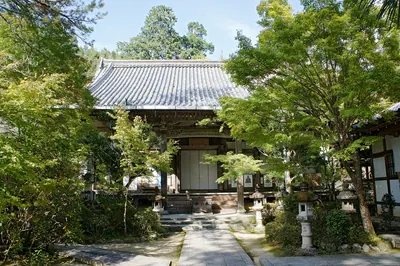
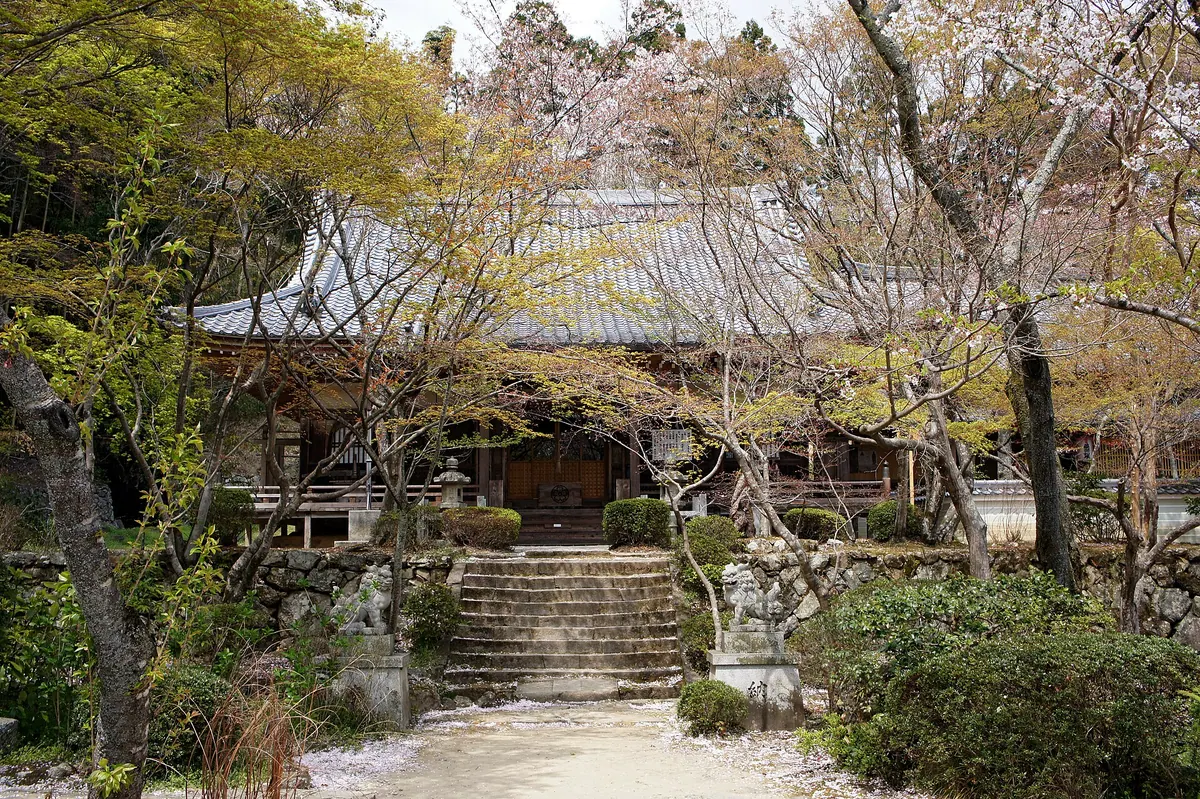
This temple offers natural scenery, seasonal colors, and Buddhist statues, including a famous cherry tree.
What it is
- Temple founded in 679 by ascetic En no Gyoja.
- Rebuilt in 791 by Saicho, founder of Tendai Buddhism.
- Known as the “temple of flowers” due to cherry trees.
- Houses a diverse collection of well-preserved Buddhist statuary.
What to see
- 100 cherry trees, including Saigyo-zakura, a famous descendant.
- Many maple trees creating verdant summer and brilliant autumn colors.
- Ninth-century Niomon Gate, 500 meters southeast of the temple.
- Rurikoden Hall with 19 statues, including Yakushi Buddha.
- Amidado Hall dedicated to Amida Buddha.
- Fudodo Hall with a stone sculpture of Fudo Myo-o.
When to go
- Spring for white and light pink cherry blossoms.
- Summer for verdant landscape from maple trees.
- Autumn for brilliant colors from maple trees.
- Winter for a contemplative scene, sometimes snow-covered.
In detail
The location of Shojiji Temple near the base of Mt. Oshio makes it a popular destination to enjoy the natural scenery and changing seasons. In spring, the 100 cherry trees on the grounds bloom white and light pink. One of them is especially famous as the third-generation descendant of a tree planted by the renowned poet-monk Saigyo Hoshi (1118–1190). This cherry tree is known as Saigyo-zakura and is the reason why Shojiji is often referred to as the “temple of flowers.” The many maples in the precincts and on the surrounding mountain slopes create a verdant landscape in summer and fill the area with brilliant colors in autumn. Winter’s subdued palette makes for a contemplative scene, and at times, snow blankets the grounds in pure white. Shojiji also houses a diverse collection of well-preserved Buddhist statuary. Please note that the temple is closed in February.
Brief History
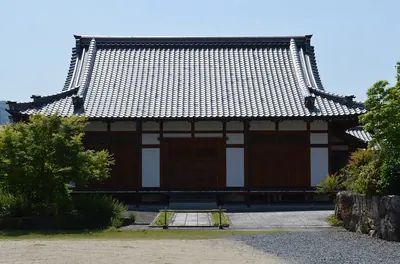
According to temple legend, Shojiji was originally founded in 679 by the ascetic En no Gyoja (634–701?) and rebuilt on a larger scale in 791 by Saicho (Dengyo Daishi, 767–822), the founder of Tendai Buddhism in Japan. In 838, the temple grounds encompassed 49 halls, pagodas, and other buildings. However, like much of Kyoto, Shojiji was almost completely destroyed during the Onin War (1467–1477), a shogunate succession conflict. The only structure that survived is the ninth-century Niomon Gate, which stands about 500 meters to the southeast, marking the beginning of the main approach to the temple. Most of the current buildings date to the late sixteenth century.
Rurikoden Hall
Nineteen statues of different styles, sizes, and historical periods are enshrined in the Rurikoden Hall. The temple’s principal object of worship is a sculpture of Yakushi Buddha, the deity of healing, portrayed with the right hand reaching for the medicine jar held in the left palm. In front of the pedestal is a much smaller figure of the same Buddha encased in glass, said to have been discovered inside the larger statue.
On both sides of the main object of worship are sculptures of the Twelve Divine Generals, each with one of the twelve animals of the Chinese zodiac on the head. Flanking the Yakushi Buddha images are statues of Gakko and Nikko, the bodhisattvas of moonlight and sunlight, respectively. Gakko Bodhisattva holds a white disc that symbolizes the moon, and Nikko Bodhisattva holds a red disc representing the sun. Together, they serve as attendants to Yakushi Buddha.
In the far corners of the hall are two 3-meter-tall sculptures of Nio guardians, which were originally located in the Niomon Gate, protecting the entrance to the temple. To the front at the left side of the hall is a seated statue of Saigyo Hoshi, a warrior and poet who became a monk at Shojiji. The Nio statues and both Yakushi Buddha statues are nationally designated Important Cultural Properties.
A wooden plaque commissioned by Emperor Daigo (885–930) in 927 is displayed at ground level. It is carved with the temple’s name based on characters written by the eminent calligrapher Ono no Michikaze (894–966). A frog figurine next to the plaque is a reference to the tale in which Michikaze rediscovered the importance of perseverance by watching a frog repeatedly try to climb a willow branch. To the right of the plaque is a letter of authentication by Konoe Iehiro (1667–1736), a high-ranking court noble, calligrapher, tea master, and scholar.
Amidado and Fudodo Halls
The Amidado Hall next to the Rurikoden is devoted to the worship of Amida, the Buddha of Infinite Light and Life. At the top of a stone stairway is the Fudodo Hall dedicated to Fudo Myo-o, the Immovable Wisdom King, a fierce-looking deity believed to protect and guide the faithful with stern love. At Shojiji, Fudo Myo-o is also associated with healing, especially eye-related ailments. At the back of the hall is a stone sculpture of Fudo Myo-o enshrined in a small niche in the retaining wall.
Text: 観光庁 地域観光資源の多言語解説文データベース. Reproduced unchanged. The notes above were written from that text by Japan Gems.
Where it is
京都市西京区大原野南春日町1194 Open in Google Maps
この施設の関係者の方へ
このページは公開情報をもとに Japan Gems が作成し、訪日外国人向けに英語で掲載しています。 写真や情報の追加・修正を承っています。お店の写真に差し替えることもできます。
このページの情報を更新する