
Takasago Shrine
高砂神社
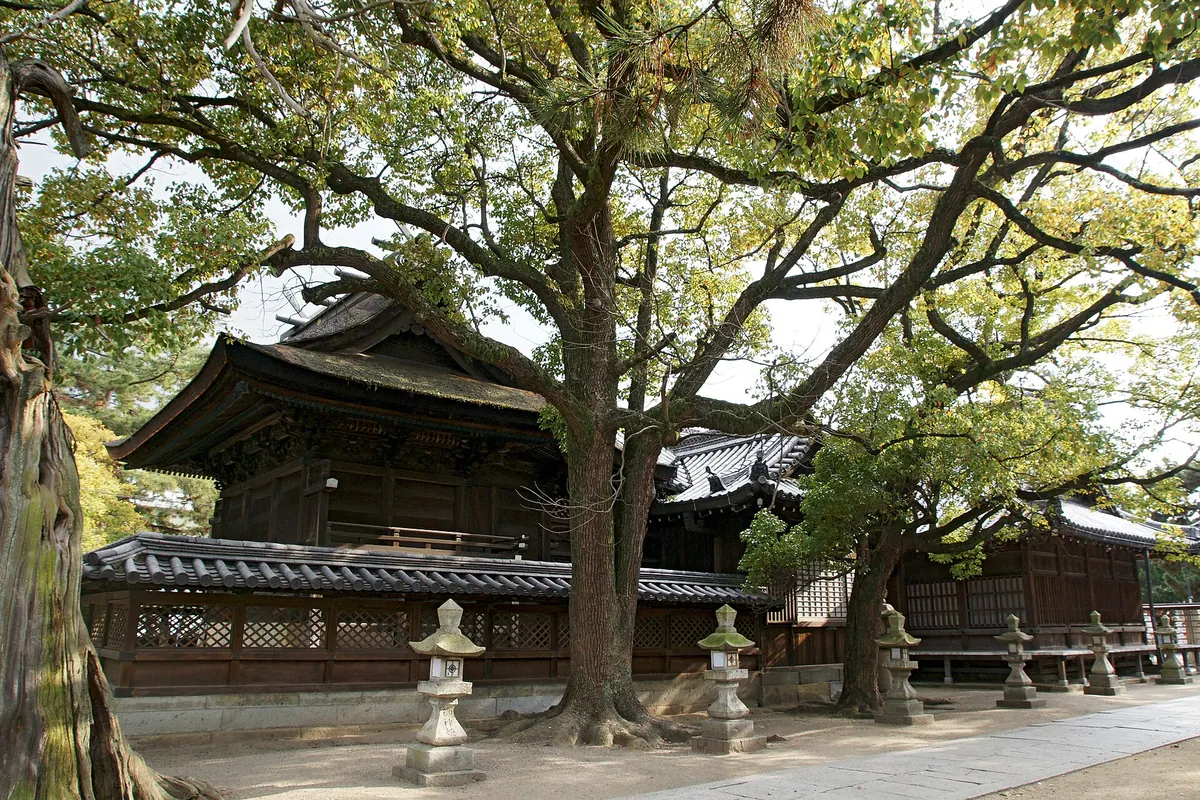
Takasago Shrine offers a historic lighthouse, a main shrine with unique roof tiles, and a Noh stage.
What it is
- Shrine, symbol of Takasago, founded about 1,700 years ago.
- Dedicated to conjugal harmony and safe passage.
- Home to the original setting of the Noh play Takasago.
What to see
- Stone lantern from 1799, originally a lighthouse.
- Main shrine building with fierce-faced roof tiles.
- Large Noh stage built in 2013 by local people.
- Pine tree painted on Noh stage with three hidden hearts.
- Venerable 'Aioi no Matsu' (twin pines) symbolizing harmony.
- Statue of Kuraku Matsuemon, shipping innovator.
When to go
- Any time to pray for safe travel or a happy marriage.
In detail
All-night Light
This stone lantern was made in 1799. It originally faced the shore of the Harima Sea, in the eastern part of the Seto Inland Sea, serving as a lighthouse for passing vessels. The town thus developed as a popular port, an important trading post, and a relay station for the region. The all-night light, later relocated, now stands within the grounds of Takasago Shrine, and people pray there for safe passage on their travels.
Main Shrine
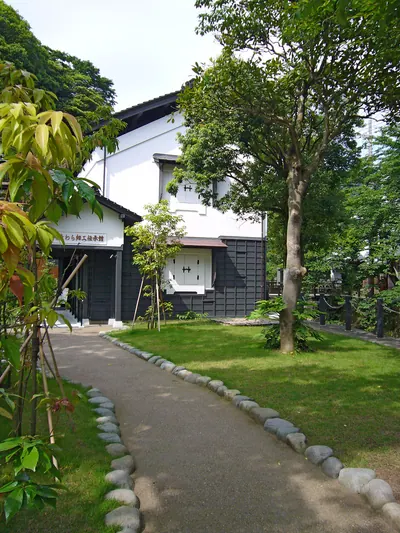
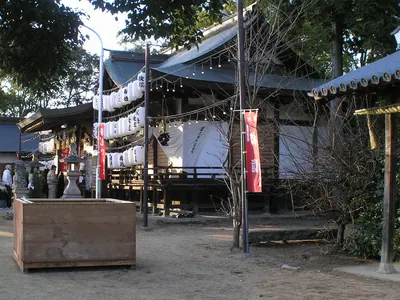
The shrine, a symbol of Takasago, was first built near the shore about 1,700 years ago. It is thought that the sandy beaches and pine trees made the location attractive. Later, the shrine was relocated in order to allow a castle to be built to defend the city, and eventually was moved again to its current position. The fierce-faced tiles on the roof of the main building are believed to scare away bad spirits, protect people at sea, and even bring good luck to those in love.
Noh Stage
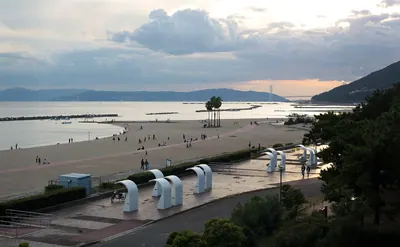
This Noh stage was built in 2013 as the location is thought to be the original setting of the Noh play Takasago. The play was written by actor and playwright Zeami Motokiyo (1363–1443), who is considered the foremost composer of the traditional Japanese performing art of Noh, a UNESCO Intangible Cultural Heritage. During the play, a singer chants: “From Takasago, sailing over the bay, sailing over the bay, the moon goes out with the tide, past the silhouette of Awaji Island, far over the sea to Naruo, arriving at Suminoe, arriving at Suminoe.” The chant, which refers to several places in present-day Hyogo and Osaka Prefectures, evokes images associated with harmony between husband and wife.
The large Noh stage was built by local people to celebrate the play, as well as to highlight the town’s connection to enduring conjugal harmony. The pine tree painted on the stage contains images of three hearts. It is said that if visitors find all three hearts, they will be blessed with a long and happy marriage.
Twin Pines
This venerable pine tree, known as “Aioi no Matsu” (twin pines), consists of two pines growing out of the same roots. The red pine is considered female, while the black pine is considered male. The tree is depicted in the play Takasago and symbolizes conjugal harmony. The Takasago chant from the play is often performed at traditional wedding ceremonies in Japan.
Statue of Kuraku Matsuemon
Takasago-born Kuraku Matsuemon (1743–1812) ran a shipping business and carried out civil engineering works. He had a huge impact on Japan’s shipping industry through his invention of what became known as Matsuemon canvas. This strong and flexible material was used for ships’ sails throughout the country.
Matsuemon’s engineering work also helped improve harbor docking facilities, including in Takasago. Other ports that benefited include Tomonoura in Hiroshima and two ports in Hokkaido: Etorofu (Iturup) Island and Hakodate.
Text: 観光庁 地域観光資源の多言語解説文データベース. Reproduced unchanged. The notes above were written from that text by Japan Gems.
Where it is
兵庫県高砂市高砂町東宮町190 Open in Google Maps
この施設の関係者の方へ
このページは公開情報をもとに Japan Gems が作成し、訪日外国人向けに英語で掲載しています。 写真や情報の追加・修正を承っています。お店の写真に差し替えることもできます。
このページの情報を更新する