
Tennei-ji Temple
天寧寺
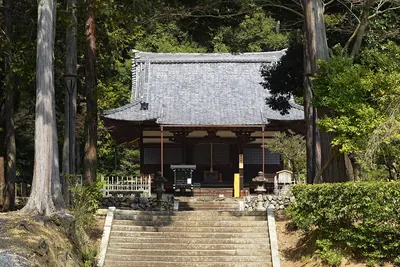
Tenneiji Temple, founded by Zen master Guchu Shukyu, has a notable dragon ceiling painting and ancient silk paintings.
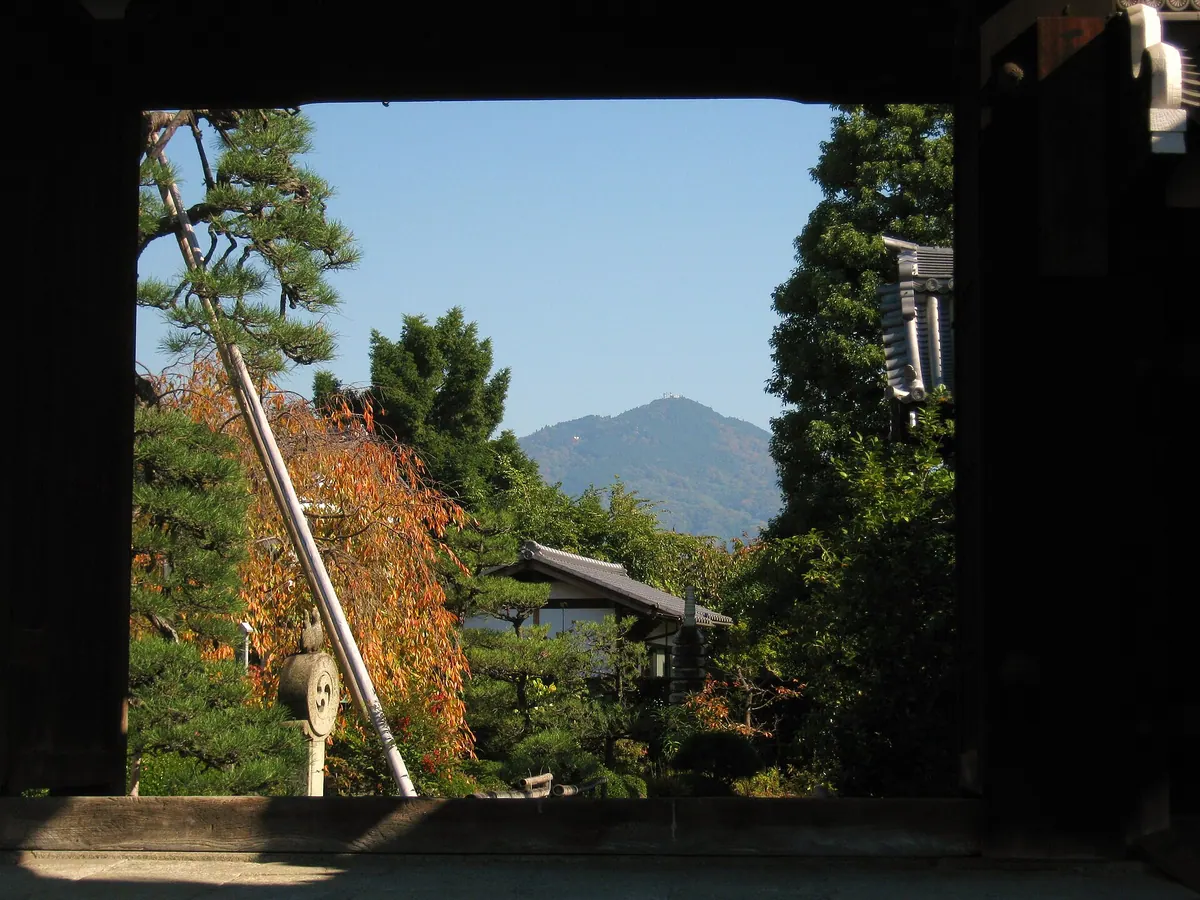
What it is
- Tennei-ji Temple of the Rinzai school of Buddhism.
- Founded by Zen master Guchu Shukyu.
- Guchu Shukyu became first head priest in 1365.
What to see
- Kaisando Hall enshrines the founders.
- Yakushido Hall dedicated to Buddha Yakushi.
- Yakushido Hall has a huge ceiling painting of a dragon.
- Dragon painting created by artist Hara Zaichu.
In detail
Tenneiji Temple of the Rinzai school of Buddhism was founded by the Zen master Guchu Shukyu (1323–1409). Guchu began his training as a monk in Kyoto at the age of 13 and traveled to China at the age of 19, where he studied under Shikkyu Keiryo (Jixiu Qiliao; 1269–1351). He became the first head priest of Tenneiji in 1365.
The two oldest buildings at Tenneiji are Kaisando Hall, which enshrines the founders, and Yakushido Hall, dedicated to the Buddha Yakushi, buddha of medicine and healing. Both were rebuilt after a 1777 fire. Yakushido Hall has a huge ceiling painting of a dragon, which can be associated with water and protection against fire. The temple commissioned the artist Hara Zaichu (1750–1837), the first in a family of renowned painters. He stayed at the temple for many nights, but initially painted nothing, as he was dissatisfied with the water available for mixing his pigments, and refused to work. Eventually, after finding water that met his high standards, he finished the painting quickly. It has survived over 250 years without any major restoration work, and was spared by a 1961 fire, which destroyed most of the other temple buildings.
The temple owns silk paintings of the 16 Arhats, disciples of Shakyamuni Buddha who had attained enlightenment, believed to be from the fourteenth century. During a raid on nearby Izaki Castle in the sixteenth century, the paintings were smuggled out in the dark of night and brought here for safe keeping. Although the paintings are not on public display, the temple has managed to preserve them, and they have been designated Important Cultural Properties.
Text: 観光庁 地域観光資源の多言語解説文データベース. Reproduced unchanged. The notes above were written from that text by Japan Gems.
Where it is
京都府京都市北区寺町鞍馬口下ル天寧寺門前町301 Open in Google Maps
この施設の関係者の方へ
このページは公開情報をもとに Japan Gems が作成し、訪日外国人向けに英語で掲載しています。 写真や情報の追加・修正を承っています。お店の写真に差し替えることもできます。
このページの情報を更新する