
Hōkō-ji Temple
方広寺
Visit Hōkō-ji Temple to see a bronze bell central to a major 17th-century political conflict.
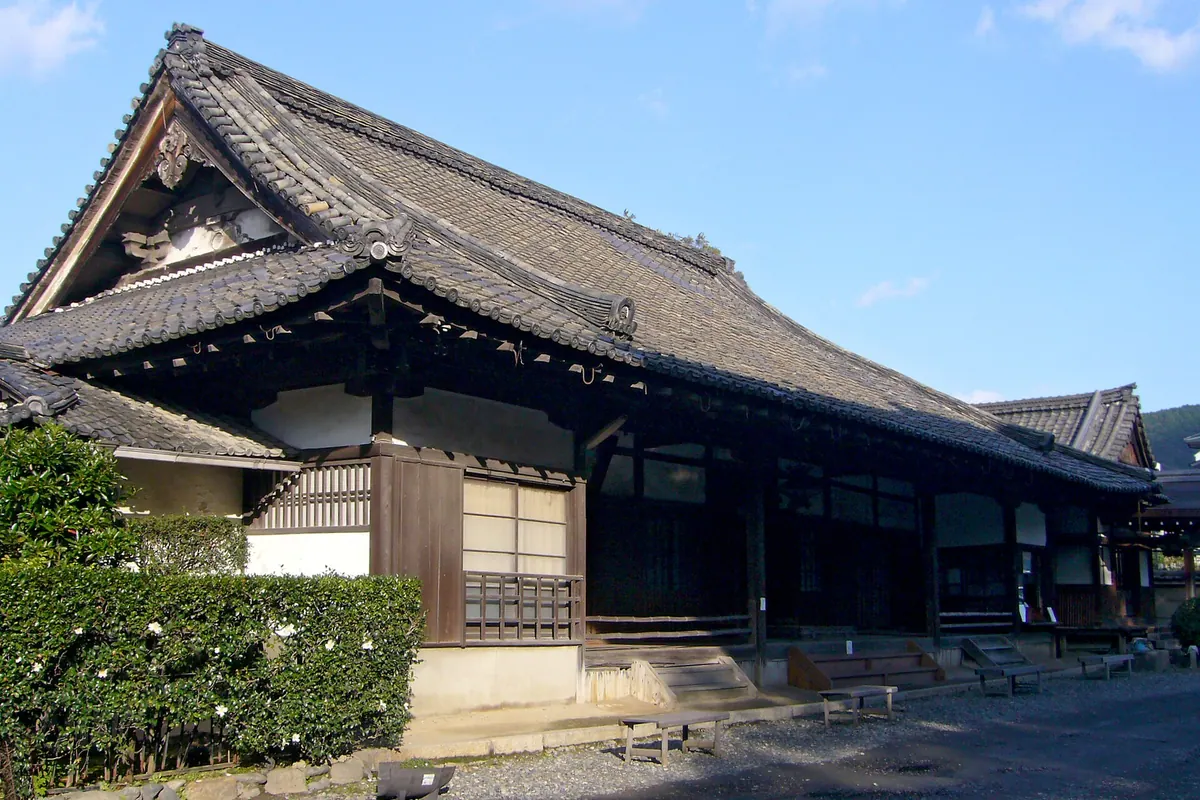
What it is
- Temple of Hōkōji.
- Houses a significant historical bronze bell.
- Bell was cast in 1614.
What to see
- Original bronze bell from 1614.
- Inscription on the bell that enraged Tokugawa Ieyasu.
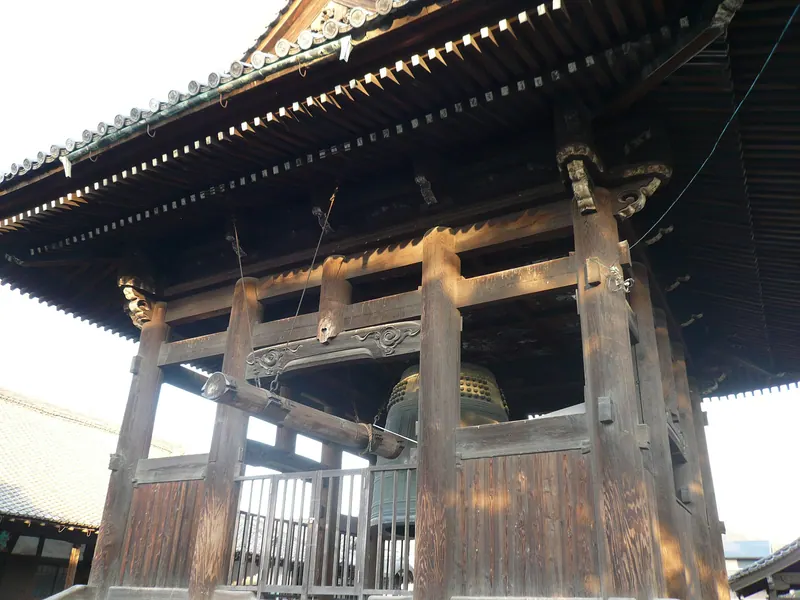
- Meiji era belfry housing the bell.
- Lavishly illustrated ceiling panels in the belfry.
- Illustrations of karyōbinga, mystical Buddhist beings.
In detail
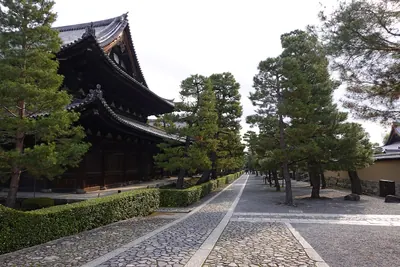
The bronze bell at the temple of Hōkōji hangs unassumingly amid relatively simple surroundings. The simplicity of the scene might fail to convey the importance of this bell––one of the most significant historical objects of Japan’s early modern period. It can be credited for fanning the flames of a political row that led to the demise of the Toyotomi house, the warrior family that dominated Japanese politics at the end of the sixteenth century.
In 1610, in the midst of a project to rebuild the grand Buddha and surrounding temple that his father had built, Toyotomi Hideyori started a campaign to finance the recreation of a great bronze bell for the temple. Casting was completed in 1614, but the dedication ceremony was abruptly cancelled by Tokugawa Ieyasu, who had effectively wrested control of the country from the young Hideyori and his supporters in 1603. Ieyasu was insulted by the inscription on the bell and used that as a pretext for vilifying the Toyotomi house. The characters for Ieyasu’s name were included in an inscription on the bell in a way that divided them into separate sections. These characters are the second and fourth in the phrase Kokka Anko, “Security and Peace in the Nation.” Ieyasu claimed that with this separation, his name had been “dismembered” ––an insult that fueled a conflict that finally ended with the Toyotomi family being forced into obscurity. The Tokugawa continued to rule unchallenged for the following two and a half centuries.
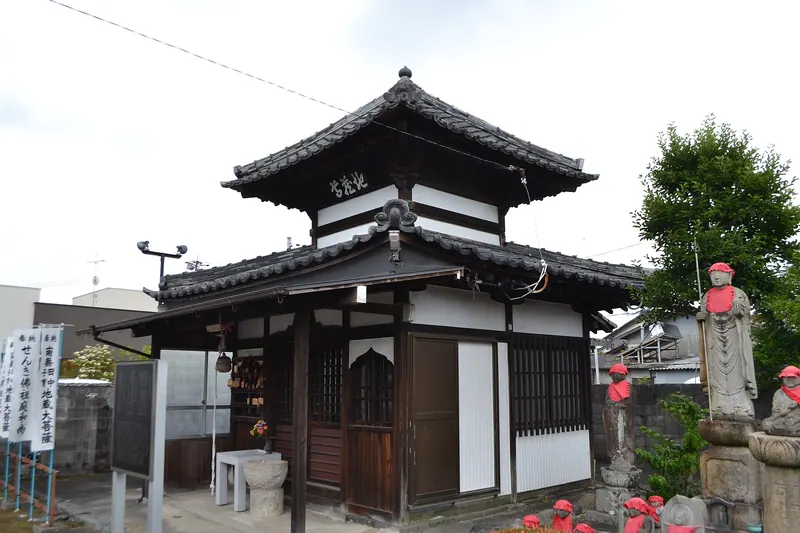
The bronze bell that hangs at Hōkōji today is the original one that was cast in 1614. The inscription that reportedly enraged Ieyasu is still clearly visible. It hangs in a belfry that was built in the Meiji era (1868–1912). The ceiling panels of the beautifully preserved belfry are lavishly illustrated with images of karyōbinga, mystical beings in Buddhism with the head of a human and the body of a bird, and who are said to reside in the Western Pure Land. Although karyōbinga appear on the ceilings of several important temples in Kyoto, nowhere are the illustrations so easily accessible to the public.
Text: 観光庁 地域観光資源の多言語解説文データベース. Reproduced unchanged. The notes above were written from that text by Japan Gems.
More photos
Where it is
京都府京都市東山区大和大路通七条上ル茶屋町527-2 Open in Google Maps
この施設の関係者の方へ
このページは公開情報をもとに Japan Gems が作成し、訪日外国人向けに英語で掲載しています。 写真や情報の追加・修正を承っています。お店の写真に差し替えることもできます。
このページの情報を更新する