
Kaijūsen-ji Temple
海住山寺
This temple offers views of the valley and a National Treasure Five-storied Pagoda.
What it is
- Temple on Mount Sanjoyama, founded in 735.
- Built to protect the capital from evil spirits.
- Named after a mythical pure land of Kannon.
What to see
- View of the lower valley and surrounding sites.
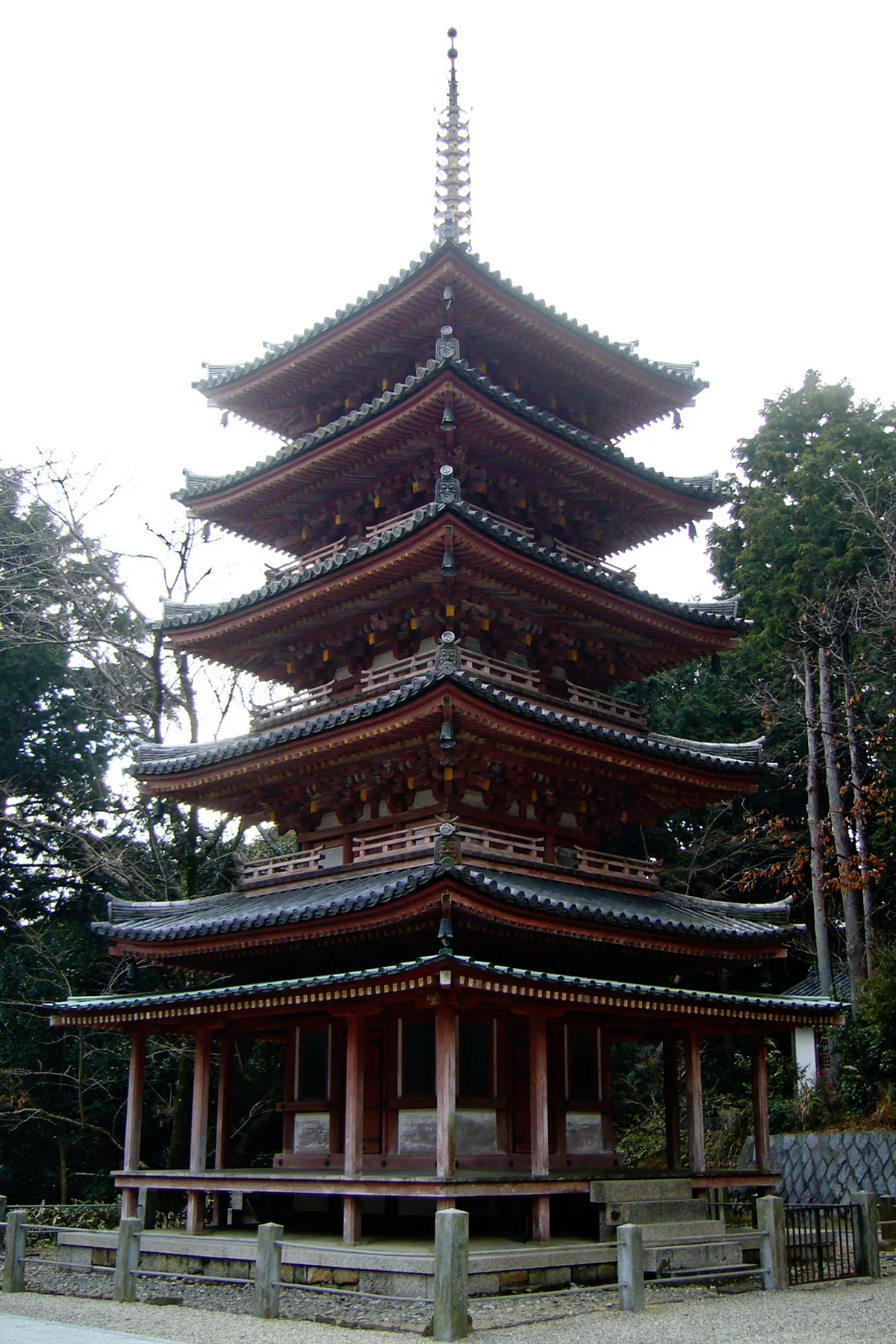
- Five-storied Pagoda, a National Treasure.
- Monjudo Hall, an Important Cultural Property.
- Two Standing Eleven-Headed Kannon statues.
- Main hall and sanctuary with Kannon statues.
In detail
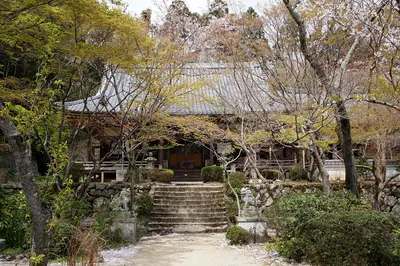
Kaijusenji Temple is located half-way up Mount Sanjoyama, overlooking the city below with a view that takes in renowned sites like Mikanohara (an area along the river in present-day Kizugawa City), the Kunikyo Ruins (an old imperial palace), and the Kizu River (the heart of the Minami Yamashiro area). In 740, the Japanese emperor ordered the national capital to be moved to Mikanohara. According to the temple legend, Kaijusenji was built northeast of the city center, a direction traditionally occupied by the kimon, or demon gate. The kimon is located in the northeast because it is believed that this is the direction from which demons come and go, and thus is a source of bad luck. Kaijusenji Temple is believed to have been placed there to pray for the safe construction of the new capital and of Todaiji Temple’s great Buddha statue. Today, however, Kaijusenji Temple is known for its view of the lower valley as well as its Five-storied Pagoda, which is a National Treasure.
History
In 740, Emperor Shomu (701–756) moved the capital to the Mikanohara area. Kunikyo, as this capital was called, functioned as the center of the state until 744. In order for the capital to be protected from evil spirits, many temples were built in this area. Kaijusenji is one such temple, built on the slopes of Mount Sanjoyama. According to Onmyodo (The Way of Yin and Yang), a traditional Japanese esoteric cosmology based on philosophies introduced from China in the sixth century, the northeast is an unlucky direction associated with misfortune known as kimon, or demon gate.
Kaijusenji Temple is thought to have been placed in the northeast in 735 to counteract the kimon and safeguard the area. In 1137, the original structures of Kaijusenji Temple were lost to fire, but the temple was reconstructed seventy years later in 1208 by an influential Buddhist monk named Jokei (1155–1213). At its most prosperous, the temple boasted over fifty-eight individual structures. The characters in the name Kaijusenji Temple mean sea (kai), dwell (ju), and mountain temple (senji), referring to the mythical pure land inhabited by Kannon (the Buddhist avatar of mercy), which is said to lie far off in the southern seas.
Treasures and Artifacts
Kaijusenji Temple also has several important works of art and cultural treasures. Among Kaijusenji Temple’s structures, its five-storied pagoda is a designated National Treasure, and its Monjudo Hall is an Important Cultural Property. They were both originally constructed in the Kamakura period (1185–1333). The Standing Four Heavenly Kings (Shitenno Ryuzo) statues from the same period used to be enshrined in the pagoda but are now entrusted to the Nara National Museum. The main hall and the sanctuary both enshrine consecrated Buddhist statues of Kannon, the beloved Buddhist avatar of compassion. These two Standing Eleven-Headed Kannon are thought to date back even earlier, to the Heian period (794–1185), and are Important Cultural Properties.
Text: 観光庁 地域観光資源の多言語解説文データベース. Reproduced unchanged. The notes above were written from that text by Japan Gems.
Where it is
京都府木津川市加茂町例幣海住山20 Open in Google Maps
この施設の関係者の方へ
このページは公開情報をもとに Japan Gems が作成し、訪日外国人向けに英語で掲載しています。 写真や情報の追加・修正を承っています。お店の写真に差し替えることもできます。
このページの情報を更新する