
Kimpusen-ji Temple
金峯山寺
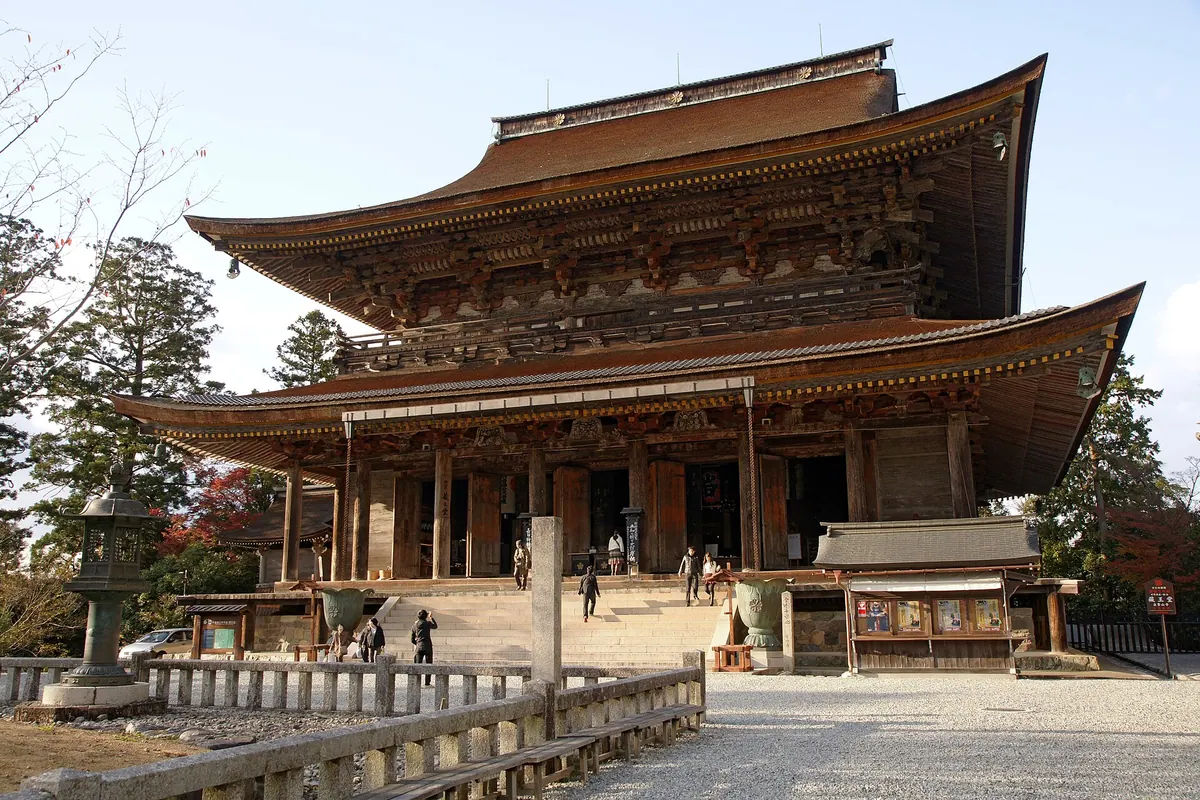
This seventh-century temple on Yoshinoyama is a UNESCO site and Shugendo base, known for its large wooden hall.
What it is
- Seventh-century temple on Yoshinoyama ridgeline.
- Head temple of Shugendo, a mountain worship religion.
- Believed founded by En no Gyoja, Shugendo founder.
- Part of a UNESCO World Heritage Site since 2004.
What to see
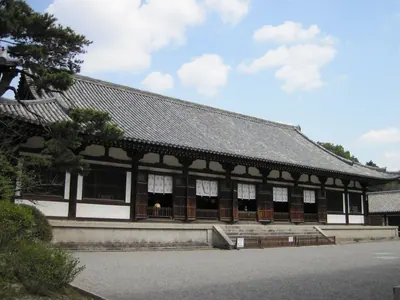
- Zaodo, the second-largest traditional wooden building in Japan.
- Three towering statues of Zao Gongen inside Zaodo.
- Statues are designated National Treasures, occasionally exhibited.
- Yamabushi (Shugendo practitioners) in traditional garb.
When to go
- Spring for cherry blossom viewing on Yoshinoyama.
- May to September for Shugendo season and practitioners.
In detail
This seventh-century temple is located high on the ridgeline of Yoshinoyama. For centuries, Kinpusenji has been the head temple of Shugendo, a form of mountain worship that combines ancient Japanese nature worship, Buddhist beliefs, and Taoism. The temple is believed to have been established by En no Gyoja (634–701), the founder of the religion. Kinpusenji is still an essential base for the many Shugendo practitioners who undertake the arduous trail to Mt. Sanjogatake.
The Zaodo, or main hall, is the second-largest traditional wooden building in Japan after the Great Buddha Hall of Todaiji Temple in Nara, and houses three towering statues of Zao Gongen, avatars of the Buddhist deities of the past, present, and future. These designated National Treasures are only occasionally exhibited to the public.
Yoshinoyama has been a famous area for cherry blossom viewing since the Heian period (794–1185), and spring is considered one of the best seasons to visit. In May, after the blossoms have fallen, the Shugendo season begins. From then until September, the temple reverberates with the bellows of conch-shell horns sounded by yamabushi (Shugendo practitioners) in traditional garb as they tackle their strenuous ascetic training on Mt. Sanjogatake.
Kinpusenji Temple is an important site within the “Sacred Sites and Pilgrimage Routes in the Kii Mountain Range,” designated as a UNESCO World Heritage Site in 2004.
Text: 観光庁 地域観光資源の多言語解説文データベース. Reproduced unchanged. The notes above were written from that text by Japan Gems.
Where it is
奈良県吉野郡吉野町大字吉野山2498 Open in Google Maps
この施設の関係者の方へ
このページは公開情報をもとに Japan Gems が作成し、訪日外国人向けに英語で掲載しています。 写真や情報の追加・修正を承っています。お店の写真に差し替えることもできます。
このページの情報を更新する