

12 Onsen in Ishikawa worth your time
Japan Gems
12 Onsen in Ishikawa, with what to see and how to get there.
Ishikawa has 12 onsen on Japan Gems. Below are the 12 we can tell you the most about — each one written up in English from Japanese sources, with what to see and how to get there. See all onsen in Ishikawa.
01
Wakura Onsen
ISHIKAWA · PLACE 和倉温泉
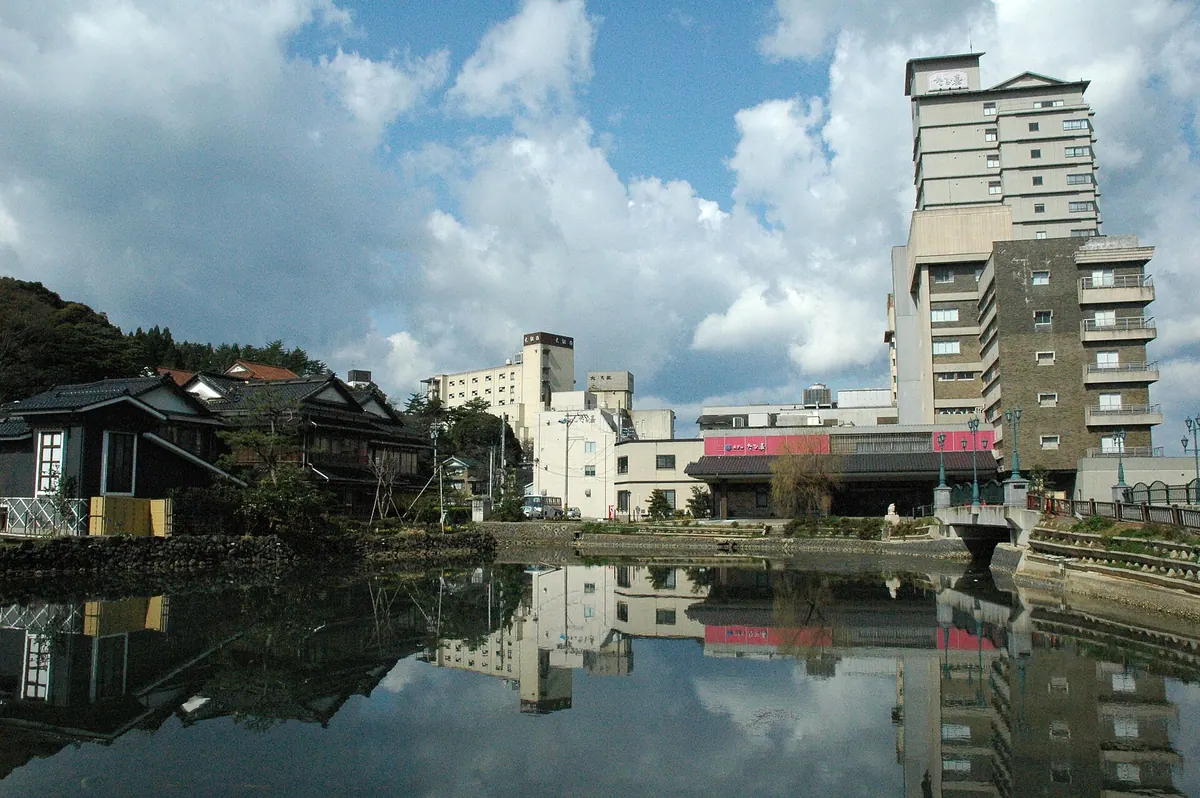
A historic saline hot spring resort on Nanao Bay known for high-temperature waters and traditional festivals.
What it is
- A hot spring resort located on the southern shore of Nanao Bay in Ishikawa Prefecture.
- A saline spring containing sodium and calcium chloride discovered by fishermen in the ocean.
- A historic area developed by the Maeda clan with water temperatures reaching 89.1 degrees Celsius.
- A resort currently recovering from damage caused by the 2024 Noto Peninsula earthquake.
What to see
- The public bathhouse Soyu which reopened for visitors in March 2024.
- Colorless and transparent hot spring water with a notably high salt content.
- Views of the surrounding Nanao Bay from the coastal resort area.
When to go
- April and August to witness the local fireworks displays over the water.
- June for the Noto Yosakoi Festival held within the resort area.
Getting there
- Access the resort via Wakura Onsen Station on the JR and Noto Railway lines.
- Official site
- www.wakura.or.jp
02
Chūgū Onsen
ISHIKAWA · PLACE 中宮温泉
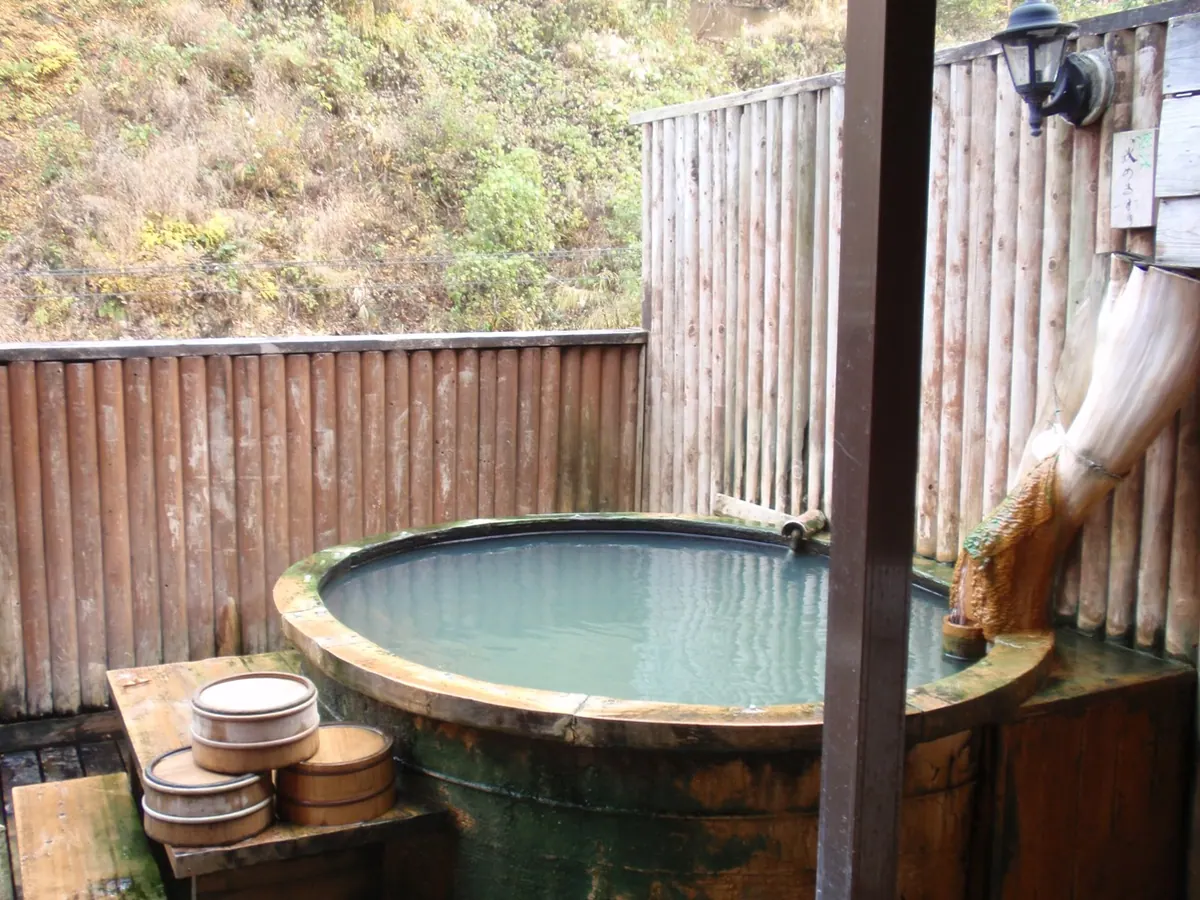
A historic national park hot spring resort featuring mineral-rich waters that turn yellow-brown when exposed to the air.
What it is
- A hot spring resort located within the boundaries of Hakusan National Park.
- Designated as a National Recreation Hot Spring Resort for its therapeutic qualities.
- Founded in 1574 with a bathing room credited to discovery by Taicho Daishi.
- The area features two inns and one public outdoor bath for visitors.
What to see
- Spring water that turns a distinct yellow-brown color upon oxidation.
- Natural scenery surrounding the hot spring source within the national park.
- Outdoor bathing facilities with water containing sodium chloride and hydrogen carbonate.
When to go
- Visit between May and November to avoid the winter closure period.
- The resort is closed from December to April due to heavy snow.
Getting there
- Take the Hakusan City community bus to the Chūgū Onsen stop.
- Official site
- www.chuguonsen.com
03
Shin Iwama Onsen
ISHIKAWA · PLACE 新岩間温泉
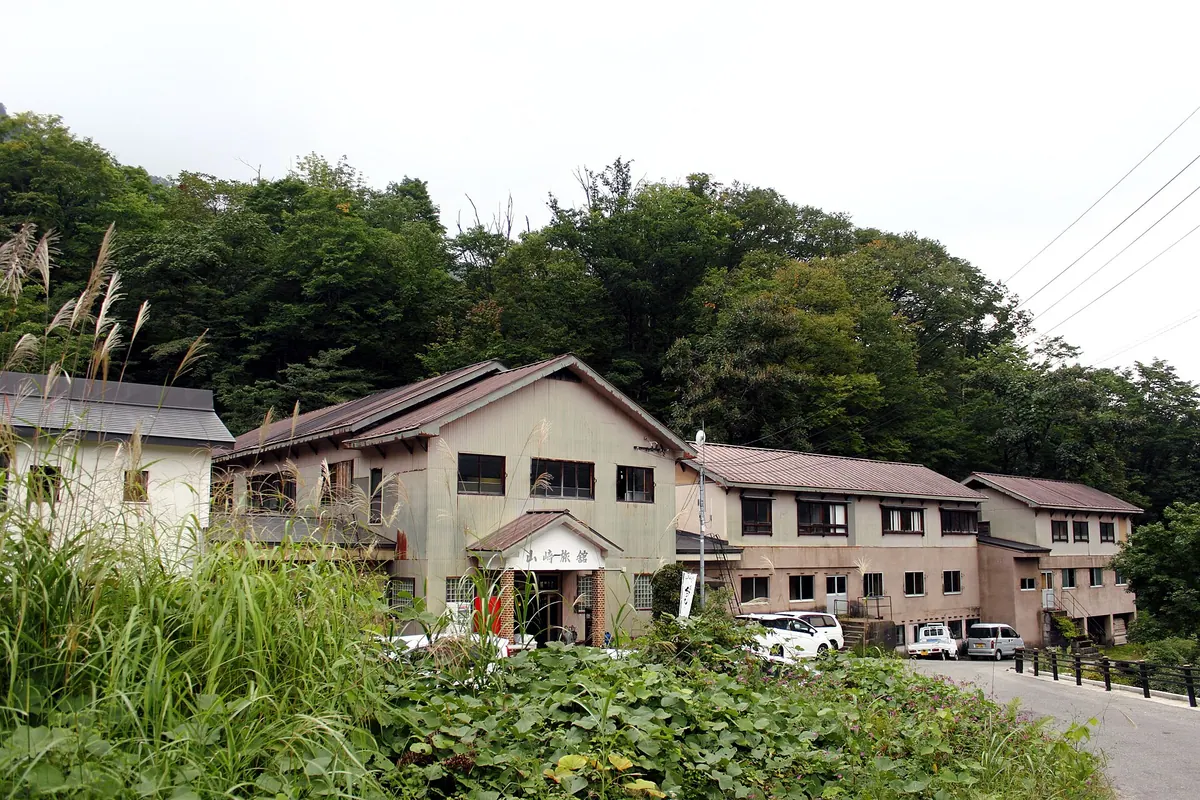
A secluded hot spring inn in Hakusan City offering mixed-gender open-air bathing with water piped from upstream sources.
What it is
- A hot spring facility part of the Hakusan Onsenkyo group founded in 1957.
- The site features Yamazaki Ryokan, the only inn currently operating at this location.
- A member of the Japan Association of Secluded Hot Springs that reopened after renovations in 2012.
- The facility provides hot spring water piped directly from the upstream Iwama Onsen source.
What to see
- A traditional open-air bath designed for mixed-gender use.
- The secluded mountain scenery surrounding the single inn at the end of the road.
When to go
- The facility is closed during the winter season from November to mid-May.
Getting there
- Take the Meguru bus to the Onsonguchi stop.
- Expect an eighty-minute walk from the nearest bus stop to the inn.
- Access by vehicle is via Ishikawa Prefectural Route 53.
04
Yamashiro Onsen
ISHIKAWA · PLACE 山代温泉
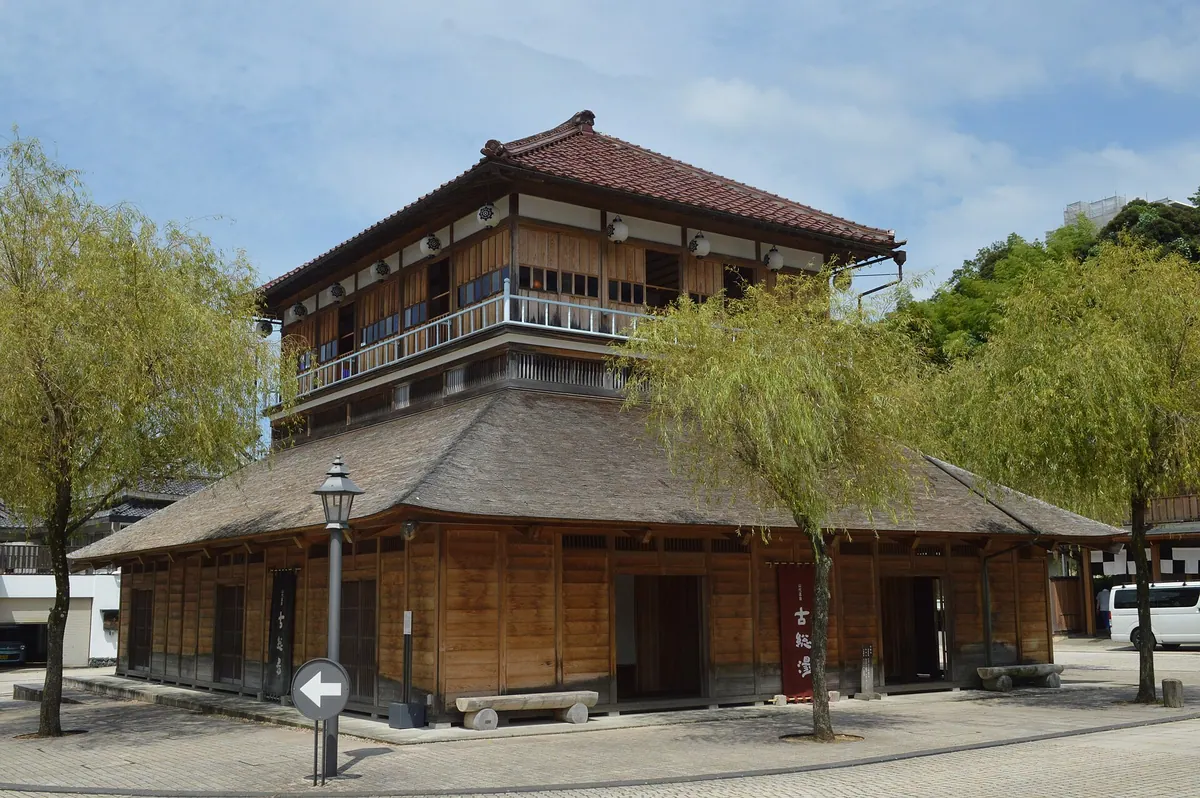
A historic hot spring town centered around communal bathhouses and the birthplace of Kutani-yaki pottery.
What it is
- A hot spring town in Ishikawa Prefecture part of the Kaga Onsenkyo group
- Legend says the monk Gyoki discovered the spring in the year 725
- The town layout centers around a communal bathhouse and historic Yunogawa streetscape
- A location known for its sodium, calcium, sulfate, and chloride spring waters
What to see
- The Soyu communal bathhouse located at the center of the town
- Kosoyu, a restored Meiji-era bathhouse that opened in 2010
- A stone pagoda at Onsenji Temple designated as a National Important Cultural Property
- The Kutani-yaki Kiln Ruins, a nationally designated historic site
- Iroha Soan villa where the artist Kitaoji Rosanjin once stayed
Getting there
- Accessible from Kaga Onsen Station by taking a local bus
- Approximately fifteen minutes by car from the Kaga Interchange
- Official site
- www.yamashiro-spa.or.jp
05
Yuwaku Onsen
ISHIKAWA · PLACE 湯涌温泉
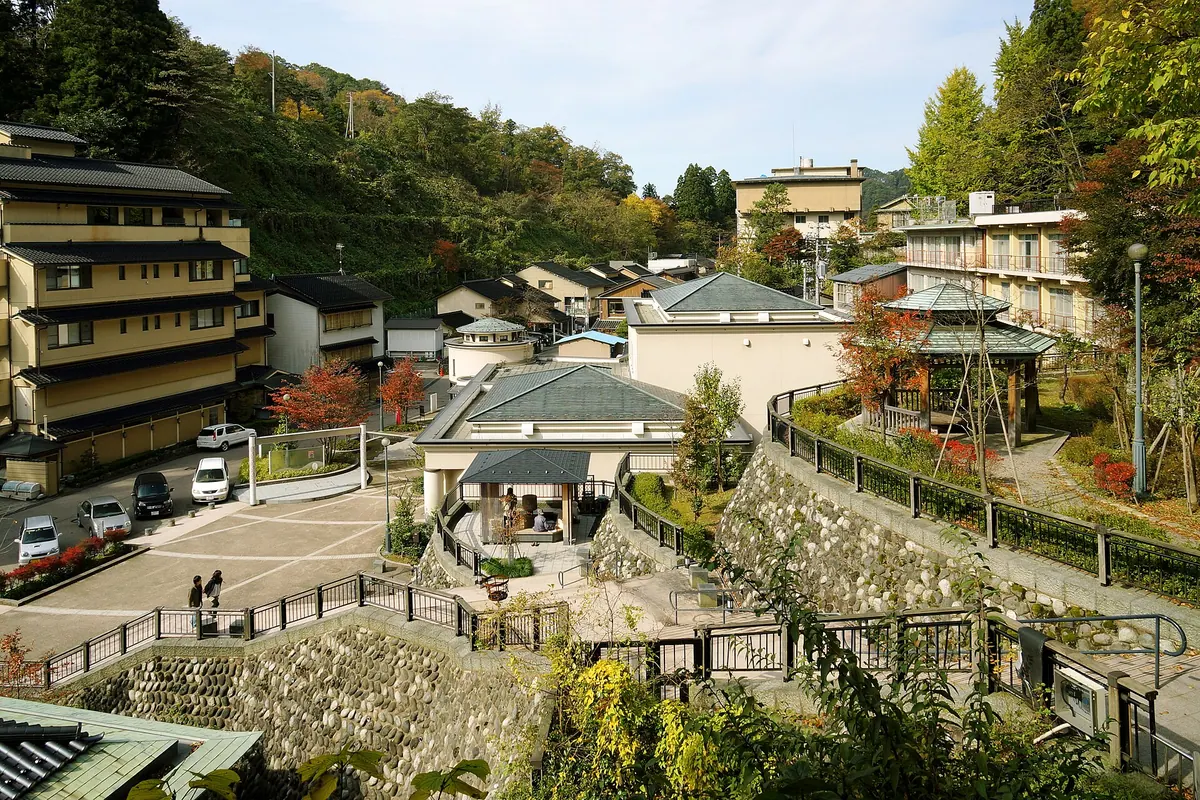
A historic hot spring resort in Kanazawa featuring traditional public baths, Edo-period architecture, and a museum dedicated to Takehisa Yumeji.
What it is
- A hot spring resort reportedly discovered in 718 within Kanazawa Onsen-kyo.
- One of four hot springs used by the Kaga clan lords during the Edo period.
- The area features four different spring sources containing sodium, calcium, chloride, and sulfate.
What to see
- The Soyu Shirasagi-no-Yu public bathhouse serves as a central bathing facility.
- Kanazawa Yuwaku Edo Village contains relocated buildings from the Edo period.
- The Kanazawa Yuwaku Yumeji-kan Museum commemorates the artist Takehisa Yumeji.
- Gyokusen Lake is an artificial lake situated at the deepest part of the resort.
When to go
- The Bonbori Festival is held every autumn.
Getting there
- Buses run directly from Kanazawa Station to the hot spring resort.
- Official site
- yuwaku.gr.jp
06
Yamanaka Onsen
ISHIKAWA · PLACE 山中温泉
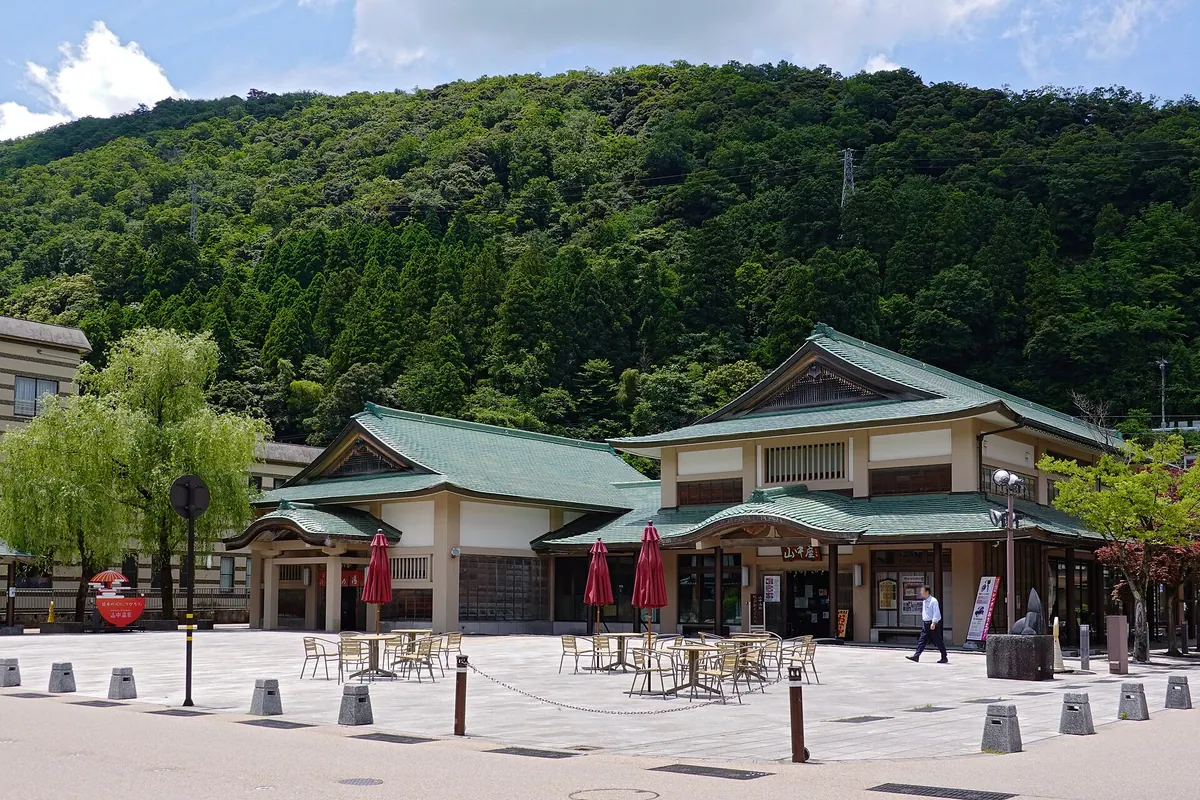
A historic hot spring resort in a scenic river valley, famous for its high-quality lacquerware and traditional public bathhouse.
What it is
- A historic hot spring resort located along the Daigo-ji River valley.
- Legend says the monk Gyoki discovered the sulfate spring water.
- Matsuo Basho named it one of the three finest springs in Japan.
- A production center for traditional Yamanaka lacquerware.
What to see
- Kiku-no-yu serves as the central public bathhouse for visitors.
- Kakusenkei Gorge is a designated national scenic spot for nature walks.
- The Ayatori Bridge was designed by a master of the Sogetsu school.
- Local artisans produce and display traditional Yamanaka lacquerware.
When to go
- The Yamanaka Shikki Festival takes place annually during Golden Week.
Getting there
- Buses connect the town to JR Kaga-Onsen Station in thirty minutes.
- Official site
- www.yamanaka-spa.or.jp
07
Katayamazu Onsen
ISHIKAWA · PLACE 片山津温泉
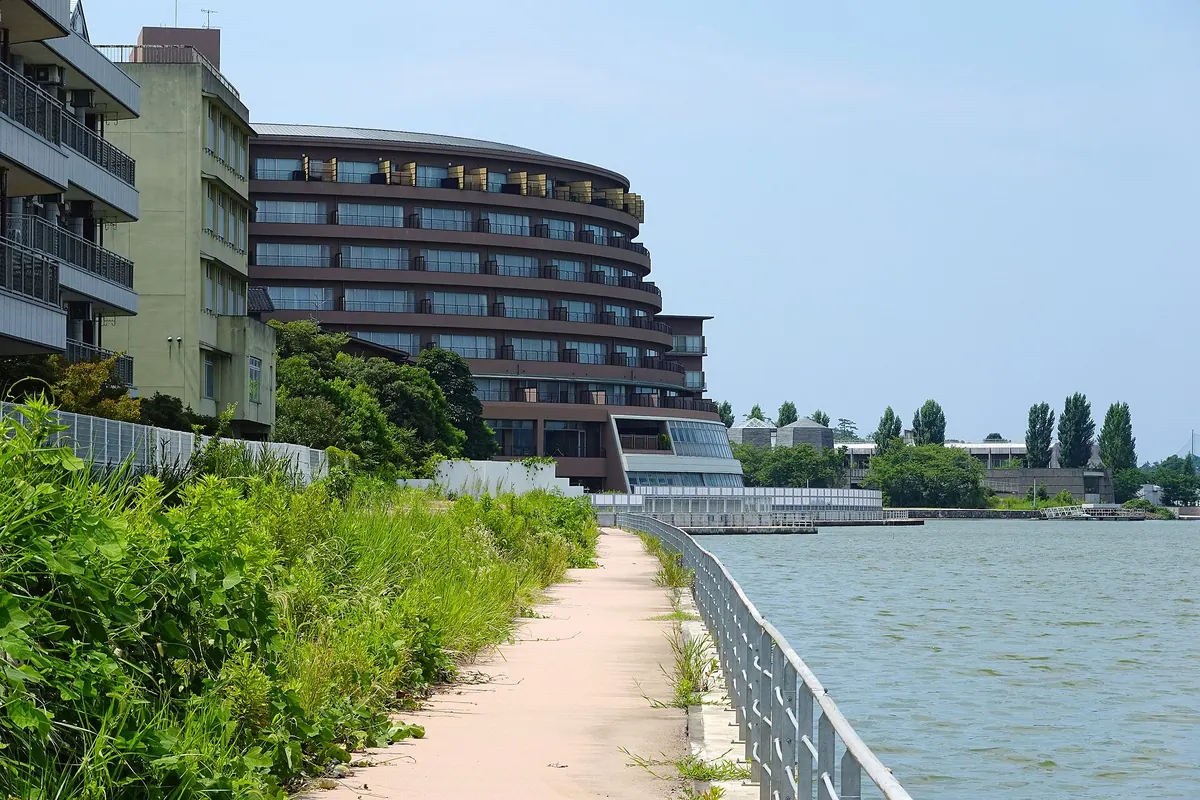
A lakeside hot spring resort in Kaga City featuring salt-rich waters and a modern public bathhouse overlooking the water.
What it is
- A hot spring resort on the shore of Lake Shibayama in Ishikawa Prefecture.
- Founded in 1653 by Lord Maeda Toshiaki and developed after land reclamation.
- Part of the Kaga Onsen group known for sodium and calcium chloride waters.
- The resort name is a registered regional collective trademark.
What to see
- The Soyu public bathhouse which offers views of the surrounding lake.
- The Nakaya Ukichiro Museum of Snow and Ice located within the town.
- Colorless and transparent hot spring water high in salt content.
- Views across the water of Lake Shibayama from the resort area.
Getting there
- The nearest major train stop is JR Kaga Onsen Station.
- Accessible by car via the Katayamazu Interchange on the Hokuriku Expressway.
- Official site
- www.katayamazu-spa.or.jp
08
Tatsunokuchi Onsen
ISHIKAWA · PLACE 辰口温泉
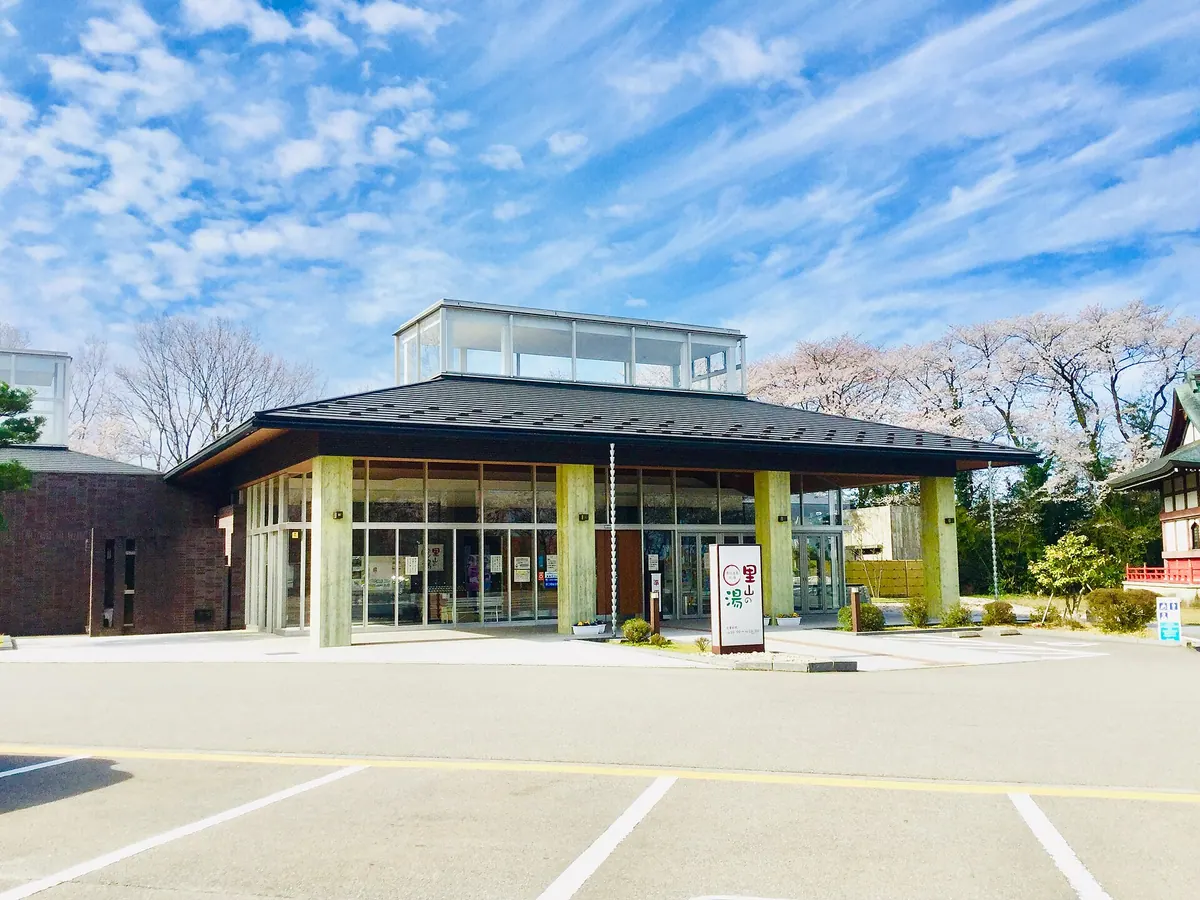
A historic hot spring area in Nomi City featuring traditional inns, public baths, and a free footbath for visitors.
What it is
- A hot spring area rediscovered by Haiya Gensuke in 1836.
- The site features three Japanese-style inns and a municipal public bath.
- The main spring source consists of simple thermal water.
- Satoyama no Yu public bath provides sodium chloride weak alkaline spring water.
What to see
- The Satoyama no Yu public bath which opened in 2009.
- A free footbath located at the base of the hill.
- The municipal public bath situated inside the Tatsunokuchi Welfare Hall.
Getting there
- Buses run to the hot spring from Kanazawa and Komatsu stations.
- A Nomi City bus connects the area to Nomi-neagari Station.
- The site is a 15-minute drive from the Komatsu Interchange.
- The site is a 20-minute drive from the Mikawa Interchange.
09
Jōmon Mawaki Onsen
ISHIKAWA · PLACE 縄文真脇温泉
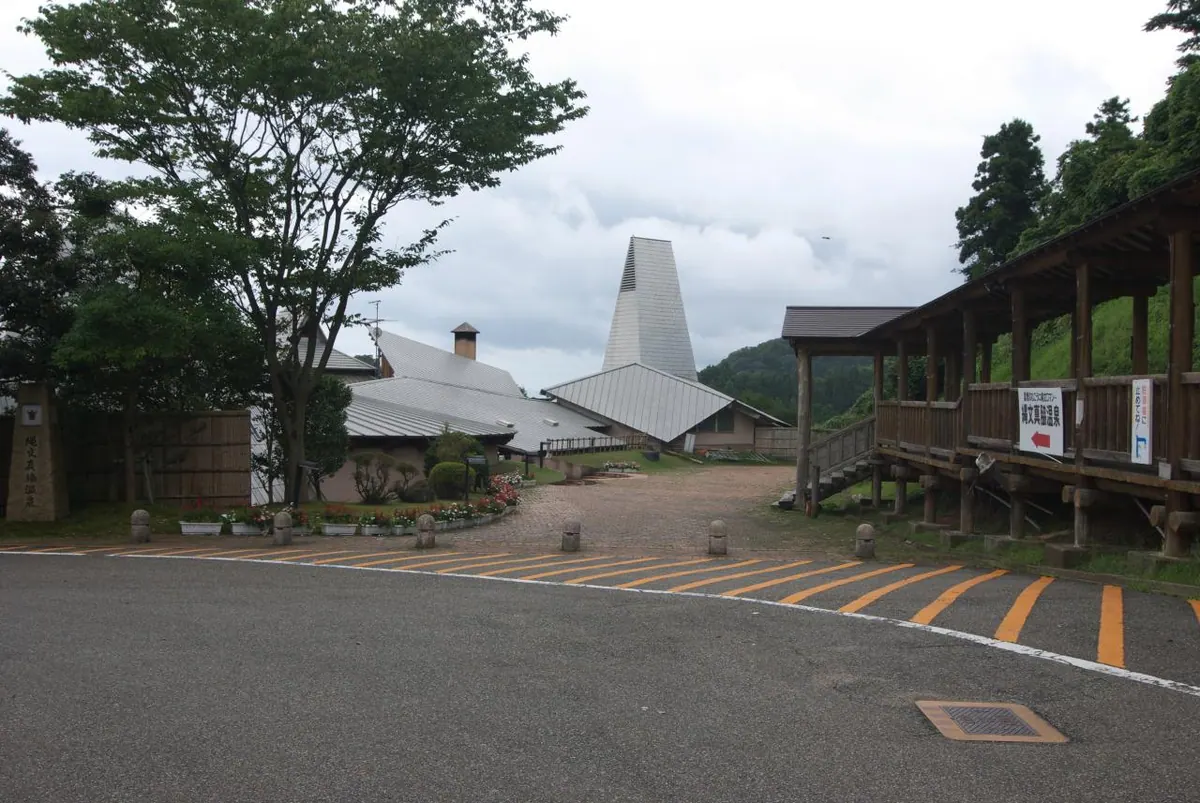
A public bathhouse and lodging facility located within an archaeological park, featuring unique high-salt alkaline thermal waters.
What it is
- A public bathhouse and lodging facility located within the Mawaki Archaeological Site Park.
- The hot spring source was first tapped in 1990 and opened to the public in 1993.
- The facility features alkaline sodium chloride strong salt spring water.
What to see
- Indoor baths that use diluted spring water due to the high natural salt content.
- The surrounding Mawaki Archaeological Site Park where the facility is situated.
Getting there
- A shared taxi from Noto Airport reaches the site in approximately 45 minutes.
- Express buses run from Kanazawa Station to the Mawaki Onsen-guchi stop.
- The site is accessible via the Noto Railway Anamizu Station.
- Driving from Kanazawa takes approximately two hours and 45 minutes.
- Official site
- mawaki-pore.jp
10
Yoshigaura Onsen
ISHIKAWA · PLACE 葭ヶ浦温泉
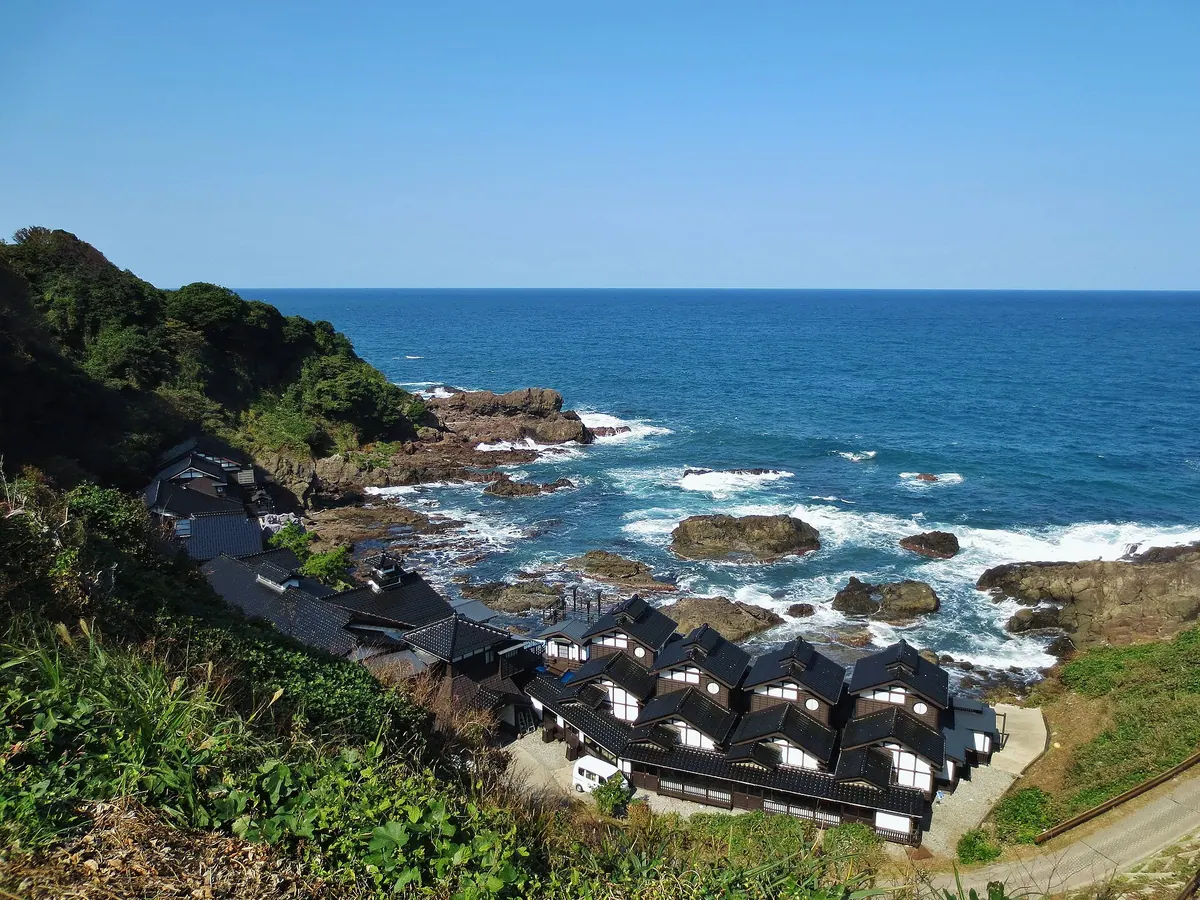
A historic hot spring inn founded in 1577, offering a secluded coastal experience within Noto Hanto Quasi-National Park.
What it is
- A hot spring area featuring sodium chloride water from two distinct sources.
- Founded as a shipping company in 1577 and opened as an inn in 1889.
- The site is home to Lamp no Yado, the only inn at this hot spring.
- Located within the protected boundaries of the Noto Hanto Quasi-National Park.
What to see
- The Blue Grotto, a natural sea cave located on the property.
- An aerial observation deck providing views of the surrounding sea.
- Coastal scenery characteristic of the Noto Peninsula landscape.
Getting there
- The Yoshigaura bus stop is a fifteen minute walk from the site.
- A three hour drive is required to reach the location from Kanazawa City.
- On-site parking is available for up to fifty vehicles.
- Official site
- www.lampnoyado.co.jp
11
Yugawa Onsen
ISHIKAWA · PLACE 湯川温泉
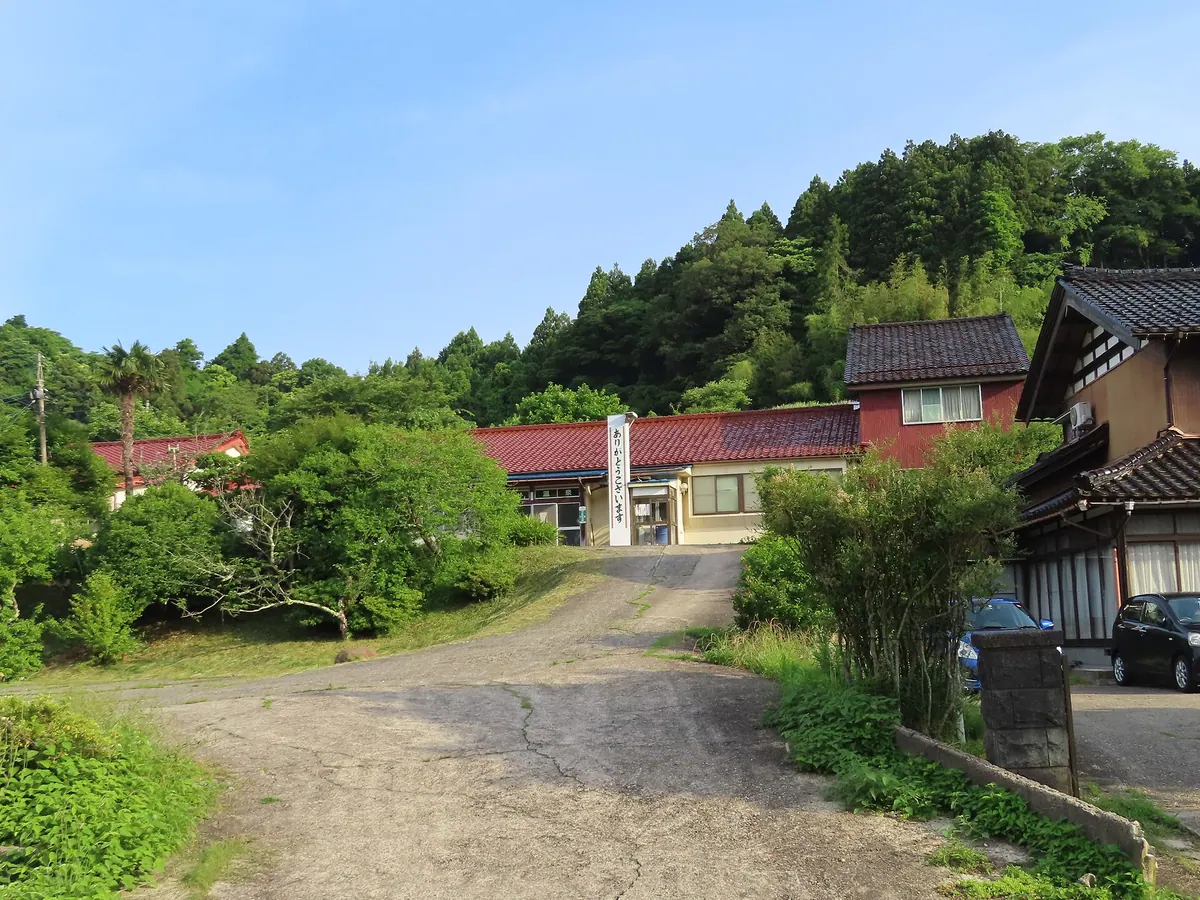
A rare radon hot spring in Noto featuring dark brown water and a heritage-certified free-flowing source for day-trip bathing.
What it is
- A hot spring resort in Nanao City opened at its current location in 1952.
- The only self-spouting free-flowing spring source located in the Noto region.
- Designated as a heritage site by the Japan Onsen Heritage Association.
- A single inn named Ryuuoukaku operates at the site and offers day-trip bathing.
What to see
- Natural hot spring water featuring a distinct dark brown color.
- Mineral-rich water containing a high concentration of natural radon.
- Spring water that emerges from the ground at 51.3 degrees Celsius.
Getting there
- Accessible by taking a bus from Nanao Station.
- Located ten kilometers away from the Nanao Shiroyama Interchange.
12
Nebuta Onsen
ISHIKAWA · PLACE ねぶた温泉
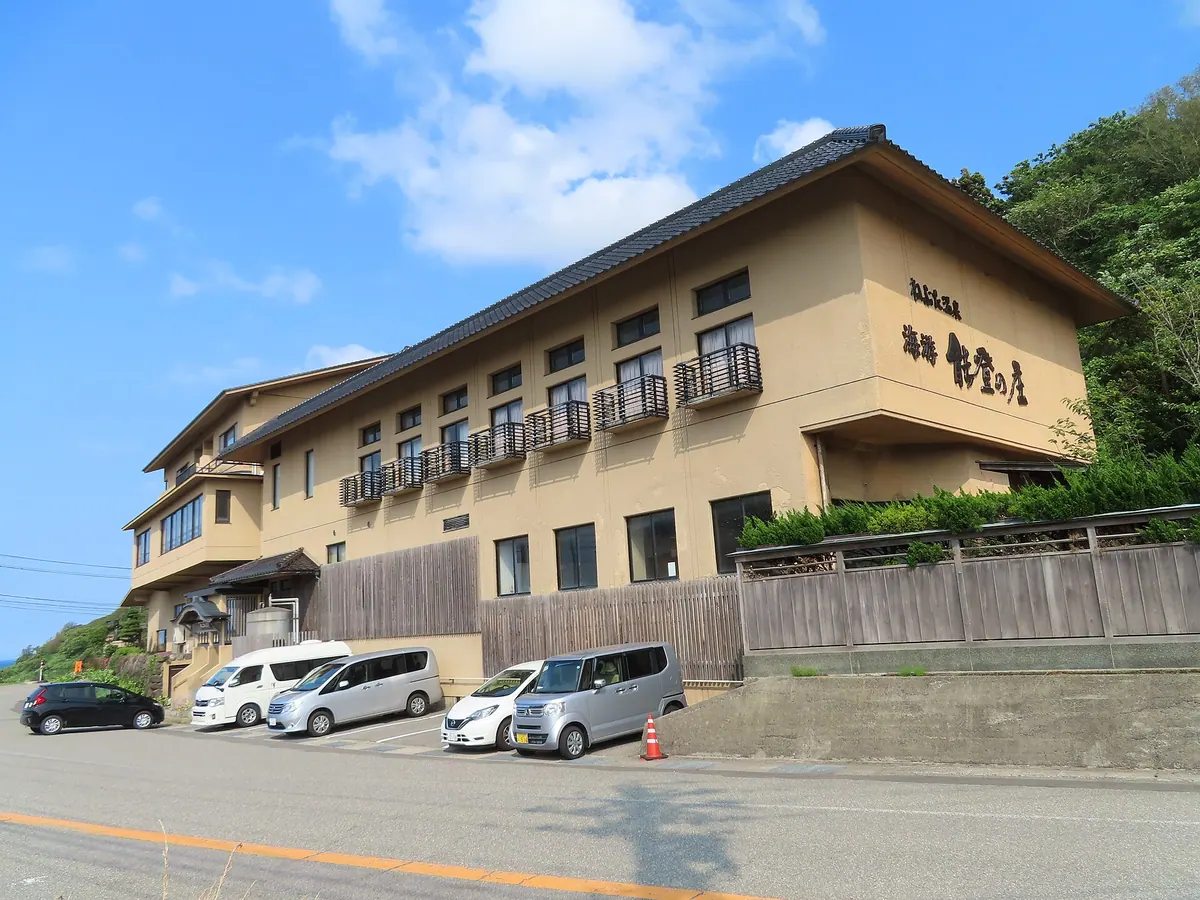
A high-alkaline hot spring inn in Wajima offering therapeutic waters and scenic views of the Sea of Japan.
What it is
- A hot spring facility featuring alkaline water with a high pH level of 10.5
- Legend says the priest Kobo Daishi discovered the spring after seeing a wounded boar
- The name originates from the Japanese words for sleeping pig
- A single inn called Kaiyu Noto no Sho operates at this location
What to see
- Indoor and outdoor baths overlooking the Sea of Japan
- Heating and filtration systems that maintain the spring water at comfortable temperatures
When to go
- Day trip bathing services are available following their resumption in July 2024
Getting there
- The site is a 30-minute car journey from Noto Airport
- Official site
- www.notonosho.co.jp