

20 Onsen in Shizuoka worth your time
Japan Gems
23 Onsen in Shizuoka, with what to see and how to get there.
Shizuoka has 23 onsen on Japan Gems. Below are the 20 we can tell you the most about — each one written up in English from Japanese sources, with what to see and how to get there. See all onsen in Shizuoka.
01
Atagawa Onsen
SHIZUOKA · PLACE 熱川温泉
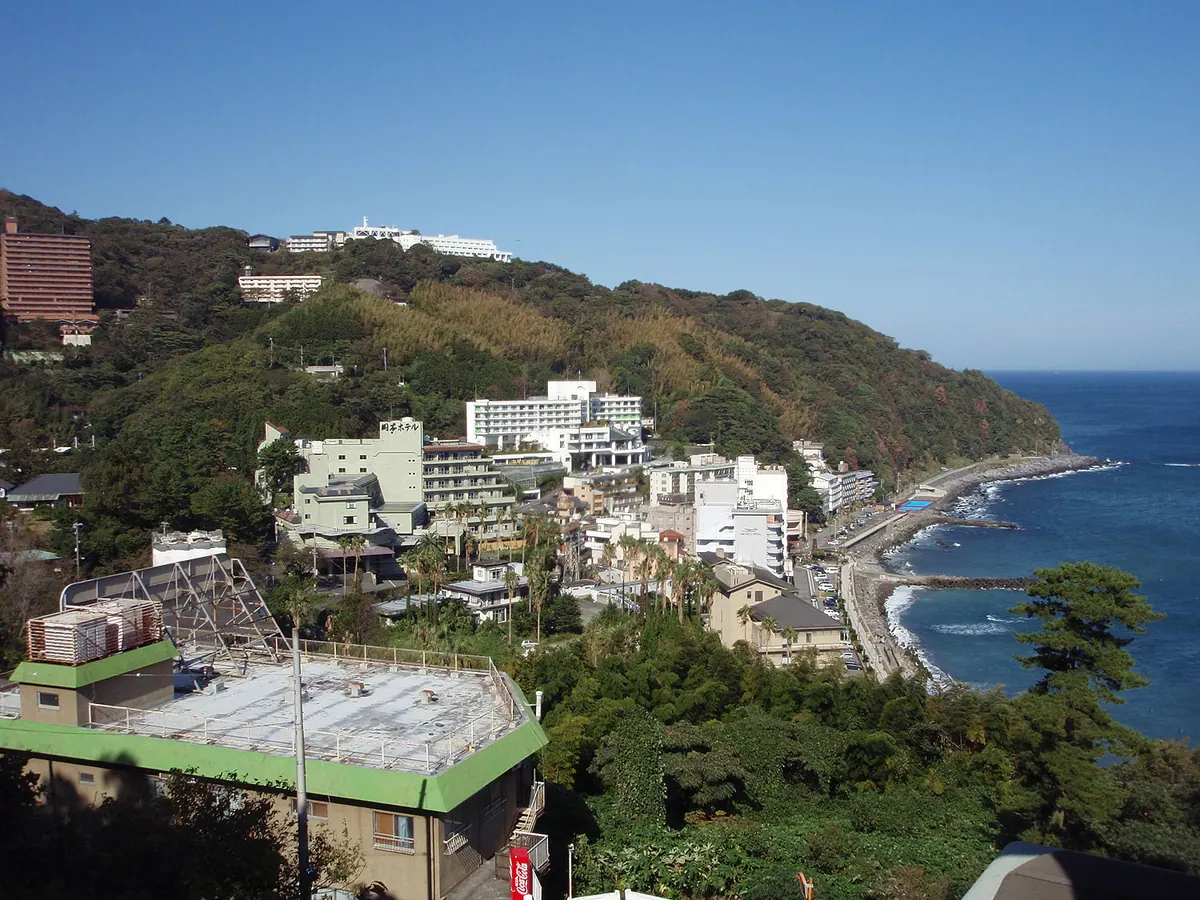
A coastal hot spring resort discovered by Ota Dokan, featuring high-temperature waters, a tropical alligator garden, and sandy beaches.
What it is
- A coastal hot spring resort located in Higashiizu Town with nineteen inns and hotels.
- The area features chloride spring water with a source temperature of approximately 100 degrees Celsius.
- Historical records credit Ota Dokan with the discovery of the hot spring source.
- The resort area includes a sandy beach known as Atagawa YOU-YU Beach.
What to see
- Atagawa Tropical and Alligator Garden which utilizes local geothermal heat for its exhibits.
- Two free footbaths located conveniently near the train station and the coastline.
- Steam rising from hot spring vents throughout the narrow coastal town area.
When to go
- A fireworks festival is held annually every July along the coast.
Getting there
- Izu-Atagawa Station is served by the Izu Kyuko Line with direct limited express trains from Tokyo.
- The resort area is accessible by car via National Route 135.
- Official site
- atagawa.net
02
Izu Nagaoka Onsen
SHIZUOKA · PLACE 伊豆長岡温泉
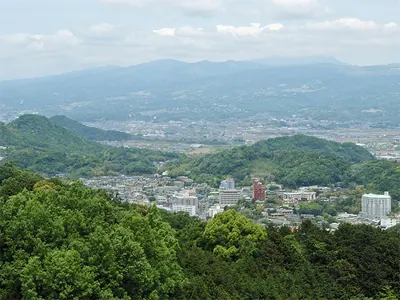
A historic hot spring resort featuring alkaline waters, scenic mountain views via ropeway, and free public foot baths.
What it is
- A hot spring resort in Shizuoka consisting of the Kona and Nagaoka districts
- Kona Hot Spring was reportedly discovered around 720 AD
- The area features alkaline simple hot spring water managed through a centralized system
- Historical figures like Minamoto no Yoritomo reportedly used these waters for healing
What to see
- Approximately 200 hot spring wells located throughout the combined region
- Izu Panorama Park which provides ropeway access to the summit of Mount Katsuragi
- Free public foot baths available for use in both districts
When to go
- The town hosts the traditional Genji Ayame Festival
- The annual Nue-barai Festival takes place within the resort area
Getting there
- Local bus services run frequently from Izu-Nagaoka Station to the resort
- Direct highway buses operate from Shinjuku directly to the hot spring area
- Official site
- izuspa.com
03
Dōgashima Onsen
SHIZUOKA · PLACE 堂ヶ島温泉
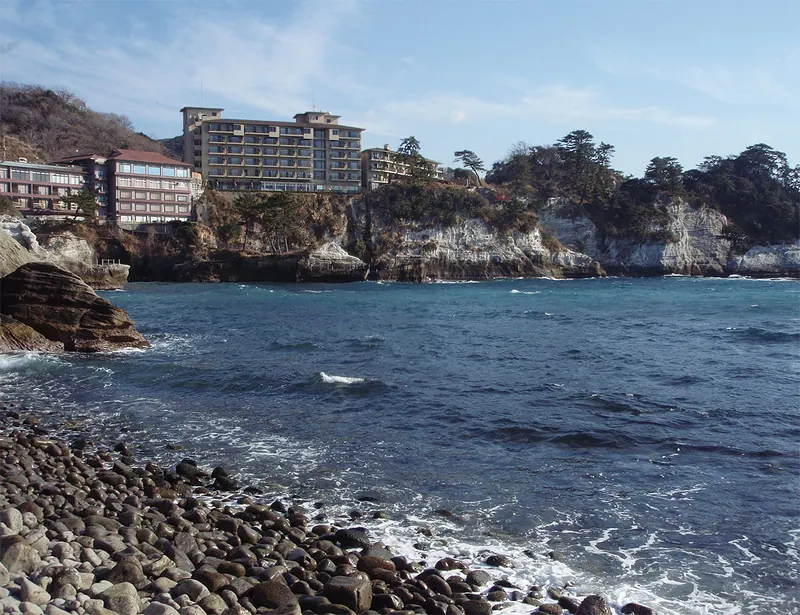
A coastal hot spring resort in Nishiizu famous for its dramatic cliffside baths, sea caves, and unique tombolo land bridge.
What it is
- A hot spring resort area located in Nishiizu Town on the Izu Peninsula.
- The first hot spring well was successfully drilled at this site in 1962.
- The resort features sulfate spring water with temperatures ranging from 30 to 45 degrees Celsius.
- The area includes eleven hotels, ryokans, and four public day-trip bathing facilities.
What to see
- Tenshodo Cave and the Sanshiro Islands are designated as national natural monuments.
- The tombolo phenomenon where a land bridge appears during low tide.
- Sawada Park Open-air Bath is situated on top of a cliff overlooking the sea.
- The Izu Trick Art Museum which opened at the site in August 2022.
Getting there
- Accessible by bus from Shuzenji Station and Izukyu-Shimoda Station.
- An 85-minute drive from Numazu Interchange via the Izu Jukan Expressway.
04
Atami Onsen
SHIZUOKA · PLACE 熱海温泉
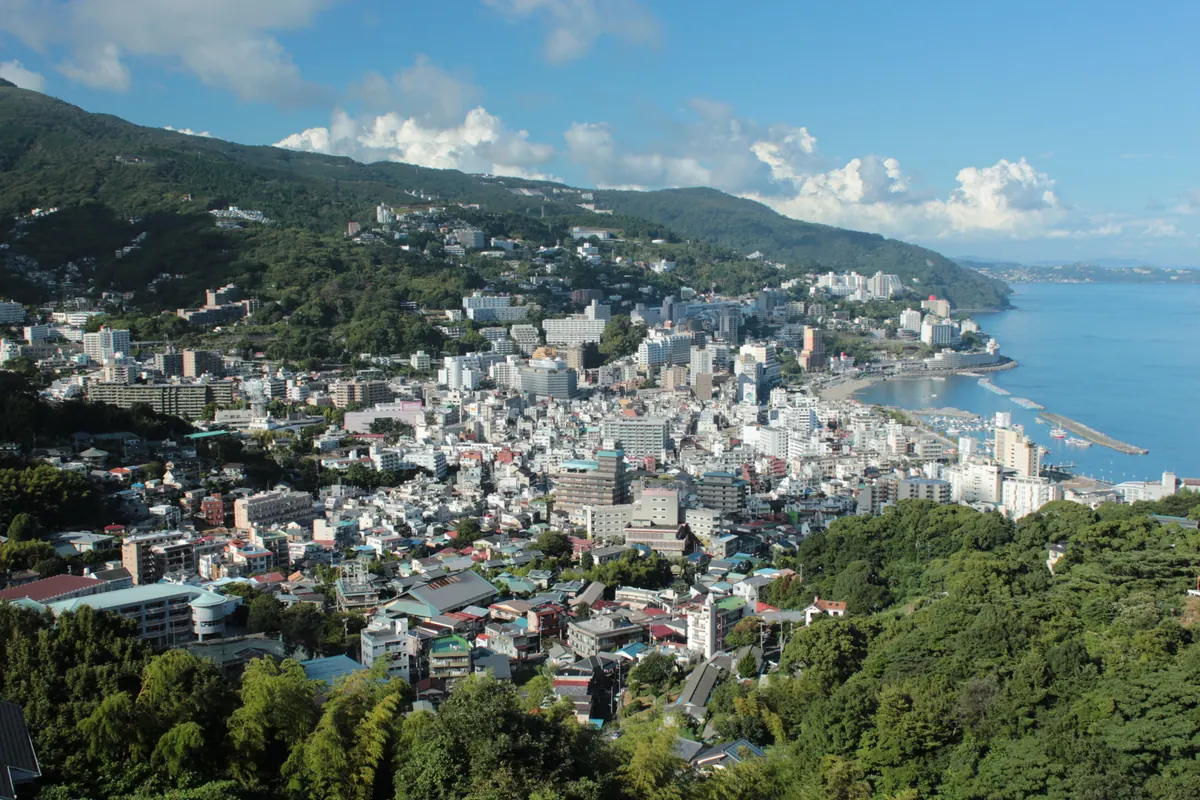
A historic coastal hot spring resort famous for its high-temperature saline waters and connection to Shogun Tokugawa Ieyasu.
What it is
- A major hot spring resort area featuring over 400 active thermal sources.
- The site where Shogun Tokugawa Ieyasu stayed for seven days in 1604.
- A coastal destination popularized by the famous novel Konjiki Yasha by Ozaki Koyo.
- A thermal hub discharging 18,000 liters of sodium-calcium chloride water per minute.
What to see
- The Oyu Geyser which was historically ranked among the world's top three geysers.
- Seven restored historic hot springs known as the Atami Shichiyu landmarks.
- A monument dedicated to the British diplomat Rutherford Alcock near the geyser.
- Natural spring waters reaching temperatures as high as 98.2 degrees Celsius.
Getting there
- Access the area via the JR Tokaido Shinkansen at Atami Station.
- The resort serves as the eastern gateway for tourism in the Izu region.
- Official site
- www.atamispa.com
05
Kumomi Onsen
SHIZUOKA · PLACE 雲見温泉
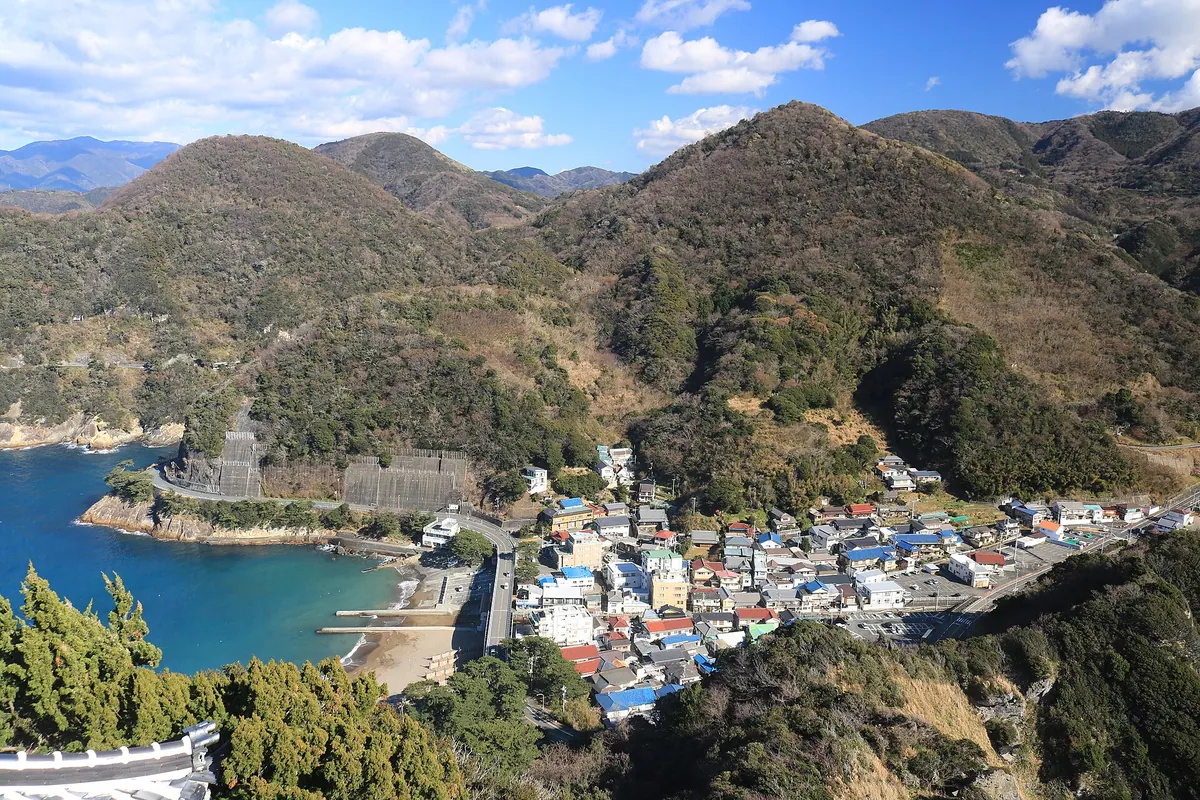
A coastal hot spring town in Shizuoka featuring dramatic rock formations, mountain shrines, and views of the Izu Peninsula.
What it is
- A hot spring destination featuring water rich in calcium and sodium chloride.
- A scenic coastal area that served as a filming location for the drama Tonbi.
- A destination for professional boxing training camps and outdoor recreation.
What to see
- Kumomi Sengen Shrine located on the 163-meter summit of Mount Eboshi.
- Ushitsuki Rock, a prominent landmark and popular diving spot near the coast.
- Senganmon, a natural rock formation featuring a large central hole.
- Mount Takatoori which rises to an elevation of 519 meters.
- Coastal views from the Matsuzaki Town area in Shizuoka Prefecture.
When to go
- Visit between March and May for Amanatsu orange picking season.
Getting there
- Take a bus from Shimoda Station for a journey of approximately 90 minutes.
- Official site
- kumomikankou.com
06
Inatori Onsen
SHIZUOKA · PLACE 稲取温泉
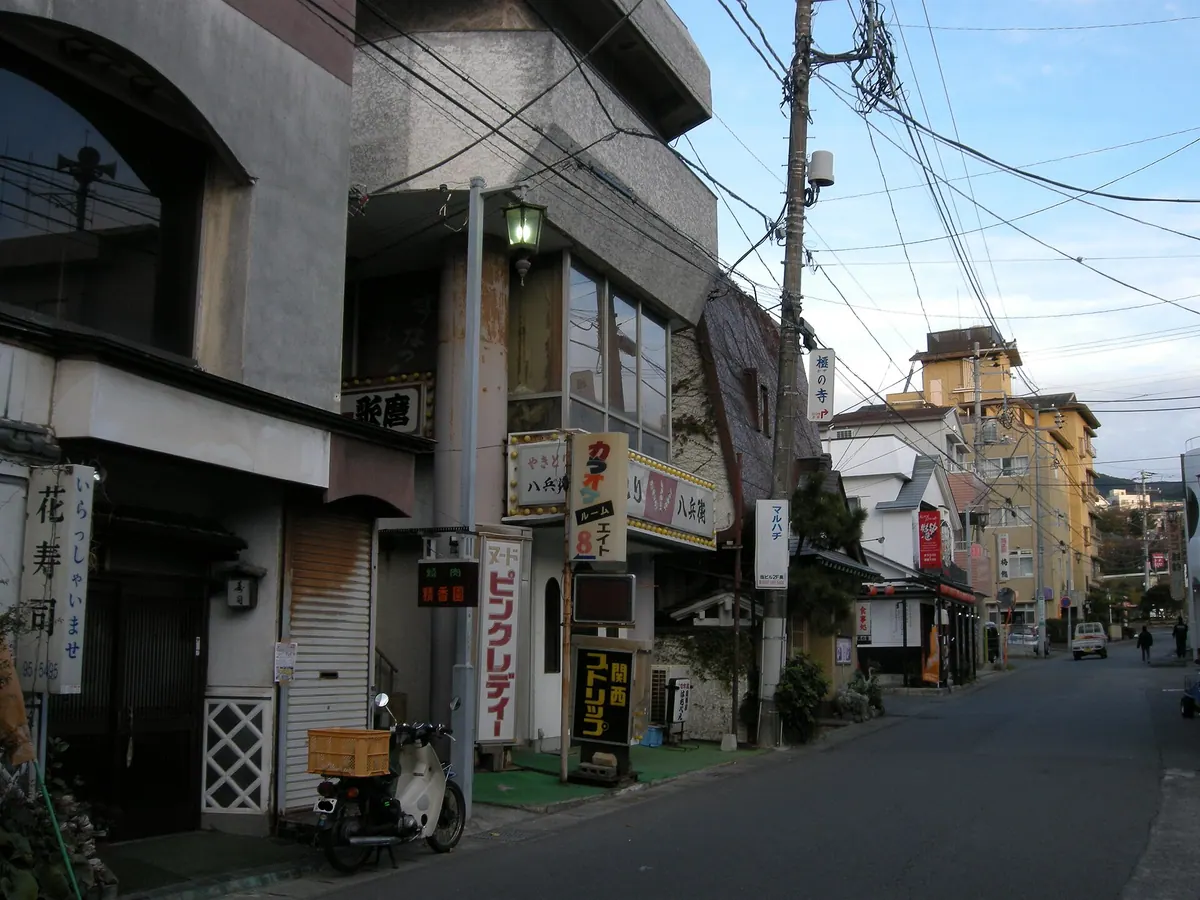
A coastal hot spring resort established in 1956, famous for its unique doll festivals and sulfate-rich thermal waters.
What it is
- A hot spring resort town established in 1956 on a coastal cape.
- The area features sulfate springs used for thermal bathing.
- The town contains over thirty hotels, inns, and local guesthouses.
- The resort is situated near the active Inatori Port.
What to see
- Two public baths and two footbaths are available for visitors.
- The town center houses the Higashiizu Town Hall.
- Traditional hanging doll displays during the Hina no Tsurushi Kazari Festival.
When to go
- January to March for the Hina no Tsurushi Kazari Festival.
- April to June for the Tsurushi Tango no Fuku Festival.
- The first week of June for the Dontuku Festival.
Getting there
- The resort is accessible via Izu Inatori Station.
- Drivers can reach the area via National Route 135.
- Official site
- inatorionsen.or.jp
07
Kanzanji Onsen
SHIZUOKA · PLACE 舘山寺温泉
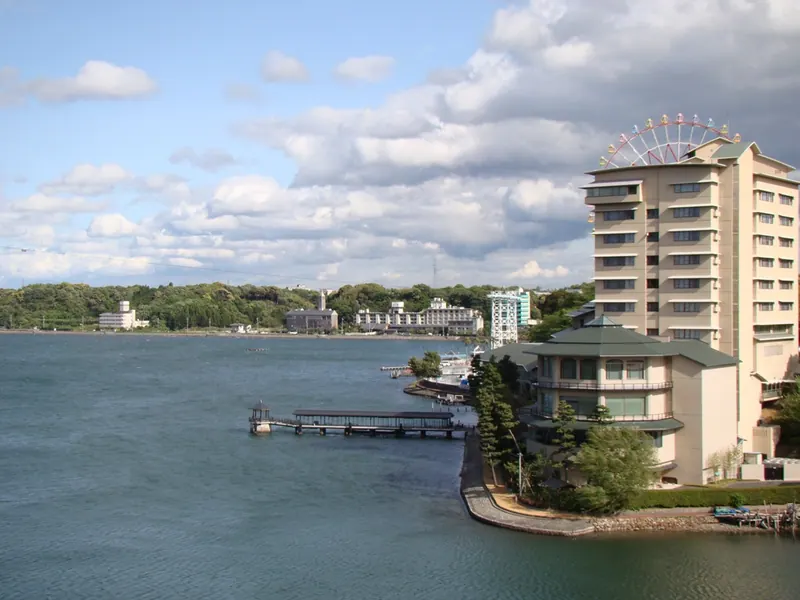
A lakeside hot spring resort featuring mineral-rich salt baths, scenic ropeway views, and proximity to major botanical gardens and zoos.
What it is
- A hot spring resort town established in 1958 along the coast of Lake Hamana
- The area takes its name from the nearby historic Kanzanji Temple
- The resort features ten Japanese-style inns offering chloride strong salt spring water
- Current hot spring water is drawn from sources excavated up to 2000 meters deep
What to see
- The Kanzanji Ropeway which connects the resort town to the summit of Mount Okusa
- Nearby attractions including the Hamamatsu Flower Park and the Hamamatsu City Zoo
- Scenic views of the Lake Hamana coastline from the various inn baths
When to go
- Summer for the annual festival featuring floating lanterns and fireworks displays
Getting there
- Buses from Hamamatsu Station reach the resort in approximately 40 minutes
- Official site
- hamanako-kanzanji.com
08
Kurami Onsen
SHIZUOKA · PLACE 倉真温泉
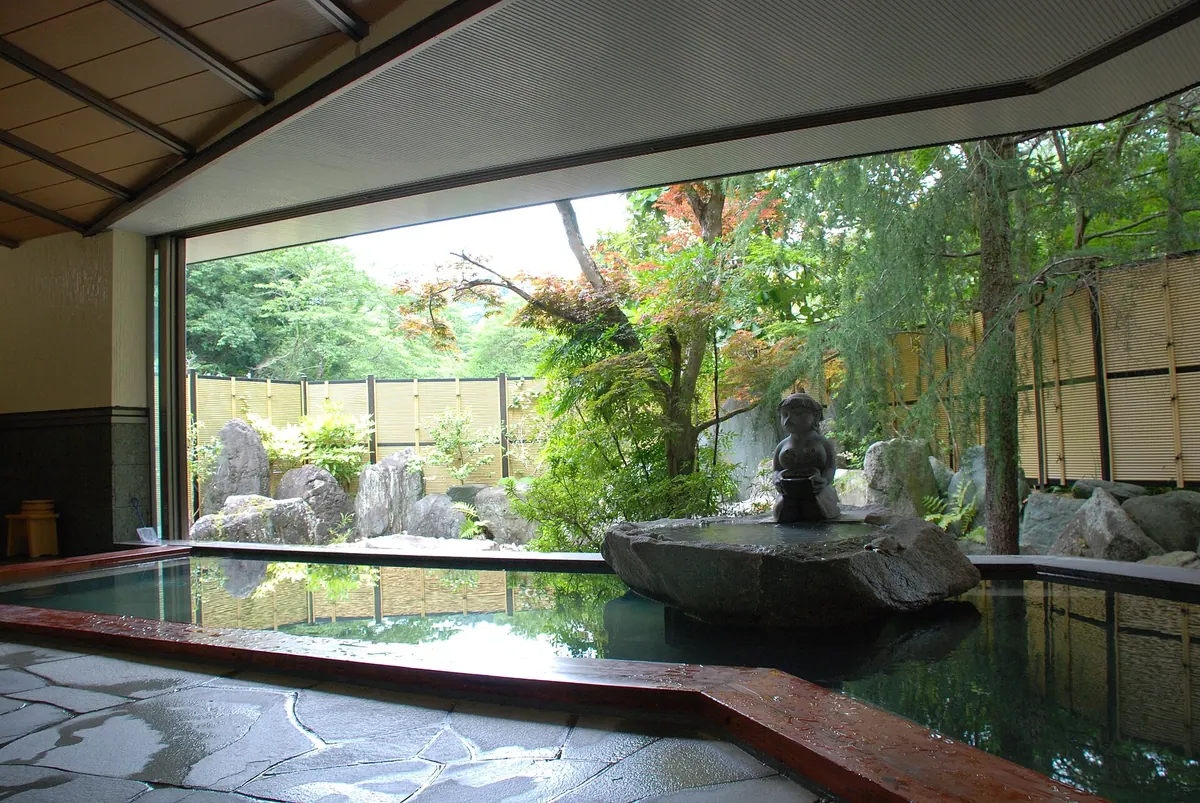
A historic mountain retreat featuring three traditional inns with alkaline sulfur cold mineral springs discovered in the early seventeenth century.
What it is
- A mountain hot spring area featuring three traditional Japanese accommodation facilities
- The site was reportedly discovered between the years 1596 and 1615
- The water is classified as an alkaline simple sulfur cold mineral spring
- Natural spring water emerges at a source temperature of 18 degrees Celsius
What to see
- The Masagokan, Suigetsu, and Ochiaisou hot spring inns
- Scenic mountain landscapes surrounding the secluded hot spring facilities
Getting there
- Take a twenty-five minute bus ride from Kakegawa Station to the area
- The destination is a four minute walk from the Kurami Onsen bus stop
- A taxi from Kakegawa Station reaches the hot springs in approximately fifteen minutes
- The site is a twenty minute drive from the Kakegawa Interchange
09
Mine Onsen
SHIZUOKA · PLACE 峰温泉
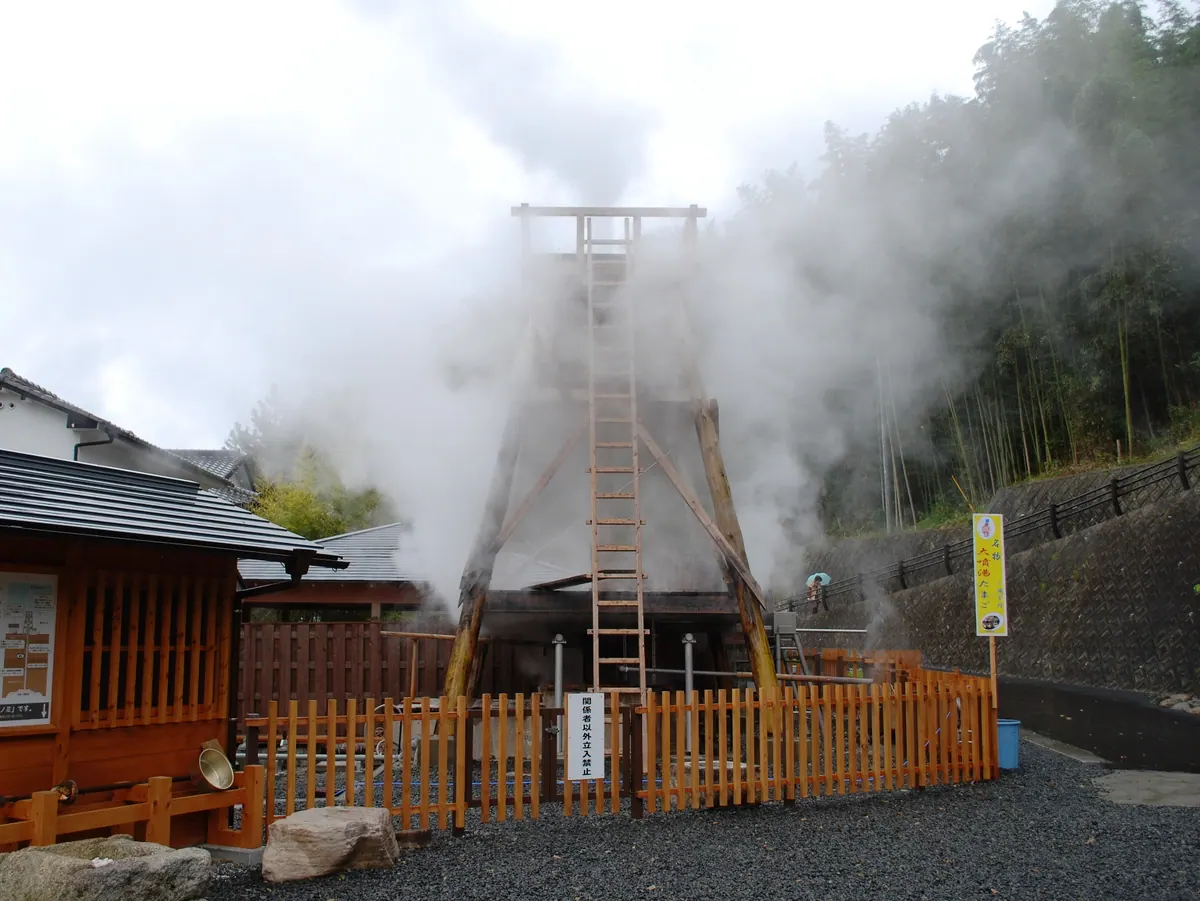
A historic hot spring park featuring a powerful 30-meter geyser and public bathing facilities in Kawazu Town.
What it is
- A hot spring area featuring a great geyser drilled by Inaba Tokitaro in 1926.
- The site includes the Mine Onsen Daifunto Park which opened in 2009.
- The spring water is a weak alkaline simple hot spring at 61.6 degrees Celsius.
- The area contains seven accommodation facilities and a day-use bathing hall.
What to see
- The Great Geyser which can reach a height of 30 meters.
- The Hosen Footbath which is free to use between 9:00 and 16:00.
- The Odoriko Onsen Kaikan facility for day-use hot spring bathing.
When to go
- The geyser erupts seven times daily for approximately one minute each time.
- The park is closed to visitors on Tuesdays and Fridays.
Getting there
- The site is a five-minute bus ride from Kawazu Station.
10
Shuzenji Onsen
SHIZUOKA · PLACE 修善寺温泉
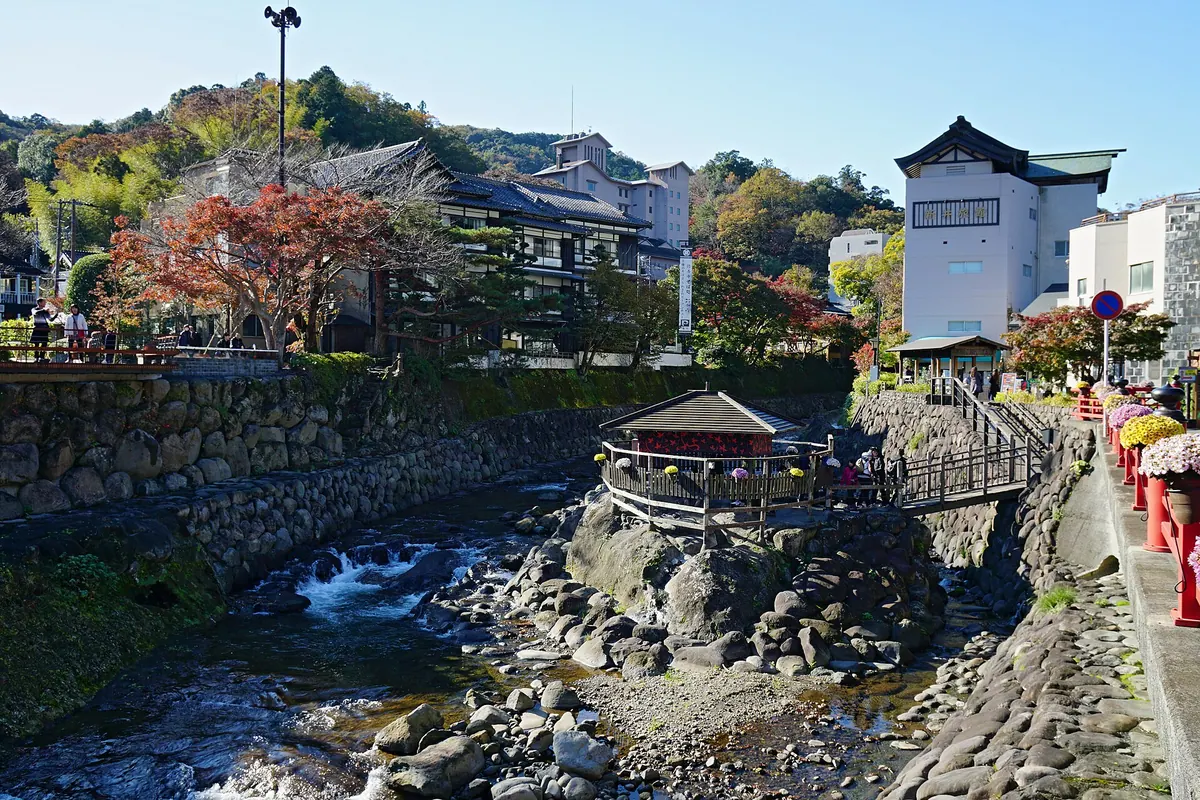
The oldest hot spring resort on the Izu Peninsula featuring historic temples and traditional public bathhouses along the Shuzenji River.
What it is
- The oldest hot spring resort located on the Izu Peninsula.
- Founded in 807 by Kobo Daishi who established the central temple.
- A historic town where alkaline simple spring water is centrally managed.
- Home to Shigetsuden, the oldest wooden building in the Izu region.
What to see
- Tokko-no-yu, the symbolic hot spring located in the center of the town.
- Shigetsuden, a wooden structure built by Hojo Masako for Minamoto no Yoriie.
- Hakoyu, a public bathhouse that has been open to tourists since 2002.
- The local Haristos Orthodox Church, designated as a prefectural cultural property.
- The Shuzenji River flowing through the heart of the resort area.
When to go
- Visit during the Autumn Kobo Daishi Festival held on August 20 and 21.
- Official site
- www.shuzenji-kankou.com
11
Hokkawa Onsen
SHIZUOKA · PLACE 北川温泉
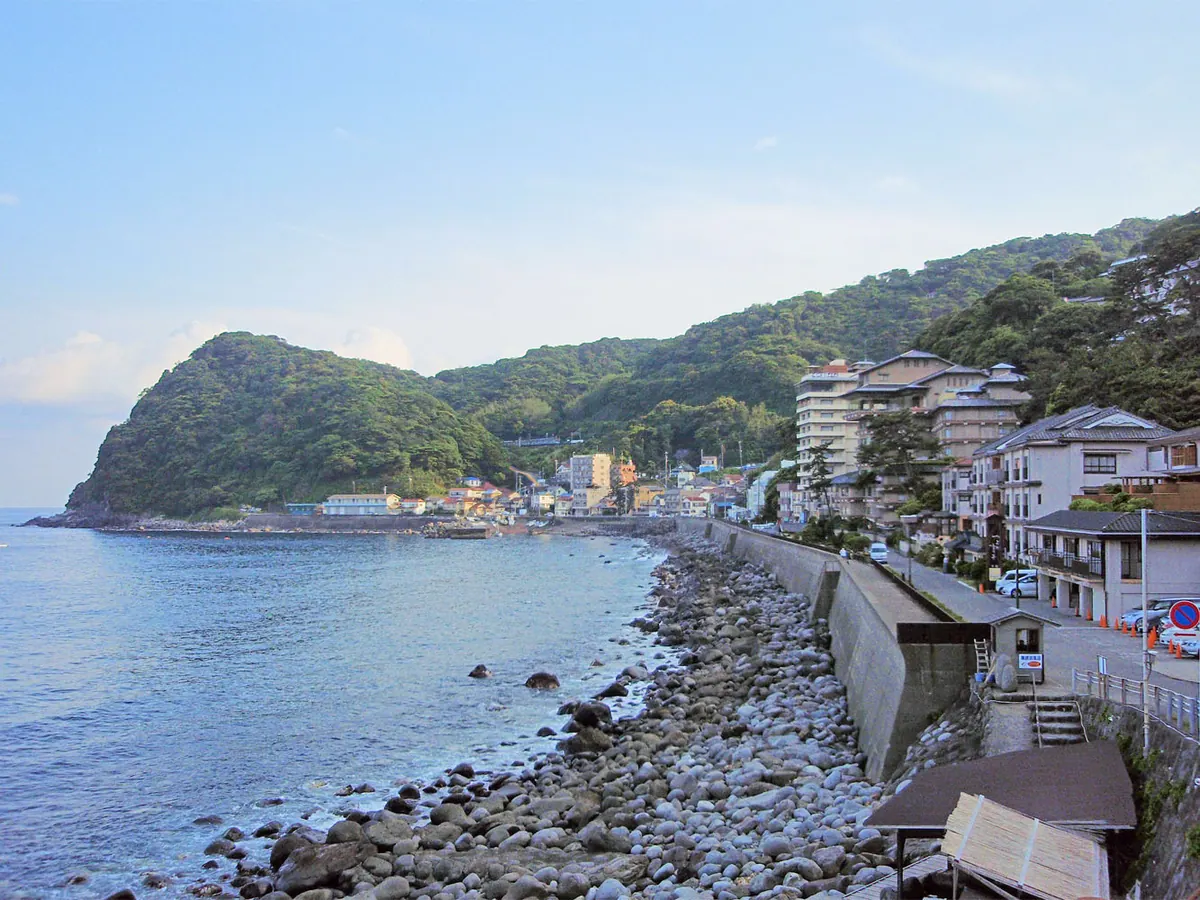
A coastal hot spring town featuring a historic mixed-gender open-air bath carved into the rocks by the sea.
What it is
- A hot spring resort area located along the coastline of Higashiizu Town.
- Founded in the early Showa period after a local fisherman drilled the coast.
- The resort features nine traditional Japanese inns situated near a fishing port.
- The spring water is naturally composed of chloride and sulfate minerals.
What to see
- The Kurone Iwa-buro mixed-gender open-air bath located directly on the rocky shore.
- Clear views of Izu Oshima island across the water from the coastline.
- The local Hokkawa Fishing Port situated within the hot spring area.
- The historic bath site used as a filming location for a Hitoshi Matsumoto commercial.
Getting there
- The area is accessible via Izu-Hokkawa Station on the Izukyu Line.
- Official site
- www.hokkawa-onsen.com
12
Ōsawa Onsen
SHIZUOKA · PLACE 大沢温泉
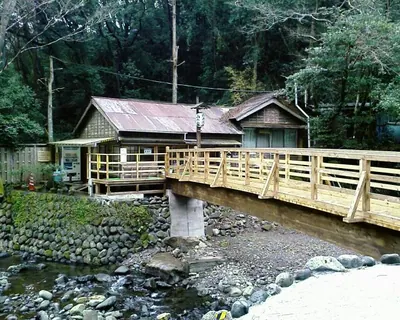
A 300-year-old hot spring village on the Ikedai River known for its therapeutic waters and connection to Hokkaido pioneers.
What it is
- A hot spring area established approximately 300 years ago in Matsuzaki Town.
- The birthplace of Hokkaido pioneer Benzo Yoda.
- A destination featuring traditional self-catering hot spring cure facilities.
- Locally referred to as Kesho no Yu with calcium and sodium sulfate waters.
What to see
- Two traditional inns and several guesthouses operating along the Ikedai River.
- A stone statue of Sajihei Yoda located in the riverbed.
- Natural hot spring sources ranging from 40 to 53 degrees Celsius.
Getting there
- A 40-minute bus ride from Izukyu-Shimoda Station to the local stop.
- A 120-minute drive from the Numazu Interchange.
- A short walk from the Osawa Onsen bus stop to the facilities.
13
Toi Onsen
SHIZUOKA · PLACE 土肥温泉
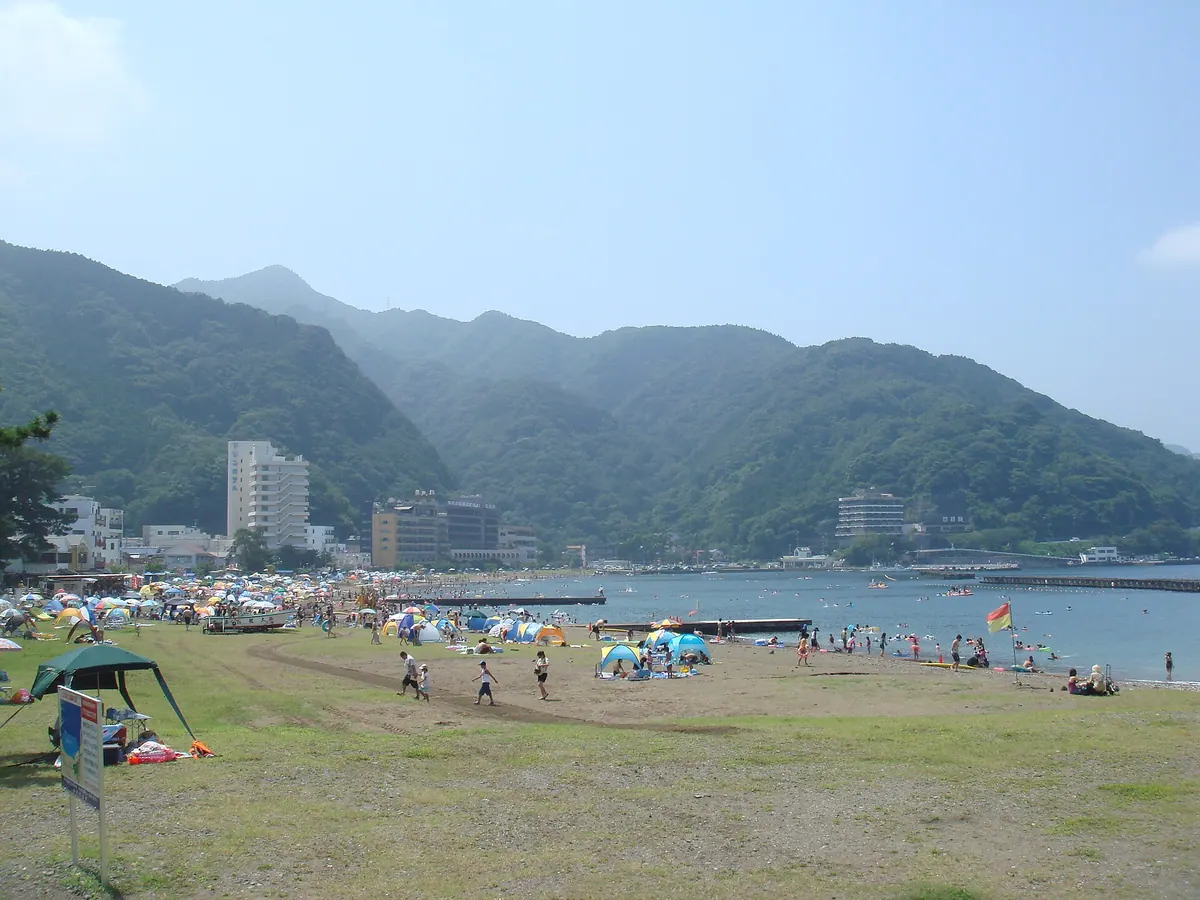
A historic hot spring resort on the Izu coast featuring public baths, deep-sea cuisine, and a former gold mining legacy.
What it is
- A coastal hot spring resort located on the western side of the Izu Peninsula.
- A town that originally prospered through the development of the Toi Gold Mine.
- A municipal hot spring area with sources dating back as far as 1611.
- A filming location for the movie Umi no Futa.
What to see
- Four public bath houses and one communal footbath located throughout the town.
- The original Mabu-yu spring source situated within the grounds of Anraku-ji Temple.
- Restaurants serving local deep-sea fish caught from the nearby Suruga Bay.
Getting there
- Take a bus directly to the area from Shuzenji Station.
- A ferry connects Shimizu Port to Toi Port in approximately 90 minutes.
- Official site
- www.toi-onsen.com
14
Ajiro Onsen
SHIZUOKA · PLACE 網代温泉
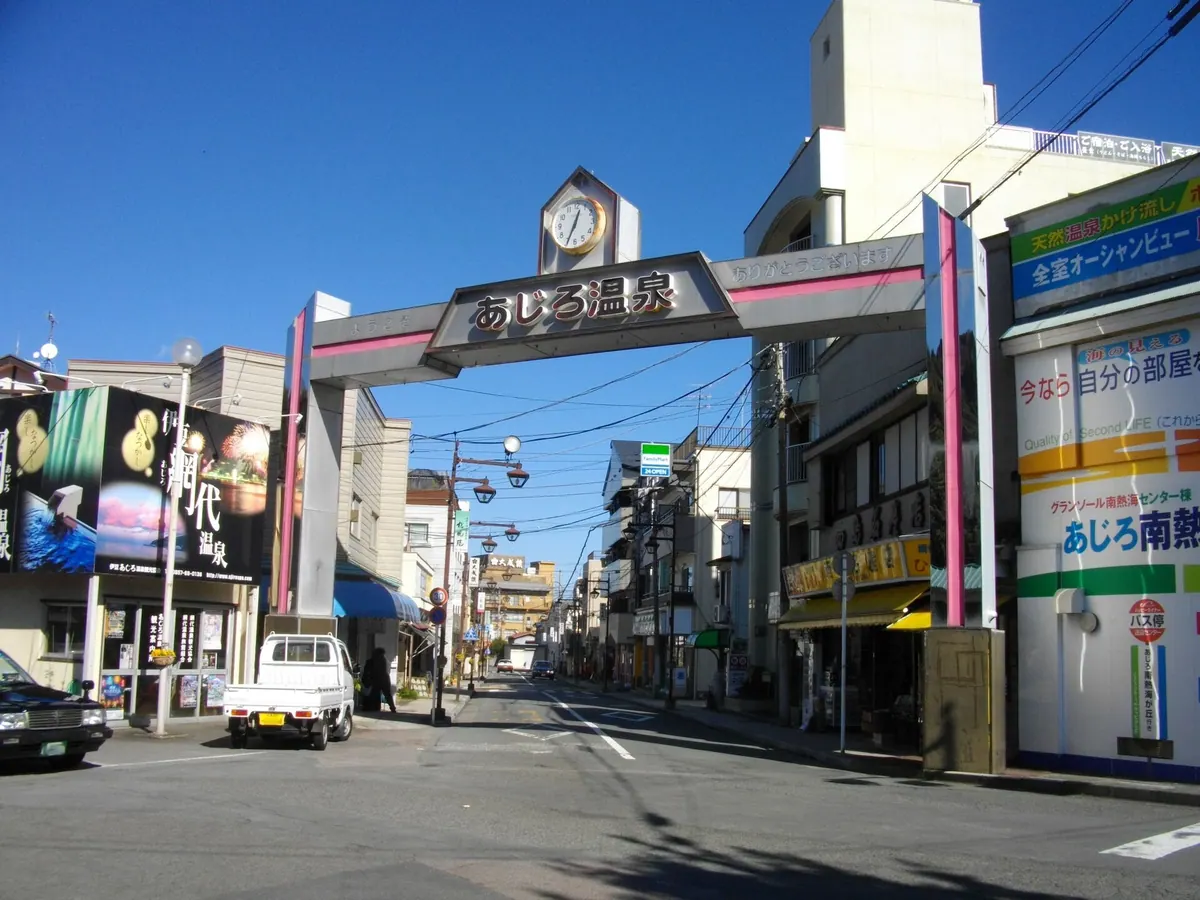
A seaside hot spring district near Atami known for saltwater baths, fresh seafood, and a quiet fishing port atmosphere.
What it is
- A hot spring town extending from the fishing port to the nearby mountains.
- A collection of ten inns and hotels featuring saltwater hot springs.
- A district first established in 1938 after excavation at Onawa Beach.
- An area also known as Minami Atami Onsen specializing in dried fish.
What to see
- Active fishing port where local seafood is sourced for the inns.
- Hot spring sources with temperatures ranging from twenty-seven to sixty-eight degrees.
- Traditional Japanese inns as there are no public bathhouses in this district.
Getting there
- Five-minute walk from Ajiro Station to reach the hot spring area.
- Ten-minute drive from the center of Atami City.
- Official site
- ajirospa.com
15
Izusan Onsen
SHIZUOKA · PLACE 伊豆山温泉
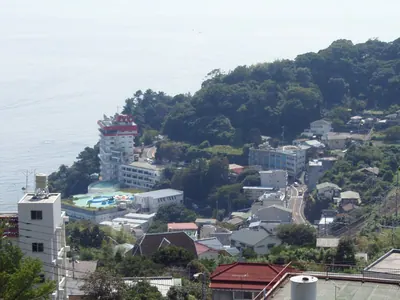
A historic hot spring resort near Izusan Shrine featuring a unique cave spring and waters used for healing since 699.
What it is
- A hot spring area in Atami City surrounding the historic Izusan Shrine
- Legend says the spring was discovered by En no Gyoja in the year 699
- The resort features seven inns and one public bathhouse along the coastline
- Minamoto no Yoritomo famously prayed at the local shrine for his clan's revival
What to see
- The Hashiriyu cave spring which is a famous local attraction
- Spring water flowing at a temperature of approximately 70 degrees Celsius
- Izusan Shrine where historical figures once offered their prayers
- Coastal views from the various hotels and inns situated along the shore
Getting there
- The resort is five minutes from Atami Station by bus
- Official site
- www.izusan.com
16
Hōsenji Onsen
SHIZUOKA · PLACE 法泉寺温泉
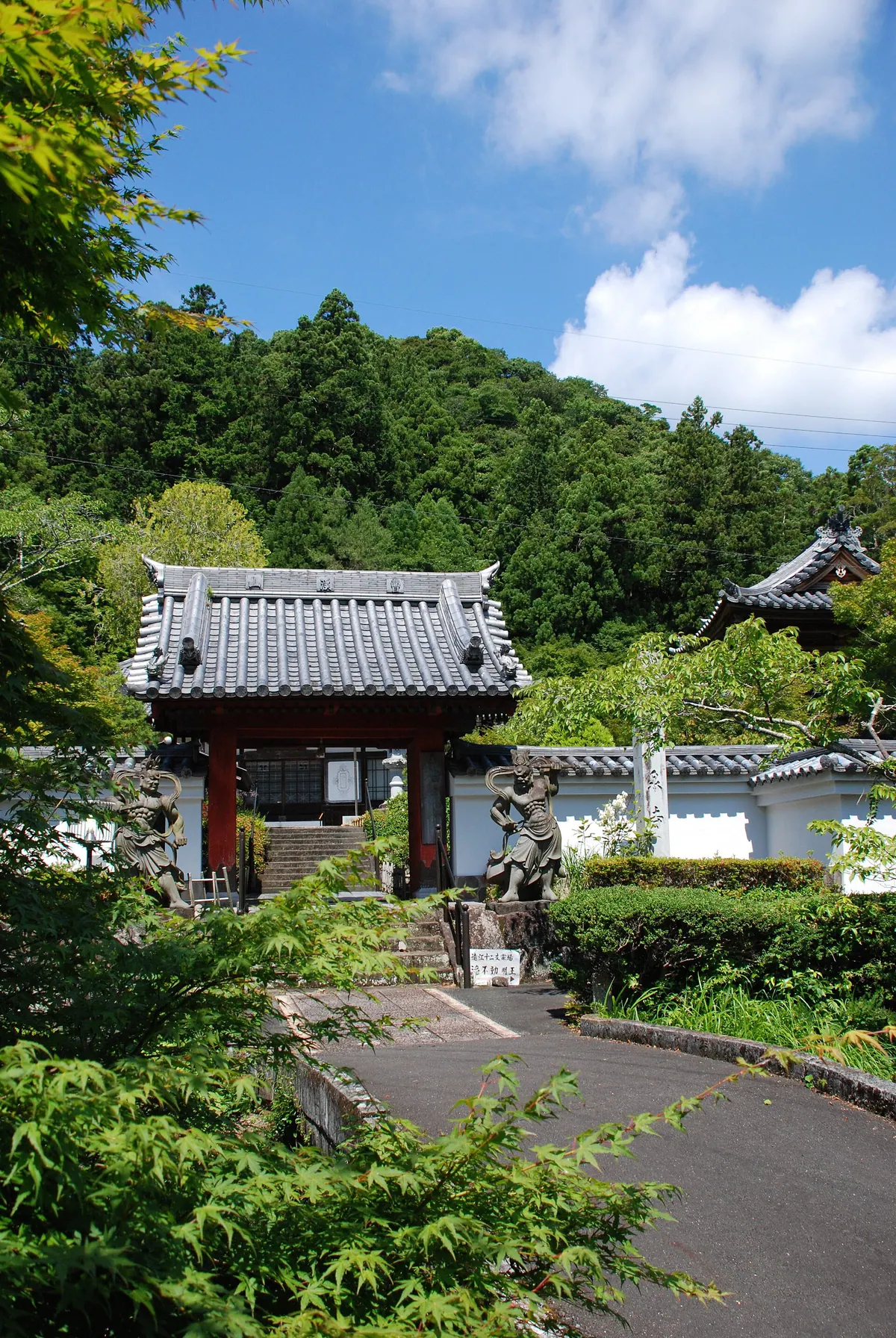
A historic hot spring founded in 1440, offering sulfur baths in a quiet mountainous river setting near Kakegawa.
What it is
- A hot spring area founded in 1440 by Shun-ya Souno.
- The spring originated when a staff was struck into the ground.
- Located in the northern mountainous area of Kakegawa along the Hosenji River.
- The spring water is classified as simple sulfur with a source temperature of 17.4 degrees Celsius.
What to see
- Two traditional inns named Takimokan and Kosugikan operate at the site.
- Natural scenery along the banks of the Hosenji River.
Getting there
- Take a 20 minute bus ride from Kakegawa Station.
- The site is a two minute walk from the Hosenji Onsen bus stop.
- Located 7 kilometers from the Kakegawa Interchange by car.
17
Heda Onsen
SHIZUOKA · PLACE 戸田温泉
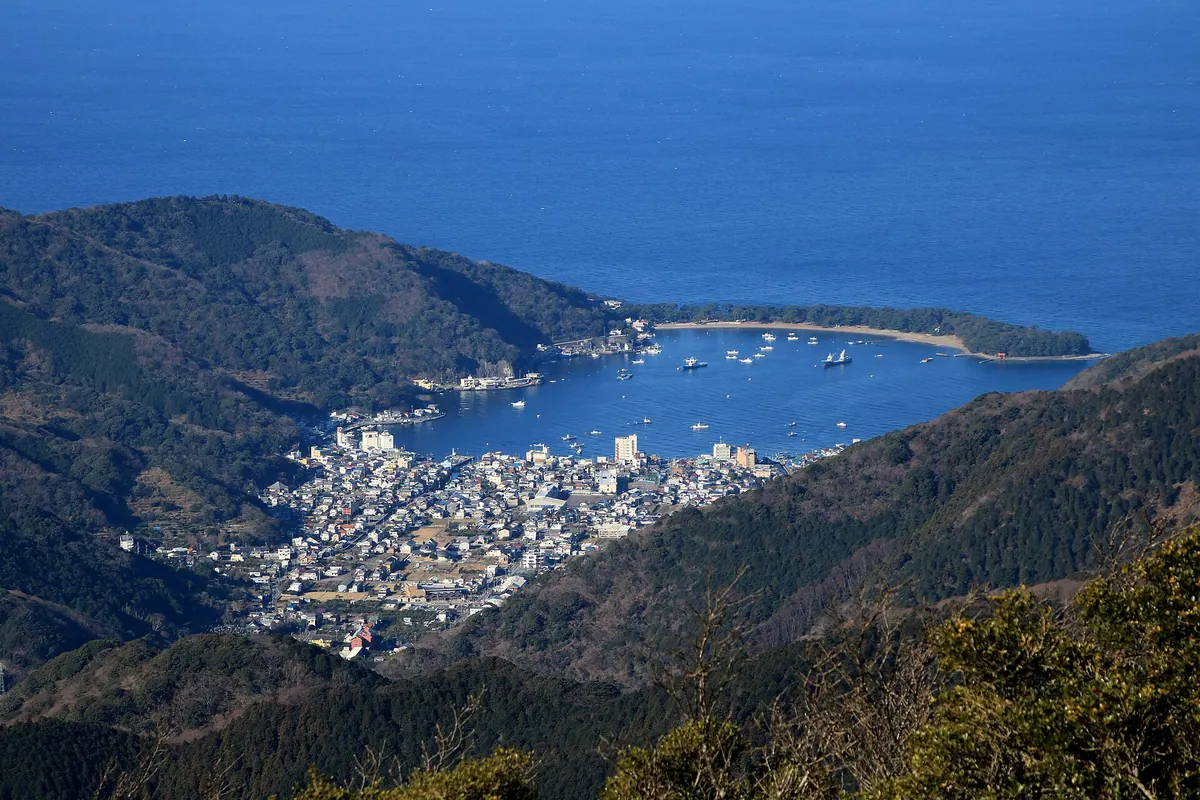
A coastal hot spring resort founded in 1986 near a fishing port, offering mineral-rich waters and public bathing facilities.
What it is
- A hot spring resort area established in 1986 near Heda Fishing Port.
- The name originates from the nearby Heda Shrine.
- The spring water contains sodium, calcium, and sulfate at fifty-two degrees Celsius.
- The area features fifteen inns and hotels for visitors.
What to see
- A day-use bath located within the Michi-no-Eki Kurura Heda facility.
- A free footbath available for public use at the roadside station.
- A hot spring water vending stand for local mineral water.
Getting there
- It is a seventy-minute drive from the Numazu Interchange.
- Shin Tokai Bus provides transportation from Shuzenji Onsen.
18
Itō Onsen
SHIZUOKA · PLACE 伊東温泉
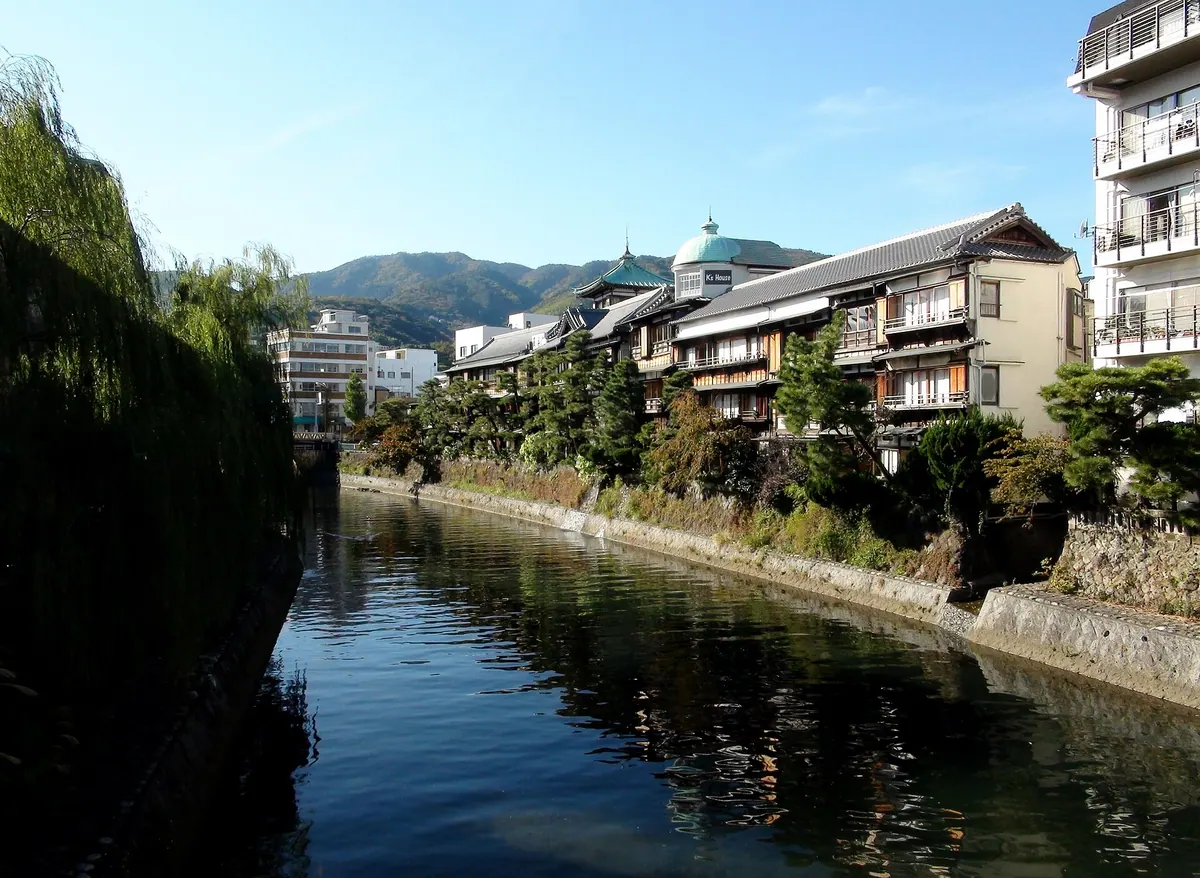
A historic hot spring town with the highest water discharge on Japan's main island, featuring numerous public baths and lucky statues.
What it is
- A historic hot spring resort founded during the Heian period.
- The area features 780 separate hot spring sources.
- The springs once provided water for the Shogun Tokugawa Iemitsu.
- The town served as the setting for the song Yunomachi Elegy.
What to see
- Ten public baths located throughout the hot spring town.
- Eight public baths featuring statues of the Seven Lucky Gods.
- A massive water discharge of 34,000 liters per minute.
When to go
- The All Japan Pillow Fight Championships are held here annually.
Getting there
- Accessible via Itō Station on the JR Itō Line.
- Official site
- www.ito.or.jp
19
Imaihama Onsen
SHIZUOKA · PLACE 今井浜温泉
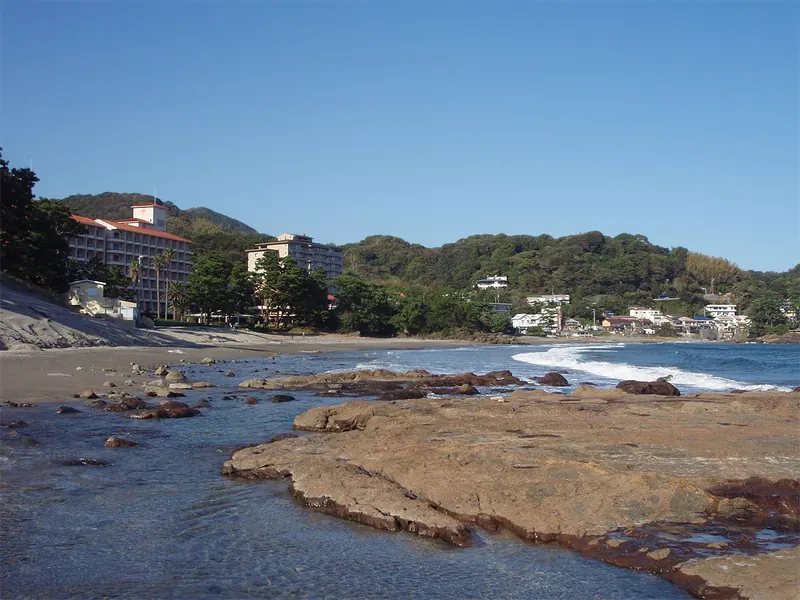
Imaihama Onsen is a coastal hot spring resort offering relaxation and local experiences, worth visiting for its unique baths.
What it is
- A hot spring resort in Kawazu Town, Shizuoka Prefecture.
- Part of the larger Kawazu Onsen Resort group.
- Also known as Izu Maikohama.
- Water piped from the inland Mine Onsen source.
What to see
- Hotels, ryokans, and pensions line the coast.
- Funado no Banya offers day-trip bathing and dining.
- Spring water contains gypsum and weak salt carbonate.
- Source water temperature is 60 degrees Celsius.
When to go
- Participate in dried fish and salt making workshops.
Getting there
- Accessible via Imaihama-Kaigan Station on the Izu Kyuko Line.
20
Sumatakyō Onsen
SHIZUOKA · PLACE 寸又峡温泉
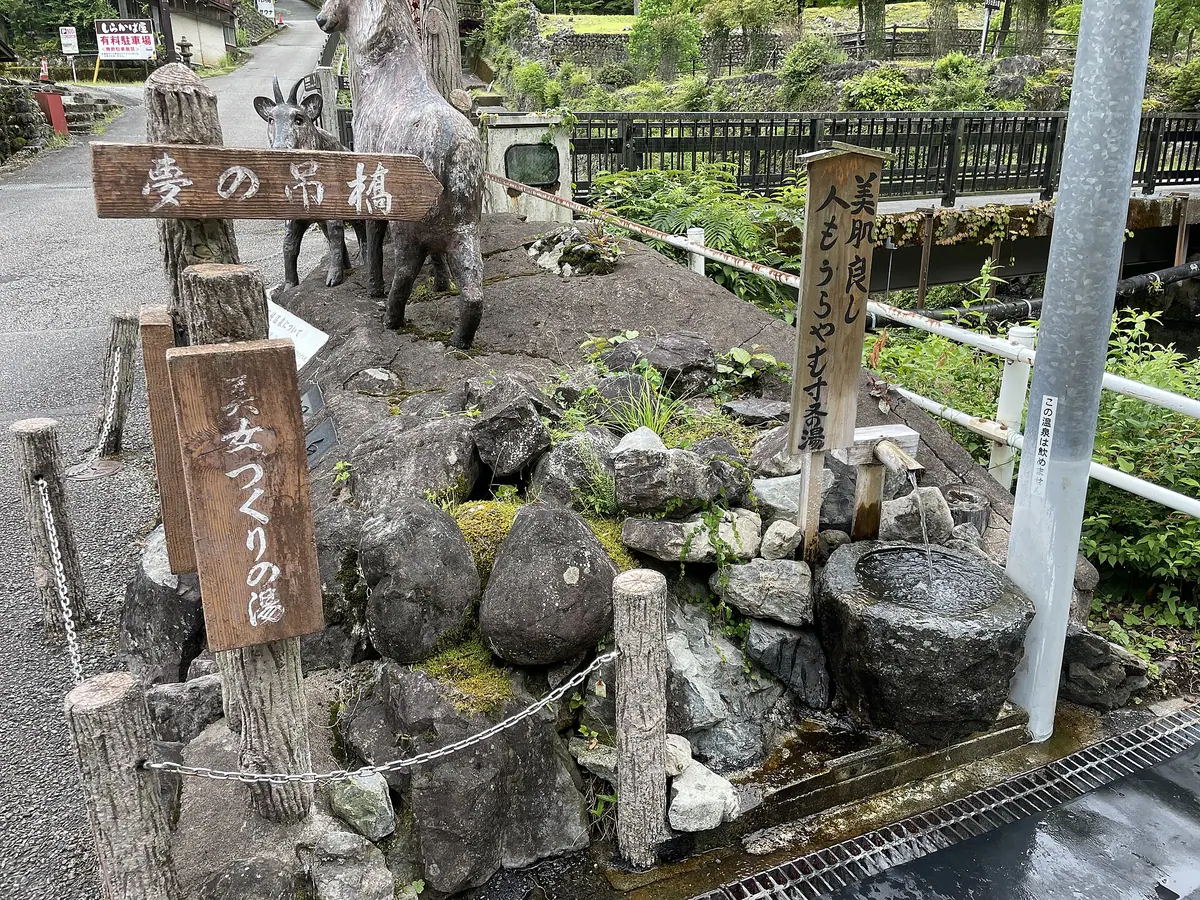
A sulfur hot spring resort established in 1962 featuring eight inns and a public open-air bath in Shizuoka.
What it is
- A hot spring resort established in 1962 in Kawanehon Town.
- The resort features sulfur spring water with a source temperature of 43.7 degrees Celsius.
- The area contains eight inns and guesthouses for visitors.
- The original hot spring source was submerged by the Ooma Dam.
What to see
- A town-operated open-air bath is available for public use.
- The resort area is located at the end of Shizuoka Prefectural Road 77.
Getting there
- Buses run from Senzu Station directly to the hot spring resort.
- The bus journey from Senzu Station takes approximately 40 minutes.