

9 Onsen in Ōita worth your time
Japan Gems
9 Onsen in Ōita, with what to see and how to get there.
Ōita has 9 onsen on Japan Gems. Below are the 9 we can tell you the most about — each one written up in English from Japanese sources, with what to see and how to get there. See all onsen in Ōita.
01
Kannawa Onsen
ŌITA · PLACE 鉄輪温泉
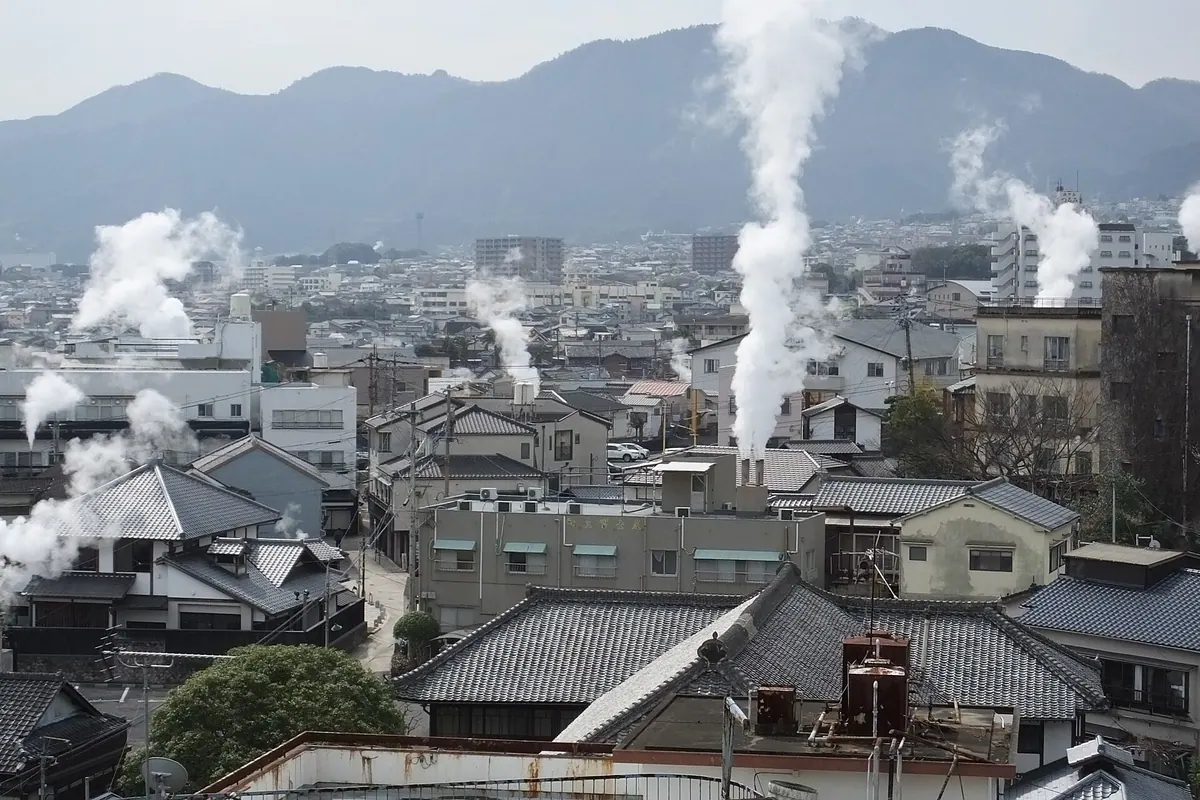
A historic hot spring district in Beppu famous for its concentrated volcanic steam, traditional medicinal baths, and unique steam-cooked cuisine.
What it is
- One of the eight major hot spring areas located in Beppu City.
- Founded in 1276 by Ippen Shonin who established the local steam bath.
- Designated as an Important Cultural Landscape in 2012 for its unique environment.
- A district containing the highest concentration of hot spring sources in the city.
What to see
- Nine public baths including the historic Kannawa Mushi-yu steam bath.
- Multiple Beppu Hell Tour sites featuring unique volcanic activity.
- The Yumetake device which cools boiling spring water without dilution.
- Local facilities where visitors use natural volcanic steam for cooking food.
When to go
- The Kannawa Yuami Festival takes place annually during September.
Getting there
- Local buses from JR Beppu Station reach the district in twenty minutes.
- High-speed buses provide direct connections from Fukuoka and Nagasaki.
- Official site
- kannawaonsen.com
02
Hells of Beppu
ŌITA · PLACE 別府地獄めぐり
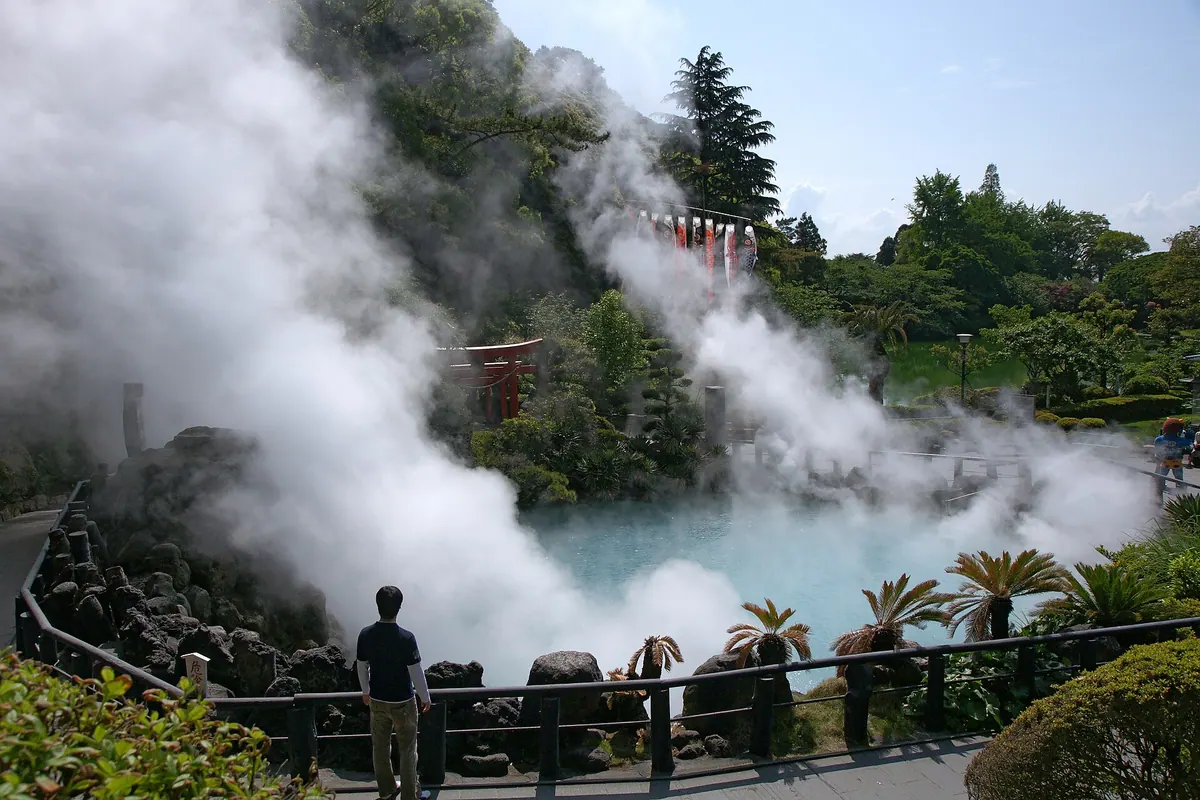
Seven unique volcanic hot springs in Oita featuring colorful waters, boiling mud, and a geyser for visual observation.
What it is
- A collection of natural hot spring vents located in Oita Prefecture.
- Seven major springs belong to the Beppu Jigoku Association for tourism.
- Four of the locations were designated as National Scenic Spots in 2009.
- The site features Japan's first bus tour service established in 1928.
What to see
- Umi Jigoku features cobalt blue water reaching temperatures of 98 degrees Celsius.
- Chinoike Jigoku displays natural vermilion red water in a large pool.
- Tatsumaki Jigoku is a geyser that erupts at intervals of 30 to 40 minutes.
- Oniyama Jigoku uses geothermal heat to breed approximately 100 crocodiles.
- Shiraike Jigoku contains white water caused by specific temperature and pressure changes.
- Onishi Bozu Jigoku features large bubbles of hot gray mud rising to the surface.
When to go
- Kamenoi Bus operates regular sightseeing tours throughout the day.
- Official site
- www.beppu-jigoku.com
03
Yufuin Onsen
ŌITA · PLACE 由布院温泉
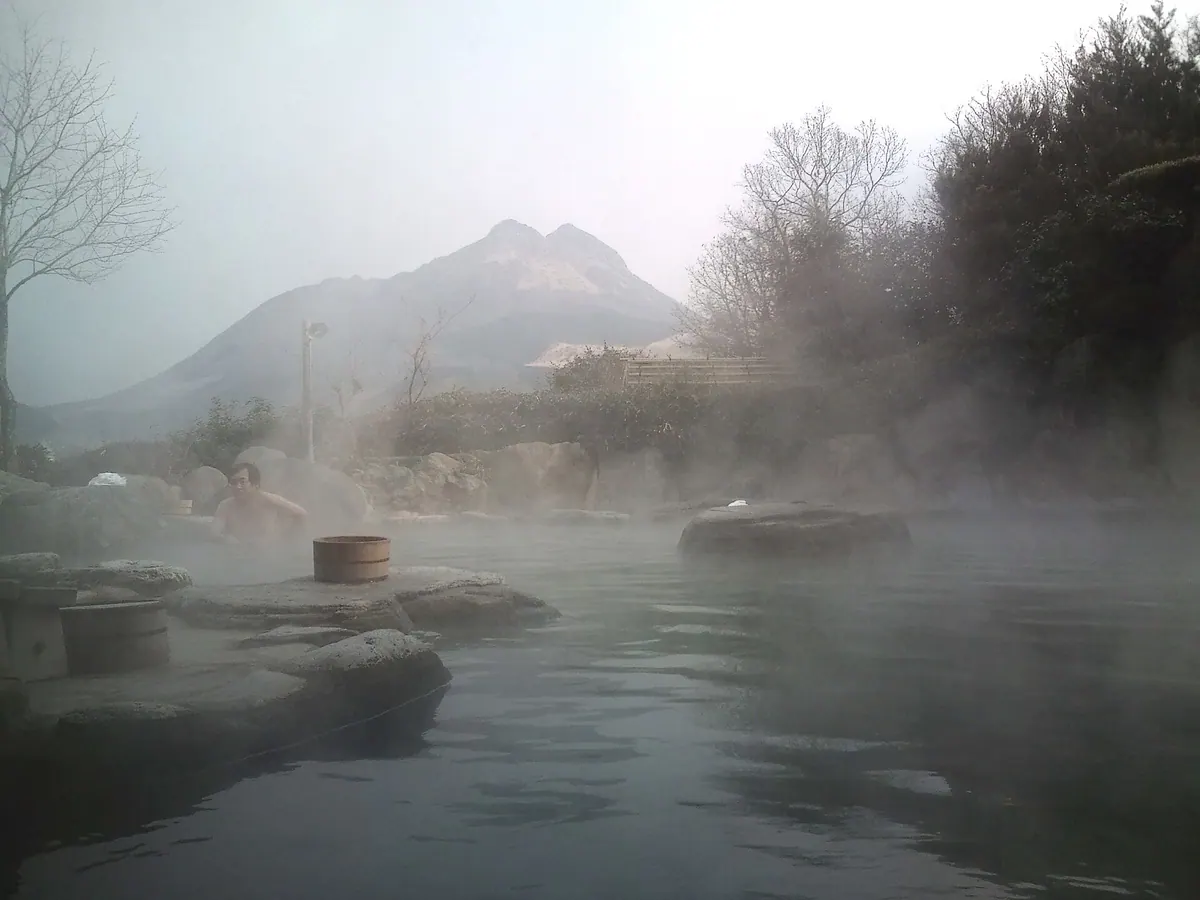
A premier hot spring resort at the foot of Mount Yufu known for high water volume and scenic morning mists.
What it is
- A hot spring resort town located at the base of Mount Yufu.
- Designated as a National Health Resort in 1959.
- Features 852 hot spring sources with the second highest discharge volume in Japan.
- The primary water source is a simple thermal spring.
What to see
- Mount Yufu serves as the prominent natural landmark overlooking the town.
- Yunotsubo Avenue is a main thoroughfare leading toward the water.
- Lake Kinrin is a scenic body of water located at the end of the main street.
- Public baths such as Shitanyu are available for visitors near the lake.
When to go
- Winter months offer views of morning mist across the basin.
- The town hosts an annual film festival and a music festival.
Getting there
- The resort is accessible via the JR Kyudai Main Line.
- Yufuin Station serves as the primary railway gateway to the area.
- Official site
- www.yufuin.gr.jp
04
Beppu Onsen
ŌITA · PLACE 別府温泉
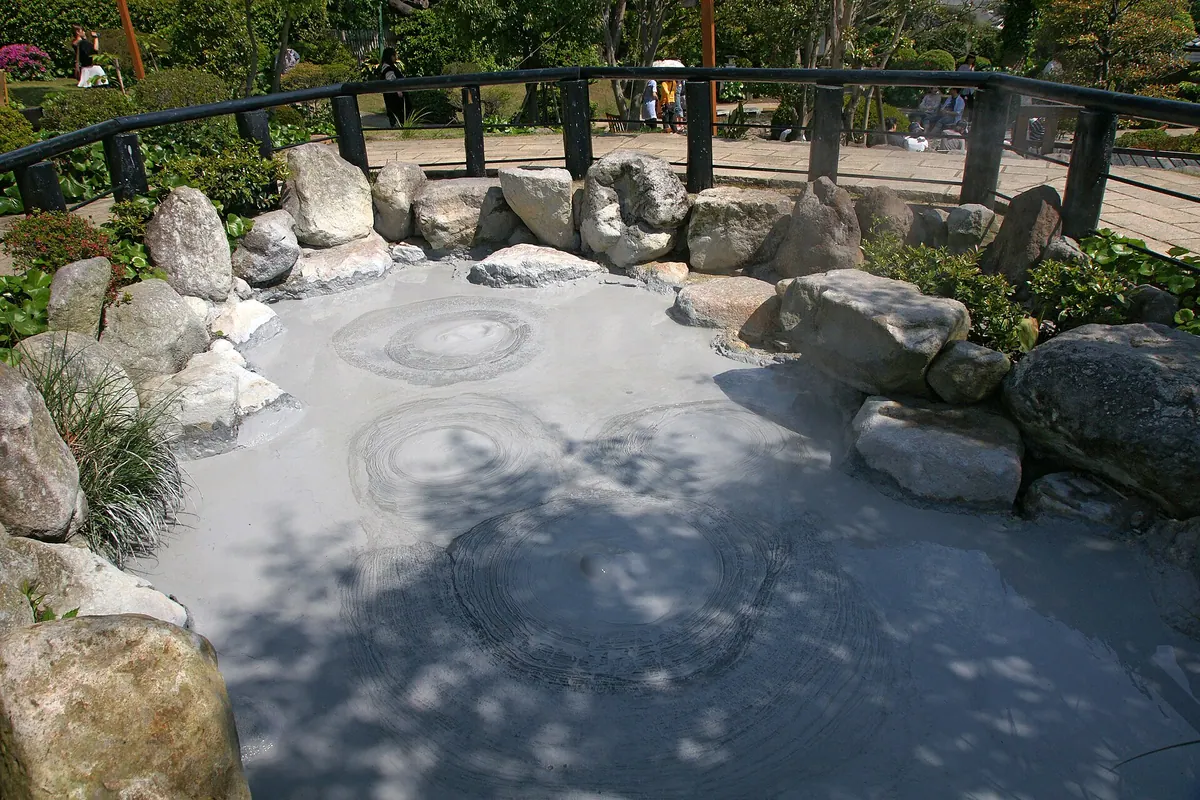
Japan's most prolific hot spring destination features eight distinct districts, unique steam cooking, and scenic natural geothermal wonders.
What it is
- A collection of hundreds of hot springs located throughout the city.
- The area contains the highest number of hot spring sources in all of Japan.
- Eight major hot spring districts collectively known as the Beppu Hatto.
- A major tourist destination attracting over eight million visitors every year.
What to see
- Takegawara Onsen which is a designated Modernization Industrial Heritage site.
- The scenic natural springs featured in the Beppu Jigoku Meguri tour.
- Important Cultural Landscapes within the Myoban and Kannawa districts.
- Traditional Beppu Bamboo Crafts designated as a National Traditional Craft.
- Hot spring steam used for a local cooking style called Jigoku-mushi.
When to go
- The Beppu Hatto Onsen Festival held annually in early April.
05
Hokkein Onsen
ŌITA · PLACE 法華院温泉
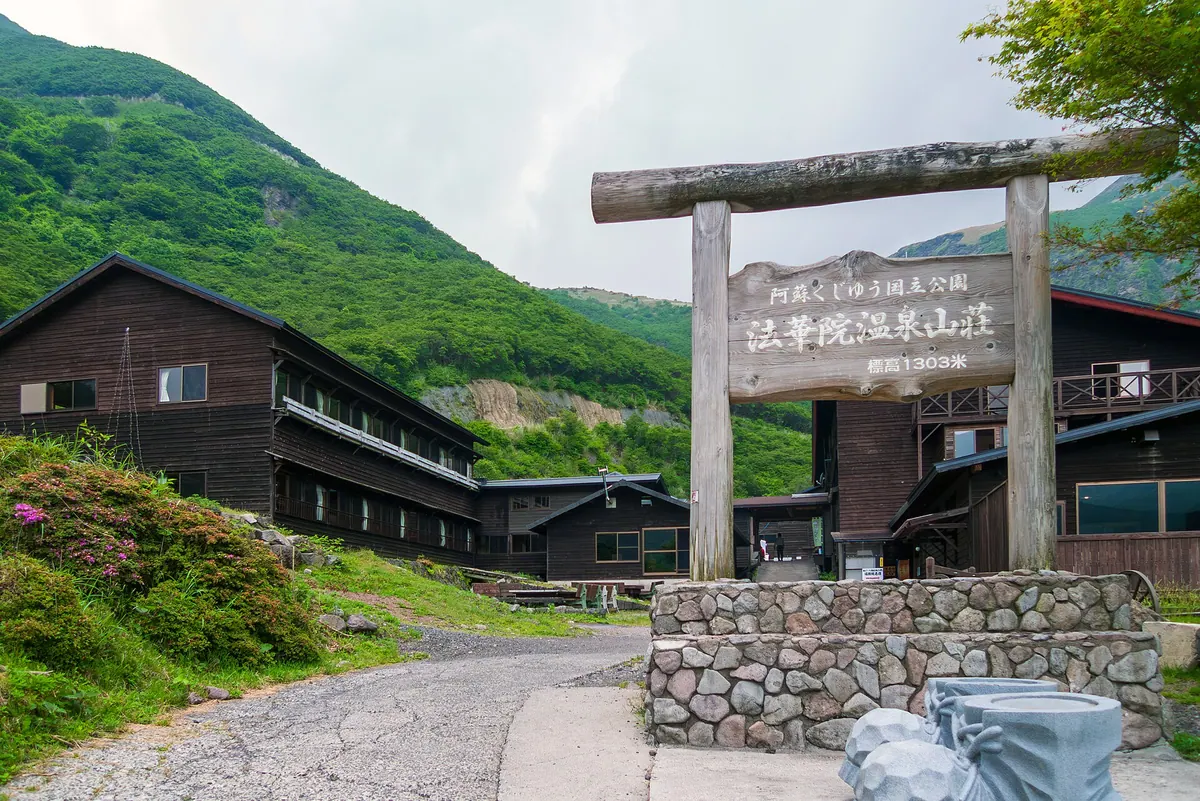
Kyushu highest hot spring offers a historic mountain lodge experience accessible only by a two-hour hike through scenic highlands.
What it is
- The highest hot spring in Kyushu sitting at an altitude of 1,303 meters.
- A mountain lodge and campground established in 1882 on a former temple site.
- A facility originating as a Buddhist training center founded in 1470.
- Part of the Takeda Onsen Group national health resort in Oita Prefecture.
What to see
- A single mountain lodge offering day trip bathing for hikers.
- Hot spring water containing calcium, magnesium, and sodium sulfate.
- A mountain campground surrounded by the high peaks of Taketa.
- The site where original temple buildings stood before an 1882 fire.
Getting there
- A two-hour hike is required to reach the lodge from the trailhead.
- The facility is located approximately 5.4 kilometers from the nearest trailhead.
06
Kanno-jigoku Onsen
ŌITA · PLACE 寒の地獄温泉
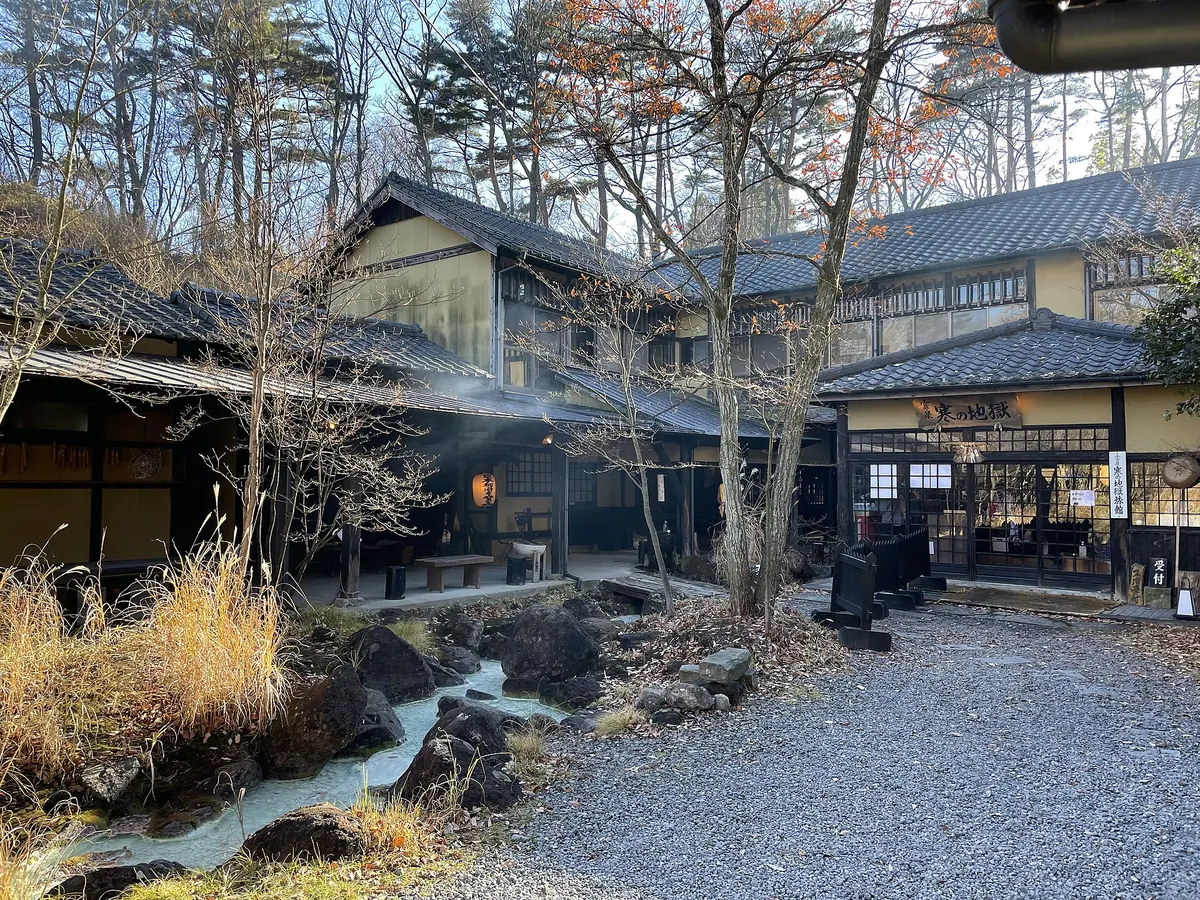
A historic cold-water hydrogen sulfide spring at 1,100 meters altitude, famous for its unique 14-degree Celsius bathing experience.
What it is
- A historic hot spring facility opened in 1849 in Kokonoe Town.
- Member of the Japan Association of Secluded Hot Springs located at high altitude.
- Features a cold hydrogen sulfide spring source flowing at 2,160 liters per minute.
- The associated ryokan inn was founded later in 1928.
What to see
- Cold spring baths with a source temperature between 13 and 14 degrees Celsius.
- A mixed-gender bathing area where visitors must wear swimwear or underwear.
- A self-service sauna facility established in July 2023.
- Mountain scenery from a location situated 1,100 meters above sea level.
Getting there
- Buses run to the hot spring site from Yufuin Station.
- Public bus transportation is available from Aso Station.
07
Tsukahara Onsen
ŌITA · PLACE 塚原温泉
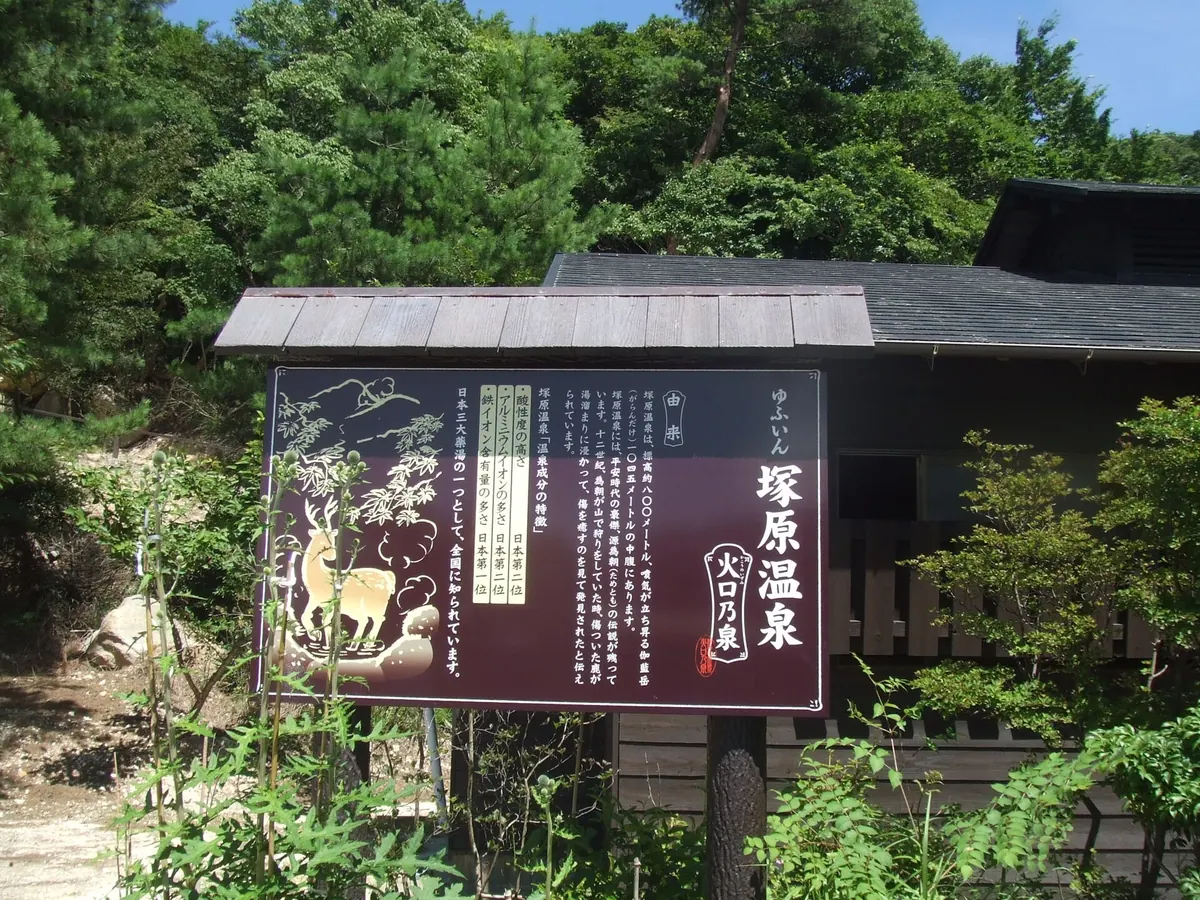
A historic volcanic hot spring on Mount Garan featuring Japan's highest iron content and extremely acidic therapeutic waters.
What it is
- A historic hot spring facility located on Mount Garan in Yufu City
- Part of the Yufuin Onsen-kyo National Health Resort area
- Reportedly discovered during the Heian period for its medicinal properties
- Features highly acidic sulfate water with a pH level of 1.5
What to see
- Indoor and outdoor public baths and private family bathing areas
- A volcanic hell zone where the hot spring source originates
- Eggs that have been steamed in volcanic gases for twenty hours
- Views of the active volcanic landscape surrounding the facility
When to go
- The facility may close during winter months due to heavy snowfall
Getting there
- Accessible by a twenty minute taxi ride from Yufuin Station
08
Takegawara Onsen
ŌITA · PLACE 竹瓦温泉
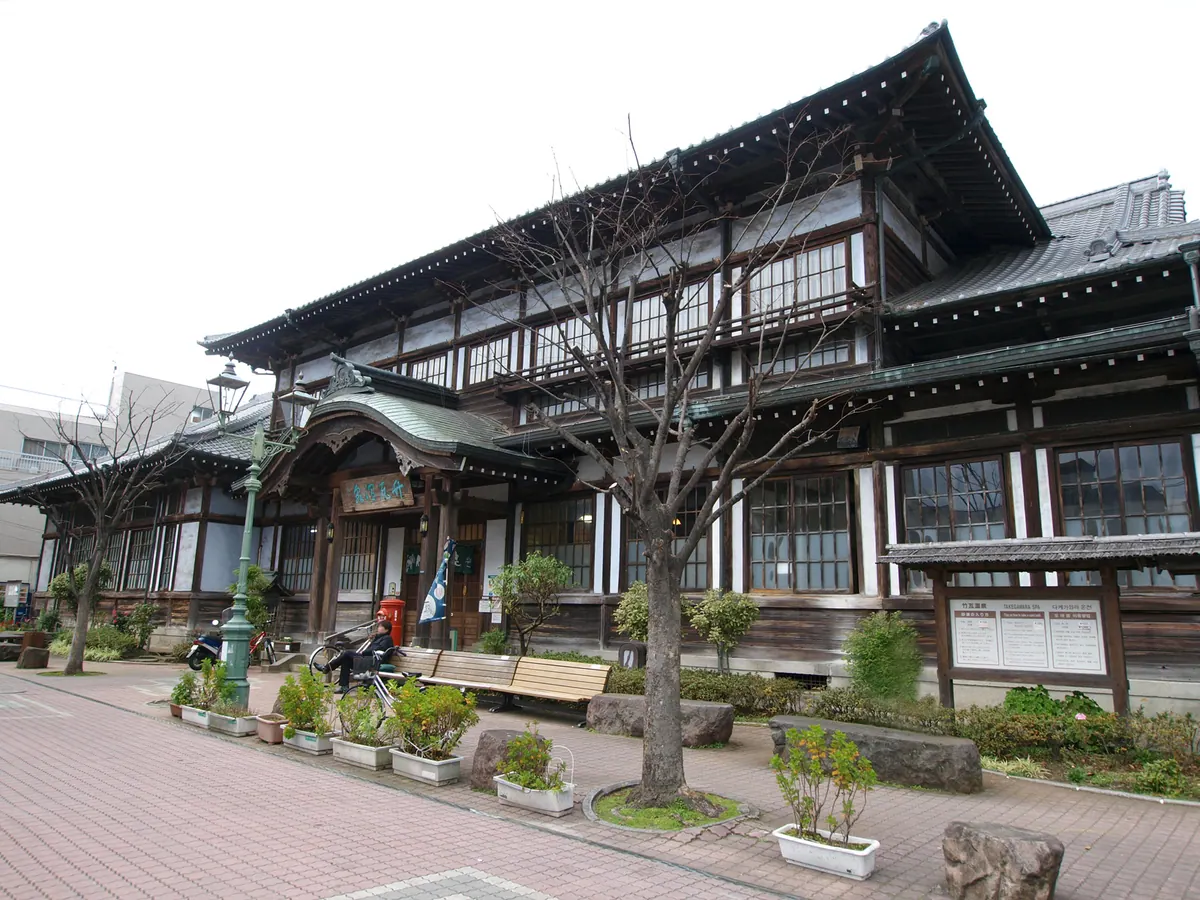
A historic 1938 municipal bathhouse in Beppu offering traditional hot spring soaking and unique sand baths in a cultural landmark.
What it is
- A municipal hot spring facility originally established in 1879.
- The current wooden structure dates back to 1938.
- A registered tangible cultural property and Heritage of Industrial Modernization.
- Named after the bamboo roofing used on the original building.
What to see
- The distinctive large karahafu style gabled roof on the exterior.
- Traditional indoor baths containing chloride and hydrogen carbonate spring water.
- A dedicated area for experiencing traditional sand baths.
- The second floor which functions as a local community center.
- The nearby Takegawara Koji Arcade, the oldest existing arcade in Japan.
Getting there
- A ten minute walk from JR Beppu Station.
- Official site
- www.city.beppu.oita.jp
09
Yunohira Onsen
ŌITA · PLACE 湯平温泉
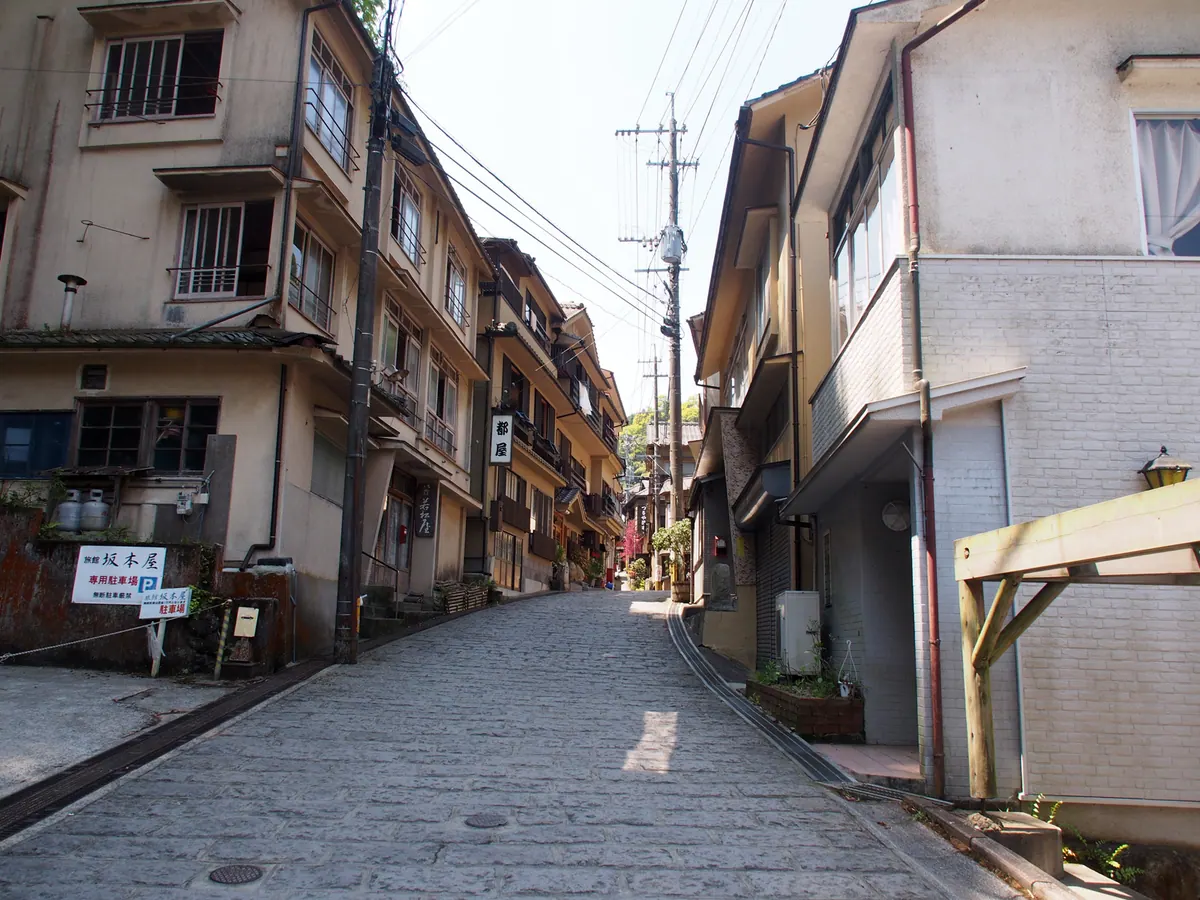
A historic hot spring town in a river valley featuring Edo-period stone streets and therapeutic public bathhouses.
What it is
- A hot spring resort in Yufu City designated as a National Health Resort Onsen.
- A historic site dating back to the Kamakura period with sodium chloride and sulfate waters.
- A former filming location for the Tora-san movie series.
- A destination once ranked as West Yokozuna in an early Showa era hot spring ranking.
What to see
- Stone-paved streets originally constructed during the Edo period.
- Four public bathhouses located throughout the town area.
- The scenic landscape of the Kagano River valley.
- The site where poet Santoka Taneda visited in 1930.
Getting there
- Accessible by a short taxi ride from JR Yunohira Station.
- Official site
- www.yunohira-onsen.jp