

9 Onsen in Wakayama worth your time
Japan Gems
9 Onsen in Wakayama, with what to see and how to get there.
Wakayama has 9 onsen on Japan Gems. Below are the 9 we can tell you the most about — each one written up in English from Japanese sources, with what to see and how to get there. See all onsen in Wakayama.
01
Nanki-Shirahama Onsen
WAKAYAMA · PLACE 南紀白浜温泉

One of Japan's three oldest hot spring resorts, offering ancient seaside baths and white sand beaches on the Pacific coast.
What it is
- One of the three oldest hot spring resorts in Japan with over a millennium of history.
- A collection of seven distinct hot spring districts located in Shirahama Town.
- A historic destination visited by Emperors Saimei, Jito, and Monmu in ancient times.
- Waters originating from deep groundwater squeezed from a tectonic plate reaching 85 degrees Celsius.
What to see
- Saki-no-yu, an open-air hot spring bath located directly on the Pacific Ocean.
- Shirarahama, a white sand beach that gives the town its name.
- Adventure World and Shirahama Energy Land theme parks located within the town area.
- Local seafood markets featuring seasonal specialties like spiny lobster and longtooth grouper.
Getting there
- Direct flights are available from Tokyo Haneda Airport to Nanki-Shirahama Airport.
- The area is accessible by train via Shirahama Station on the Kisei Line.
- Drivers can reach the resort area via the Kisei Expressway.
- Official site
- www.shirahama-ryokan.jp
02
Kada Awashima Onsen
WAKAYAMA · PLACE 加太淡嶋温泉
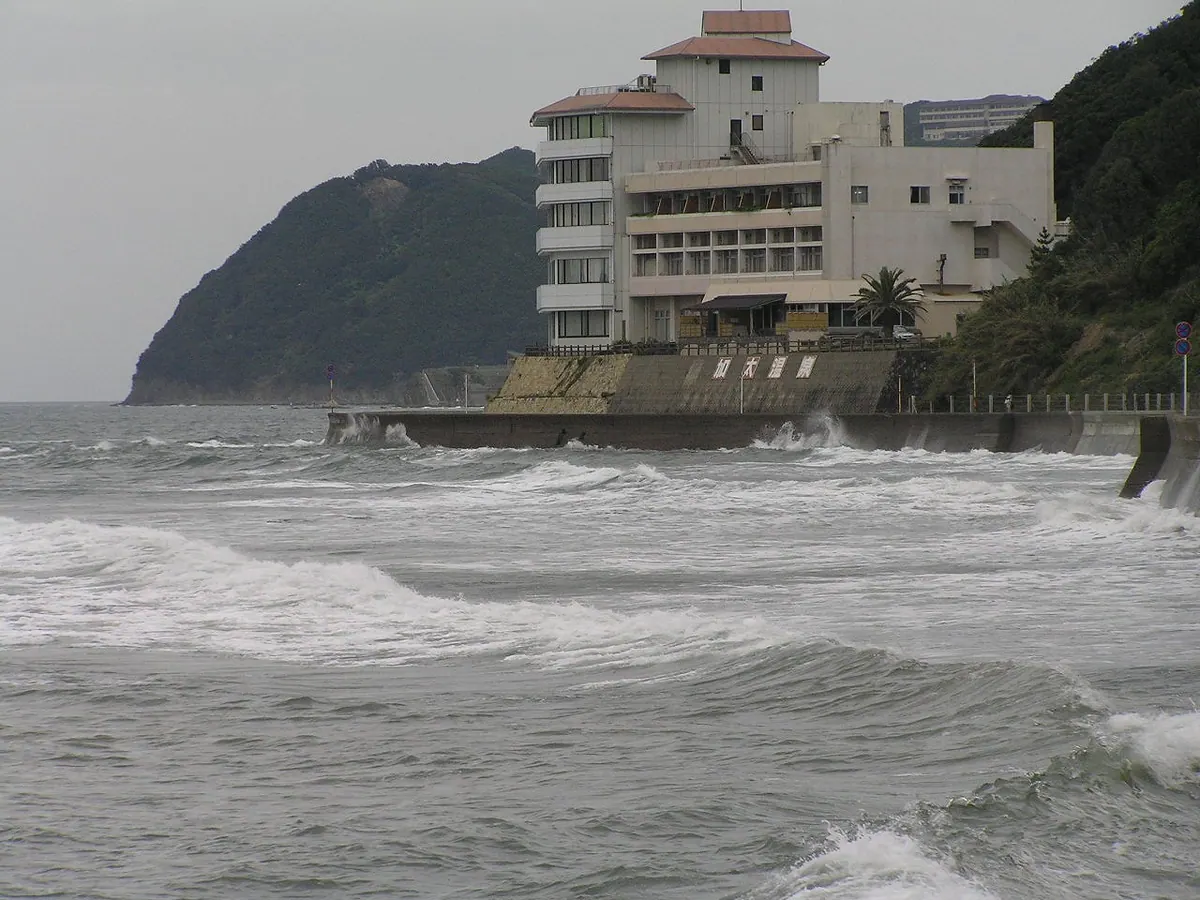
A coastal hot spring resort in Wakayama featuring therapeutic waters and a unique shrine famous for its doll festival.
What it is
- A hot spring resort area located along the Kitan Strait and Kada Bay.
- The spring water contains hydrogen carbonate and sodium chloride for therapeutic bathing.
- Approximately six hotels and traditional inns operate within the local area.
- The colorless and transparent source water reaches a temperature of 25.5 degrees Celsius.
What to see
- Awashima Shrine is located in the immediate vicinity of the hot spring area.
- Views of Tomogashima island are visible to the west of the coastline.
- Day-trip bathing facilities are available at several local inns during the daytime.
When to go
- The Doll Floating festival takes place annually on March 3rd.
Getting there
- Kada Station on the Nankai Railway is located one kilometer from the site.
- The area is situated 18 kilometers from the Wakayama Interchange.
03
Nanki-Katsuura Onsen
WAKAYAMA · PLACE 南紀勝浦温泉
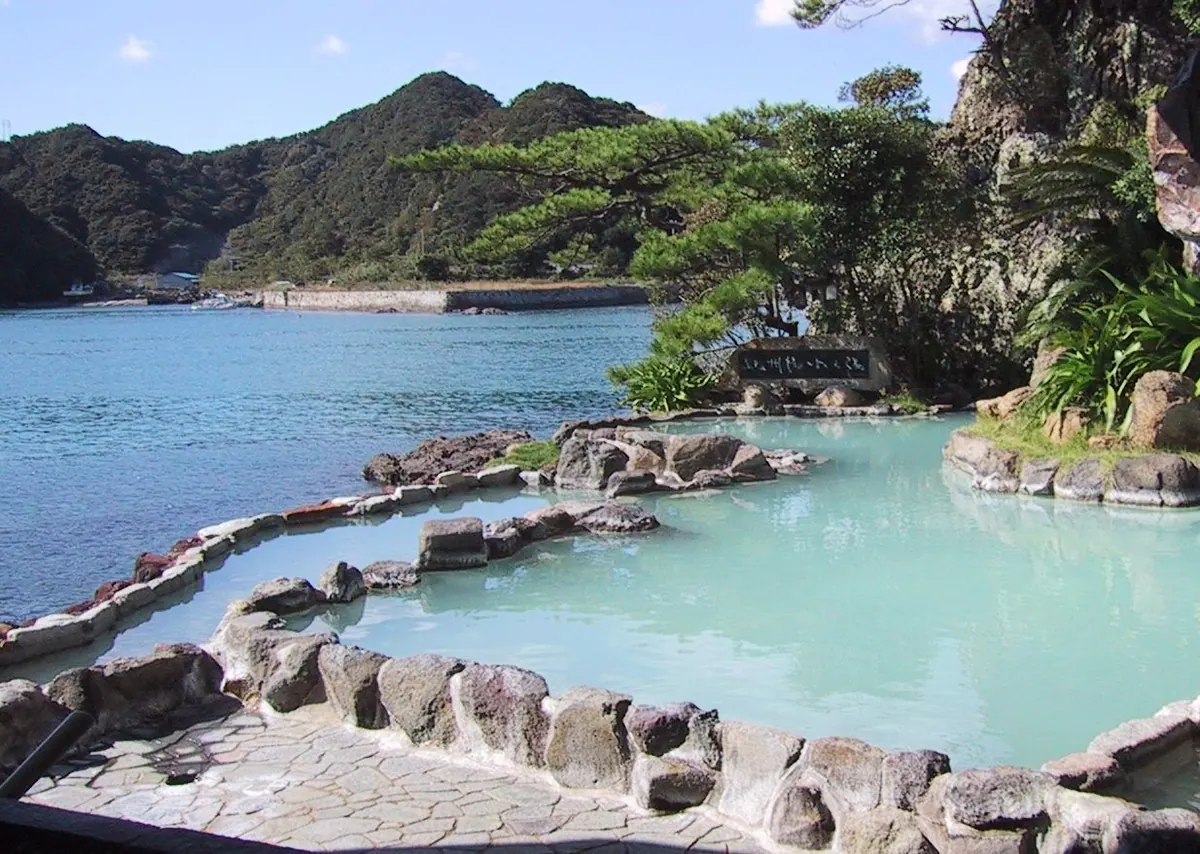
A coastal hot spring resort in Wakayama serving as a gateway to the Kumano Kanzan World Heritage site.
What it is
- A hot spring resort area located along the rias coastline of Nachikatsuura.
- A major base for visitors exploring the Kumano Kanzan World Heritage site.
- A designated part of the Yoshino-Kumano National Park since 1950.
- A resort town featuring over one hundred separate hot spring sources.
What to see
- Natural cave baths named Bokido and Genbudo located at Hotel Urashima.
- Kii-Katsuura Port which serves as a major base for tuna fishing.
- Hotels and traditional inns concentrated along the scenic coastline.
- Accommodations that are accessible only by taking a boat from the pier.
When to go
- The annual hot spring offering ceremony held every November.
Getting there
- Take a direct limited express train from Osaka, Kyoto, or Nagoya.
- Arrive at Kii-Katsuura Station located on the Kise Line.
- Official site
- katsuuraonsen.jp
04
Wataze Onsen
WAKAYAMA · PLACE 渡瀬温泉

A designated National Health Resort in Kumano featuring one of the largest outdoor hot spring baths in the region.
What it is
- A hot spring area part of the Kumano Hongu Onsen Village in Tanabe City.
- Designated as a National Health Resort in 1957 for its therapeutic water quality.
- The site features three hotels and a dedicated day-trip bathing facility.
- Natural spring water flows directly from three sources at 600 liters per minute.
What to see
- Large outdoor bathing area with six pools for men and five for women.
- Hot spring facilities situated along the banks of the Yomura River.
- Nearby campsite and public health center within the resort grounds.
When to go
- An annual offering ceremony takes place at the nearby Kumano Hongu Taisha Shrine.
Getting there
- Buses from Shingu Station reach the hot springs in approximately 60 minutes.
- A 90-minute bus ride connects the area to Kii-Tanabe Station.
05
Kawayu onsen
WAKAYAMA · PLACE 川湯温泉

A unique riverside hot spring where visitors dig their own baths and enjoy a massive communal winter pool.
What it is
- A riverside hot spring area where hot water emerges by digging into the river bank.
- Designated as a National Recreation Onsen in 1957.
- The spring water contains sodium bicarbonate and chloride.
What to see
- The Sennin-buro, a large outdoor bath created in the river during winter.
- The Oto River bank where visitors can create their own private baths.
- Kumano Hongu Taisha shrine located a ten minute drive from the area.
When to go
- December to the end of February to experience the Sennin-buro outdoor bath.
- January for the traditional wooden karuta card competition.
- October to witness the annual hot water offering ceremony.
Getting there
- Buses from Shingu Station reach the area in sixty minutes.
- Buses from Yagi Station take five and a half hours to arrive.
06
Yukawa Onsen
WAKAYAMA · PLACE 湯川温泉
A historic sulfur spring resort beside Yukashi Lagoon, offering traditional healing baths and a rest stop along the Kumano Kodo.
What it is
- A hot spring area specializing in traditional recuperation and sulfur water cures.
- Historically served as a purification site for pilgrims traveling the Kumano Kodo.
- Located in Nachikatsuura Town beside the scenic Yukashi Lagoon.
- Famous for hosting notable Japanese poets including Takahama Kyoshi and Sato Haruo.
What to see
- Natural sulfur springs with water temperatures ranging from twenty-five to sixty degrees Celsius.
- The Yukashi Lagoon, which was named by the poet Sato Haruo.
- Traditional accommodations designed for long-term health stays and healing.
- Access points to the surrounding Kumano Kodo pilgrimage forest routes.
Getting there
- A twenty-minute walk from Yukawa Station leads to the hot spring area.
- The site is a five-minute taxi ride from Kii-Katsuura Station.
07
Tsubaki Onsen
WAKAYAMA · PLACE 椿温泉
A historic alkaline hot spring resort in Shirahama known for its skin-smoothing sulfur waters and coastal views.
What it is
- A historic hot spring area in Shirahama Town mentioned in the Kii Shoku Fudoki.
- The site features highly alkaline water with a pH between 9.6 and 10.4.
- The hot spring water contains small amounts of sulfur.
- A collection of medium-sized inns and resort condominiums overlooking the sea.
What to see
- Roadside Station Tsubaki Hana no Yu featuring a day-trip bath facility.
- A free public footbath located at the roadside station.
- A small swimming beach within a ten minute walk of the area.
- Coastal views from the resort condominiums and inns along National Route 42.
Getting there
- Tsubaki Station on the JR Kisei Line is a thirty minute walk away.
- Meiko Bus operates services from Shirahama Station to the hot spring area.
- Official site
- www.tubakionsen.com
08
Ryūjin Onsen
WAKAYAMA · PLACE 龍神温泉
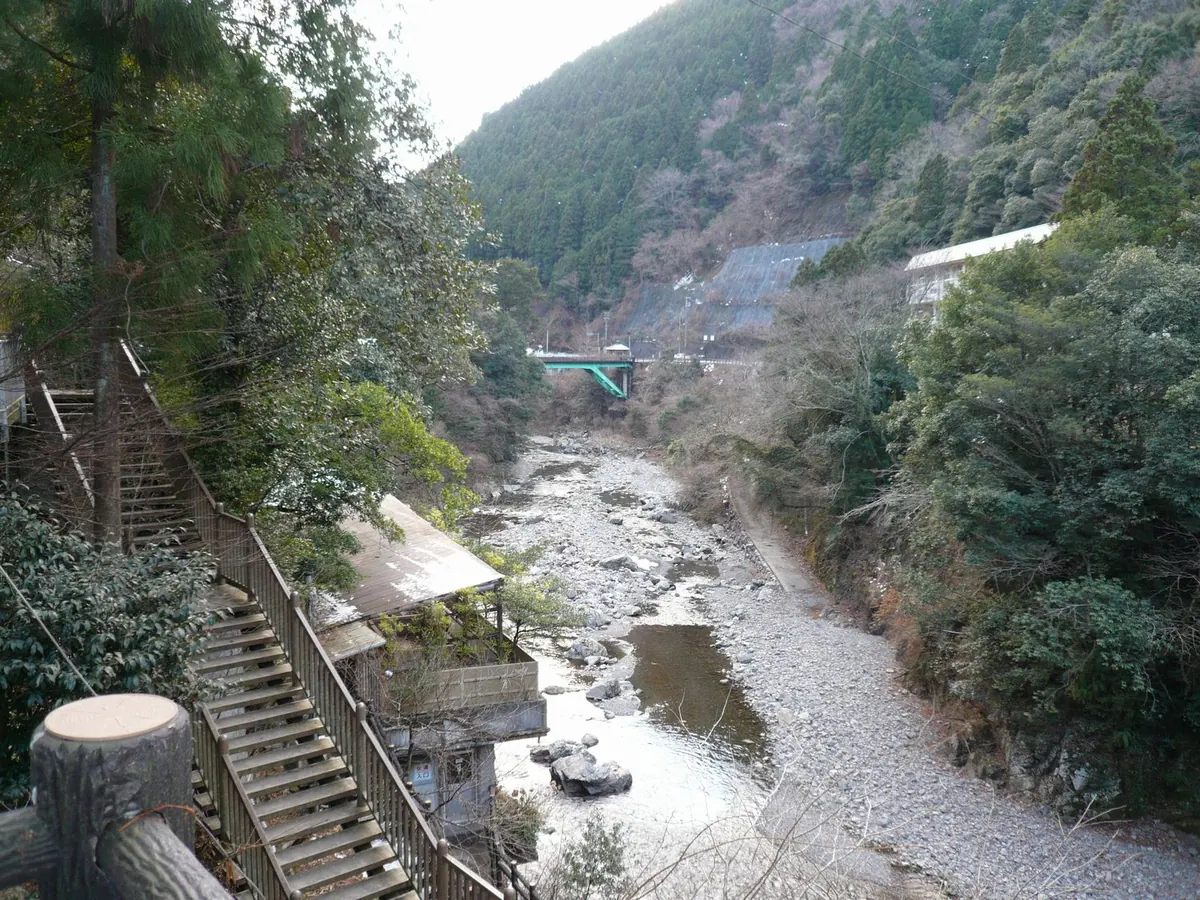
A historic hot spring resort ranked among Japan's top three for skin beautifying properties, set along the scenic Hidaka River.
What it is
- A sodium bicarbonate saline hot spring located in Tanabe City, Wakayama Prefecture.
- Legend says En no Gyoja discovered the spring and Kobo Daishi opened the bathhouse.
- Designated as a National Health Resort Onsen by the Environment Agency.
- One of Japan's three most famous hot springs for beautiful skin.
What to see
- The Kami-goten building, which is a National Registered Tangible Cultural Property.
- Traditional accommodations situated along the banks of the Hidaka River.
- Natural hot spring water with a source temperature of 48 degrees Celsius.
- The setting featured in the novel Daibosatsu Toge by Kaizan Nakazato.
Getting there
- Buses from Kii-Tanabe Station take about eighty minutes to reach the hot spring.
09
Yunomine Onsen
WAKAYAMA · PLACE 湯の峰温泉
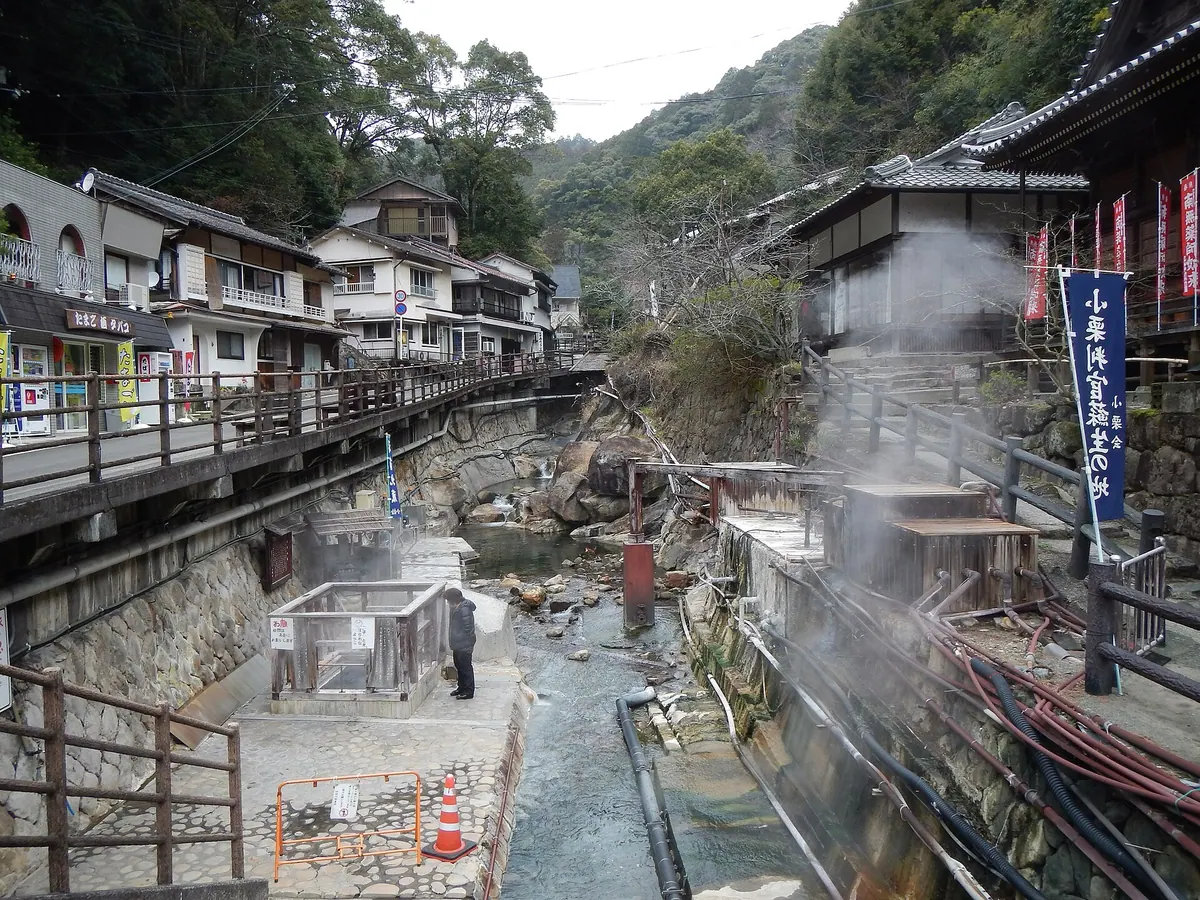
A UNESCO-listed hot spring on the Kumano Kodo pilgrimage route featuring Japan's oldest public bath and natural boiling vents.
What it is
- A historic hot spring discovered in the 4th century located in Tanabe City.
- A designated UNESCO World Heritage site and part of the Kumano Hongu Onsen-kyo.
- A significant stop along the ancient Kumano Kodo pilgrimage route.
- Home to Tsuboyu, which is considered the oldest public bath in Japan.
What to see
- The Yututsu vent where visitors boil eggs and vegetables in 92.5 degree water.
- Tokoji Temple which stands prominently in the center of the town.
- The rare Yunomine-shida fern first discovered in this area in 1887.
- Small public bath houses containing sulfur, sodium, chloride, and bicarbonate minerals.
Getting there
- Accessible by taking a bus from Shingu Station.