

6 Lakes in Akita worth your time
Japan Gems
6 Lakes in Akita, with what to see and how to get there.
Akita has 6 lakes on Japan Gems. Below are the 6 we can tell you the most about — each one written up in English from Japanese sources, with what to see and how to get there. See all lakes in Akita.
01
Hachirōgata
AKITA · PLACE 八郎潟
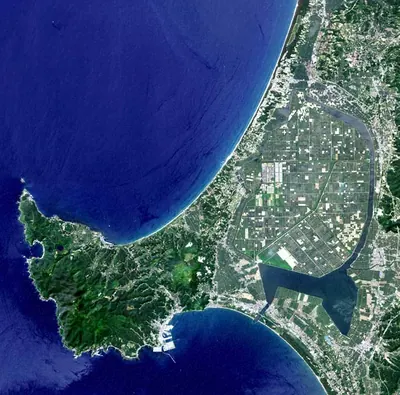
A former massive brackish lake transformed into a freshwater body and agricultural village through Dutch-assisted land reclamation technology.
What it is
- A freshwater lake in Akita Prefecture that was once Japan's second largest body of water.
- The site of a massive land reclamation project completed between 1957 and 1977.
- A designated special water quality conservation lake currently ranked as the eighteenth largest in Japan.
- The location of Ogata Village, which was established on the newly reclaimed land in 1964.
What to see
- The intersection point of the 40th parallel north and 140th meridian east.
- The Funakoshi Waterway, which serves as the only outflow river for the lake.
- Expansive agricultural lands created using technical cooperation from the Netherlands.
- Local fishermen catching wakasagi on the water during the colder months.
When to go
- Winter is the primary season for visitors interested in wakasagi fishing.
02
Lake Kagami
AKITA · PLACE 鏡沼
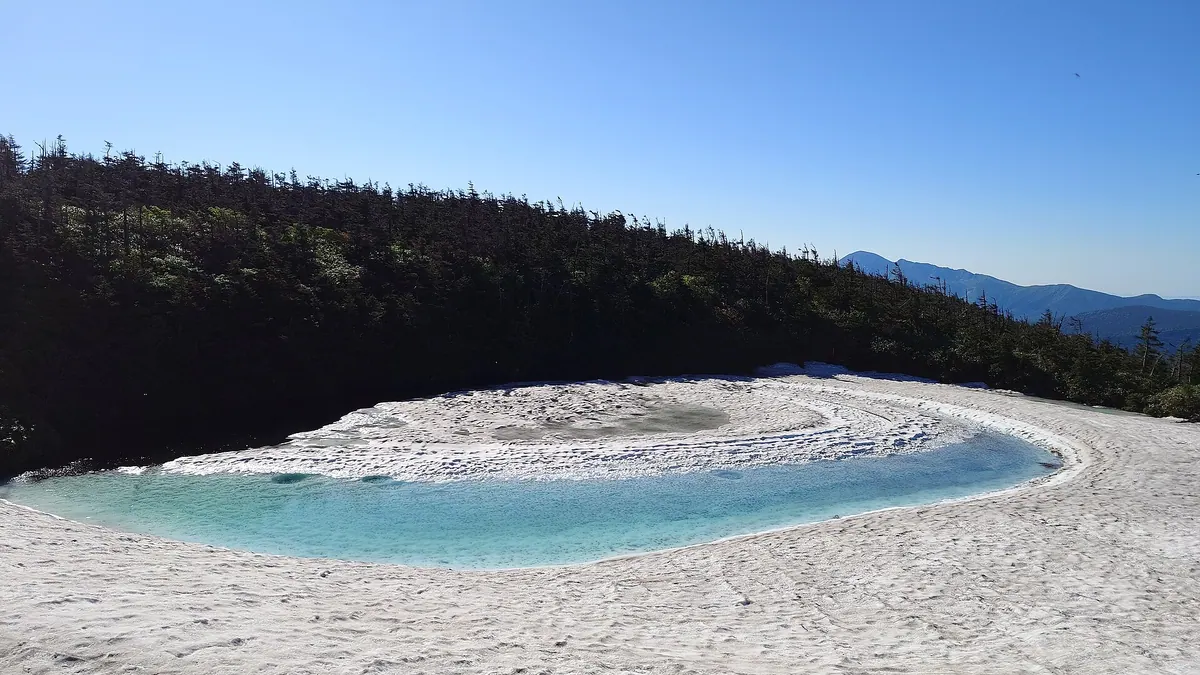
A volcanic crater lake near Mount Hachimantai summit famous for a unique snow melting pattern known as the Dragon Eye.
What it is
- A crater lake formed when water filled a volcanic depression near the summit of Mount Hachimantai.
- The site straddles the border between Iwate Prefecture and Akita Prefecture.
- A shallow body of water sitting at an elevation of approximately 1,613 meters.
- The location received the Cool Japan Award in 2019 for its natural beauty.
What to see
- A funnel-shaped lake with a circumference of about one kilometer.
- The Hachimantai Dragon Eye formed by a specific pattern of melting snow.
- Views of the surrounding Towada-Hachimantai National Park landscape.
- A circular body of water with a diameter of about 50 meters.
Getting there
- The lake is a 10-minute walk from the Hachimantai parking lot.
03
Kisakata
AKITA · PLACE 象潟
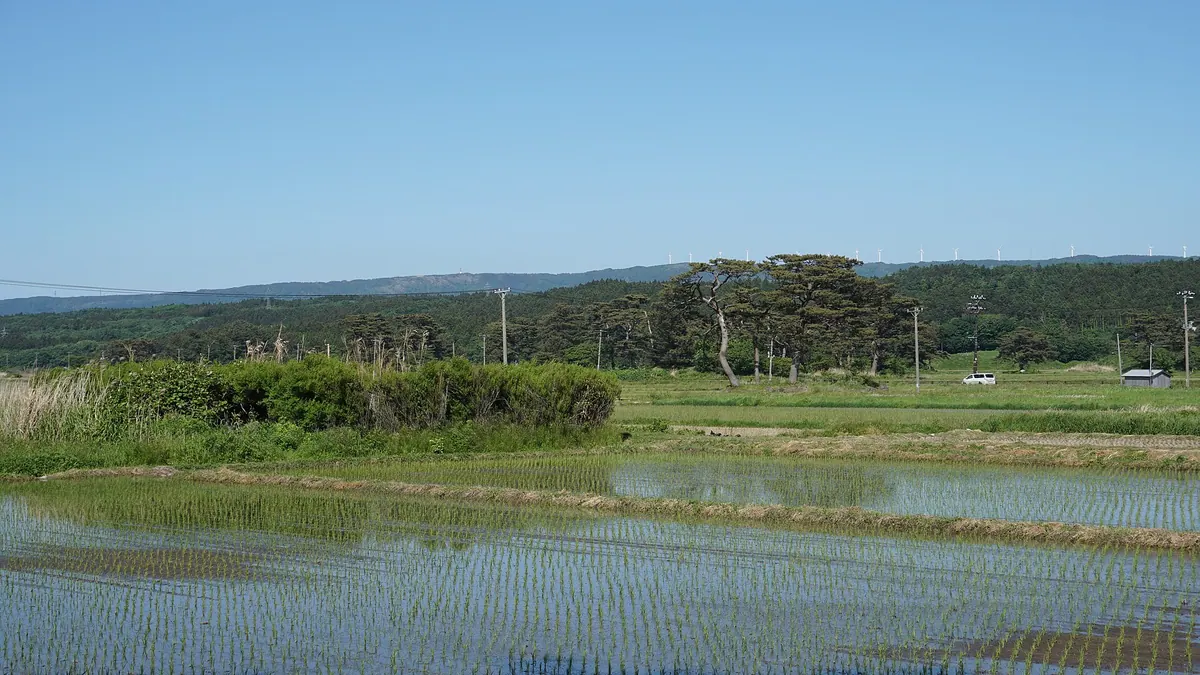
A former lagoon where sixty islands now sit in rice fields, famously visited by the poet Matsuo Basho.
What it is
- A national natural monument and scenic spot located in Nikaho City, Akita Prefecture.
- A former shallow lagoon created by the collapse of Chokai Mountain around 466 BC.
- The northernmost point of the journey described in Matsuo Basho's Oku no Hosomichi.
- A site where an 1804 earthquake raised the land and permanently dried the lagoon.
What to see
- Approximately sixty islands remaining scattered across the local rice fields.
- Historical artifacts and local exhibits at the Kisakata Kyodo Shiryokan museum.
- The preserved islands saved from agricultural development by the priest Kakurin.
When to go
- Springtime when seawater-filled rice fields recreate the appearance of the original lagoon.
04
Lake Towada
AKITA · PLACE 十和田湖
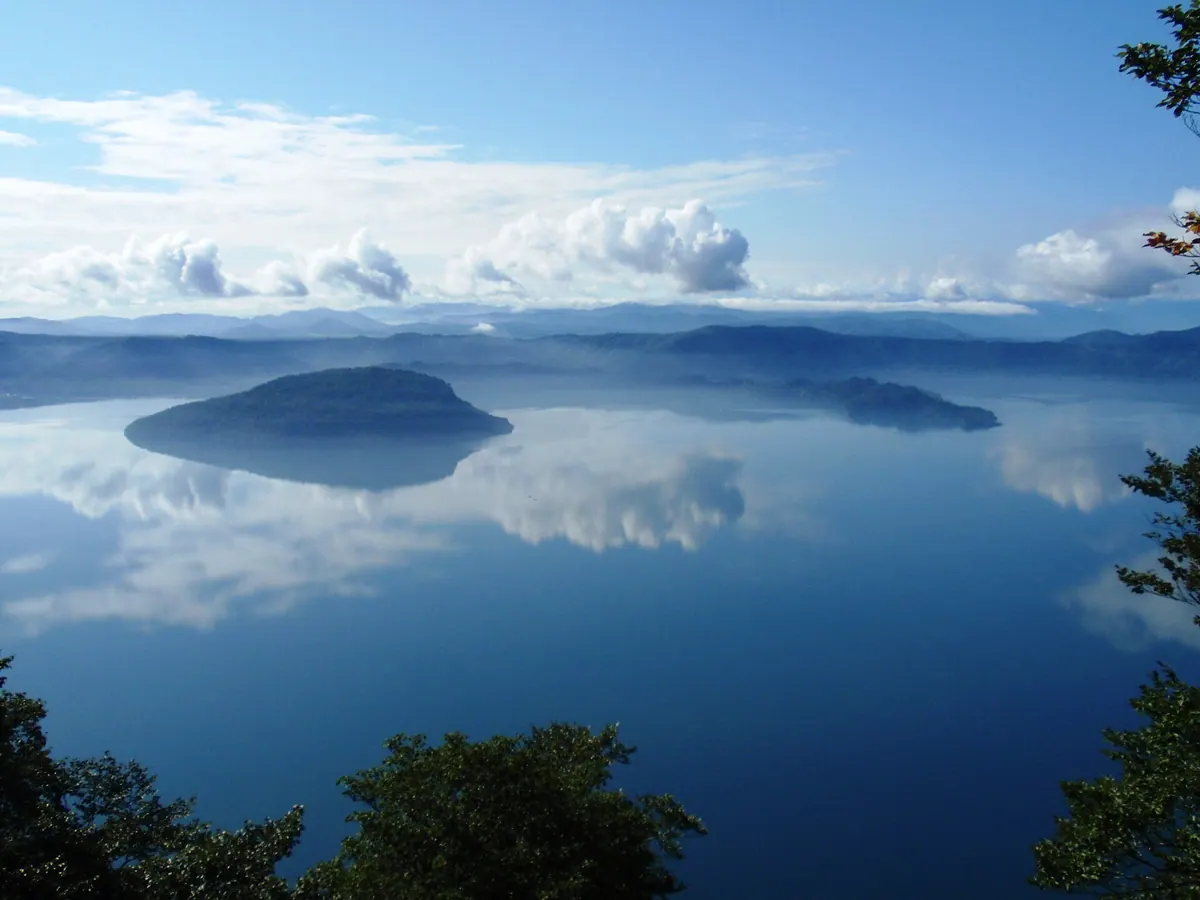
A deep double caldera lake and national park offering scenic boat tours and a historic shrine on the shoreline.
What it is
- A double caldera lake located on the border of Aomori and Akita prefectures.
- Japan's third deepest lake reaching a depth of over three hundred meters.
- Designated as a national park in 1936 and a Special Scenic Spot.
- The twelfth largest lake in Japan by surface area.
What to see
- The Oirase River which is the only river flowing out of the lake.
- Two distinct peninsulas named Nakayama and Ogura extending into the water.
- The bronze Statue of Maidens standing on the lakeshore.
- Towada Shrine established at the Nakayama Peninsula.
- Sightseeing boats that operate across the water.
When to go
- Sightseeing boats are available to board except during the winter season.
05
Lake Ichinomegata
AKITA · PLACE 男鹿目潟火山群一ノ目潟
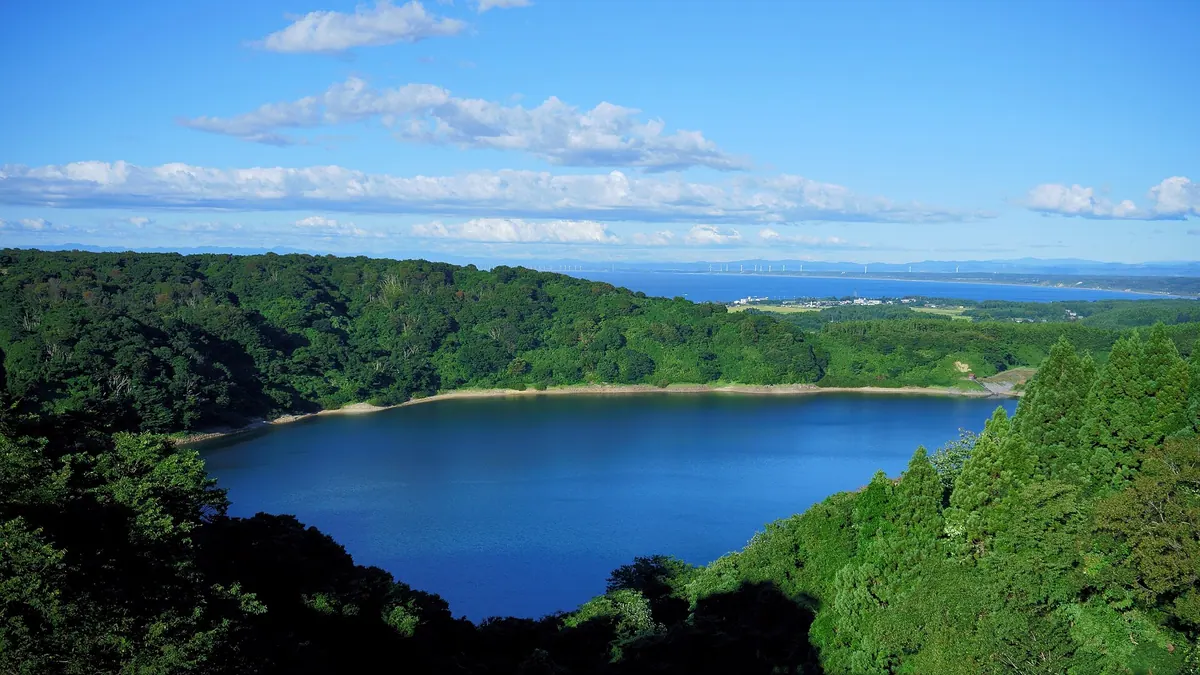
A rare volcanic explosion crater lake and National Natural Monument offering unique geological insights from the Hachibodai observation point.
What it is
- A freshwater lake formed as a water-filled explosion crater known as a maar.
- Designated as a National Natural Monument and part of the Megata Volcano Group.
- The first site where mantle-derived xenoliths were discovered within andesite rock.
- A circular body of water with a diameter of approximately 600 meters.
What to see
- Panoramic views of the crater lake from the Hachibodai observation point.
- Xenoliths from the site displayed at the Akita University Mining Museum.
- A deep volcanic basin reaching a maximum depth of 44.6 meters.
Getting there
- Accessible via the Showa-Oga-Peninsula Interchange on the Akita Expressway.
06
Lake Tazawa
AKITA · PLACE 田沢湖
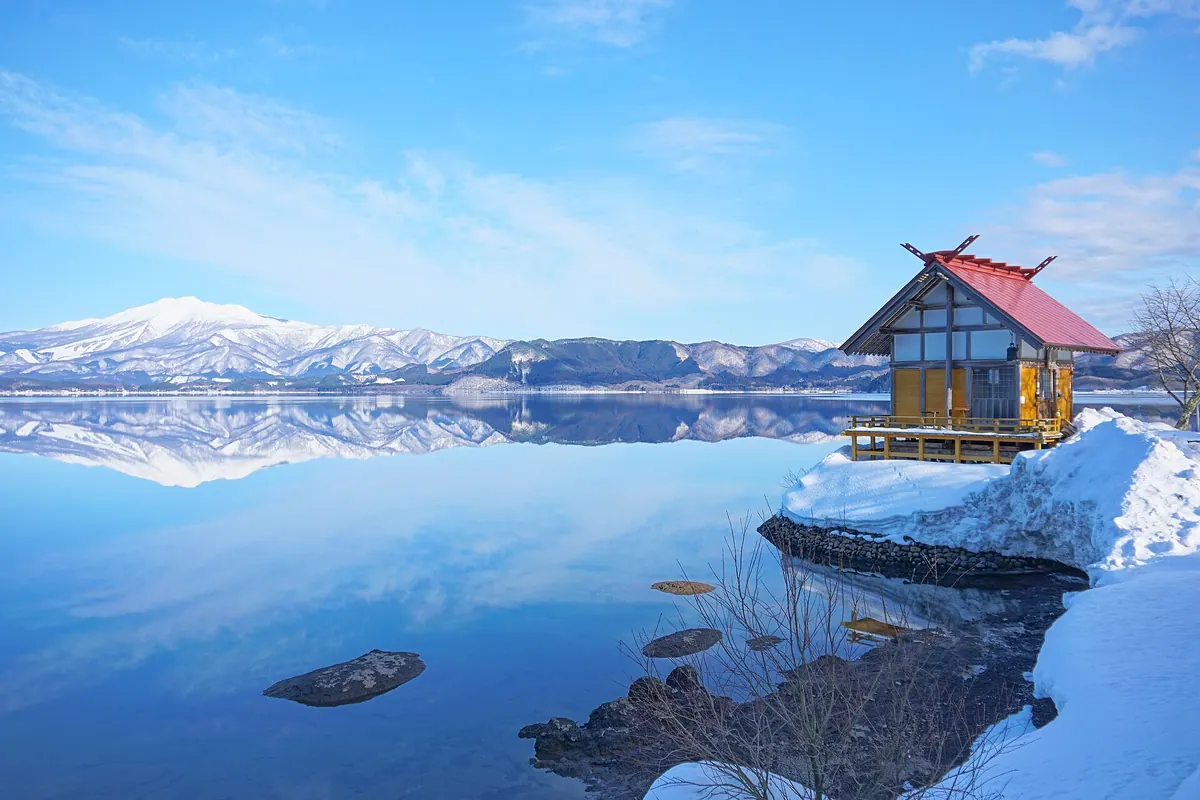
Japan's deepest freshwater lake, featuring a golden statue and a museum dedicated to the once-extinct indigenous trout.
What it is
- A freshwater caldera lake located in Semboku City, Akita Prefecture.
- The deepest lake in Japan with a maximum depth of 423.4 meters.
- Part of the Tazawako-Dakigaeri Prefectural Natural Park formed by volcanic activity.
- A site of environmental recovery following the acidification of its waters in 1940.
What to see
- A golden statue of Tatsuko located on the western shore of the lake.
- The Tazawako Kunimasu Future Museum which opened on the lakeshore in 2017.
- Clear waters covering two lava domes situated on the lake floor.
- Exhibits regarding the indigenous Kunimasu trout that once became extinct here.