

19 Mountains in Yamagata worth your time
Japan Gems
19 Mountains in Yamagata, with what to see and how to get there.
Yamagata has 19 mountains on Japan Gems. Below are the 19 we can tell you the most about — each one written up in English from Japanese sources, with what to see and how to get there. See all mountains in Yamagata.
01
Mount Iwaigame
YAMAGATA · PLACE 祝瓶山
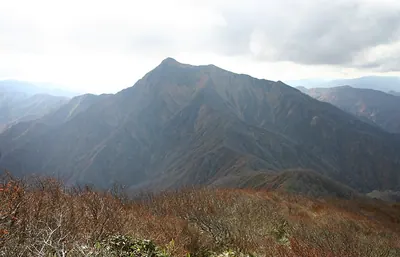
A 1,417-meter granite peak in Yamagata known as the Matterhorn of Tohoku, offering challenging climbs and national park views.
What it is
- A 1,417-meter mountain located in western Yamagata Prefecture within the Asahi Mountain Range.
- One of Japan's 300 Famous Mountains primarily composed of granitic plutonic rock.
- The northern ridge is a protected part of Bandai-Asahi National Park.
- A distinctive peak nicknamed the Matterhorn of Tohoku spanning Nagai City and Oguni Town.
What to see
- The sharp granite peak and northern ridge lines within the national park.
- Views of the surrounding landscape from the 1,417-meter summit.
- Nagai Dam and Kijiyama Dam located in the vicinity of the mountain.
- The Kuwasumidaira and Hannaridaira climbing routes through the rugged terrain.
Getting there
- The Kuwasumidaira climbing route begins from the Nagai City side.
- The Hannaridaira climbing route starts from the Oguni Town side.
- The ascent from the Kuwasumidaira starting point takes approximately four hours.
02
Tengendai Highlands
YAMAGATA · PLACE 天元台高原
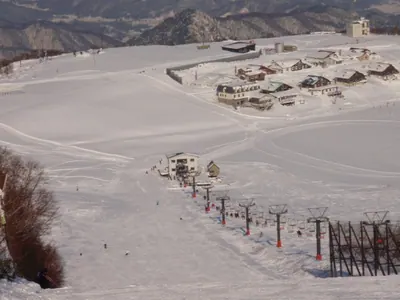
A high-altitude mountain resort and trailhead offering year-round outdoor activities, accessible by ropeway from a nearby hot spring town.
What it is
- A mountain highland area sitting at an elevation of 1,300 meters.
- The primary trailhead for hikers climbing Mount Azuma.
- A year-round resort managed by a public-private third-sector company.
- A venue for various alpine skiing and snowboarding competitions.
What to see
- A small shrine located directly in front of the ropeway station exit.
- A digital television relay station situated on the highlands.
- Ski courses reaching a maximum length of 6 kilometers.
- Views from Kitabogadai at an elevation of 1,820 meters.
When to go
- Winter ski season runs from mid-November to early May.
- Summer months offer grass skiing on the mountain slopes.
Getting there
- A ropeway connects Shirabu Onsen to the highlands in 10 minutes.
- Three lifts transport visitors from the highlands up to Kitabogadai.
03
Maya San
YAMAGATA · PLACE 摩耶山

A scenic 1,019-meter peak in Yamagata used for Shugendo training, offering challenging trails with ladders and chains for experienced hikers.
What it is
- A 1,019.8-meter mountain in Tsuruoka City designated as a place of scenic beauty.
- A historical training ground for Shugendo practitioners that was once restricted by the Shonai Domain.
- A protected wildlife zone featuring a base of early Paleogene volcanic granodiorite.
- The summit consists of three distinct peaks named Mae, Naka, and Minami.
What to see
- Views from the three separate peaks at the summit area.
- Steep climbing sections equipped with fixed ladders and chains.
- Diverse local flora and fauna within the designated wildlife protection zone.
- Natural rock formations resulting from ancient volcanic activity.
When to go
- The mountain officially opens for climbing in late May.
- The climbing season concludes in late October.
- Allow two and a half to three hours for the ascent.
04
Mount Gassan
YAMAGATA · PLACE 月山
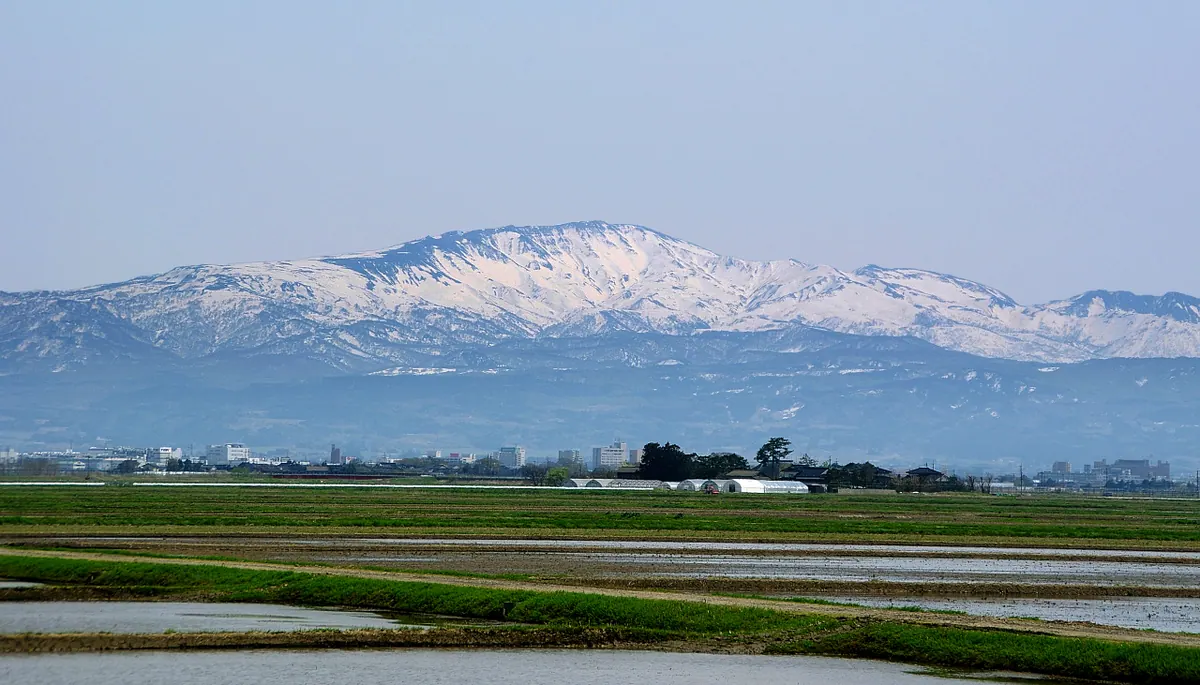
A 1,984-meter volcano and sacred peak in Yamagata offering summer skiing, alpine marshes, and a summit shrine.
What it is
- One of the three sacred Dewa Sanzan mountains in Yamagata Prefecture
- A 1,984-meter volcano formed by activity starting 700,000 years ago
- Part of the Bandai-Asahi National Park and a famous Japanese mountain
- A spiritual site credited to Prince Hachiko with a shrine at the summit
What to see
- Gassan Shrine located at the very top of the mountain
- High-altitude marshes and various species of alpine plants
- Landscape featured in Matsuo Basho's Narrow Road to the Deep North
- Panoramic views from one of the 100 Famous Japanese Mountains
When to go
- Summer skiing is available on the slopes until late July
Getting there
- Buses run to the Ubazawa and Gassan Hachigome stops
- Access via the Gassan Interchange on National Route 112
- Official site
- www.dewasanzan.jp
05
Three Mountains of Dewa
YAMAGATA · PLACE 出羽三山

A sacred Japan Heritage site for mountain worship featuring ancient cedar forests, a national treasure pagoda, and rigorous ascetic rituals.
What it is
- A center for Shugendo mountain worship founded by Prince Hachiko.
- Three sacred peaks consisting of Mount Gassan, Mount Haguro, and Mount Yudono.
- Designated as a Japan Heritage site in 2016 for its cultural significance.
- A spiritual destination that was strictly closed to women until 1997.
What to see
- A five-story pagoda on Mount Haguro designated as a National Treasure.
- The Sanjin Gosaiden shrine which enshrines the deities of all three mountains.
- A stone stairway leading up Mount Haguro consisting of 2,446 steps.
- An ancient cedar avenue recognized as a Special Natural Monument.
- Sites on Mount Yudono associated with the practice of self-mummified monks.
When to go
- The Aki-no-mine ritual performed by ascetics annually at the end of August.
- Official site
- nihonisan-dewasanzan.jp
06
Omoshiroyama
YAMAGATA · PLACE 面白山

A 1,264-meter mountain on the Yamagata-Miyagi border featuring scenic valleys and a train station located directly between two peaks.
What it is
- A mountain standing 1,264 meters tall on the border of Yamagata and Miyagi prefectures.
- Historically known as Tsurashiroyama, a name associated with lingering snow on the slopes.
- The area includes the Momijigawa Valley and the southern peak of Minami Omoshiroyama.
- Home to Snow Park Omoshiroyama, though the ski resort operations are currently suspended.
What to see
- The natural landscape of the Momijigawa Valley located within the mountain area.
- Views of the 1,225-meter Minami Omoshiroyama peak to the south.
- The Senzan Tunnel which runs underground between the two mountain peaks.
- National Route 48 passing through the Sekiyama Pass to the north.
Getting there
- Omoshiroyama Kogen Station is located directly between the two mountains.
07
Mount Zaō
YAMAGATA · PLACE 蔵王連峰

A complex volcano featuring a vibrant crater lake, famous winter ice trees, and hot spring resorts on the mountain border.
What it is
- A complex volcano on the border of Miyagi and Yamagata prefectures.
- Designated as the Zaō Quasi-National Park and one of Japan's 100 famous mountains.
- A monitored volcanic site consisting of basalt and andesite stratovolcanoes.
- The highest peak is Mount Kumano reaching an elevation of 1,840 meters.
What to see
- Okama is a circular crater lake located in the central area of the mountain.
- Coniferous trees that transform into frozen ice trees known as Juhyo.
- Kattamine Shrine situated on the summit of Mount Katta.
- The Zaō Echo Line road which crosses through the mountain range.
- Ski resorts and traditional hot spring towns located at the base.
When to go
- Winter is the time to see the famous Juhyo ice trees.
08
Mount Chōkai
YAMAGATA · PLACE 鳥海山
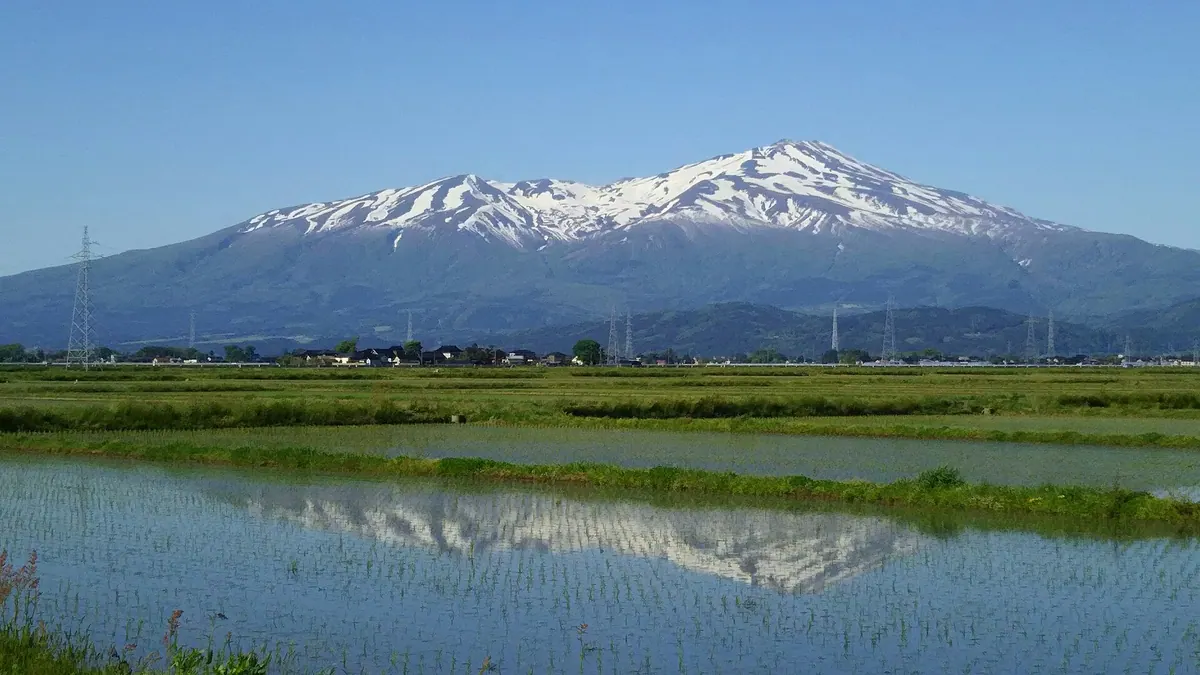
An active volcano and National Historic Site offering alpine flora and a summit shrine on Tohoku's second highest peak.
What it is
- An active volcano standing 2,236 meters high on the border of Yamagata and Akita.
- The second highest peak in the Tohoku region and a member of 100 Famous Japanese Mountains.
- A designated National Historic Site within the Chōkai Quasi-National Park.
- Home to the Chōkai-san Omonoimi Shrine located at the mountain summit.
What to see
- The Shinzan lava dome created during a volcanic eruption in 1801.
- Endemic plant species including the Chōkai-azami and Chōkai-fusuma flowers.
- Evidence of a major volcanic collapse that occurred in 466 BC.
- Panoramic views from the highest peak located in Yuza town.
Getting there
- The mountain is accessible to visitors via the Chōkai Blue Line road.
09
Mount Koshiki
YAMAGATA · PLACE 甑山
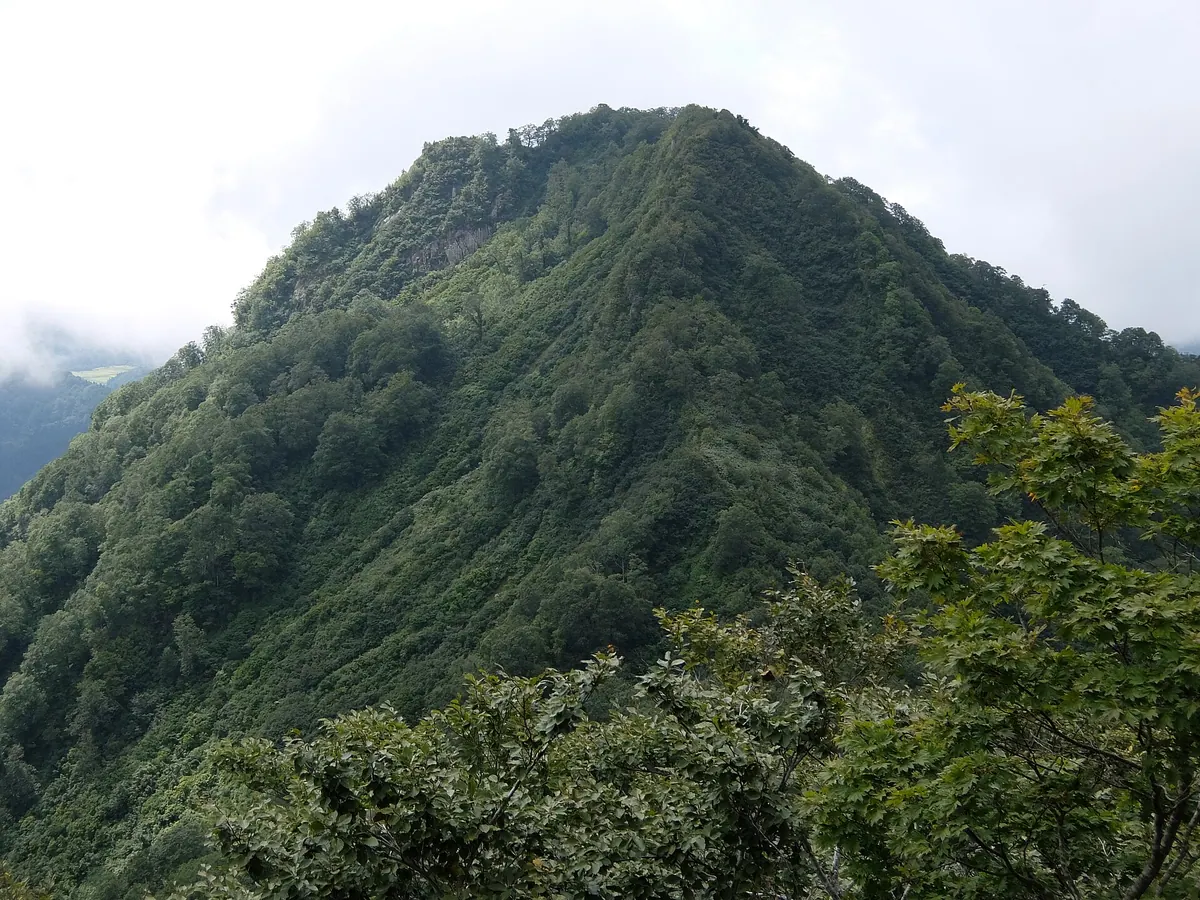
A dual-peak mountain in Kamushiyama Prefectural Natural Park offering historic ascetic trails, rare wildlife habitats, and ancient giant trees.
What it is
- A mountain spanning Akita and Yamagata Prefectures within the Tohoku 100 Famous Mountains.
- A historic site formerly used for Shugendo mountain asceticism practices.
- Part of the Kamushiyama Prefectural Natural Park near the historic Yashima Kaido road.
- A natural area featuring two distinct rocky peaks named O-koshiki and Me-koshiki.
What to see
- The O-koshiki peak standing at an elevation of 981.3 meters.
- Eboshi Rock which serves as the primary symbol of the O-koshiki peak.
- A giant katsura tree on Me-koshiki recognized as a top giant tree.
- Meishonuma pond at the mountain base which serves as a treefrog habitat.
- Aranuma Marshland where visitors can find the rare Scarlet Dwarf dragonfly.
10
Mount Yudono
YAMAGATA · PLACE 湯殿山
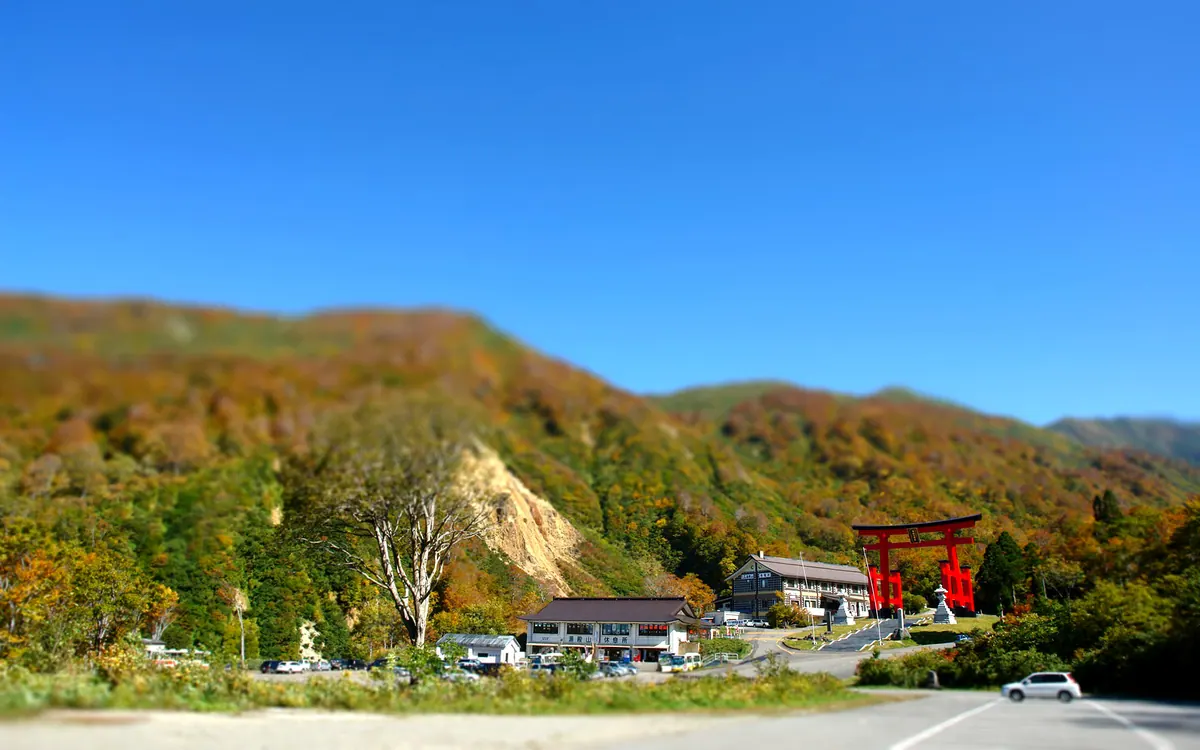
A sacred peak of the Dewa Sanzan mountains where visitors experience ancient Shugendo rituals and unique natural shrine features.
What it is
- One of the three sacred Dewa Sanzan mountains reaching 1,500 meters in elevation
- A holy site for Shugendo practitioners associated with family safety and bountiful harvests
- The location where Date Masamune's mother famously prayed for a child
- A shrine that lacks traditional main or worship halls to preserve its natural state
What to see
- The sacred Yudono Shrine which is the subject of a famous Matsuo Basho haiku
- A rugged trail to Mount Gassan equipped with iron ladders and chains
- The largest ski resort in the Shonai region located on nearby Mount Shinakura
Getting there
- A local bus stops within a five-minute walk of the shrine entrance
- Official site
- www.dewasanzan.jp
11
Mount Maizuru
YAMAGATA · PLACE 舞鶴山

A 242-meter mountain park featuring castle ruins, a new maple garden, and unique human shogi matches every April.
What it is
- A mountain with an elevation of 242.1 meters located in Tendo City.
- The site contains the historical ruins of Tendo Castle.
- A public recreational area designated as Tendo Park.
- A former site for an analog television relay station discontinued in 2011.
What to see
- The Momiji-en garden which opened to the public in April 2021.
- A 250-meter walking path connecting the mountain summit to the ground.
- The ruins of the former Tendo Castle structures.
- Views of the JR Ou Main Line running to the west.
When to go
- Visit in April to watch the annual Human Shogi matches.
- The Momiji-en garden is a highlight during the autumn season.
12
Mount Shirataka
YAMAGATA · PLACE 白鷹山
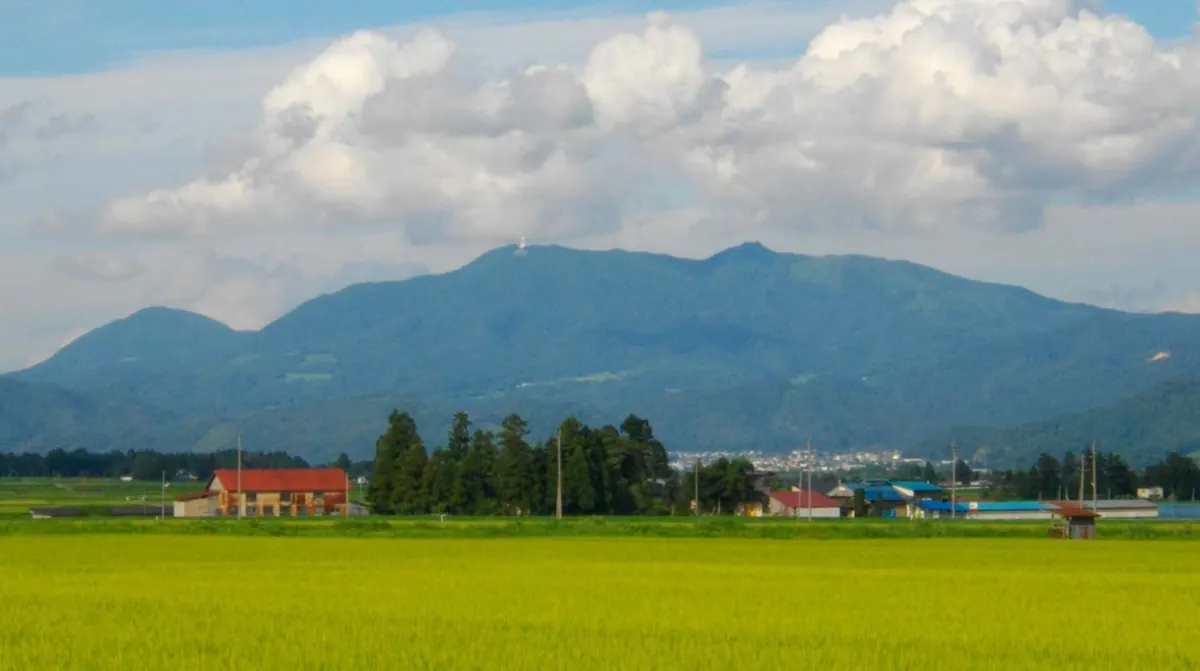
A 994-meter extinct volcano and sacred site offering historical ties to the Uesugi clan and a summit shrine.
What it is
- A 994-meter tall volcano located in Yamagata Prefecture that was active one million years ago.
- A sacred mountain worshipped by locals as a god of agriculture and sericulture.
- A former military retreat route used during the Keicho Dewa Battle.
- The namesake of the famous Yonezawa Domain lord, Uesugi Yozan.
What to see
- The Fukumitsu Daikokuzo-son shrine situated at the mountain summit.
- A collapsed caldera extending nine kilometers toward the northeast.
- A Ministry of Land wireless relay station and radar site.
- A first-class triangulation point located at the peak.
- Exposed rock formations consisting of pyroxene andesite and dacite.
13
Ha Yama
YAMAGATA · PLACE 葉山 (村山市・寒河江市)
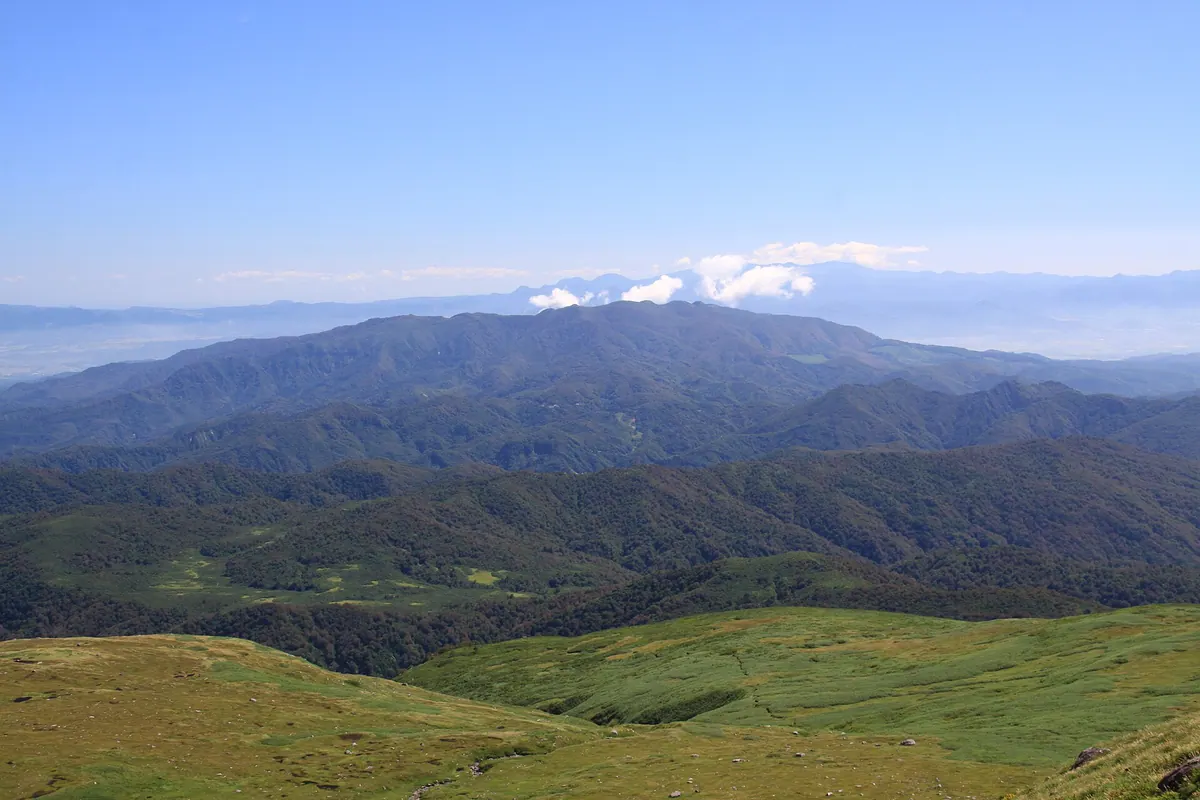
A 1,462-meter stratovolcano and former Shugendo pilgrimage site featuring a summit shrine, volcanic craters, and diverse alpine flora.
What it is
- A 1,462-meter Neogene stratovolcano located on the border of Murayama and Sagae.
- A historic center for Shugendo mountain asceticism formerly part of the Three Mountains of Dewa.
- The site of Hayama Shrine dedicated to the deity historically called Hayama Yakushi Gongen.
What to see
- Two explosive craters remaining at the mountain summit.
- Hayama Shrine and a first-class triangulation point located at the top.
- Beech forests and various alpine plants growing near the peak.
- Six different climbing routes leading to the summit.
Getting there
- Accessible by car from Murayama and Sagae stations.
14
Funagata volcano
YAMAGATA · PLACE 船形山
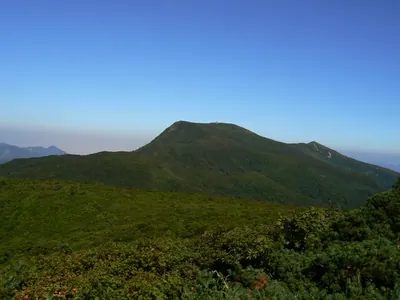
A 1,500-meter volcano on the Miyagi-Yamagata border featuring ancient beech forests, alpine meadows, and a summit shrine for mountain asceticism.
What it is
- A 1,500-meter volcano also known as Goshosan on the Miyagi and Yamagata border.
- One of Japan's 200 Famous Mountains formed over 600,000 years ago.
- A historical site for Shugendo mountain asceticism within two designated prefectural natural parks.
- A mountain dedicated to the deity Mizugami Benzaiten enshrined at the peak.
What to see
- Funagata Mountain Shrine located at the 1,500.34-meter summit.
- Primary beech forests and alpine meadows across the mountain slopes.
- A mountain hut called Funagatayama-goya standing at the peak.
- Expansive views from the summit of the Funagata Mountain Range.
15
Mount Asahi
YAMAGATA · PLACE 朝日岳
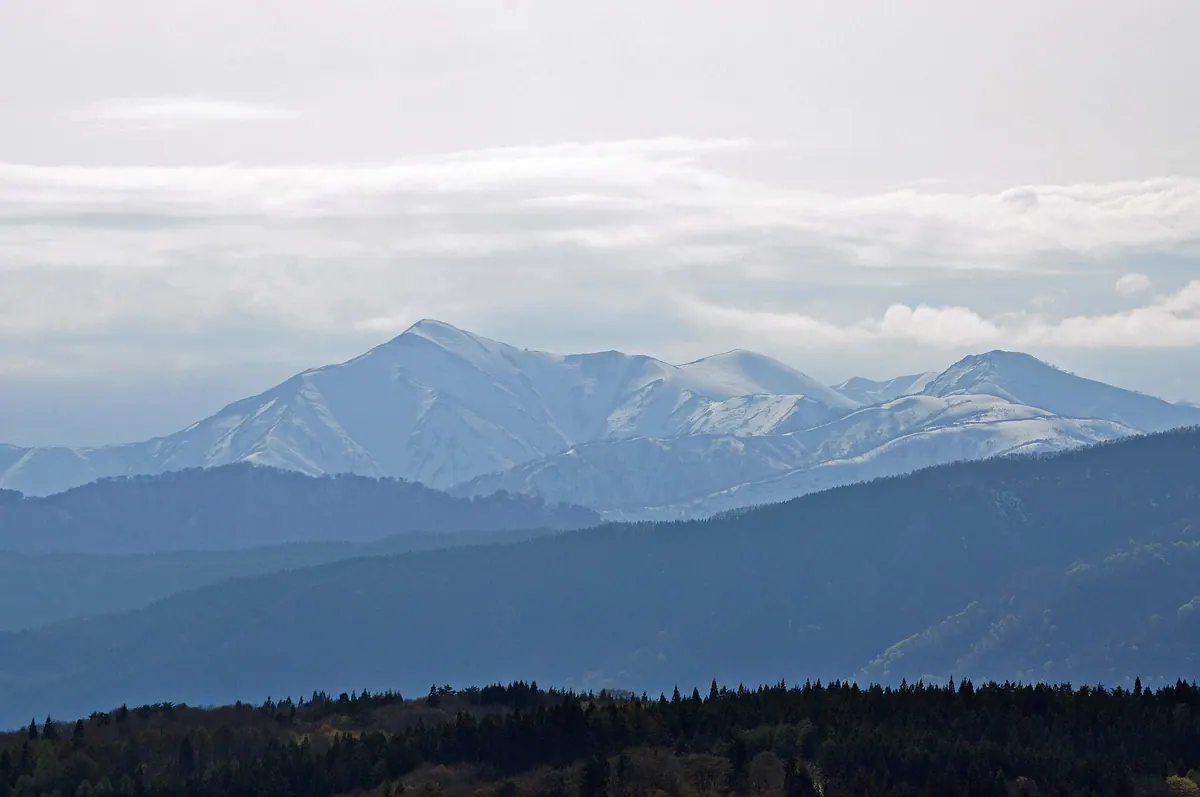
A 1,870-meter peak in Bandai-Asahi National Park listed among the 100 Famous Japanese Mountains for its granite ridges and springs.
What it is
- A major peak standing at 1,870.3 meters within the Asahi Mountain Range
- Part of the protected Bandai-Asahi National Park on the Niigata and Yamagata border
- One of the 100 Famous Japanese Mountains located in Oguni Town
- A geological formation consisting primarily of ancient Paleozoic granite
What to see
- The main summit of Mount Dai-Asahi reaching an elevation of 1,870.3 meters
- Mount Naka and the 1,814-meter Mount Nishi-Asahi on the northern ridge
- Mount Ko-Asahi and Mount Torihara situated along the eastern ridge
- Natural Kodera and Asahi mineral springs located in the surrounding area
16
Mount Chitose
YAMAGATA · PLACE 千歳山
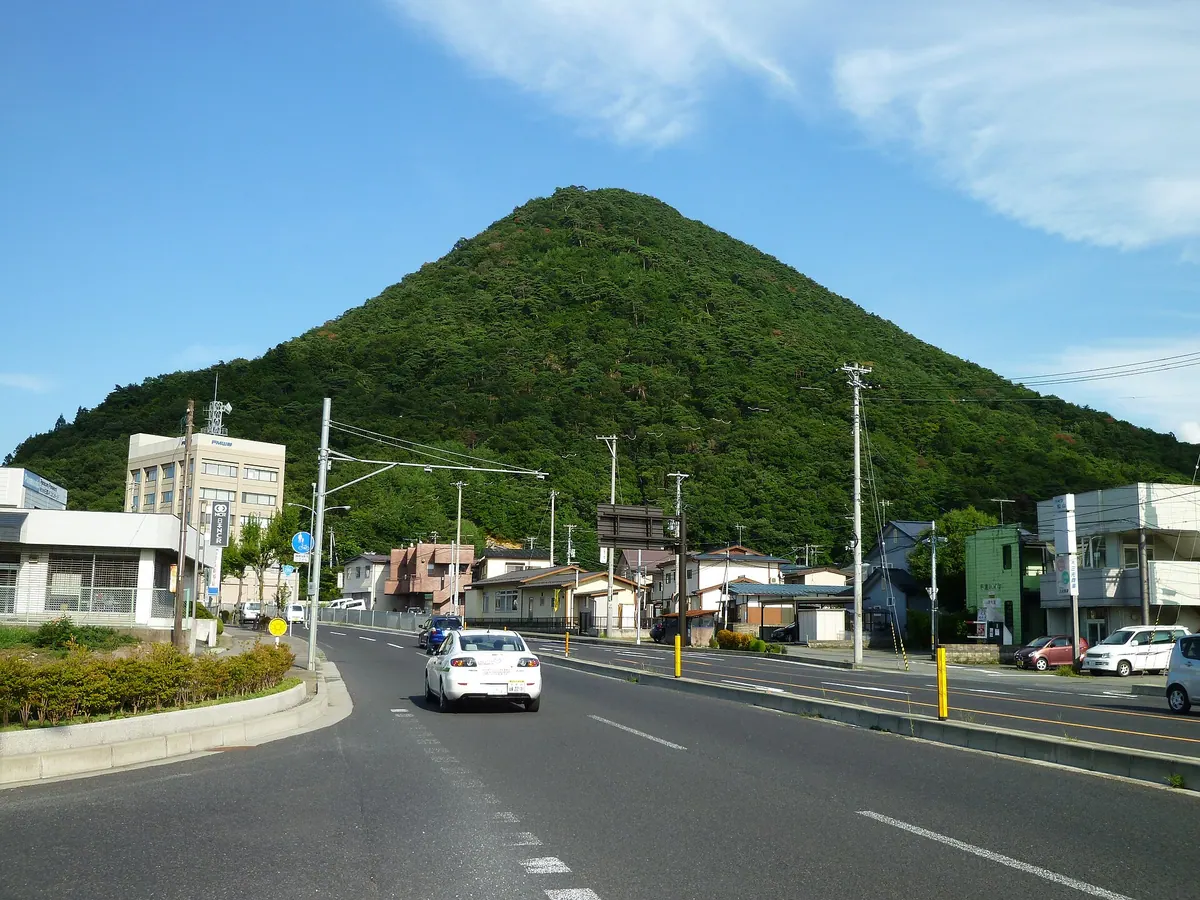
A 471-meter sacred mountain in Yamagata City featuring a summit observation deck and a national recreation forest for hikers.
What it is
- A mountain of religious faith standing 471.3 meters high in eastern Yamagata City.
- Named by Princess Akoya and designated as a national recreation forest in 1970.
- The subject of a poem written by the famous monk Takuan Soho.
- A natural landmark situated near the intersection of National Route 13 and Route 286.
What to see
- An observation deck at the summit providing views of the surrounding area.
- Banshoji Temple located at the foot of the mountain.
- Chitoseyama Park situated at the base of the slopes.
- The site where traditional imoni parties were held until the 1970s.
17
Mount Haguro
YAMAGATA · PLACE 羽黒山
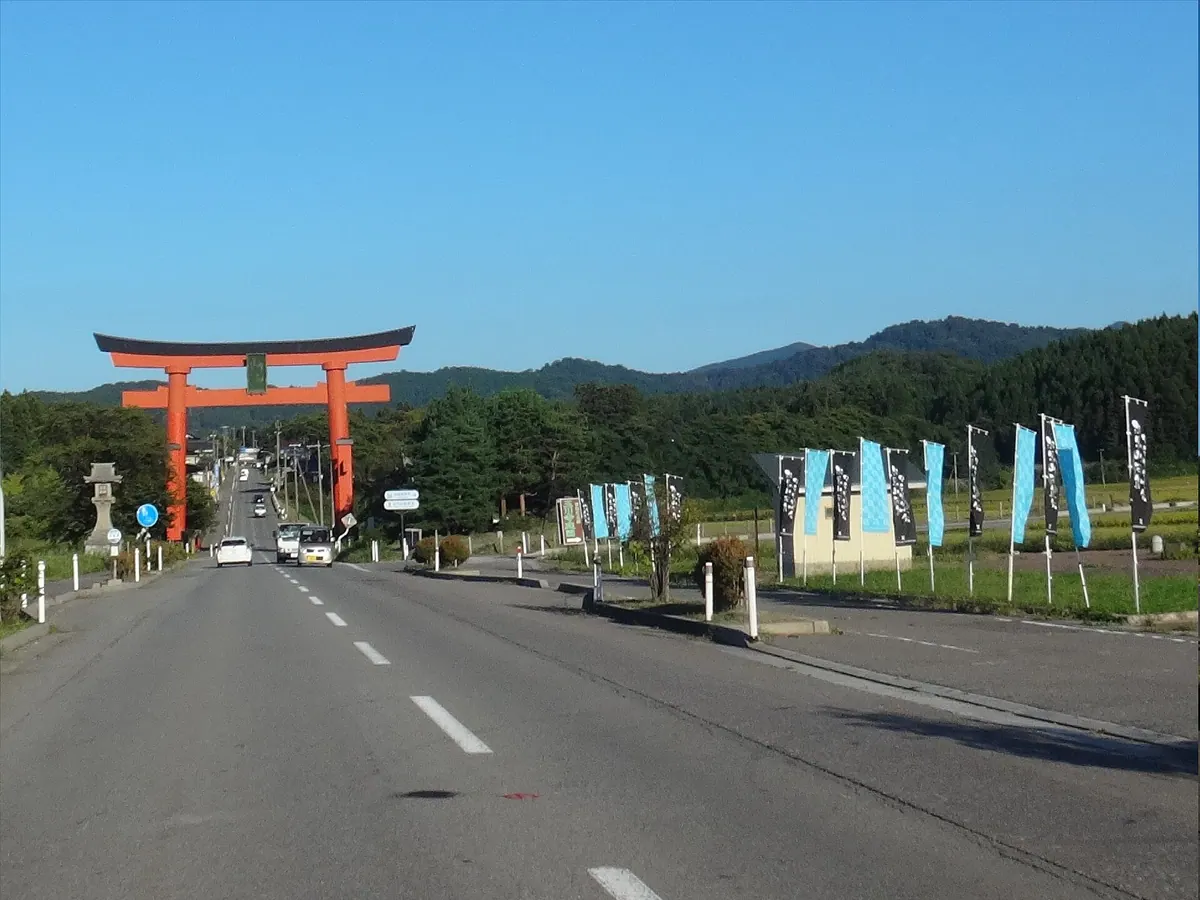
A sacred 414-meter mountain in Yamagata serving as a center for Shugendo mountain worship and home to a National Treasure pagoda.
What it is
- A 414-meter peak in Tsuruoka City dedicated to mountain worship and Shugendo.
- The site of Dewa Shrine which is located at the mountain summit.
- A designated component of a Japan Heritage site representing spiritual traditions.
What to see
- A 29-meter five-story pagoda rebuilt in the 15th century at the entrance approach.
- The Jijisugi cedar tree which is over 1000 years old and a National Natural Monument.
- A National Treasure pagoda standing near the start of the mountain path.
- Stone monuments featuring inscribed poems by Takahama Kyoshi and Noguchi Ujo.
- Official site
- www.dewasanzan.jp
18
Mount Kamuro
YAMAGATA · PLACE 禿岳
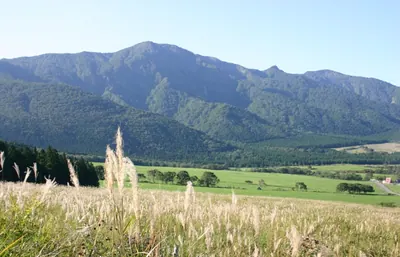
A 1,261-meter peak in Kurikoma Quasi-National Park known for its steep terrain and status as a top Tohoku mountain.
What it is
- A 1,261.7 meter peak spanning the border of Miyagi and Yamagata prefectures.
- The highest point on the rim of the Onikobe caldera.
- A mountain primarily composed of granodiorite within Kurikoma Quasi-National Park.
- One of the 100 Famous Mountains of Tohoku nicknamed Little Tanigawadake.
What to see
- Steep slopes that resemble the rugged terrain of Mount Tanigawa.
- A second-class triangulation point named Kokabura at the summit.
- Views of the surrounding Onikobe and Naruko hot spring areas.
- Neighboring peaks including Mount Hanabuchi and Mount Koshiba.
19
Mount Tōdono
YAMAGATA · PLACE 頭殿山
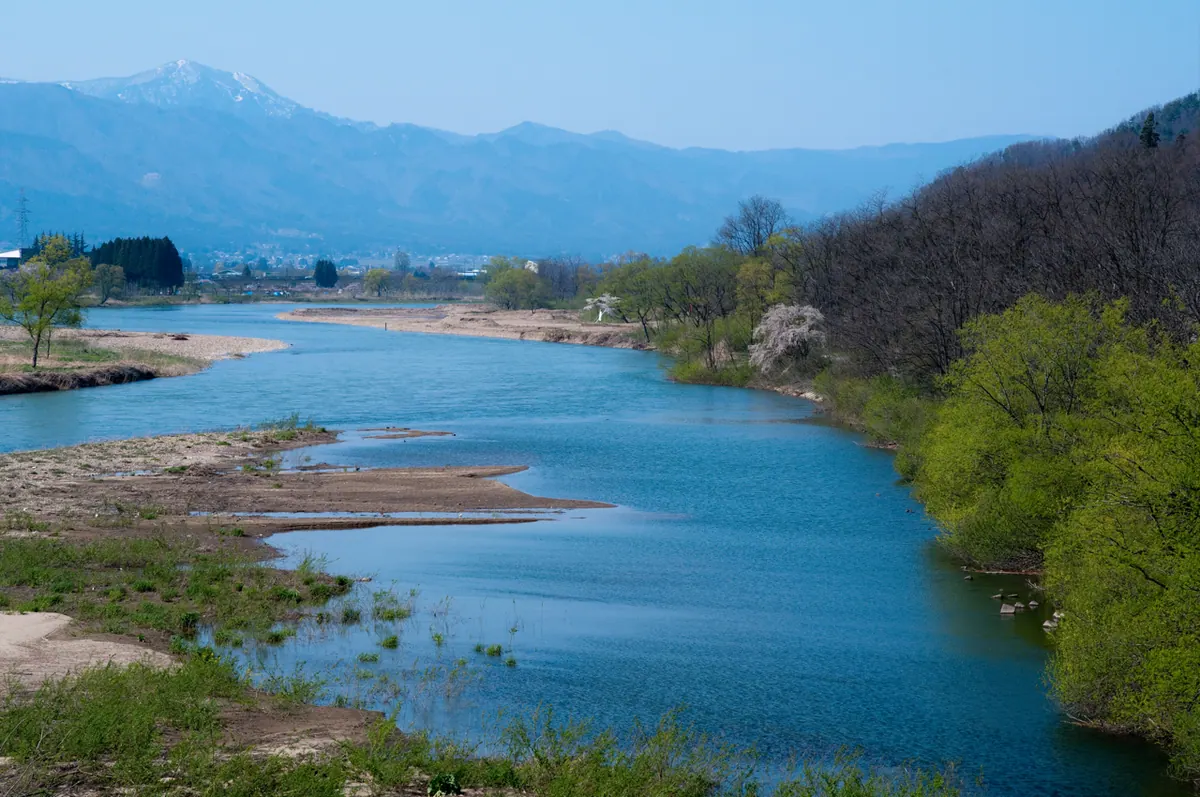
A 1,203-meter peak in the Asahi Mountain Range offering panoramic views of the surrounding alpine landscape.
What it is
- A mountain standing 1,203 meters tall on the border of Asahi and Shirataka.
- Part of the larger Asahi Mountain Range in northern Japan.
- The namesake for the asteroid 16725 Toudono.
What to see
- Panoramic views of the Asahi Mountain Range from the summit.
- The Asahi Kosen climbing route approaching the peak from the west.
- The Kurogamo climbing route approaching from the east.
- The Kurogamo trailhead located along the Mount Todono Forest Road.