

7 Historic sites in Mie worth your time
Japan Gems
Mie Prefecture has five heritage sites, including the Ruins of Saikū and Takarazuka Kofun. These sites offer a look into ancient Japanese history.
Mie has 7 historic sites on Japan Gems. Below are the 7 we can tell you the most about — each one written up in English from Japanese sources, with what to see and how to get there. See all historic sites in Mie.
01
Ruins of Saikū
MIE · HISTORIC SITE 斎宮跡
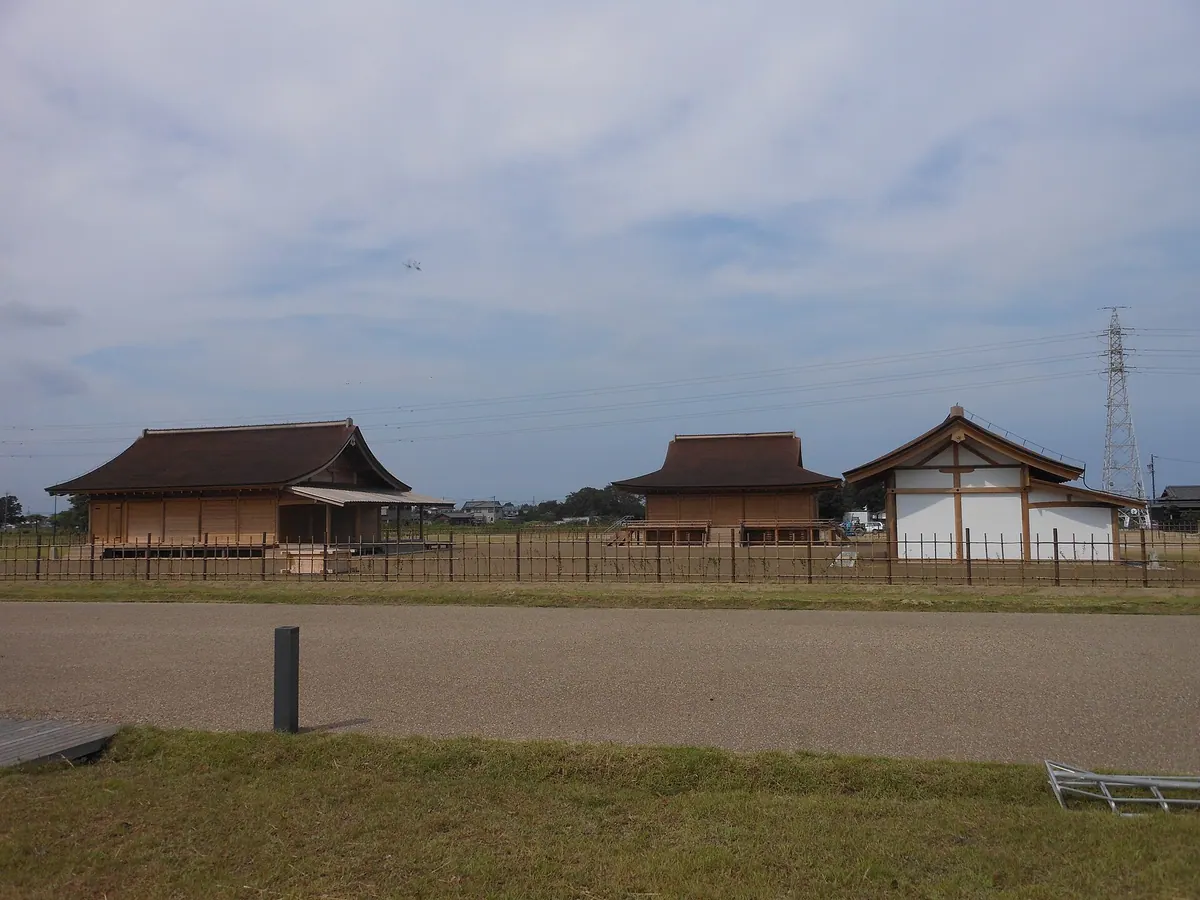
Explore the extensive ruins of Saikū, where imperial princesses once served Ise Grand Shrine.
What it is
- A designated National Historic Site in Meiwa Town.
- The historical administrative center for imperial princesses, Saio.
- Saio served the Ise Grand Shrine rituals.
- Dates from the Asuka-Nara to Northern and Southern Dynasties periods.
What to see
- Nara period remains in the western part of the site.
- Heian period remains in the eastern part of the site.
- Kamakura period remains in the Furusato area.
- Excavated artifacts: ornamental horses, sancai pottery, green-glazed pottery.
02
Akaizuka Kofun
MIE · HISTORIC SITE 赤井塚古墳

Explore Akaizuka Kofun, a large 6th-century burial mound with the Iga region's biggest stone chamber.
What it is
- A circular tumulus in Nabari City, Mie Prefecture.
- Part of the Mihata Kofun-gun National Historic Site.
- Built around the late 6th century.
- Designated a National Historic Site in 1978.
What to see
- A large circular tumulus, 22 meters in diameter.
- The tumulus stands 8.5 meters high.
- A double-sleeved horizontal stone burial chamber.
- The stone chamber opens to the south.
- The stone chamber is 12.6 meters long.
- It is the largest stone chamber in the Iga region.
03
Kurube Government Offices Site
MIE · HISTORIC SITE 久留倍官衙遺跡

Explore ancient government ruins and a storehouse complex dating from the Yayoi period.
What it is
- A government office ruin, designated a National Historic Site.
- Contains structures from the Yayoi period to the Middle Ages.
- Excavation began in 1999 due to highway construction.
- Kurube Government Offices Site Park opened on November 1, 2020.
What to see
- About 80 building pillar foundation traces were found.
- Period I had an east-facing government office.
- Period III saw the construction of a Shosoin (storehouse complex).
04
Sakamoto Kofun Cluster
MIE · HISTORIC SITE 坂本古墳群
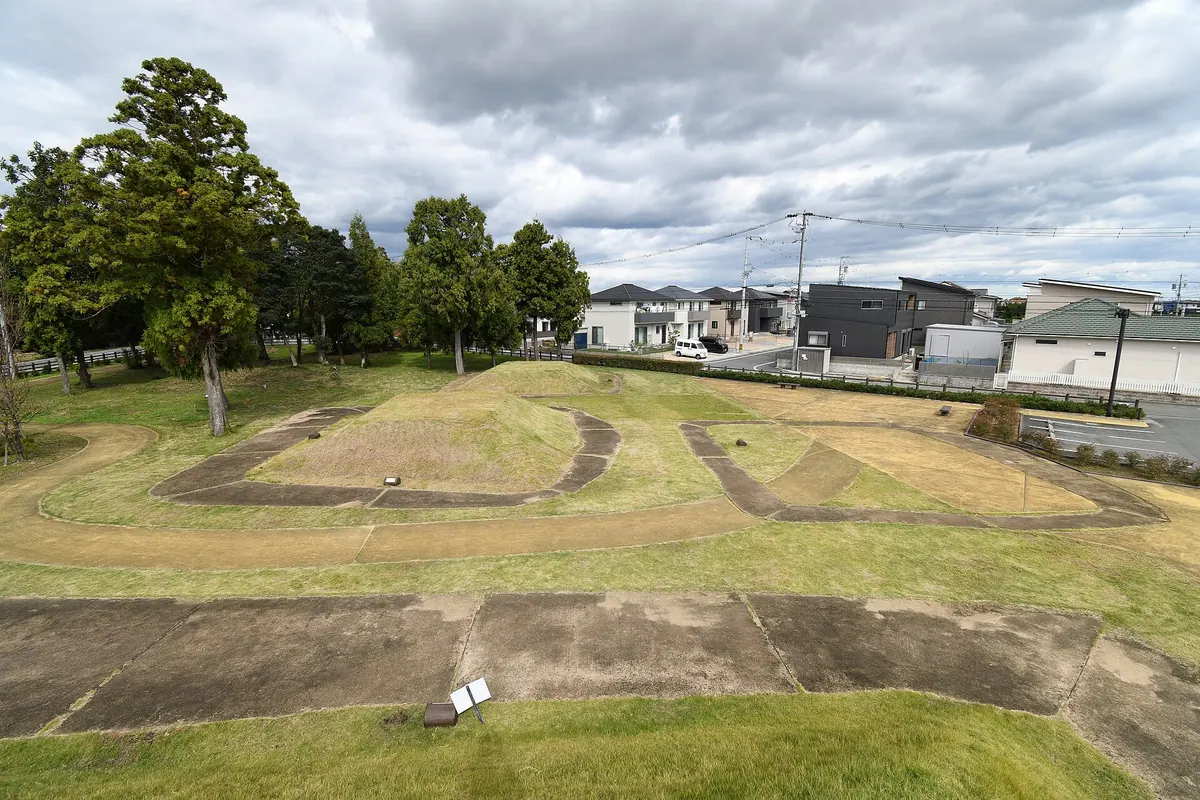
Ancient burial mounds, including Japan's last square-front, square-rear tumulus, offer a glimpse into early history.
What it is
- A cluster of ancient burial mounds, once numbering over 150.
- Designated as Mie Prefecture Historic Sites.
- Investigations have been conducted since 1995.
What to see
- Six remaining tumuli, numbered 1 through 6.
- Tumulus 1 is Japan's last square-front, square-rear tumulus.
- A gilt bronze sword from Tumulus 1 is a cultural property.
- Earrings were found in Tumulus 2.
- An iron sword was found in Tumulus 3.
05
Takakurayama Kofun
MIE · HISTORIC SITE 高倉山古墳
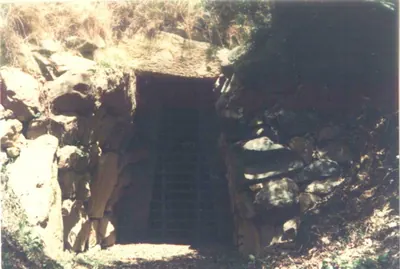
Explore a large 6th-century burial mound with a massive stone chamber, a designated historic site.
What it is
- A circular burial mound, a kofun.
- Designated historic site of Ise City.
- Built in the late 6th century.
- Located within Ise Grand Shrine Outer Shrine precincts.
What to see
- One of Japan's largest horizontal stone chambers.
- Mound with an estimated 35-meter diameter.
- Mound with an estimated 7.5-meter height.
- Double-sleeved horizontal stone chamber, 18.5 meters long.
06
Nobono Ōtsuka Kofun
MIE · HISTORIC SITE 能褒野王塚古墳

Visit this large, ancient keyhole-shaped tomb, believed to be Prince Yamato Takeru's.
What it is
- A kofun, an ancient burial mound.
- Designated as the tomb of Prince Yamato Takeru.
- Part of the Nobono Kofun group.
- Constructed at the end of the 4th century.
What to see
- A keyhole-shaped tumulus.
- The largest kofun in the northern Ise region.
- Mound length measures 90 meters.
- Outer moat and embankment surround the mound.
- Haniwa fragments detected on the surface.
07
Takarazuka Kofun
MIE · HISTORIC SITE 宝塚古墳
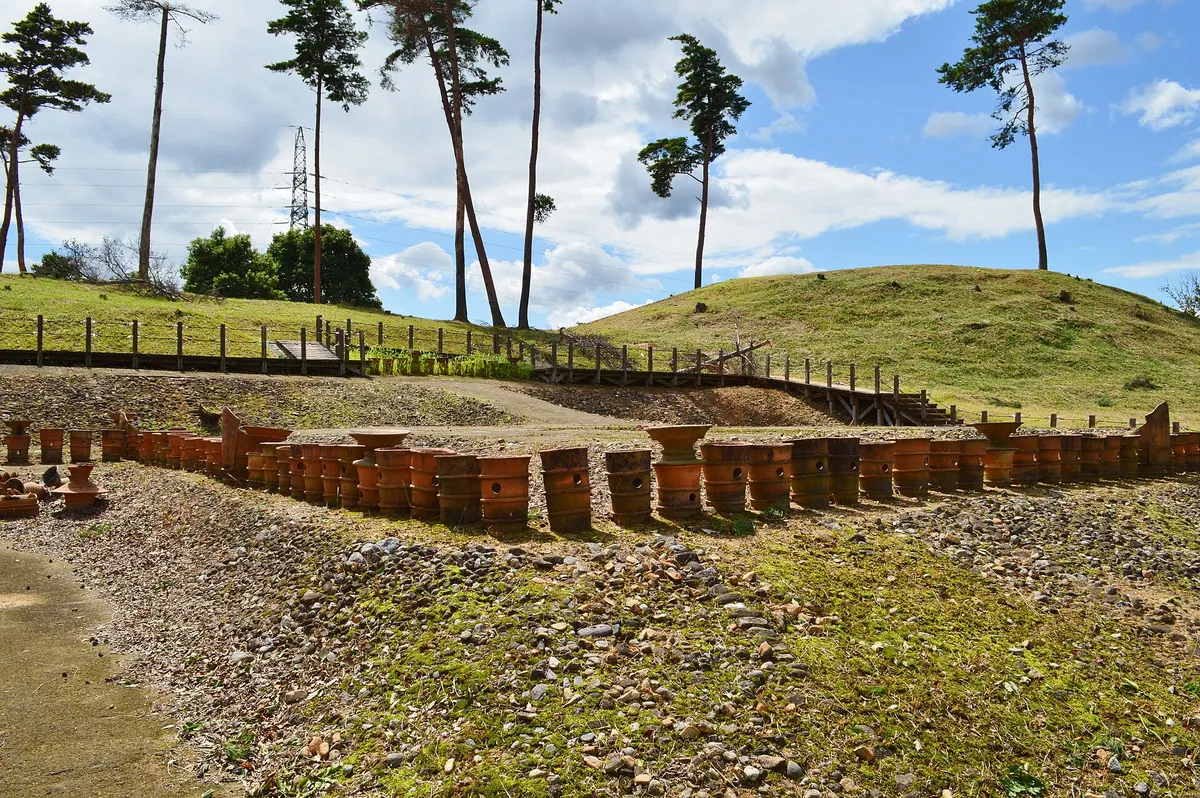
Explore ancient burial mounds, including a keyhole-shaped tumulus and a National Treasure.
What it is
- Two ancient burial mounds, called tumuli or kofun.
- Designated as a National Historic Site.
- Dates to the early 5th century.
- Part of a larger group of at least 88 tumuli.
What to see
- Kofun 1, a large 111-meter keyhole-shaped tumulus.
- Kofun 2, a scallop-shell shaped tumulus.
- Excavated Haniwa from Kofun 1, a National Treasure.
- The tumuli are located on a low hill.