

20 Historic sites in Shimane worth your time
Japan Gems
Shimane Prefecture has 20 heritage sites, including the Ishiya Kofun and Izumo-taisha Precinct Site. These sites offer a look into ancient Japanese history.
Shimane has 27 historic sites on Japan Gems. Below are the 20 we can tell you the most about — each one written up in English from Japanese sources, with what to see and how to get there. See all historic sites in Shimane.
01
Okadayama Kofun
SHIMANE · HISTORIC SITE 岡田山古墳
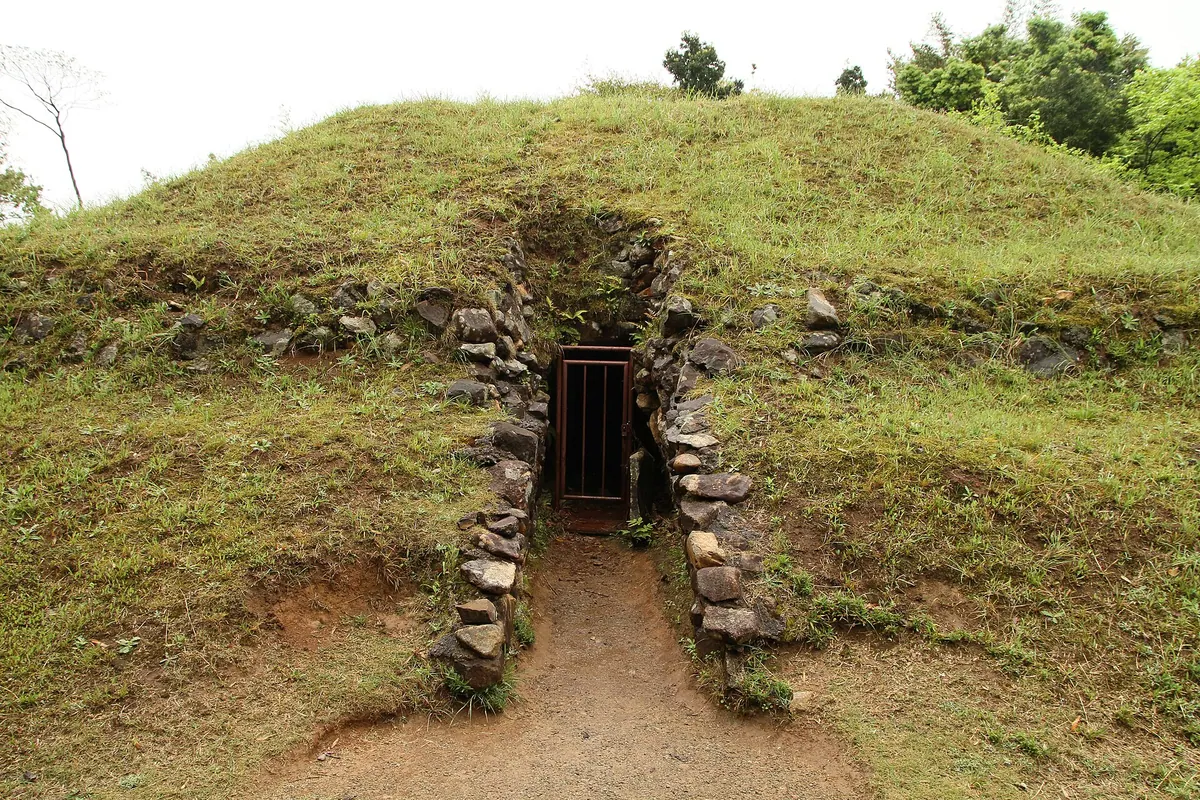
Explore ancient burial mounds and artifacts, including a unique inscribed sword, at this historic site.
What it is
- A group of ancient burial mounds (kofun) on a low hill.
- Part of the larger Yu-Okusa Kofun group.
- Designated as a National Historic Site.
- Artifacts are National Important Cultural Properties.
What to see
- Kofun 1: a 24 or 47-meter keyhole-shaped tomb.
- Kofun 2: a 44-meter diameter circular tomb.
- Seven confirmed structures, including stone coffins.
- A sword with a silver inlay inscription.
When to go
- Kofun 2 dates to the late 4th to 5th century.
- Kofun 1 dates to the late 6th century.
02
Takarazuka Kofun
SHIMANE · HISTORIC SITE 宝塚古墳
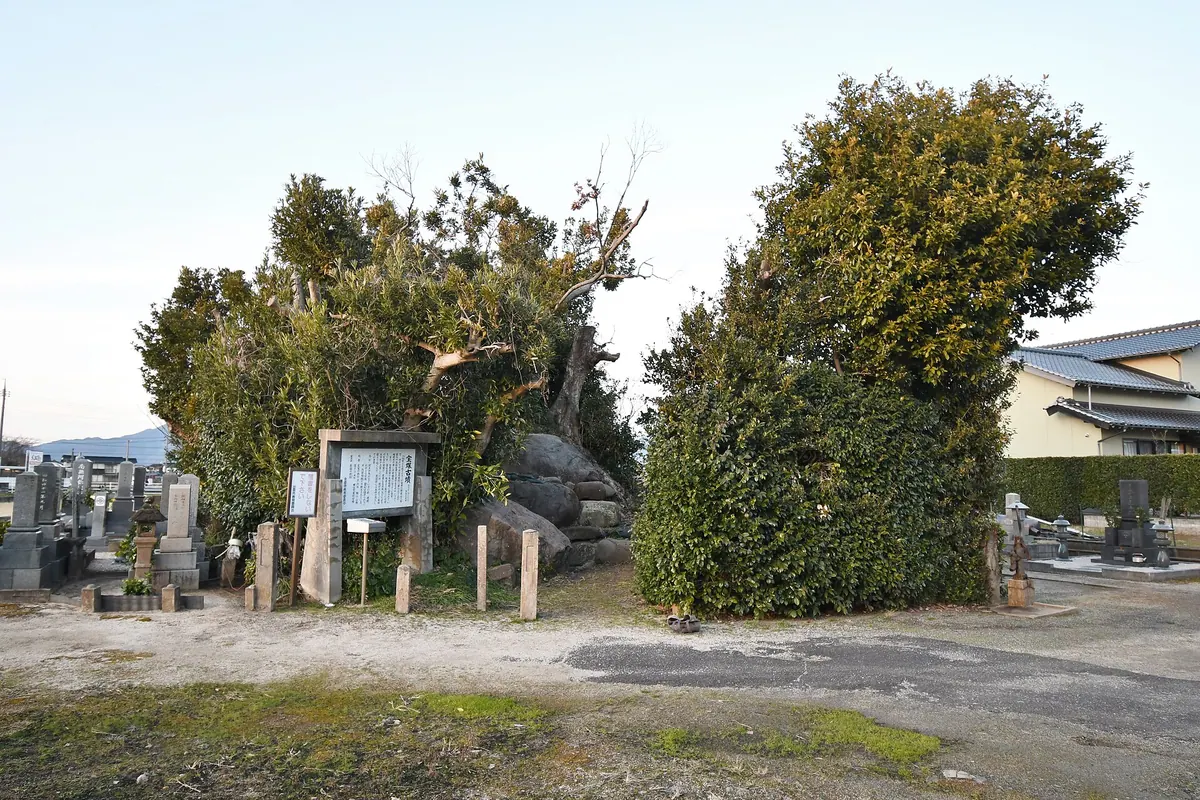
Explore a well-preserved ancient burial mound with a unique stone coffin, a National Historic Site.
What it is
- A designated National Historic Site in Izumo City.
- An ancient burial mound from the late Kofun period.
- Dates to the late 6th to early 7th century.
- Designated a National Historic Site on November 26, 1931.
What to see
- A kofun built on a natural levee of the Kobe River.
- A single-sleeved horizontal stone chamber.
- The stone chamber opens to the south.
- Cut tuff used for the stone chamber's construction.
- A house-shaped stone coffin inside the chamber.
- The stone chamber is at least 7 meters long.
03
Nishidani Tumulus Cluster
SHIMANE · HISTORIC SITE 西谷墳墓群
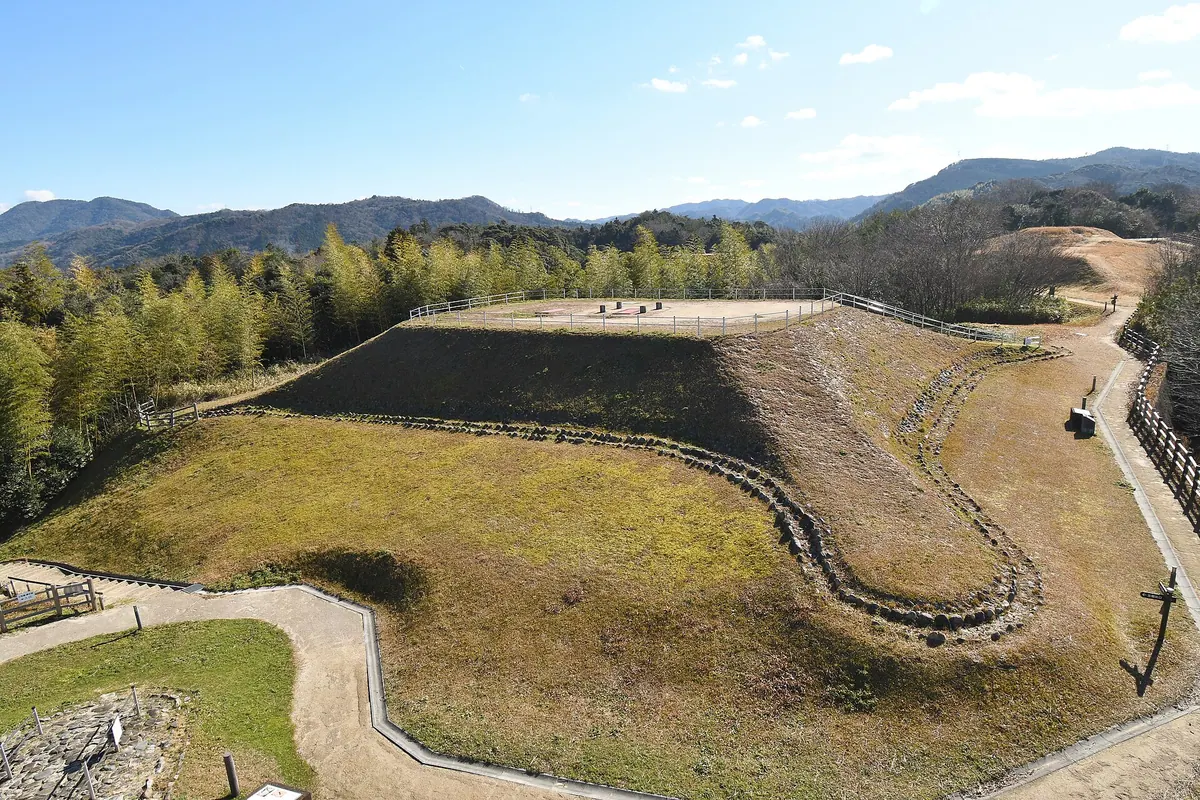
Explore ancient burial mounds from various periods at this significant historic site.
What it is
- A designated National Historic Site in Izumo City.
- Contains tumuli from the Yayoi to Nara periods.
- Discovered in 1953, preserving ancient burial practices.
- A historic park, Izumo Yayoi no Mori, opened in 2004.
What to see
- 32 identified tumuli and horizontal cave tombs.
- Six square-shaped tumuli with four protruding corners.
- The 3rd tumulus, 40 meters east-west and 30 meters north-south.
- The 9th tumulus, the largest square-shaped tumulus.
- Izumo Yayoi no Mori Museum, opened in 2010.
04
Kōjindani Site
SHIMANE · HISTORIC SITE 荒神谷遺跡
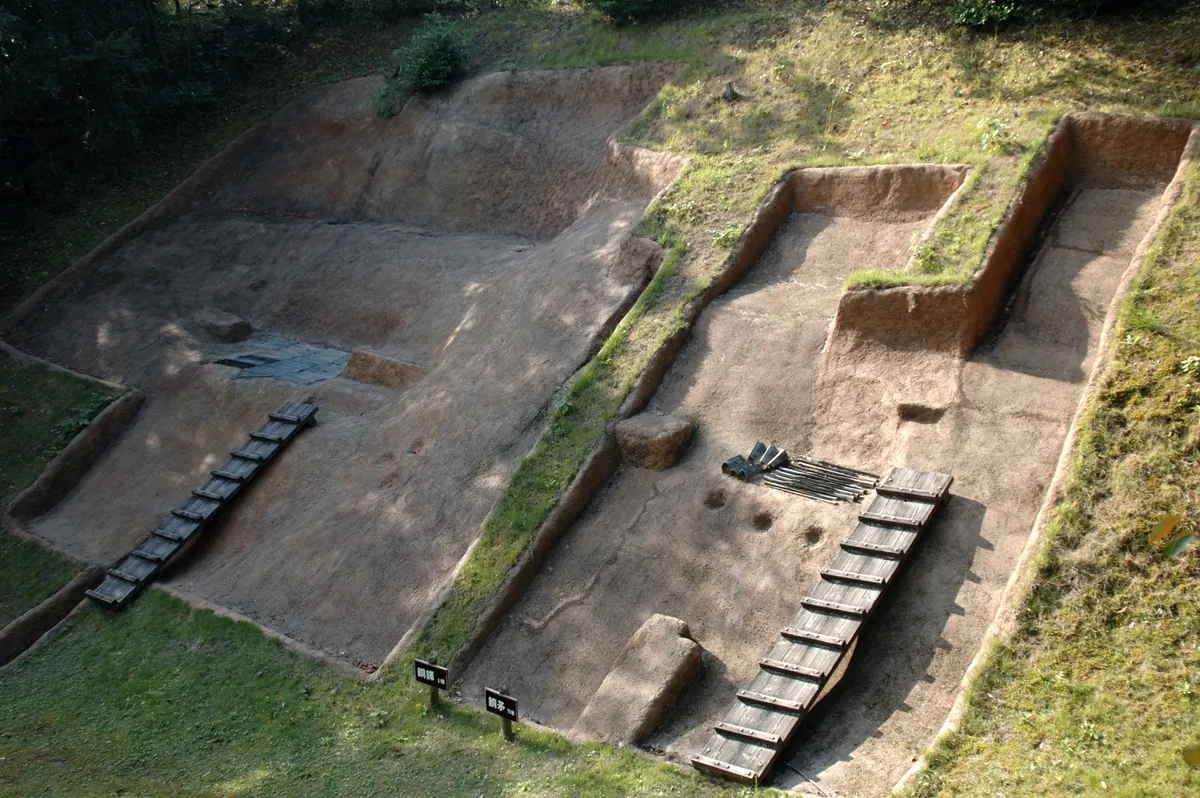
Kōjindani Site: a National Historic Site with ancient bronze artifacts, offering a glimpse into Japan's past.
What it is
- An archaeological site in Izumo City, Shimane Prefecture.
- Designated a National Historic Site in 1987.
- Excavation began in 1983 due to road construction.
What to see
- Unearthed 358 bronze swords, 6 bronze bells, and 16 bronze spears.
- Bronze swords were found arranged in four rows.
- Bronze bells were found arranged in two rows.
- Bronze spears were found with alternating tips.
- Kōjindani Museum opened at the site in 2005.
- Artifacts are displayed at Shimane Museum of Ancient Izumo.
- Official site
- www.kojindani.jp
05
Imaichi Dainenji Kofun
SHIMANE · HISTORIC SITE 今市大念寺古墳
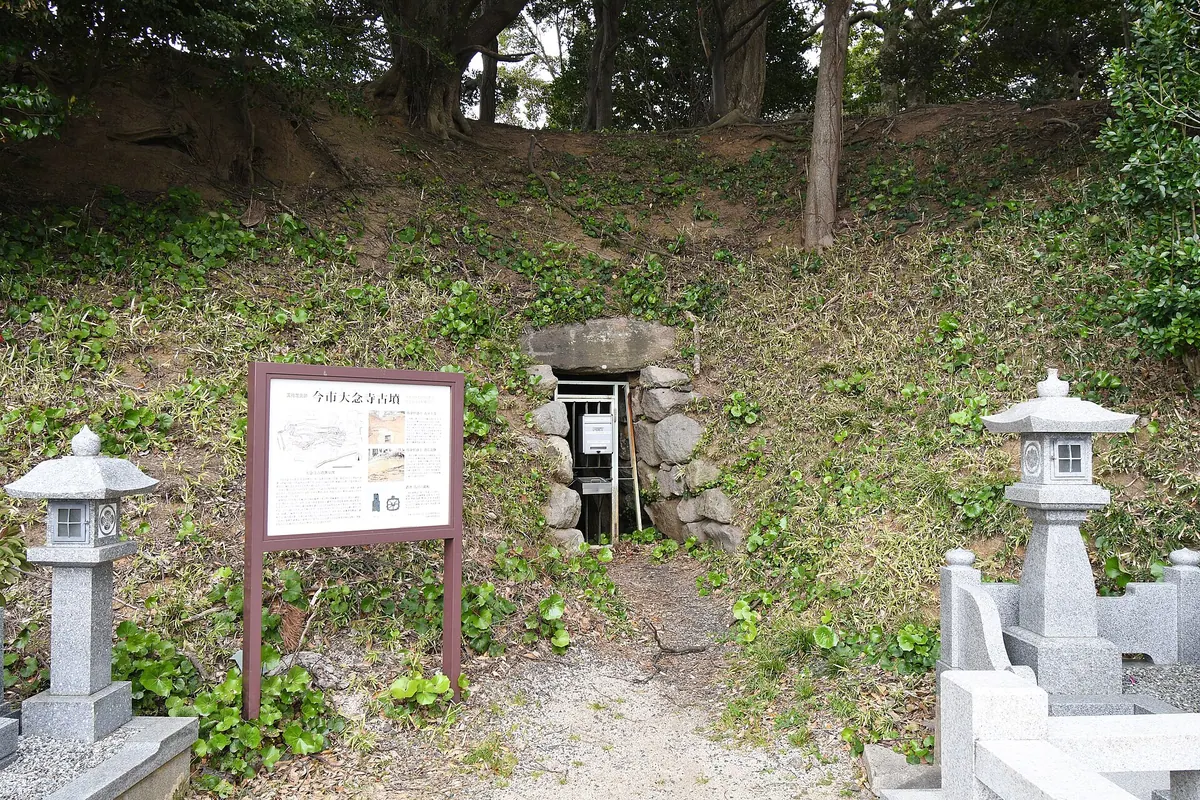
Largest keyhole-shaped tumulus in Izumo, a National Historic Site with a massive stone coffin.
What it is
- A tumulus in Izumo City, Shimane Prefecture.
- Designated as a National Historic Site.
- Estimated construction around the late 6th century.
- Largest keyhole-shaped tumulus in the Izumo region.
What to see
- A keyhole-shaped tumulus, about 92 meters long.
- A double-chambered stone burial chamber.
- One of Japan's largest stone coffins in the main chamber.
- Excavated artifacts are cultural properties.
Getting there
- 7-minute walk from Izumo-shi Station.
06
Kunidomi-Nakamura Kofun
SHIMANE · HISTORIC SITE 国富中村古墳
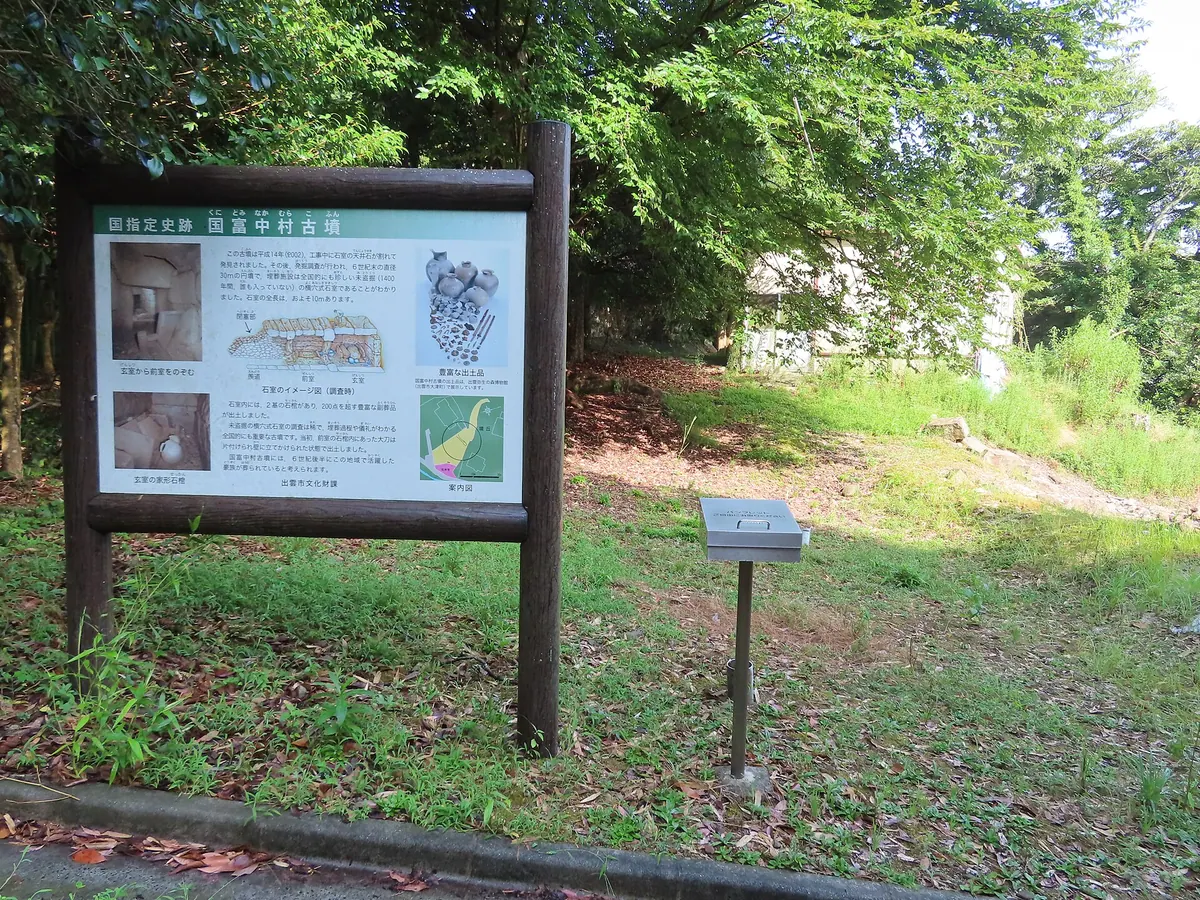
Explore a rare, unlooted 7th-century burial mound with fascinating ancient artifacts.
What it is
- A late Kofun period circular burial mound.
- Constructed from the late 6th century to early 7th century.
- Designated a National Historic Site on March 27, 2013.
- Known to exist by 1925.
What to see
- A circular burial mound, 30 meters in diameter.
- An unlooted horizontal stone chamber, over 9.3 meters long.
- The stone chamber opens to the southwest.
- Excavated bronze mirror, personal ornaments, swords.
- Iron arrowheads, horse fittings, and Sue ware pottery.
07
Ishiya Kofun
SHIMANE · HISTORIC SITE 石屋古墳
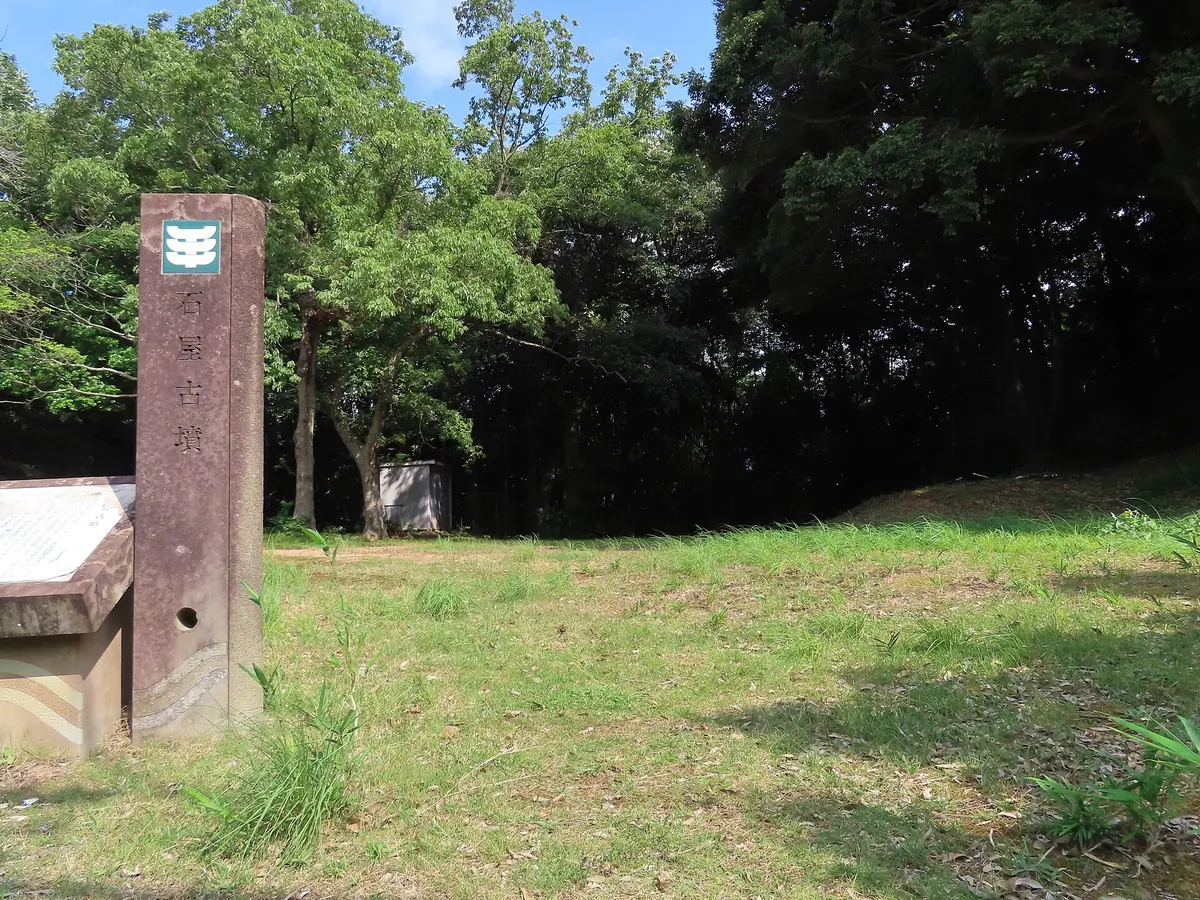
Explore a 5th-century square tomb mound with unique haniwa, including Japan's oldest sumo wrestler figure.
What it is
- A kofun, an ancient burial mound, in Matsue City.
- Dates from the latter half of the 5th century.
- Designated a National Historic Site in 1979.
What to see
- A square-shaped tomb mound, 40 meters per side.
- Two stages with fukiishi (revetment stones).
- Cylindrical haniwa excavated from between the fukiishi.
- Figurative haniwa fragments: human, horse, implement.
- Japan's oldest sumo wrestler haniwa was found here.
- Overlooks the Ohashi River from a hill.
08
Ōbaniwatorizuka Tumulus
SHIMANE · HISTORIC SITE 大庭鶏塚
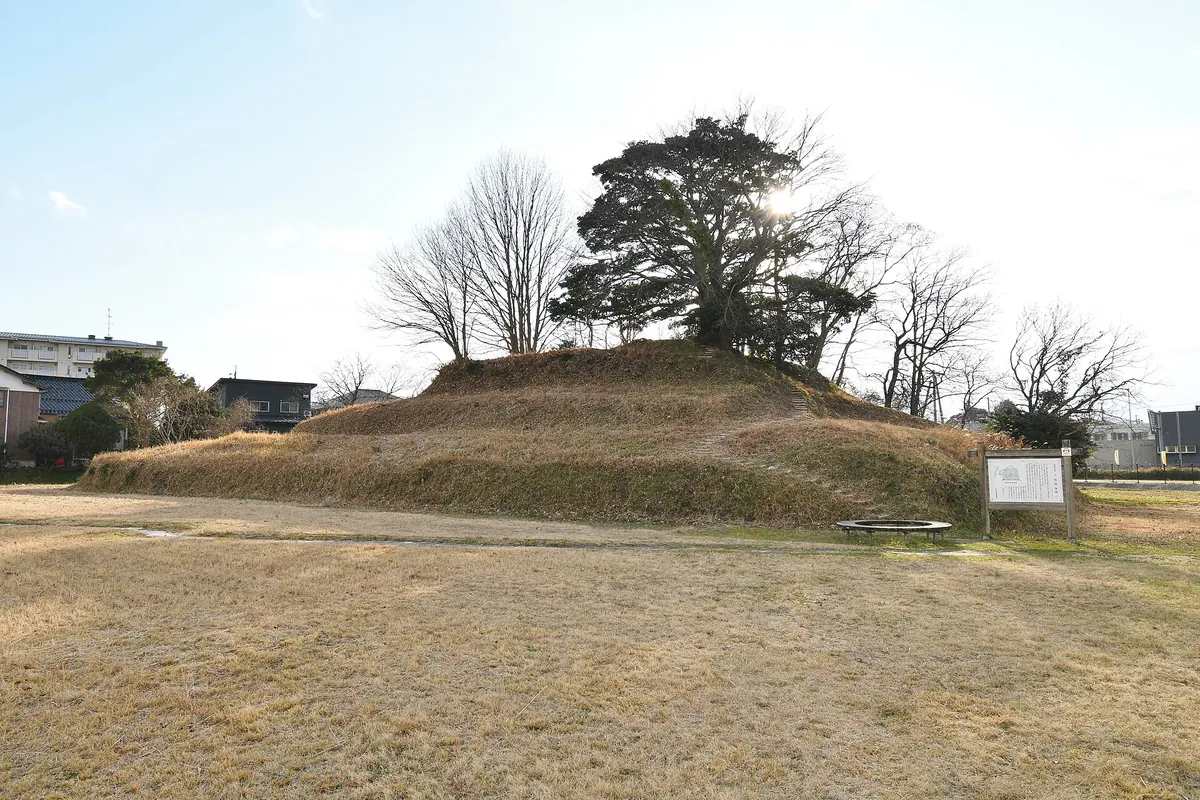
Ancient 6th-century burial mound, a National Historic Site with unique shape and artifacts.
What it is
- A square-shaped tumulus, part of the Yamashiro-Oba Kofun Group.
- Designated as a National Historic Site.
- Built by cutting off a tongue-shaped plateau.
- Construction estimated early to mid-6th century.
What to see
- Rhombic mound, 41m east-west, 43m north-south, 9m high.
- Mound has two tiers.
- Protrusions on the west and south sides.
- Surrounding moat recognized on the west side.
- Excavated cylindrical Haniwa fragments and Sue ware.
09
Sukumozuka Kofun
SHIMANE · HISTORIC SITE スクモ塚古墳
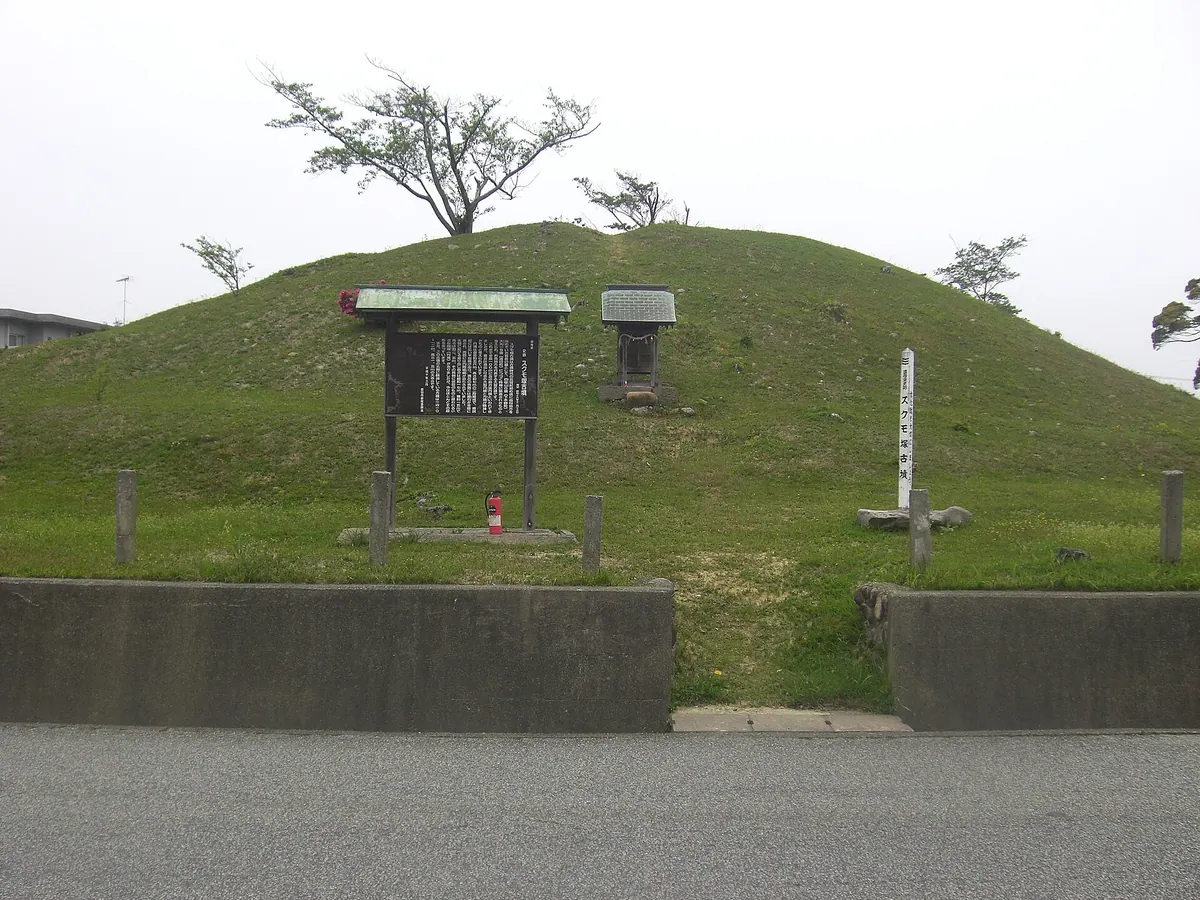
Explore Shimane's largest keyhole-shaped burial mound, a significant 5th-century tomb.
What it is
- A keyhole-shaped burial mound, or kofun.
- Discovered in 1939, confirmed as kofun in 2022.
- Designated a National Historic Site in 1941.
- Believed to be the tomb of the Kushiro clan chief.
What to see
- The largest tumulus in Shimane Prefecture.
- Total length of the tumulus is 100 meters.
- Posterior circular part has a diameter of 54-57 meters.
- The tumulus stands 7 meters high.
- Small companion mounds existed on both sides.
10
Iwayaato Kofun
SHIMANE · HISTORIC SITE 岩屋後古墳
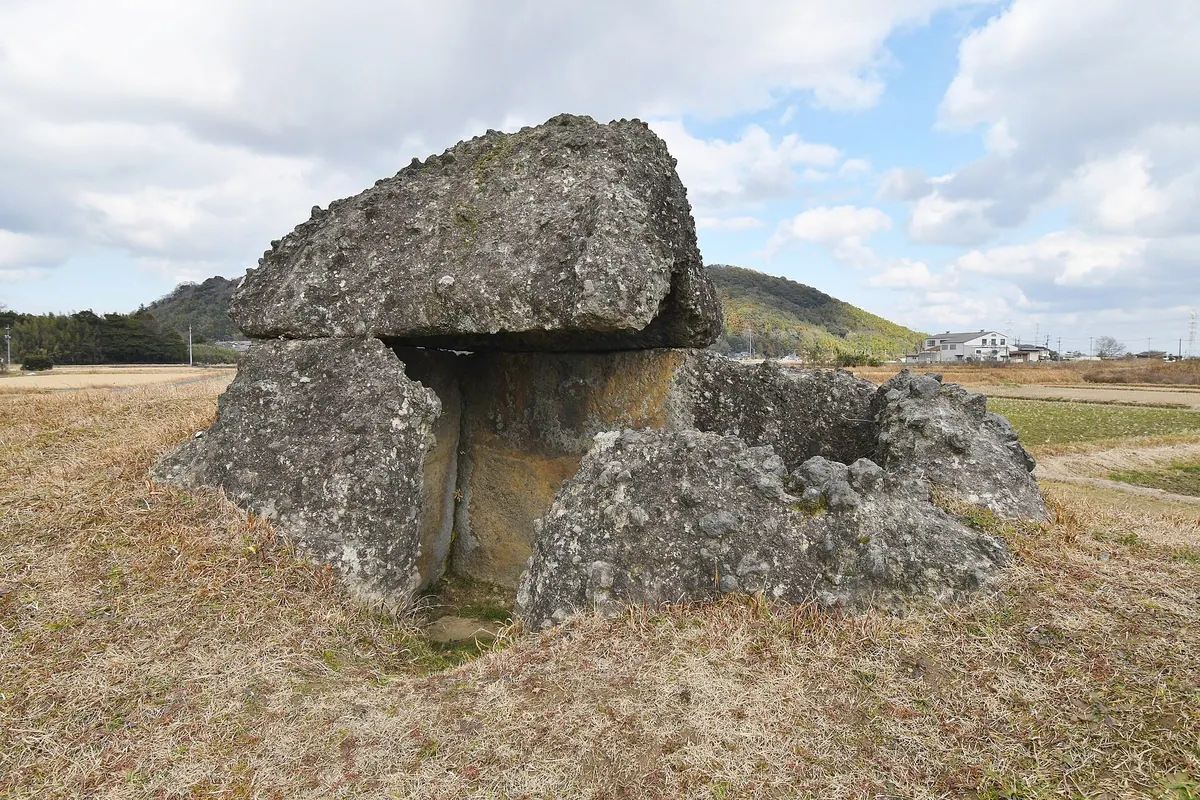
Explore an ancient burial mound with unique Izumo-style stone chambers and rare human haniwa.
What it is
- A tumulus in Matsue City, part of the Yu-Okusa Kofun Group.
- Designated a Shimane Prefecture historic site in 1970.
- Estimated to have been built in the late 6th century.
What to see
- A round or square mound, approximately 20 meters in size.
- An Izumo-style stone coffin type stone chamber, opening southwest.
- Cylindrical and figural haniwa unearthed from the mound.
- Rare human haniwa, discovered during the Meiji period.
11
Kamienya Tsukiyama Kofun
SHIMANE · HISTORIC SITE 上塩冶築山古墳
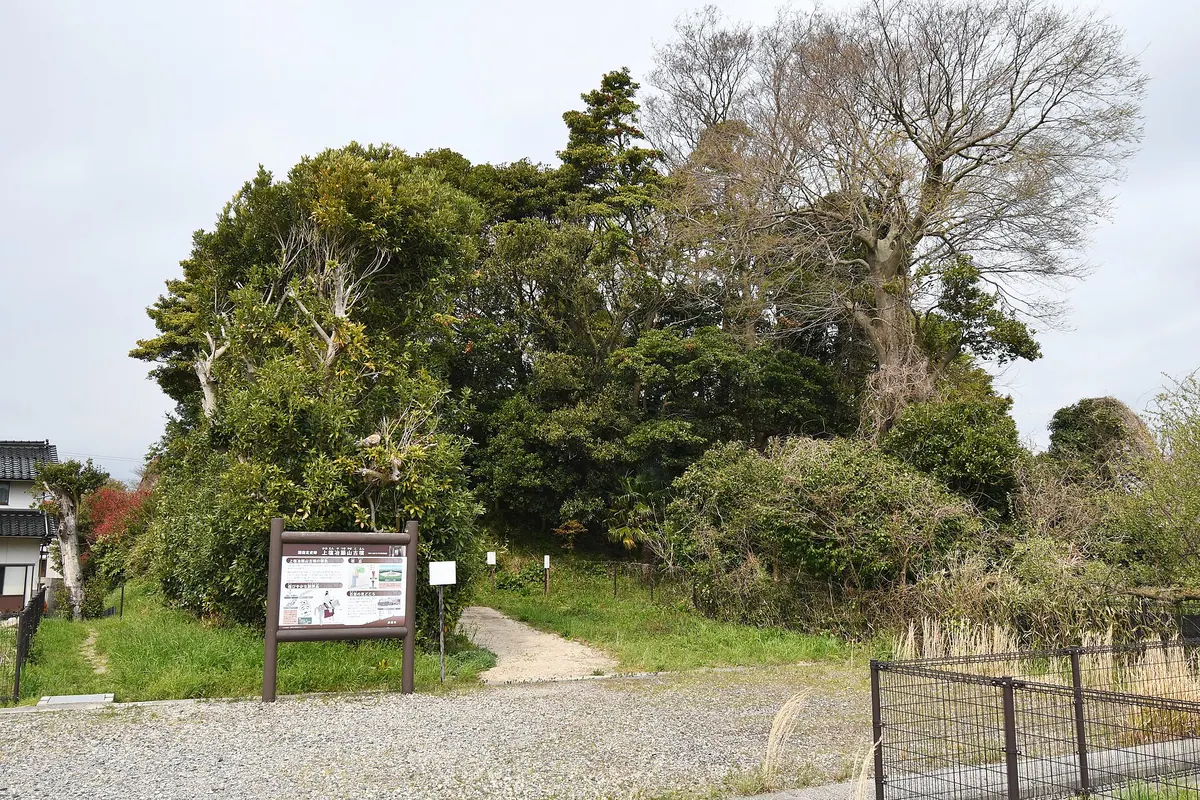
Explore this ancient circular burial mound with unique stone coffins, a designated National Historic Site.
What it is
- A tumulus in Izumo City, Shimane Prefecture.
- Part of the Tsukiyama Kofun group.
- Designated a National Historic Site.
- Built in the late 6th century.
What to see
- A circular kofun, 46 meters in diameter.
- A surrounding moat, 16 meters wide.
- A large cut-stone horizontal-passage stone chamber.
- Two house-shaped stone coffins inside the chamber.
- Excavated artifacts are Important Cultural Properties.
12
Hei-jinja Kofun
SHIMANE · HISTORIC SITE 平神社古墳
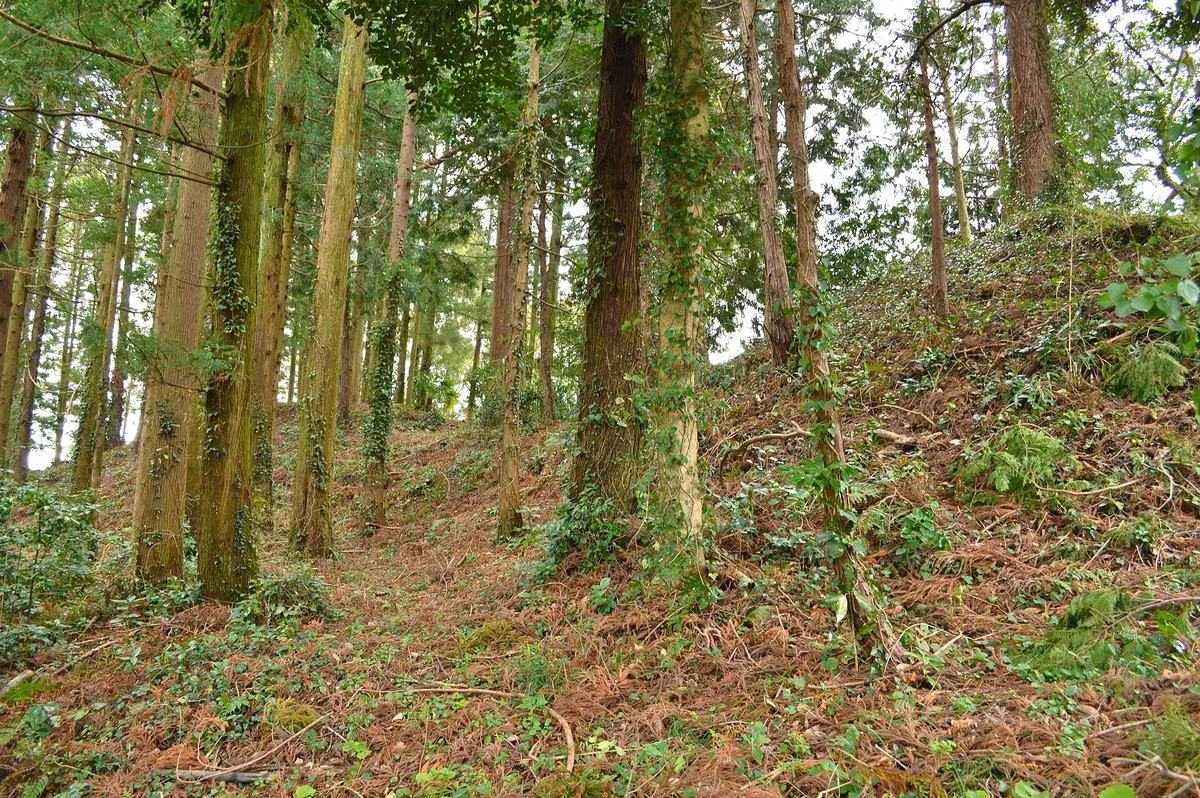
Explore the largest ancient burial mound in the Oki Islands, a keyhole-shaped tumulus from the 6th century.
What it is
- A keyhole-shaped tumulus, an ancient burial mound.
- Largest kofun in the Oki Islands.
- Construction estimated around the late 6th century.
- Designated a Shimane Prefecture historic site in 1969.
What to see
- A tumulus approximately 46 meters in total length.
- The mound is constructed in two stages.
- River stones and haniwa fragments on the surface.
- A horizontal stone burial chamber, 8 meters long.
13
Yamashiro Futagozuka Kofun
SHIMANE · HISTORIC SITE 山代二子塚
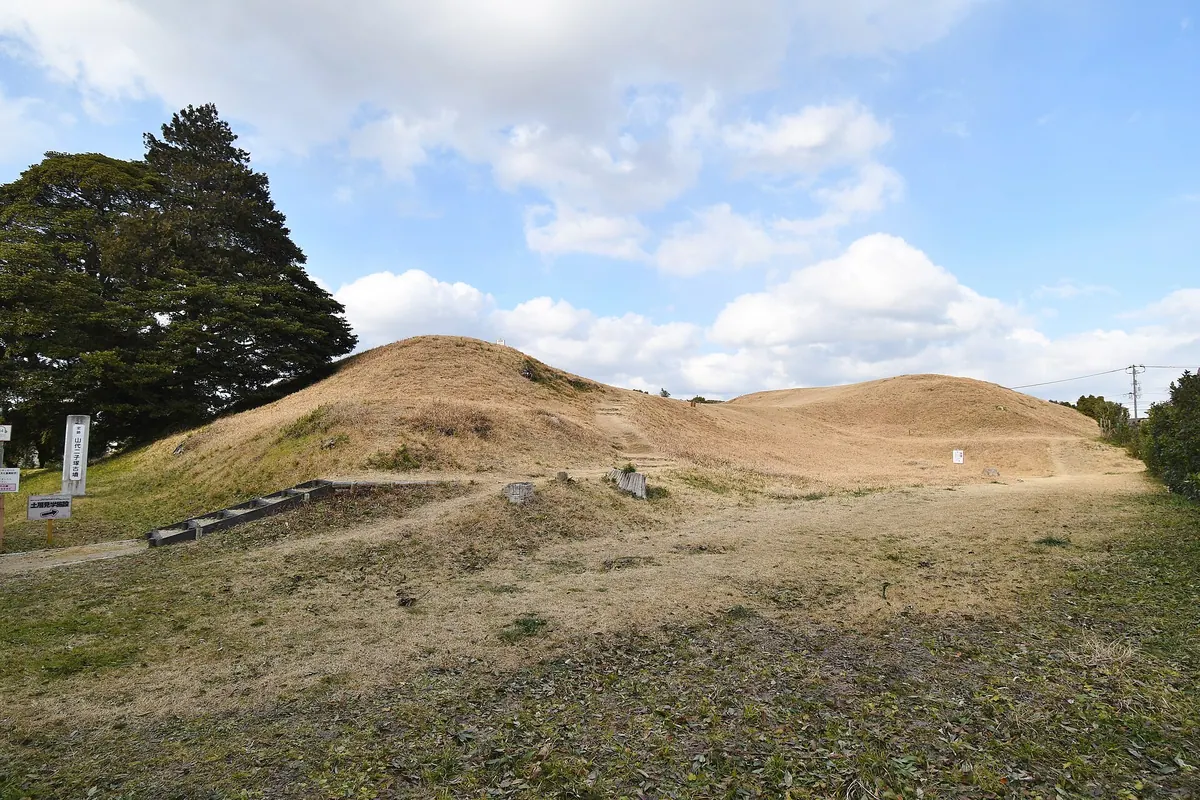
Explore a large 6th-century keyhole-shaped burial mound, a National Historic Site with unique haniwa.
What it is
- A keyhole-shaped kofun, an ancient burial mound.
- Part of the Yamashiro-Oba Kofun group.
- Designated as a National Historic Site.
- Estimated to be from the mid to late 6th century.
What to see
- The keyhole-shaped mound built on a rise.
- A rectangular moat and outer bank surround the mound.
- Total length including the outer bank is about 150 meters.
- Unearthed cylindrical and figurative Haniwa.
14
Arashima Kofun Cluster
SHIMANE · HISTORIC SITE 荒島古墳群
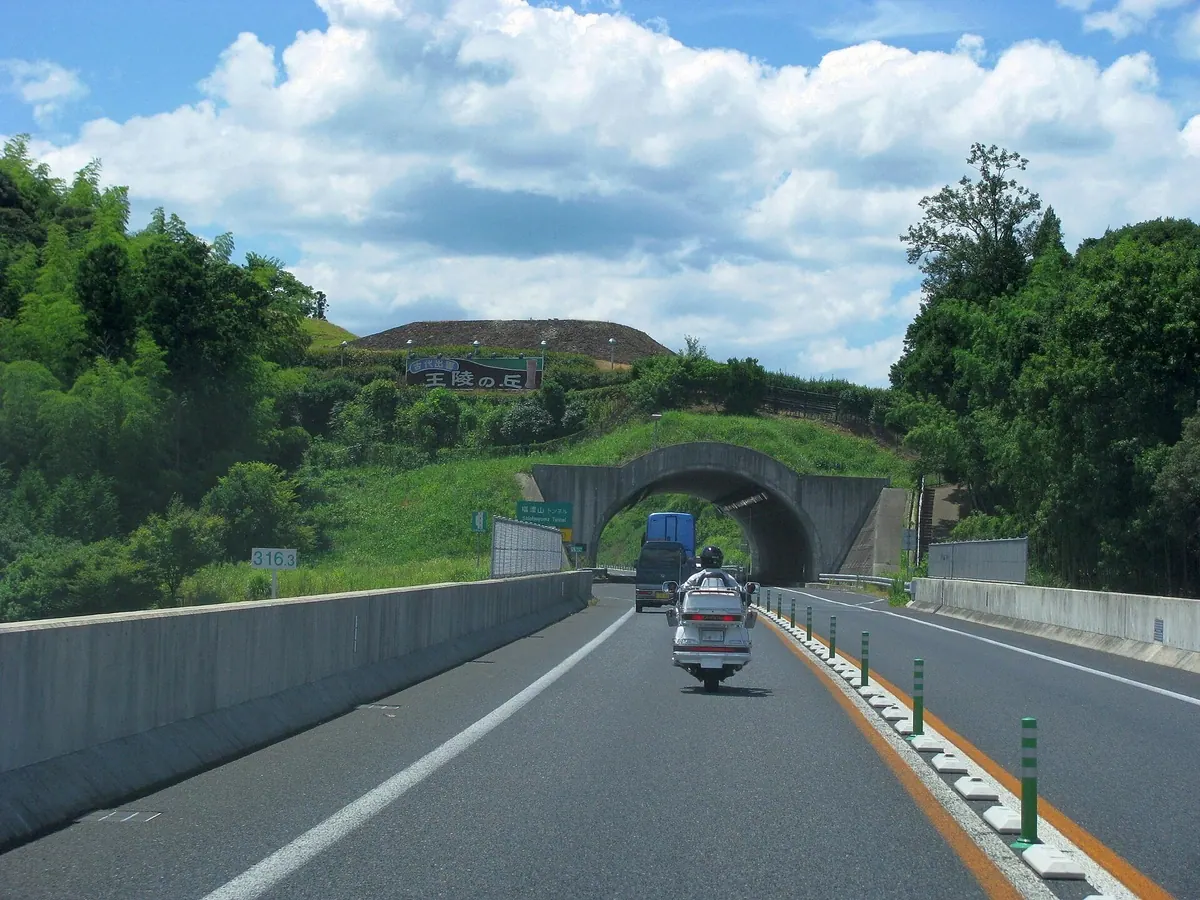
Explore ancient burial mounds from the Yayoi and Kofun periods, a designated National Historic Site.
What it is
- A cluster of ancient burial mounds.
- Dates from the late Yayoi to early Kofun periods.
- Designated a National Historic Site.
- Renamed Arashima Kofun Cluster in 1999.
What to see
- Zozan Kofun Group 1-4.
- Oonari Kofun, a large 60-meter square tumulus.
- Shiotsuyama Tomb Group 1-11.
- Tombs with protruding corners in Shiotsuyama Group.
- Triangular-rimmed divine beast mirrors from Oonari Kofun.
15
Kamo-Iwakura Site
SHIMANE · HISTORIC SITE 加茂岩倉遺跡
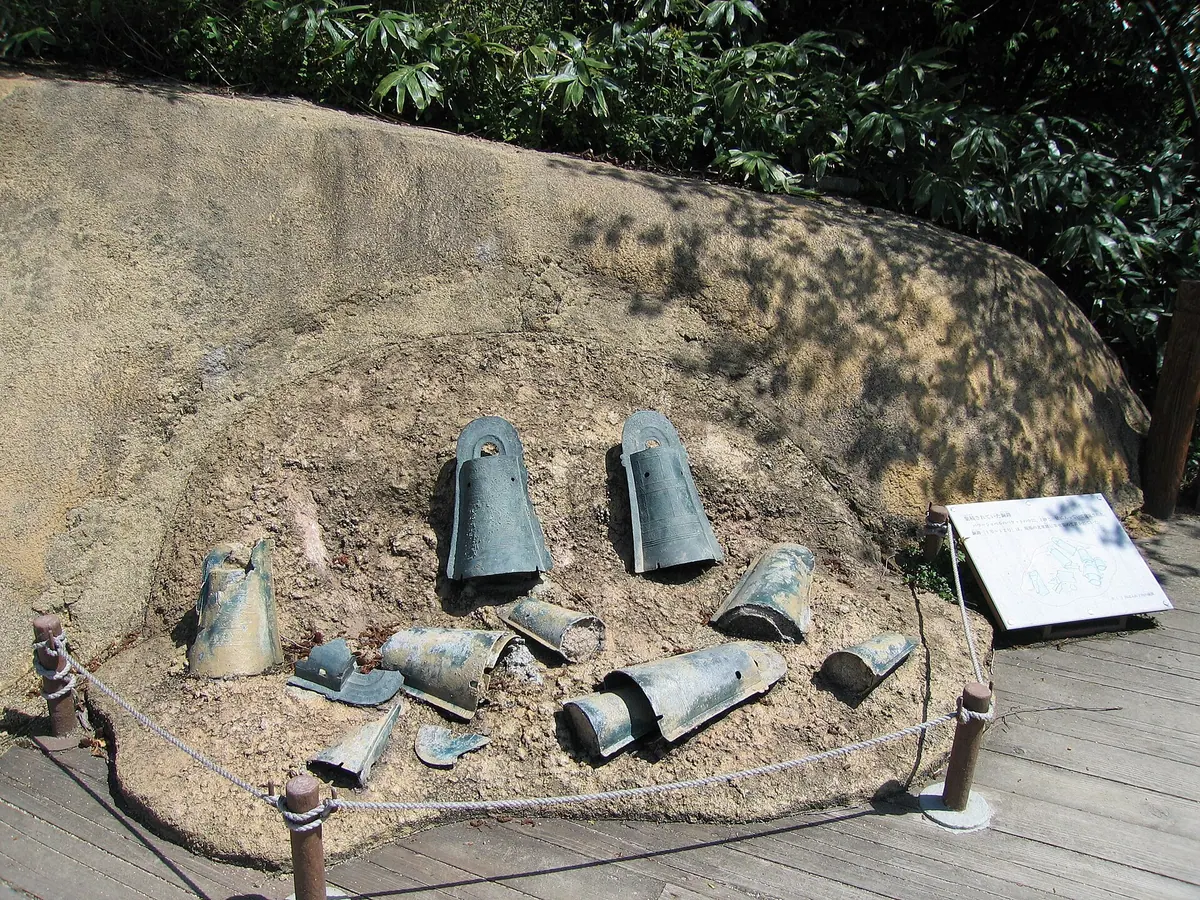
See where 39 ancient bronze bells were found, the most at any site in Japan.
What it is
- Yayoi period archaeological site.
- Discovered on October 14, 1996.
- Designated a National Historic Site in 1999.
What to see
- Site where 39 bronze bells were unearthed.
- Largest number of bronze bells found at one site.
- Some bells depict faces, dragonflies, deer, wild boars.
- Some bells were found nested inside larger ones.
- Some bells have an 'X' mark, like those from Kojindani Site.
16
Tangean Kofun
SHIMANE · HISTORIC SITE 丹花庵古墳
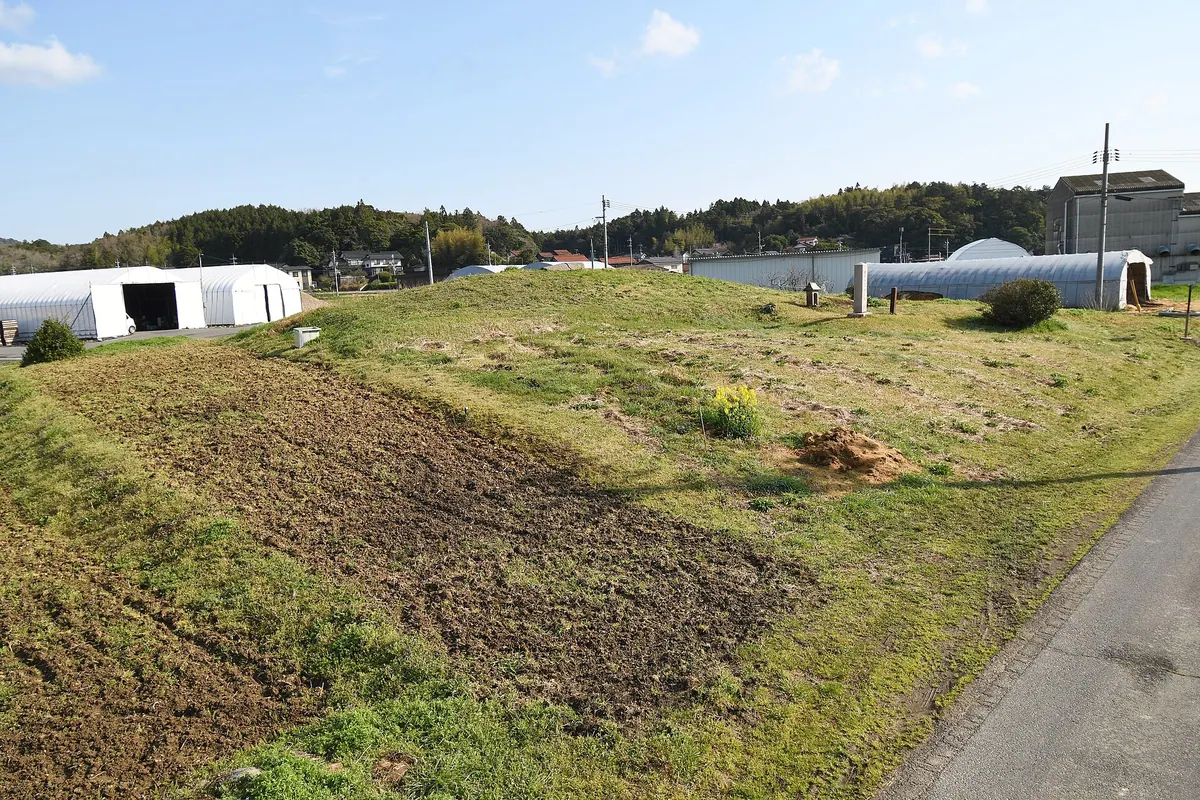
Tangean Kofun is a rare square-shaped burial mound from the 5th century.
What it is
- A square-shaped kofun, an ancient burial mound.
- Designated a National Historic Site in 1933.
- Dates to the late 5th century, middle Kofun period.
What to see
- Mound measures 45 by 49 meters.
- Mound has a two-tiered structure.
- Fukiishi and cylindrical Haniwa on the mound surface.
- Sarcophagus made of tuffaceous sandstone.
- Sarcophagus lid stone has sawtooth patterns.
17
Yamashiro hōfun
SHIMANE · HISTORIC SITE 山代方墳
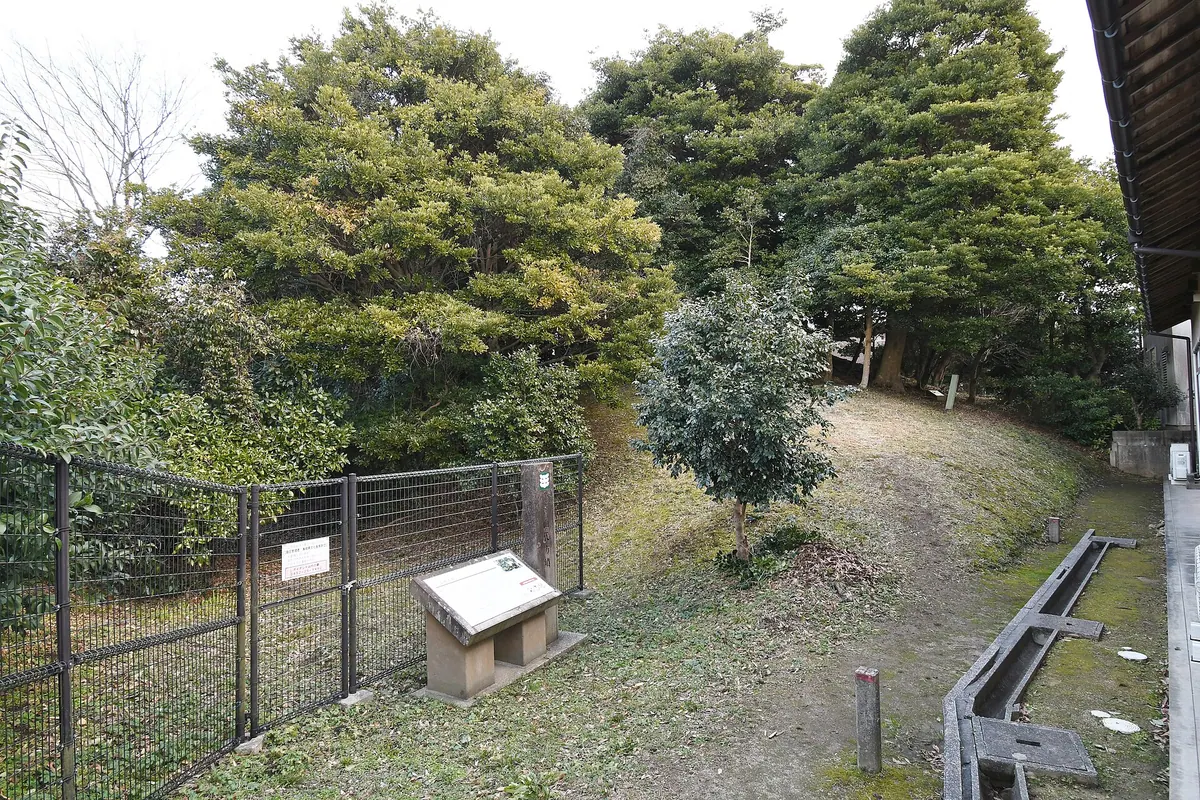
Explore a 7th-century chief's tomb, a unique square burial mound with a surrounding moat.
What it is
- An ancient burial mound, Yamashiro hōfun.
- Part of the Yamashiro-Ōba Kofun Group.
- Designated a National Historic Site since 1941.
- Estimated to be an early 7th-century chief's tomb.
What to see
- A square-shaped mound, 45 by 43 meters.
- The mound has a two-tiered construction.
- A surrounding moat, 5.7 to 7.1 meters wide.
- An Izumo-style stone coffin burial chamber.
18
Kamienya Jizōyama Kofun
SHIMANE · HISTORIC SITE 上塩冶地蔵山古墳
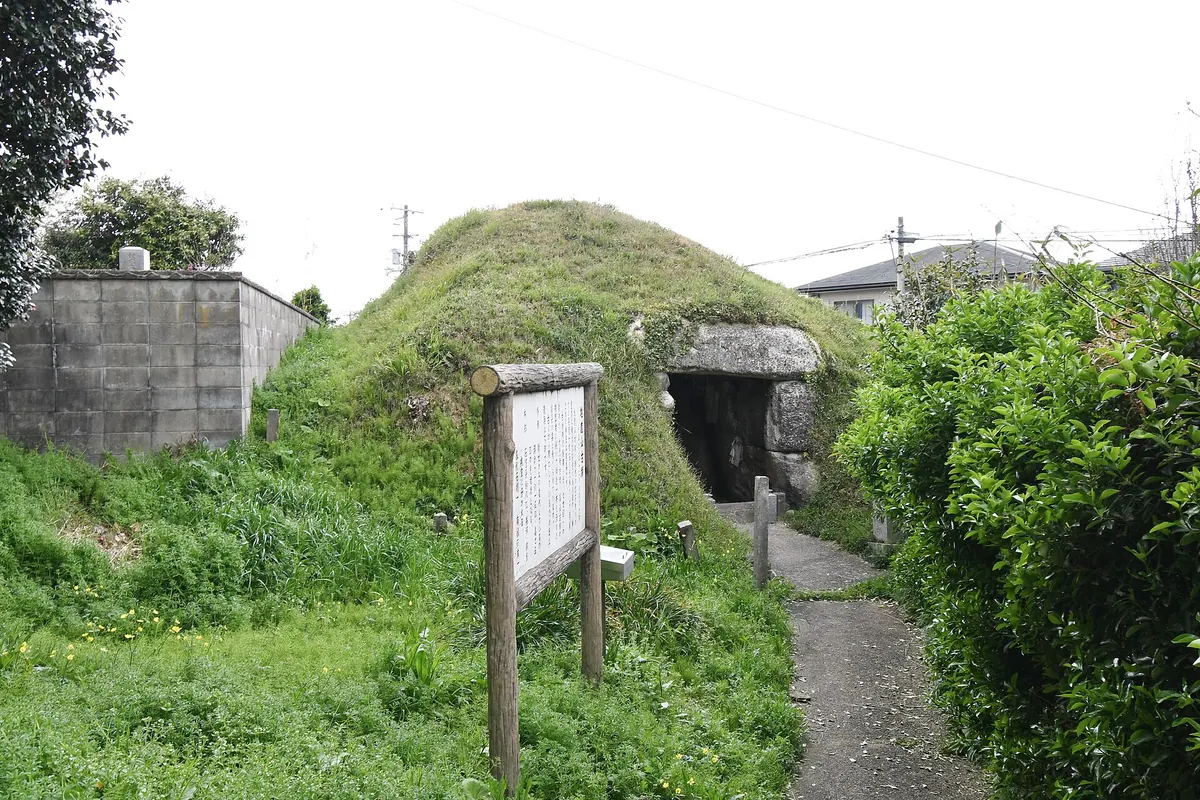
Explore a 7th-century kofun, a National Historic Site, showcasing ancient burial architecture.
What it is
- A kofun, an ancient burial mound.
- Designated a National Historic Site.
- Built around the early 7th century.
- Representative late-period kofun in the Izumo Plain.
What to see
- Horizontal stone chamber, a double-chamber structure.
- Chamber uses cut tuff and sandstone.
- Main chamber contains a house-shaped stone coffin.
- Main chamber also contains a sarcophagus.
19
Ageshima Kofun
SHIMANE · HISTORIC SITE 上島古墳
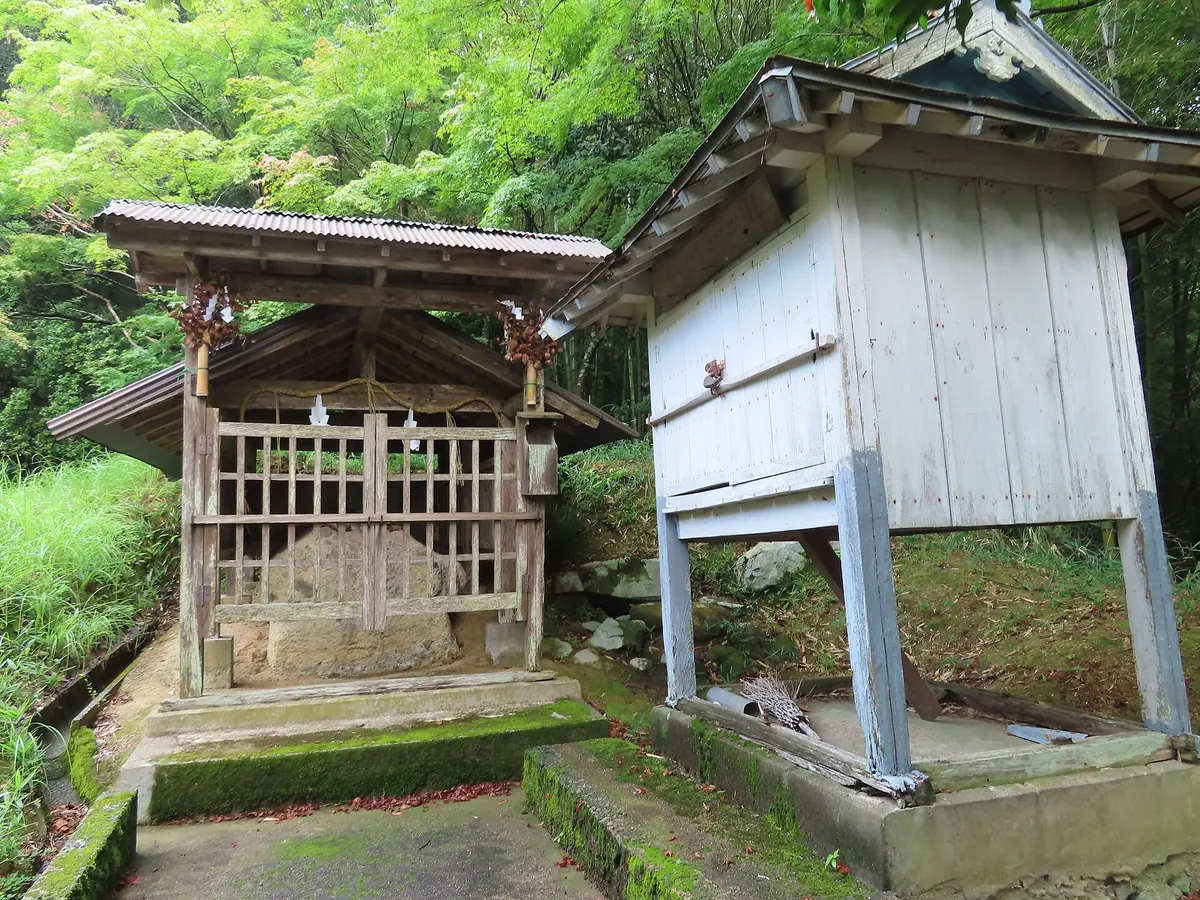
Explore a 6th-century burial mound, a National Historic Site with unique burial facilities and artifacts.
What it is
- A circular burial mound, a tumulus.
- Designated as a National Historic Site.
- Discovered in 1949.
- Construction estimated to be in the mid-6th century.
What to see
- A 15-meter diameter, 2-meter high mound.
- Two burial facilities: a house-shaped stone coffin.
- A pit-style stone chamber.
- Excavated artifacts at Shimane Museum of Ancient Izumo.
20
Iwami Ginzan Silver Mine
SHIMANE · HISTORIC SITE 石見銀山
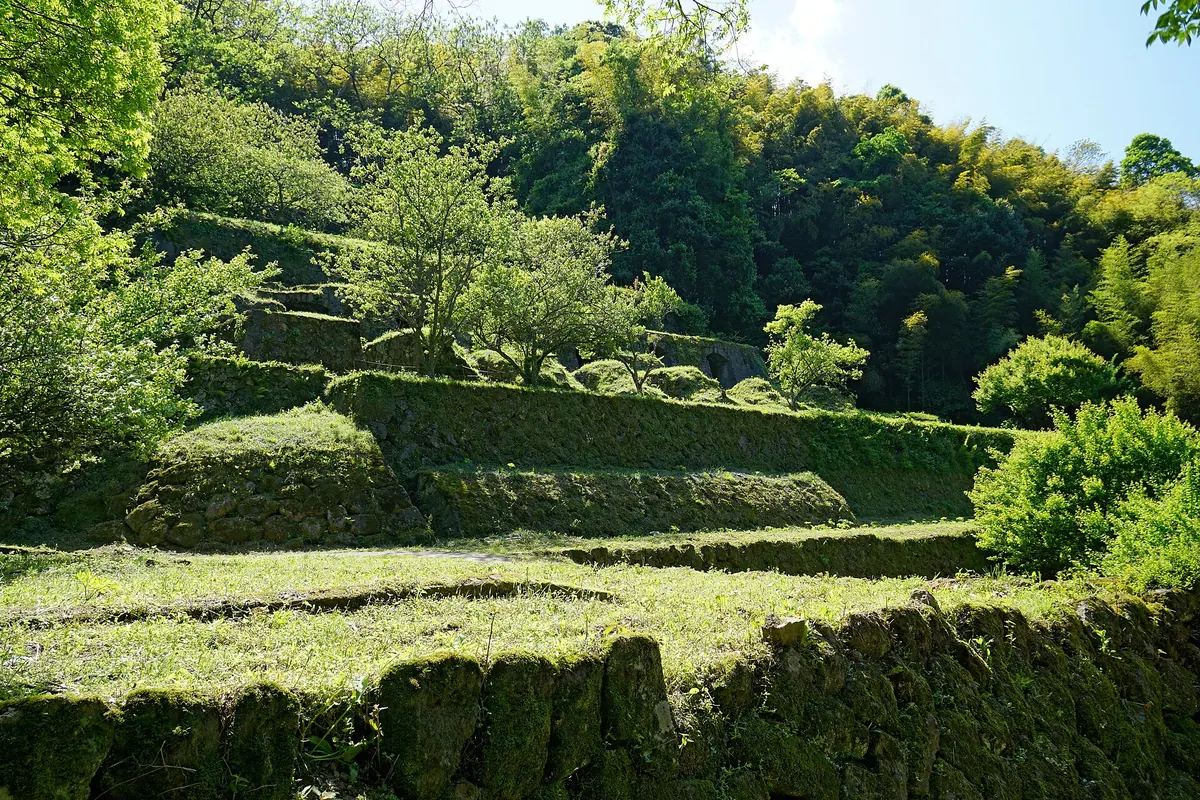
This historic silver mine, a UNESCO site, supplied much of the world's silver.
What it is
- Most productive silver mine in Japanese history.
- Supplied majority of Japan's silver from 1526 to late 1800s.
- Produced one-third of world's silver in early 1600s.
- Designated a UNESCO World Heritage Site in 2007.
What to see
- Mine, mining settlements, and infrastructure.
- Well-preserved district, largely unaltered since 1920s closure.