

20 Historic sites in Saitama worth your time
Japan Gems
Nakanoyama Kofun and Yoshimi Hundred Caves are among Saitama Prefecture's 20 heritage sites. These sites offer a look into ancient Japanese history.
Saitama has 27 historic sites on Japan Gems. Below are the 20 we can tell you the most about — each one written up in English from Japanese sources, with what to see and how to get there. See all historic sites in Saitama.
01
Maruhakayama Kofun
SAITAMA · HISTORIC SITE 丸墓山古墳
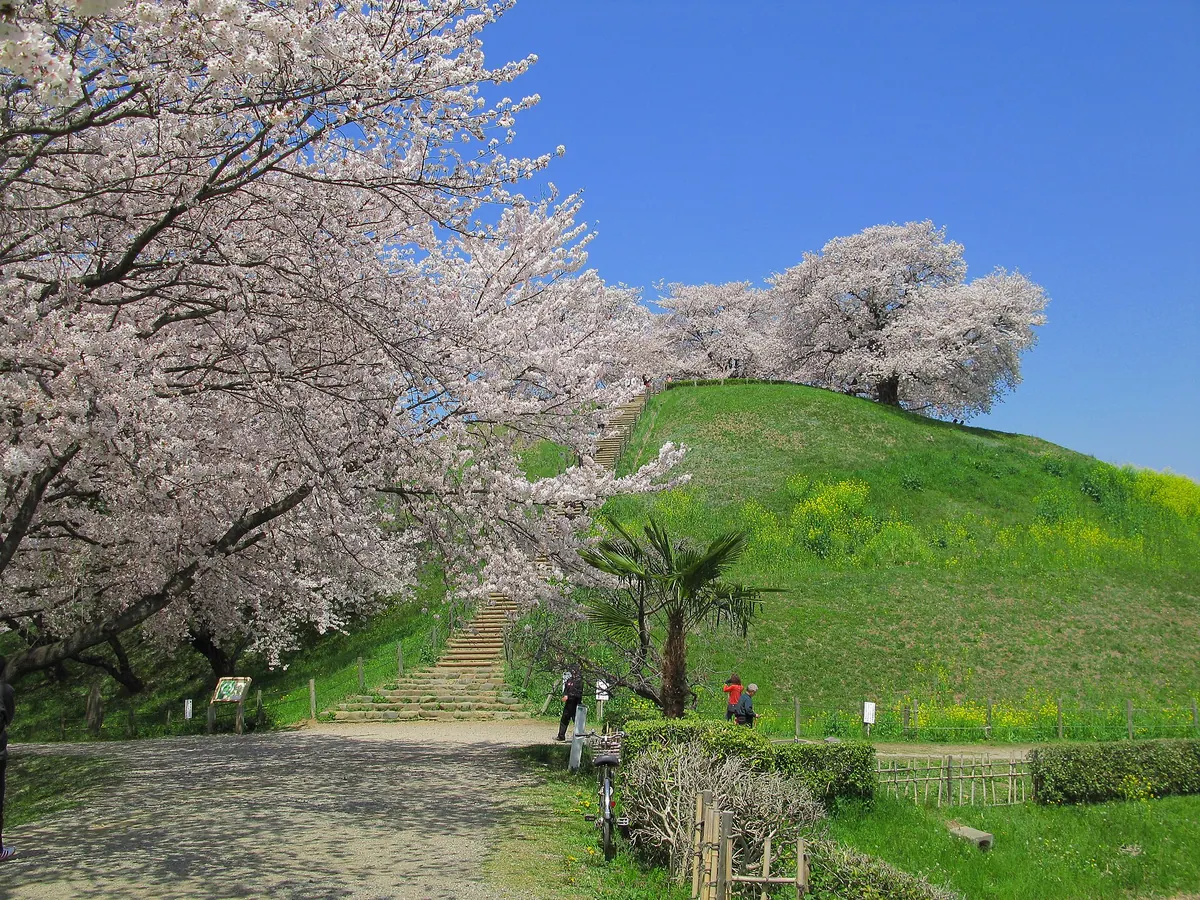
Japan's largest circular burial mound, offering history and cherry blossoms, worth an hour.
What it is
- A circular tumulus in Gyoda City, Saitama Prefecture.
- Part of the Saitama Kofun Group, a Special National Historic Site.
- Largest circular tumulus in Japan, built in the 6th century.
- Ishida Mitsunari camped here in 1590 for a water attack.
What to see
- A tumulus with a diameter of 105.0 meters.
- A tumulus with a height of 17.2 meters.
- Excavated haniwa, including cylindrical and human figures.
- The site of Ishida Mitsunari's camp and embankment.
When to go
- Visit in spring for cherry blossoms around the tumulus.
02
Hachiman-yama Kofun
SAITAMA · HISTORIC SITE 八幡山古墳 (埼玉県)
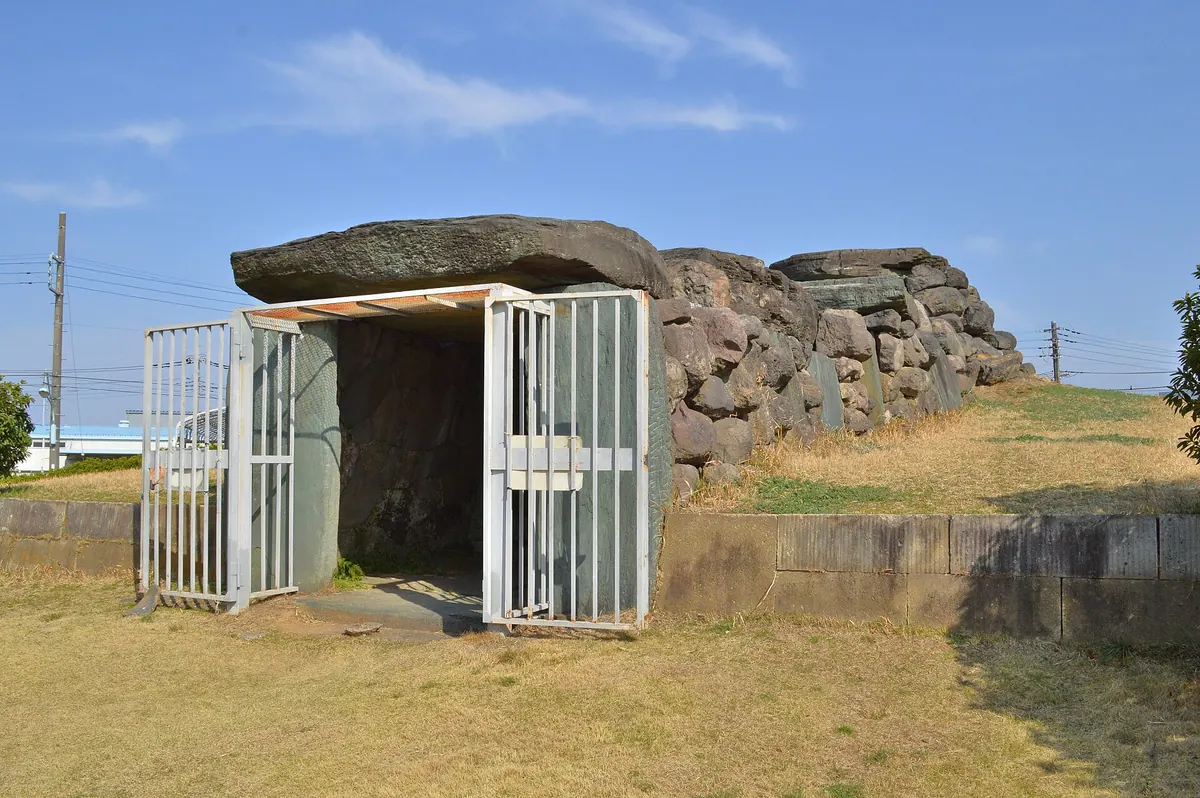
Explore a large 7th-century burial mound with an exposed stone chamber.
What it is
- A circular burial mound in Gyoda City, Saitama Prefecture.
- Part of the Wakakodama Kofun group.
- Designated as a Saitama Prefecture historic site.
- Constructed around the mid-7th century.
What to see
- A tumulus 80 meters in diameter and 9.5 meters high.
- An exposed horizontal stone burial chamber.
- Stone chamber is 16.7 meters long.
- Chamber has an antechamber, front, middle, and back sections.
- Inner chamber height is 3.1 meters.
- Fragments of a dry lacquer coffin were excavated.
03
Okunoyama Kofun
SAITAMA · HISTORIC SITE 奥の山古墳
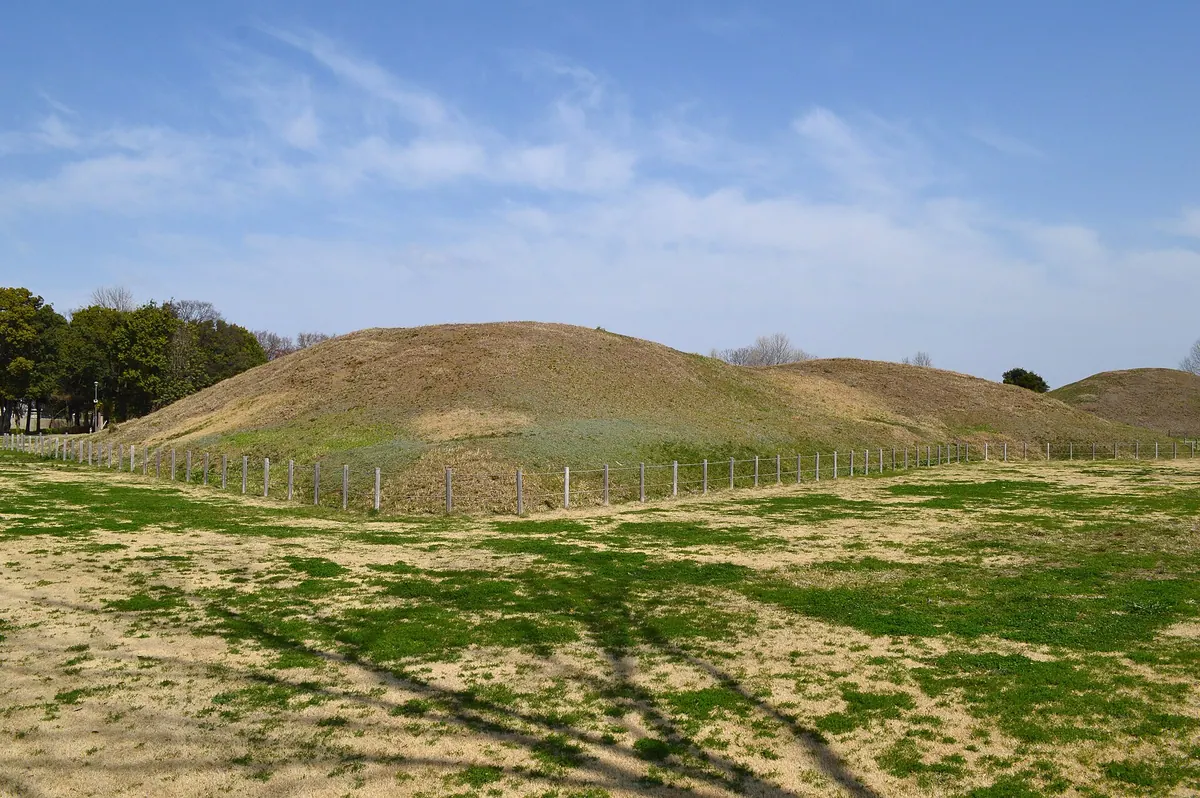
Explore a 6th-century keyhole-shaped burial mound, part of a National Special Historic Site.
What it is
- A keyhole-shaped burial mound (kofun).
- Part of the Saitama Kofun Group.
- Designated a National Special Historic Site.
- Constructed in the middle of the 6th century.
What to see
- The 66.4-meter-long burial mound.
- Posterior circular part: 38.4 meters diameter, 5.6 meters high.
- Anterior square part: 43.2 meters wide, 6.0 meters high.
- A rectangular double moat.
- Cylindrical, horse-shaped, equestrian, shield-shaped Haniwa.
- Rare decorated Sue ware (child-holding jar).
04
Inariyama Kofun
SAITAMA · HISTORIC SITE 稲荷山古墳
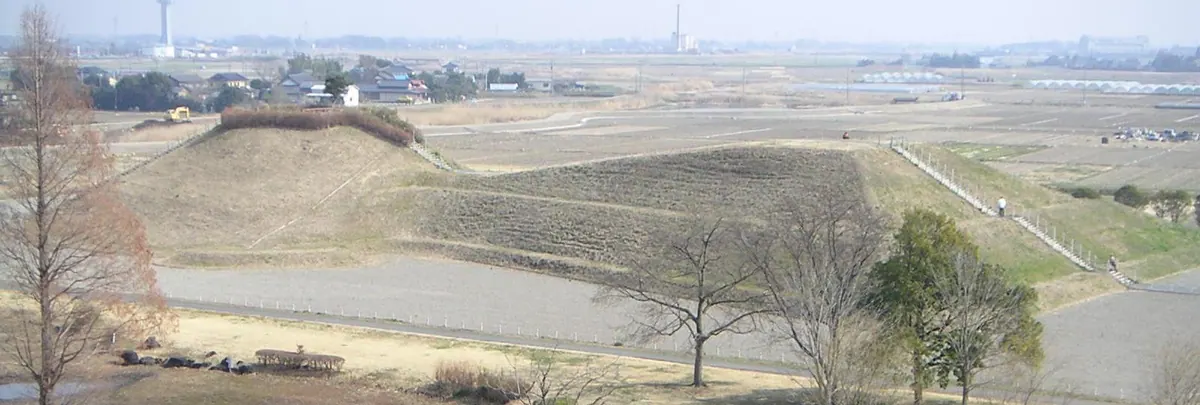
Explore a 5th-century keyhole-shaped tumulus, a National Historic Site with excavated National Treasures.
What it is
- A keyhole-shaped tumulus, built in the late 5th century.
- Part of the Saitama Kofun Group.
- Designated a Special National Historic Site.
What to see
- The second largest keyhole-shaped tumulus in Saitama Prefecture.
- Tumulus is 120.0 meters long.
- Posterior circular part has a 62.6 meter diameter.
- Anterior rectangular part is 82.4 meters wide.
- A double moat surrounds the kofun.
- Excavated artifacts are National Treasures, including a gold-inlaid iron sword.
05
Shinmei Shell Mound
SAITAMA · HISTORIC SITE 神明貝塚
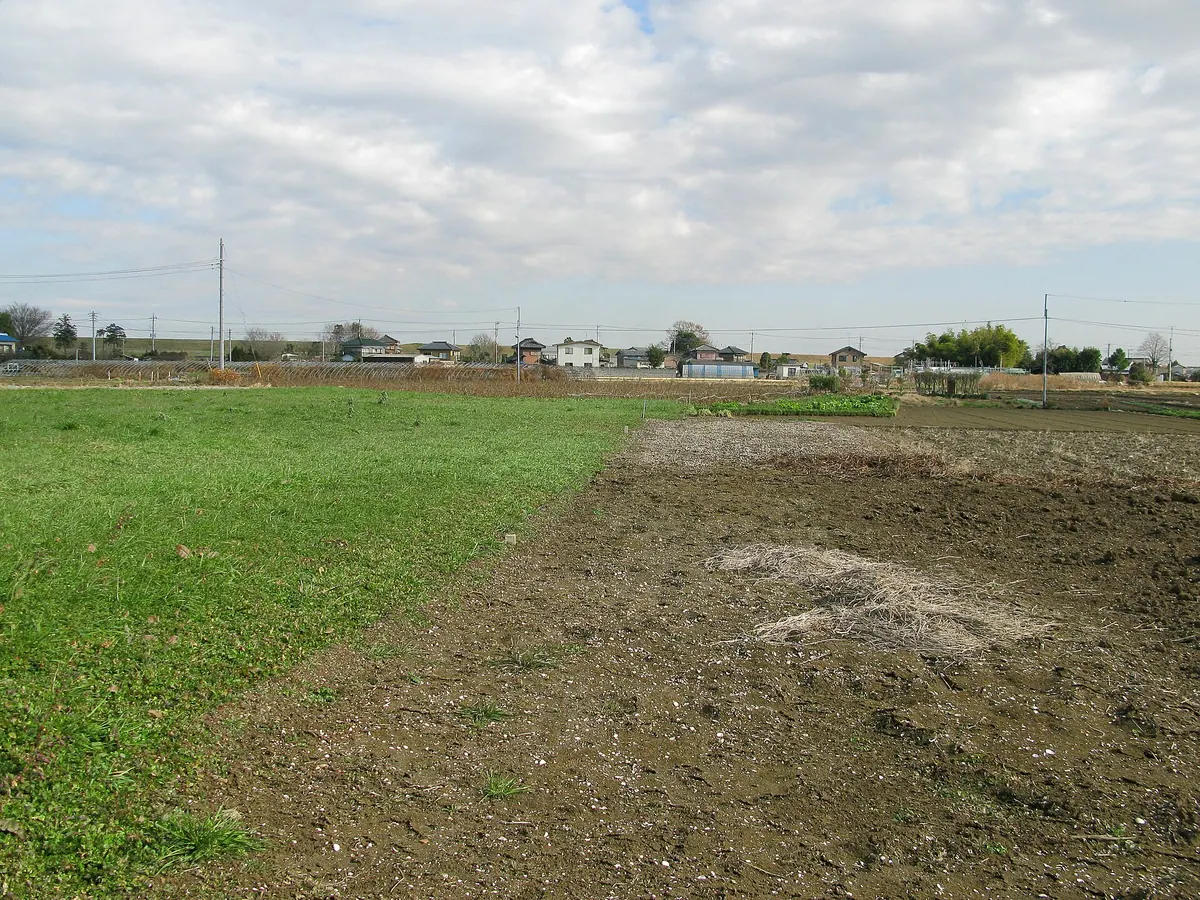
Explore a large Jomon-era shell mound, a designated National Historic Site, revealing ancient life.
What it is
- A horseshoe-shaped shell mound.
- Dates to the late Jomon period.
- Designated a National Historic Site.
- Also a Saitama Prefecture Selected Important Archaeological Site.
What to see
- The shell mound measures 180m east-west.
- The shell mound measures 120m north-south.
- Mainly consists of Yamato Shijimi clams.
- Horinouchi to Kasori B type pottery has been excavated.
- Four pit dwellings were found in 1961.
- Three Jomon human remains were found in 2016.
06
Yoshimi Hundred Caves
SAITAMA · HISTORIC SITE 吉見百穴
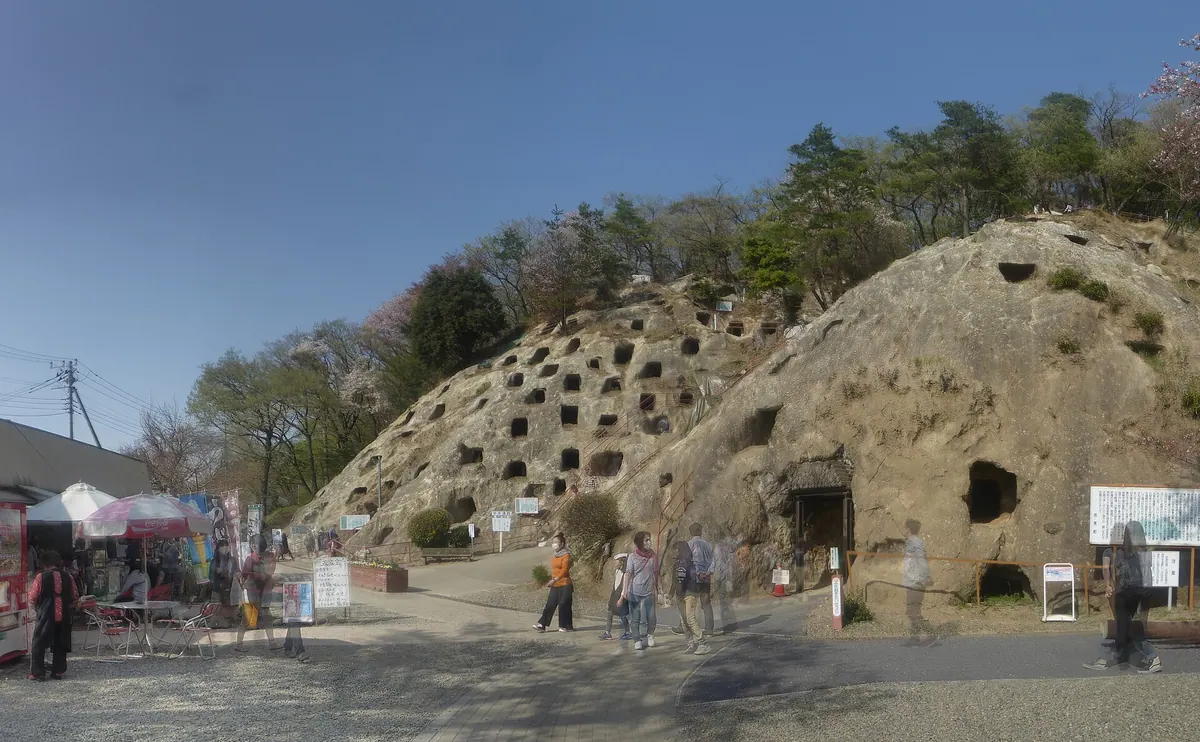
Ancient tombs, wartime tunnels, and glowing moss offer a unique historical and natural experience.
What it is
- A group of horizontal tombs from the late Kofun period.
- Designated a National Historic Site on March 7, 1923.
- Excavated by Shogoro Tsuboi in 1887.
What to see
- 219 existing horizontal tombs.
- Underground military tunnels from World War II.
- Natural habitat for glowing moss.
- Tunnels are 4 meters wide and 2.2 meters high.
Getting there
- Take a bus from Higashimatsuyama Station.
- Take a bus from Konosu Station West Exit.
- Official site
- www.town.yoshimi.saitama.jp
07
Tennoyamazuka Kofun
SAITAMA · HISTORIC SITE 天王山塚古墳
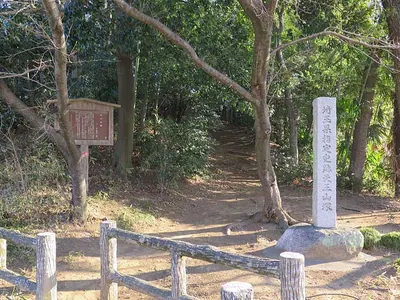
Explore a large, ancient keyhole-shaped burial mound, a significant historical site in Saitama.
What it is
- A keyhole-shaped tumulus, or burial mound.
- Part of the Kayama Kofun Group.
- Designated a historic site by Saitama Prefecture.
- Built between the 6th and 7th centuries.
What to see
- The tumulus is 107 meters long.
- Front part is 62 meters wide and 9 meters high.
- Rear circular part is 55 meters in diameter and 10 meters high.
- Largest tumulus in its group.
- Sixth largest in Saitama Prefecture.
- A Yakushido hall stands on the saddle part.
08
Mitakata Site
SAITAMA · HISTORIC SITE 見田方遺跡

Explore a Kofun-period settlement site and its artifacts, offering a glimpse into ancient life.
What it is
- Archaeological site in Koshigaya City, Saitama Prefecture.
- Settlement from the late Kofun period (late 6th century).
- Designated historic site of Koshigaya City.
What to see
- Pit-dwelling remains from 1966-1967 excavations.
- Haji ware, Sue ware, stone tools, and wooden artifacts.
- Ornaments, daily necessities, and plant remains.
- Artifacts displayed at Former Higashikata Village Nakamura Family Residence.
- Some areas preserved as a park.
09
Wakamiya-Hachiman Kofun
SAITAMA · HISTORIC SITE 若宮八幡古墳

Explore a 6th-century circular burial mound with a unique stone chamber and a shrine on top.
What it is
- A circular kofun, an ancient burial mound.
- Part of the Shimokarako Kofun Group.
- Constructed around the latter half of the 6th century.
- Designated a Saitama Prefecture historic site in 1964.
What to see
- A circular mound 34 meters in diameter, 4.5 meters high.
- A Hachiman Shrine located at the top of the mound.
- A double-sleeved horizontal stone chamber.
- Stone chamber has antechamber and passage.
- Stone chamber opens to the southeast.
10
Mizuko Shell Mound
SAITAMA · HISTORIC SITE 水子貝塚

Explore a 6000-year-old Jomon shell mound and reconstructed dwellings, a National Historic Site.
What it is
- A shell mound and ring settlement site.
- Dates from the early Jomon period, 5500-6000 years ago.
- Designated as a National Historic Site since 1969.
- Discovered on October 25, 1894.
What to see
- Five restored pit dwellings.
- A 582-meter-long promenade.
- Exhibition hall for archaeological materials.
- Mizuko-style pottery from excavations.
Getting there
- 15-minute walk from Mizuhodai Station.
- Official site
- www.city.fujimi.saitama.jp
11
Teppōyama Kofun
SAITAMA · HISTORIC SITE 鉄砲山古墳

Explore a large, ancient keyhole-shaped tomb with a rare triple moat.
What it is
- A keyhole-shaped tumulus from the latter half of the 6th century.
- Part of the Saitama Kofun Group.
- Designated a National Special Historic Site.
What to see
- A tumulus 107.6 meters long.
- Total length including the moat is 163 meters.
- A rare triple moat surrounds the tumulus.
- A horizontal stone chamber in the posterior circular part.
- Unearthed cylindrical and morning glory-shaped haniwa.
- Unearthed Sue ware.
12
Sakitama Kofun Cluster
SAITAMA · HISTORIC SITE 埼玉古墳群

Explore ancient burial mounds, including one with a gold-inlaid sword, at this National Special Historic Site.
What it is
- A cluster of nine large kofun burial mounds.
- Designated a National Special Historic Site.
- Dates from the late 5th century to the 7th century.
- Added to the Japan Heritage story in 2017.
What to see
- Eight keyhole-shaped kofun and one round kofun.
- Gold-inlaid iron sword found in Inariyama Kofun.
- Maruboyama Kofun, one of Japan's largest round kofun.
- Futagoyama Kofun, largest keyhole kofun in Musashi Province.
13
Wadō Site
SAITAMA · HISTORIC SITE 和銅遺跡

Japan's first copper discovery site, where the Wadō era and first currency originated.
What it is
- Site of Japan's first natural copper discovery in 708.
- Empress Genmei changed the era name to Wadō.
- Wadō Kaichin was Japan's first circulating currency.
- Designated a Saitama Prefecture Historic Site in 1961.
What to see
- An open-pit copper mine.
- A large monument of Wadō Kaichin.
- Kuroya Copper Smelter Site.
Getting there
- Nearest station is Wadō-Kuroya on the Chichibu Railway.
- Official site
- wadohosyoukai.com
14
Gyōda Futagoyama Kofun
SAITAMA · HISTORIC SITE 二子山古墳
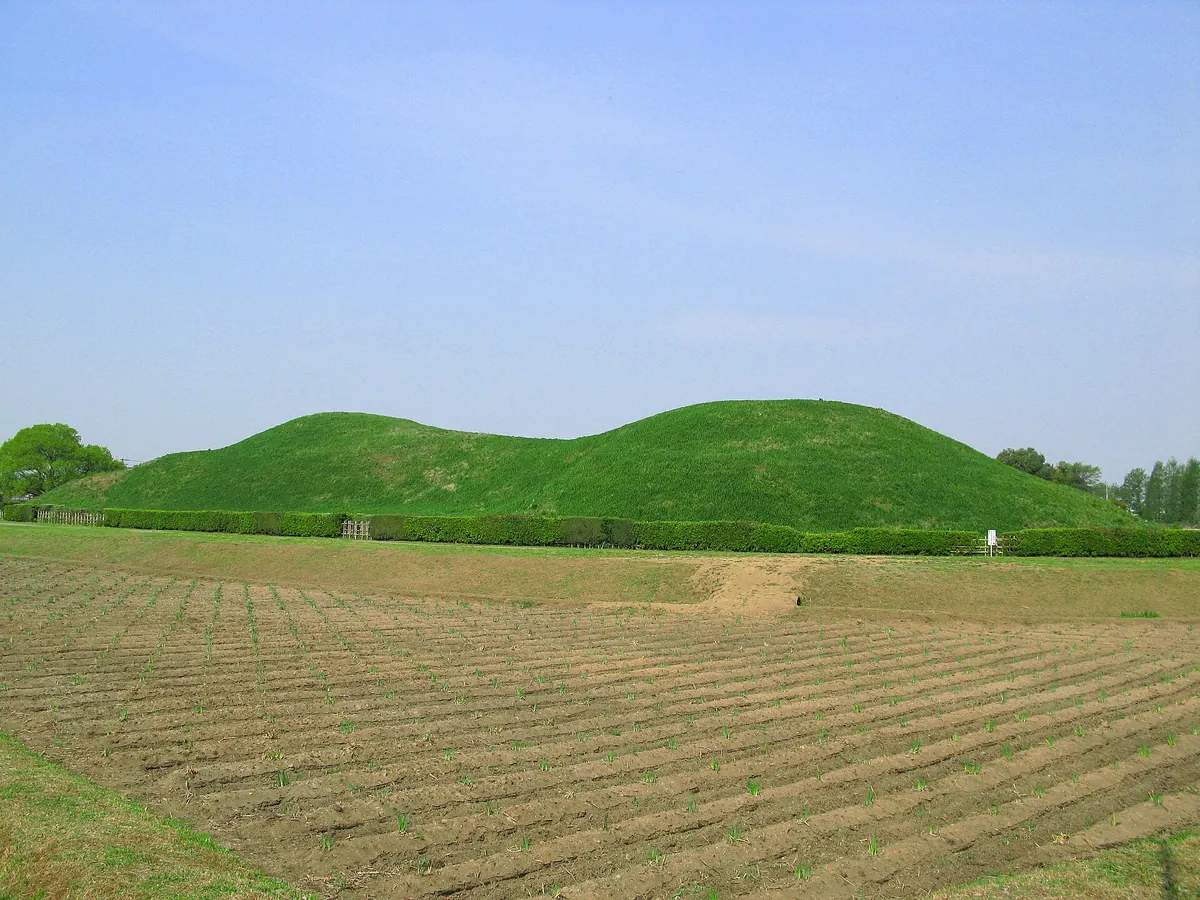
Explore Saitama's largest ancient burial mound, a keyhole-shaped kofun with unique haniwa.
What it is
- A kofun, an ancient burial mound.
- Part of the Saitama Kofun Group.
- Designated a Special National Historic Site.
- Constructed in the first half of the 6th century.
What to see
- Largest kofun in Saitama Prefecture.
- Keyhole-shaped tumulus.
- Mound is 132.2 meters long.
- Posterior circular part is 67 meters in diameter.
- Anterior square part is 83.2 meters wide.
- Square double moat, inner moat holds water.
15
Atagoyama Kofun
SAITAMA · HISTORIC SITE 愛宕山古墳
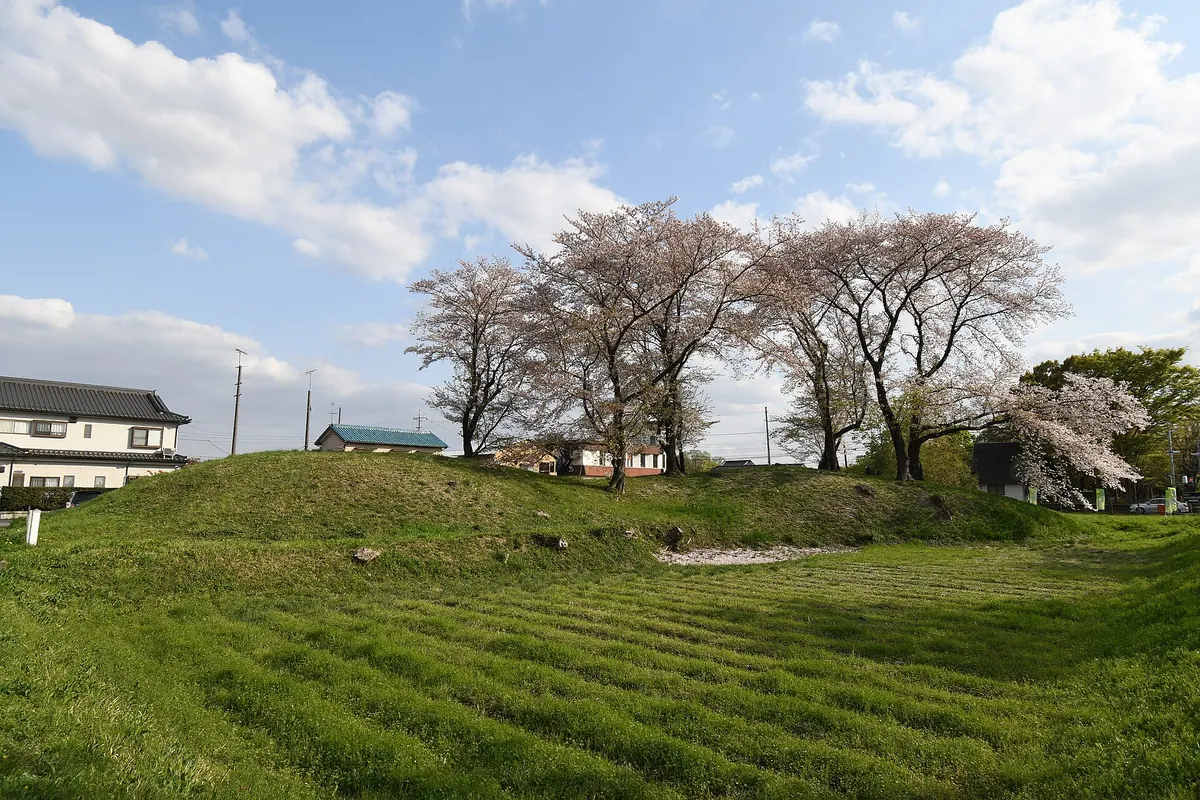
Explore a 6th-century keyhole-shaped burial mound, part of a National Special Historic Site.
What it is
- A keyhole-shaped burial mound, or kofun.
- Part of the Saitama Kofun Group.
- Designated a National Special Historic Site.
- Believed to be constructed in the mid-6th century.
What to see
- The mound is 54.7 meters long.
- Rear circular part is 26.4 meters in diameter.
- Front rectangular part is 31.4 meters wide.
- Excavated cylindrical and morning glory Haniwa.
- Excavated sword-shaped and male human Haniwa.
16
Shinpukuji Shell Mound
SAITAMA · HISTORIC SITE 真福寺貝塚
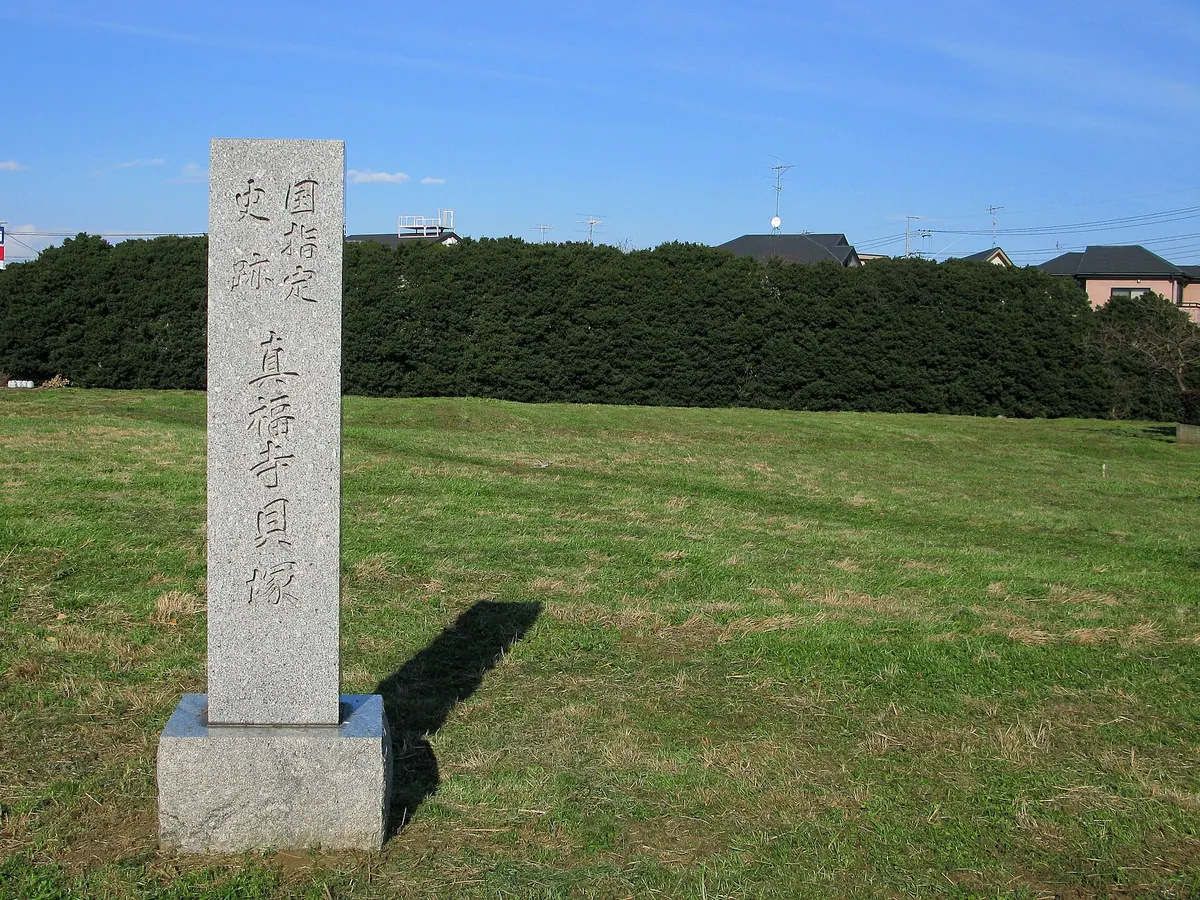
Explore a large Jomon-era shell mound and peat layer, a National Historic Site.
What it is
- A settlement site from the late to final Jomon period.
- Consists of a shell mound and a peat layer.
- Designated as a National Historic Site.
What to see
- A shell mound approximately 150 meters in diameter.
- The designated historic site area is about 24,800 square meters.
- Excavated clay figurines are Important Cultural Properties.
- Numerous artifacts, including pottery and tools, were found.
17
Nohara Burial Mounds
SAITAMA · HISTORIC SITE 野原古墳群

Explore ancient burial mounds, including a keyhole-shaped tumulus, at this Saitama Prefecture historic site.
What it is
- A group of tumuli, ancient burial mounds.
- Designated a Saitama Prefecture Important Historic Site in 1976.
- Excavations occurred in 1962 and 1964.
What to see
- 23 tumuli located in a forest.
- A keyhole-shaped tumulus, 40 meters long.
- Horizontal stone chambers in the tumulus.
- Haniwa figures collected during construction.
- Magatama and earrings are tangible cultural properties.
18
Banbaomuroyama Archaeological Site
SAITAMA · HISTORIC SITE 馬場小室山遺跡

Explore a large Jomon period settlement site and excavated artifacts near Higashi-Urawa Station.
What it is
- A Jomon period settlement site.
- Covers approximately 152,000 square meters.
- Settlement formed around 4,000 BC.
- Designated a historic site in 2005 and 2015.
What to see
- Excavated clay tablets.
- Excavated dogu figures.
- Excavated stone tools.
- Site was a coastal area in early Jomon period.
Getting there
- On a plateau near Higashi-Urawa Station.
19
Tobaguchiyama Kofun
SAITAMA · HISTORIC SITE 戸場口山古墳
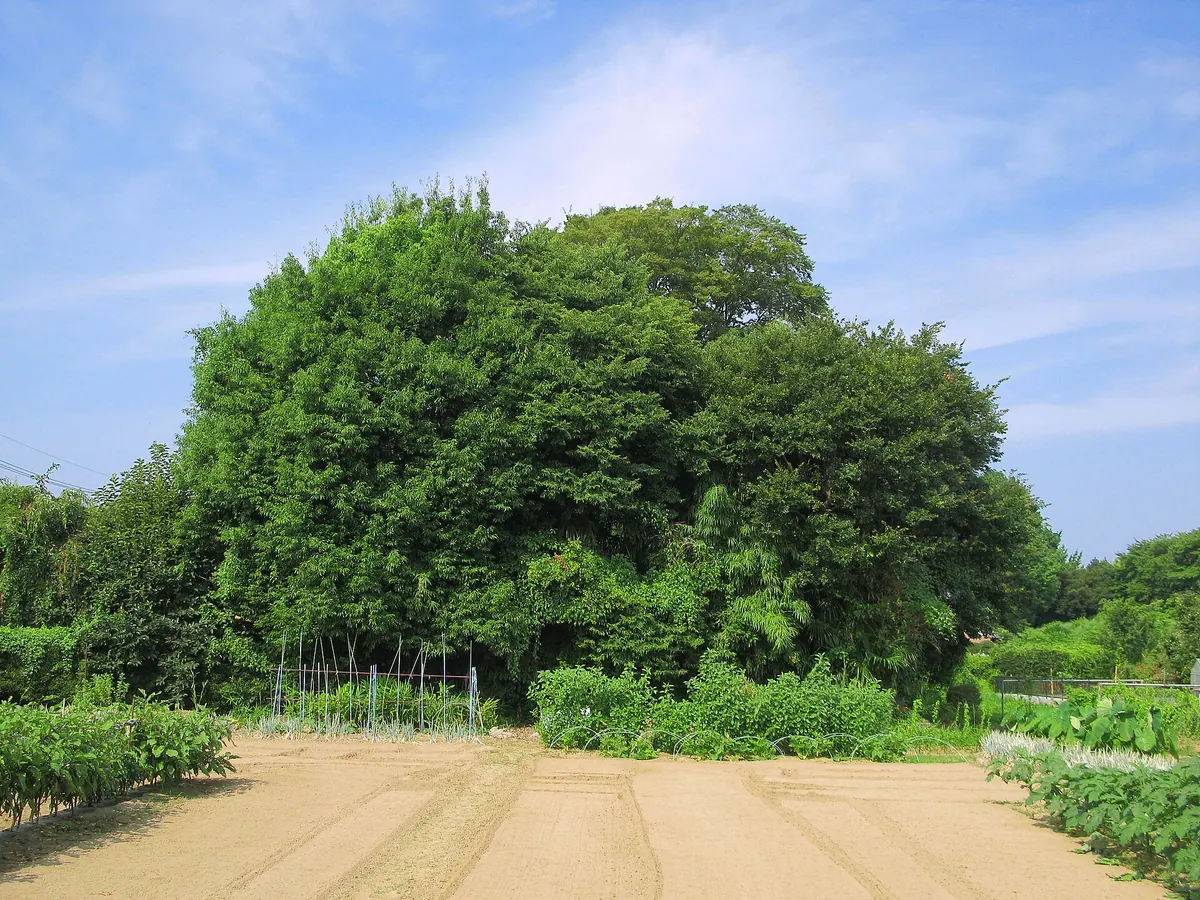
Explore the remnants of a 7th-century burial mound, once part of the Saitama Kofun Group.
What it is
- A 7th-century square burial mound, 40 meters per side.
- Part of the Saitama Kofun Group.
- Known as one of the Wataragi Three Great Tombs.
- Disappeared around 1918.
What to see
- Traces of a double moat remain.
- Moat partially overlapped with Nakanoyama Kofun.
- Believed to have had a medium-sized horizontal stone chamber.
- Tuffaceous sandstone was excavated from the site.
20
Kawarazuka Kofun
SAITAMA · HISTORIC SITE 瓦塚古墳
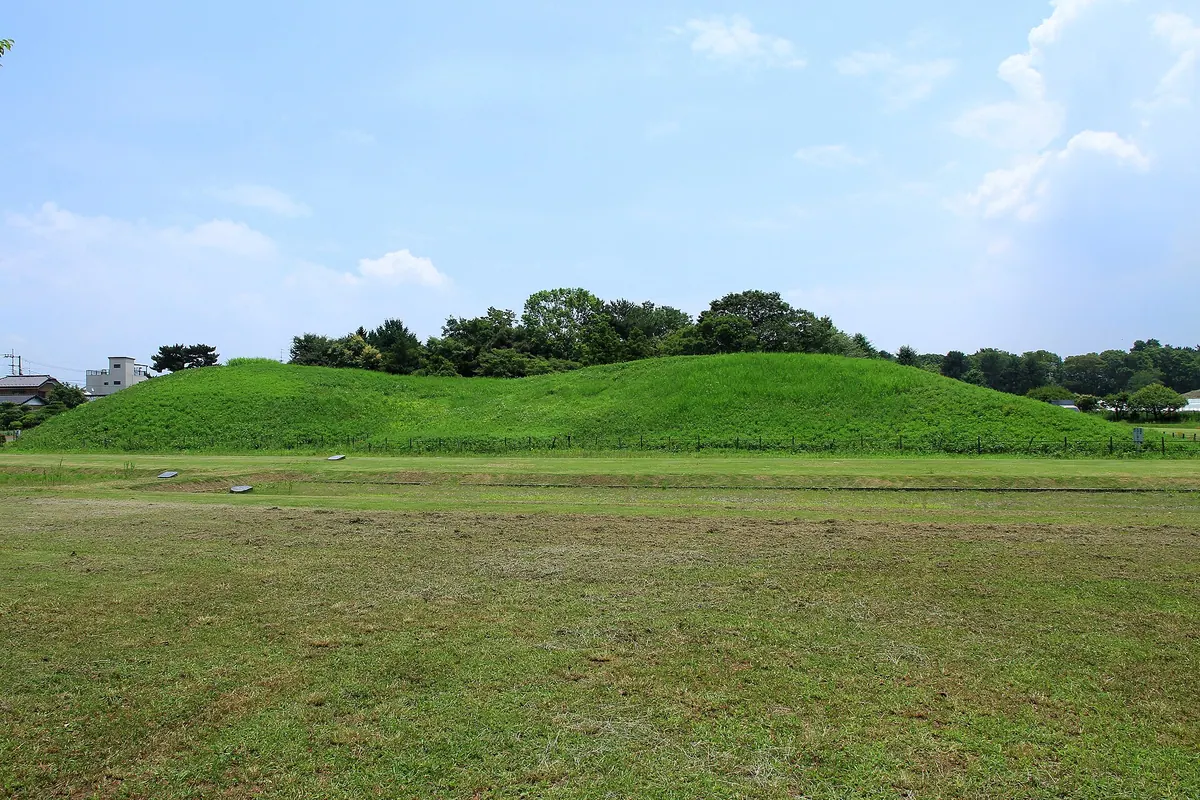
Explore a large 6th-century keyhole-shaped burial mound, part of a National Special Historic Site.
What it is
- A kofun, an ancient burial mound.
- Part of the Saitama Kofun Group.
- Designated a National Special Historic Site.
- Built around the early 6th century.
What to see
- A keyhole-shaped tumulus.
- Tumulus length is 73.4 meters.
- Rear circular part diameter is 36.2 meters.
- Front part width is 45.0 meters.
- A double trapezoidal moat.
- Excavated Sue ware ceramics and haniwa.