

20 Historic sites in Shizuoka worth your time
Japan Gems
Shizuoka Prefecture has 19 heritage sites, including the Miikedaira Kofun and Hitoana Fuji-ko Iseki. These sites offer a glimpse into the region's ancient past.
Shizuoka has 25 historic sites on Japan Gems. Below are the 20 we can tell you the most about — each one written up in English from Japanese sources, with what to see and how to get there. See all historic sites in Shizuoka.
01
Tenpaku Iwakura Site
SHIZUOKA · HISTORIC SITE 天白磐座遺跡
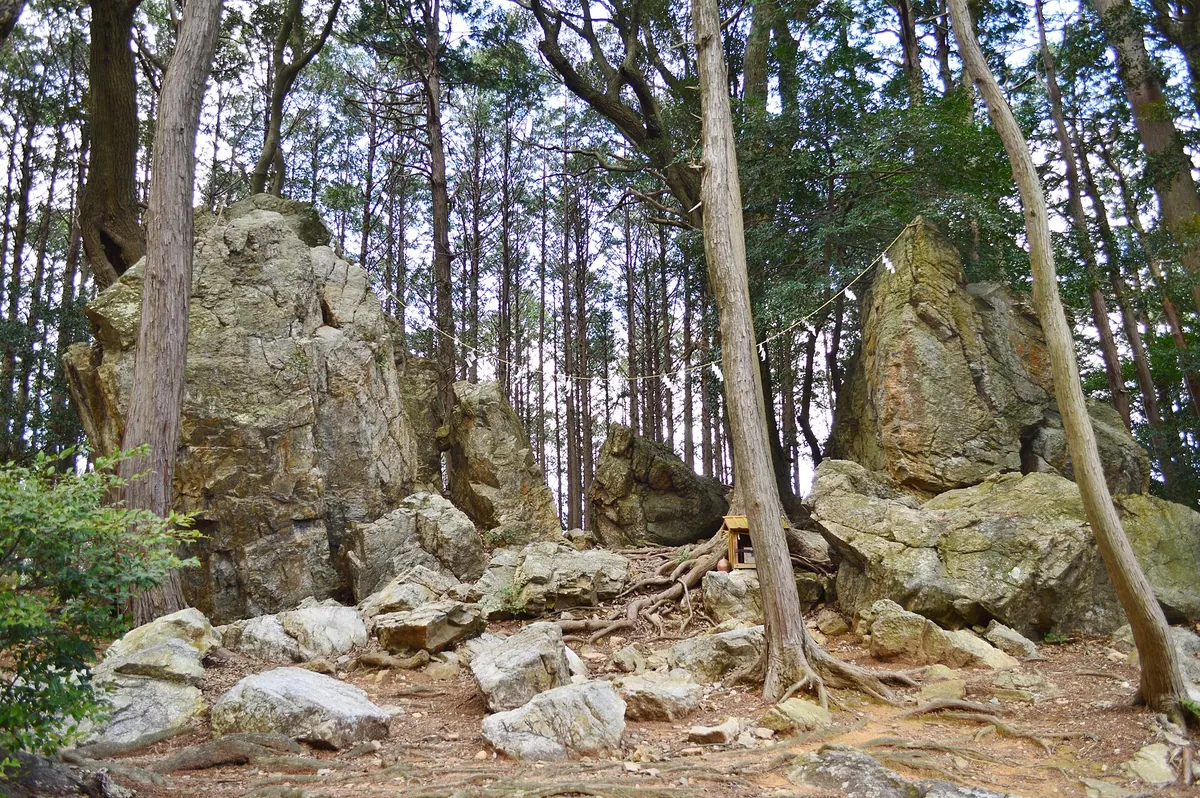
Ancient ritual site with unique rock formations and artifacts from early Japanese history.
What it is
- An ancient ritual site confirmed in 1988.
- Designated as a Shizuoka Prefectural Historic Site.
- Known as the "Iinoya Shrine Precinct Site."
- Excavation surveys were conducted in 1989.
What to see
- Three large rocks forming the iwakura: west, east, and north.
- Over 200 handmade earthenware pieces found under the west rock.
- Kofun period artifacts: magatama, iron spears, iron swords.
- Heian period artifacts, including kyozuka-related items.
- Artifacts exhibited at the Hamamatsu City Regional Heritage Center.
02
Iba Ruins
SHIZUOKA · HISTORIC SITE 伊場遺跡
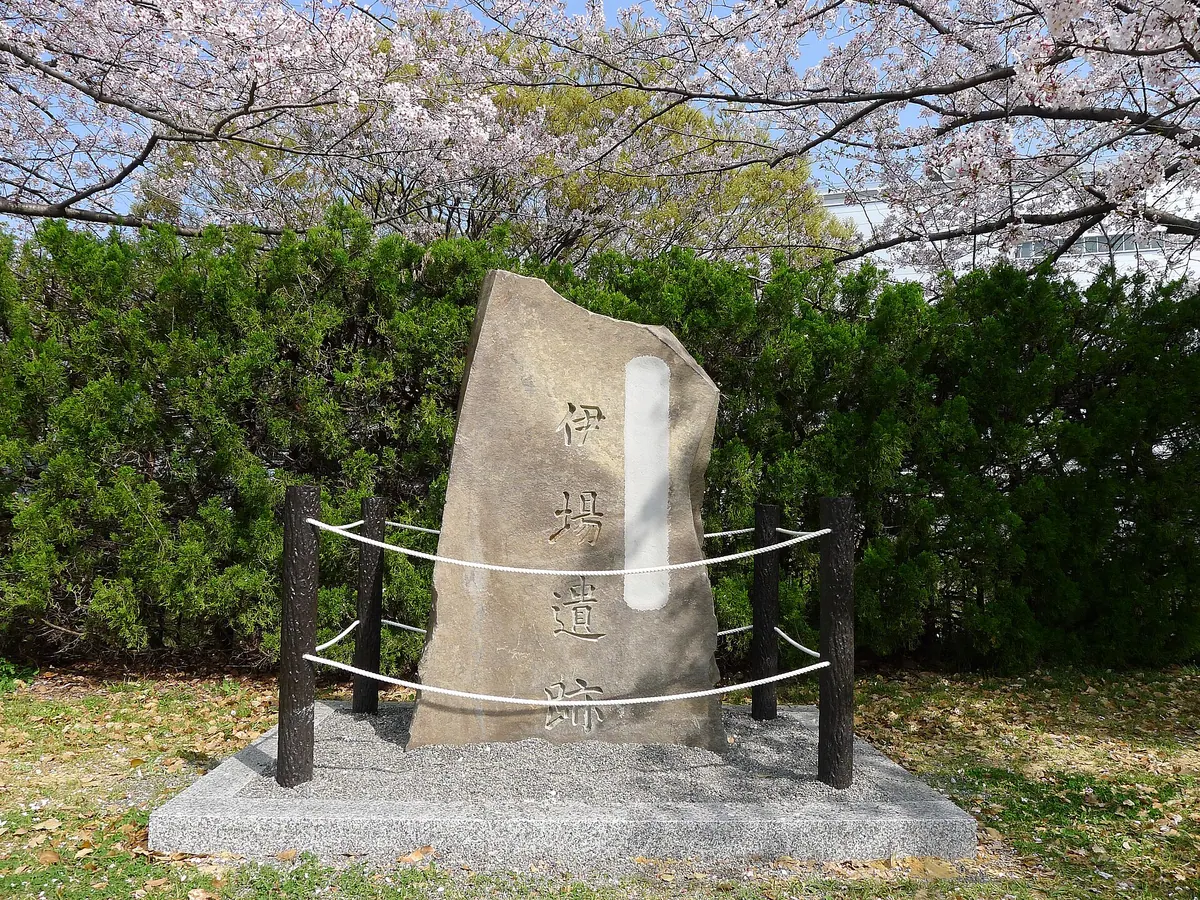
Explore Iba Ruins, a significant archaeological site spanning from Yayoi to Heian periods.
What it is
- A complex archaeological site in Hamamatsu City.
- Dates from the Yayoi period to the Heian period.
- Excavations began in 1949 by Kokugakuin University.
- Some parts are maintained as Iba Ruins Park.
What to see
- Remains of a moated Yayoi settlement.
- Remains of the ancient Shikichi District office.
- Remains of the Kurihara station house.
- Excavated Yayoi pottery, wooden farm tools, and bronze items.
- Rare wooden armor, nationally important.
- Artifacts designated as National Important Cultural Properties.
03
Enoura Cave Tomb Cluster
SHIZUOKA · HISTORIC SITE 江浦横穴群
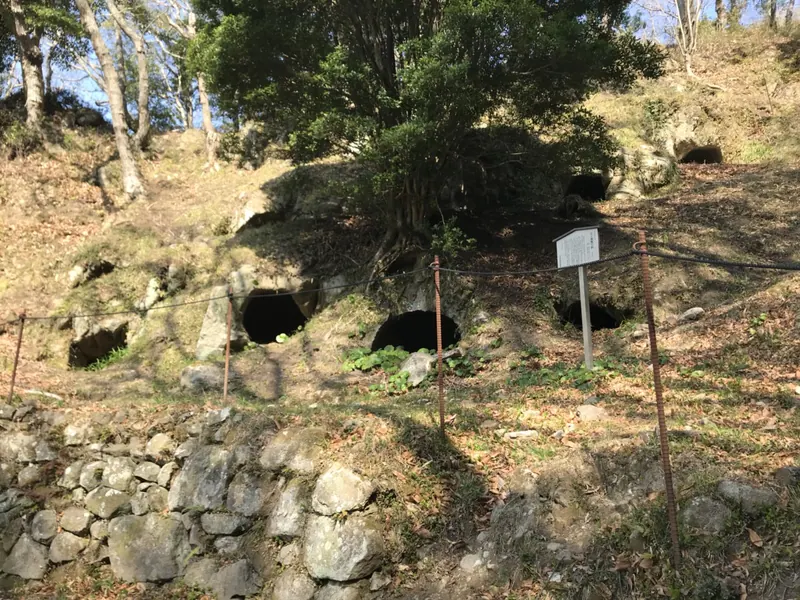
Explore ancient cave tombs and burial mounds from the 7th-8th centuries.
What it is
- A cluster of horizontal cave tombs.
- Designated a Shizuoka Prefectural Historic Site in 1977.
- Tombs and mounds date from the late 7th to early 8th century.
What to see
- 92 confirmed tombs across four areas.
- Tombs excavated into tuff, a base layer of Suruga Bay.
- Small cluster of circular burial mounds 150 meters east.
- Sue ware fragments collected from the site.
- Iron sword fragments and human bones reportedly found.
Getting there
- Accessible by bus from Numazu Station.
04
Toro
SHIZUOKA · HISTORIC SITE 登呂遺跡
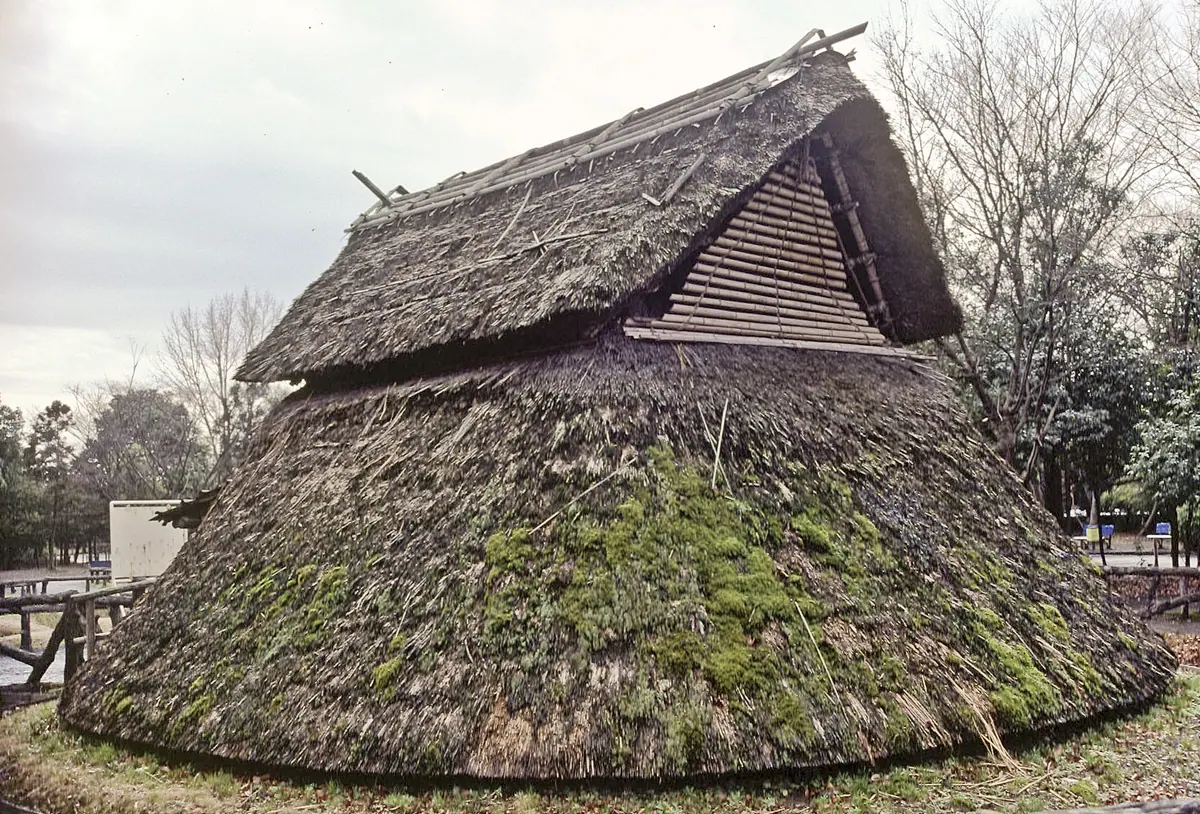
Explore an ancient Yayoi-period village and museum, a unique glimpse into early Japanese life.
What it is
- A Yayoi period settlement and wetland site.
- Designated a Special National Historic Site.
- Dates to the 1st century, late Yayoi period.
- Discovered in 1943 during wartime construction.
What to see
- Over 80,000 square meters of rice paddies and wells.
- Wooden tools for farming, hunting, and fishing.
- A large pillar-supported building from re-excavations.
- The site is maintained as Toro Park.
- Adjacent Shizuoka City Toro Museum.
- Artifacts designated Important Cultural Properties.
05
Shizuhatagayama Kofun
SHIZUOKA · HISTORIC SITE 賤機山古墳
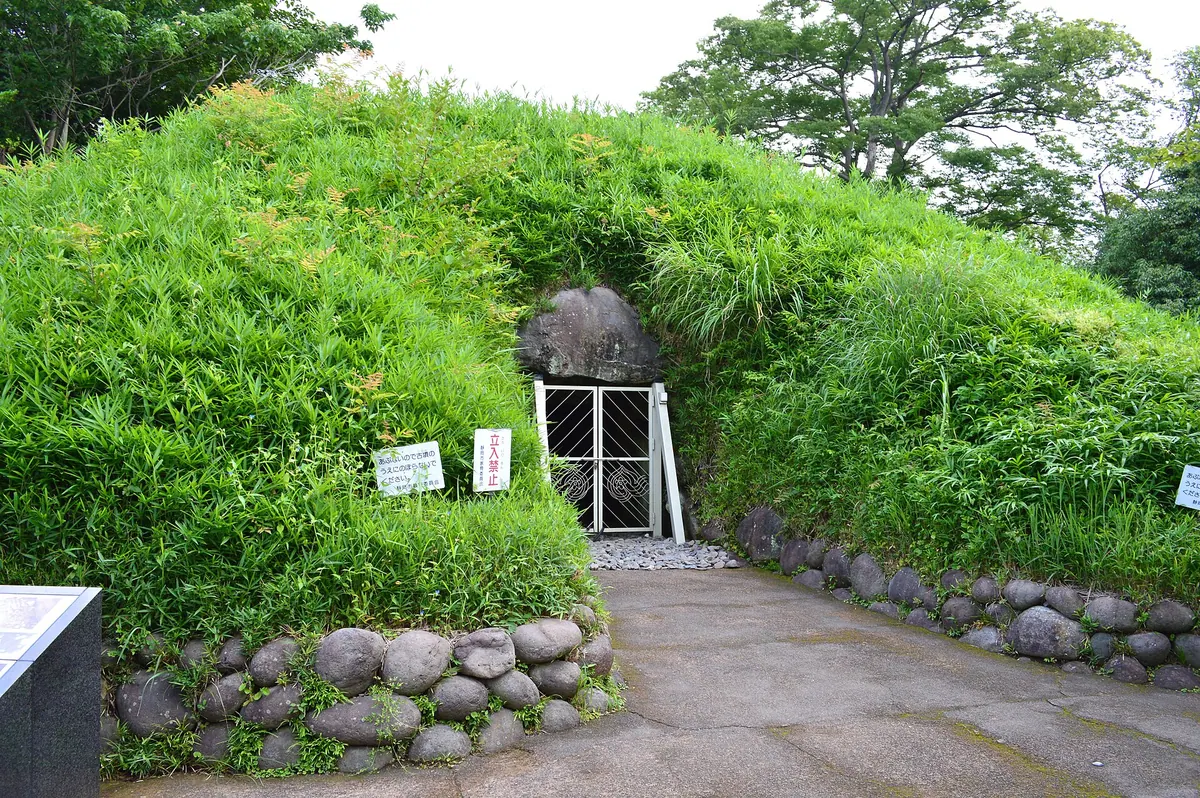
Explore an ancient burial mound with a rare house-shaped stone coffin.
What it is
- A tumulus, or burial mound, from ancient Japan.
- Designated as a national historic site.
- Part of the Shizuhatayama Kofun group.
- Located within Shizuoka Sengen Shrine grounds.
What to see
- A circular tumulus, 32 meters in diameter.
- A 13.2-meter long horizontal stone burial chamber.
- A house-shaped stone coffin made from Izu tuff.
- Artifacts unearthed from around the stone coffin.
When to go
- Stone chamber interior is illuminated from 8 AM to 6 PM.
- Official site
- www.city.shizuoka.lg.jp
06
Akamonue Kofun
SHIZUOKA · HISTORIC SITE 赤門上古墳
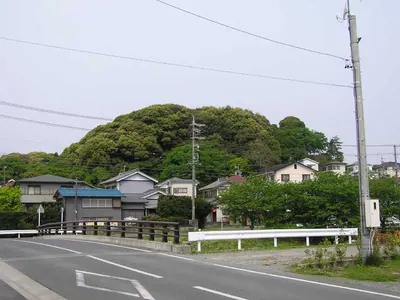
Explore a 4th-century keyhole-shaped burial mound, a designated historic site, revealing ancient burial practices.
What it is
- A keyhole-shaped burial mound, or kofun.
- Designated a Shizuoka Prefectural Historic Site.
- Construction estimated to be late 4th century.
- Named after nearby Ryusen-in temple (Akamon-ji).
What to see
- A large keyhole-shaped tumulus, 56.3m long.
- Located on the eastern edge of the Mikatagahara plateau.
- Artifacts found are displayed at Hamakita Citizen's Museum.
- Excavations found a 5.58m camphor wood coffin.
- Burial goods included a bronze mirror and metal products.
07
Nyakuōji Kofun Cluster
SHIZUOKA · HISTORIC SITE 若王子古墳群
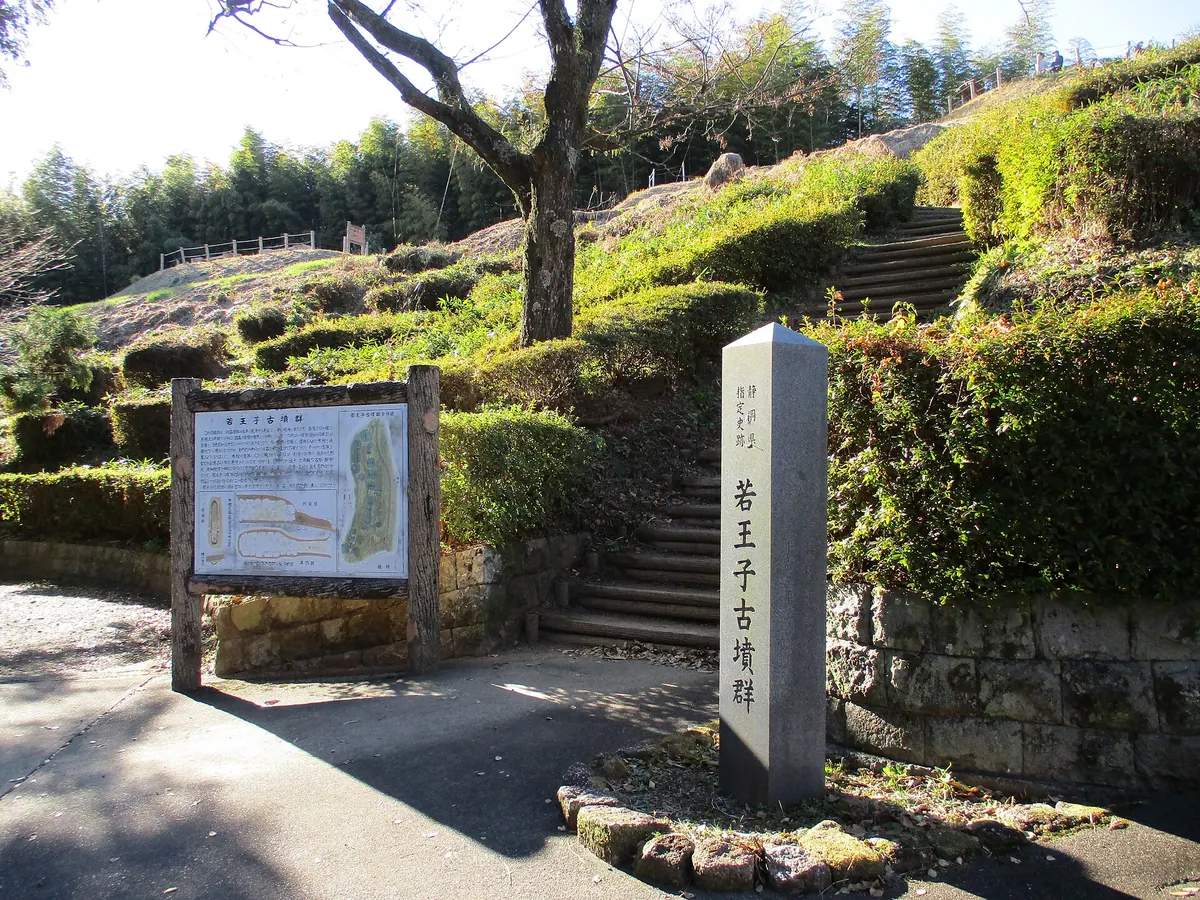
Explore ancient burial mounds from the 4th to 6th centuries at this historic hilltop site.
What it is
- A cluster of kofun, ancient burial mounds.
- Dates from the late 4th to 6th centuries AD.
- Designated a Shizuoka Prefecture historic site in 1995.
- Part of Rengejiike Park, developed as Kofun Hiroba.
What to see
- Twenty-eight to thirty-three kofun along a ridge.
- Most kofun are circular or square in shape.
- Some kofun from the 6th century have stone chambers.
- Mirrors were excavated from Kofun No. 1 and No. 31.
- A wheel-shaped stone was excavated from Kofun No. 12.
08
Yonezuka Kofun Cluster
SHIZUOKA · HISTORIC SITE 米塚古墳群
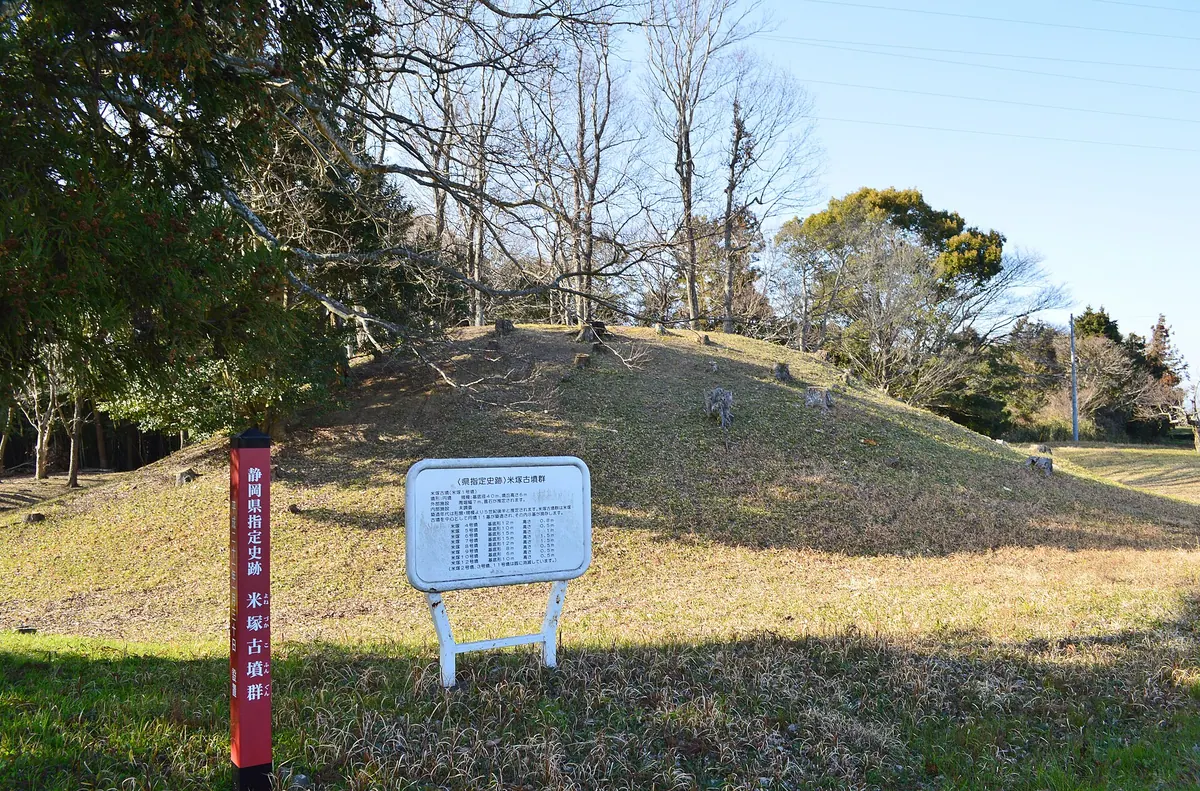
Explore ancient burial mounds from the 5th century, offering a glimpse into Japan's past.
What it is
- A cluster of ancient burial mounds, called kofun.
- Nine tumuli are currently preserved.
- Designated a Shizuoka Prefecture Historic Site in 1979.
- Tumulus 1 dates to the late 5th century.
What to see
- Twelve tumuli originally formed the cluster.
- Tumulus 1 is 40 meters in diameter.
- Tumulus 1 stands 6 meters high.
- Tumulus 1 has a 7-meter wide moat.
- Excavated artifacts include beads and iron arrowheads.
- Horse fittings, Sue ware, and Haji ware were also found.
09
Miikedaira Kofun
SHIZUOKA · HISTORIC SITE 三池平古墳
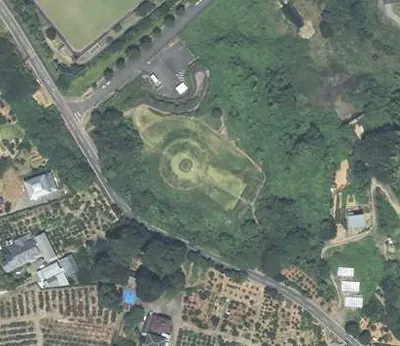
Explore a 5th-century keyhole-shaped tomb of a powerful chief, a designated historical site.
What it is
- A keyhole-shaped tumulus built in the early 5th century.
- Designated historical site of Shizuoka Prefecture.
- Considered a powerful chief's tomb in the Ihara region.
- Discovered in 1956 during tangerine farm work.
What to see
- A 65-meter long kofun with a 43-meter diameter rear circle.
- The kofun has a three-tiered structure.
- Excavated vertical pit stone chamber.
- Andesite split-bamboo-shaped stone coffin.
- Bronze mirrors and iron tools found in the chamber.
- Address
- 静岡県静岡市清水区原927-1 Map
10
Shida Gunga ruins
SHIZUOKA · HISTORIC SITE 志太郡衙跡
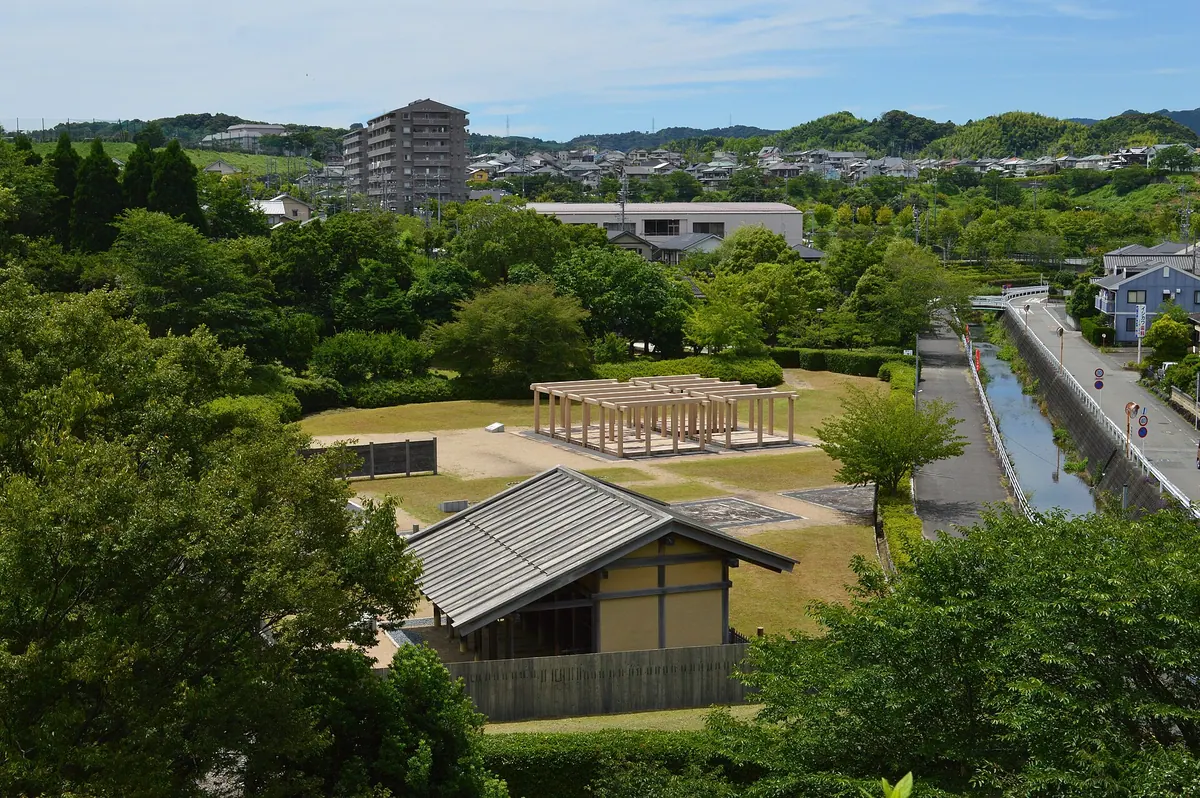
Explore 8th-9th century government office ruins, a National Historic Site revealing ancient administration.
What it is
- National Historic Site, also known as Mikogaya ruins.
- Discovered in 1977 during land development.
- Site of a regional government office from the 8th-9th centuries.
What to see
- Foundations of 30 pillar-supported buildings, gates, fences, wells, and roads.
- Regularly arranged buildings with north-south orientation.
- Exhibits of over 260 ink-inscribed earthenware pieces.
- Written materials designated as Shizuoka Prefecture cultural property.
11
Takaosan Kofun
SHIZUOKA · HISTORIC SITE 高尾山古墳
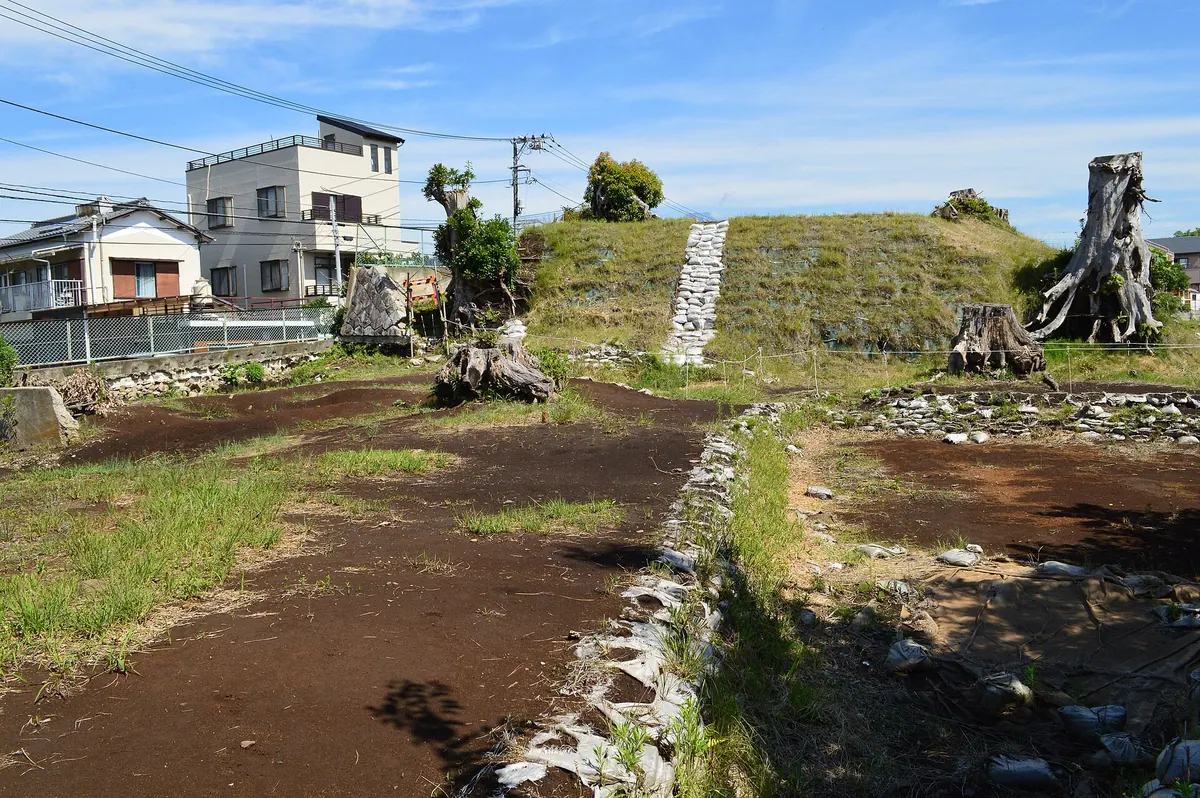
Explore Takaosan Kofun, an ancient burial mound, significant as one of eastern Japan's oldest and largest.
What it is
- A 'zenpo-kofun' type of burial mound.
- Designated as a National Historic Site.
- Estimated construction around 250 AD.
- One of the oldest and largest kofun in eastern Japan.
What to see
- Burial mound with a north-south main axis.
- Total length of the mound is 62.178 meters.
- Front part is 30.768 meters long.
- Rear part is 31.768 meters long.
- Direct burial in a wooden coffin.
- Coffin estimated at 5.053 meters long, 1.252 meters wide.
12
Chōjayashiki Ruins
SHIZUOKA · HISTORIC SITE 長者屋敷遺跡
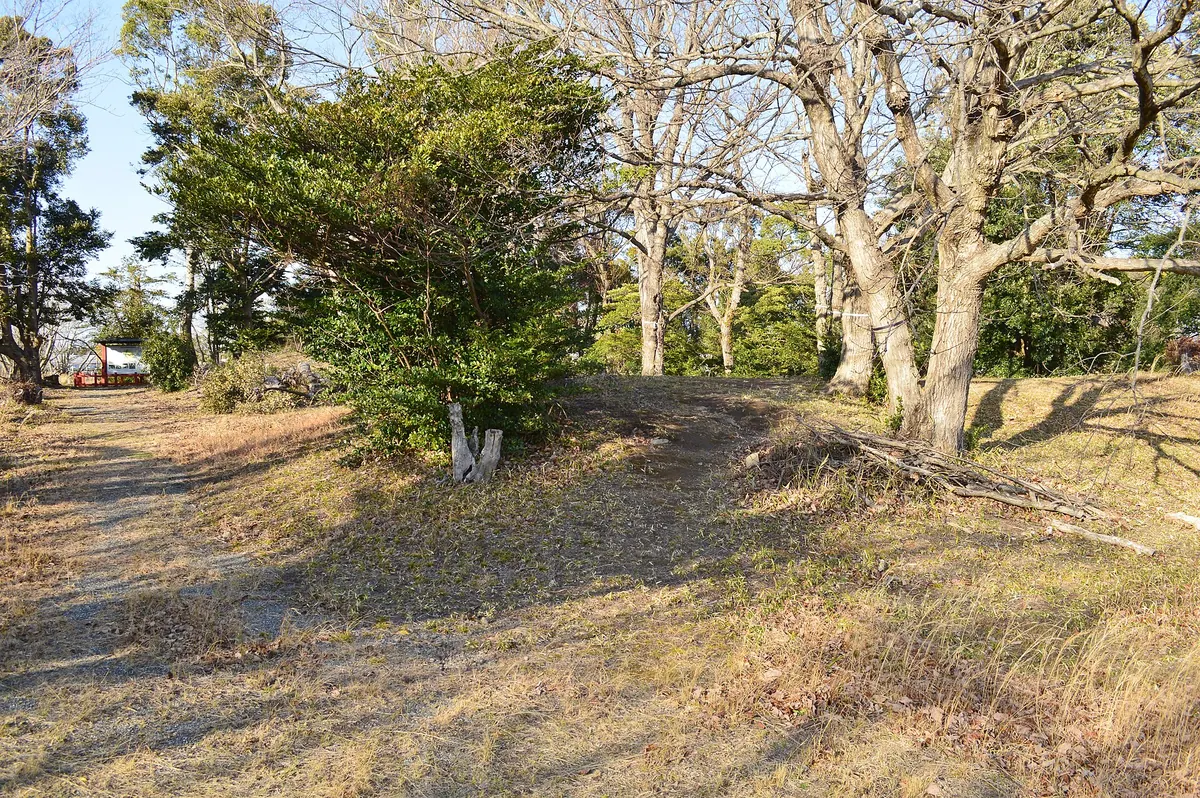
Explore a Nara period ruin with unique earthworks and ancient pottery.
What it is
- A Nara period ruin, the Chojayashiki Site.
- Designated a Shizuoka Prefecture historic site.
- Named after the Chōja legend.
- Excavated in 1969 and 1977.
What to see
- An earthwork 100 meters east-west, 60 meters north-south.
- The earthwork stands about 3 meters high.
- Assumed entrances at the south center and northeast corner.
- A kofun incorporated into the southwest corner.
- Excavated Sue ware pottery from Kofun to Nara periods.
13
Umamizuka Burial Mounds
SHIZUOKA · HISTORIC SITE 馬見塚古墳群
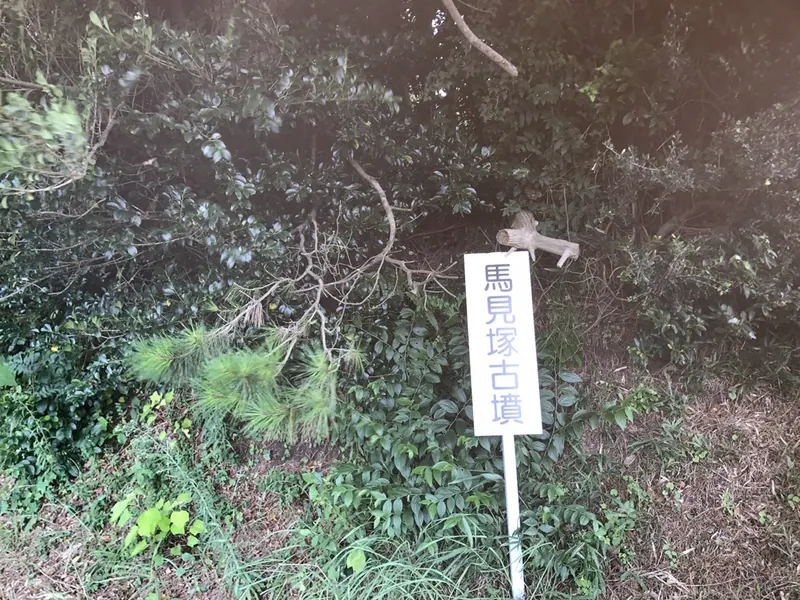
Explore ancient burial mounds, including one with a stone coffin, dating from the 6th to 8th centuries.
What it is
- A group of kofun (burial mounds) in Numazu City.
- Includes Umamizuka Kofun and Umamiba Kofun.
- The Nishi-omagari Site contains Kofun 1 to 3.
- Dates from the late 6th century to the early 8th century.
What to see
- Kofun 1 contains a stone coffin.
- Kofun 2 and 3 are circular mounds.
- Kofun 2 and 3 have a diameter of 9 to 10 meters.
- Kofun 2's moat yielded a Haji ware cup.
- Kofun 2 is currently a tennis court.
14
Hiyoshi Abandoned Temple Site
SHIZUOKA · HISTORIC SITE 日吉廃寺跡
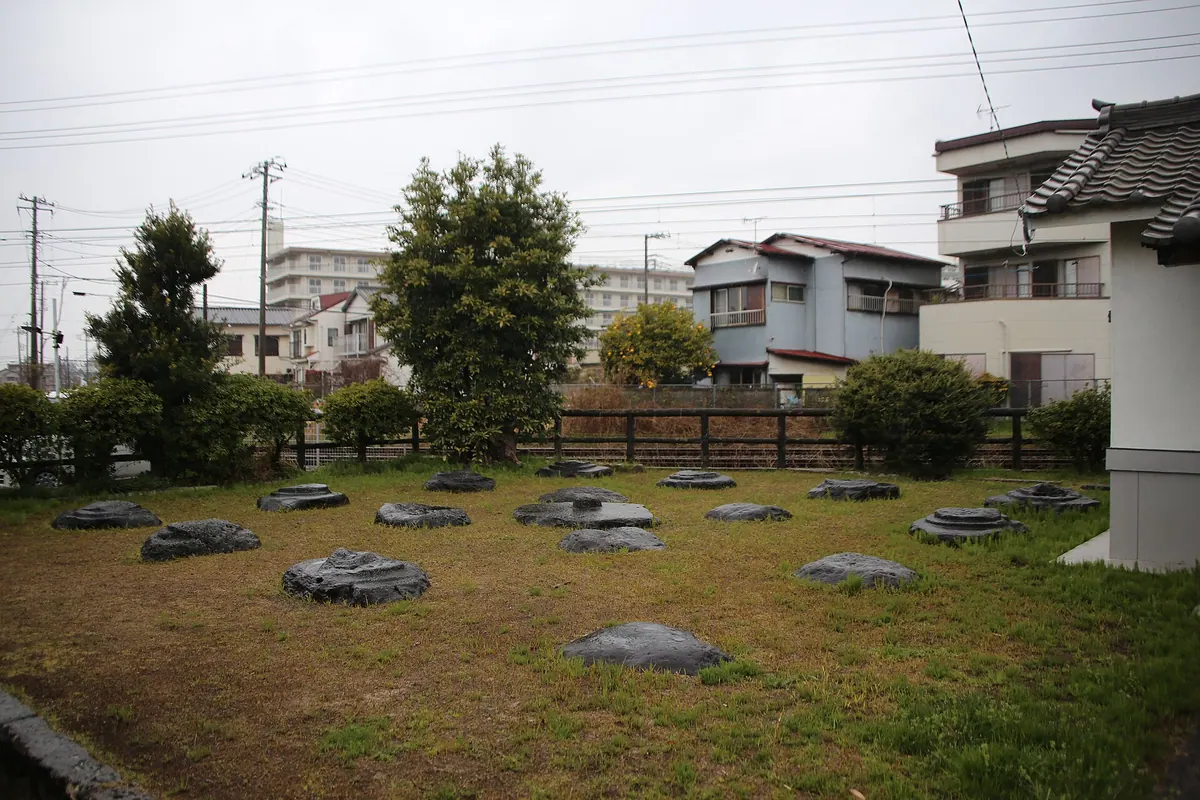
Explore ancient temple ruins from the Hakuho period, a significant historical site near Numazu Station.
What it is
- An ancient temple ruin site, Hiyoshi Haiji Ato.
- Estimated to have been founded in the Hakuho period.
- Designated as a municipal cultural property.
What to see
- The temple precinct was about 110 by 220 meters.
- See 17 foundation stones, including the pagoda's central one.
- Roof tiles and Buddhist artifacts have been unearthed.
Getting there
- 15-minute walk east from Numazu Station.
15
Kitaema Cave Tombs
SHIZUOKA · HISTORIC SITE 北江間横穴群
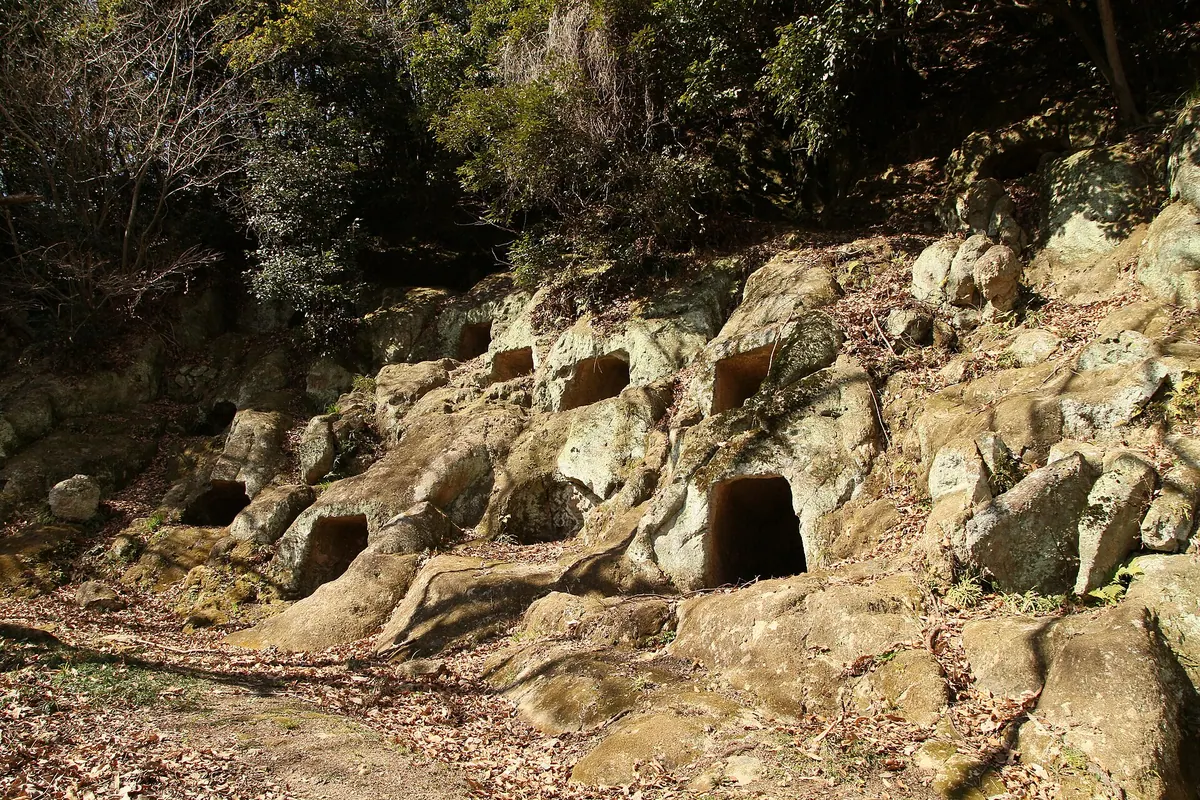
Explore ancient cave tombs from the 7th-8th centuries, a unique glimpse into Japan's historical burial practices.
What it is
- A National Historic Site designated in 1976.
- Cave tombs used from the 7th to 8th centuries.
- Divided into Okita and Daishiyama Cave Tombs.
- Dug into tuff cliffs in Izunokuni City.
What to see
- Tombs containing stone coffins and stone cists.
- A stone coffin inscribed with 'Waka Toneri' (an imperial official).
- Some tombs are 6.5 meters deep.
- Coffins and cists range from house-shaped to cremation size.
16
Ita-Sungō Kofun Cluster
SHIZUOKA · HISTORIC SITE 井田松江古墳群
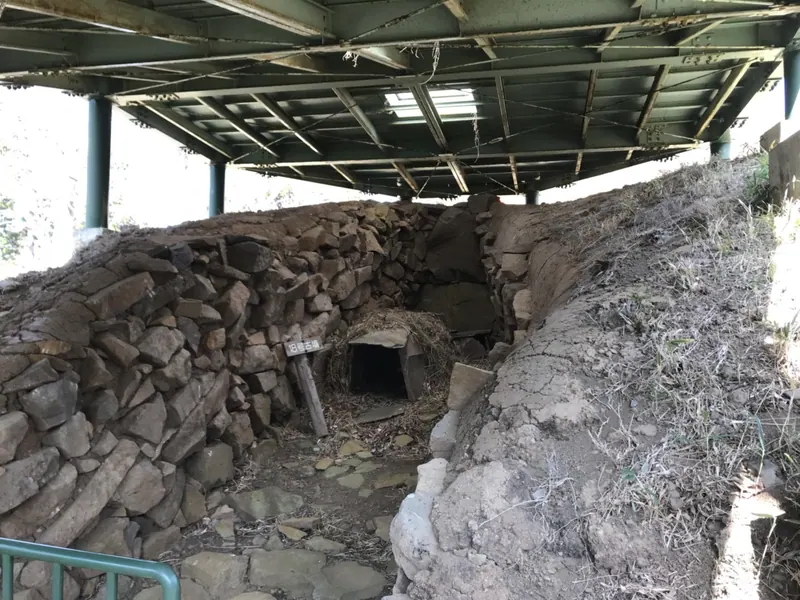
Ancient burial mounds from the 6th century, offering a glimpse into Japan's past.
What it is
- A cluster of ancient burial mounds.
- Designated a Shizuoka Prefecture Historic Site.
- Constructed in the late 6th century.
- First recorded in 1800.
What to see
- 17 existing circular burial mounds.
- The 7th tumulus has an 8.8-meter stone chamber.
- Artifacts from excavations are at Toda Village Museum.
- Excavations found a silver-inlaid sword pommel.
- Four inlaid sword guards were confirmed.
17
Hitoana Fuji-ko Iseki
SHIZUOKA · HISTORIC SITE 人穴富士講遺跡
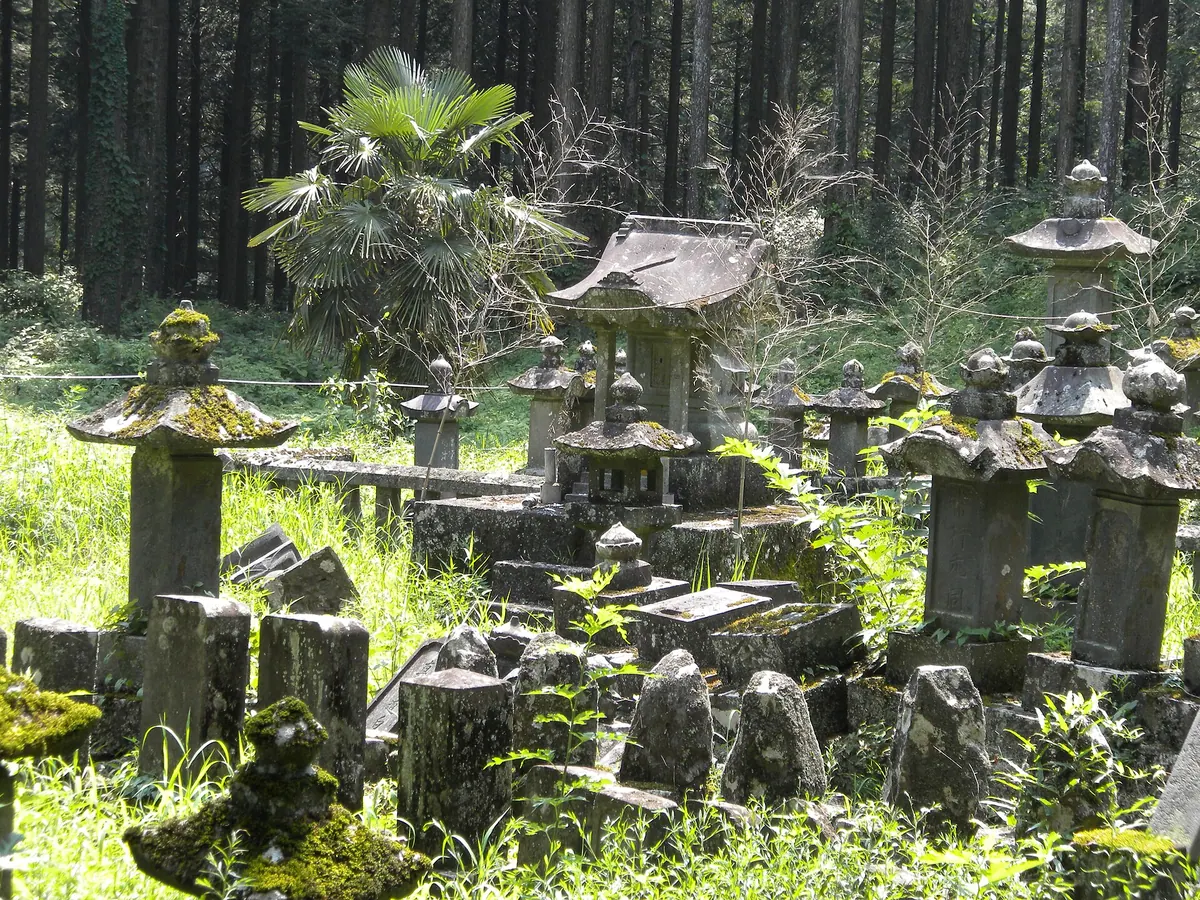
Explore a sacred lava cave, a World Heritage site with a unique shrine and historic monuments.
What it is
- A National Historic Site and World Cultural Heritage site.
- A lava cave formed by Mount Fuji's eruption.
- Considered the abode of Asama Dai-bosatsu.
- Hitoana Sengen Shrine was founded in 1648.
What to see
- The cave entrance on the southwest side.
- Inside the cave: a shrine, three stupas, and four stone Buddhas.
- Over 300 gravestones of Fuji-ko believers.
- A monument group with 233 stupas.
18
Shijimizuka site
SHIZUOKA · HISTORIC SITE 蜆塚遺跡
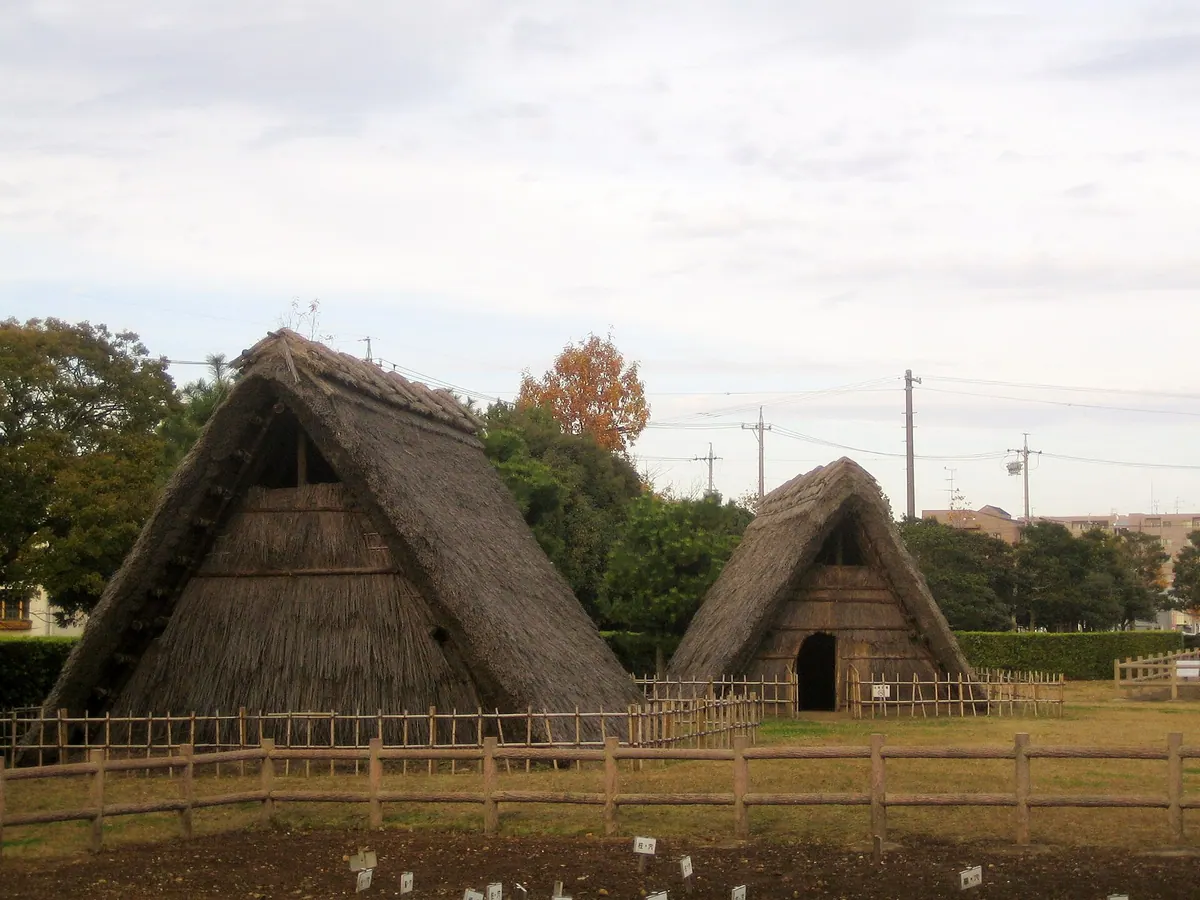
Explore a large Jomon-period shell mound and settlement with reconstructed dwellings.
What it is
- A shell mound and settlement from the Jomon period.
- Designated a National Historic Site.
- Known since the Edo period.
- Now a free historic park.
What to see
- Over 20 circular dwelling remains.
- Human bones with necklaces and shell bracelets.
- Relatively large shell mounds.
- One shell mound preserved as excavated.
- Reconstructed buildings.
- Artifacts displayed at Hamamatsu City Museum.
- Official site
- www.city.hamamatsu.shizuoka.jp
19
Ōshikakubo ruins
SHIZUOKA · HISTORIC SITE 大鹿窪遺跡
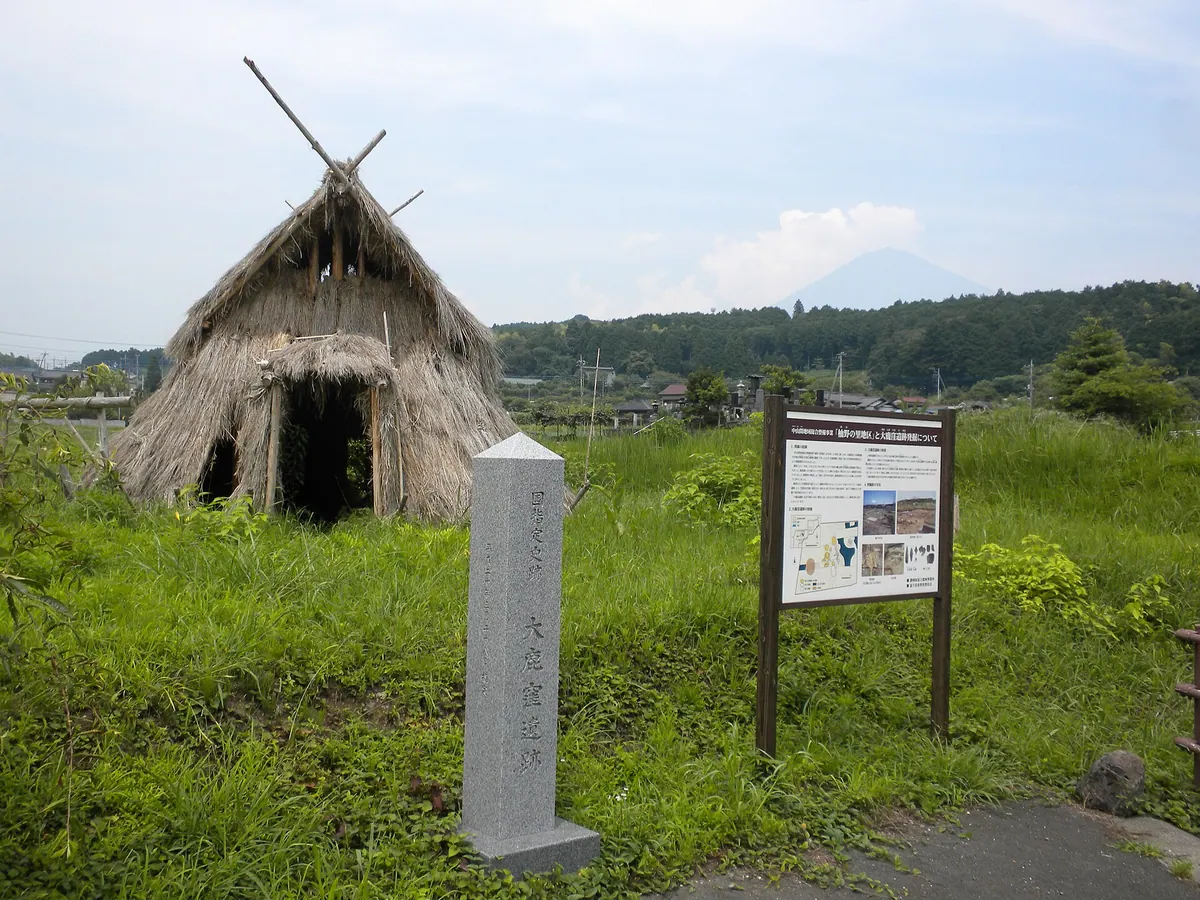
Explore Japan's oldest settled village, a National Historic Site with Jomon period pit dwellings and artifacts.
What it is
- A Jomon period archaeological site.
- Dates from 15,000 to 12,000 years ago.
- One of Japan's oldest examples of a settled village.
- Designated as a National Historic Site.
What to see
- Site located between Shin-Fuji lava flow and a buried valley.
- Remains of fourteen pit dwellings.
- Stone arrangements.
- Over 26,000 excavated artifacts.
- Jomon pottery.
- Obsidian from Izu Kozushima.
20
Kawarakezuka Kofun
SHIZUOKA · HISTORIC SITE 土器塚古墳
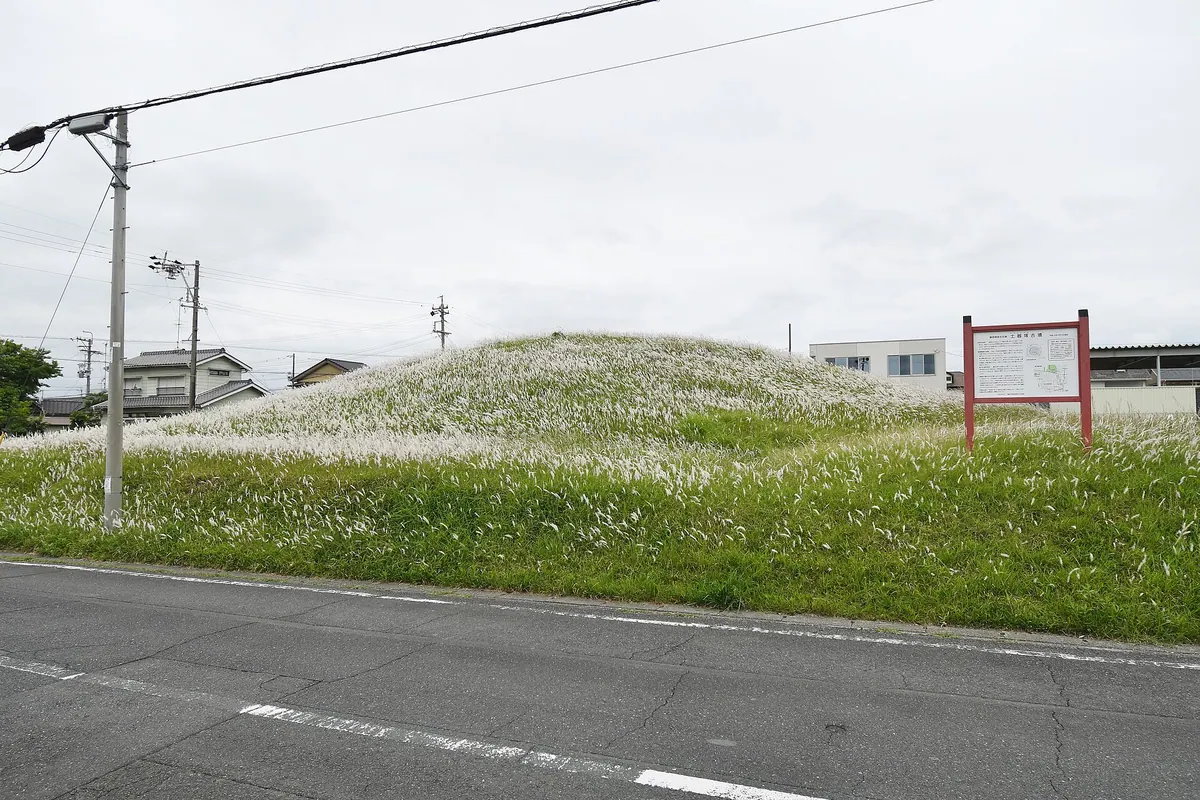
Explore a 5th-century burial mound, a significant historical site in Shizuoka Prefecture.
What it is
- A large circular tumulus, or burial mound.
- Built around the early 5th century.
- Designated a Shizuoka Prefectural Historic Site in 2002.
What to see
- A circular mound, 36 meters in diameter, 5 meters high.
- A surrounding moat, 7 meters wide and 1 meter deep.
- A burial pit, 7-8 meters long and 1 meter wide.
- Artifacts found include a tubular bead and armor fragments.