

20 Islands in Okayama worth your time
Japan Gems
22 Islands in Okayama, with what to see and how to get there.
Okayama has 22 islands on Japan Gems. Below are the 20 we can tell you the most about — each one written up in English from Japanese sources, with what to see and how to get there. See all islands in Okayama.
01
Maejima
OKAYAMA · PLACE 前島
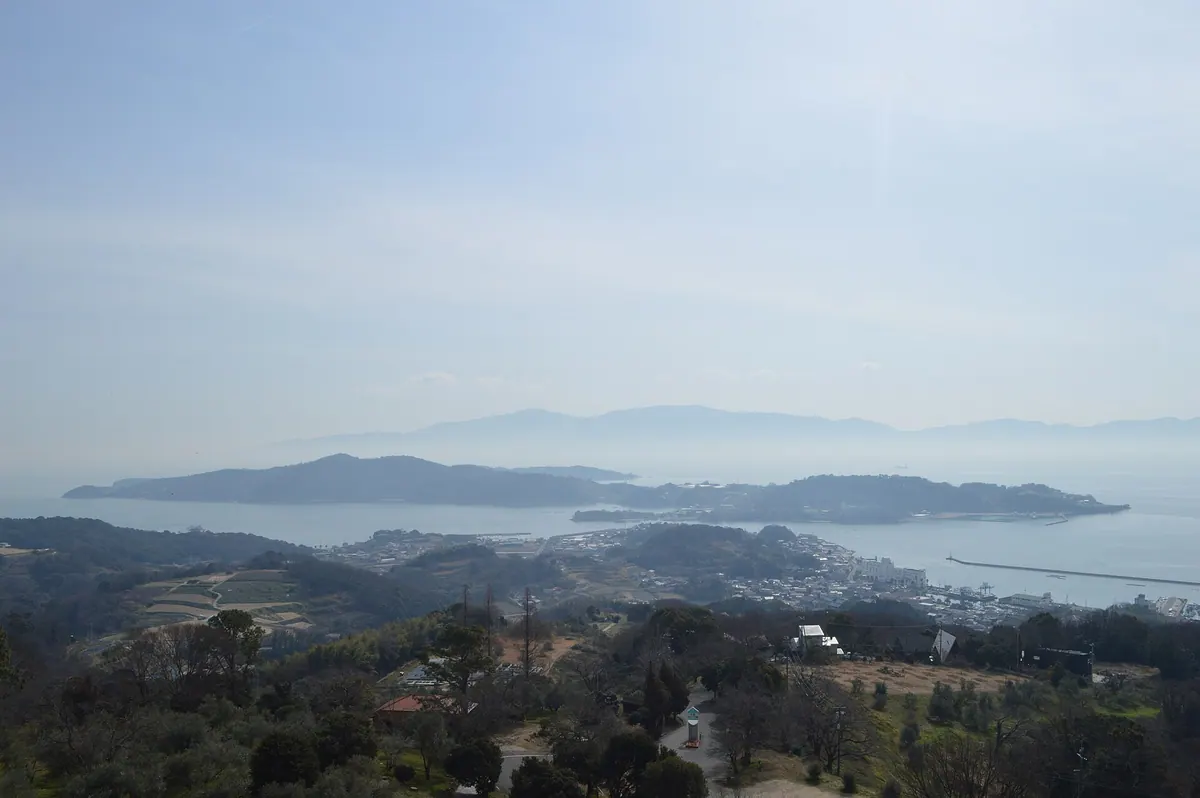
An inhabited island in Setonaikai National Park known for its historic quarry sites and one of Japan's top sunset views.
What it is
- An inhabited island in the Seto Inland Sea with a circumference of eight kilometers.
- Part of the Setonaikai National Park located within Ushimado Town.
- A former quarry site used for the reconstruction of Osaka Castle.
- Home to Yoshida Shrine which was established on the island in 1841.
What to see
- The Maejima Observatory listed as one of the top one hundred sunset spots in Japan.
- Agricultural fields where farmers cultivate cabbage, pumpkins, and watermelons.
- Sun Beach Maejima which is open for visitors during the warmer months.
- Waters surrounding the island where finless porpoises are known to live.
When to go
- Visit Sun Beach Maejima during its operating months of May, July, and August.
- Arrive in the late afternoon to catch the famous sunset from the observatory.
Getting there
- Take a five minute ferry ride from the mainland to reach the island.
02
Takashima
OKAYAMA · PLACE 高島
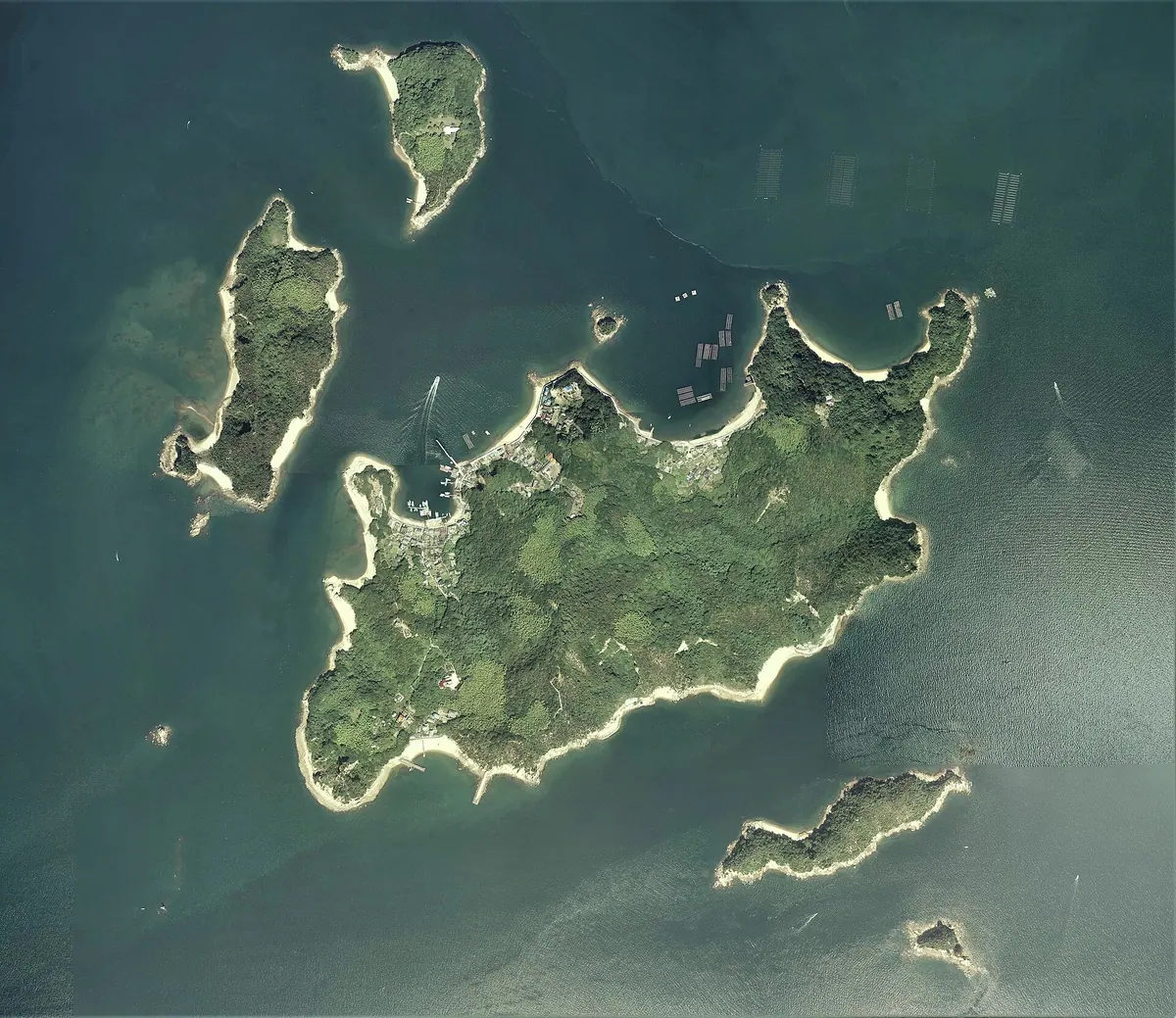
An inhabited island in Setonaikai National Park featuring ancient ruins and a shrine linked to Japan's first emperor.
What it is
- An inhabited island within the Setonaikai National Park in Okayama Prefecture.
- A National Scenic Spot designated for its historical ruins and surrounding natural beauty.
- The legendary site of Takashima Palace where Emperor Jimmu stayed during his expedition.
- A small community that was home to seventy-one residents as of 2022.
What to see
- Numerous archaeological ruins dating back to the Jomon and Yayoi periods.
- Takashima Shrine which stands on the purported site of an ancient imperial palace.
- Views of surrounding uninhabited islands including Akechijima and Inazumijima.
- Coastal scenery situated between the neighboring islands of Shiraishi and Konoshima.
Getting there
- Take a passenger ship from Sumiyoshi Port for a twenty-five minute journey.
- Four ferry trips operate daily to the island from the mainland.
- The island is located eight kilometers south of Kasaoka Port.
03
Shiraishi Island
OKAYAMA · PLACE 白石島
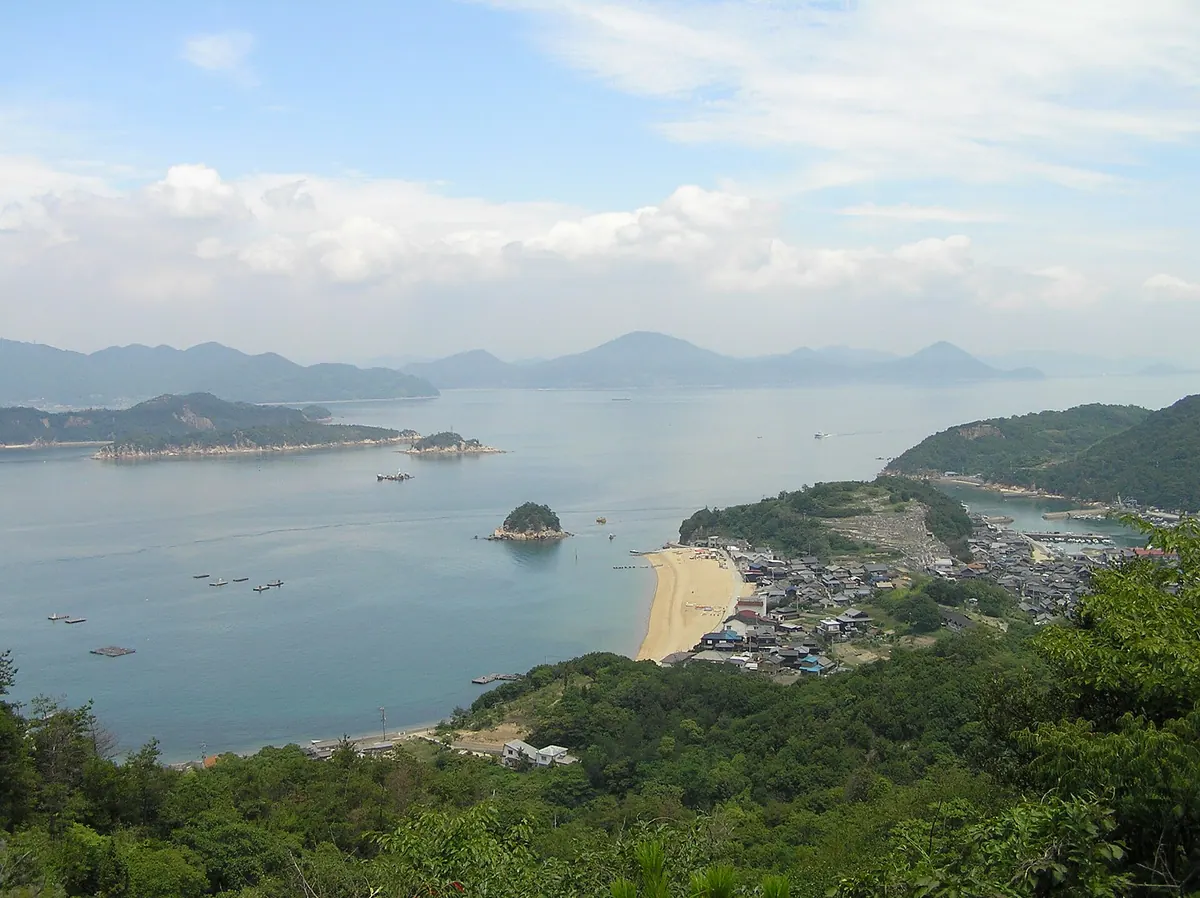
A nationally designated scenic island in Okayama featuring unique rock formations and a traditional folk dance performed every August.
What it is
- A designated National Scenic Beauty covering 2.86 square kilometers in Kasaoka City.
- A former territory of the Bingo-Fukuyama Domain with a peak reaching 169 meters.
- The setting for the Japanese novel His Motorcycle Her Island.
- Home to the Shiraishi-odori, a National Important Intangible Folk Cultural Property.
What to see
- Yoroi-iwa Rock, a designated Natural Monument with a unique armored appearance.
- Kairyu-ji Temple, a spiritual site located on the island.
- Tateishi Mountain, the highest point offering views of the surrounding sea.
- Shiraishi Elementary and Junior High School buildings, which remain until 2026.
When to go
- Visit from August 14 to 16 to witness the traditional Shiraishi-odori dance.
Getting there
- Take a ferry from Kasaoka Port to reach the island.
- Regular ferry services connect the island to Fushigoe Port.
04
Inujima
OKAYAMA · PLACE 犬島
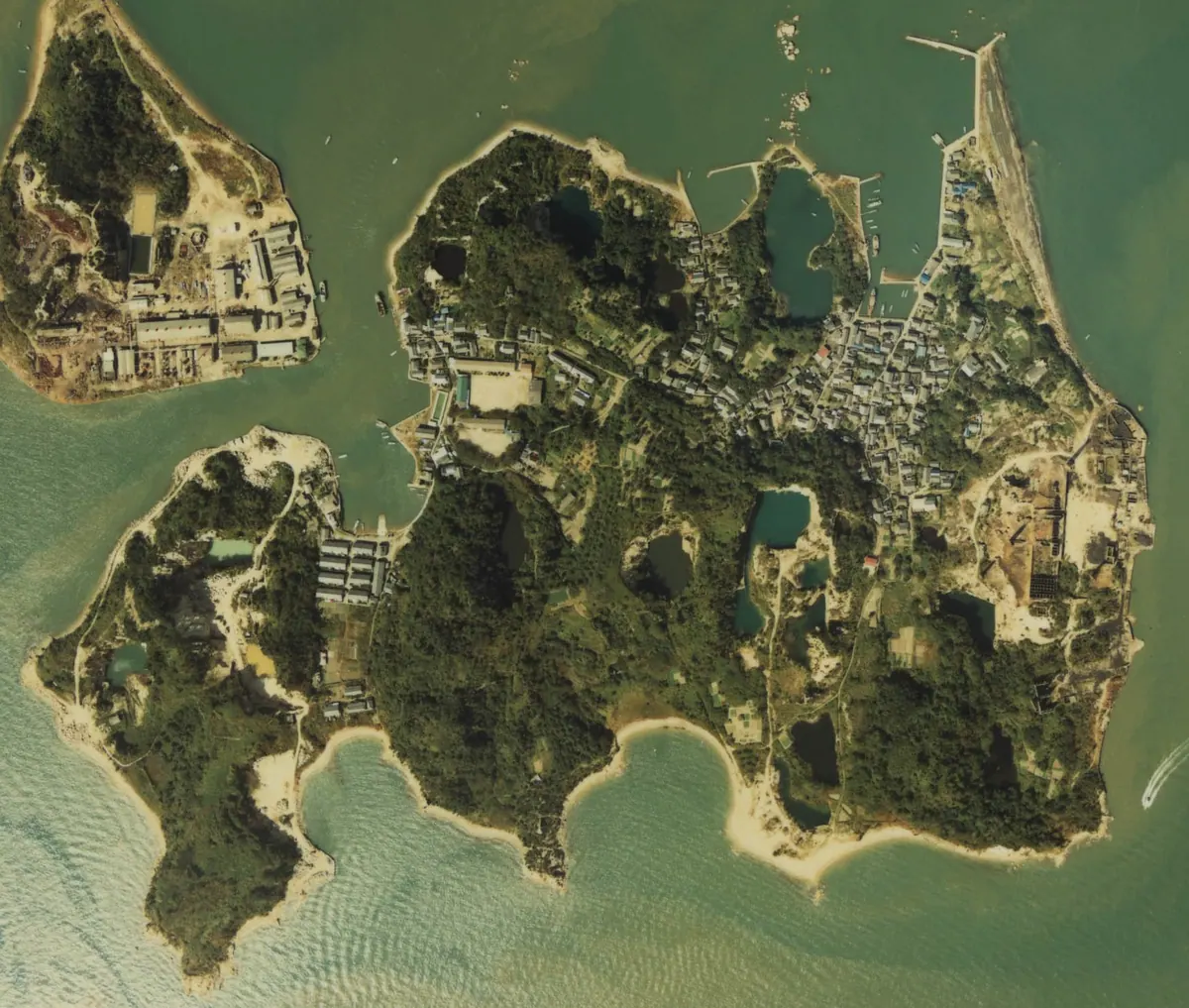
A small inhabited island in the Seto Inland Sea featuring contemporary art installations and historic copper refinery ruins.
What it is
- The only inhabited remote island located within Okayama City.
- A former center for granite quarrying and industrial copper smelting.
- A modern venue for contemporary art and the Setouchi Triennale festival.
- An island named after a large rock shaped like a dog called Inushi.
What to see
- The Inujima Seirensho Art Museum built into the former copper refinery.
- The ruins of a copper refinery that operated from 1909 to 1919.
- The Inujima Shell Mound which is among the oldest in Western Japan.
- Various contemporary art installations scattered across the small island.
When to go
- During the Setouchi Triennale art festival held periodically throughout the year.
Getting there
- Take a regular ferry from the mainland at Hoden.
- The boat journey across the water takes approximately eight minutes.
05
Kuroshima
OKAYAMA · PLACE 黒島
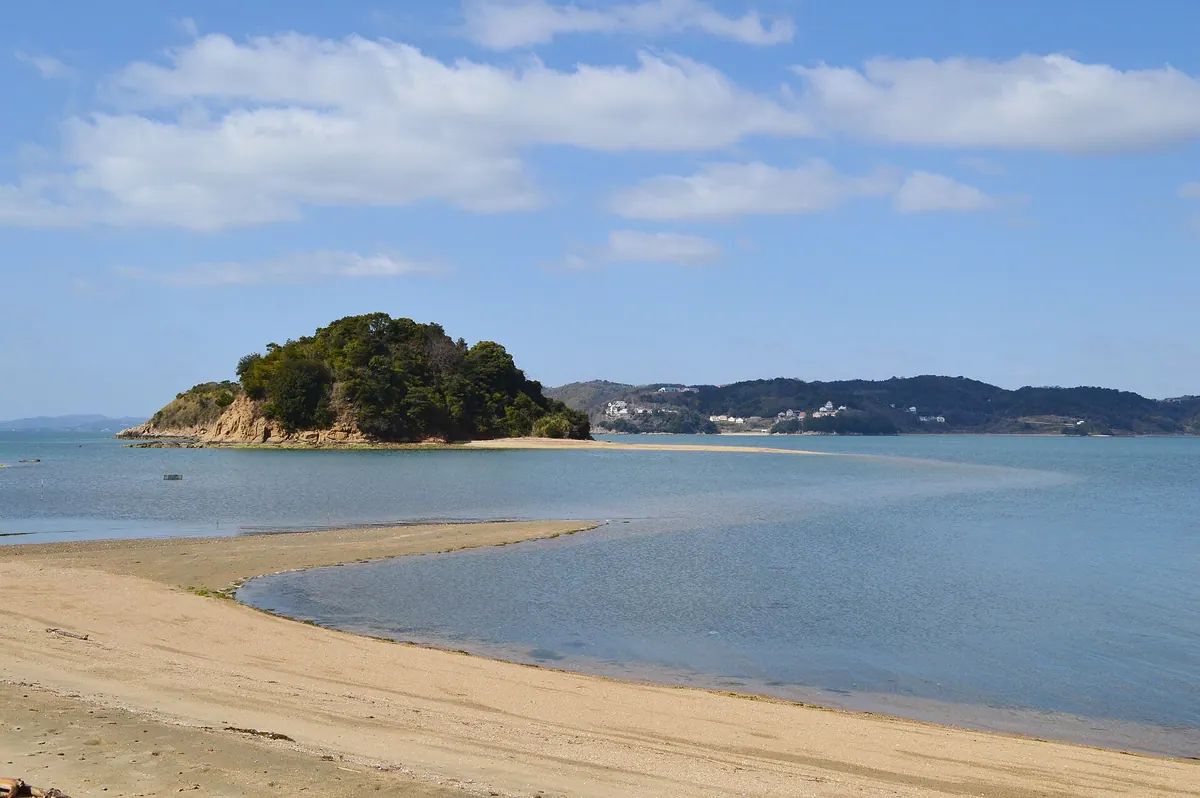
An uninhabited island in Okayama featuring ancient burial mounds and sandbars that appear during low tide for visitors to explore.
What it is
- An uninhabited island in Setouchi City that is part of the Ushimado Islands.
- A designated Youth Island containing an ancient shell mound and a burial mound.
- The site of the Kuroshima Tomb which dates back to the fourth or fifth century.
- A former residential area that once operated a small shipyard during the 1970s.
What to see
- Sandbars that connect the main island to nearby islets during low tide.
- The ancient Kuroshima Tomb and a historical shell mound.
- Remnants of the former settlement which became uninhabited in 2018.
When to go
- Visit during low tide to see the sandbars connecting the islands.
Getting there
- Take a charter boat from Ushimado Port or Maejima as no scheduled ferries operate.
- The boat journey to the island takes approximately ten minutes.
06
Mushima
OKAYAMA · PLACE 六島
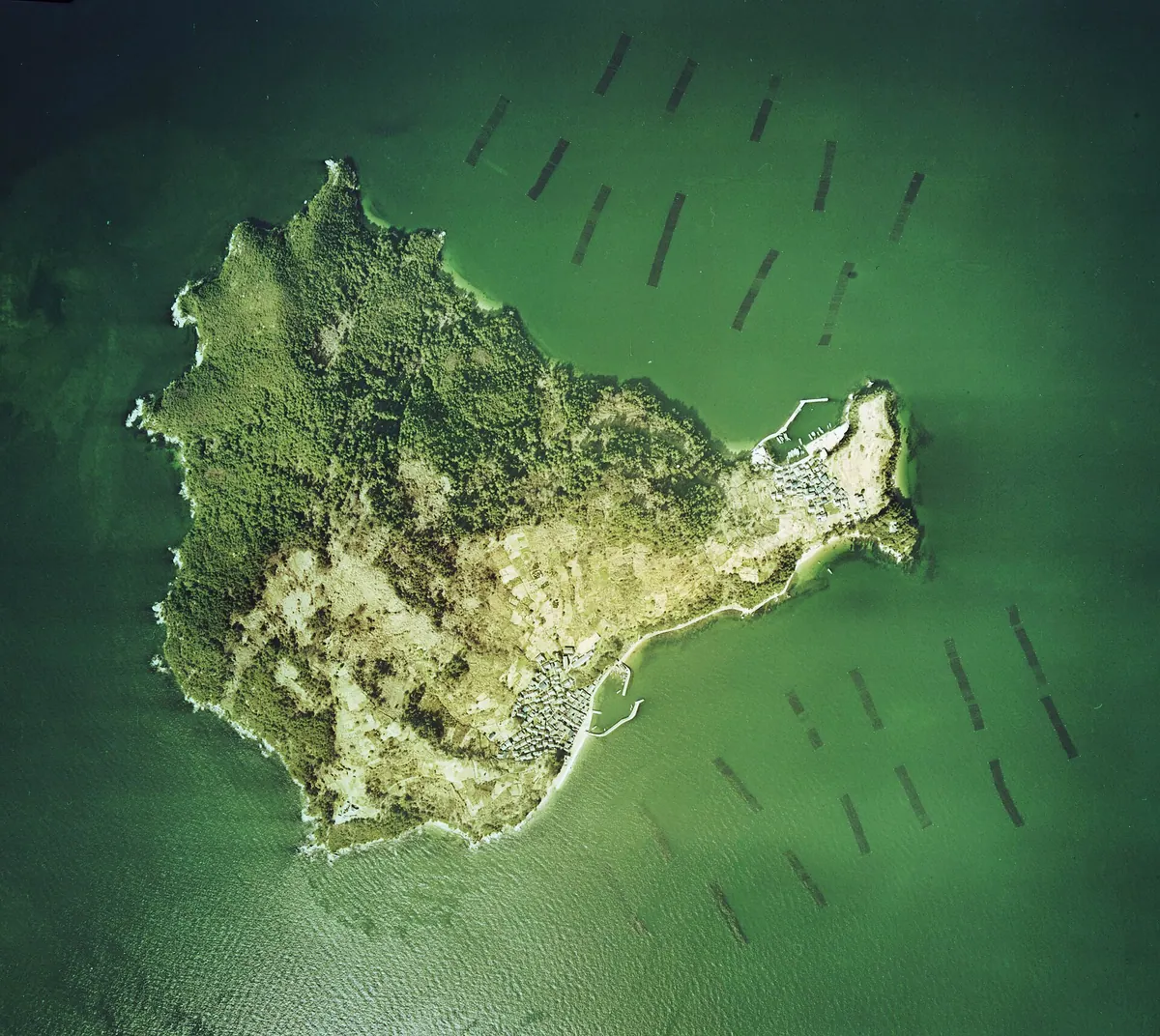
A remote island in the Seto Inland Sea famous for its historic lighthouse, wild daffodils, and literary connections.
What it is
- The southernmost inhabited island in Okayama Prefecture within the Kasaoka chain.
- A small community of forty-six people living on a landscape of weathered granite.
- The real-life setting for the famous Japanese mystery novel Gokumon Island.
- Site of the 1867 Iroha Maru incident in the surrounding waters.
What to see
- The oldest lighthouse in Okayama Prefecture designated as a Lighthouse of Romance.
- Mount Oishi which stands as the highest point at 185 meters above sea level.
- Approximately 100,000 wild daffodils blooming across the island slopes.
- A local brewery producing the island's own craft beer.
When to go
- Late January to see the wild daffodils in full bloom.
Getting there
- Regular ferry service connects the island to Kasaoka Port.
07
Kashirajima
OKAYAMA · PLACE 頭島
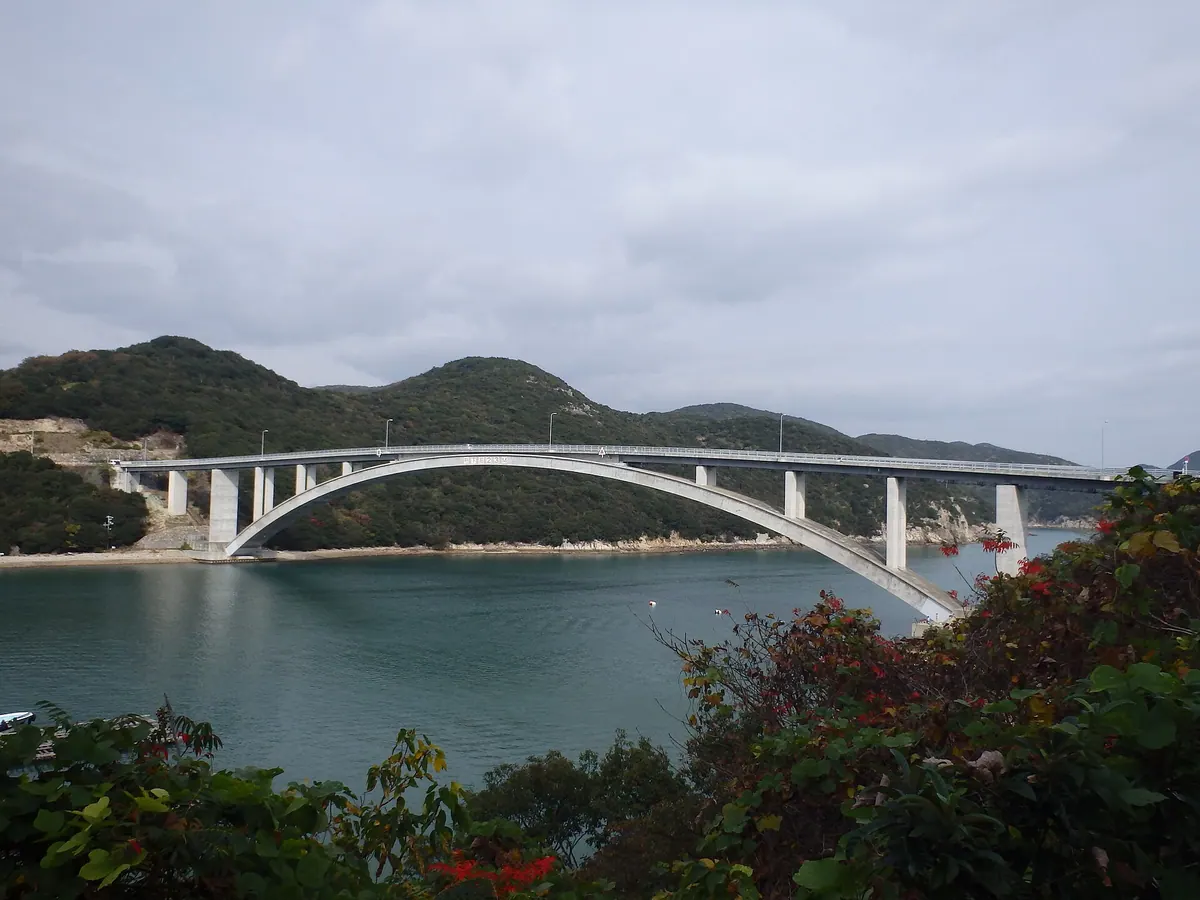
An inhabited island in the Seto Inland Sea known for its rhyolite rock composition and thriving oyster farming industry.
What it is
- An inhabited island in the Seto Inland Sea belonging to Bizen City.
- The most populated island within the Hinase Islands group.
- A settlement established in 1698 by seven households from the mainland.
- A landscape composed entirely of rhyolite rock with a peak of 55 meters.
What to see
- Active oyster farms which serve as a central local industry.
- The 300-meter long Kashirajima Bridge that opened in 2004.
- Numerous local guesthouses and pensions catering to island visitors.
- The site of the former elementary school which closed in 2015.
Getting there
- Access is available via municipal buses crossing from the mainland.
- Regular ferry services provide transportation to and from the island.
- Bridges connect the island to the mainland by way of Kakui Island.
08
Ōbishima
OKAYAMA · PLACE 大飛島
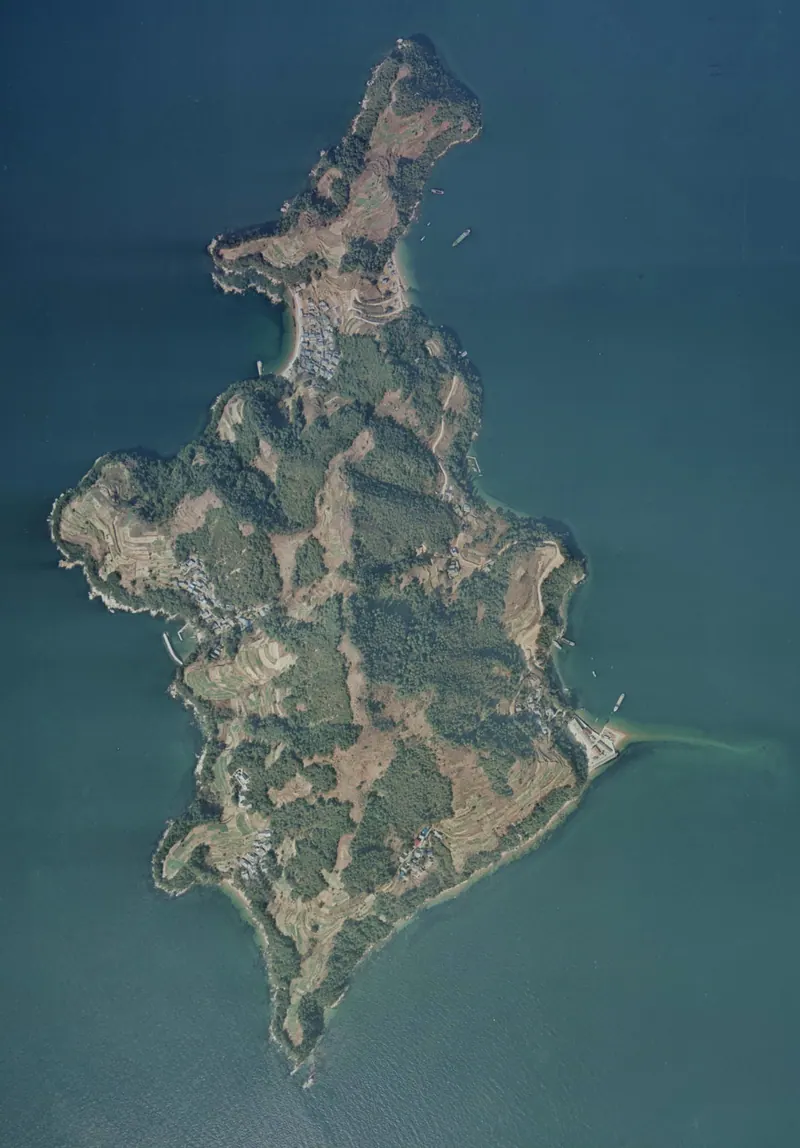
A small island in the Kasaoka chain featuring ancient ritual sites, a natural sandbar, and a historic camellia forest.
What it is
- A small island covering 1.05 square kilometers in the Kasaoka chain.
- Site of maritime safety rituals dating back to the Nara period.
- Home to the Otoshi Shrine and a protected camellia forest.
- Location where National Important Cultural Properties like copper mirrors were excavated.
What to see
- A sandbar appearing during low tide between this island and Kobishima.
- Mount Kojin, the highest point on the island at 152 meters.
- The city-designated natural monument formed by the tidal sandbar.
- Ancient artifacts including Nara Sansai jars found at the local site.
When to go
- Low tide is necessary to see the natural sandbar monument.
Getting there
- Take a ferry from Kasaoka Port for a 40-minute journey.
09
Nagashima
OKAYAMA · PLACE 長島
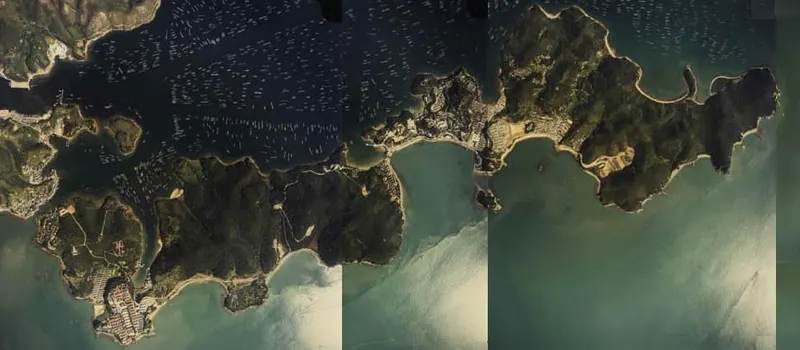
This island in Okayama features Japan's first national leprosy sanatoriums and remains home to over one hundred survivors.
What it is
- An island in Setouchi City housing the Nagashima Aiseien and Oku Komyoen sanatoriums.
- Site of Japan's first national leprosy sanatorium which opened in 1930.
- A community where over one hundred leprosy survivors still reside today.
- A geological site consisting of sandstone, granite, and rhyolite southeast of Mushiage Bay.
What to see
- The Oku Nagashima Bridge which has connected the island to the mainland since 1988.
- Active oyster farming operations located in the waters between Nagashima and Kohjima.
- The narrowest point between the island and mainland measuring only 44 meters wide.
Getting there
- Take a bus from Oku Station for a 40-minute journey to the island.
- Access the island by vehicle via the Oku Nagashima Bridge.
10
Kitagi Island
OKAYAMA · PLACE 北木島
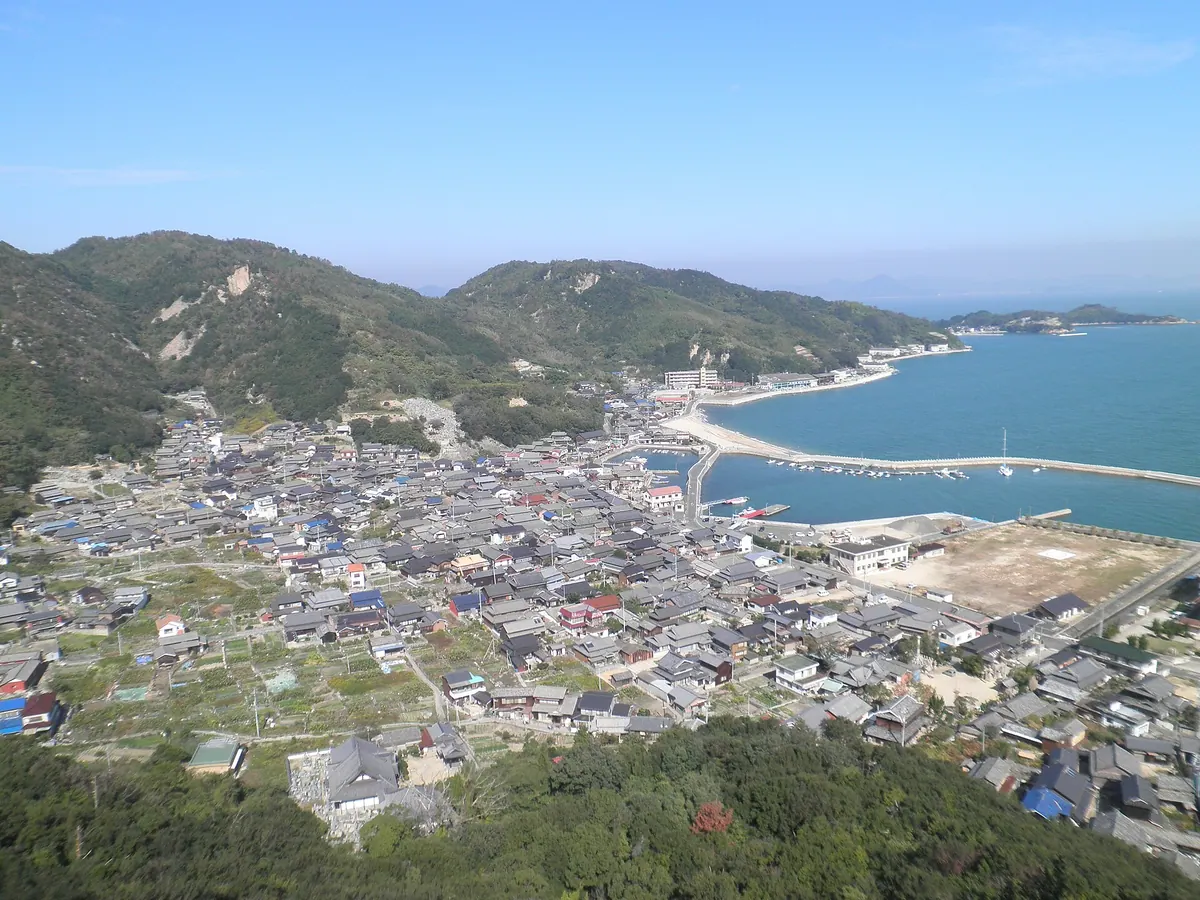
The largest of the Kasaoka Islands, famous for high-quality granite used in Japan's most iconic historical landmarks and structures.
What it is
- The largest inhabited island within the Kasaoka Islands chain.
- A designated Japan Heritage site known for producing premium Kitagi granite.
- The source of stone for the Bank of Japan and Yasukuni Shrine torii.
- The birthplace of the popular Japanese comedian Daigo from the duo Chidori.
What to see
- Deep quarry lakes formed by rainwater collecting in abandoned granite excavation sites.
- The Kitagi Stone Memorial Room displaying a collection of traditional quarrying tools.
- Active coastal areas where local oysters branded as Kitaki-kaki are produced.
Getting there
- Passenger ships and ferries run from Kasaoka City to the island.
- The island is located fifteen kilometers south of Kasaoka Port.
11
Matsushima
OKAYAMA · PLACE 松島
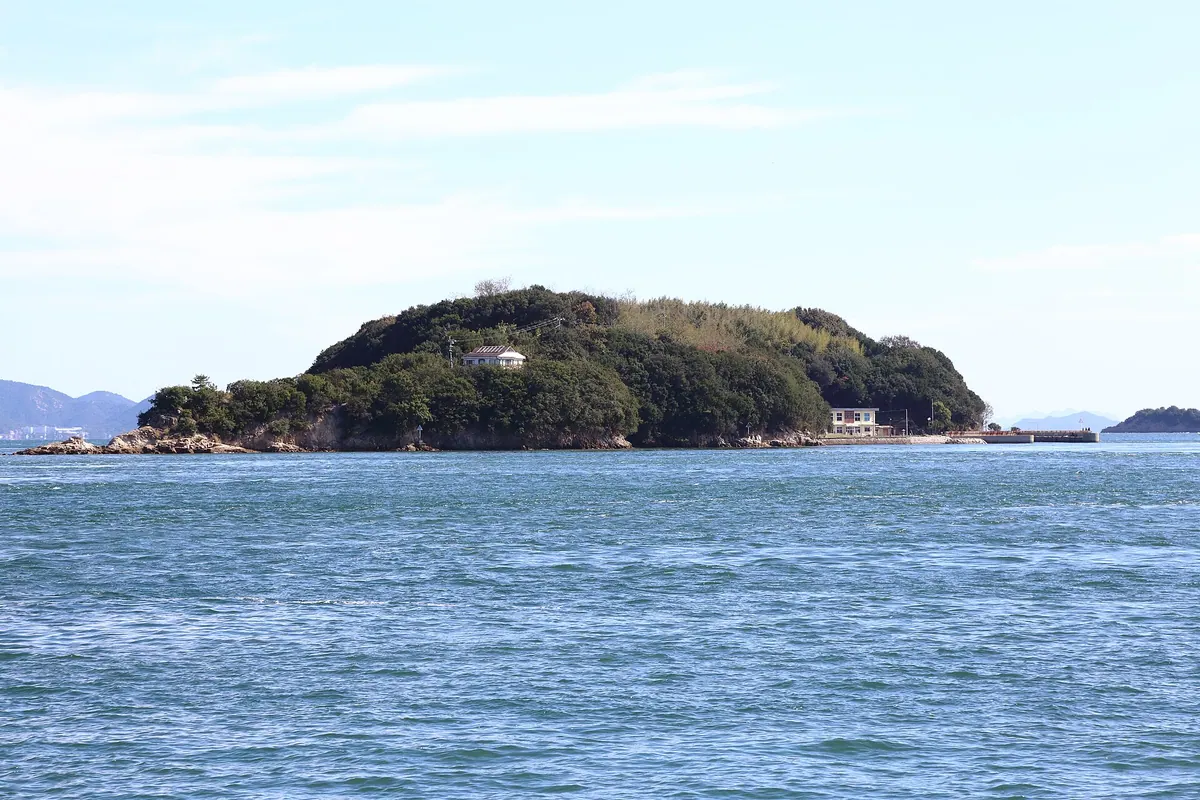
The smallest inhabited island in Okayama, featuring a shrine, medieval ruins, and a museum in a former school building.
What it is
- The smallest inhabited island in Okayama Prefecture with a total area of 0.08 square kilometers.
- A quiet location named for its abundance of pine trees.
- A site containing the remains of a medieval manor house.
- A community that recorded a population of only one person in 2022.
What to see
- Sumitomo Shrine located on the island grounds.
- The Matsushima Branch Museum housed in a former school building.
- Remains of a medieval manor house from the island's history.
- Views of the surrounding waters 600 meters off the coast of Mount Washu.
Getting there
- Access requires hiring a chartered boat from Shimotsui or Ajino Port.
- There is no scheduled ferry service available to the island.
12
Kōjima
OKAYAMA · PLACE 鴻島
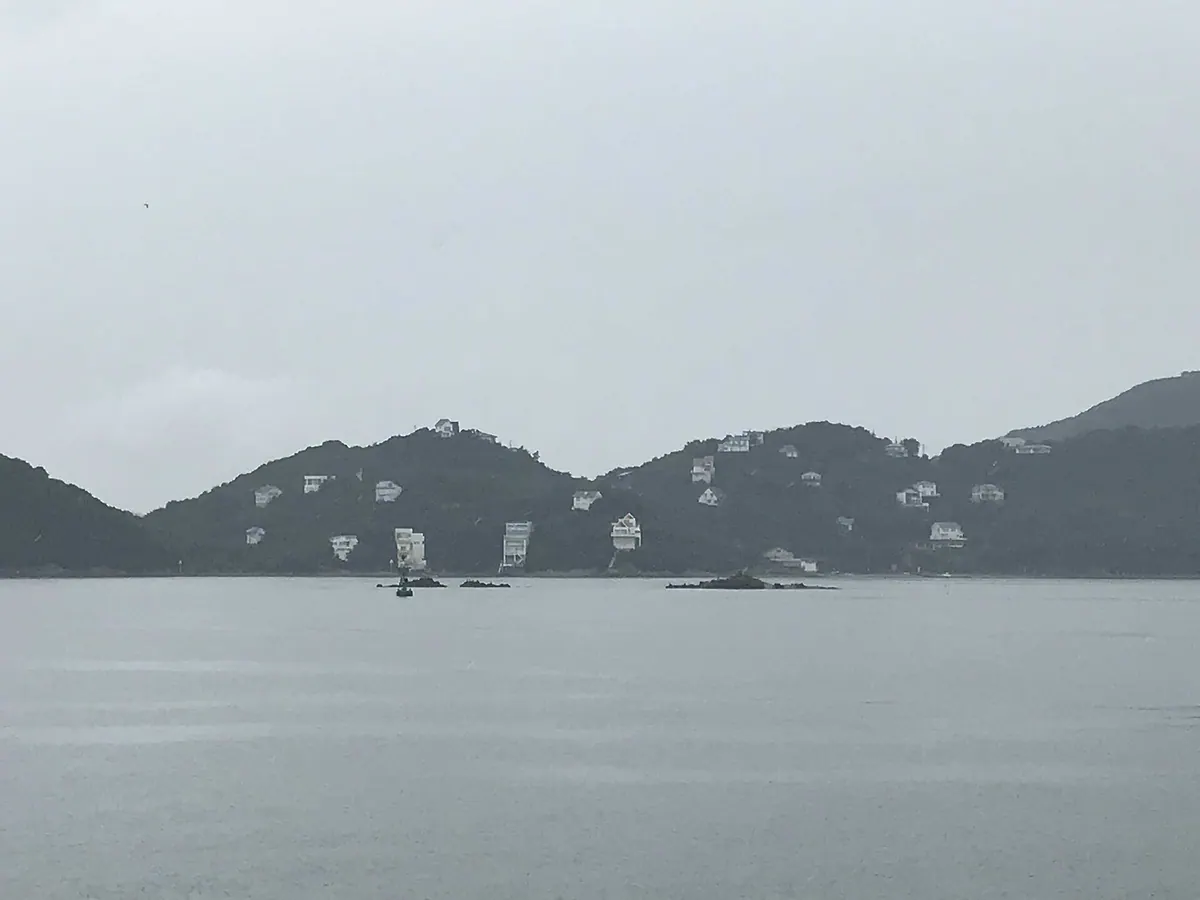
A quiet island in Setonaikai National Park known for its mandarin orange farm, swimming beach, and hundreds of private villas.
What it is
- A small island covering two square kilometers within the Setonaikai National Park.
- A former ranch for the Okayama Domain that later served as a place of exile.
- A residential and vacation spot with approximately 350 villas and a small local population.
- Home to Yokoyama Farm where mandarin orange cultivation has continued since 1965.
What to see
- The Kame-no-ura swimming beach located on the island coast.
- The island's only mandarin orange farm operated by the Yokoyama family.
- Views of the surrounding Hinase Islands and the Seto Inland Sea.
Getting there
- Regular boats depart from Hinase Port for the island.
- The boat journey from the port takes approximately 15 minutes.
13
Aoshima
OKAYAMA · PLACE 青島
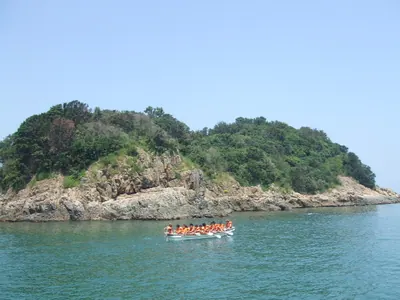
An uninhabited island in Setonaikai National Park known for its rhyolite rock formations and private educational summer camps.
What it is
- Uninhabited island in the Seto Inland Sea measuring 2.2 kilometers around
- Part of the protected Setonaikai National Park in Okayama Prefecture
- Owned by Kwansei Gakuin since 1962 for use as a summer camp site
- Named for the distinct color of the local bamboo grass
What to see
- Natural rhyolite rock formations that compose the entire island
- A chapel and wooden cabins used by visiting students
- Local wind power facilities installed on the island grounds
- Wild raccoon dogs that inhabit the island interior
- Sites where ancient Yayoi pottery and archaeological artifacts were discovered
When to go
- Annual summer camps are held here by Kwansei Gakuin and Keimei Gakuin
14
Kamashima
OKAYAMA · PLACE 釜島
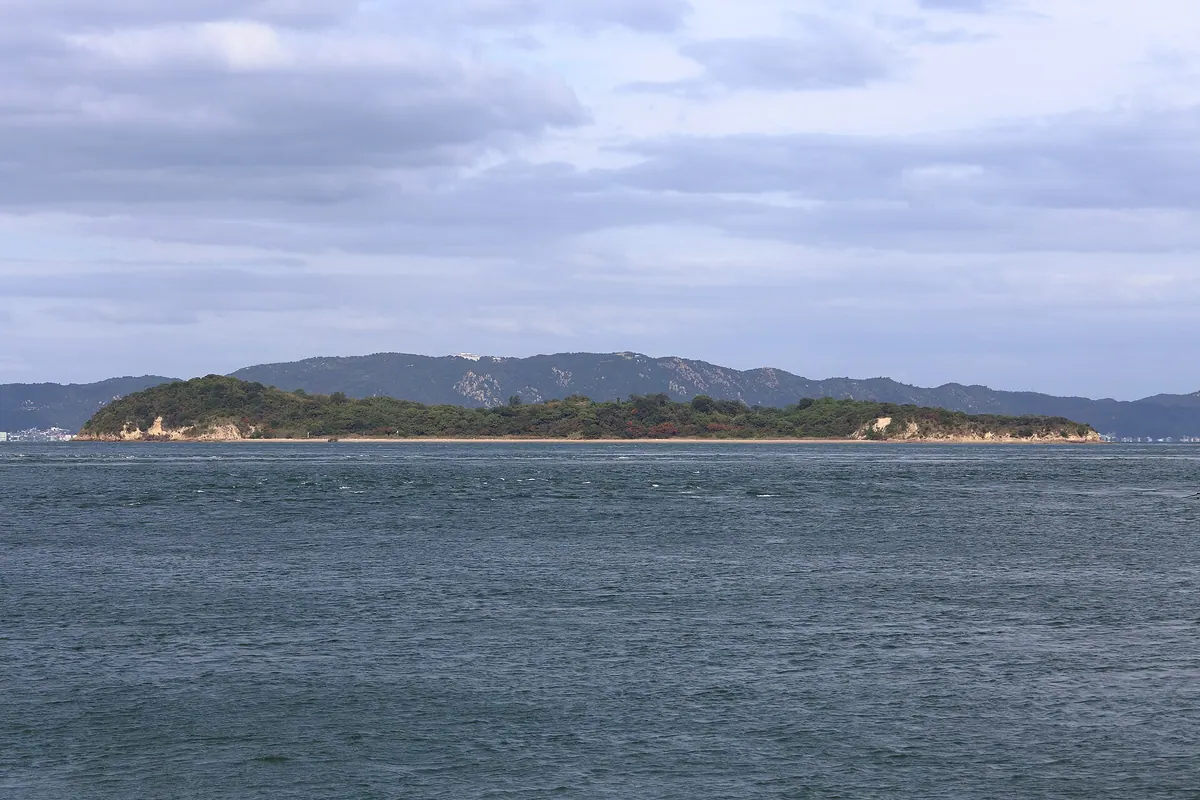
An uninhabited island in the Mizushima group featuring ancient pottery sites and the ruins of a tenth-century castle.
What it is
- An uninhabited island covering zero point four square kilometers in the Mizushima group.
- Site of a tenth-century castle built by the historical figure Fujiwara no Sumitomo.
- A former residential area that became completely uninhabited by the year 1980.
- A historical location where archaeologists discovered ancient Jomon and Yayoi period pottery.
What to see
- The highest point of the island reaching forty-three meters above sea level.
- Coastal scenery that served as a filming location for a movie in 1958.
- Remnants of the island's history as a former territory of the Okayama Domain.
Getting there
- Access to the island requires the use of chartered boats.
15
Ōtabujima
OKAYAMA · PLACE 大多府島
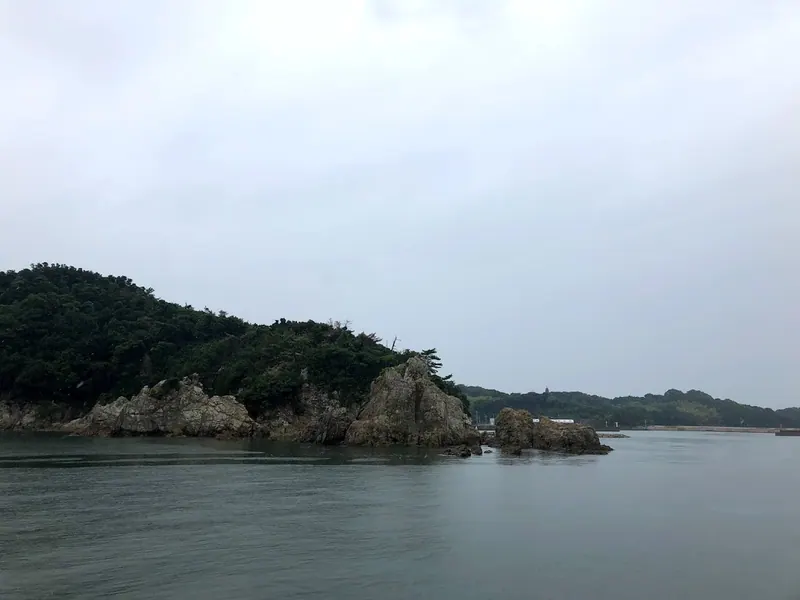
A historic island in Bizen featuring a 17th-century breakwater, a wooden lighthouse, and unique coastal rock formations.
What it is
- A populated island in Bizen City established as a port by the Okayama Domain in 1698.
- Home to a stone breakwater from the Genroku era registered as a Tangible Cultural Property.
- Site of the Kasuga Shrine which was founded on the island in 1707.
What to see
- A ten-meter wooden lighthouse reconstructed in 1986 based on historical designs.
- A hexagonal ancient well that previously served as the primary water source.
- Unusual rock formations located along the southern side of the island.
- A cave associated with local legends of historical counterfeiting operations.
Getting there
- Accessible by a thirty-five minute ferry ride departing from Hinase Port.
16
Takashima
OKAYAMA · PLACE 高島
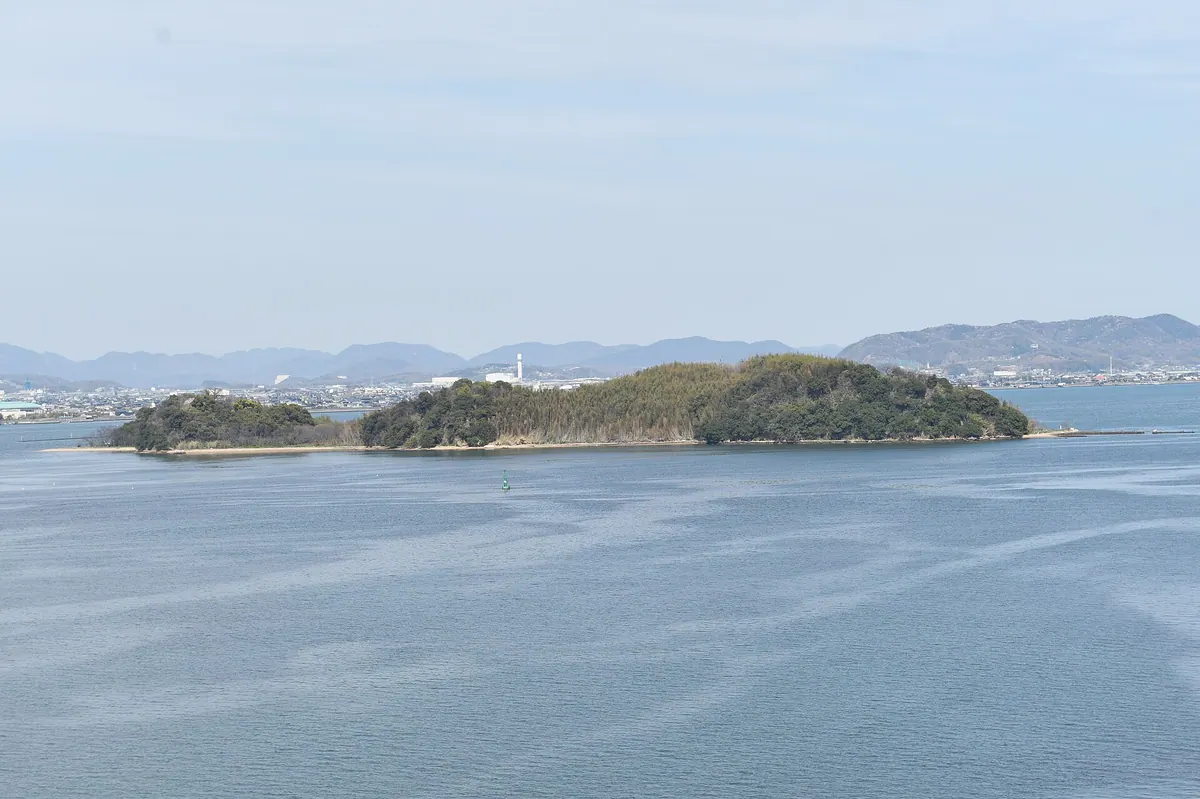
An uninhabited island near Okayama Port featuring ancient ritual ruins and a legendary site associated with Emperor Jimmu.
What it is
- An uninhabited island in Okayama City with a circumference of 1.2 kilometers.
- A legendary site of Emperor Jimmu's Takashima Palace.
- Location of the Bizen Takashima ritual ruins covering most of the island.
- A sacred area containing artifacts from the Jomon to the Kofun periods.
What to see
- Takashima Shrine located on the southern coast of the island.
- A large monolith on Iwakasa Mountain considered a sacred site.
- A monument commemorating Emperor Jimmu.
- Three hills connected by a sandbar.
- A remote prayer hall located in the Miyaura district.
When to go
- Public access to the island is currently restricted.
17
Muguchi Island
OKAYAMA · PLACE 六口島
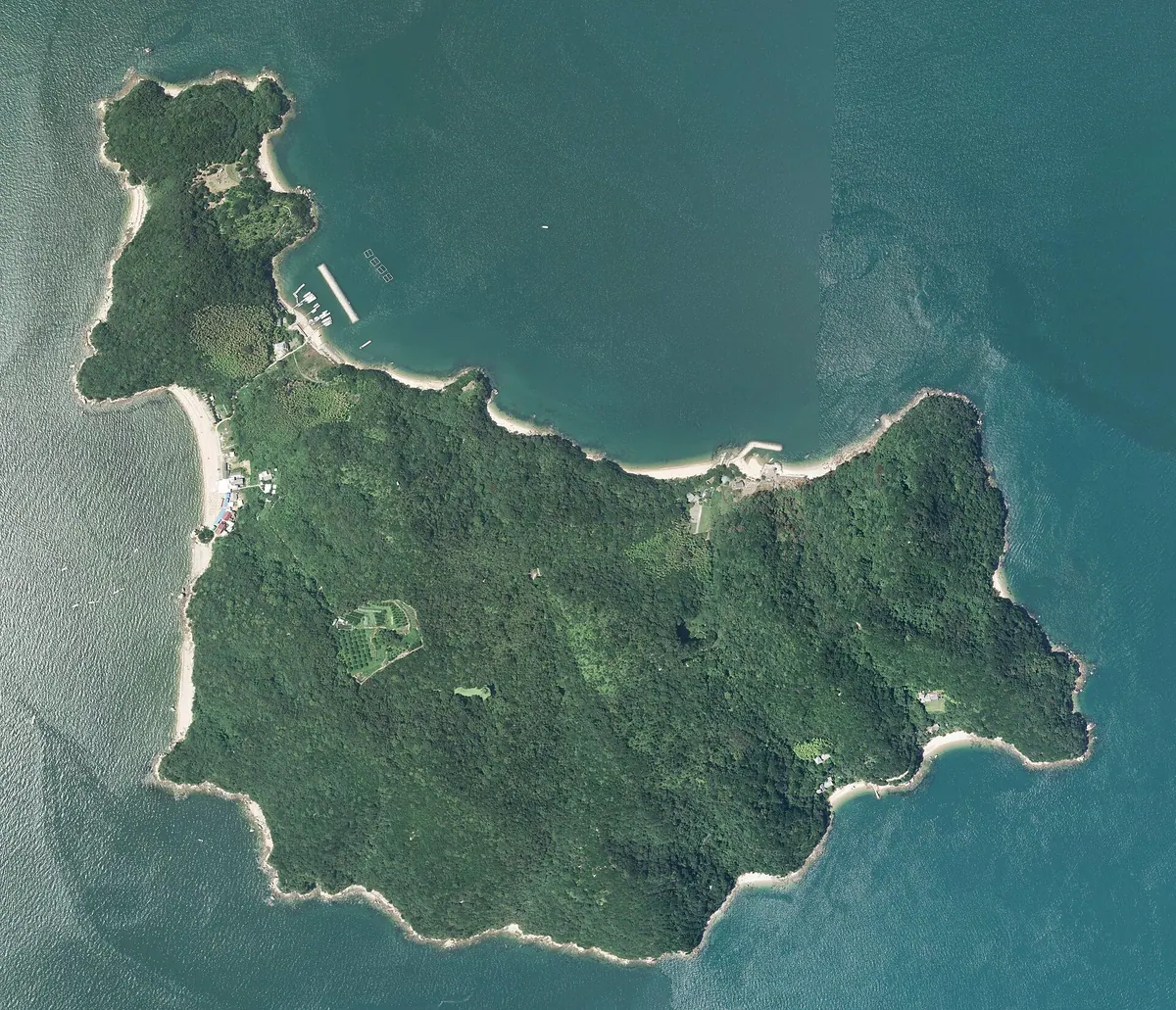
A quiet island near Kurashiki famous for its unique natural rock formations and granite used in historic Japanese landmarks.
What it is
- A small island in Kurashiki City with a circumference of approximately 5.9 kilometers.
- The island name originates from its six distinct valleys.
- A historic site where stone tools and Jomon pottery have been excavated.
- A source of granite used to repair Osaka Castle and build the National Diet Building.
What to see
- The Elephant Rock which is designated as a national natural monument.
- Granite landscapes that contributed to major Japanese architectural projects.
Getting there
- Located two kilometers southwest of Shimotsui Port.
- Visitors must use chartered boats as there is no scheduled ferry service.
18
Kobishima
OKAYAMA · PLACE 小飛島
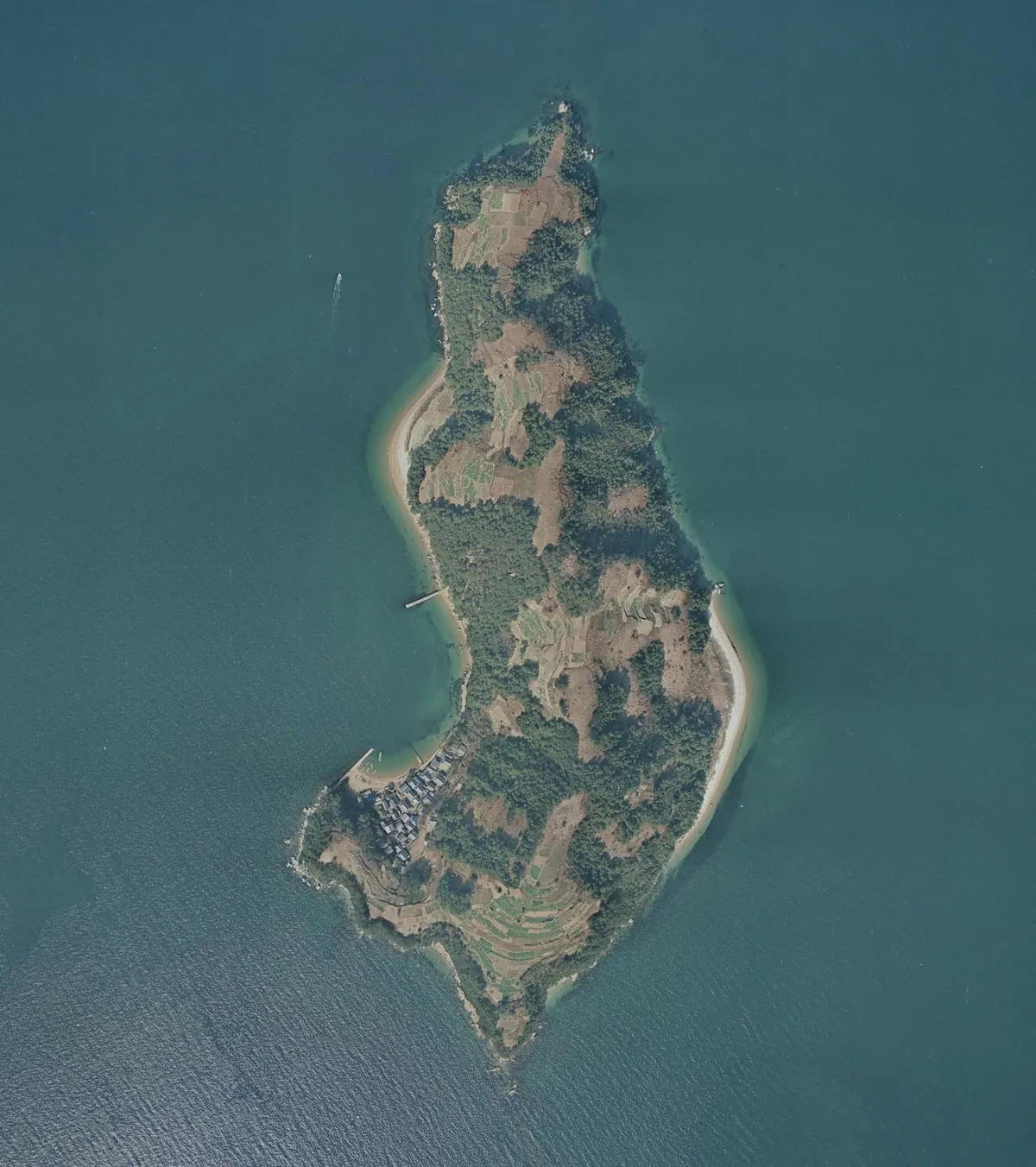
A quiet, small island in Setonaikai National Park offering a peaceful escape within the Kasaoka Islands group.
What it is
- The smallest island in the Kasaoka Islands group within Okayama Prefecture.
- A protected area designated as part of the Setonaikai National Park.
- A compact landmass with a total surface area of only 0.3 square kilometers.
- A small community where the highest elevation reaches 81 meters.
What to see
- Natural landscapes and coastal views along the 2.8 kilometer island perimeter.
- Scenic vistas of the surrounding Seto Inland Sea from elevated points.
Getting there
- Take a Sanyo Kisen ferry from Kasaoka Port to reach the island.
- The ferry journey from the mainland port takes approximately 45 minutes.
19
Kakui Island
OKAYAMA · PLACE 鹿久居島
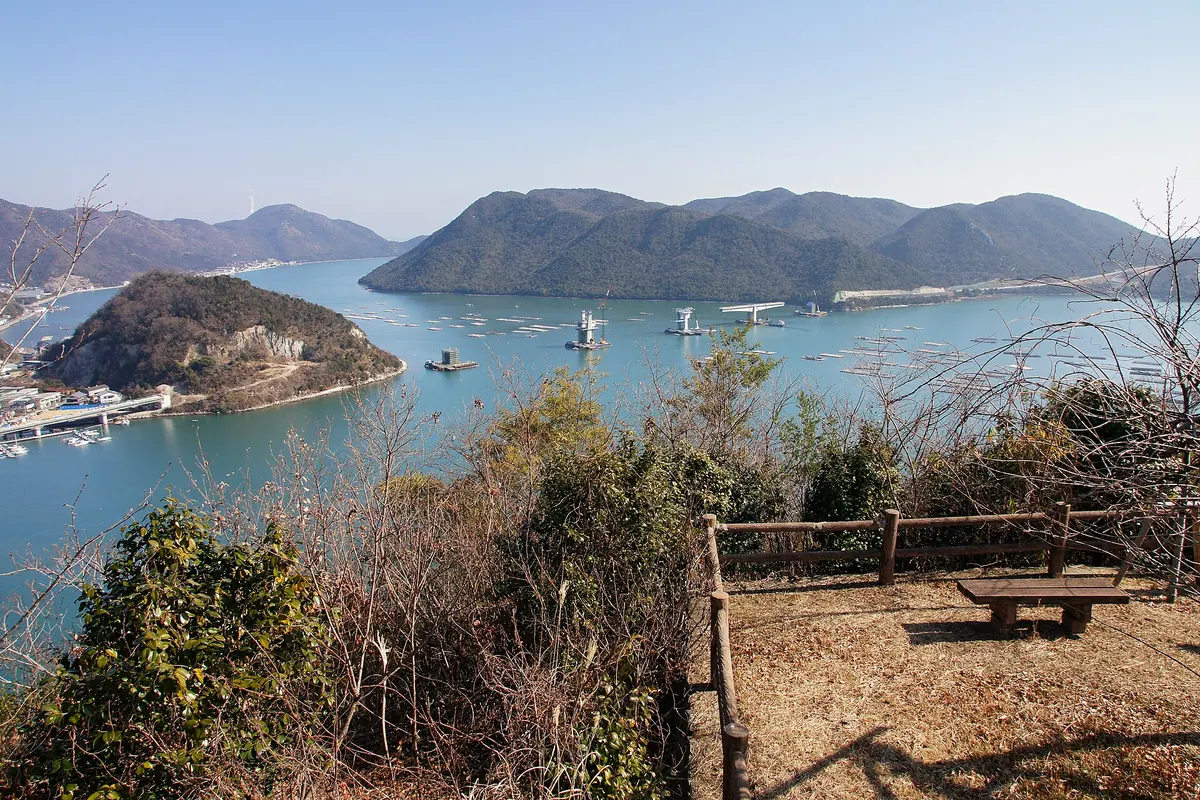
The largest of the Hinase Islands, offering wild deer sightings, ancient ruins, and orange groves within a national park.
What it is
- The largest island in the Hinase chain within Setonaikai National Park.
- A former horse ranch for the Okayama Domain and an Edo period penal colony.
- A nationally designated wildlife protection area specifically for herons.
- An agricultural hub primarily known for the cultivation of mandarin oranges.
What to see
- Wild deer that inhabit the island and travel across local bridges.
- The Bizen Hinase Bridge connecting the island to the Japanese mainland.
- Kakui Sengen ruins containing artifacts from the Jomon and Kamakura periods.
- A tourism facility featuring experiences related to ancient Japanese lifestyles.
20
Kojima Peninsula
OKAYAMA · PLACE 児島半島
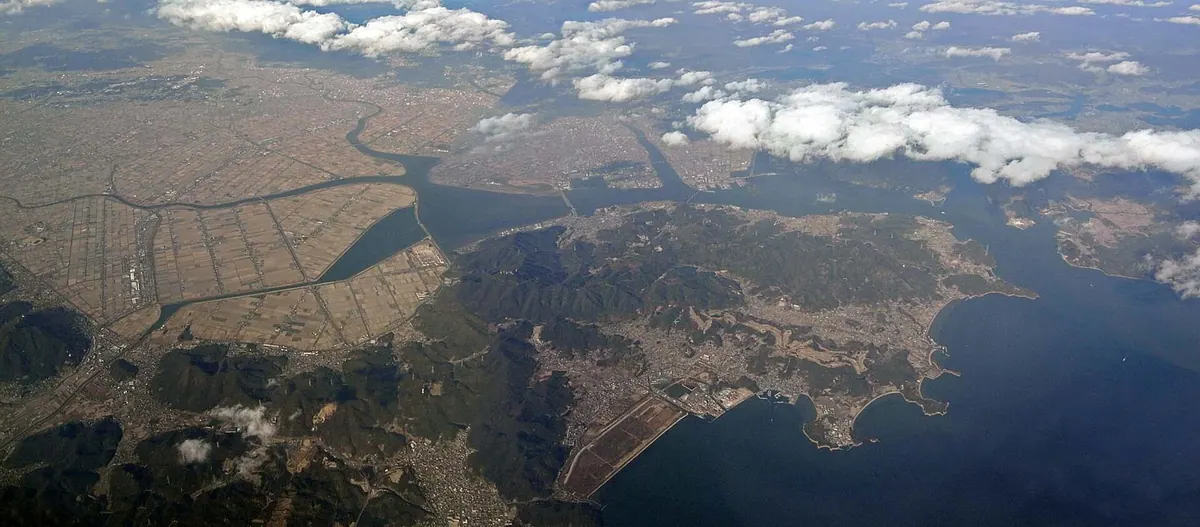
A scenic granite peninsula in Setonaikai National Park featuring mountain peaks, historic temples, and the massive Seto Ohashi Bridge.
What it is
- A granite hilly region in southern Okayama Prefecture within Setonaikai National Park.
- Originally an island named Kibi no Kojima before land reclamation in 1618.
- A thirty kilometer stretch of land spanning Okayama, Kurashiki, and Tamano cities.
- Home to Rendaiji Temple, the sixth site on the Chugoku Kannon Pilgrimage.
What to see
- The Seto Ohashi Bridge which carries a highway and railway to Kagawa Prefecture.
- Granite peaks including Mount Ojigadake and Mount Konko.
- Large scale land reclamation projects initiated during the Meiji era.
- Scenic views across the Seto Inland Sea from the hilly terrain.