

20 Shrines in Yamagata worth your time
Japan Gems
Yamagata Prefecture is home to 36 shrines, including Uesugi Shrine and Chōkaisan Ōmonoimi Shrine. Visitors can find a wide variety of spiritual sites across the prefecture.
Yamagata has 36 shrines on Japan Gems. Below are the 20 we can tell you the most about — each one written up in English from Japanese sources, with what to see and how to get there. See all shrines in Yamagata.
01
Kasuga Shrine
YAMAGATA · SHRINE 春日神社
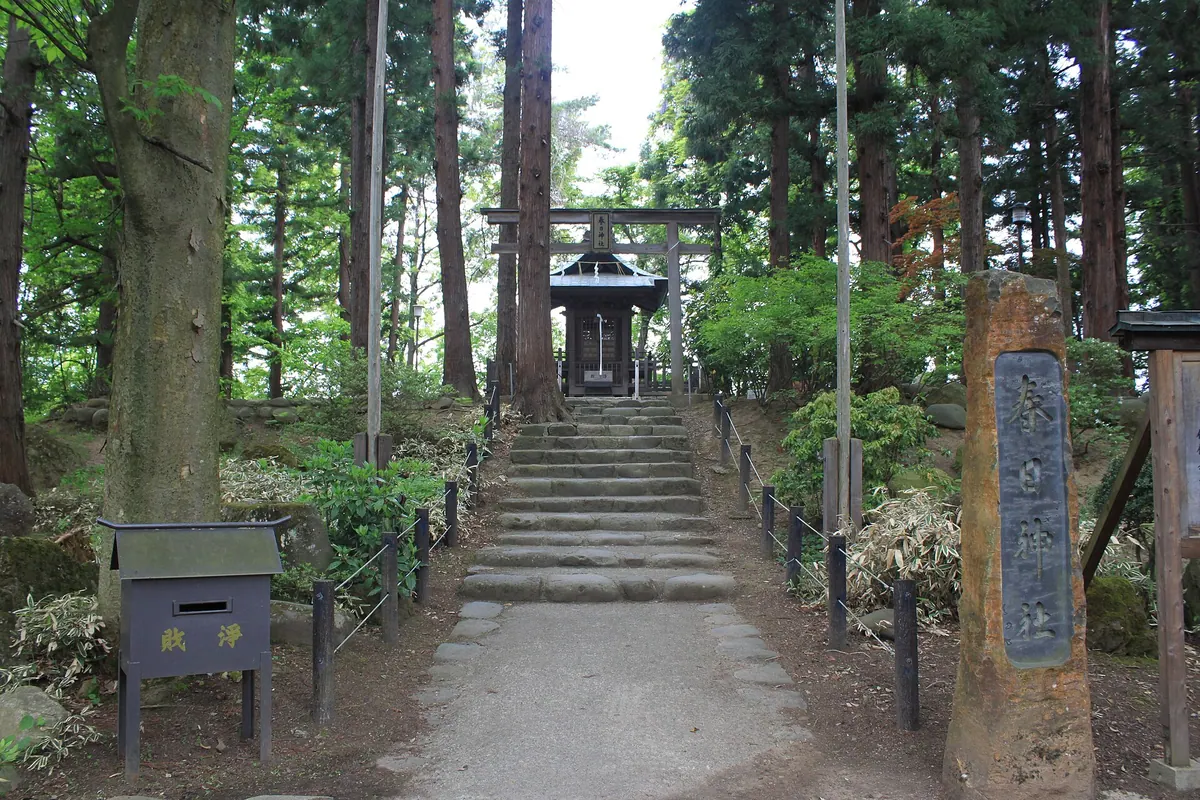
This shrine, founded in 807, hosts festivals throughout the year to pray for peace and harvest.
What it is
- Shrine founded in 807 during the Heian period.
- Enshrines four deities: Takemikazuchi, Iwai Nushi, Amatsu Koyane, Hime.
- Protected Kurokawa Noh, performed as Shinto ritual.
- Name changed several times, became Kasuga Jinja in 1868.
What to see
- Main hall (honden) built in 1674.
- Present-day worship hall (haiden) built in 1739.
When to go
- January 1: Saitan Festival for solar New Year.
- February 1-2: Ogi Festival for lunar New Year.
- May 3: Reitai Festival to worship deities.
- Every 20 years: Periodic festival to celebrate founding.
- Address
- 山形県米沢市丸の内1 Map
02
Hie Shrine
YAMAGATA · SHRINE 日枝神社

Hie Shrine is a historic shrine in Sakata, known for its unique gates and annual festival.
What it is
- A shrine in Sakata City, also called Shimo-Hie Shrine.
- Founded around the mid-16th century.
- Settled in its current location in 1712.
- Dedicated to Onamuchi-no-kami, Oyamakui-no-kami, and Munakata Nakatsuhime-no-kami.
What to see
- The main shrine building, built in 1784 by Honma Mitsuoka.
- A Zuijinmon gate on the shrine grounds.
- A Sanno Torii gate on the shrine grounds.
When to go
- The annual Sakata Matsuri is from May 19th to 21st.
Getting there
- Located northeast of Hiyoriyama Park.
- Address
- 山形県酒田市日吉町1-7-32 Map
03
Uesugi Shrine
YAMAGATA · SHRINE 上杉神社
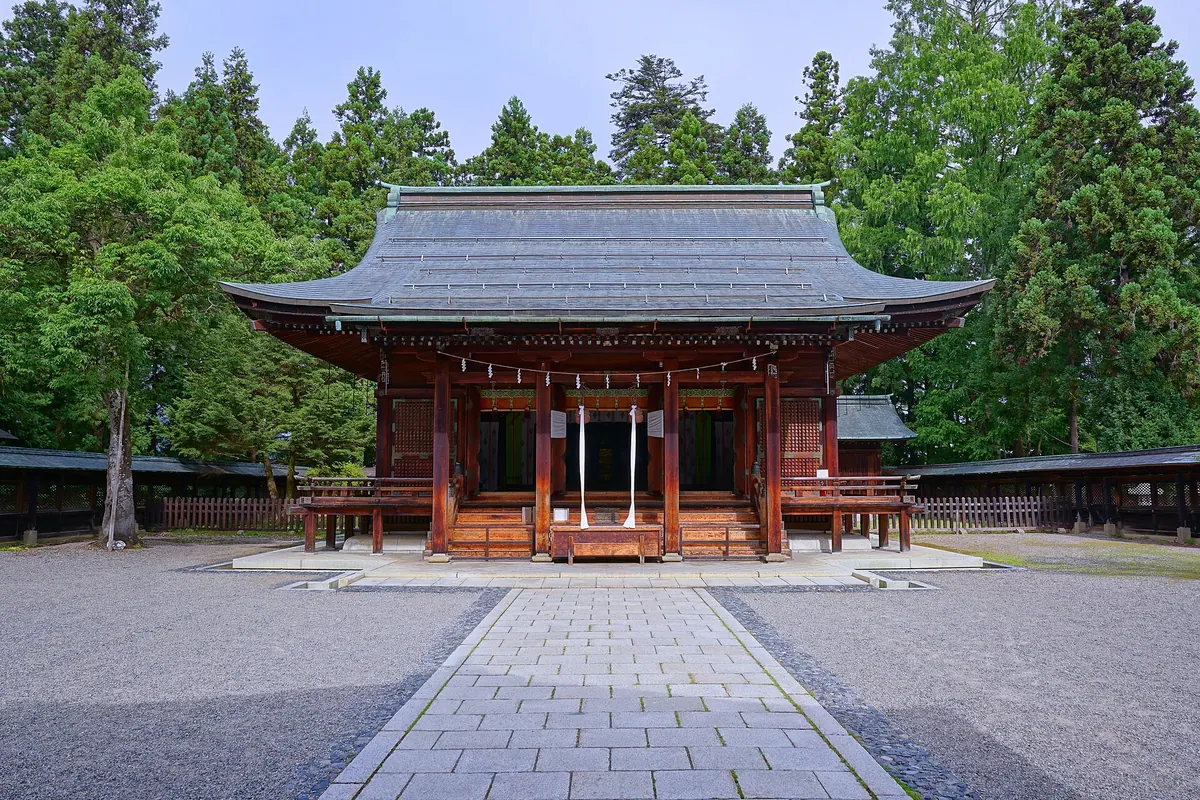
Uesugi Shrine, dedicated to Uesugi Kenshin, offers historical insights and cultural treasures.
What it is
- Shrine dedicated to Uesugi Kenshin.
- Located in Matsugasaki Park, former Yonezawa Castle site.
- Designated a Bekkaku Kanpei-sha.
- Main hall and treasure hall rebuilt in 1923.
What to see
- Statues of Uesugi Kenshin and Uesugi Yozan.
- Statues of Uesugi Kagekatsu and Naoe Kanetsugu.
- Matsugasaki Shrine, dedicated to Uesugi Yozan.
- Many cultural properties housed here.
When to go
- Uesugi Festival held from April 28th to May 3rd.
Getting there
- About a 20-minute walk from Yonezawa Station.
- Address
- 山形県米沢市丸の内1丁目4-13 Map
- Official site
- www.uesugi-jinja.or.jp
04
Arakura Shrine
YAMAGATA · SHRINE 荒倉神社

Arakura Shrine is an ancient shrine dedicated to horses and food, with unique statues and festivals.
What it is
- Founded in 717 AD.
- Dedicated to Ukemochi-no-Okami and Ogetsuhime-no-Kami.
- Known as a guardian of food, animals, and sericulture.
- Especially famous as a god of horses.
What to see
- Stone statues of two horses are on the grounds.
- Main shrine building was constructed in 1855.
- Stone statue of Sho Kannon is a cultural property.
When to go
- Annual festivals are held in April, August, and November.
- Arakura Lion Dance is a sacred performing art.
- Address
- 山形県鶴岡市西目荒倉口38 Map
05
Gosho Shrine
YAMAGATA · SHRINE 五所神社
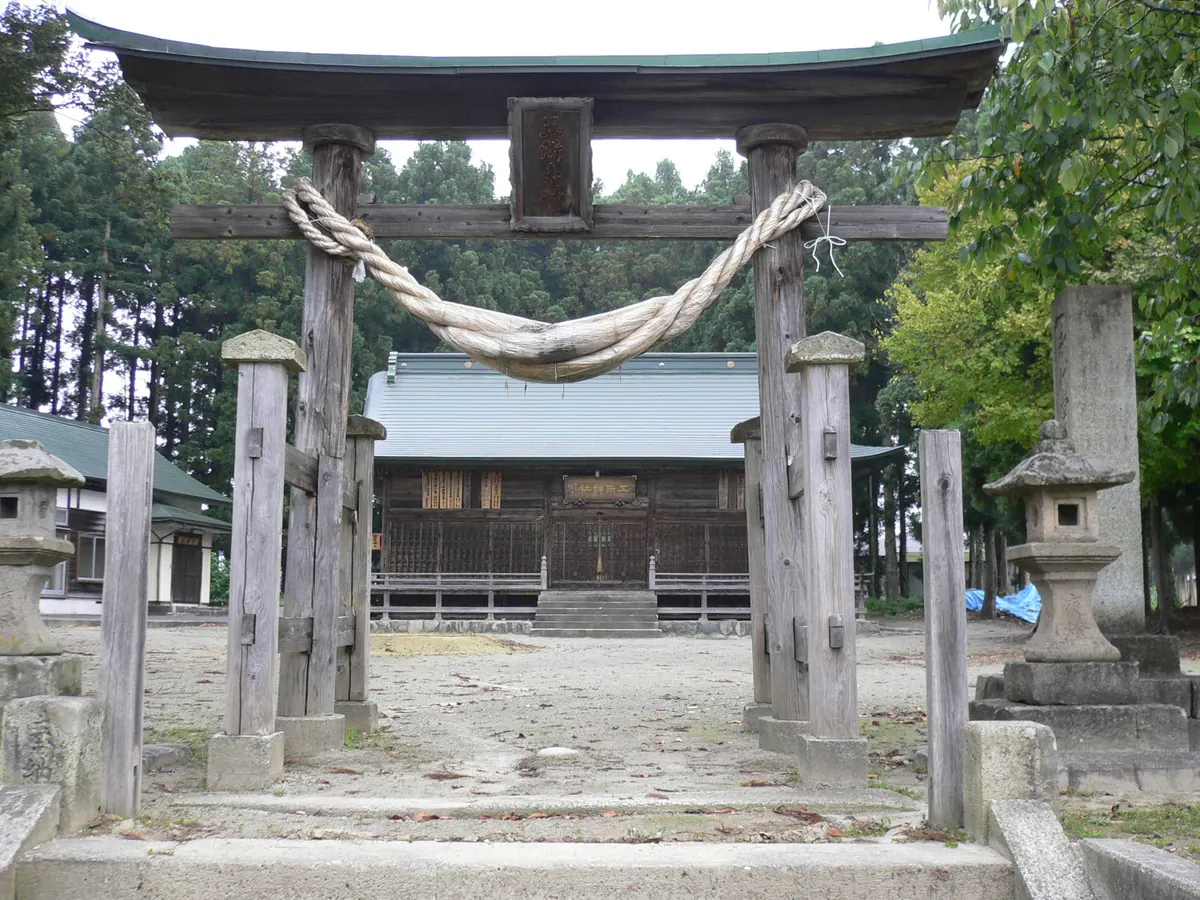
Gosho Shrine, founded in the late 7th century, is worth visiting for its unique Black Lion Festival.
What it is
- Shrine founded in the late 7th century.
- Enshrines Ohirume-no-muchinomikoto and Tsukuyomi-no-mikoto.
- Also enshrines Wakeikazuchi-no-kami, Kanamahiko-no-mikoto, and Takeminakata-no-mikoto.
- Five deities were enshrined together in 1090.
What to see
- Black Lion Dance with a 10-meter curtain.
When to go
- Annual festival on August 14-15.
- Black Lion Festival is held then.
Getting there
- 10 minutes by car from Nagai Station.
- Address
- 山形県長井市寺泉2303 Map
06
Torigoe Hachiman Shrine
YAMAGATA · SHRINE 鳥越八幡神社
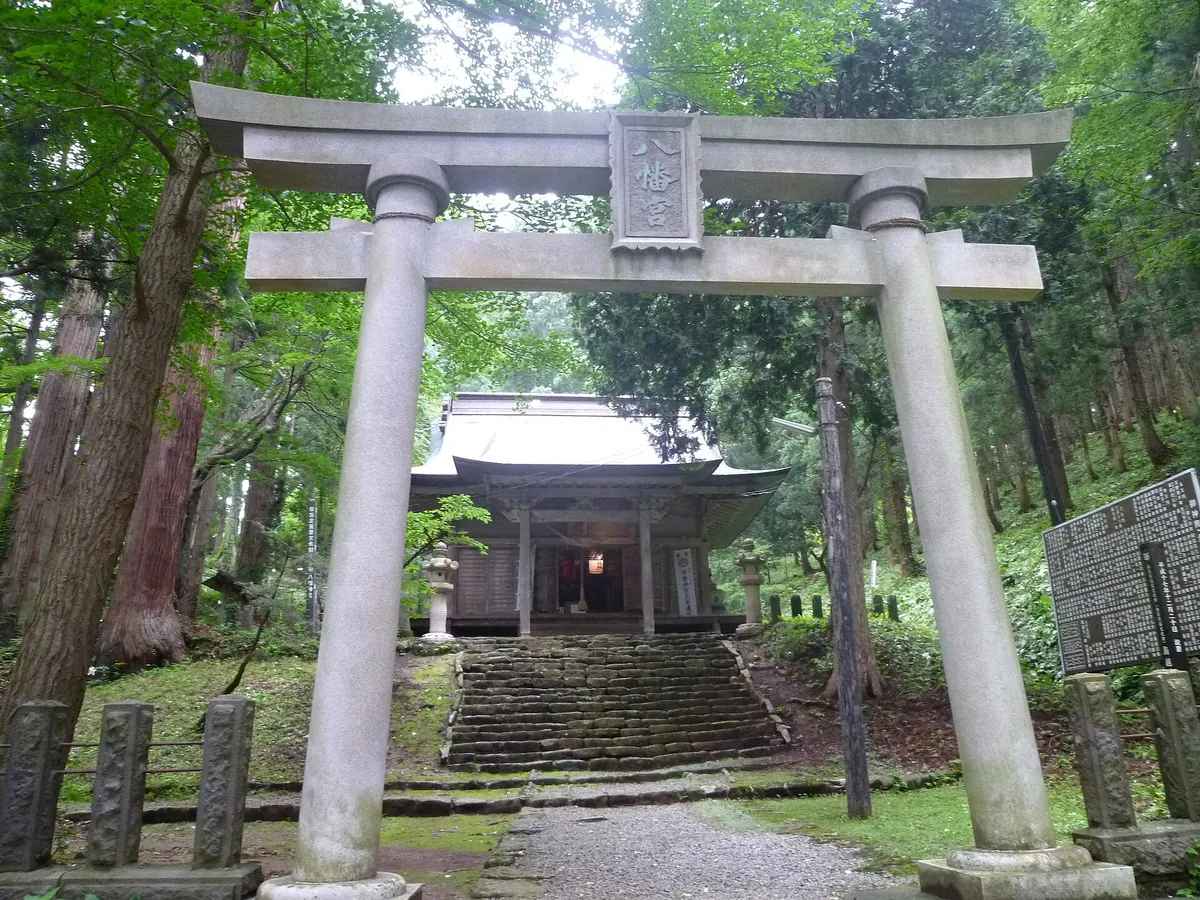
Historic shrine in Shinjo City, home to the oldest building and important cultural properties.
What it is
- Formal name is Hachiman Shrine.
- Founded in 1229.
- Dedicated to Emperor Ojin.
- Revered by successive feudal lords.
What to see
- Main hall built in 1638, oldest building in Shinjo City.
- Main hall is a National Important Cultural Property.
- Worship hall built in 1691.
- Worship hall is a National Important Cultural Property.
- Left hand of Prince Oyama Mori no Mikoto is enshrined.
- Torigoe Kagura is a city-designated intangible folk cultural property.
- Address
- 山形県新庄市鳥越1224 Map
07
Kinbō Shrine
YAMAGATA · SHRINE 金峯神社 (鶴岡市)
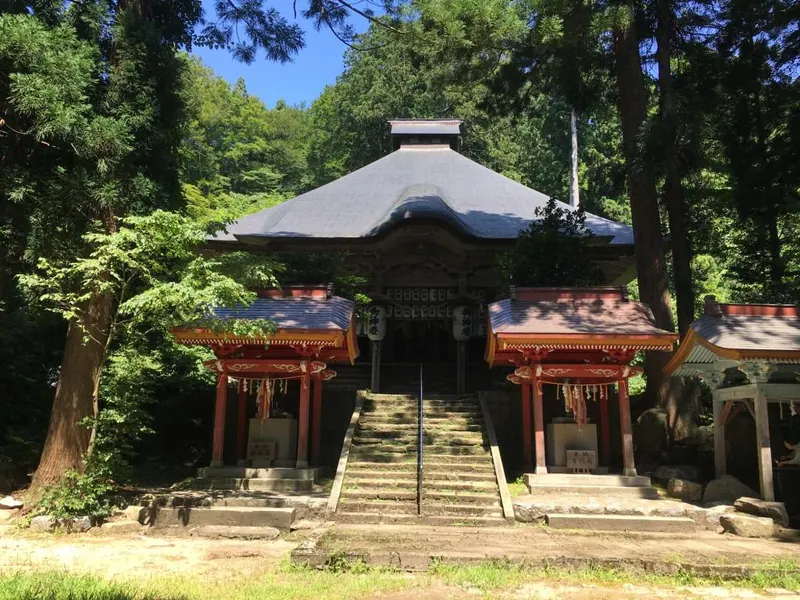
Kinbō Shrine is a historic mountain shrine with important cultural properties and scenic views.
What it is
- A Shinto shrine in Tsuruoka City, Yamagata Prefecture.
- Founded between 806 and 810.
- Formerly a prefectural shrine and Shugendō training ground.
- Dedicated to Sukunahikona-no-kami, Ōkuninushi-no-kami, Kotoshironushi-no-kami, and Emperor Ankan.
What to see
- The main hall on the summit of Mount Kinbō.
- Shrine buildings scattered throughout Mount Kinbō.
- Main hall is an important cultural property.
- A bronze bowl is an important cultural property.
- Address
- 山形県鶴岡市大字青龍寺字金峯1 Map
08
Yudonosan Shrine
YAMAGATA · SHRINE 湯殿山神社

Yudonosan Shrine: a unique mountain shrine where the mountain itself is worshipped.
What it is
- Shrine on the slopes of Mount Yudono.
- One of the three sacred Dewa Sanzan mountains.
- The mountain itself is the object of worship.
- No main hall or shrine buildings.
What to see
- Mount Yudono as the main deity.
- Otaki Shrine behind, worshipping a waterfall.
- Visitors purify and remove shoes at the main shrine.
Getting there
- Yudono-san Toll Road, then shuttle bus or walk.
- 2-hour hiking trail from Mount Gassan summit.
- Address
- 山形県鶴岡市田麦俣字六十里山7 Map
- Official site
- www.dewasanzan.jp
09
Hie Shrine
YAMAGATA · SHRINE 日枝神社

A historic shrine founded in 860 by Ennin, serving as a spiritual base for Sanno Shinto in the Tohoku region.
What it is
- A Shinto shrine founded in 860 by the monk Ennin.
- The site is dedicated to the deity Oyamakui-no-kami.
- It was originally established as a base for Sanno Shinto in Tohoku.
- The shrine was formerly known as Sanno Gongen and Omiya Daigongen.
What to see
- A divided spirit brought from the famous Hiyoshi Taisha.
- The grounds of a historic village shrine in Yamadera.
- Nearby landmarks including the related Risshaku-ji Temple.
- Address
- 山形県山形市山寺4449-4 Map
10
Shōnai Shrine
YAMAGATA · SHRINE 荘内神社
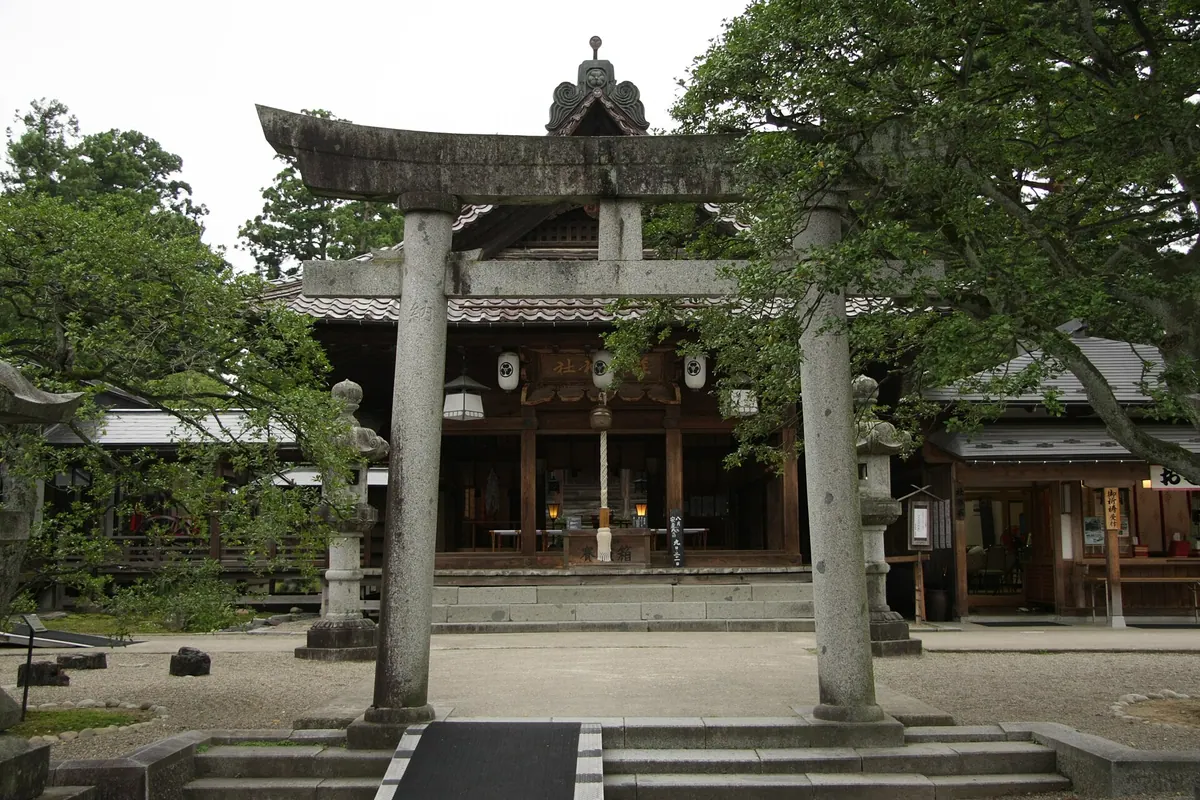
Shōnai Shrine honors local lords; its treasure hall displays samurai family treasures.
What it is
- Shrine founded in 1877 on Tsurugaoka Castle's main keep site.
- It enshrines four ancestors of the Sakai family.
- The Sakai family were former lords of Shōnai Domain.
What to see
- Treasure hall built in 1998.
- Displays about 2000 items, including Sakai family treasures.
- Located within Tsuruoka Park, known for cherry trees.
When to go
- Shōnai Grand Festival, with daimyo procession, is every August.
- Address
- 山形県鶴岡市馬場町4番1号 Map
- Official site
- jinjahan.com
11
Sagae Hachinangū
YAMAGATA · SHRINE 寒河江八幡宮
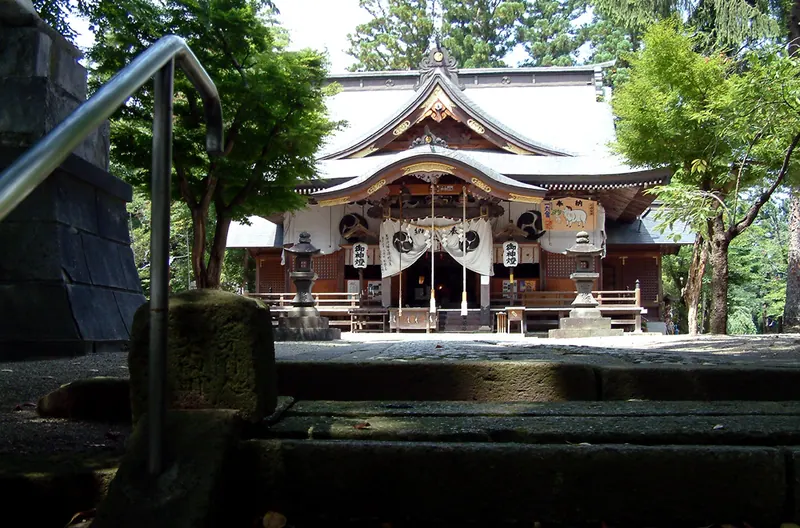
Sagae Hachimangu is a historic shrine with unique Yabusame, worth visiting for its cultural heritage.
What it is
- A Shinto shrine in Sagae City, Yamagata Prefecture.
- Founded in 1093.
- Dedicated to Hondawake-no-mikoto and Oyamatsumi-no-kami.
- Formerly a prefectural shrine, now a Beppyo Jinja.
What to see
- The current main hall, built in 1686.
- The worship hall, built in 1775.
- A short sword, a prefectural cultural property.
When to go
- Sagae Hachimangu Yabusame is a unique intangible folk cultural property.
- Address
- 山形県寒河江市八幡町5-70 Map
12
Chōkaisan Ōmonoimi Shrine
YAMAGATA · SHRINE 鳥海山大物忌神社

Ancient mountain shrine dedicated to Ōmonoimi no Ōkami, offering a glimpse into sacred Japanese mountain worship.
What it is
- Ancient Shikinaisha and Dewa Province Ichinomiya.
- Dedicated to Ōmonoimi no Ōkami.
- Worships Mount Chokai as a sacred mountain.
- Designated a National Historic Site in 2008.
What to see
- Main shrine on Mount Chokai.
- Two lower shrines.
- Fukura Kuchinomiya, enshrining Tsukuyomi no Mikoto.
- Three mountain huts, including Omurogoya.
When to go
- Annual art exhibition at Omurogoya.
- Address
- 山形県飽海郡遊佐町に3宮 Map
- Official site
- www9.piala.or.jp
13
Kinowa Shrine
YAMAGATA · SHRINE 城輪神社
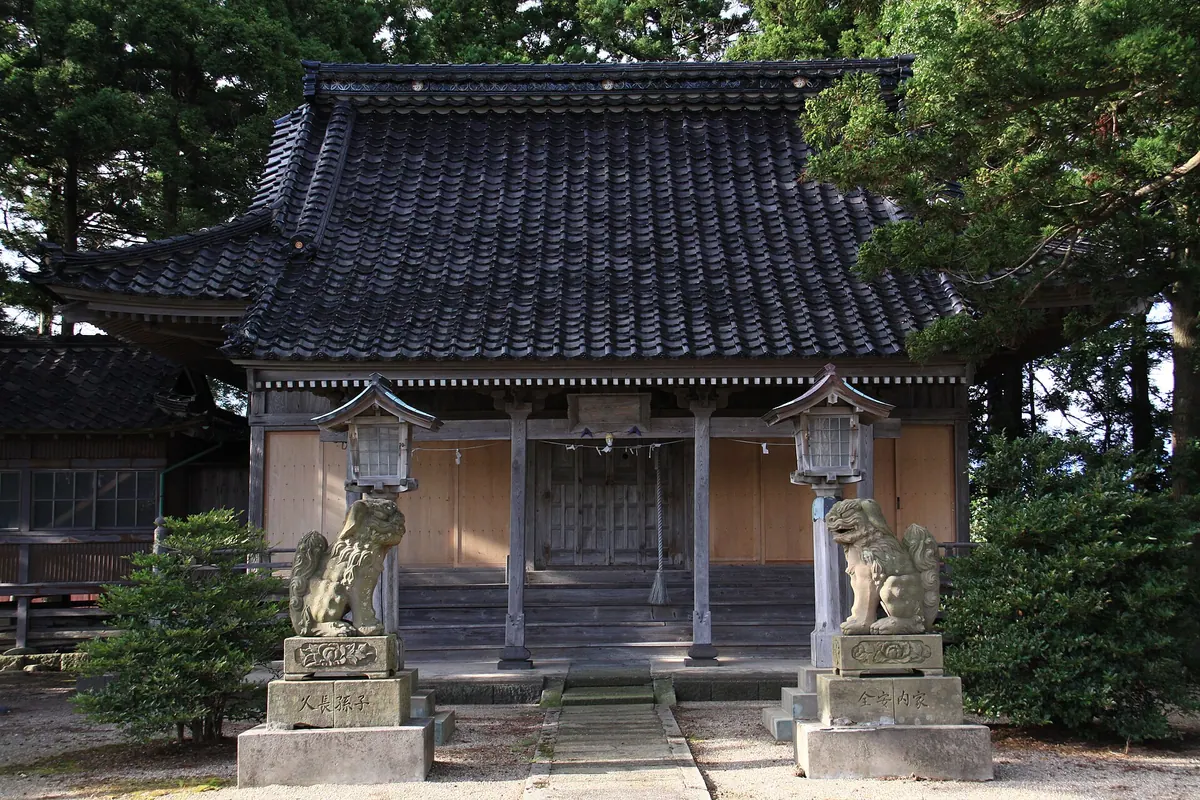
Visit this ancient shrine, guardian of a former castle, to see its historic grounds and sub-shrines.
What it is
- Ancient shrine, guardian deity of a former castle.
- Second shrine of Dewa Province.
- Appears in the Six National Histories.
- Enshrines Ukanomitama-no-mikoto.
What to see
- Castle ruins discovered around the shrine.
- Tamanoike Shrine within the grounds.
- Kōtai Shrine within the grounds.
Getting there
- 20-minute bus ride from Sakata Station.
- 30-minute walk from Mototate Station.
- Address
- 山形県酒田市城輪字表物忌35 Map
14
Kumano Shrine
YAMAGATA · SHRINE 熊野神社
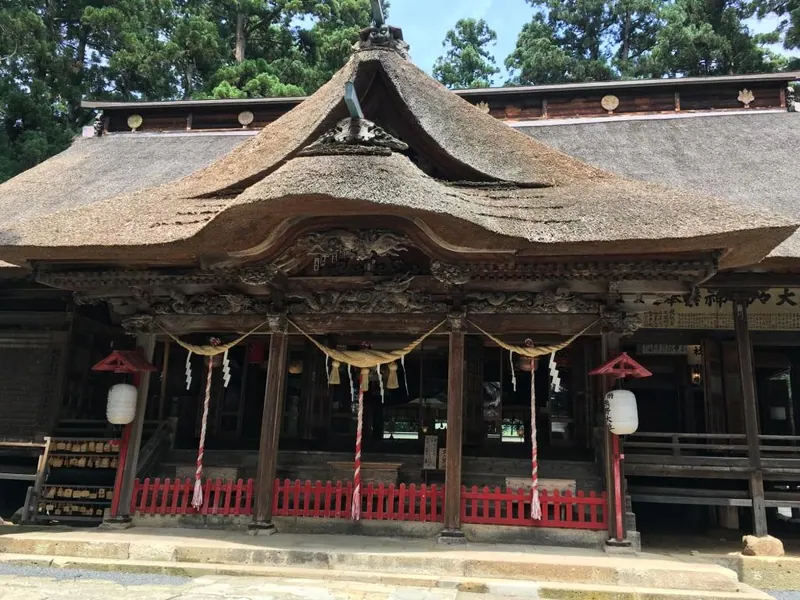
One of Japan's Three Kumano shrines, rebuilt in 806, with important cultural properties.
What it is
- Commonly called Kumano Taisha.
- One of Japan's Three Kumano shrines.
- Enshrines Izanagi-no-Mikoto and Izanami-no-Mikoto.
- Rebuilt in 806 by imperial command.
What to see
- Kumano Shrine Haiden is a prefectural cultural property.
- Tsuchisha Shrine Honden is a prefectural cultural property.
- Ninomiya Shrine Honden is a prefectural cultural property.
- Sannomiya Shrine Shaden is a city cultural property.
- Address
- 山形県南陽市宮内3476-1 Map
- Official site
- www.kumano-taisha.or.jp
15
Atago Shrine
YAMAGATA · SHRINE 愛宕神社
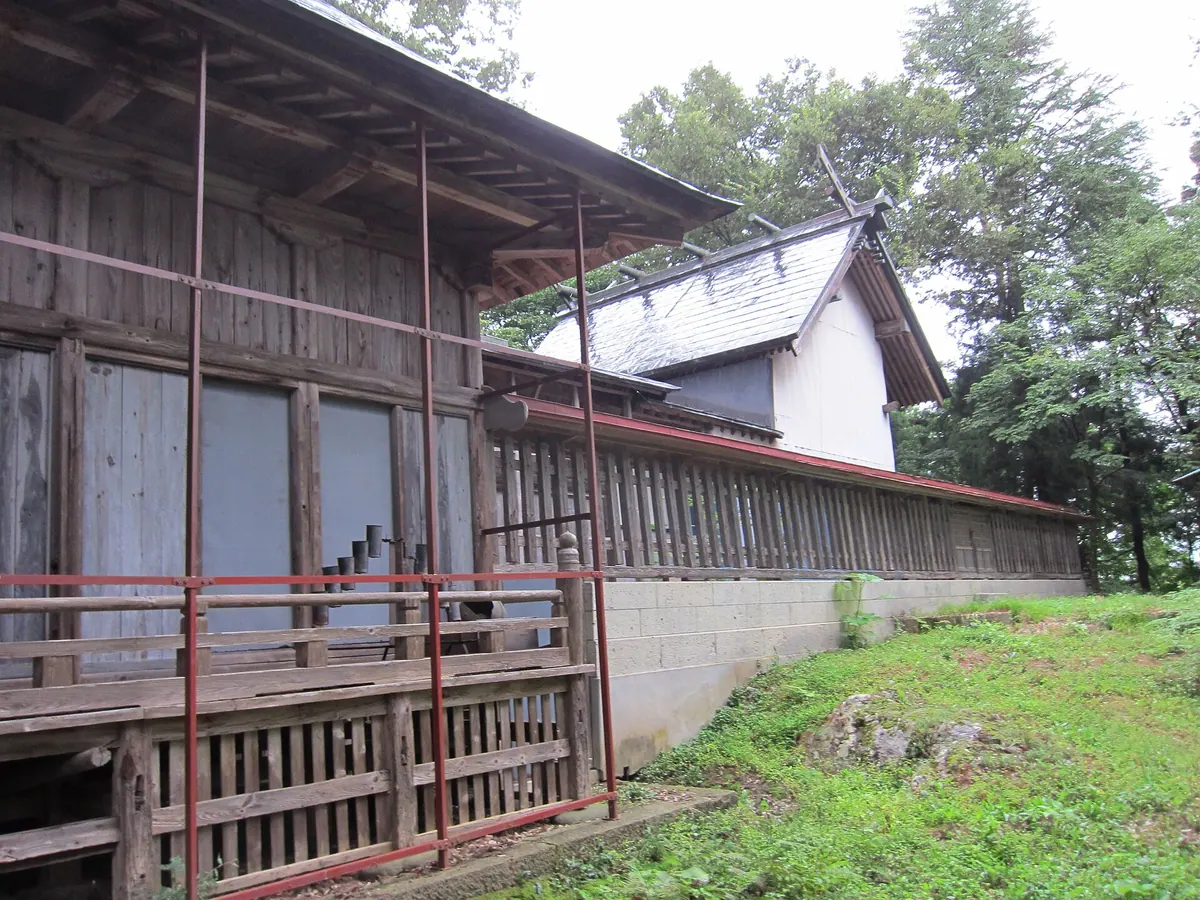
Atago Shrine, founded in 1377 on a castle site, offers historical buildings and artifacts.
What it is
- A shrine in Tendo City, Yamagata Prefecture.
- Founded in 1377 on Maizuru Mountain.
- Stands on the site of the former Tendo Castle main keep.
- Dedicated to the deity Homusubi no Kami.
What to see
- The main shrine building, constructed in 1678.
- The shrine building is a Tendo City cultural property.
- A painting of a divine horse from the Momoyama period.
- A stone lantern pole dating from 1609.
- Address
- 山形県天童市大字北目字城山988-1 Map
16
Dewa Shrine
YAMAGATA · SHRINE 出羽神社

Dewa Shrine is a historic mountain shrine with a stunning cedar forest and pagoda.
What it is
- A Shikinaisha shrine on Mount Haguro.
- Dedicated to Idehahanokami and Inakuratananomikoto.
- Former shrine rank was Kokuhei Shosha.
- Headquarters of the religious corporation.
What to see
- The Sanjin Gosaiden building.
- Main approach with 2,446 stone steps.
- Cedar forest lining the approach.
- Cedar trees are a Special Natural Monument.
- Five-Storied Pagoda, a National Treasure.
- Address
- 山形県鶴岡市羽黒町手向字羽黒山 Map
- Official site
- www.dewasanzan.jp
17
Hachiman Shrine
YAMAGATA · SHRINE 八幡神社

Ancient shrine dedicated to emperors and empresses, with historic halls and subsidiary shrines.
What it is
- Founded in 877 by Fujiwara Ason, Dewa Province governor.
- Enshrines Emperor Ojin, Emperor Chuai, and Empress Jingu.
- Consecrated from Iwashimizu Hachiman-gu.
- Formerly known as Ichijo Hachiman-gu.
What to see
- Shrine grounds include a torii gate.
- Main hall and worship hall are on the grounds.
- Kamo Shrine is a subsidiary shrine.
- Soreisha is another subsidiary shrine.
- Address
- 山形県酒田市市条字水上壱番ノ内1 Map
18
Narushima Hachiman Shrine
YAMAGATA · SHRINE 成島八幡神社

Ancient Hachiman shrine on a hill, with significant historical buildings and artifacts.
What it is
- Shrine dedicated to Hachiman-shin.
- Established in 777 by Otomo Surugamaro.
- Current worship hall built in 1383.
- Current main hall built in 1654.
What to see
- Earthworks and dry moats.
- 46 building tags.
- Two wooden gate god seated statues.
- Bugaku mask.
- Late Heian period gate god statues.
Getting there
- 1 km south of JR Narushima Station.
- Address
- 山形県米沢市広幡町成島1058 Map
19
Hirashio Kumano Shrine
YAMAGATA · SHRINE 平塩熊野神社
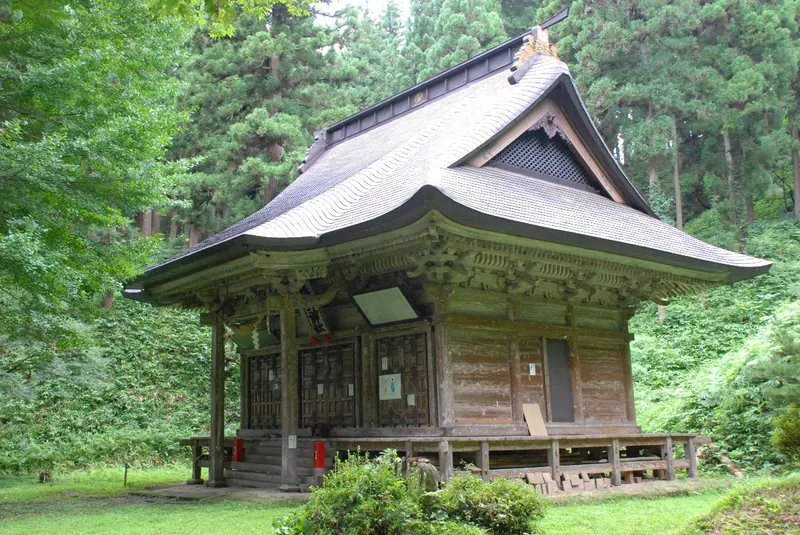
Ancient shrine founded in 721, with historic ties to powerful clans and unique cultural properties.
What it is
- Shrine founded in 721 by Gyoki.
- Minamoto no Yoriyoshi and Yoshiie prayed for victory here.
- Ooe clan provided territory in 1189.
- Nagasaki Nakayama clan protected the shrine.
What to see
- Sutra mound from the Heian period.
- Excavated octagonal stone pillar-shaped stone bell.
- Two wooden statues of the Ten Kings.
- Hirashio Bugaku, a folk cultural property.
- Address
- 山形県寒河江市平塩1 Map
20
Iwaneaswa Sanzan Shrine
YAMAGATA · SHRINE 岩根沢三山神社
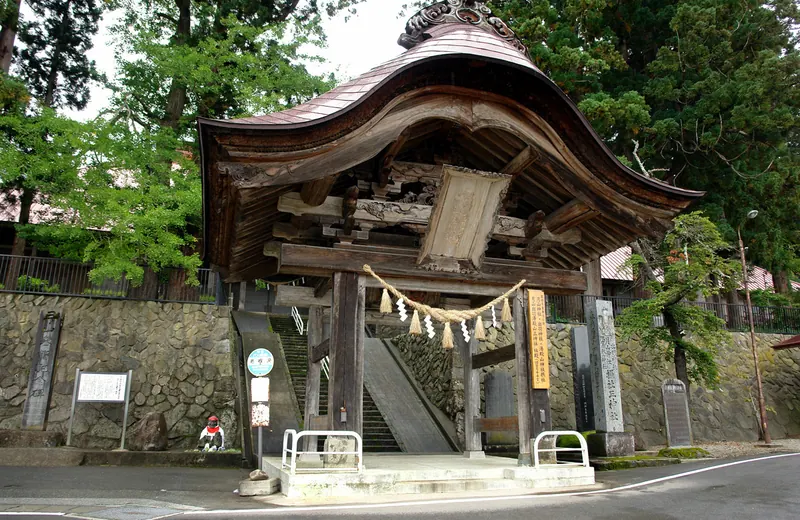
Iwaneaswa Sanzan Shrine is a historic mountain shrine, a major trailhead for Dewa Sanzan.
What it is
- A shrine in Nishikawa Town, Yamagata Prefecture.
- Originally a Tendai sect temple founded in 1387.
- Became a shrine in 1870 due to Shinto and Buddhism separation.
- A major trailhead for Dewa Sanzan.
What to see
- Current buildings constructed in 1841.
- Main hall is a National Important Cultural Property.
- Main hall is Tohoku region's largest wooden building.
- Address
- 山形県西村山郡西川町岩根沢 Map