

20 Shrines in Shiga worth your time
Japan Gems
Fujigasaki Ryuu Shrine and Kishitsu Shrine are among the many shrines in Shiga Prefecture. Visitors can find a wide variety of spiritual sites to experience.
Shiga has 145 shrines on Japan Gems. Below are the 20 we can tell you the most about — each one written up in English from Japanese sources, with what to see and how to get there. See all shrines in Shiga.
01
Shiratori Shrine
SHIGA · SHRINE 白鳥神社
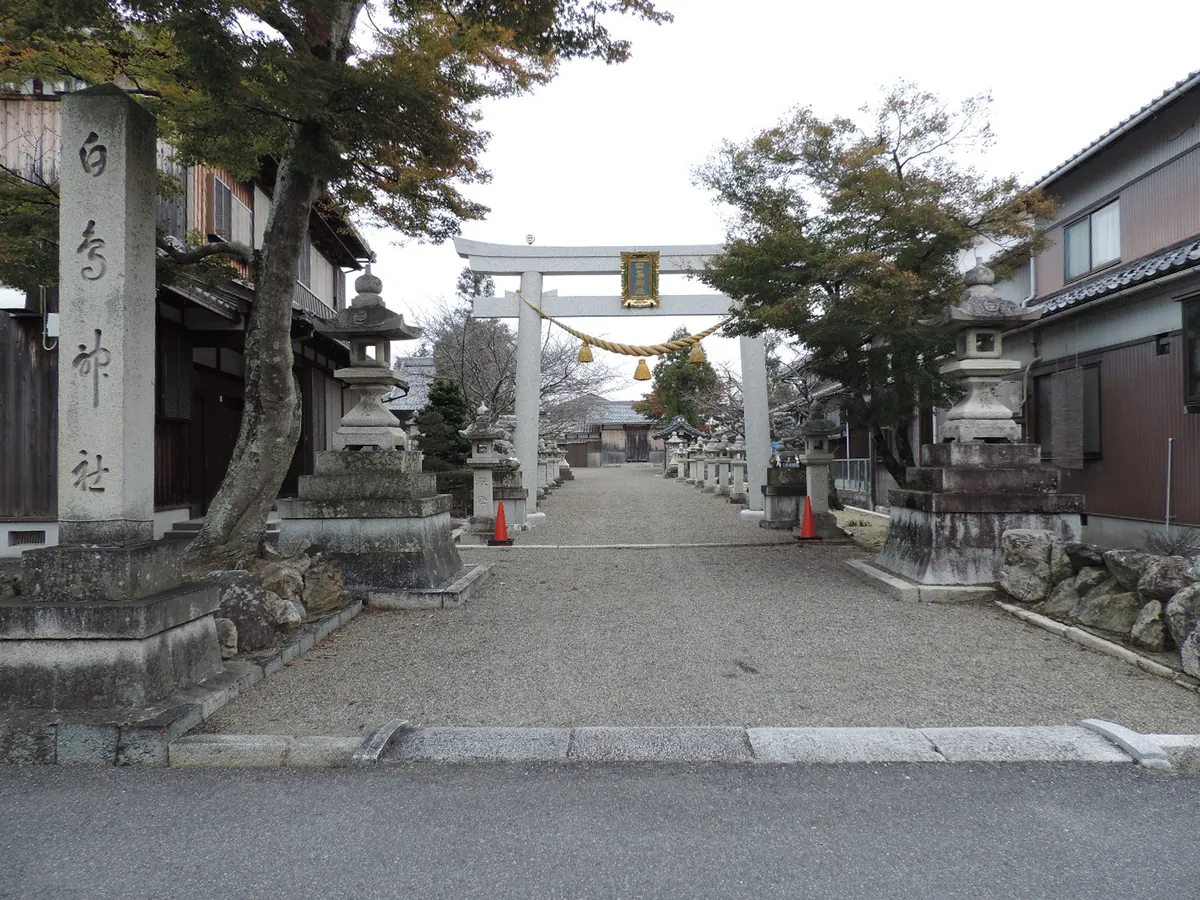
A historic Shiga shrine dedicated to Yamato Takeru, featuring eighteenth-century architecture and unique local spiritual traditions.
What it is
- A village shrine dedicated to the primary deity Yamato Takeru.
- Emperor Chuai and Emperor Ojin are also enshrined at this location.
- The monk Gyoki reportedly founded the site between 729 and 749.
- Current structures date back to reconstruction efforts in 1722 and 1900.
What to see
- The shrine crest featuring a circle with two horizontal lines.
- Three smaller sub-shrines named Hiyoshi, Nogami, and Inari on the grounds.
- Main buildings rebuilt in the eighteenth century after original structures were destroyed.
When to go
- The annual festival takes place every year on May 13th.
- A year-long ritual where a chosen person enshrines a divided spirit at home.
02
Hiyoshi Taisha
SHIGA · SHRINE 日吉大社
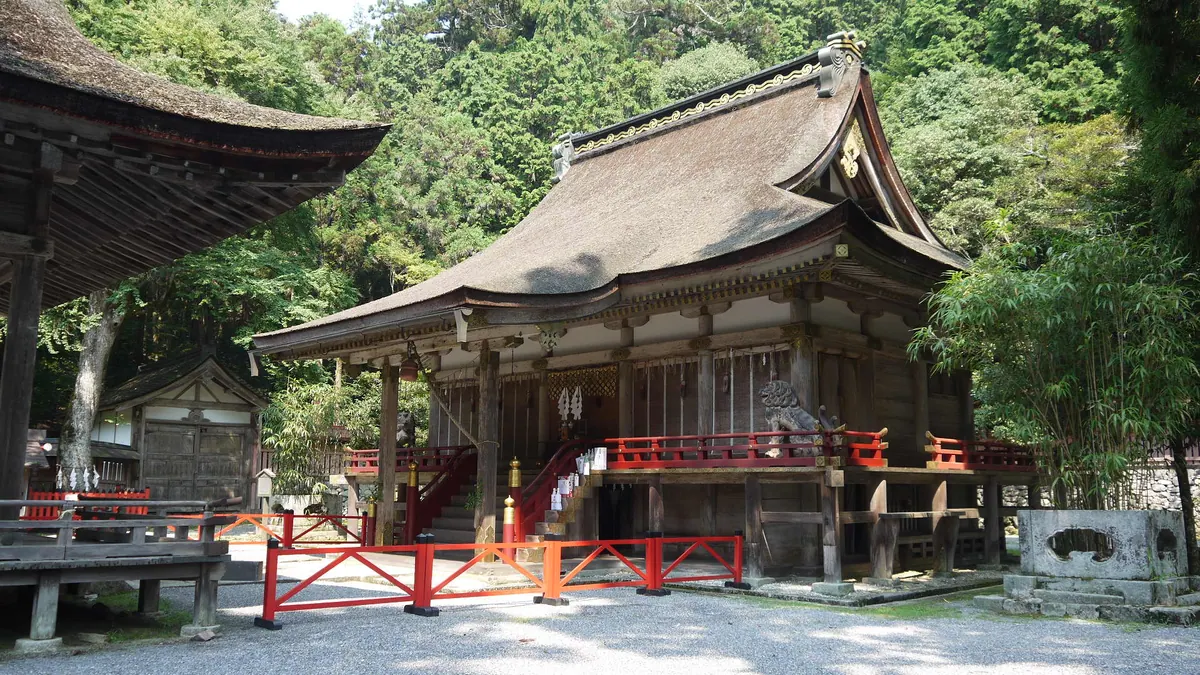
This historic head shrine features unique architecture and sacred monkey messengers on expansive grounds at the foot of Mount Hiei.
What it is
- The head shrine for approximately 3,800 Hiyoshi, Hie, and Sanno shrines across Japan.
- A national historic site covering 400,000 square meters that once guarded Enryaku-ji Temple.
- Dedicated to the deities Oyamakui-no-kami and Oanamuchi-no-kami in separate main halls.
- Current structures date to the late 16th century after being burned by Oda Nobunaga.
What to see
- The unique Sanno Torii gate which features a distinct mountain-shaped top piece.
- Sacred monkey messengers represented throughout the shrine grounds.
- The Omiya Bridge which is ranked among the top 100 bridges in Japan.
- Momoyama period architecture across the Higashi-hongu and Nishi-hongu shrine complexes.
- Official site
- hiyoshitaisha.jp
03
Erehiko Shrine
SHIGA · SHRINE 鉛練比古神社
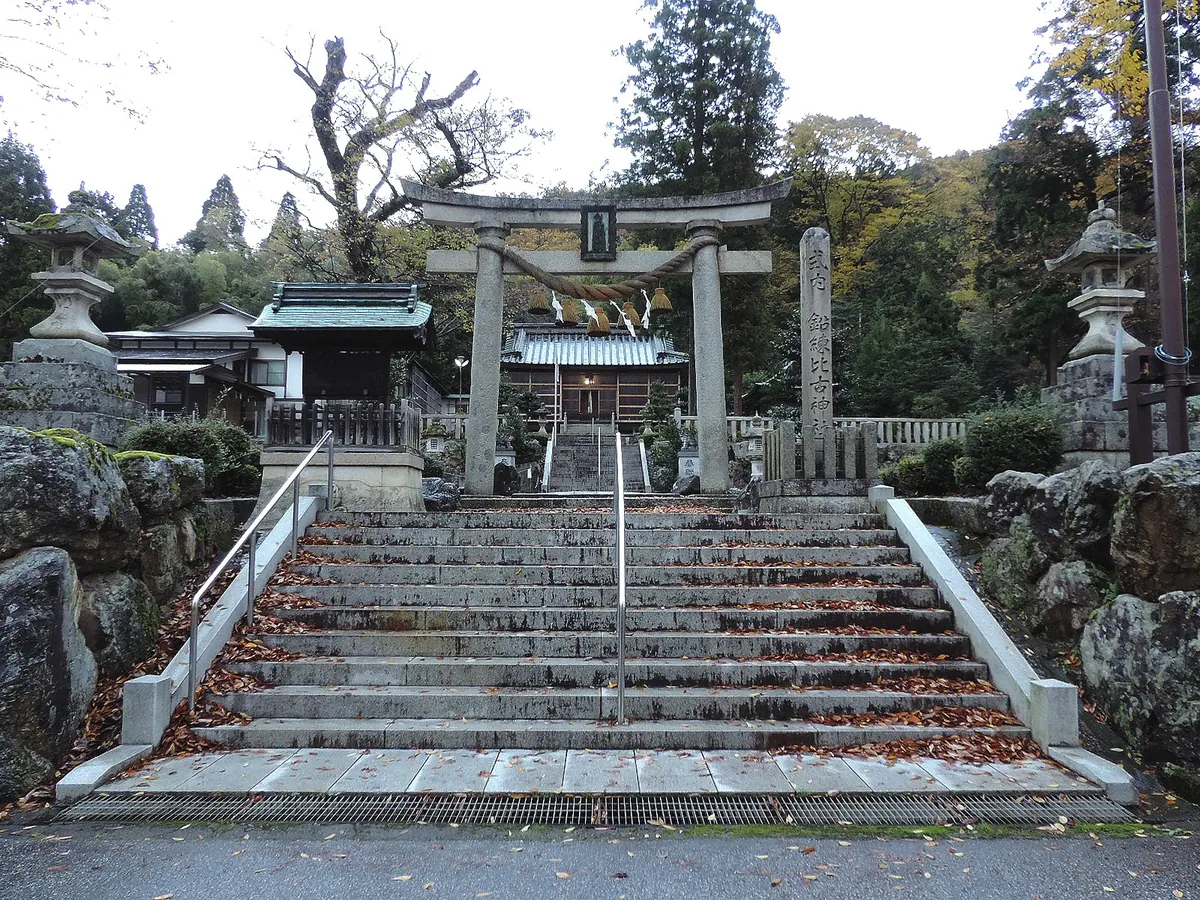
A historic Shiga shrine founded by imperial descendants, rebuilt after battle and relocated for modern infrastructure development.
What it is
- A shrine dedicated to the deities Oyamakui no Kami and Amenohiboko no Mikoto
- Founded by the descendants of Amenohiboko no Mikoto in Nagahama City
- Reconstructed in 1602 after the original buildings were destroyed in the Battle of Shizugatake
- Designated as a village shrine in 1876 and listed in the historic Engishiki Jinmeicho
What to see
- Modern shrine buildings constructed in 1980 following a highway project
- The Konoe Peony which serves as the official shrine crest
- Smaller auxiliary shrines on the grounds including Atago Shrine and Kitano Shrine
When to go
- The annual shrine festival is held every year on April 14th
04
Izumi Shrine
SHIGA · SHRINE 泉神社
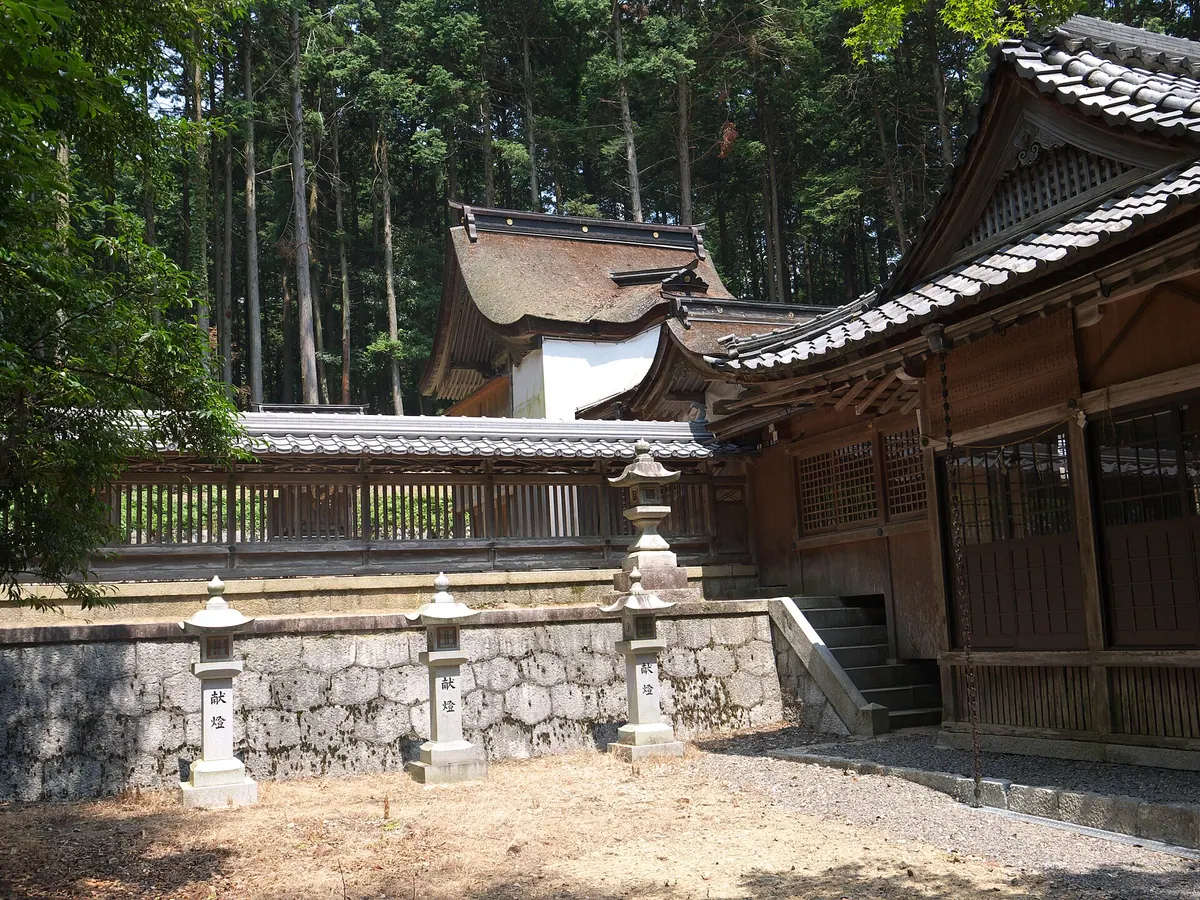
A historic shrine in Maibara featuring a renowned natural spring filtered through Mount Ibuki limestone with high-quality drinking water.
What it is
- A Shiga Prefecture shrine dedicated to the deities Susanoo and Onamuchi-no-mikoto.
- Home to a natural spring selected as one of Japan's top one hundred waters.
- The site preserves cultural properties including a wooden lion head and a rainmaking drum.
What to see
- A natural spring flowing with four thousand five hundred tons of water daily.
- A designated water collection point located downstream for public use.
- A city-designated cultural property shrine bell and wooden lion head.
- A large drum historically used for local rainmaking rituals.
Getting there
- Accessible by taking a bus from Omi-Nagaoka Station.
05
Himure Hachimangū
SHIGA · SHRINE 日牟禮八幡宮
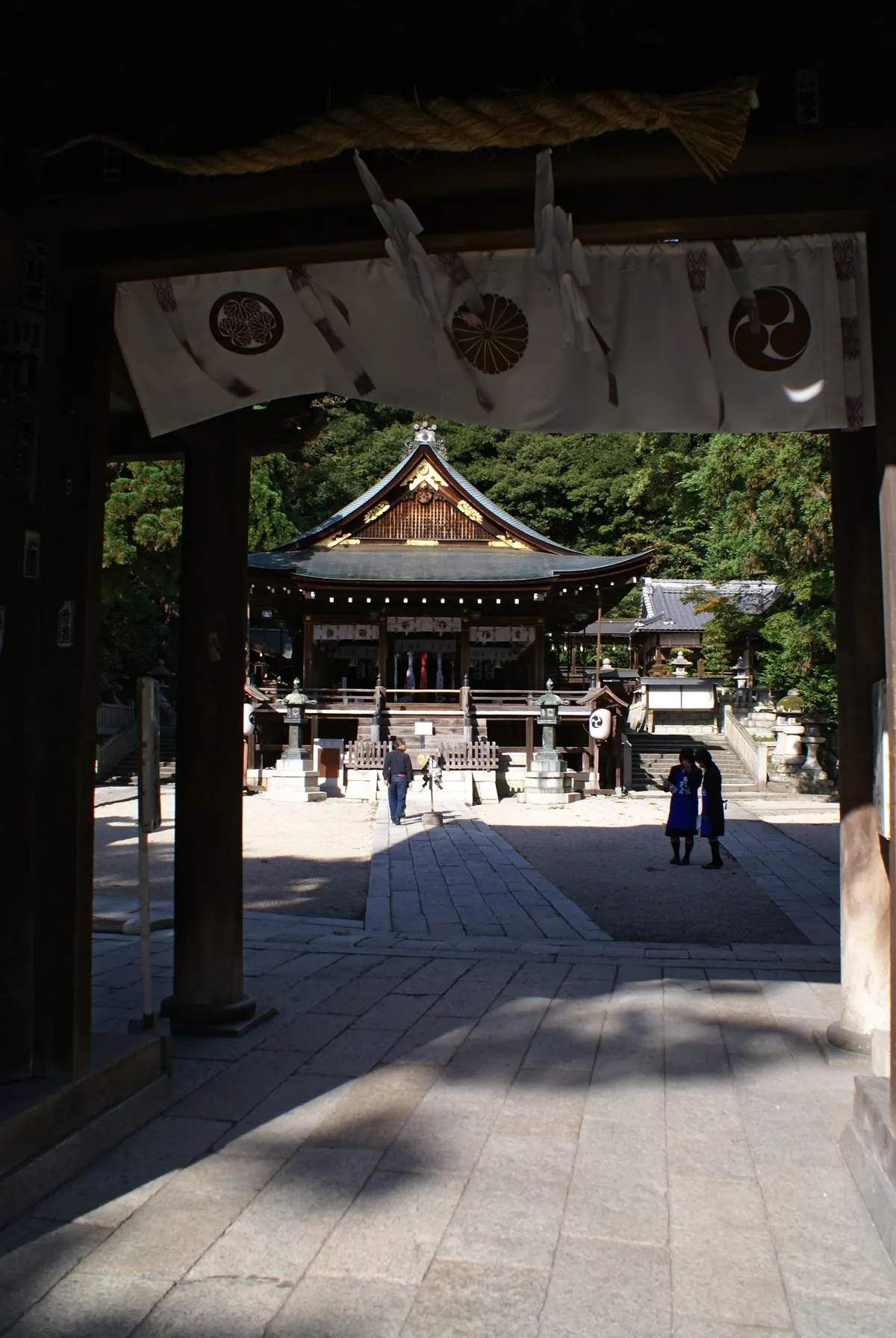
Himure Hachimangū is a historic Shinto shrine, significant for its festivals and merchant connections.
What it is
- A Shinto shrine in Omihachiman City, Shiga Prefecture.
- Origin of the name "Omihachiman City."
- Worshipped by Omi merchants for centuries.
- Main deities are Homudawake no Mikoto, Okinagatarashihime no Mikoto, and Himegami.
What to see
- Main hall is a three-bay nagare-zukuri style.
- Worship hall built in 1188 by Minamoto no Yoritomo.
- Wooden statues from the Kamakura period.
- Annam Tokaisen Ema is an Important Cultural Property.
- Shrine grounds are part of a traditional buildings district.
When to go
- Sagicho Festival is held annually in mid-March.
- Hachiman Festival is also a national intangible folk cultural property.
- Official site
- himure.jp
06
Hyōzu Taisha
SHIGA · SHRINE 兵主大社
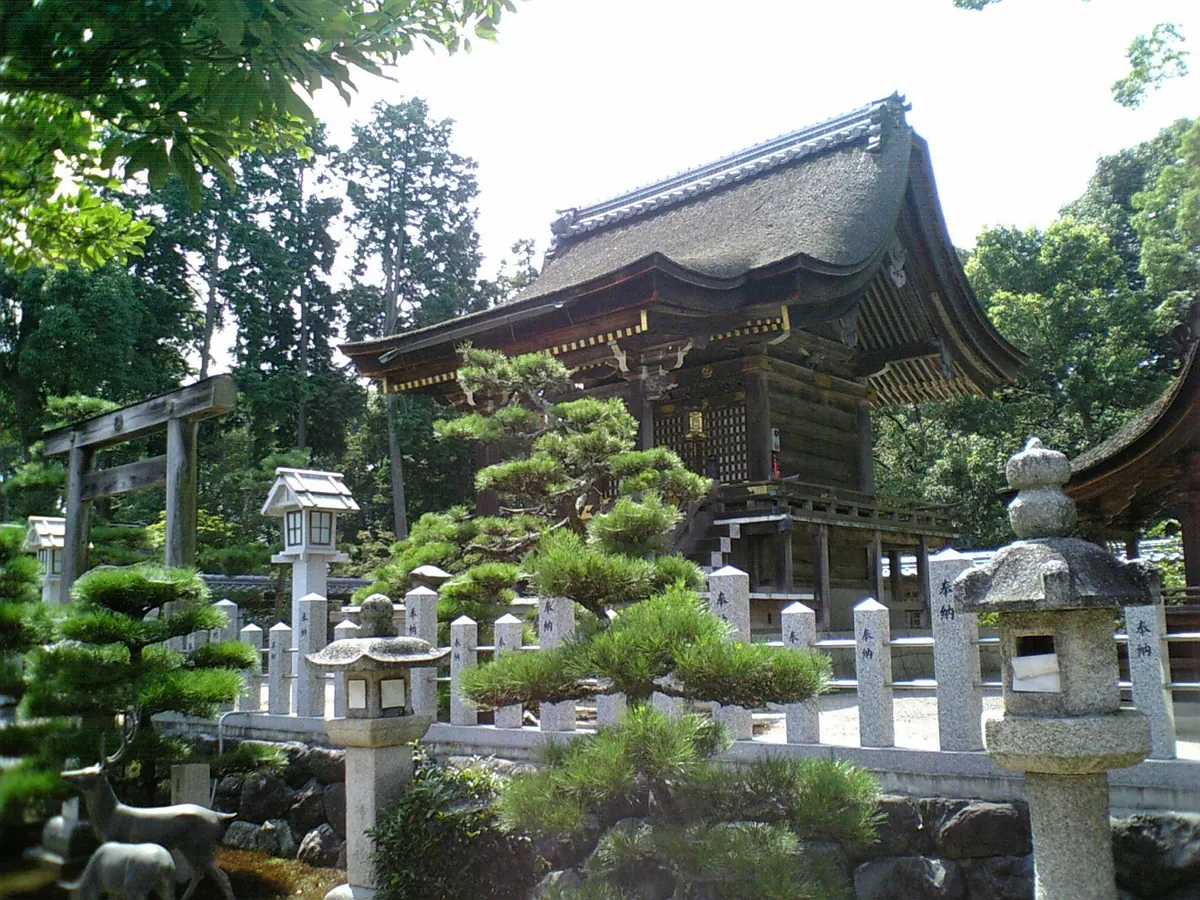
Hyōzu Taisha is a historic shrine with a scenic garden and important cultural properties.
What it is
- A shrine in Yasu City, Shiga Prefecture.
- Dedicated to Yachihoko-no-kami (Okuninushi-no-kami).
- Designated a Japan Heritage site in 2015.
- Listed as a Myojin Taisha in the Engishiki Jinmyocho.
What to see
- The garden is a National Place of Scenic Beauty.
- The main hall is a city designated cultural property.
- The stone pagoda is a city designated cultural property.
- The Romon gate is a prefecture designated cultural property.
- A white silk haramaki is an Important Cultural Property.
- The camphor tree forest is a prefecture preservation area.
When to go
- The Hyōzu Festival is held on May 5th.
- Address
- 滋賀県野洲市五条566 Map
07
Sandai Shrine
SHIGA · SHRINE 三大神社
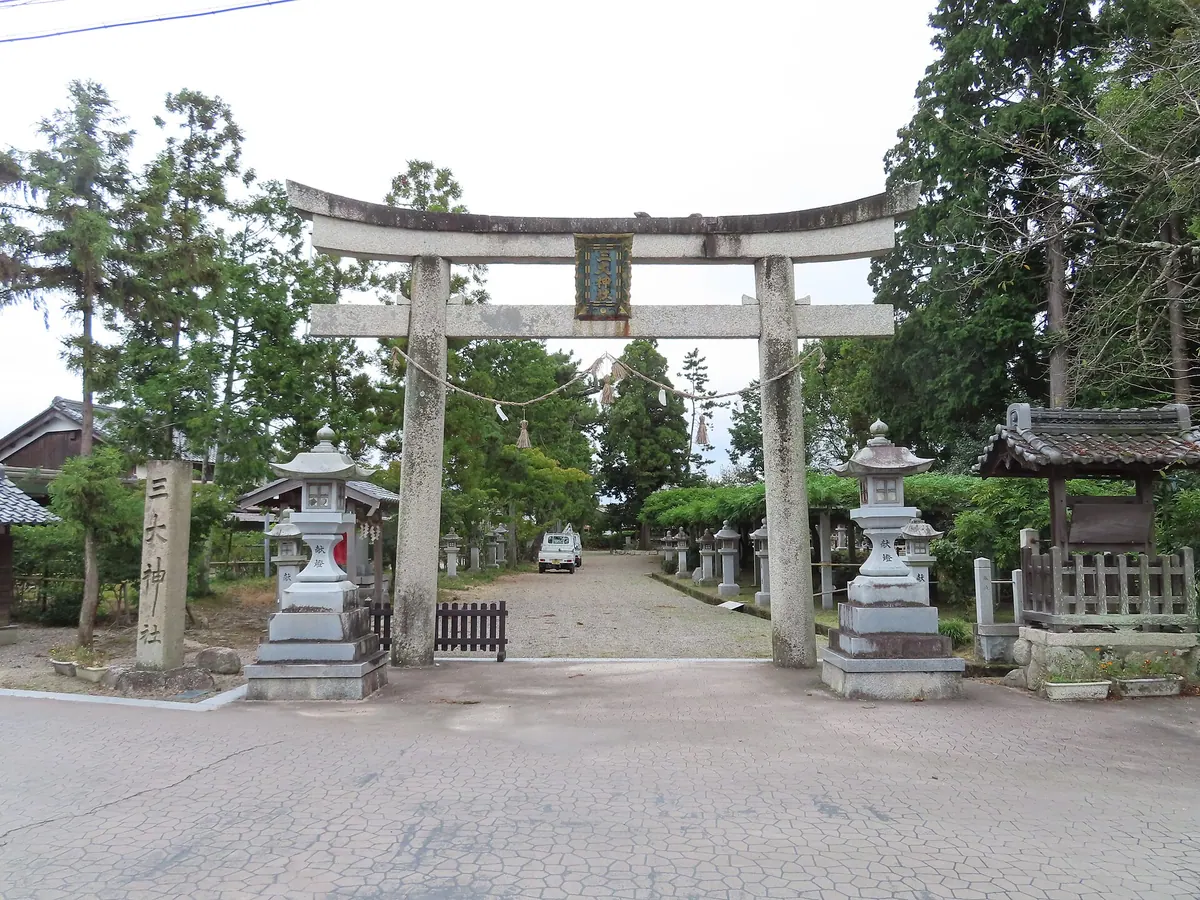
Sandai Shrine offers ancient artifacts and beautiful wisteria, a peaceful stop in Kusatsu City.
What it is
- Dedicated to Shinatsuhiko-no-mikoto and Shinatsuhime-no-mikoto.
- Ooyakohime-no-mikoto was enshrined during the Otoku era.
- Renamed in the Meiji era.
- Ranked as a village shrine in 1876.
What to see
- The crest features two sparrows on bamboo.
- One stone lantern is a National Important Cultural Property.
- Three Hannya-kyo karabitsu are city-designated cultural properties.
- A saddle is deposited at the Kyoto National Museum.
- Wisteria is a Shiga Prefecture designated natural monument.
When to go
- The annual festival is on May 3rd.
- The wisteria festival is from late April to early May.
- Address
- 滋賀県草津市志那町309 Map
08
Katsube Shrine
SHIGA · SHRINE 勝部神社
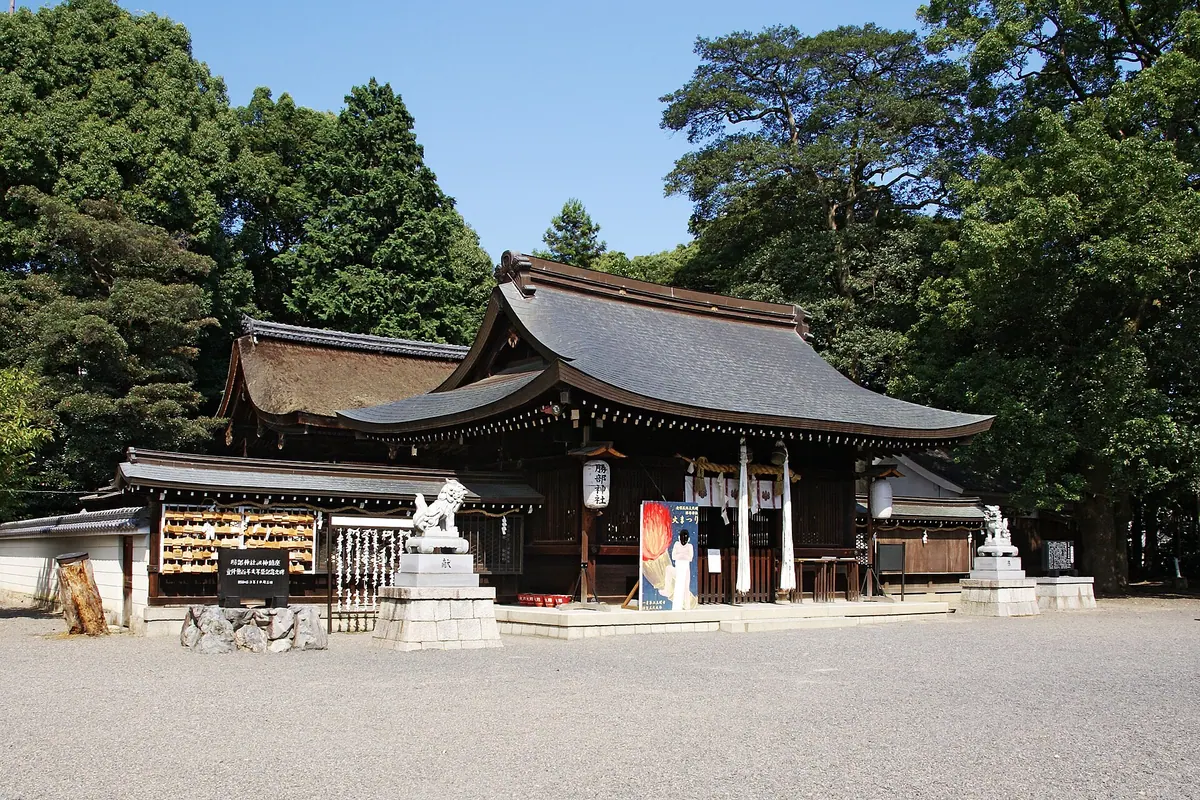
Katsube Shrine is an ancient shrine with a rich history, home to a unique fire festival.
What it is
- A Shinto shrine in Moriyama City, Shiga Prefecture.
- Formal name is Monobe-go Soja Katsube Jinja.
- Founded in 649.
- Dedicated to Mononobe Futsu-no-kami and other deities.
What to see
- Main hall rebuilt in 1497 by Rokkaku Takayori.
- Main hall repaired in 1594 by Toyotomi Hidetsugu.
- Main hall is a National Important Cultural Property.
- Oda Nobunaga dedicated 60 written oaths here.
When to go
- Taimatsu Festival is on the second Saturday of January.
- Taimatsu Festival is an Intangible Folk Cultural Property.
Getting there
- 10-minute walk from Moriyama Station.
- Address
- 滋賀県守山市勝部1丁目8-8 Map
09
Ono Shrine
SHIGA · SHRINE 小野神社
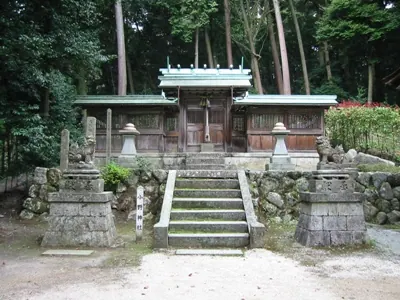
Ono Shrine is a historic site dedicated to mochi-making ancestors, featuring ancient burial mounds and cultural properties.
What it is
- Dedicated to Ametarashihiko Kuni Oshihito no Mikoto.
- Also enshrines Yone Mochitsuki Taishi Nushi no Mikoto, ancestor of confectionery.
- Designated a Shikinaisha (Myojin Taisha) in the Heian period.
- Ranked as a Gosha in 1891.
What to see
- Main hall, Chumon gate, and shrine office.
- Ono no Komachi Kuyo-to, a tangible cultural property.
- Ono Shrine Kofun Group, two circular burial mounds.
- Ono Takamura Shrine, a National Important Cultural Property.
- Ono no Michikaze Shrine, a National Important Cultural Property.
When to go
- Shitogi Festival is held on November 2nd.
- Address
- 滋賀県大津市小野1961 Map
10
Kojino Shrine
SHIGA · SHRINE 己爾乃神社
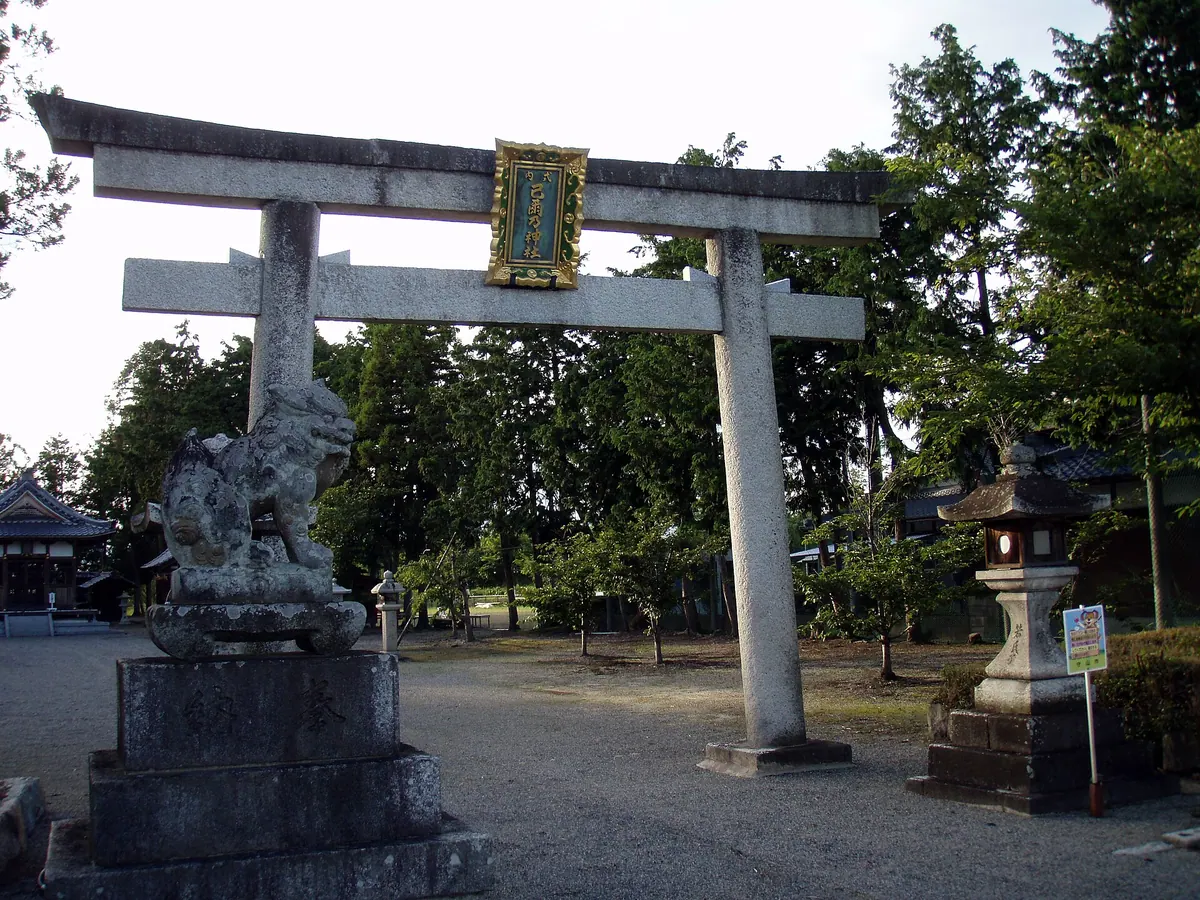
Two ancient shrines, 500 meters apart, dedicated to important Shinto deities.
What it is
- Two shrines with the same name, 500 meters apart.
- Kaihatsu shrine founded in 829 by Ika Atsutake.
- Nakanomae shrine founded in 703 by Nakatomi no Tamee.
- Listed as a Shikinaisha in the Engishiki Jinmyocho.
What to see
- Kaihatsu enshrines Izanagi-no-Mikoto and Izanami-no-Mikoto.
- Nakanomae enshrines Okuninushi-no-Mikoto and other deities.
- Nakanomae has a bronze sutra cylinder.
- The sutra cylinder is 25.3 cm high, 11.2 cm in diameter.
- The sutra cylinder was designated a cultural property in 1974.
When to go
- Annual festival for both shrines is on May 5.
- Address
- 滋賀県守山市洲本町字開発1607 Map
11
Karasaki Shrine
SHIGA · SHRINE 唐崎神社
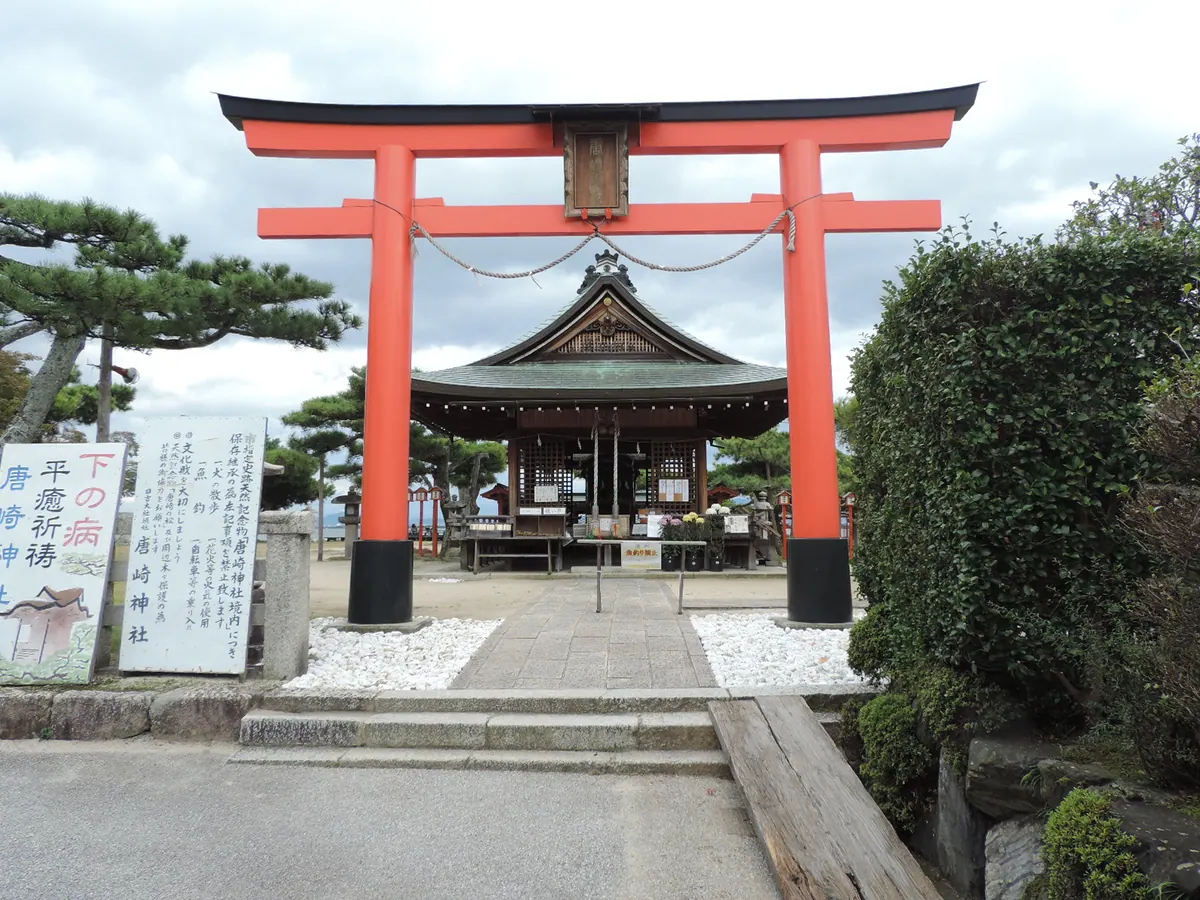
A historic lakeside shrine founded in 697, famous for its massive pine tree and inclusion in the Eight Views of Omi.
What it is
- A subordinate shrine of Hiyoshi Taisha dedicated to the deity Wakesukihime no Mikoto.
- Founded in 697 on the western shore of Lake Biwa in Otsu City.
- Historically served as a significant site for the Nanase no Harae purification rituals.
- A designated scenic spot of Shiga Prefecture featured in the Eight Views of Omi.
What to see
- The Karasaki no Matsu, a massive third-generation pine tree standing on the grounds.
- Views of Lake Biwa from the shrine's position on the water's edge.
- Pine trees that served as the origin for those found in Kanazawa's Kenrokuen garden.
- Official site
- hiyoshitaisha.jp
12
Yoshimiko Shrine
SHIGA · SHRINE 吉御子神社
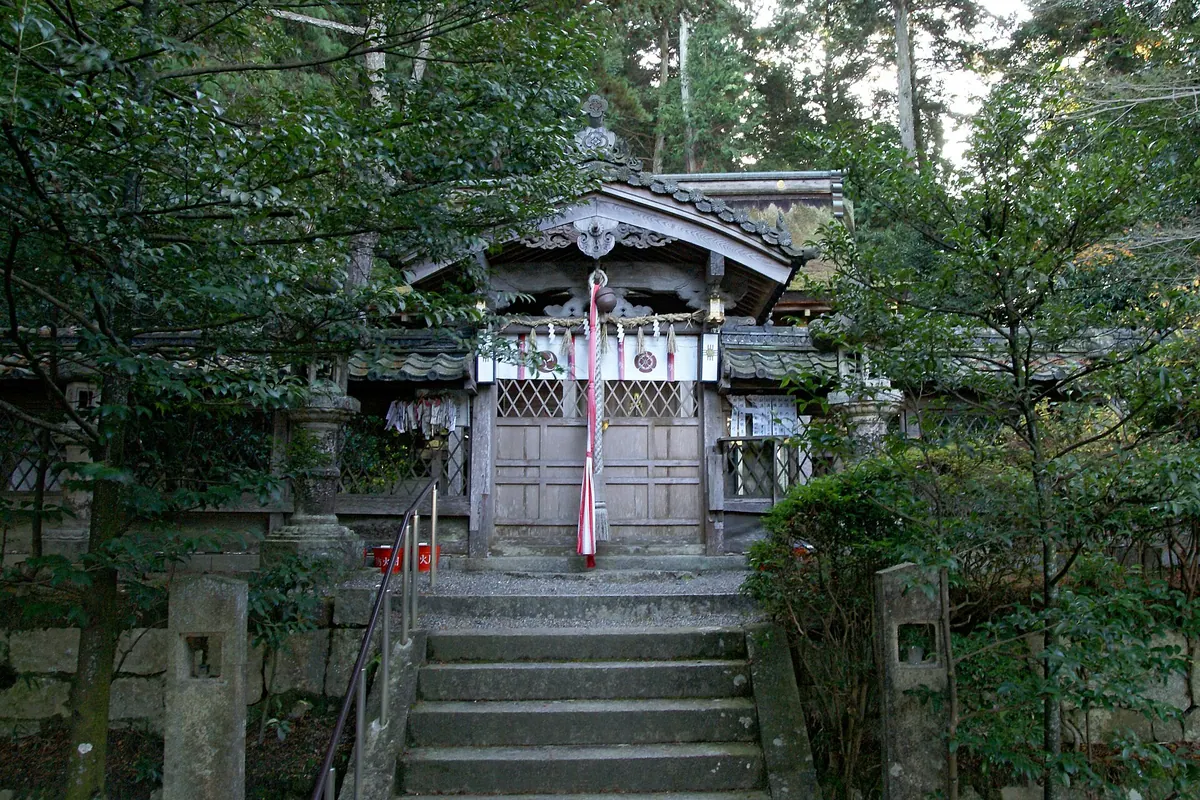
Yoshimiko Shrine offers a glimpse into ancient Japanese history and architecture.
What it is
- Ancient Shinto shrine in Shiga Prefecture.
- Founded in the 2nd year of Emperor Suinin's reign.
- Dedicated to Yoshiko-no-mikoto and Kashiwazu-hime-no-mikoto.
- Also enshrines Hachiman-no-mikoto and Sarutahiko-no-mikoto.
What to see
- Main hall, relocated from Kyoto's Kamigamo Shrine.
- Main hall built in the early Edo period.
- Main hall is a National Important Cultural Property.
- Wooden seated statue of Yoshiko-no-mikoto is a cultural property.
Getting there
- 15-minute walk from Ishibe Station.
- 15 minutes from Ritto IC on Meishin Expressway.
- Address
- 滋賀県湖南市石部西1-15-1 Map
13
Otsuki-taisha
SHIGA · SHRINE 小槻大社
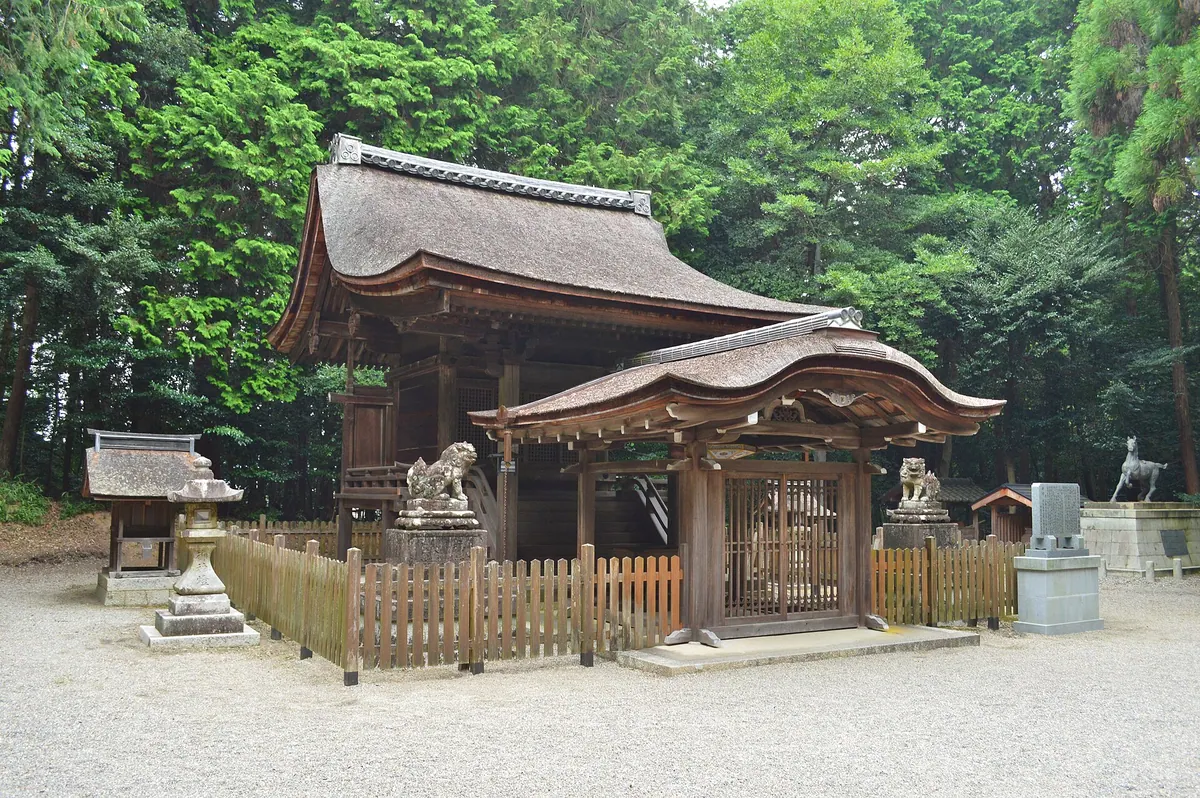
Otsuki-taisha is an ancient shrine with important cultural properties and unique dance heritage.
What it is
- A Shikinaisha shrine in Ritto City, Shiga Prefecture.
- Dedicated to the deity Ochibunomikoto.
- Its crests are 'Sagari-fuji' and 'Mukai-no-usagi'.
What to see
- The current main hall, rebuilt in 1519.
- Main hall is an Important Cultural Property.
- Two 11th-century wooden male deity statues.
- Statues are Important Cultural Properties.
- Otsuki-taisha Kofun Group on the grounds.
- Kofun Group has over 10 tumuli from the Kofun period.
When to go
- See the 'Omi Konan no Sanyare Odori' dance.
- Dance is a UNESCO Intangible Cultural Heritage.
- Address
- 滋賀県栗東市下戸山1200 Map
14
Komiya Shrine (Taga)
SHIGA · SHRINE 胡宮神社
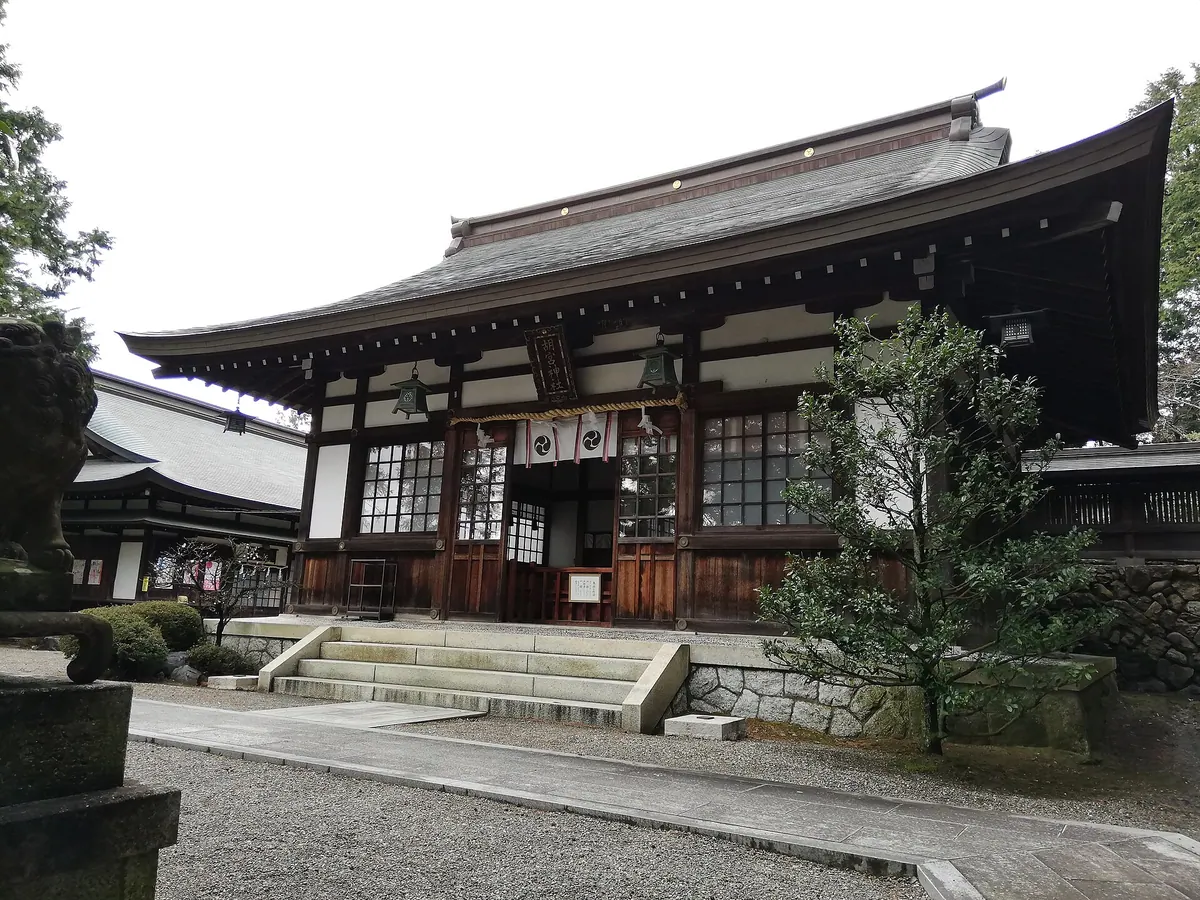
Komiya Shrine: a historic shrine in Shiga with important cultural properties and a scenic garden.
What it is
- Dedicated to deities Izanagi-no-Mikoto and Izanami-no-Mikoto.
- Originated from ancient megalithic worship on Mt. Seiryu.
- Rebuilt in 1585 by Toyotomi Hideyoshi.
- Main hall rebuilt in 1638 by Tokugawa Iemitsu.
What to see
- Main hall is a tangible cultural property of Shiga Prefecture.
- Garden is a nationally designated scenic spot.
- 敏満寺石仏谷墓跡 is a nationally designated historic site.
- Bronze gorinto is a national important cultural property.
Getting there
- 15-minute walk from Taga Taisha-mae Station.
- Address
- 滋賀県犬上郡多賀町敏満寺49 Map
15
Takebe taisha
SHIGA · SHRINE 建部大社
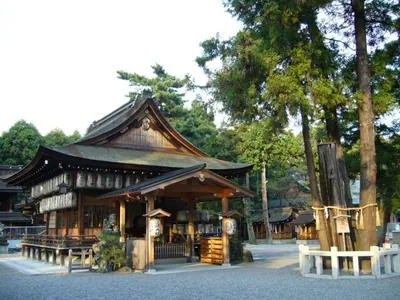
Takebe Taisha is an important, old Shinto shrine in Shiga Prefecture dedicated to a legendary warrior prince.
What it is
- Important Shinto shrine in Shiga Prefecture.
- Dates from the eighth century.
- Dedicated to legendary warrior prince Yamato Takeru.
- Designated as the prefecture's chief shrine.
What to see
- Long gravel walkway flanked by cedar trees.
- Chozuya water basin that plays music.
- Three sacred cedar trees in front of main shrine.
- Eight smaller shrines dedicated to different deities.
- Small pond with koi carp.
- Treasure hall with Heian period statues and mikoshi.
When to go
- Annual Senkosai Festival on August 17.
- Address
- 滋賀県大津市神領一丁目16-1 Map
- Official site
- takebetaisha.jp
16
Shikobuchi Shrine
SHIGA · SHRINE 思子淵神社
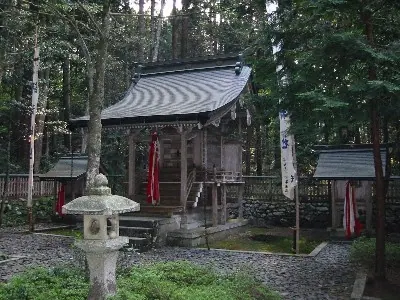
Ancient shrine in Shiga with unique local gods and kappa legends, worth visiting for its history.
What it is
- Founded in 1334.
- Dedicated to Shikobuchi-no-kami and Hikohohodemi-no-mikoto.
- Shikobuchi-no-kami is a god unique to the Adogawa River basin.
- One of seven Shikobuchi shrines with kappa legends.
What to see
- The shrine's crest is a diamond-shaped four-eyed pattern.
- Hachiman Shrine and Inari Shrine are subsidiary shrines.
When to go
- Annual festival is held on May 1st.
Getting there
- From JR Adogawa Station, take a bus to Nakano bus stop.
- It is an 8-minute walk from Nakano bus stop.
- Address
- 滋賀県高島市安曇川町中野564 Map
17
Sakunado Shrine
SHIGA · SHRINE 佐久奈度神社
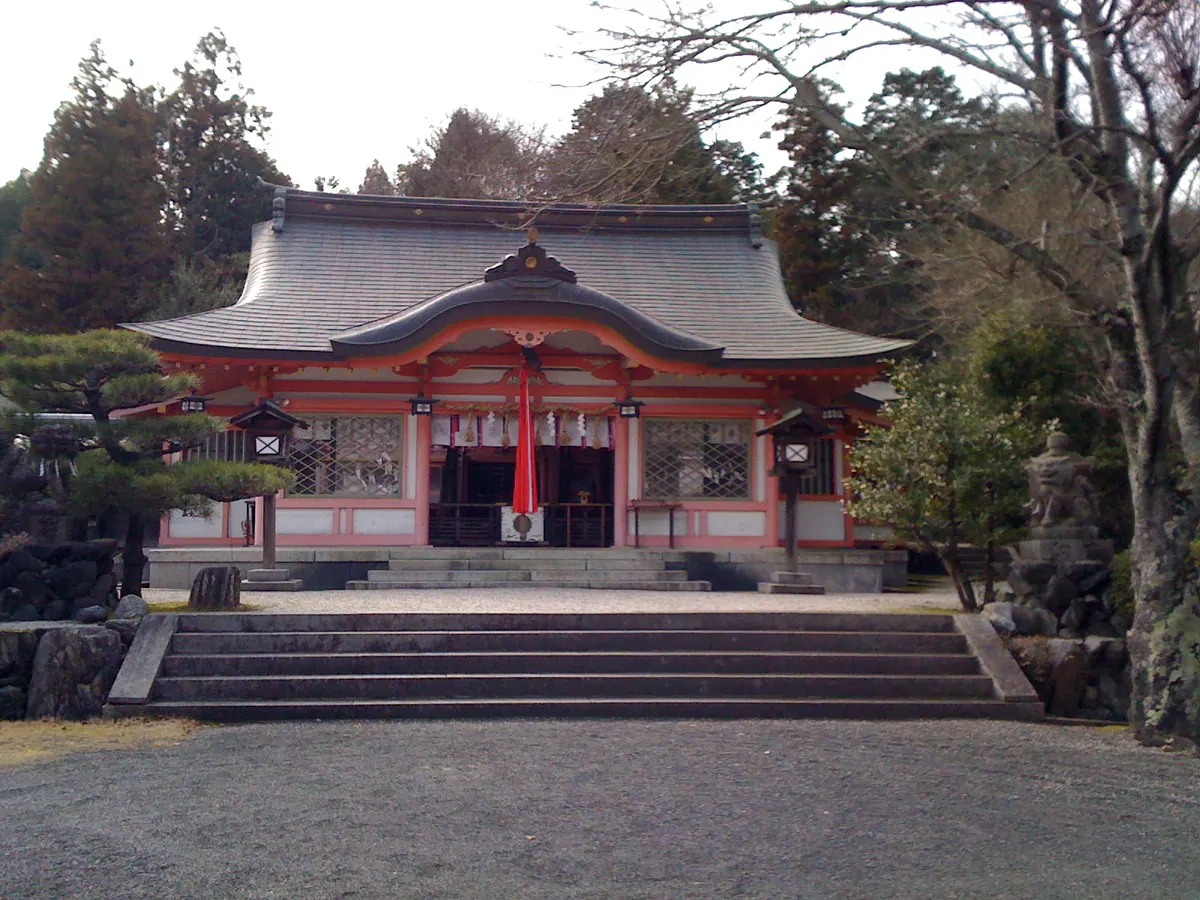
Sakunado Shrine, founded in 669, offers a glimpse into ancient Japanese worship and architecture.
What it is
- A Shikinaisha (Myojin Taisha) shrine.
- Founded in 669 by Nakatomi no Kane.
- Enshrines four deities called Haraedo Okami.
- Relocated in 1964 due to Amagase Dam construction.
What to see
- The shrine's crest is the Kokoro Sakura Juroku Kiku.
- Main buildings: Honden, Heiden, Haiden, and Shamusho.
- Main building is a designated cultural property.
- Itae Chakushoku Musha Kiba Zo is a designated cultural property.
- Otabisho is 500 meters south of the main shrine.
When to go
- Annual festival is held on April 16th.
- Address
- 滋賀県大津市大石中一丁目2-1 Map
18
Kayano Shrine
SHIGA · SHRINE 萱野神社
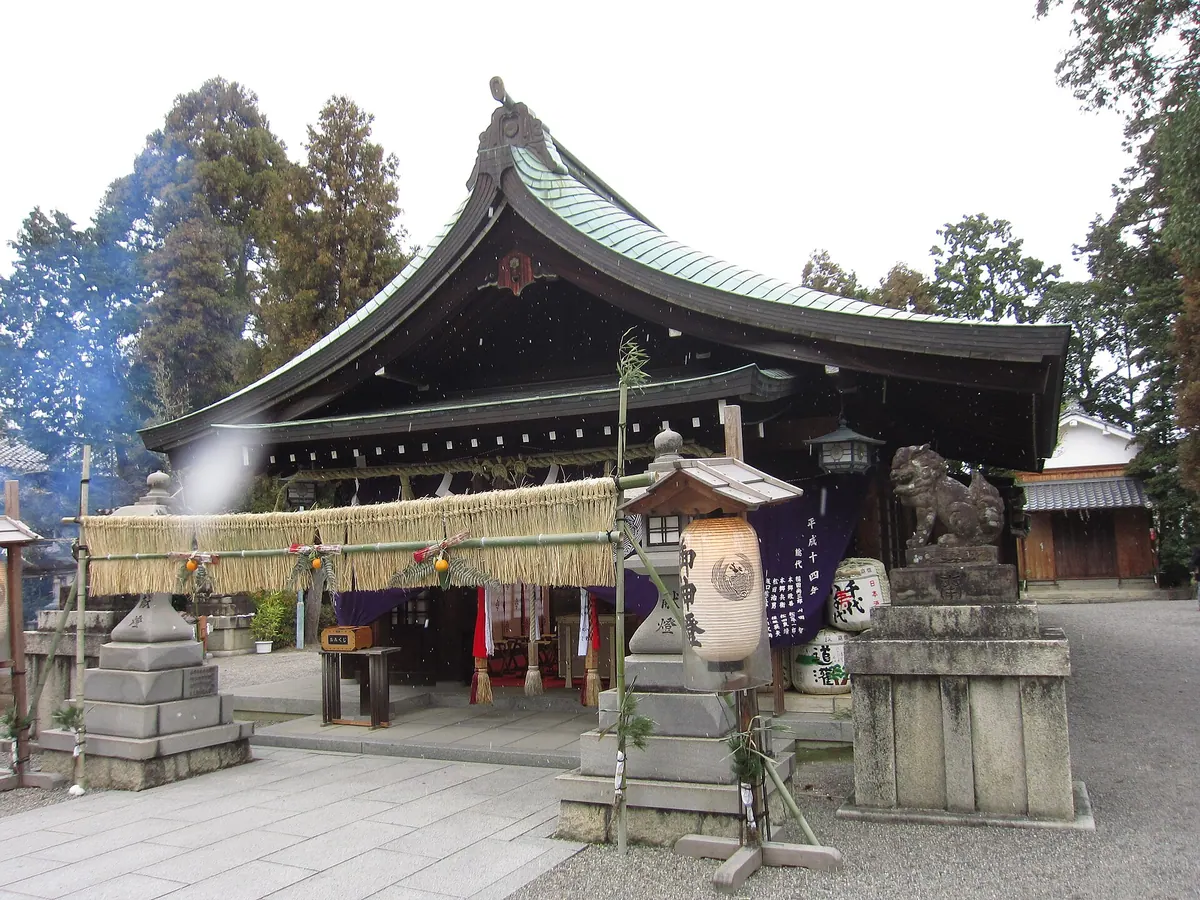
Kayano Shrine, dedicated to Emperor Kaika, offers unique architecture and seasonal festivals worth an hour.
What it is
- Dedicated to Emperor Kaika, the 9th emperor.
- Founded in the 6th year of Emperor Yuryaku's reign.
- Also known as 'Kyu-Teio-gu' or 'Kyu-Dai-o-sha'.
- Its crest is the 'Minogame' (straw-cloaked turtle).
What to see
- Main hall in Ikkensha-nagare-zukuri style.
- Worship hall in Kirizuma-zukuri style.
- Several subsidiary shrines within its grounds.
When to go
- Spring festival on May 5th.
- Fire festival on December 6th.
Getting there
- Walk from Seta Station on the JR Biwako Line.
- Address
- 滋賀県大津市大萱2-21-1 Map
19
Mikami Shrine
SHIGA · SHRINE 御上神社
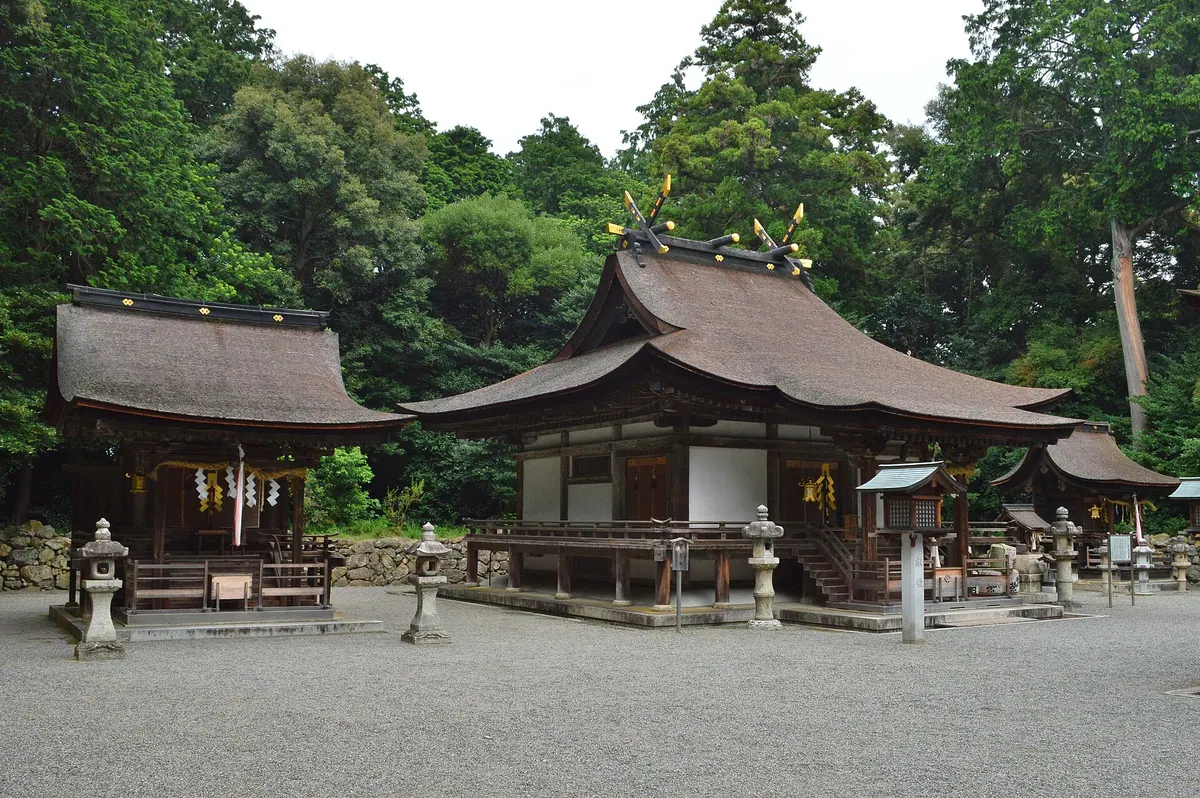
Mikami Shrine is a historic Shinto shrine with important architecture, dedicated to a sacred mountain.
What it is
- A Myojin Taisha Shinto shrine.
- A Beppyo Jinja of the Association of Shinto Shrines.
- Dedicated to Amenomikage-no-mikoto.
- Worships Mount Mikami as a sacred mountain.
What to see
- The main hall, a National Treasure.
- The worship hall, an Important Cultural Property.
- The tower gate, an Important Cultural Property.
- The Wakamiya Shrine, an Important Cultural Property.
- Mount Mikami, also known as Omi Fuji.
When to go
- The Zuiki Festival, a National Important Intangible Folk Cultural Property.
- Address
- 滋賀県野洲市三上838 Map
- Official site
- www.mikami-jinja.jp
20
Kamitakatsuki Shrine
SHIGA · SHRINE 神高槻神社
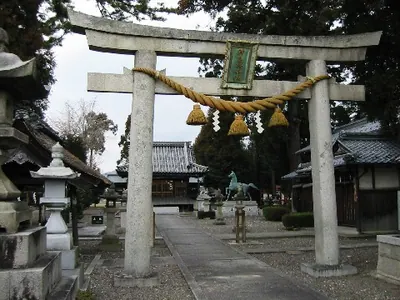
Kamitakatsuki Shrine is an ancient shrine in Nagahama, dedicated to two deities, offering a glimpse into traditional Japanese architecture.
What it is
- Ancient Shikinaisha shrine in Nagahama City.
- Listed in the historical Engishiki Jinmyocho.
- Dedicated to Amenokoyane-no-mikoto.
- Also enshrines Takahe-hime-no-mikoto.
What to see
- Main hall is Ikkensha Nagare-zukuri style.
- Worship hall is Irimoya-zukuri style.
- Shrine crest is Hidarimai Mitsugashiwa.
- Inari Shrine is on the grounds.
- Tenmangu Shrine is on the grounds.
- Ryujin Shrine is on the grounds.
When to go
- Okonae festival is on February 8th.
- Annual festival is on April 20th.
- Address
- 滋賀県長浜市高月町高月1 Map