

20 Shrines in Akita worth your time
Japan Gems
Akita Prefecture is home to 37 shrines, including the notable Izusan Shrine and Tsuzureko Shrine. These sites offer a glimpse into local spiritual traditions and architecture.
Akita has 39 shrines on Japan Gems. Below are the 20 we can tell you the most about — each one written up in English from Japanese sources, with what to see and how to get there. See all shrines in Akita.
01
Suijin Shrine
AKITA · SHRINE 水神社
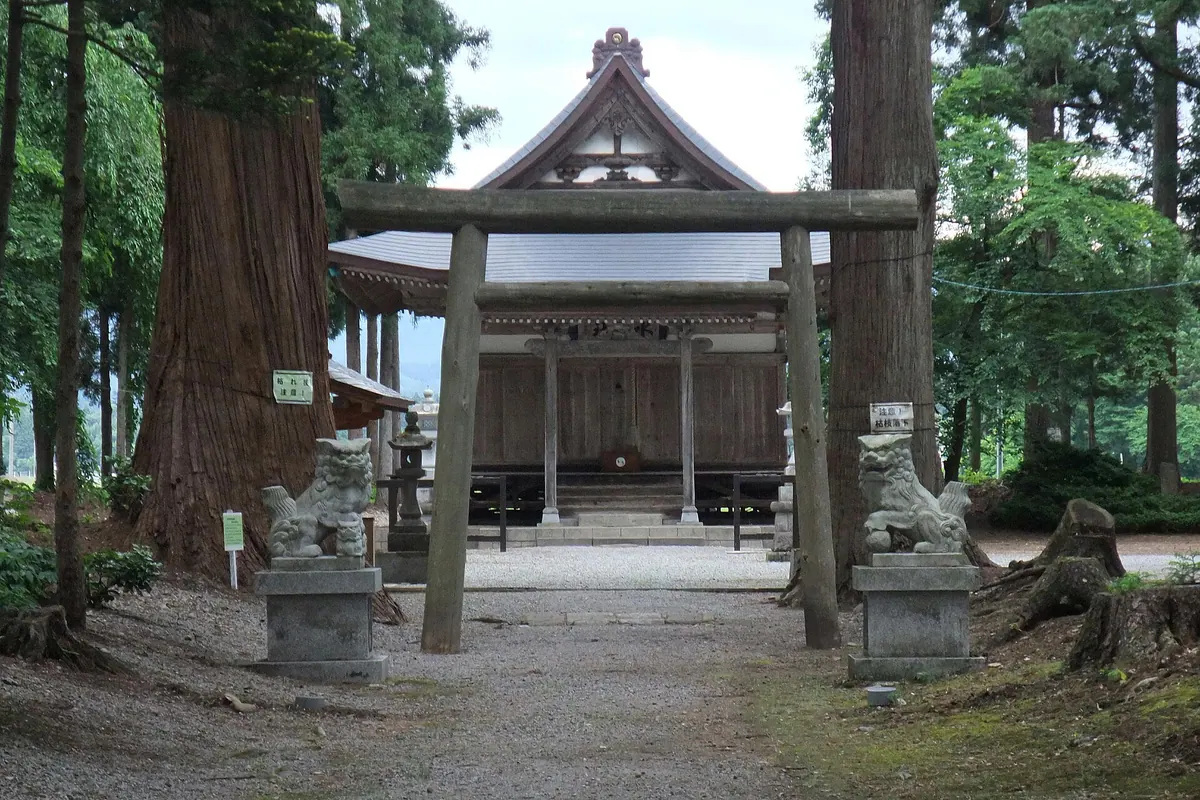
A historic shrine in Akita housing a National Treasure mirror that is publicly displayed for only one hour each year.
What it is
- Founded in 1677 by Kusunagi Rizaemon in Daisen City.
- Dedicated to a mirror engraved with a Thousand-armed Kannon found during canal construction.
- The primary deity is a National Treasure dating back to the Heian period.
What to see
- The sacred engraved mirror is the central treasure of the site.
- Four large cedar trees designated as city natural monuments stand on the grounds.
- A replica of the historic mirror is displayed at the Nakasen Civic Center.
- The shrine grounds include a parking lot for those traveling by car.
When to go
- The annual festival takes place every year on August 17.
- The sacred mirror is publicly displayed for exactly one hour during the festival.
Getting there
- The nearest train station is Ugo-Nagano Station on the Tazawako Line.
02
Subari Shrine
AKITA · SHRINE 素波里神社
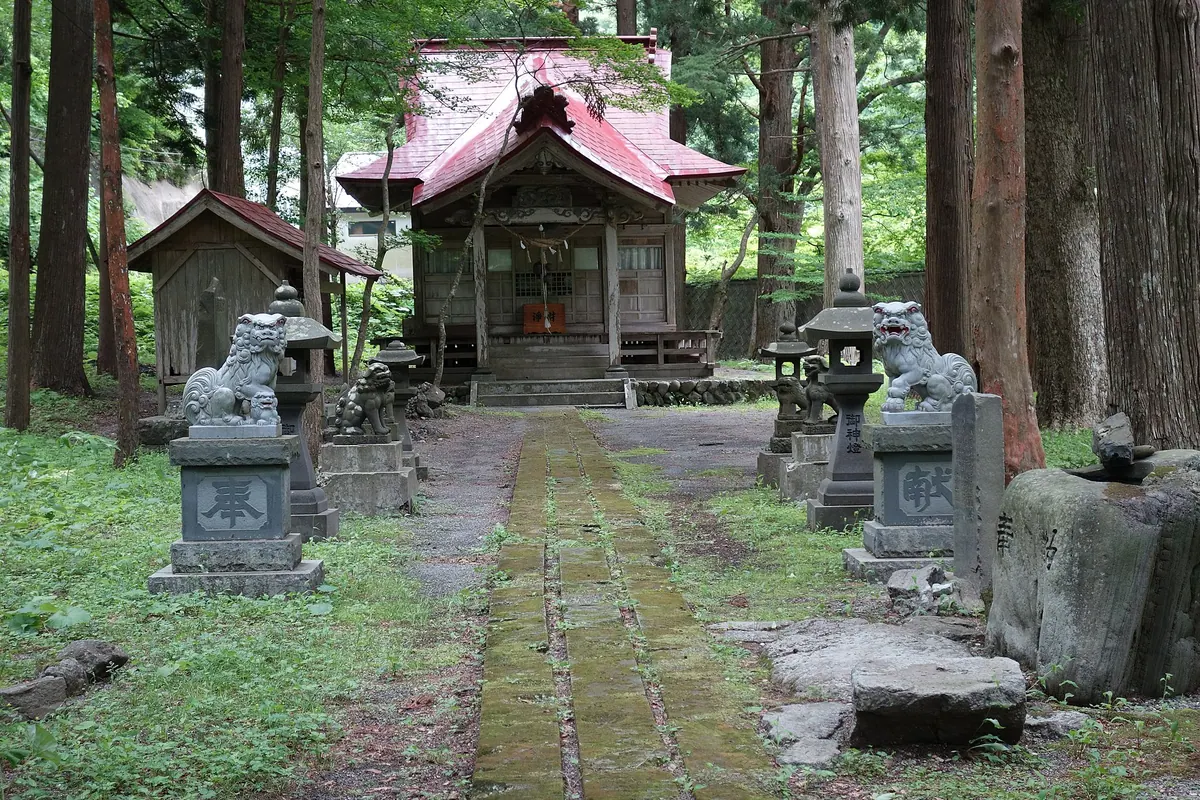
Subari Shrine, a millennium-old site, enshrines a fierce deity and offers a unique waterfall experience.
What it is
- Small shrine, over a millennium old.
- Enshrines a statue of Buddhist deity Fudō Myō-ō.
- Origins are unclear, possibly founded by Abe clan.
- Rebuilt multiple times, most recently in 1938.
What to see
- Fierce-looking statue of Fudō Myō-ō.
- Shrine buildings in gongen-zukuri architectural style.
- Worship hall and main sanctuary connected under one roof.
- Fudō Falls, a 30-meter high plunge waterfall.
- Path passing Subari Dam hydroelectric power station.
- Moss-covered rocks near the waterfall.
When to go
- Festival held annually on July 28.
- Statue of Fudō Myō-ō visible to public during festival.
Getting there
- Located next to Subari Dam.
- Fudō Falls is a few minutes’ walk west of the shrine.
- Address
- 秋田県山本郡藤里町粕毛字岩合2 Map
03
Tsuchizaki Shinmeisha
AKITA · SHRINE 土崎神明社
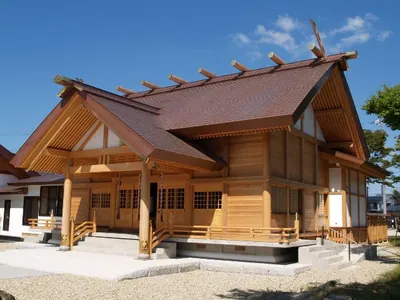
A historic shrine on former castle grounds hosting a major cultural festival recognized for its intangible folk heritage.
What it is
- A Shinto shrine dedicated to the sun goddess Amaterasu Omikami.
- Founded in 1620 by Kawaguchi Sojiro to guard the town of Tsuchizaki Minato.
- The site occupies the former grounds of Dewaminato Castle.
- Ranked as a prefectural shrine in 1881.
What to see
- The main shrine grounds featuring Okuninushi Shrine and Nishinomiya Shrine.
- Traditional Hikiyama festival floats during the annual July celebrations.
- A dedicated parking lot area for visitors arriving by car.
When to go
- July 20 and 21 for the annual Hikiyama festival.
- January 1 to observe the traditional New Year festival.
Getting there
- A two-minute walk from JR Tsuchizaki Station.
- Official site
- tsuchizakishinnmeisha.or.jp
04
Horowasan Haushiwake Shrine
AKITA · SHRINE 保呂羽山波宇志別神社
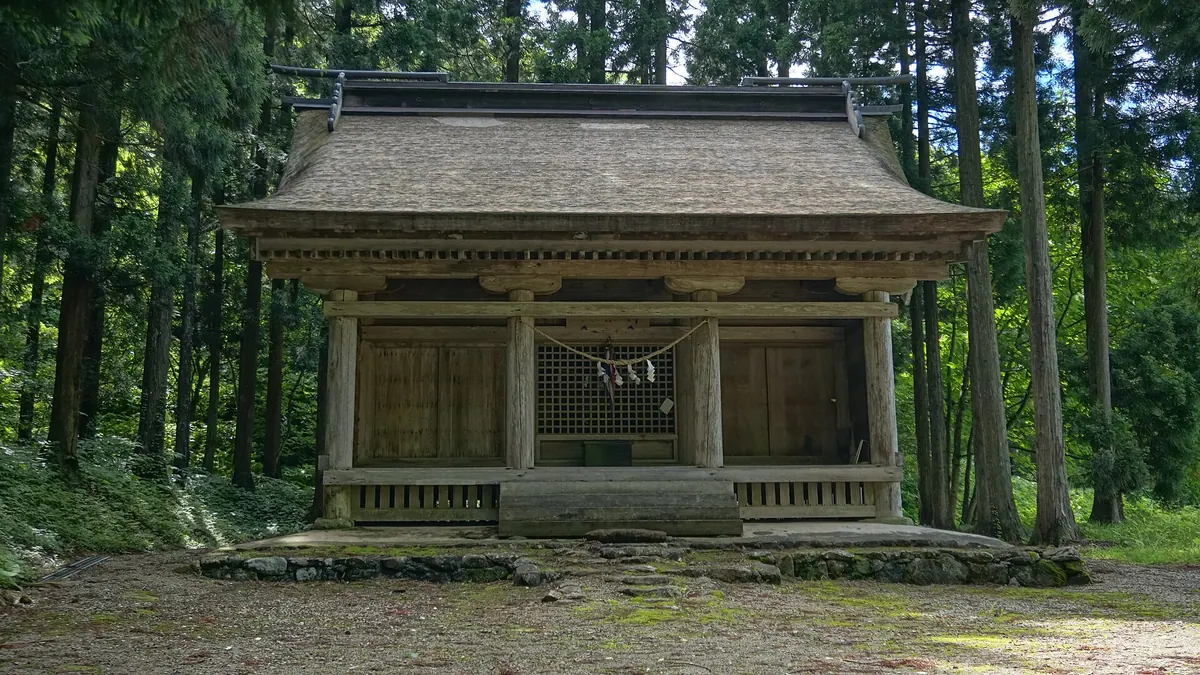
Ancient mountainside shrine in Akita, home to important cultural properties and a unique Kagura dance.
What it is
- One of three Shikinaisha shrines in Akita Prefecture.
- Founded in 757 on the mountainside of Mt. Horowa.
- Enshrines Emperor Ankan and Susanoo-no-Mikoto.
- The Ohtomo family has served as chief priest since founding.
What to see
- The Kagura-den is a National Important Cultural Property.
When to go
- Shimotsuki Kagura of Mt. Horowa is held on November 7.
- Shimotsuki Kagura is an Important Intangible Folk Cultural Property.
Getting there
- 35 minutes by car from Omagari Station.
- 20 minutes from Omagari IC via Route 105.
- 30 minutes from Yokote-kita SIC via Prefectural Road 29.
- Address
- 秋田県横手市大森町八沢木字保呂羽山1-1 Map
05
Gozanoishi Shrine
AKITA · SHRINE 御座石神社
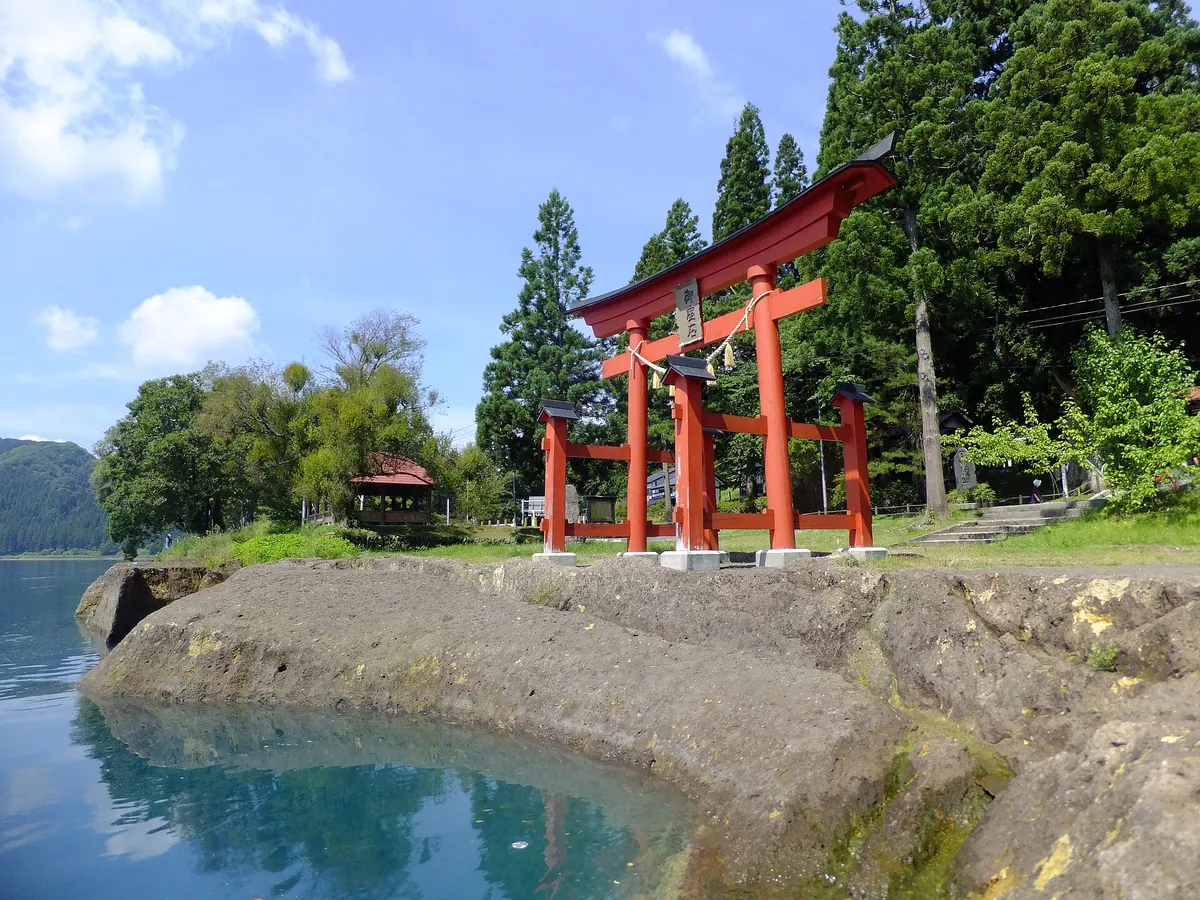
This shrine, dedicated to Lake Tazawa's dragon guardian, is notable for its unique torii gate and legendary natural features.
What it is
- Shrine dedicated to Tatsuko-hime-no-kami, dragon guardian of Lake Tazawa.
- Established October 17, 1911, by the Sannojo family.
- Commemorates Satake Yoshitaka's 1650 visit to Lake Tazawa.
What to see
- Vermillion-lacquered torii gate affixed to the Goza-no-ishi rock.
- Goza-no-ishi rock, a large flat rock resembling a mat.
- Nanairo-gi, the “Seven-Colored Tree,” with seven species from one trunk.
- Katagashira-no-reisen, the “Miraculous Spring of Katagashira.”
- Kagami-ishi, the “mirror rock,” where Tatsuko admired her reflection.
- Statue of Tatsuko with the lower half of her body as a dragon.
06
Karamatsu Shrine
AKITA · SHRINE 唐松神社
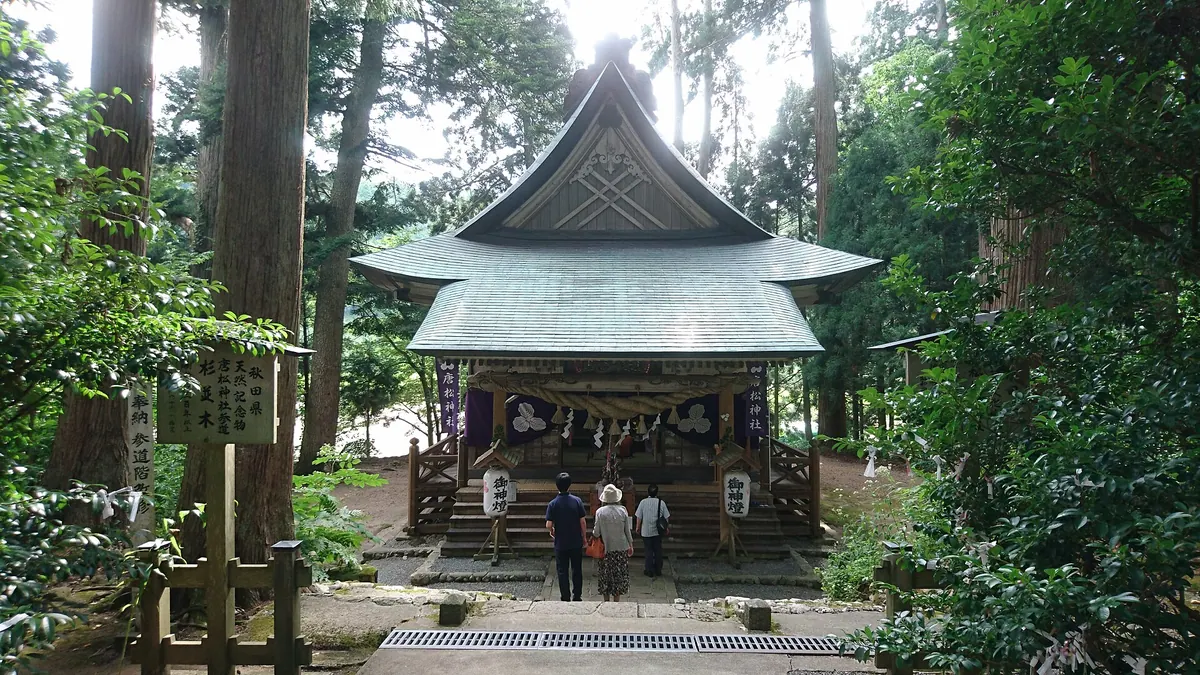
Karamatsu Shrine is a historic site in Akita, revered for women's well-being and cultural properties.
What it is
- Shrine dedicated to Okina Tarashihime no Mikoto and Kagutsuchi no Kami.
- Guardian deity for women's lives, matchmaking, fertility, safe childbirth.
- Revered by the Onodera and Satake clans.
- Once the 18th stop on the Akita Rokugun Sanjusan Kannon Pilgrimage.
What to see
- Oku-den is an Akita Prefectural Tangible Cultural Property.
- Wooden lion head is an Akita Prefectural Tangible Cultural Property.
- Cedar avenue is an Akita Prefectural Natural Monument.
- Jagan Kagura is a Daisen City Intangible Cultural Property.
Getting there
- 15-minute walk from JR Ugo-Sakai Station.
- Address
- 秋田県大仙市協和境字下台84 Map
07
Tsuzureko Shrine
AKITA · SHRINE 綴子神社
Tsuzureko Shrine is a historic site known for its big drum festival and ancient tree.
What it is
- Formerly Hachiman Shrine, renamed in 1910.
- Enshrines Hachimanyama Okami and sixteen other deities.
- Known for the Tsuzureko Big Drum dedication event.
- The drum event has over 700 years of history.
What to see
- The Tsuzureko Big Drum, an intangible folk cultural property.
- Naiyakata Bunko ruins, a historic site.
- The shrine's Millennium Katsura tree, a natural monument.
When to go
- Annual festival held on July 14th and 15th.
Getting there
- About a 15-minute taxi ride from Takanosu Station.
- A 5-minute walk from the Tsuzureko bus stop.
- Address
- 秋田県北秋田市綴子字西館47 Map
08
Taiheizan-Miyoshi Shrine
AKITA · SHRINE 太平山三吉神社
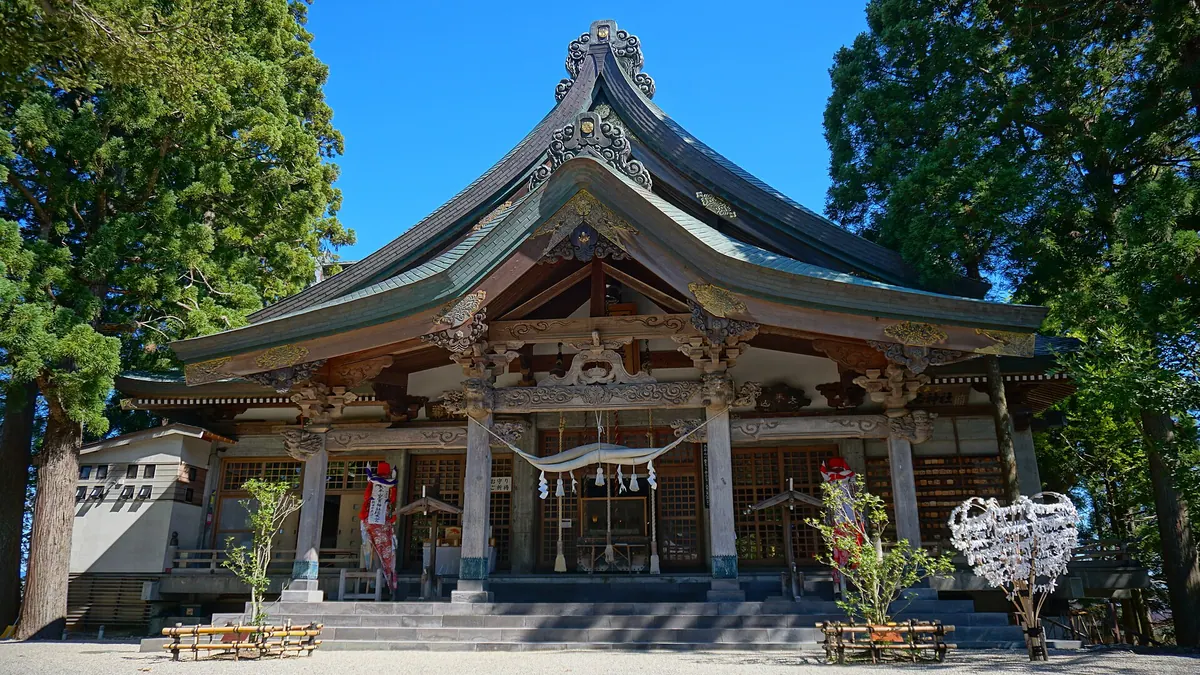
Taiheizan-Miyoshi Shrine: a mountain worship site with historical buildings and seasonal festivals.
What it is
- A shrine dedicated to mountain worship.
- Founded in 673 by En no Ozuno.
- Enshrines Onamuchi no kami, Sukunabikona no Okami, and Miyoshi Okami.
- Miyoshi Okami is a god of strength, victory, and warding off evil.
What to see
- A sato-miya (lower shrine) at the foot of Mt. Taihei.
- An oku-miya (upper shrine) at the summit of Mt. Taihei.
- A shrine building constructed in 801 by Sakanoue Tamuramaro.
- The current sato-miya built by Satake Yoshiatsu.
When to go
- Miyoshi Bonten Festival is held on January 17th.
- Spring Grand Festival is held on May 8th.
- Address
- 秋田県秋田市広面字赤沼3-2 Map
09
Takaiwa Shrine
AKITA · SHRINE 高岩神社
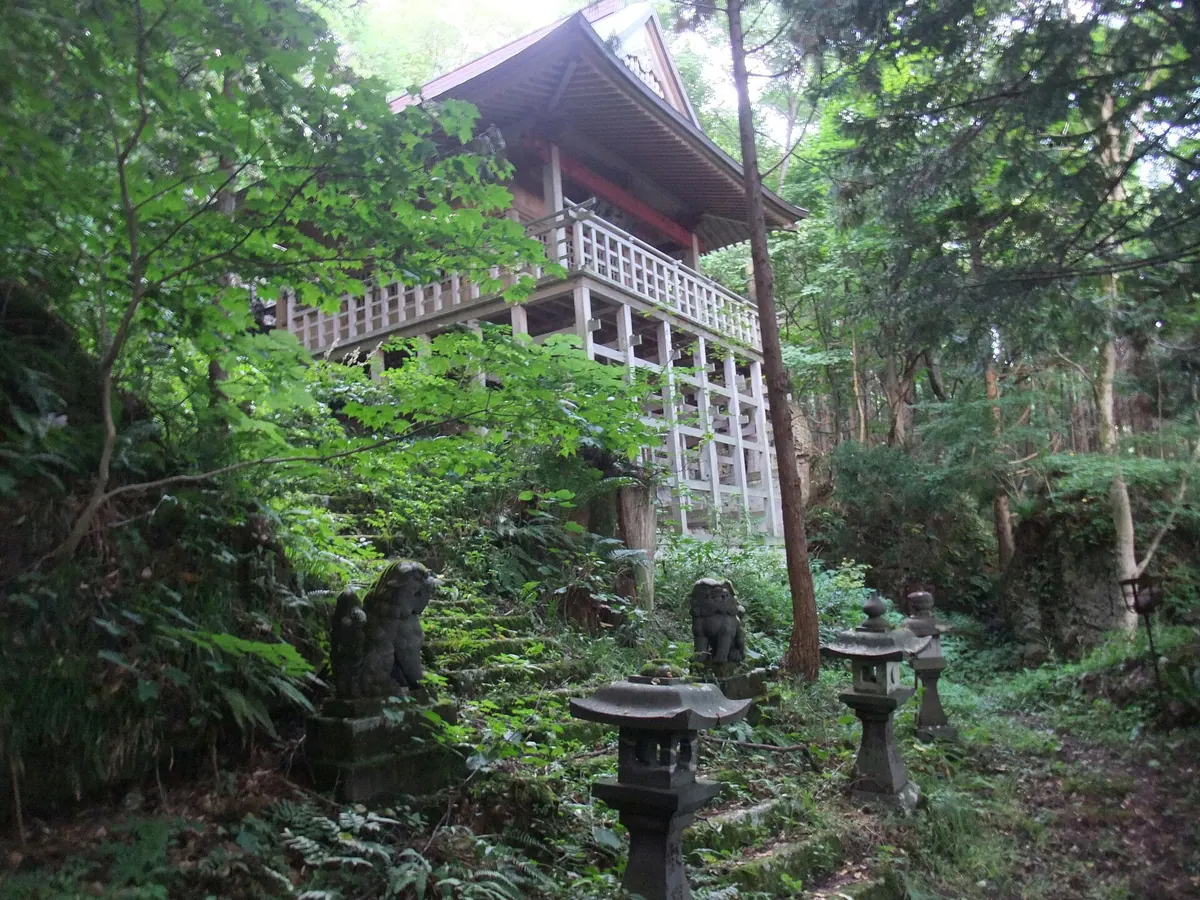
Takaiwa Shrine is a historic mountainside shrine with unique architecture and ancient trees.
What it is
- Shrine founded by Ennin during the Ten'an era (857-859).
- It is the 29th site of the Akita Kannon Pilgrimage.
- Shrine built in the kakezukuri or butaizukuri style.
- Dedicated to Benten, Kongokai Dainichi Nyorai, and Taizokai Dainichi Nyorai.
What to see
- A five-ring pagoda from the late Kamakura to early Muromachi period.
- A large ginkgo tree estimated to be over 800 years old.
- A large cedar tree, Nanameguri-sugi, estimated to be 550 years old.
- A Sue ware keikyo, a prefectural tangible cultural property.
- A framed 'Takaiwa-san' dedicated in 1794.
- Address
- 秋田県能代市二ツ井町荷上場字五輪岱23番 Map
10
Ōhirumemuchi Shrine
AKITA · SHRINE 大日霊貴神社
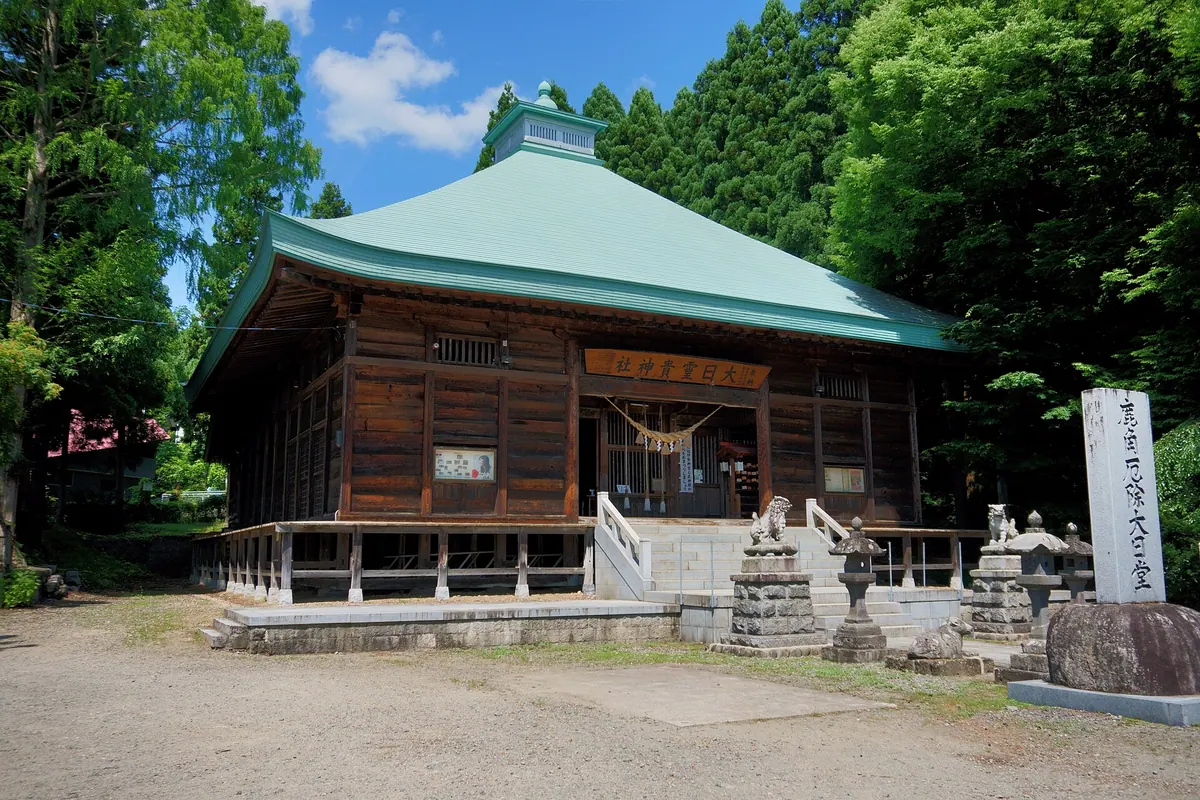
Ōhirumemuchi Shrine: a historic shrine in Akita, known for its large building and ancient bugaku dances.
What it is
- Also called Ōnidō.
- Founded during Emperor Keitai's reign.
- Rebuilt in 718 by the monk Gyōki.
- Dedicated to Amaterasu Sumerōkami and Kisshōhime no Mikoto.
What to see
- One of the largest shrine buildings in Akita Prefecture.
- Shrine building has space for bugaku performances.
- One Itabi, a Kazuno City Tangible Cultural Property.
When to go
- January 2nd for the annual festival.
- See Ōnidō Bugaku, a UNESCO Intangible Cultural Heritage.
- Address
- 〒018-5141 秋田県鹿角市八幡平字堂の上16 Map
11
Shinzan Shrine
AKITA · SHRINE 真山神社
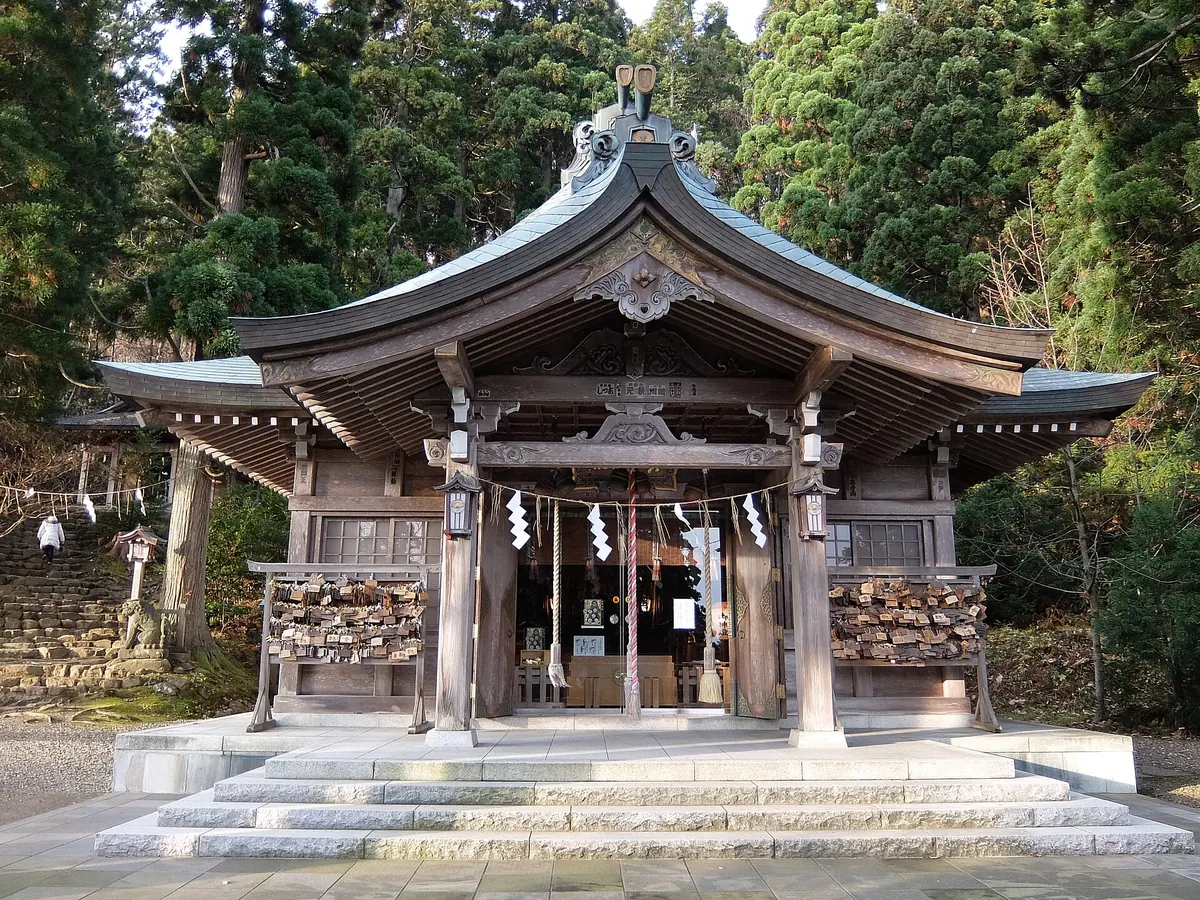
Shinzan Shrine is a historic site in Oga, known for its unique winter festival and ancient tree.
What it is
- A shrine in Oga City, Akita Prefecture.
- Formerly Akagami-yama Kōhan-ji Temple in the Edo period.
- Became Shinzan Shrine due to anti-Buddhist movement in Meiji.
- Enshrines Ninigi-no-Mikoto and Takemikazuchi-no-Mikoto.
What to see
- An over 1100-year-old kaya tree, a natural monument.
- Goshaden and Kyuden, tangible cultural properties.
- Goshaden's interior has three rooms.
When to go
- The Namahage Sedo Festival is held annually in February.
- Address
- 秋田県男鹿市北浦字真山字水喰沢97 Map
- Official site
- www.namahage.ne.jp
12
Amaterasu Sumemioya Shrine
AKITA · SHRINE 天照皇御祖神社
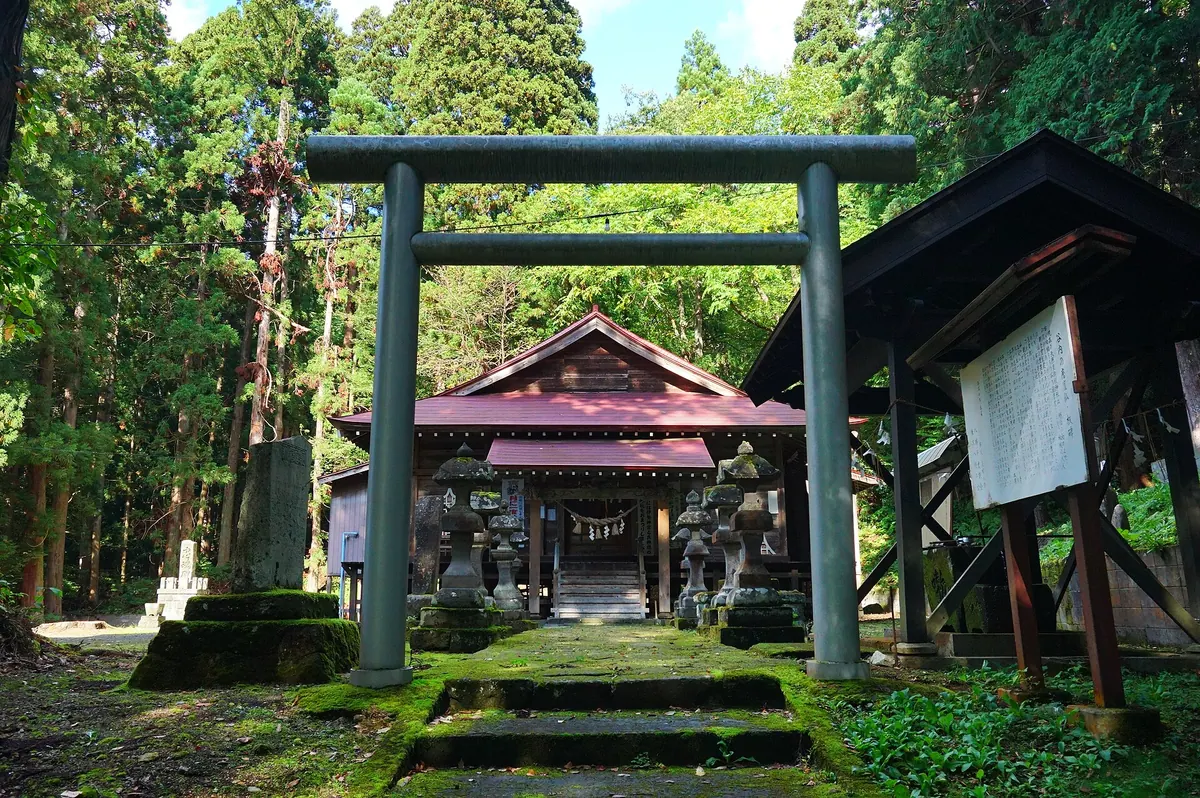
This shrine offers rare ancient dances and a unique rock-carved Buddha.
What it is
- Shrine dedicated to Amaterasu Omikami and Susanoo no Mikoto.
- Rebuilt in 1574 as Amaterasu Sumemioya Shrine.
- Designated a village shrine in 1873.
What to see
- Rock-carved Buddha is a prefectural historic site.
- It is the northernmost medieval example of its kind.
When to go
- Saki Harai Mai dance festival is on August 15-16.
- See the Godaison Mai dance, a UNESCO cultural heritage.
- See the Saki Harai Mai dance, a city cultural property.
- Address
- 秋田県鹿角市八幡平字谷内14 Map
13
Akagami Shrine
AKITA · SHRINE 赤神神社
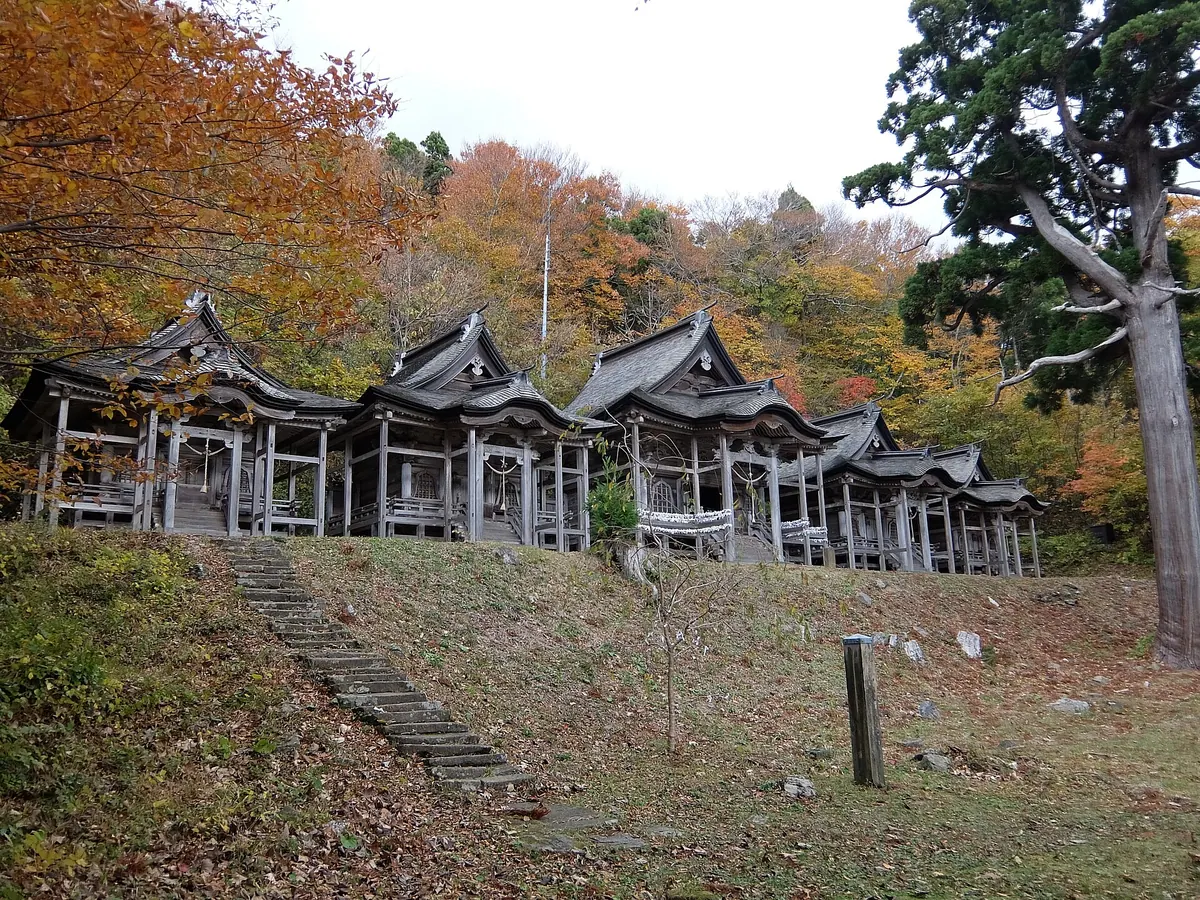
Akagami Shrine, founded in 860, is a historic site with five important cultural properties.
What it is
- A shrine in Oga City, Akita Prefecture.
- Founded in 860 by Jikaku Daishi Ennin.
- Dedicated to Akagami-yama Okami.
- Also known as Akagami Shrine Goshado.
What to see
- Five Goshado buildings are important cultural properties.
- Current Goshado buildings were built in 1710.
- Shrine buildings are lined up horizontally.
- Central shrine is Akagami Gongen-do.
- Zushi inside the central hall dates from late Muromachi period.
- Enku's Eleven-faced Kannon is enshrined.
- Address
- 秋田県男鹿市船川港本山門前字祓川35 Map
14
Asahiokayama Shrine
AKITA · SHRINE 旭岡山神社
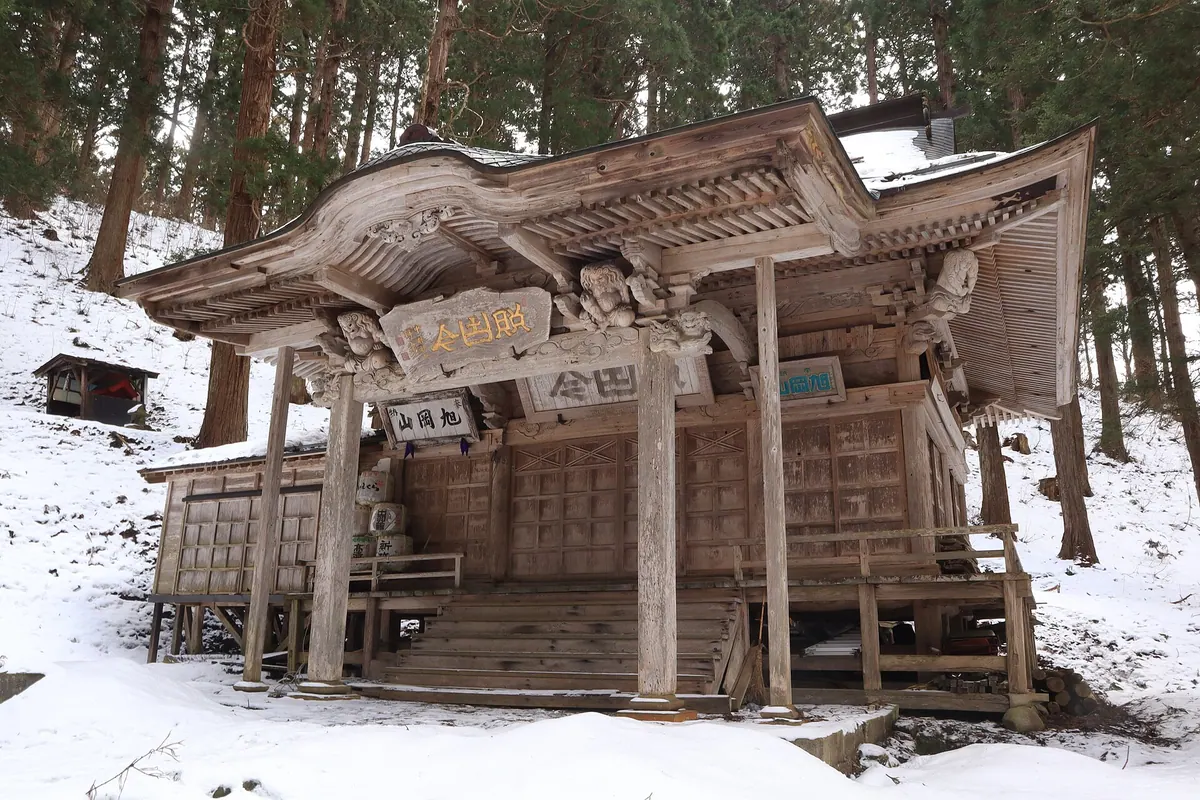
Ancient shrine founded in 807, known for its unique Bonten Festival and cultural properties.
What it is
- Shrine founded in 807 by Sakanoue Tamuramaro.
- Current building constructed by Yokote Sadomori.
- Designated a village shrine in 1873.
What to see
- Main hall houses a sacred object and twelve Yakushi generals.
- Two divine statues are Akita Prefectural Cultural Properties.
- Seven cedar trees are a Yokote City Natural Monument.
When to go
- Bonten Festival is held annually on February 17th.
- Bonten competition has been held since 1959.
- Address
- 秋田県横手市大沢字上庭当田123 Map
15
Dake Rokusho Shrine
AKITA · SHRINE 嶽六所神社
Dake Rokusho Shrine is an ancient small shrine with unique deities, worth visiting for its historical significance.
What it is
- A Shikinaisha, a small shrine.
- Founded around 701-704 AD.
- Considered the original site of Fukesawa Shrine.
- Enshrines Ota-no-mikoto, Okidama-no-mikoto, and others.
What to see
- A Hachiman Shrine is its auxiliary shrine.
- The Hachiman Shrine was founded around 810 AD.
When to go
- Bonten offering ritual on the third Sunday of March.
Getting there
- 45-minute walk from Atagoshita bus stop.
- Address
- 秋田県大仙市神宮寺字落貝7 Map
16
Yokote-shinmeisha
AKITA · SHRINE 横手神明社
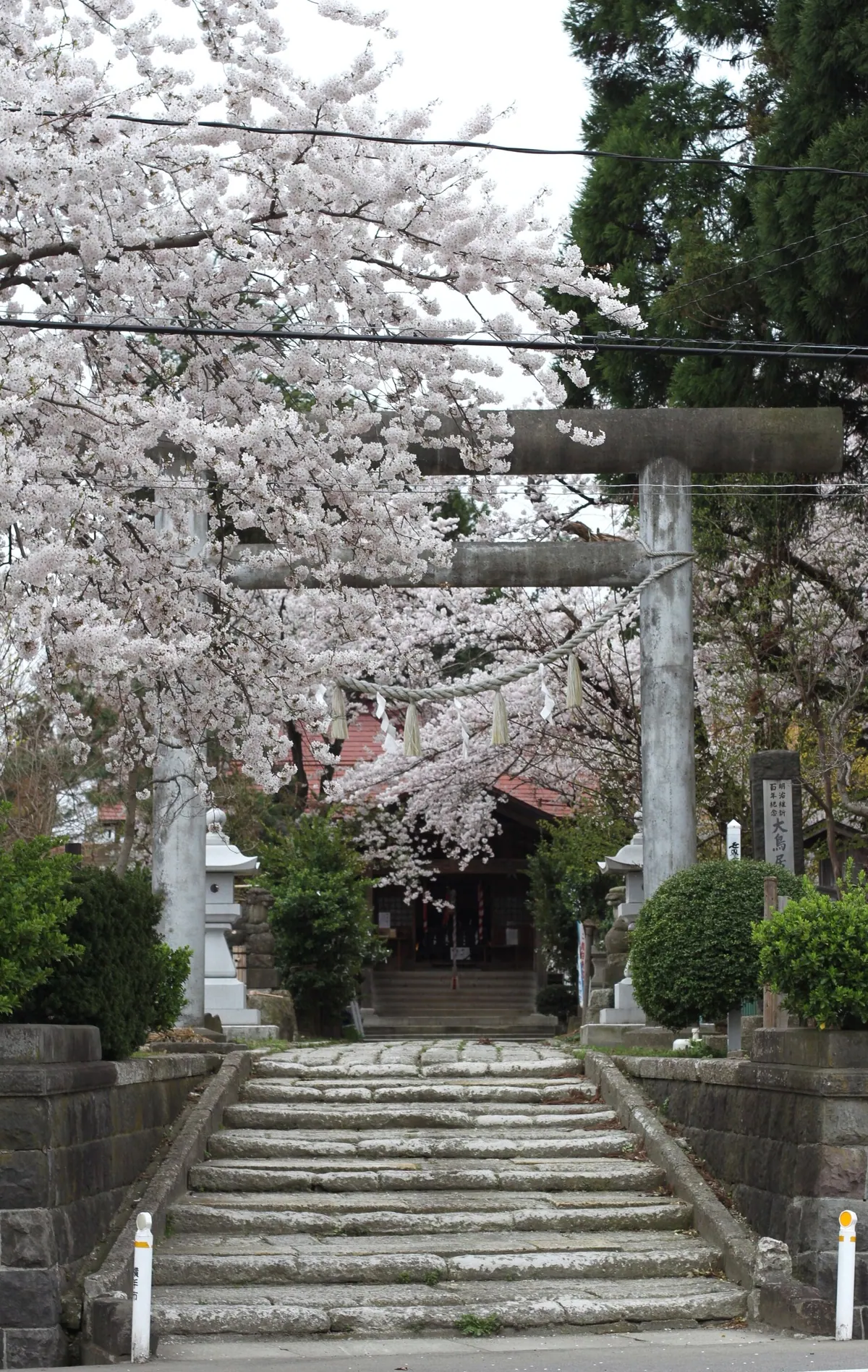
Yokote-shinmeisha is a historic shrine in Akita, enshrining important deities and housing a national treasure.
What it is
- A shrine in Yokote City, Akita Prefecture.
- Established in 1716, moved to current site in 1880.
- Enshrines Amaterasu-Omikami and Toyouke-hime-no-Okami.
- Also enshrines Saru-tahiko-no-kami and Susanoo-no-kami.
What to see
- Main hall enshrines Sugawara-no-Okami.
- Bronze shakujo head is a national important cultural property.
- The bronze shakujo head is dated 1259.
When to go
- Grand festival is held on May 4th.
- Address
- 秋田県横手市神明町7-2 Map
17
Hie-hachiman Shrine
AKITA · SHRINE 日吉八幡神社
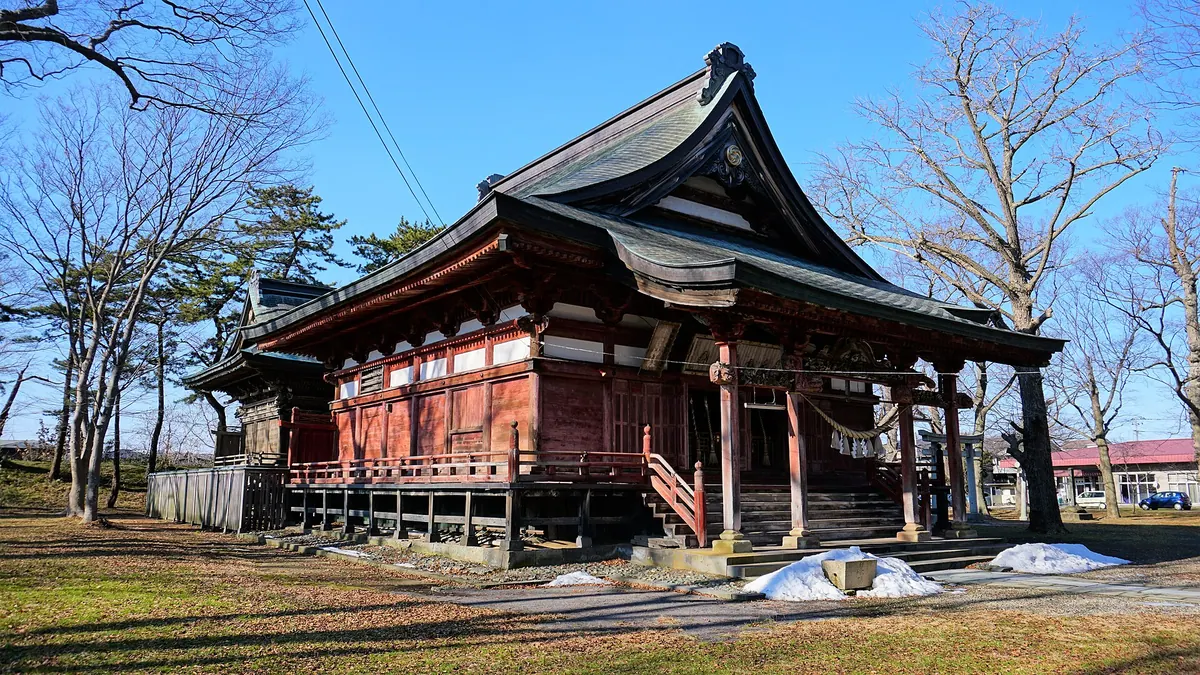
Hie-hachiman Shrine: a historic Akita shrine with unique architecture and cultural properties.
What it is
- Shrine founded in the Heian period.
- Moved to its current location in 1662.
- Rebuilt in 1778 after a fire.
- Became a prefectural shrine in the Meiji era.
What to see
- Wooden triple-tiered pagoda built in 1707.
- Main hall, worship hall, and dance stage are cultural properties.
- Main hall built in 1797.
- Statue of Motoori Norinaga in the main hall.
- Mix of Shinto and Buddhist architectural styles.
- Address
- 秋田県秋田市八橋本町1丁目4-1 Map
18
Tōko Yasaka Shrine
AKITA · SHRINE 東湖八坂神社
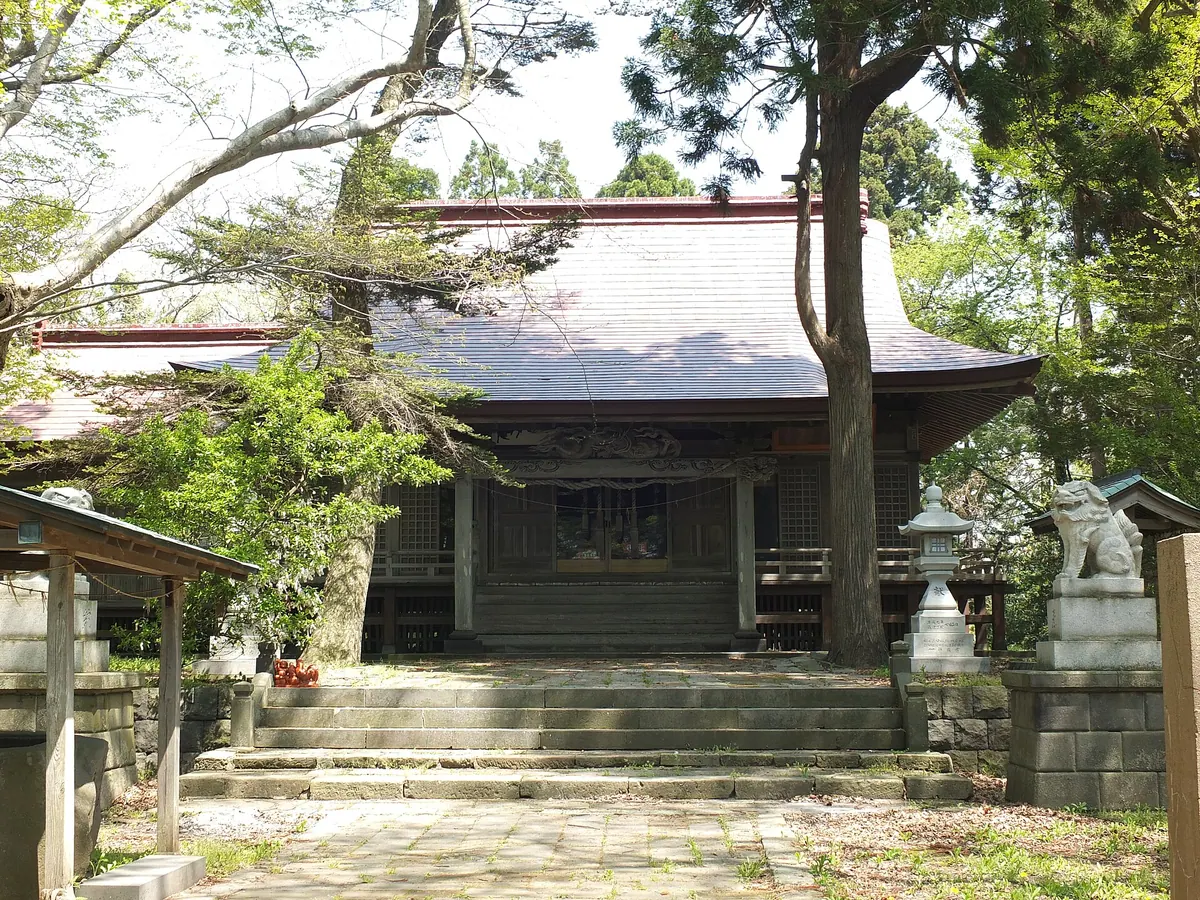
Tōko Yasaka Shrine, founded in 801, offers a glimpse into ancient Japanese religious history.
What it is
- Shrine dedicated to Susanoo-no-Mikoto.
- Founded in 801 by Sakanoue Tamuramaro.
- Relocated to its current site in 1060.
- Designated a prefectural shrine in 1881.
What to see
- Komainu statues created in 1845 and 1865.
When to go
- Tōnin event is a national intangible folk cultural asset.
Getting there
- 5-minute walk from Tenno Station.
- Address
- 秋田県潟上市天王字天王106番地 Map
19
Santetsu Shrine
AKITA · SHRINE 三哲神社
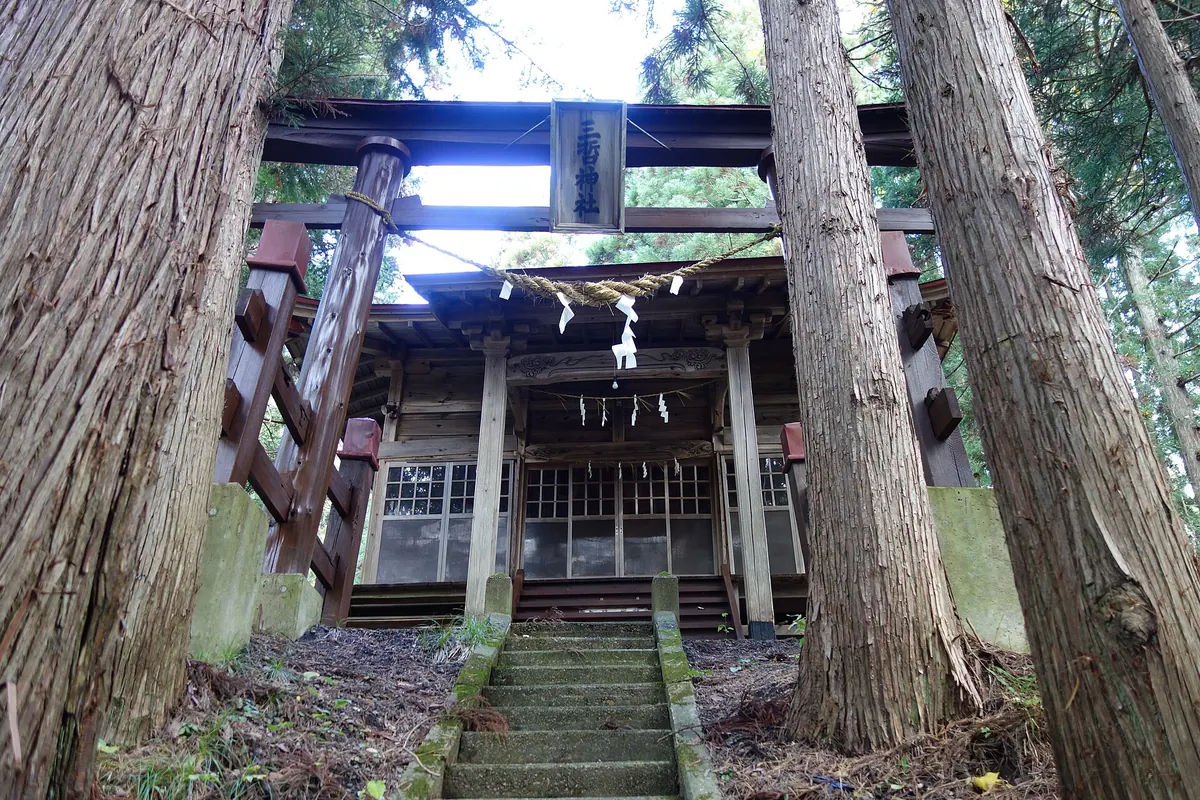
Santetsu Shrine honors a multi-talented Edo physician, offering unique dedications and historical significance.
What it is
- Shrine dedicated to Edo period physician Chiba Kazusanosuke Hidetane.
- Hidetane was also known as Santetsu.
- Founded on Santetsu Mountain in Odate City, Akita Prefecture.
What to see
- Water drawn by Santetsu for rinsing mouths.
- Fundoshi and geta dedicated at the shrine.
- Wooden hands and feet dedicated at the shrine.
- Monument to the inner sanctuary on Santetsu Mountain summit.
- Address
- 秋田県大館市十二所字中岱227 Map
20
Rōken Shrine
AKITA · SHRINE 老犬神社
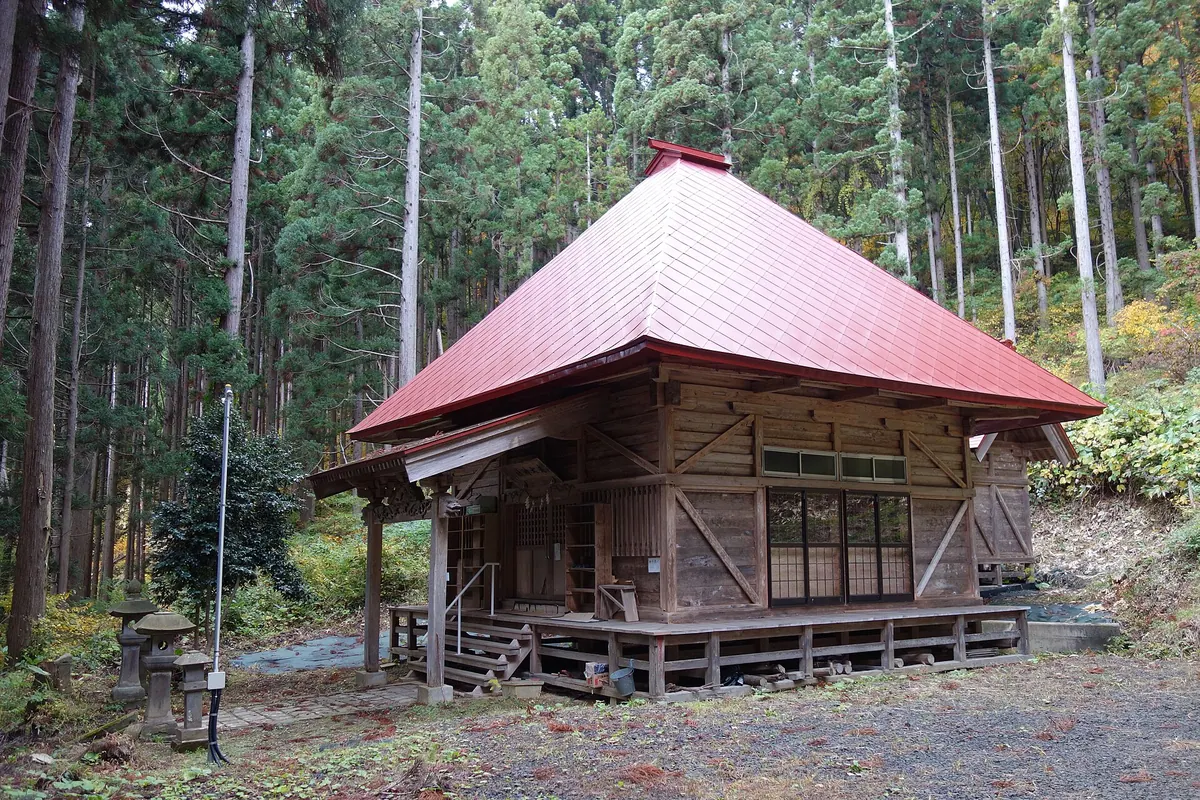
Rōken Shrine honors a legendary Matagi dog, offering unique dog statues and historical scrolls.
What it is
- Shrine dedicated to a legendary Matagi dog.
- Founded to honor a hunting dog.
- Relocated multiple times throughout its history.
What to see
- Many dog statues, ema, and photos.
- Stone statue of Shiro, erected by locals.
- Two historical scrolls: Yamadate Kakei-maki and Menjo Shōmon.
When to go
- Grand festival on the 17th and 18th of the 4th lunar month.
- Address
- 秋田県大館市十二所葛原 Map