

20 Shrines in Fukui worth your time
Japan Gems
Fukui Prefecture's shrines offer a look into local spiritual traditions. Visitors can experience the serene atmosphere of places like Kehi Jingū and Kida Shrine.
Fukui has 32 shrines on Japan Gems. Below are the 20 we can tell you the most about — each one written up in English from Japanese sources, with what to see and how to get there. See all shrines in Fukui.
01
Asuwa Shrine
FUKUI · SHRINE 足羽神社
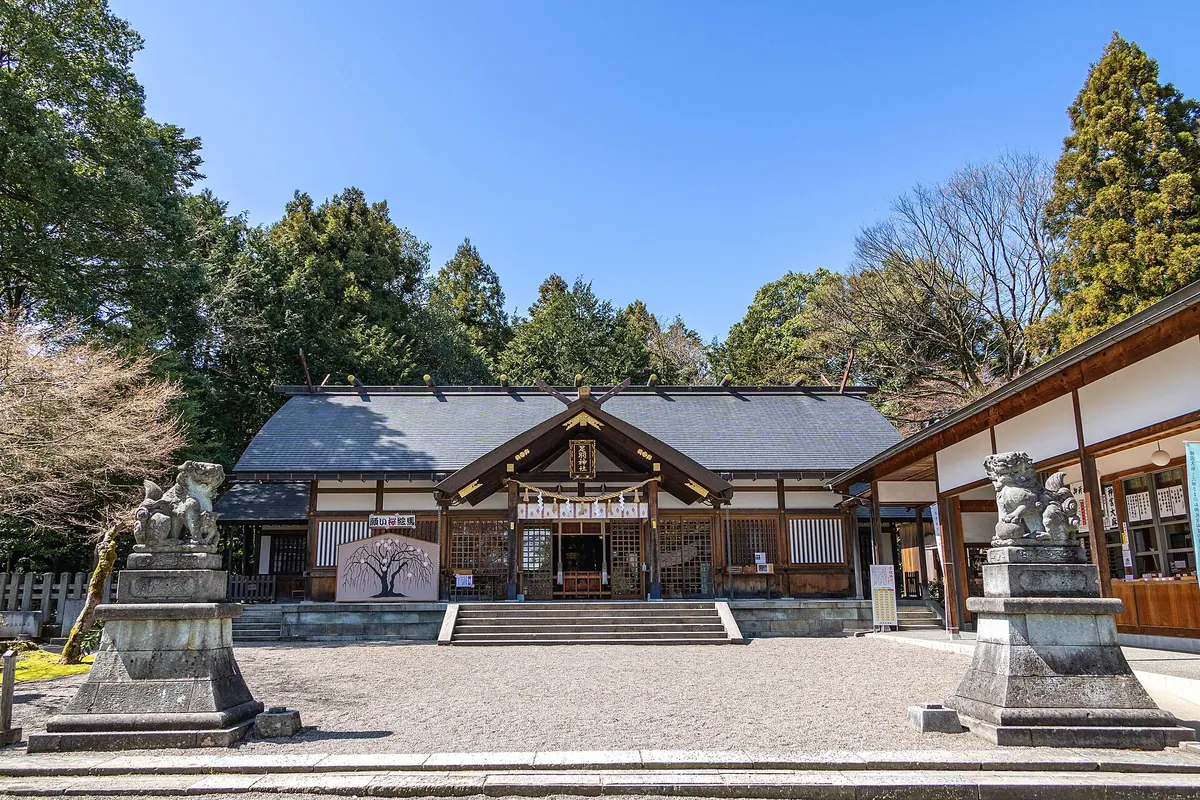
Asuwa Shrine is an ancient shrine in Fukui City with a unique crest and a historic weeping cherry tree.
What it is
- An ancient Shikinaisha and former Prefectural Shrine.
- Dedicated to Emperor Keitai and other kami.
- Founded when Emperor Keitai enshrined the spirit of Omiyachi.
- Received deep reverence from the Asakura and Echizen Matsudaira clans.
What to see
- Shrine crest combines patterns of the sun, moon, and North Star.
- This crest is found in only three shrines nationwide.
- A 381-year-old weeping cherry tree.
- The weeping cherry tree is a Fukui City Natural Monument.
- A 14-meter-tall Takaomomiji tree on the main approach.
When to go
- Various festivals are hosted throughout the year.
- Address
- 福井県福井市足羽1丁目8-25 Map
- Official site
- www.asuwajinja.jp
02
Okafuto Shrine
FUKUI · SHRINE 岡太神社
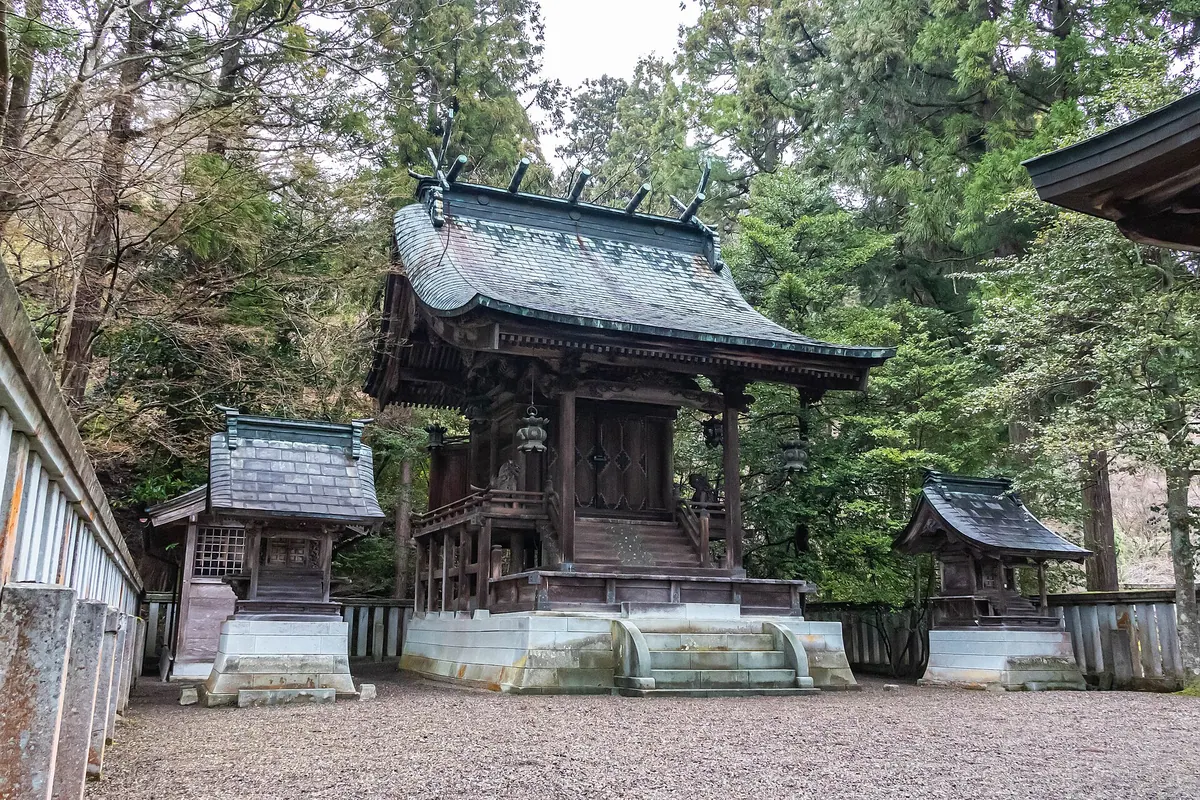
Okafuto Shrine is an ancient site for unique rituals and Noh play connections.
What it is
- Oldest shrine among 14 in the former Imadate District.
- Associated with the Noh play 'Hanakatami'.
- Main deities are Taketsunumi-no-mikoto, Kunisatsuchi-no-mikoto, and Ōnamuchi-no-mikoto.
- Rebuilt in 1902 after a fire.
What to see
- Ichino-torii gate.
- Haiden (worship hall).
- Mikoshiden (portable shrine hall).
- Honden (main sanctuary).
When to go
- Horai-shi ritual is held annually on February 11.
- Horai-shi ritual began about 1500 years ago.
- Ichimatsu festival is a currency exchange ritual.
- Tokunichi-mairi is a prayer for health and safety.
- Address
- 福井県越前市粟田部町19-3 Map
- Official site
- www.jinja-fukui.jp
03
Heisenji Hakusan Shrine
FUKUI · SHRINE 平泉寺白山神社
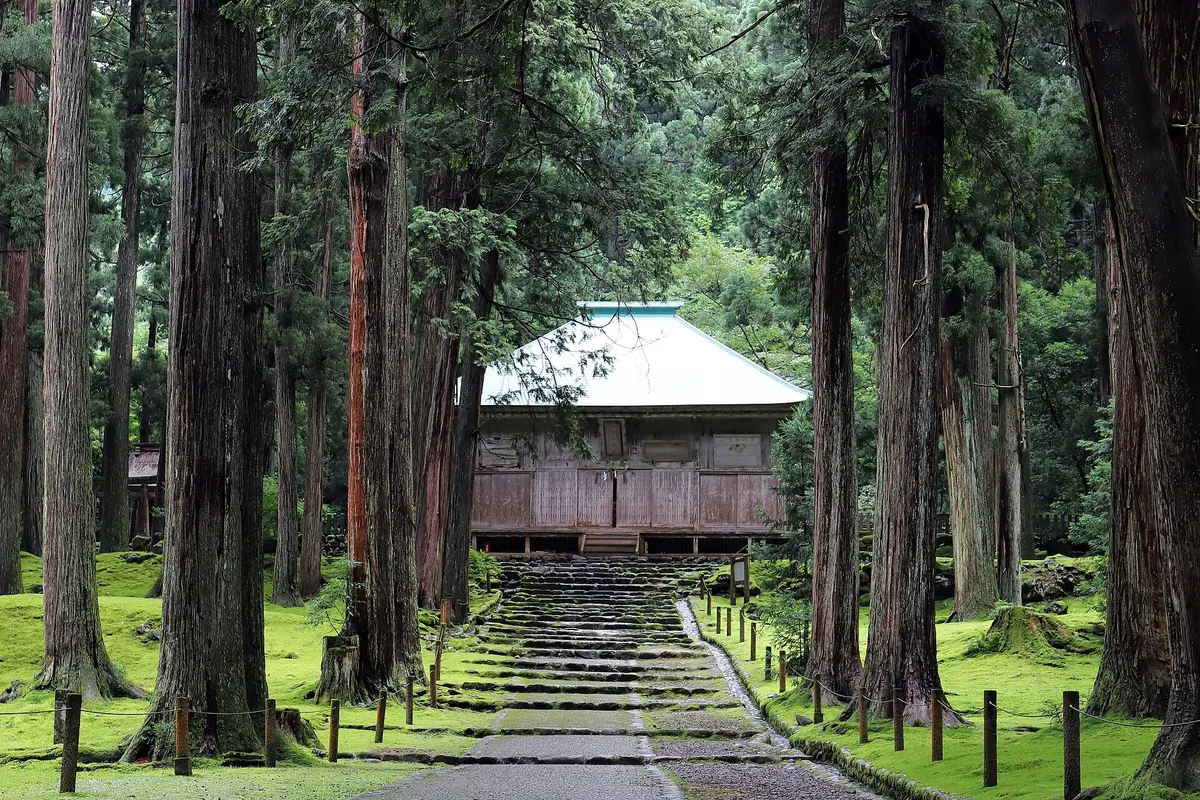
Heisenji Hakusan Shrine: a vast, ancient temple complex with historical gardens and important deities.
What it is
- Shrine in Katsuyama City, Fukui Prefecture.
- Founded in 717 by Buddhist monk Taicho.
- Originally a Buddhist temple, Reiozan Heisenji.
- Became a branch temple of Enryaku-ji Temple in 1084.
What to see
- Main hall enshrines Izanami-no-Mikoto.
- Betsuzansha enshrines Amenoshihomimi-no-Mikoto.
- Onamuchisha enshrines Onamuchi-no-Mikoto.
- Vast 150,000 square meter site.
- Old Genjoin garden is a national scenic spot.
- Old approach road is one of Japan's 100 Best Roads.
When to go
- Main hall is opened once every 33 years.
- Address
- 福井県勝山市平泉寺町平泉寺56-63 Map
- Official site
- heisenji.jp
04
Jogu Shrine
FUKUI · SHRINE 常宮神社
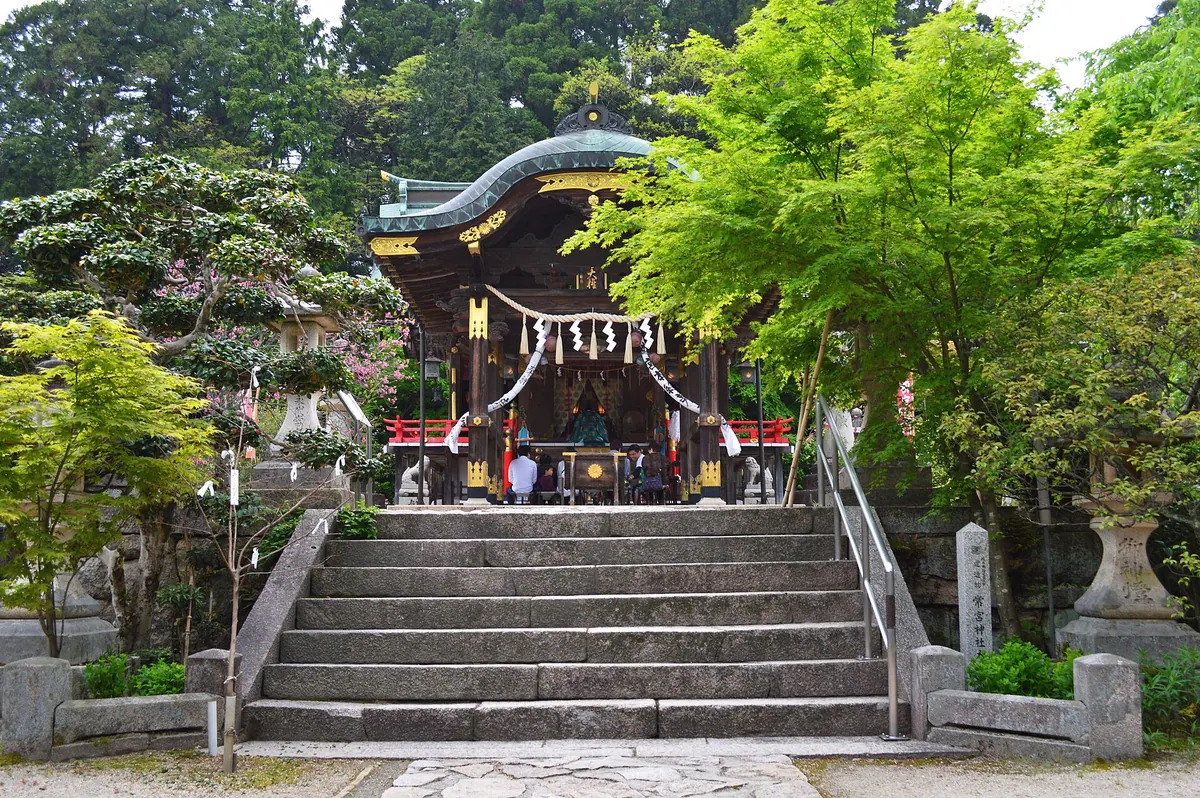
Jogu Shrine is a historic site in Tsuruga, known for its ancient bell and as a guardian of safe childbirth.
What it is
- Formerly an auxiliary shrine of Kehi Jingu.
- Known as a god of safe childbirth.
- Revered as a guardian of navigation and fishing.
What to see
- Main hall rebuilt in 1713.
- Main hall is a Fukui Prefecture tangible cultural property.
- Worship hall and middle gate are cultural properties.
- Korean bell is a designated National Treasure.
- Korean bell dates from the Unified Silla period.
When to go
- Annual festival is held on July 22nd.
Getting there
- Accessible by bus from Tsuruga Station.
- Address
- 福井県敦賀市常宮13-16 Map
05
Sansha Shrine
FUKUI · SHRINE 三社神社
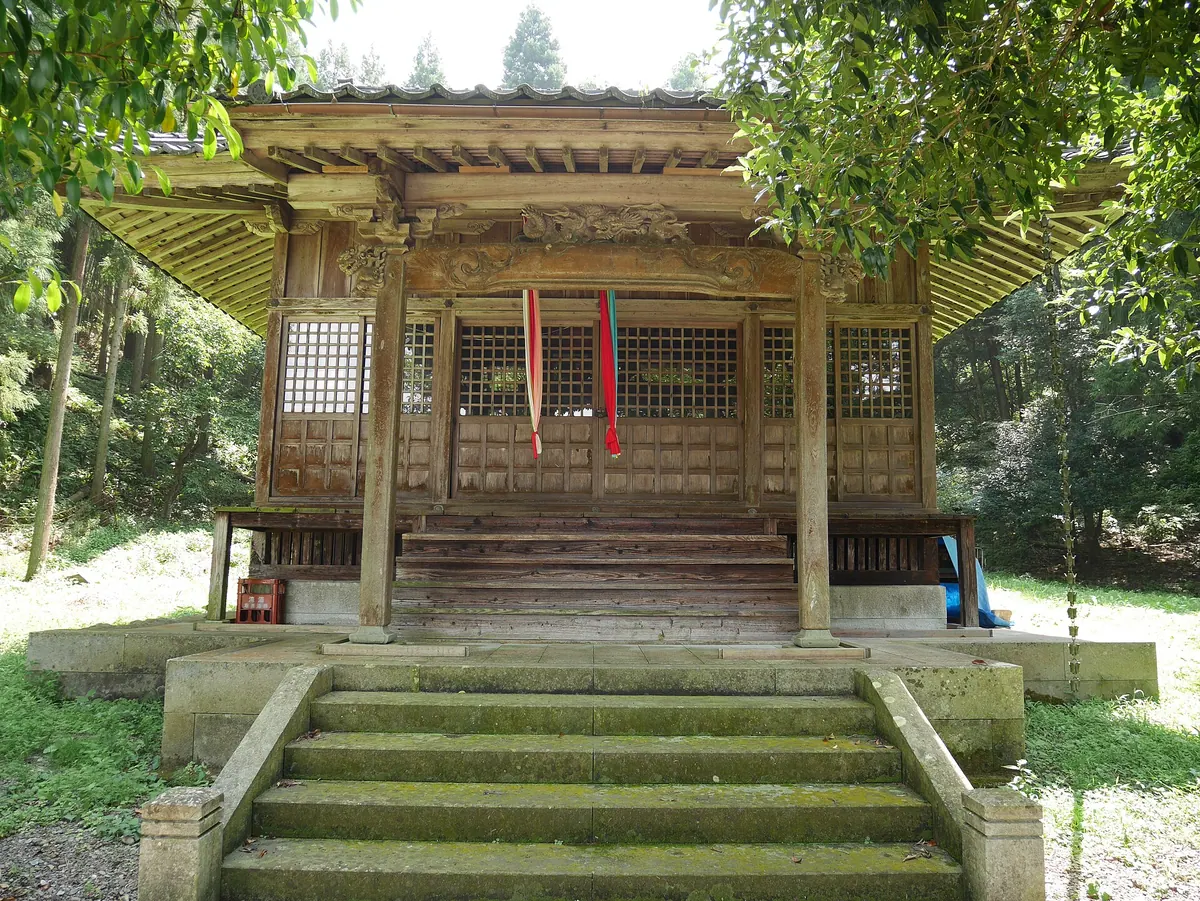
Sansha Shrine is a historic site with unique stone Buddhas, worth visiting for its cultural significance.
What it is
- Originally Saketoke Shrine, renamed Sansha Shrine after Meiji Restoration.
- Dedicated to Oyamatsumi no Kami, Ninigi no Mikoto, and Hoori no Mikoto.
- Established as a prayer place in 1584 by Hasegawa Togoro Hidekazu.
What to see
- Chomei Jizo-do stands in front of the torii gate.
- Hundreds of stone Buddhas are enshrined in Chomei Jizo-do.
- Many stone Buddhas have era names from the Asakura clan period.
When to go
- Sagicho festival is held annually in January.
- A 12-meter-high Sagicho is set up for the festival.
- Address
- 福井県福井市安原町16-39 [1] Map
06
Hino Shrine (Takefu City)
FUKUI · SHRINE 日野神社 (越前市)
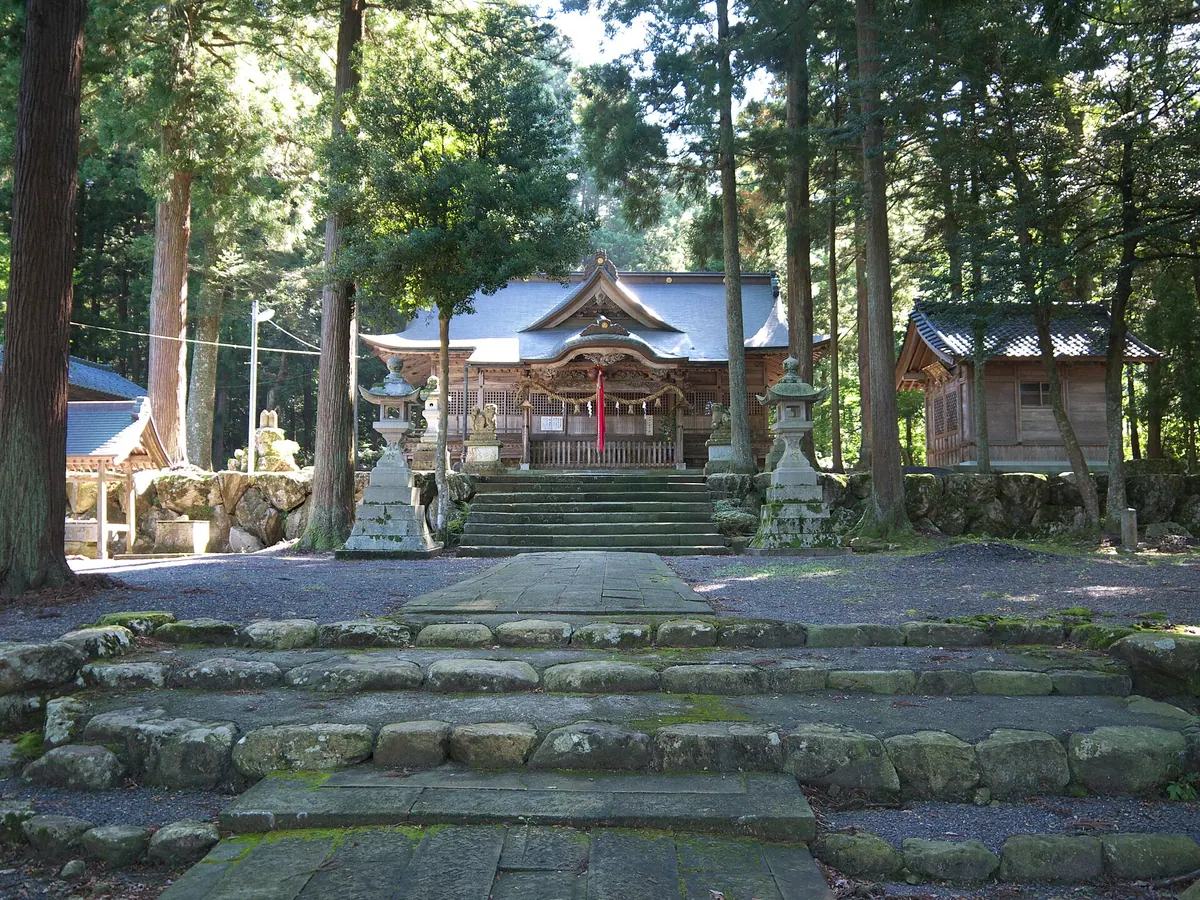
Hino Shrine is an ancient mountain worship site, protected by local lords, with unique traditional dance.
What it is
- Ancient shrine, mentioned in 910, for mountain worship.
- Formerly a Go-sha and Shikinaisha shrine.
- Protected by the Echizen Matsudaira family and Honbo Jin'ya.
What to see
- Inner shrine at the summit of Mount Hino.
- Shrine grounds are a route for Mount Hino climbing.
When to go
- See the Ancient Kagura, a municipal intangible folk cultural property.
Getting there
- Walk from Ojiho Station on the Hapi-Line Fukui Line.
- Via Hokuriku Expressway Takefu IC and Route 8.
- Address
- 福井県越前市中平吹町茶端80-1 Map
07
Senbei Shrine
FUKUI · SHRINE 天満神社 (敦賀市栄新町)
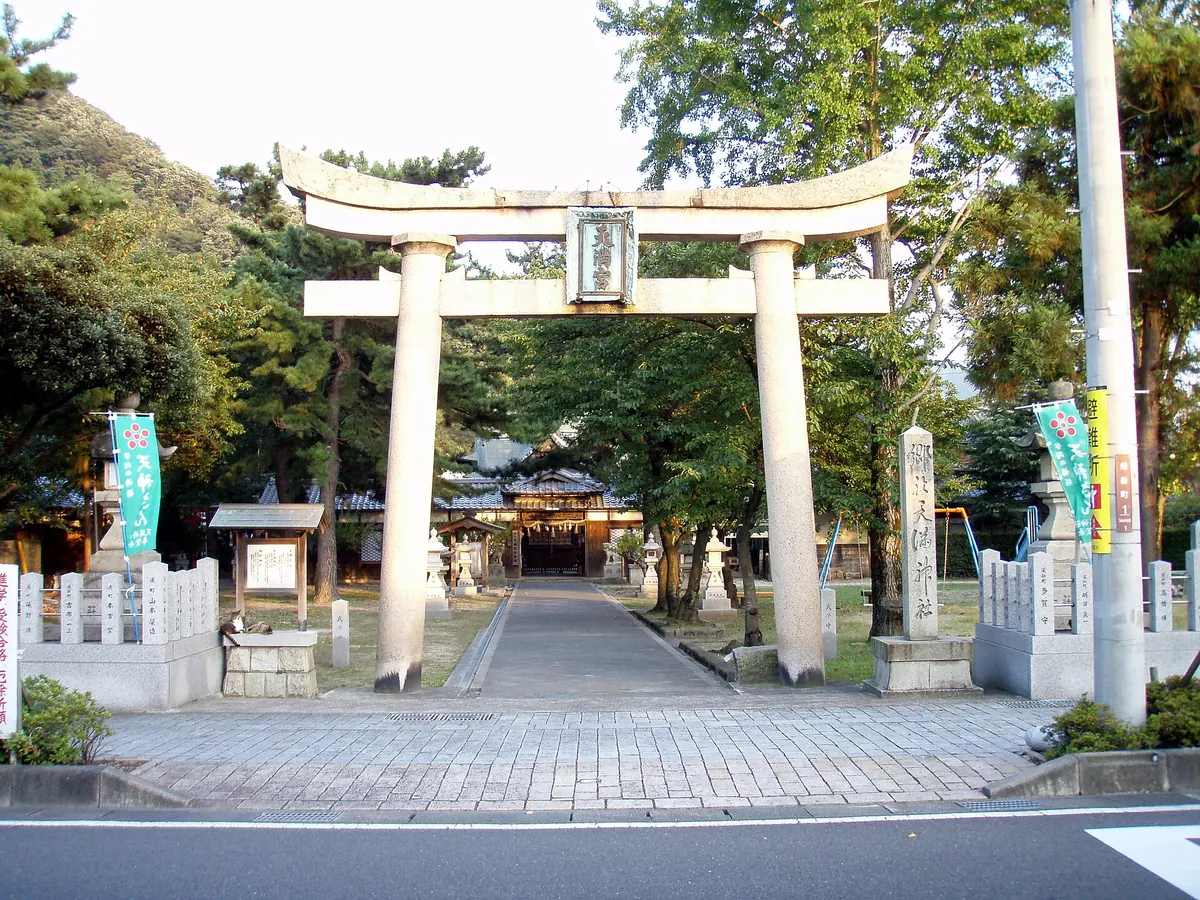
Senbei Shrine, founded in 980, is a cultural property dedicated to Sugawara Michizane.
What it is
- Shrine founded in 980.
- Dedicated to Sugawara Michizane.
- Designated tangible cultural property of Fukui Prefecture.
What to see
- Current shrine building relocated in 1960.
- Building originally built in 1811 as Gokoku-den.
- Architectural style is Gongen-zukuri.
- Main hall and worship hall are Irimoya-zukuri style.
- Worship hall has Chidori-hafu and Kara-hafu gables.
- Shrine grounds include Ebisu Shrine and Inari Shrine.
When to go
- Senbei-yaki event is held annually on November 20.
- Address
- 福井県敦賀市栄新町1番6号 Map
08
Suwāzuki Shrine
FUKUI · SHRINE 須波阿湏疑神社
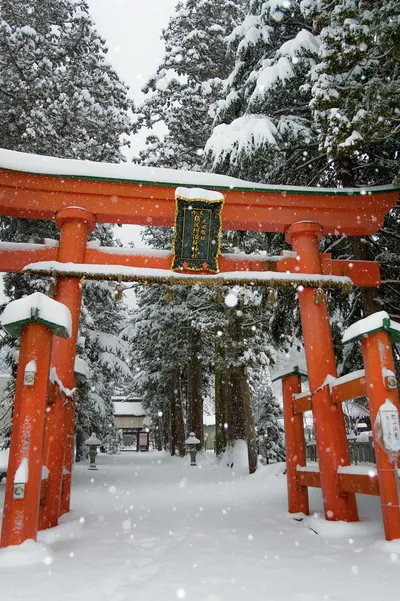
Visit Suwāzuki Shrine to see Fukui's oldest main hall and a unique Noh stage.
What it is
- Ancient Shinto shrine, mentioned in historical records.
- Origins date back to Emperor Buretsu's reign.
- Main hall is Fukui Prefecture's oldest shrine main hall.
What to see
- Main hall, a National Important Cultural Property.
- Worship hall, built in 1689, also a Noh stage.
- Mountain gate, a town cultural property.
- Noh mask 'Tenjin', a National Important Art Object.
- Sacred tree 'Inari no Osugi', a natural monument.
When to go
- Annual festival held for three days around June 10th.
- Address
- 福井県今立郡池田町稲荷13-1 Map
09
Otaki Shrine and Okata Shrine
FUKUI · SHRINE 大瀧神社・岡太神社
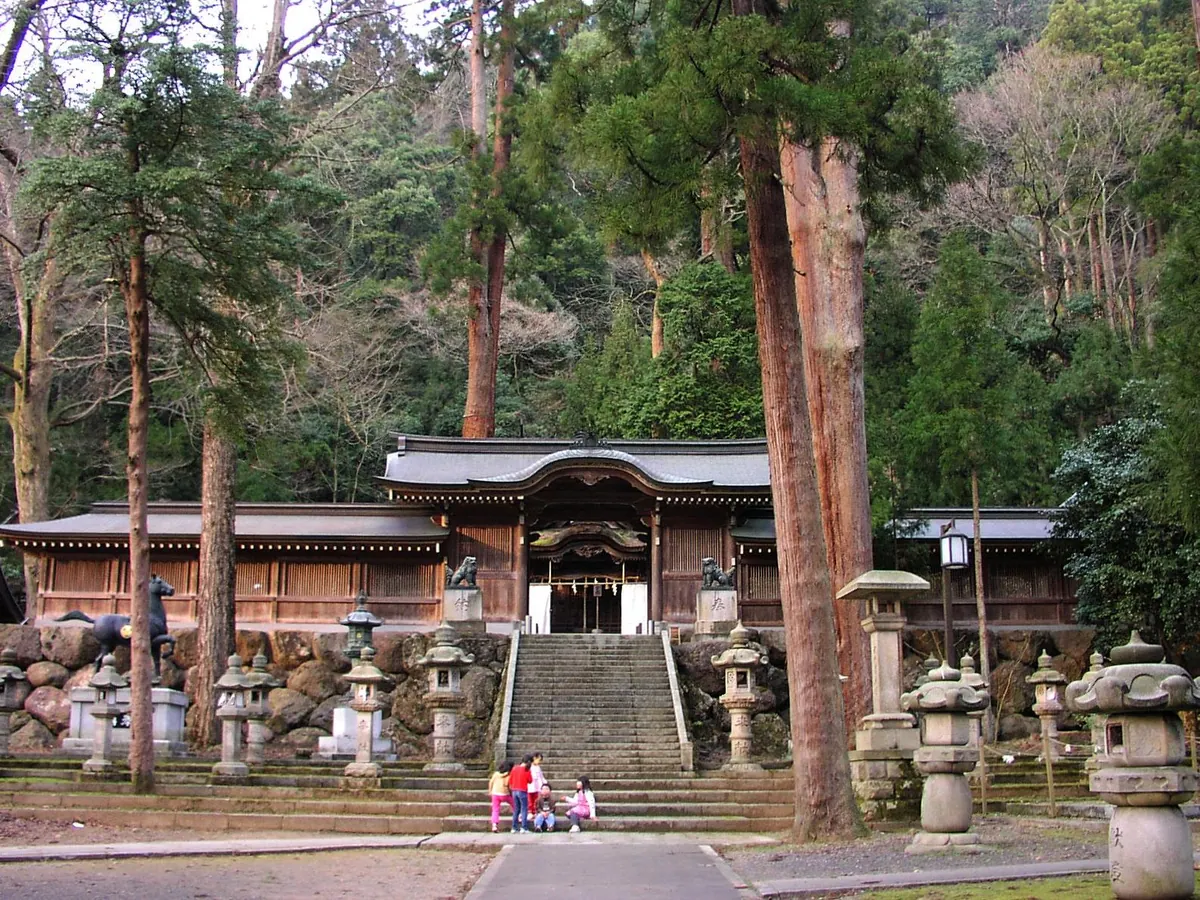
Visit this ancient shrine to Japan's paper goddess, featuring unique architecture and natural monuments.
What it is
- Two shrines, Otaki and Okata, stand side-by-side.
- Otaki Shrine was founded in 719 by Taicho.
- Okata Shrine is dedicated to the goddess of washi paper.
- The main halls were built in 1843.
What to see
- Main halls of both shrines at the upper shrine.
- Lower shrine's shared main hall and worship hall.
- Complex layered roof with intricate carvings.
- Zenmai-zakura cherry tree, a natural monument.
- Great Sugi cedar tree, a natural monument.
- Inner sanctuary forest, a natural monument.
- Address
- 福井県越前市大滝町23-10 Map
10
Ōshio Hachiman Shrine
FUKUI · SHRINE 大塩八幡宮
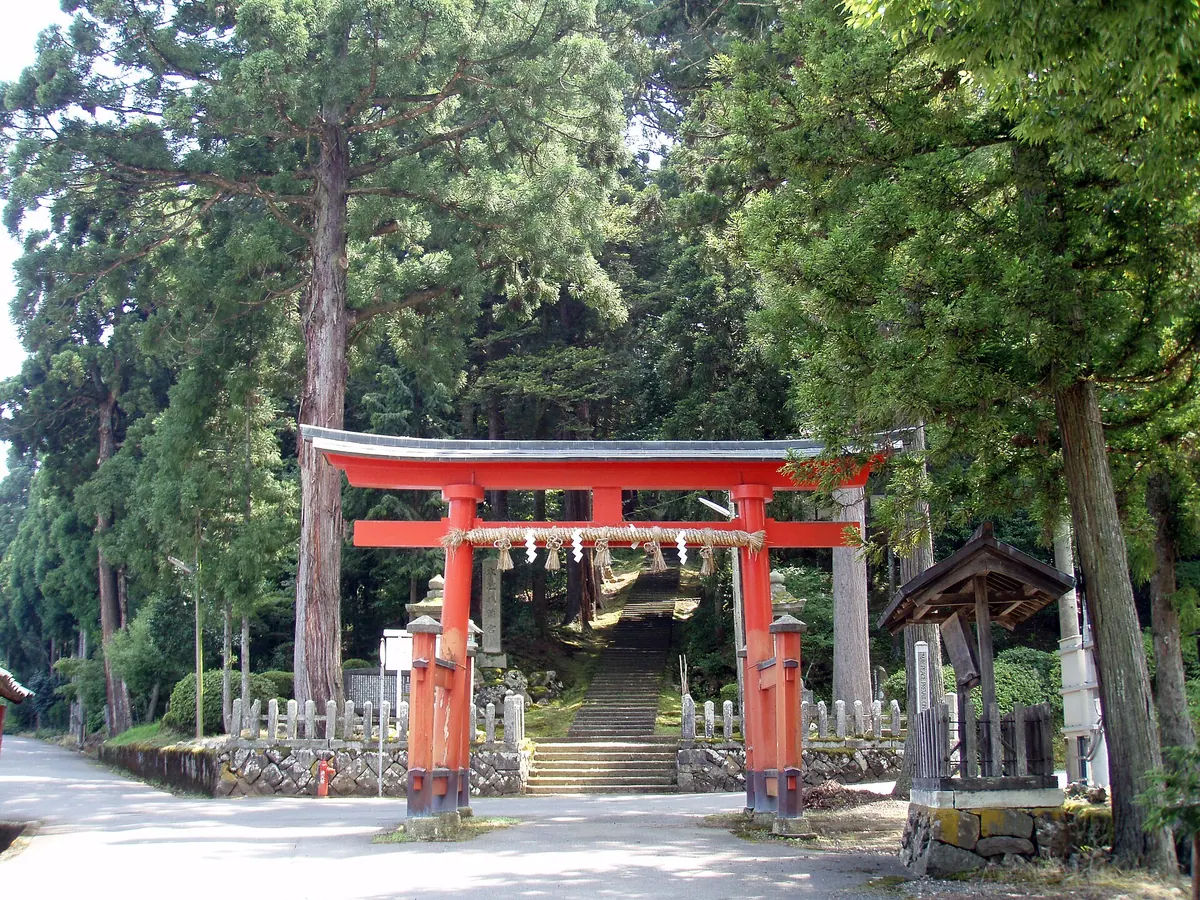
This historic shrine, dedicated to imperial figures, showcases important cultural properties from various periods.
What it is
- A shrine formerly known as Ōshio-no-ho Hachimangu.
- Current name adopted after the early modern period.
- Enshrines Okinagatarashihime-no-Mikoto, Emperor Ōjin, and Empress Jingū.
- Twelve shrines and sixteen deities enshrined in 1910.
What to see
- Main hall in nagare-zukuri style with a tiled roof.
- Worship hall is a national Important Cultural Property.
- Three saddles donated by Honda Tomimasa.
- A sangaku ema from 1701.
- A bronze bell from 1167.
- Ten votive picture tablets.
- Address
- 福井県越前市国兼22-2 Map
11
Ōmushi Shrine (Echizen)
FUKUI · SHRINE 大虫神社
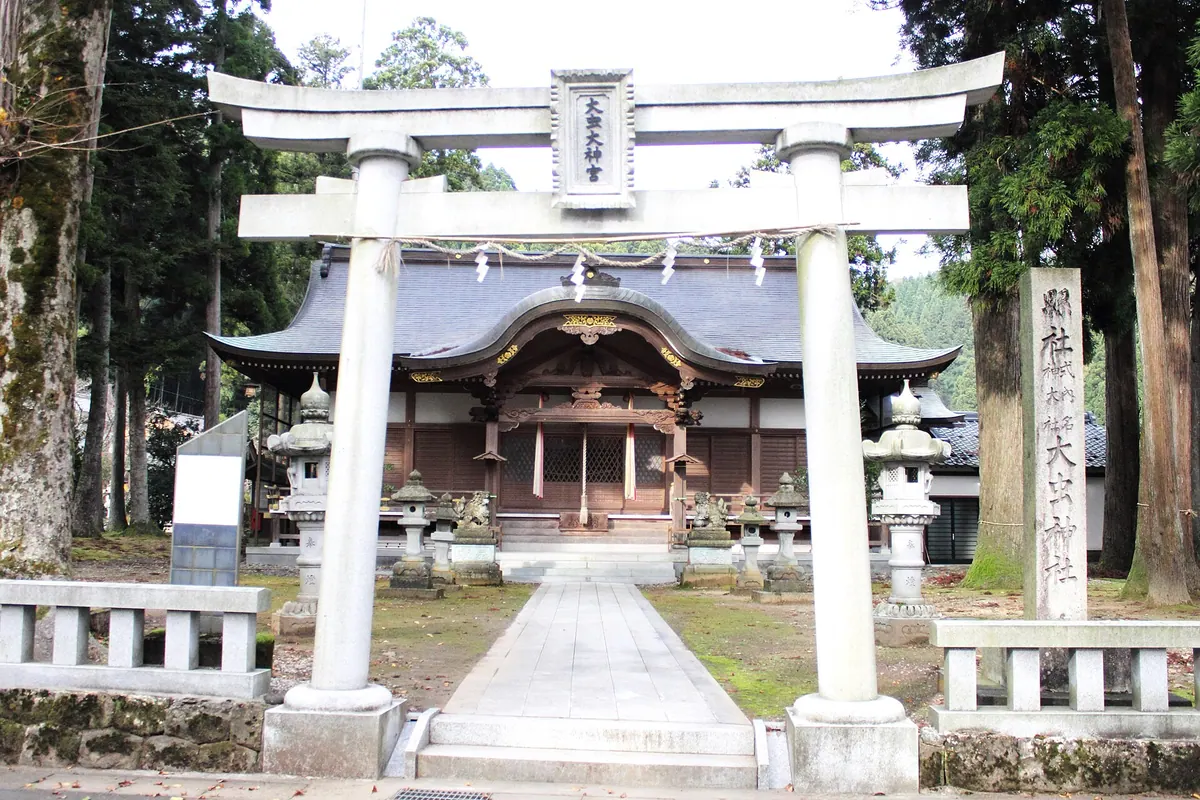
Ōmushi Shrine is an ancient site with important cultural properties and a summer festival.
What it is
- Ancient shrine first mentioned in 780.
- Dedicated to Amatsuhidakahikohonohohodemi no Mikoto.
- Rebuilt by Toyotomi Hideyoshi after 1576 fire.
What to see
- Two seated male deity statues are Important Cultural Properties.
- Miyabashi, a stone arch bridge, is a Registered Cultural Property.
- Okusha (inner shrine) on Mt. Onigatake summit.
- Ishigami no Yusui spring water on the grounds.
When to go
- Onigatake Himatsuri festival is held on August 15th.
- Address
- 福井県越前市大虫町21-28 Map
12
Hakusan Shrine (Fukui)
FUKUI · SHRINE 白山神社 (福井市)
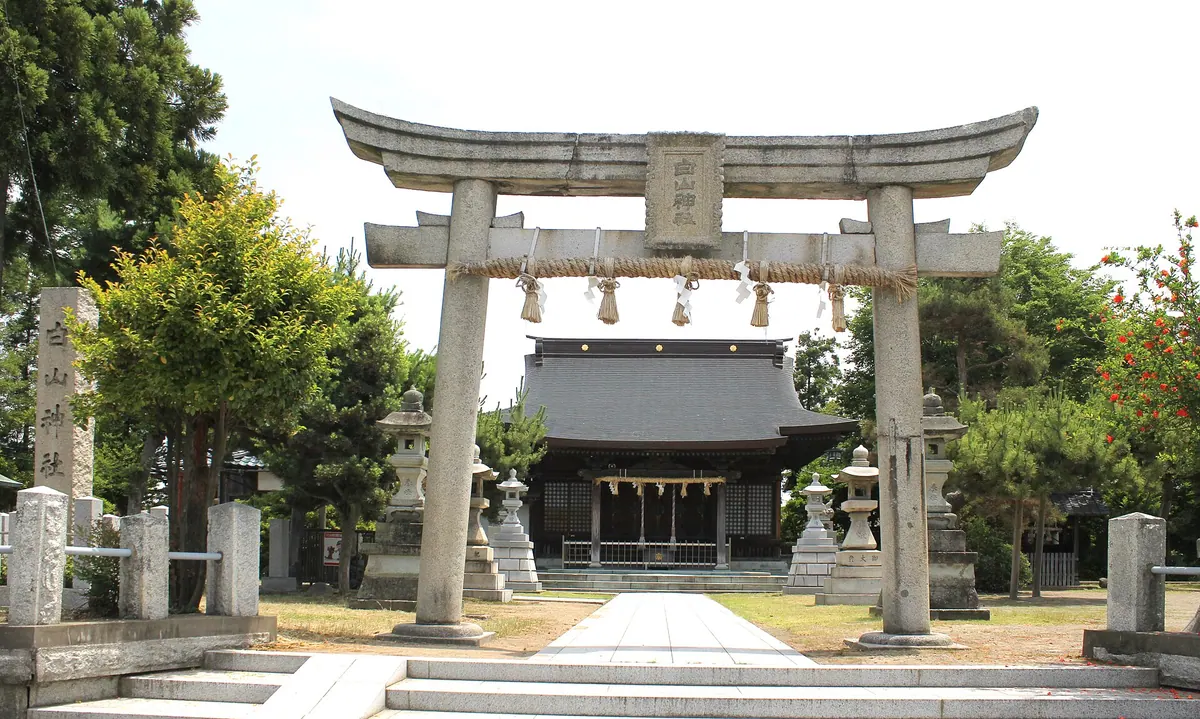
Hakusan Shrine is an ancient shrine with a unique deity, offering a glimpse into local history.
What it is
- A Shikinaisha shrine, listed in 927 AD.
- Amaterasu Omikami was enshrined in 783.
- Dedicated to a statue of Hakusan Gongen.
- Was a prayer place for the Asakura family.
What to see
- Statue of Hakusan Gongen, believed self-carved.
- Remains of Akaike pond on the grounds.
When to go
- The deity statue was moved on September 9.
Getting there
- Accessible by Keifuku Bus.
- Accessible by Hapi-Line Fukui Line.
- Address
- 福井県福井市八重巻中町24 Map
13
Wakasahiko Shrine
FUKUI · SHRINE 若狭彦神社
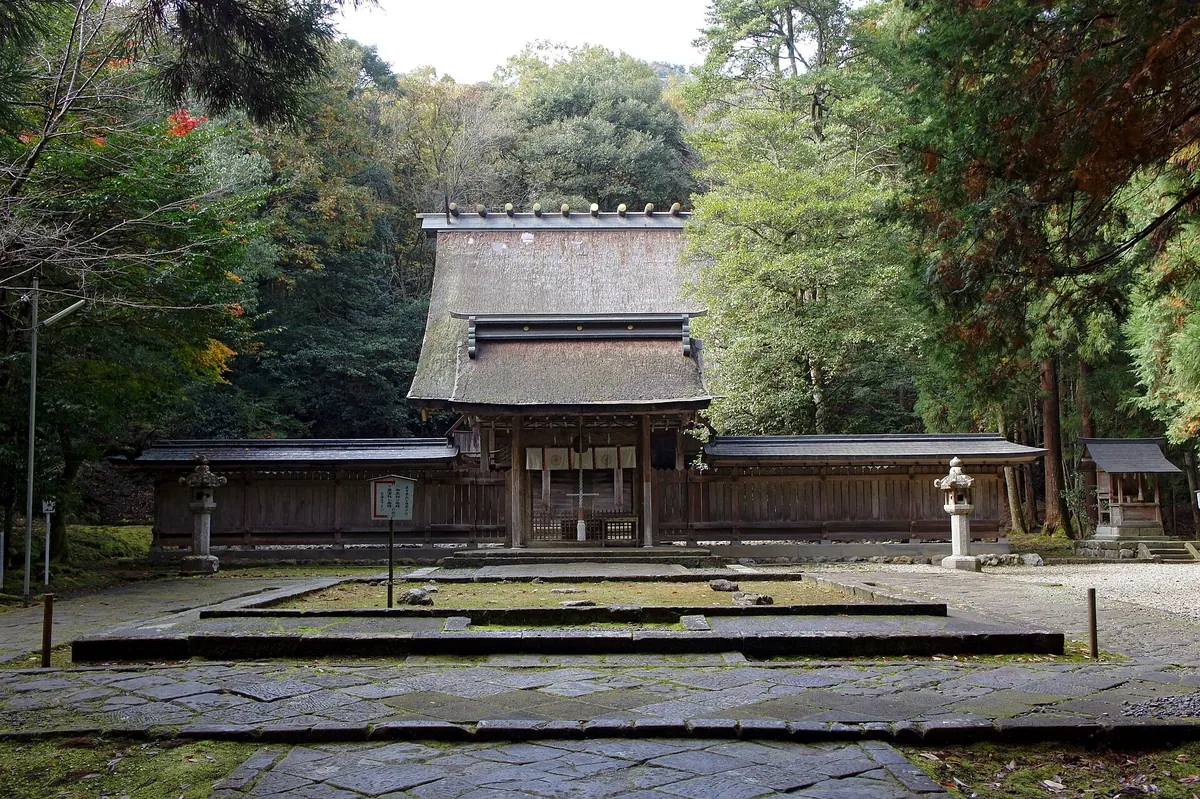
Visit this ancient shrine complex to see important cultural properties and learn about local deities.
What it is
- Ancient shrine complex founded in 714.
- Comprises an upper shrine and a lower shrine.
- Dedicated to Hikohodemi no Mikoto and Toyotamahime no Mikoto.
- It is the Ichinomiya of Wakasa Province.
What to see
- Main hall, tower gate, and gate are cultural properties.
- A Tachi sword, a National Important Cultural Property.
- A Norito document, a National Important Cultural Property.
Getting there
- Walk from Higashi-Obama Station.
- Address
- 福井県小浜市龍前 Map
14
Tsurugi Shrine (Echizen, Fukui)
FUKUI · SHRINE 劔神社
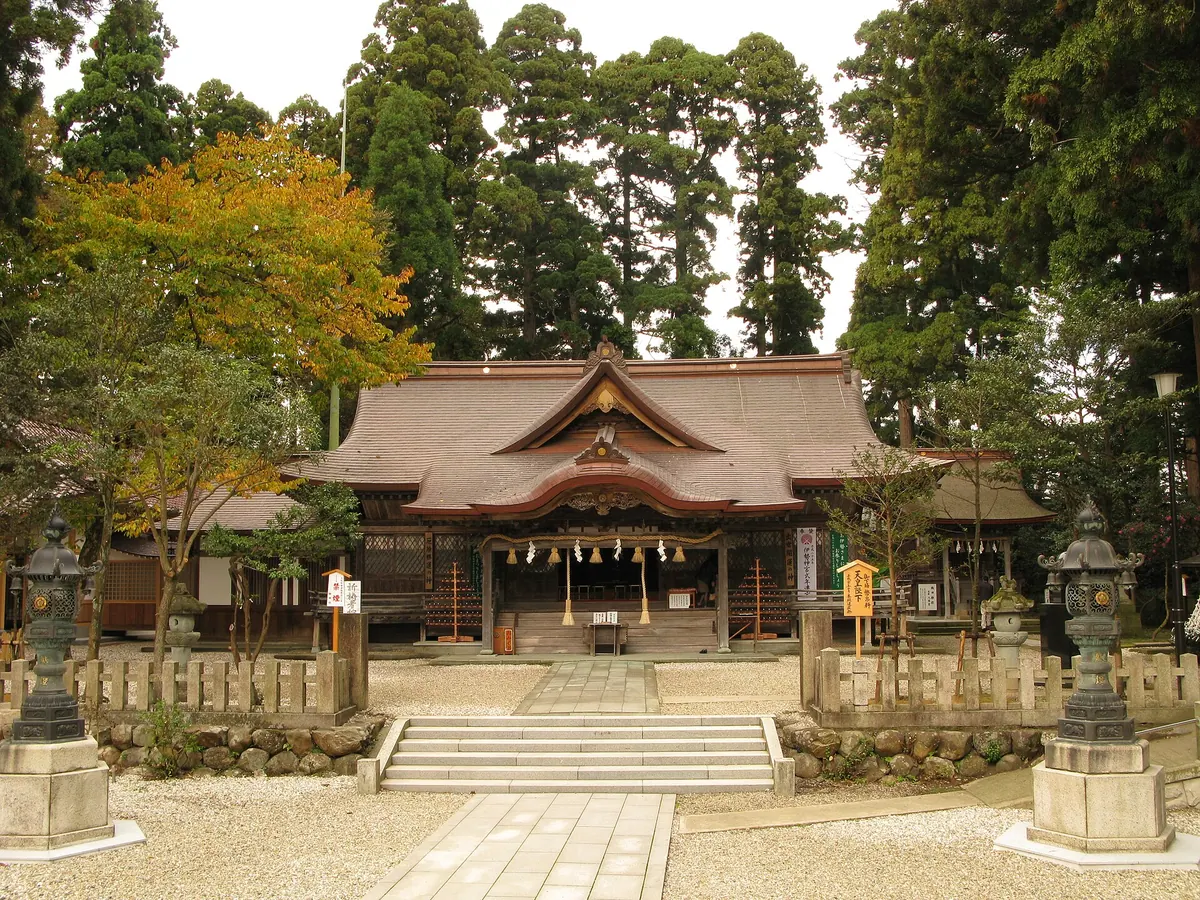
Tsurugi Shrine is an ancient shrine housing important historical artifacts and dedicated to Susanoo-no-Mikoto.
What it is
- Also known as Otamyojin.
- Dedicated to Susanoo-no-Mikoto.
- Kehi-no-Okami and Okinaga-no-Mikoto are also enshrined.
- Sacred object is a sword made by Prince Inishikiirihiko.
What to see
- Main hall built during the Edo period.
- Sessha Oda Shrine main hall from the Muromachi period.
- National Treasure temple bell from 770 CE.
- Fudo Myoo Sanzon statues from the Nanboku-cho period.
- Gilt bronze ritual implement from the Heian period.
- Address
- 福井県丹生郡越前町織田113-1 Map
15
Fujishima Shrine
FUKUI · SHRINE 藤島神社
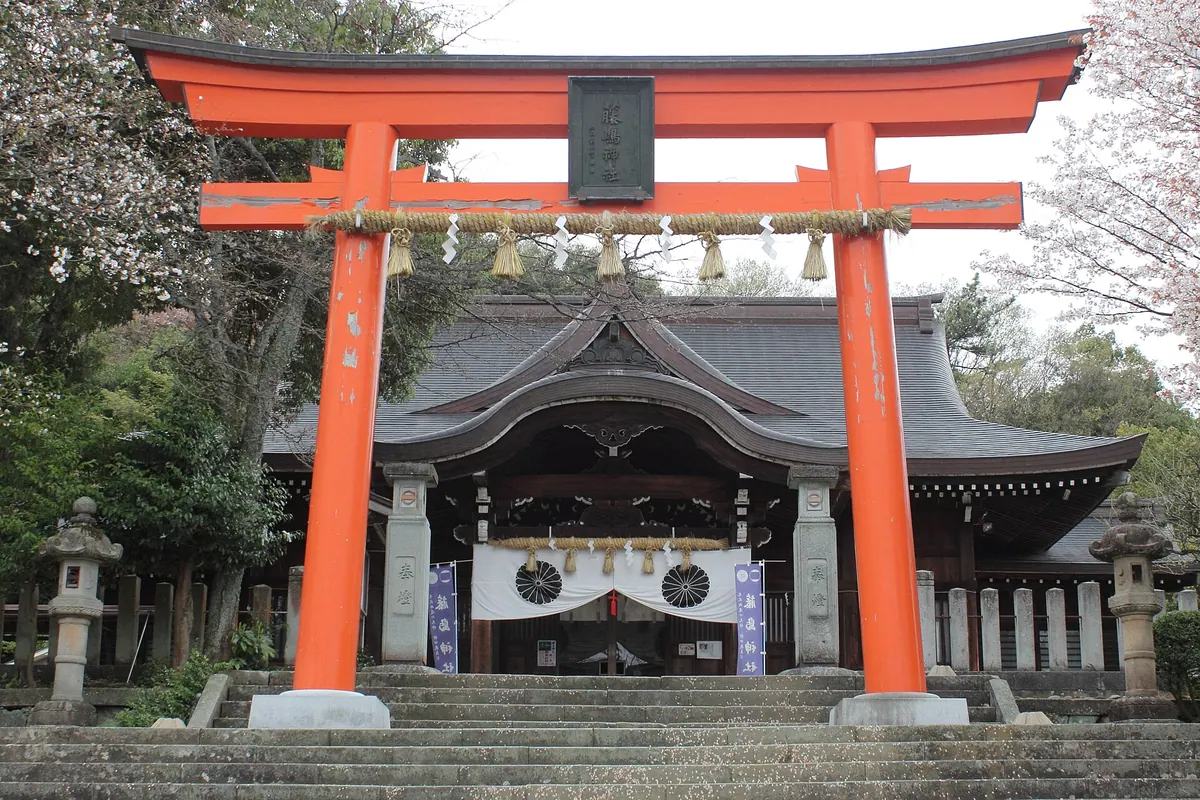
Fujishima Shrine honors a 14th-century samurai, displaying his helmet and sword as cultural treasures.
What it is
- A high-ranking shrine, established in 1876.
- Dedicated to the 14th-century samurai Nitta Yoshisada.
- Also enshrines Nitta Yoshisada's sons and brother.
- Moved to its current location in 1901.
What to see
- An iron inlaid silver helmet, a nationally important cultural property.
- A tachi sword by Yoshitsugu, a nationally important cultural property.
Getting there
- Located on Mt. Asuwa in Fukui City.
- Address
- 福井県福井市毛矢3-8-21 Map
- Official site
- nitta.or.jp
16
Uwase Shrine
FUKUI · SHRINE 宇波西神社
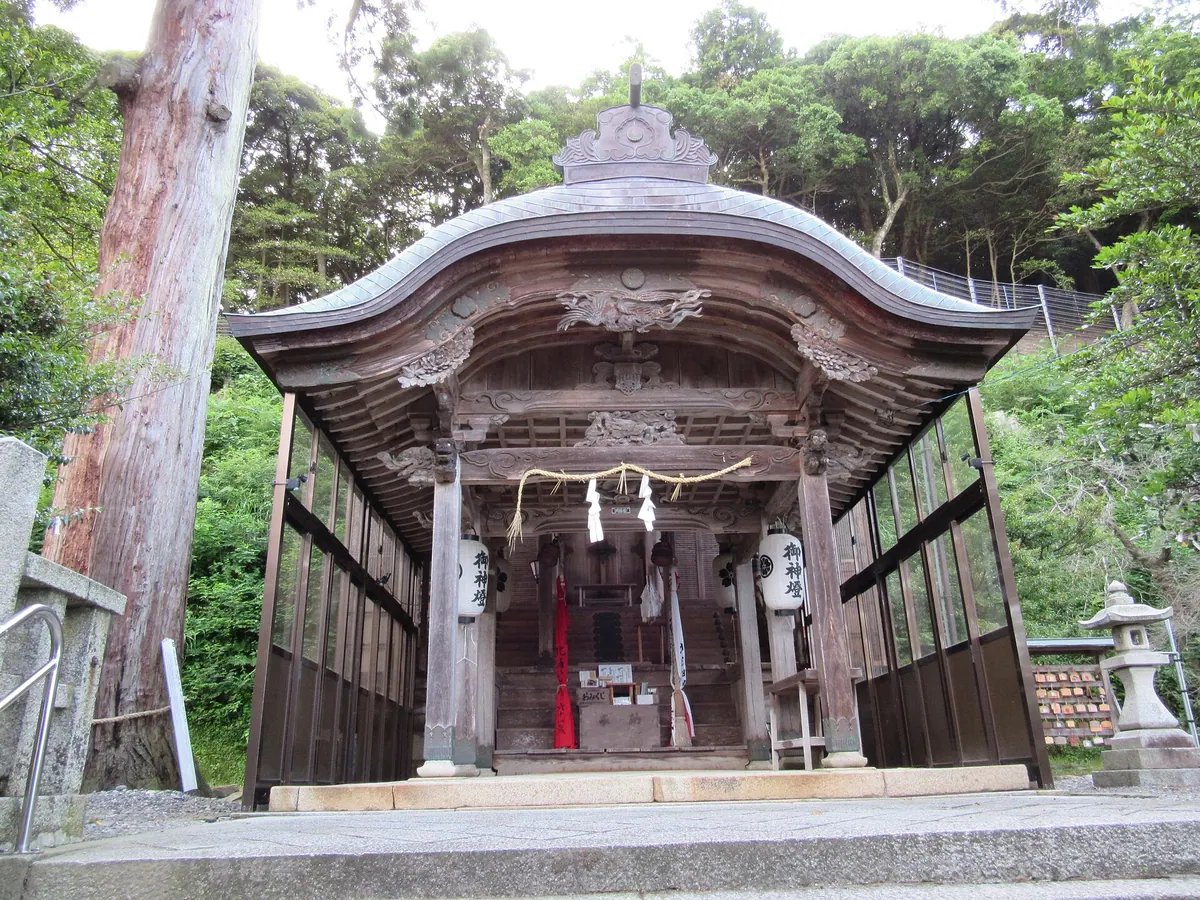
Historic shrine founded in 701, known for its unique festival and ancient lineage.
What it is
- Shrine founded in 701 in Mihama-cho, Fukui Prefecture.
- Dedicated to Ugayafukiaezu no Mikoto.
- Relocated to current site in 806.
- Recognized as a Japan Heritage site in 2015.
What to see
- Current shrine building constructed in 1851.
- Chōzubachi donated by Namekata Kyūbei.
When to go
- Annual festival features ritual dances.
- Festival is a national intangible folk cultural property.
- Address
- 福井県三方上中郡若狭町気山字寺谷129-5 Map
17
Sakae-no-yashiro
FUKUI · SHRINE 佐佳枝廼社
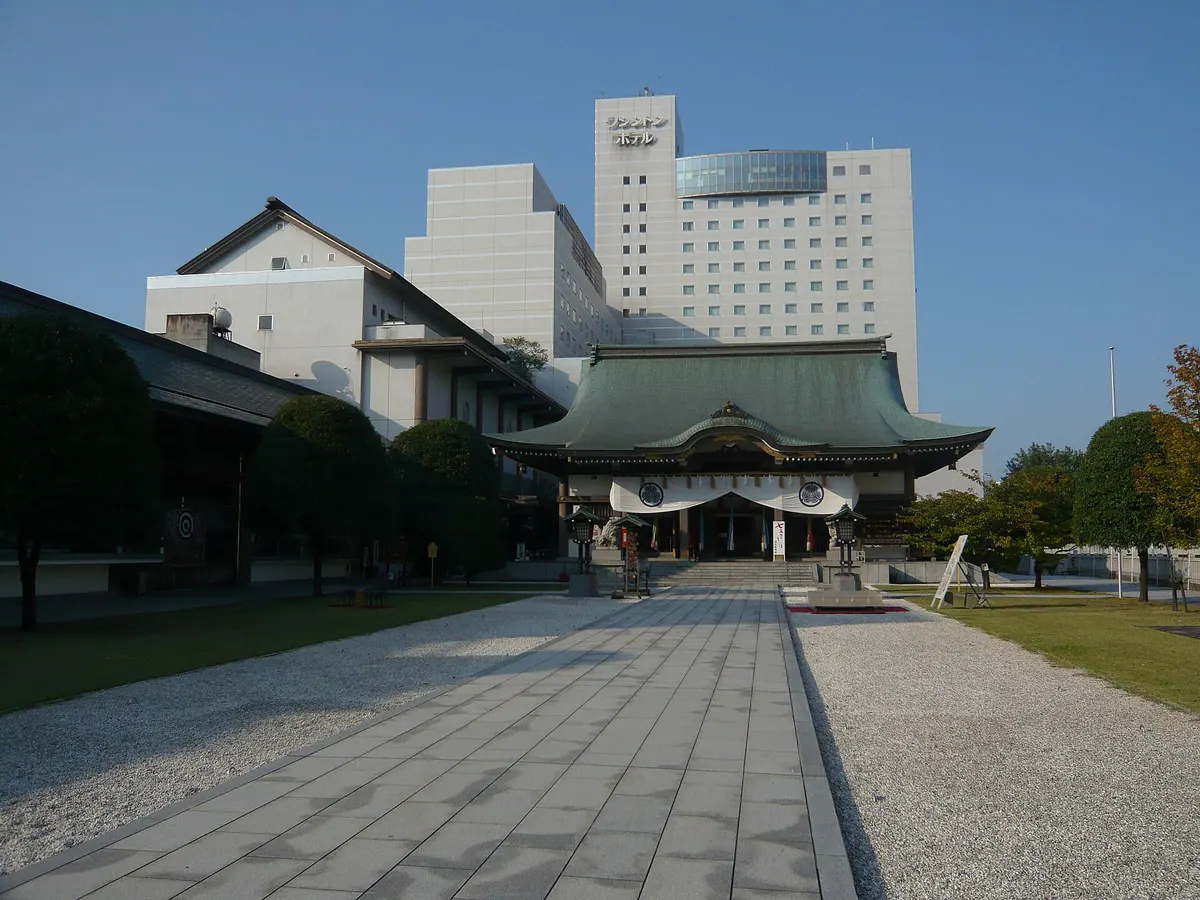
Sakae-no-yashiro is a Shinto shrine dedicated to historical figures, worth visiting for its unique history.
What it is
- A Shinto shrine in Fukui City.
- Also known as Echizen Toshogu.
- Enshrines Tokugawa Ieyasu and Matsudaira Hideyasu.
- Founded in 1873, originating from 1628.
What to see
- Main hall rebuilt with reinforced concrete in 1960.
- Auxiliary shrine enshrines three domain retainers.
Getting there
- 50 meters from Fukui Castle Ruins Daimyocho Station.
- 700 meters on foot from Fukui Station.
- Address
- 福井県福井市大手3丁目12-3 Map
18
Izumo-taisha Fukui Branch
FUKUI · SHRINE 出雲大社福井分院
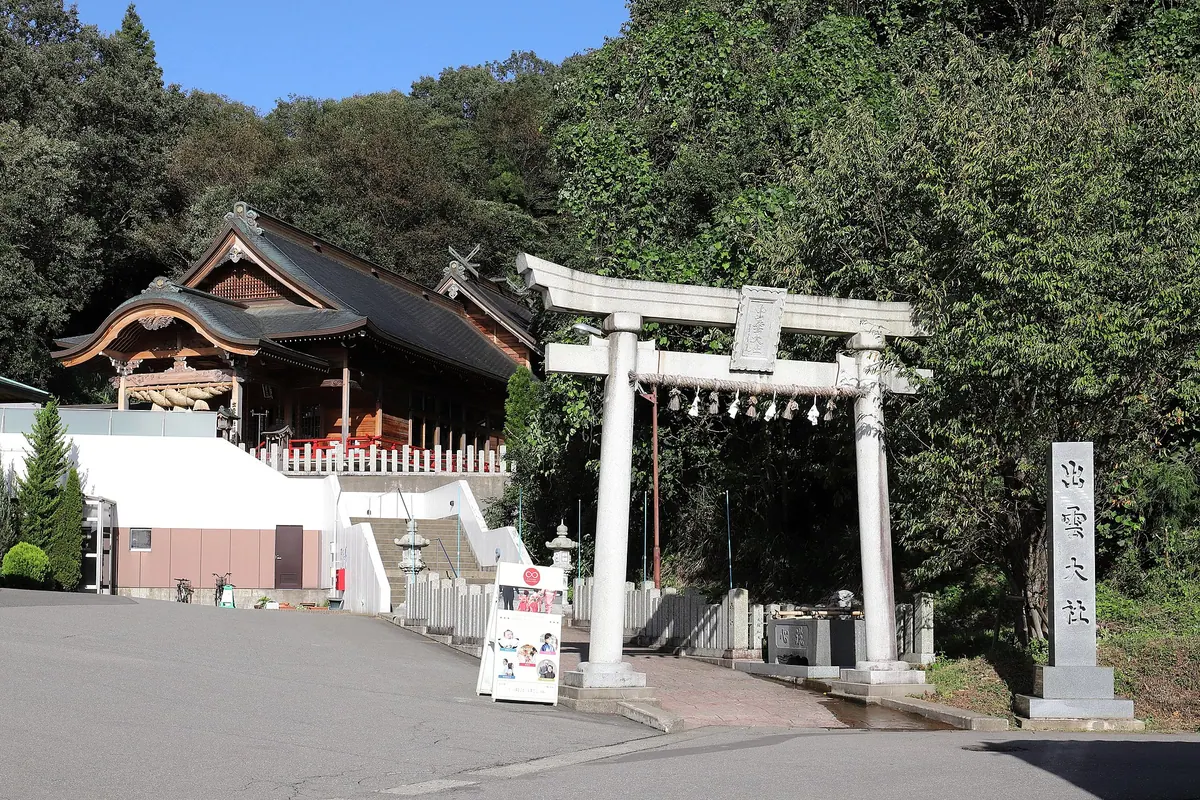
Visit this branch of Izumo-taisha Grand Shrine to experience its unique spiritual connection and festivals.
What it is
- A Shinto shrine in Fukui City.
- Enshrines a divided spirit of Ōkuninushi-no-Ōkami.
- Invited to Fukui in 1954.
- Promoted to a branch shrine in 1989.
When to go
- New Year's Festival: January 1st to 3rd.
- Setsubun Festival: February 3rd.
- Tanabata Goen Festival: July 7th.
Getting there
- 18-minute bus ride from JR Fukui Station.
- 18-minute taxi ride from JR Fukui Station.
- Address
- 福井県福井市渕2丁目2001番地 Map
19
Kanegasaki-gū
FUKUI · SHRINE 金崎宮
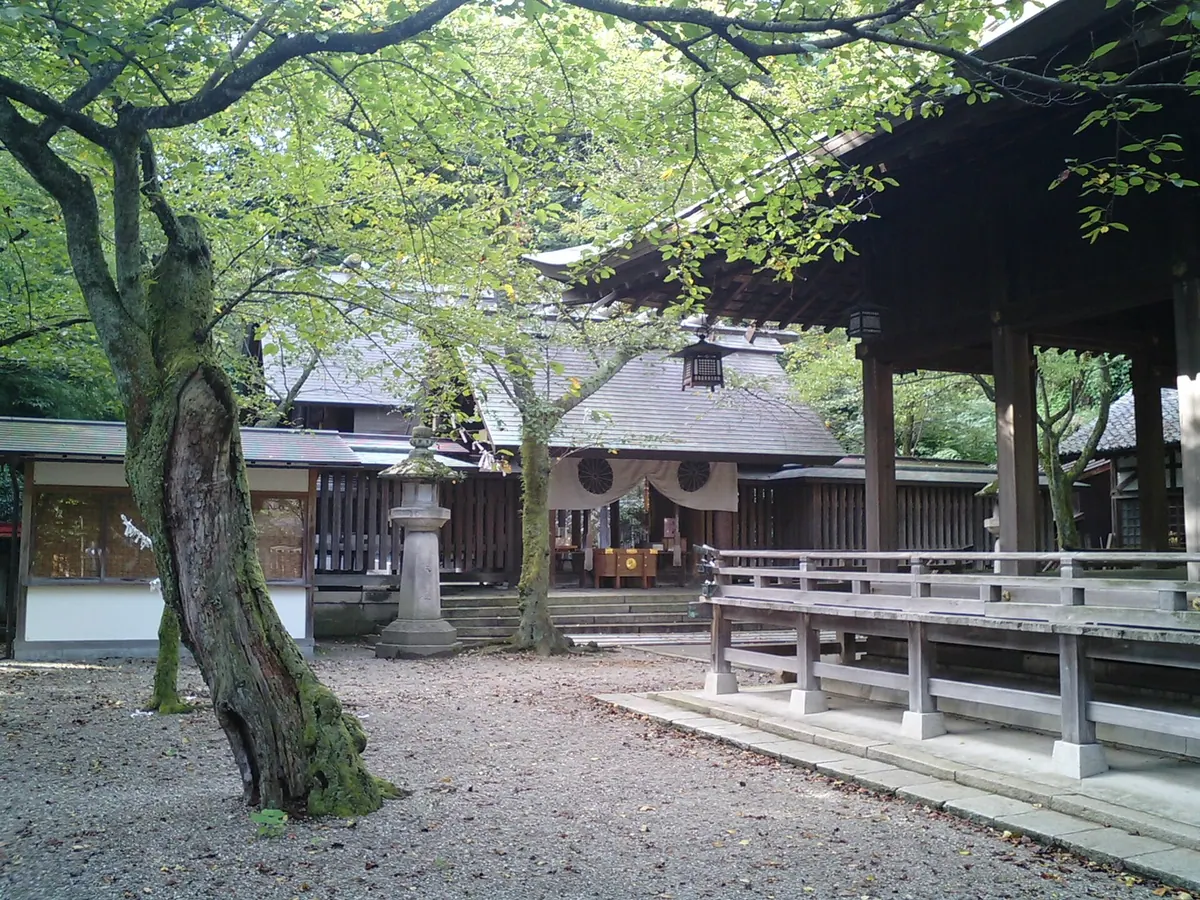
Kanegasaki-gū is a Shinto shrine known for love and cherry blossoms, worth visiting for its historical beauty.
What it is
- Shinto shrine founded in 1890.
- Dedicated to Prince Tsuneyoshi and Prince Takanaga.
- Known as "Shrine of Love."
- One of the Kenmu Restoration Fifteen Shrines.
What to see
- The current shrine building, completed in 1893.
- Kanegasaki Castle ruins at the foot of the shrine.
- One thousand Yoshino cherry trees.
When to go
- Hanakae Festival is held from April 1st to 15th.
- Address
- 福井県敦賀市金ヶ崎町1-4 Map
- Official site
- kanegasakigu.jp
20
Shibata Shrine
FUKUI · SHRINE 柴田神社
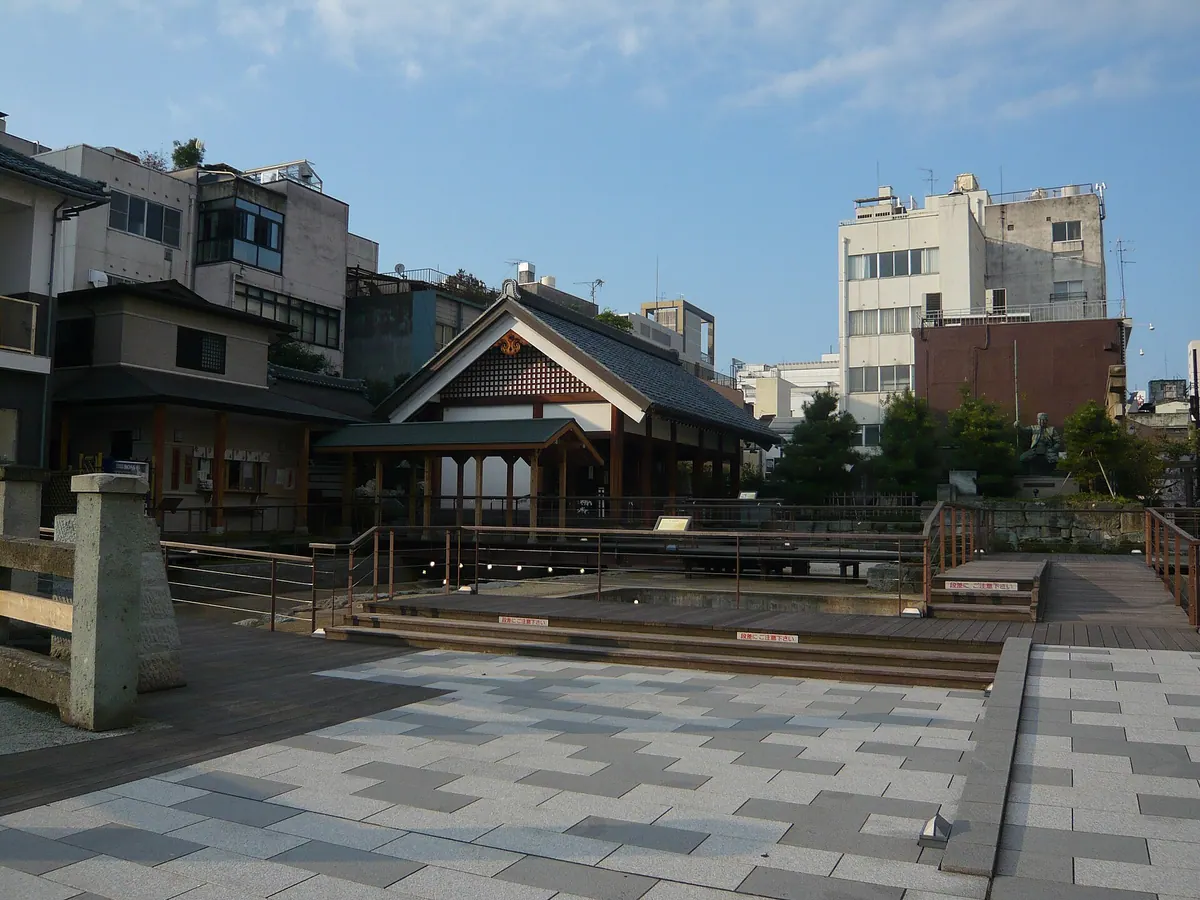
Shibata Shrine honors a samurai and his family on the ruins of Kitanosho Castle.
What it is
- Shrine established in 1890.
- Dedicated to samurai Shibata Katsuie.
- Also enshrines his wife Oichi.
- Built on the site of Kitanosho Castle's main keep.
What to see
- San-shimai Shrine, dedicated to Oichi's three daughters.
- Excavated stone wall from Kitanosho Castle.
- Grounds maintained as Kitanosho Castle Ruins Park.
Getting there
- 500m from Fukui Station West Exit.
- Address
- 福井県福井市中央1丁目21-17 Map
- Official site
- www.sibatajinja.jp