

20 Shrines in Gunma worth your time
Japan Gems
Gunma Prefecture has 81 shrines, including Akagi Shrine and Ichinomiya Nukisaki Shrine. They offer a mix of history and local culture for your visit.
Gunma has 83 shrines on Japan Gems. Below are the 20 we can tell you the most about — each one written up in English from Japanese sources, with what to see and how to get there. See all shrines in Gunma.
01
Kawasukune Shrine (Miyukida, Shibukawa)
GUNMA · SHRINE 甲波宿禰神社 (渋川市行幸田)
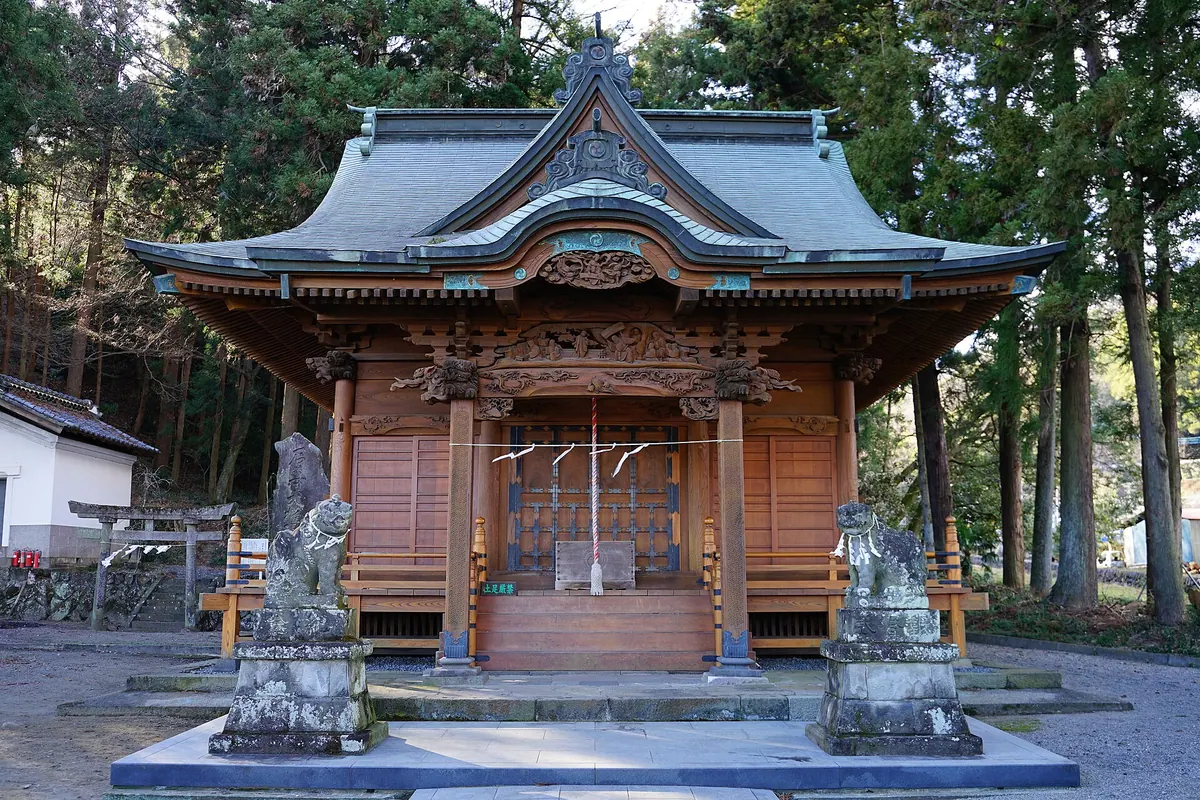
A historic village shrine in Shibukawa featuring a main hall from 1864 and traditional lion dance performances during festivals.
What it is
- Established as a branch of the Kawashima shrine to honor two Shinto deities.
- Designated as a village shrine in 1873 within the Miyukida area.
- The current main hall is a historical structure dating back to 1864.
What to see
- The main hall constructed during the late Edo period.
- Sekison Daigongen is enshrined in a dedicated space within the precinct grounds.
- Various stone monuments and smaller branch shrines scattered across the site.
- The Miyukida Lion Dance, a city-designated intangible cultural property performed for harvests.
When to go
- Spring festival held annually on the Sunday nearest to April 17.
- Autumn festival takes place every year on October 9.
Getting there
- Take a bus from Shibukawa Station to the Miyukida bus stop.
02
Ichinomiya Nukisaki Shrine
GUNMA · SHRINE 一之宮貫前神社
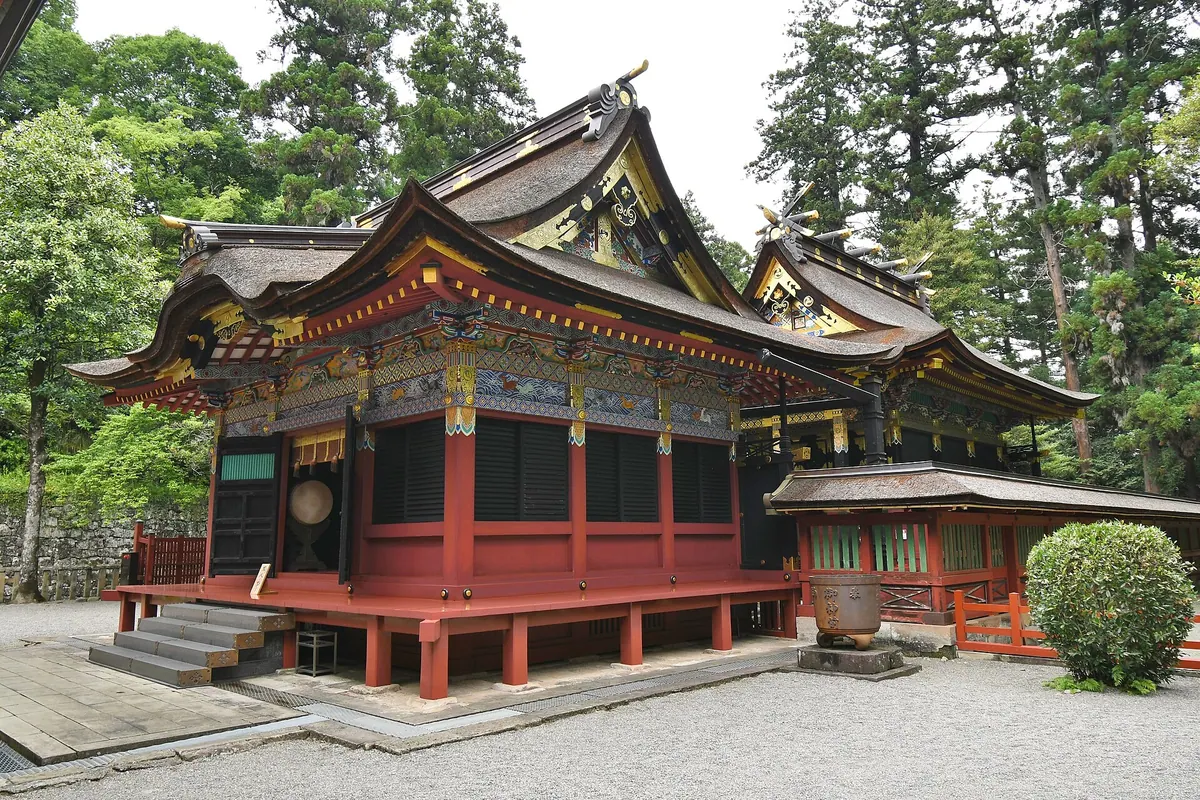
Ichinomiya Nukisaki Shrine is a unique descending shrine with important cultural properties and ancient rituals.
What it is
- Shrine dedicated to Futsunushi-no-kami and Hime-Okami.
- First mentioned in historical records in 806.
- Designated a National Treasure in 1871.
- Known as a 'kudari-miya' or descending shrine.
What to see
- Main hall, worship hall, and tower gate are Important Cultural Properties.
- Main hall is a unique two-story 'Nukisaki-zukuri' structure.
- Chokushimon gate opens three times a year.
- Fujitasugi cedar tree is said to be 1200 years old.
When to go
- Special Shinto rituals, including deer divination, are performed.
- A Shikinen Sengu ritual is conducted every 12 years.
- Address
- 〒370-2452 群馬県富岡市一ノ宮1535 Map
- Official site
- www.nukisaki.or.jp
03
Kiso Mibashira Shrine
GUNMA · SHRINE 木曾三柱神社
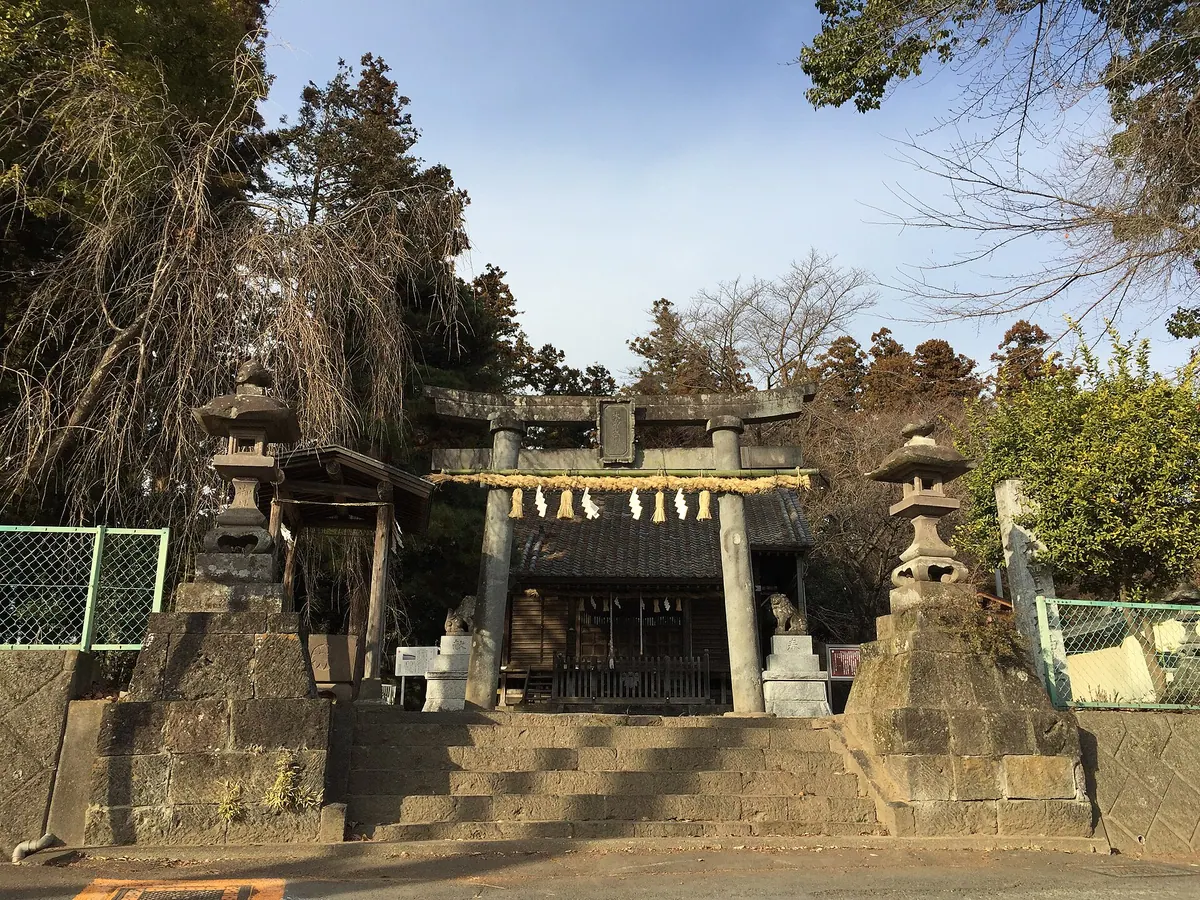
Kiso Mibashira Shrine is a historic site with ancient burial mounds and cultural treasures.
What it is
- A shrine dedicated to three Shinto deities.
- Branched off from Kiso Sansha Shrine in the late Edo period.
- Designated a village shrine.
- Known as "Hana no Myojin" for its cherry blossoms.
What to see
- The shrine building on the Shogun-zuka Kofun.
- Shogun-zuka Kofun, a 20-meter diameter circular tumulus.
- Asahi-zuka Kofun, a 14-meter diameter circular tumulus.
- Jomon period stone sword, a prefectural cultural property.
- Portrait of Kiso Yoshinaga, a city cultural property.
When to go
- Spring festival for the Hakoda Shishimai lion dance.
- Address
- 群馬県渋川市北橘町箱田777番 Map
04
Akagi Shrine
GUNMA · SHRINE 赤城神社

Akagi Shrine is a historic shrine with important cultural properties and a unique natural monument.
What it is
- One of about 300 Akagi Shrines nationwide.
- Also called Miyosawa Akagi Shrine.
- Dedicated to Akagi-no-kami, Toyokiirihiko-no-mikoto, Onamuchi-no-mikoto.
- Formerly two shrines, East and West, united after the Meiji era.
What to see
- Main hall and Chumon are important cultural properties.
- Somon gate is a Koraimon gate from the Edo period.
- The 'Tawara Sugi' is a designated natural monument.
- The 'Jindai Moji no Hi' is a city-designated cultural property.
- Edo period pine tree-lined approach.
- Ritual site centered on the 'Hitsuiwa' rock, 1.3km up Mt. Akagi.
- Address
- 群馬県前橋市三夜沢町114番地 Map
05
Serada Tōshō-gū
GUNMA · SHRINE 世良田東照宮
A historic Shinto shrine dedicated to Tokugawa Ieyasu, featuring important cultural properties.
What it is
- A Shinto shrine in Ōta City, Gunma Prefecture.
- Enshrines Tokugawa Ieyasu as Tōshō Daigongen.
- Founded by Tokugawa Iemitsu around 1639.
- Designated a National Historic Site.
What to see
- Honden (main hall) is an Important Cultural Property.
- Haiden (worship hall) is an Important Cultural Property.
- Karamon (Chinese gate) is an Important Cultural Property.
- An iron lantern from 1618.
- Tachi sword with a Ryōkai inscription.
- Thirty-six Immortal Poets painted panels.
Getting there
- Located near the Nikkō Reiheishi Kaidō.
- Address
- 群馬県太田市世良田町3119-1 Map
- Official site
- www.net-you.com
06
Ninomiya Akagi Shrine
GUNMA · SHRINE 二宮赤城神社
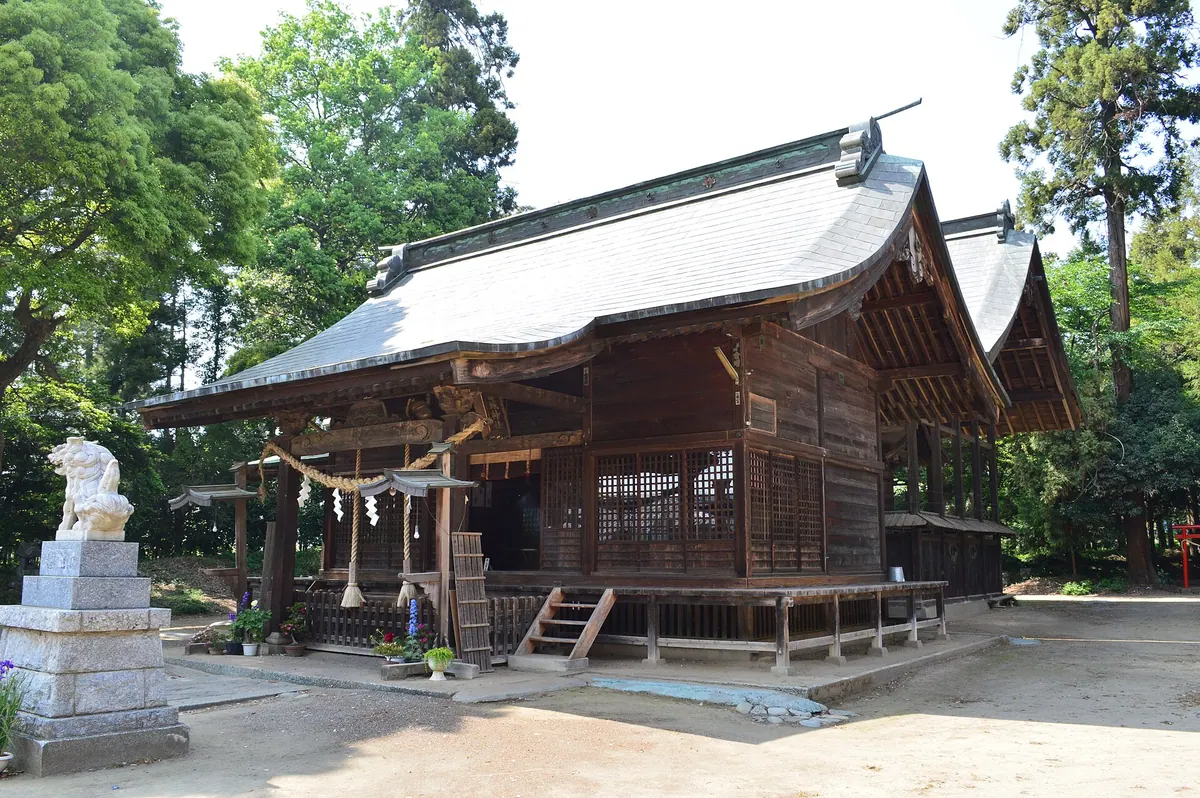
Ancient shrine with unique artifacts and a moat, offering a glimpse into Japan's past.
What it is
- A Shikinai-sha (Myojin Taisha) Ronsha shrine.
- Dedicated to Toyokiirihiko-no-mikoto and Onamuchi-no-mikoto.
- Founded during the Heian period, exact date unknown.
- Designated as a Gosha under the modern shrine ranking system.
What to see
- Shrine grounds surrounded by a moat and earthworks.
- Nasori-men mask, a cultural property.
- Bronze bell dedicated in 1623.
- Two pairs of ema donated by feudal lords.
- Hoto pagoda from the Nanboku-cho period.
When to go
- Oshinko procession is an important intangible folk cultural property.
- Address
- 群馬県前橋市二之宮町886 Map
07
Haruna Shrine
GUNMA · SHRINE 榛名神社
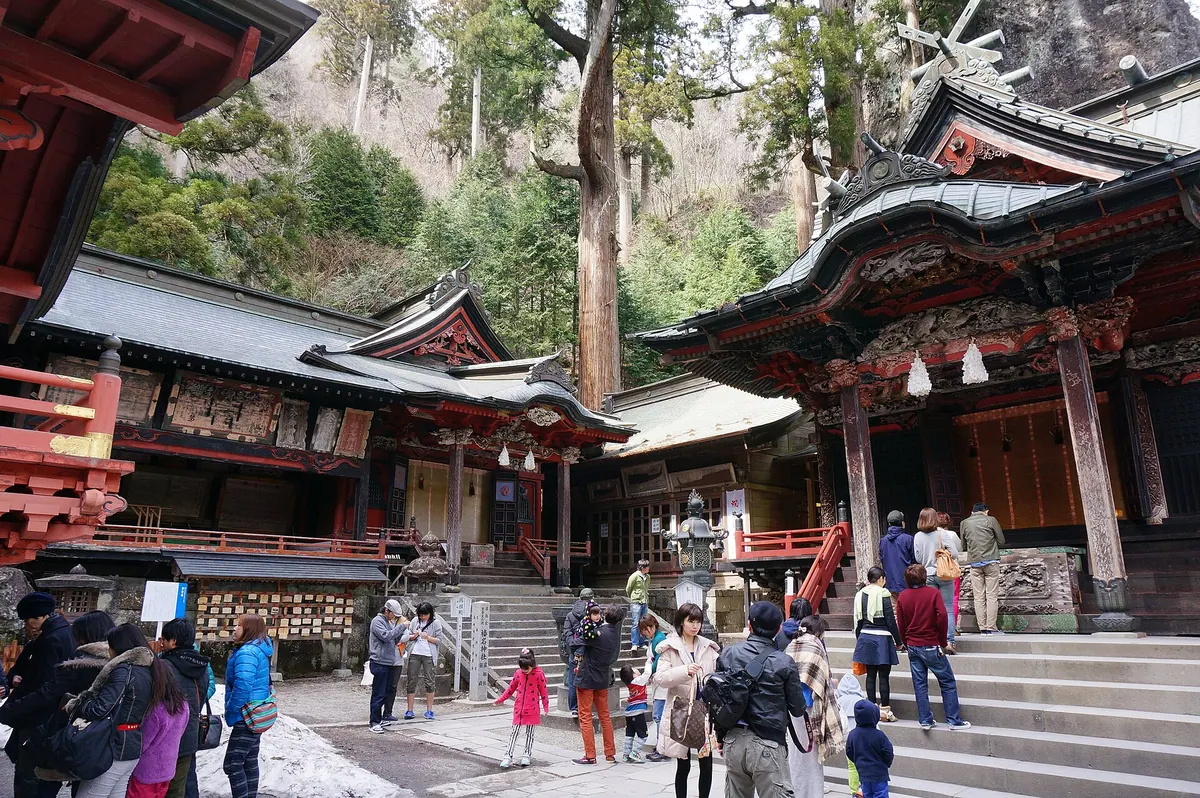
Haruna Shrine is an ancient mountain shrine with unique architecture and natural monuments.
What it is
- One of the three great mountains of Jomo.
- Mentioned in the Engishiki Jinmyocho completed in 927.
- Main deities are Homusubi-no-kami and Haniyamahime-no-kami.
What to see
- Six nationally designated important cultural properties.
- Three-story pagoda, called Shinpoden.
- Main hall connected to sacred rock, Misugata-iwa.
- Yate-no-Sugi cedar tree is a national natural monument.
- Ancient monk living quarters ruins have been excavated.
When to go
- Annual Chima-matsuri festival in June.
- Tenko-sai festival on New Year's Eve.
- Address
- 群馬県高崎市榛名山町849 Map
- Official site
- www.haruna.or.jp
08
Isesaki Shrine
GUNMA · SHRINE 伊勢崎神社
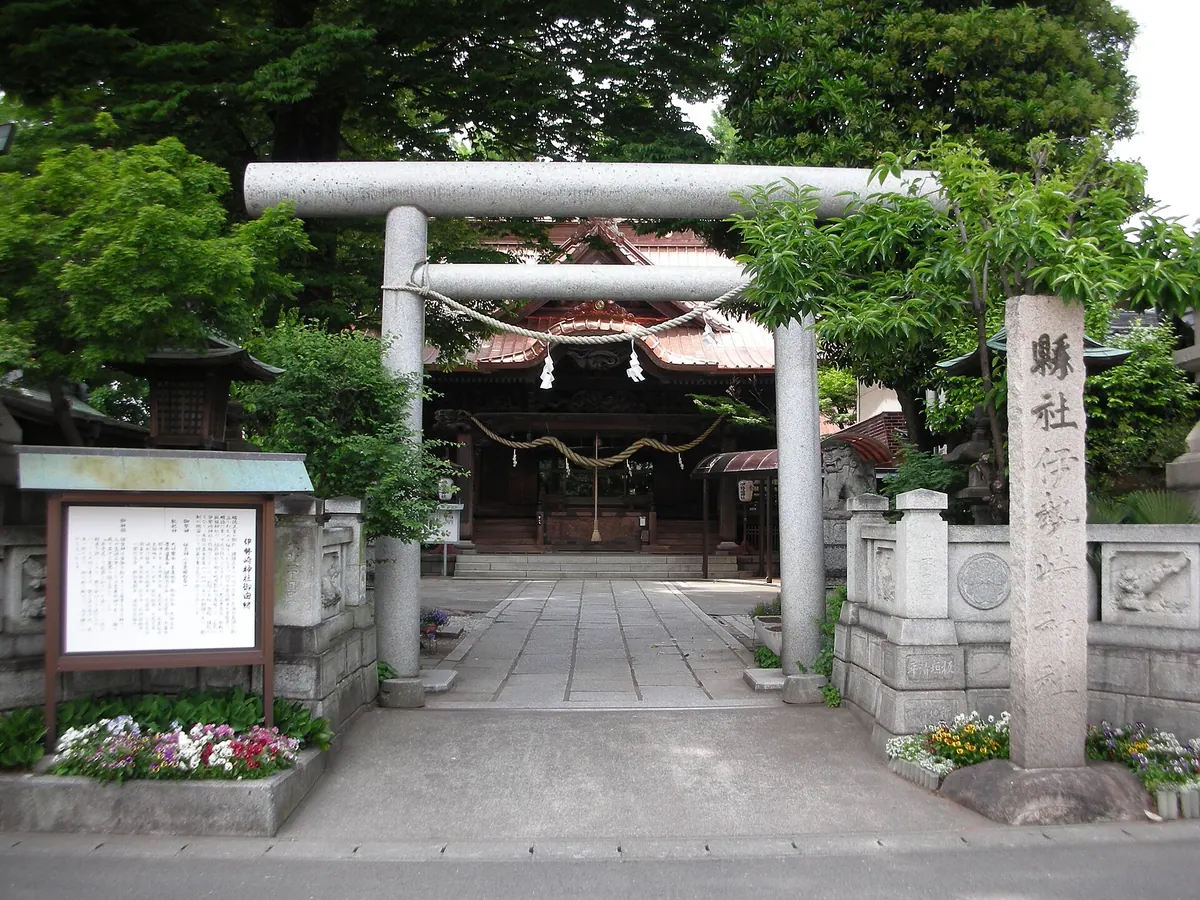
Isesaki Shrine, founded in 1200, offers unique artifacts and local festival experiences.
What it is
- Founded in 1200 by Miura Yoshizumi.
- Formerly known as Iifuku Shrine.
- Dedicated to the deity Uke Mochi no Kami.
- Birthplace of Isesaki's 'Jinja Croquette'.
What to see
- Worship hall constructed in 1935.
- Wooden propeller from a Type 90-3 seaplane.
- Propeller donated by Nakajima Aircraft employees in 1937.
- Amulets made with Isesaki-kasuri fabric.
When to go
- Joshu Yakiman Festival on January 11.
- Ebisu-ko Festival on November 19.
Getting there
- 10-minute walk from Isesaki Station.
- Address
- 群馬県伊勢崎市本町21番地1 Map
- Official site
- www.isesaki.or.jp
09
Kifune Shrine
GUNMA · SHRINE 貴船神社
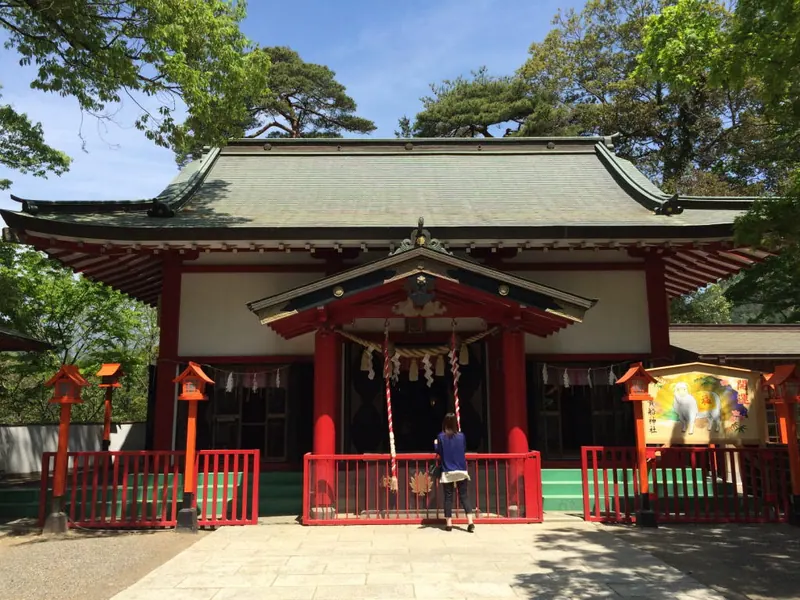
Ancient shrine dedicated to water gods, offering unique architecture and a peaceful natural setting.
What it is
- Founded in 956, relocated in 1668.
- Dedicated to Takaokami no Kami, Oyamatsumi no Kami, and Onamuchi no Kami.
- Worshipped as a water god protecting Kanto from drought.
- Attracts 200,000 New Year's worshipers annually.
What to see
- Shrine located on a paleozoic cliff.
- Main hall, heiden, and worship hall rebuilt in 1971.
- Tengu no Miya enshrines Daitengu and Karasutengu.
- Monument with a haiku by Matsuo Basho.
Getting there
- 15-minute walk from Kami-Kambai Station.
- 20-minute taxi ride from Akagi Station.
- Address
- 群馬県みどり市大間々町塩原785番地 Map
- Official site
- kifune-gunma.com
10
Kiryū Nishinomiya Shrine
GUNMA · SHRINE 桐生西宮神社
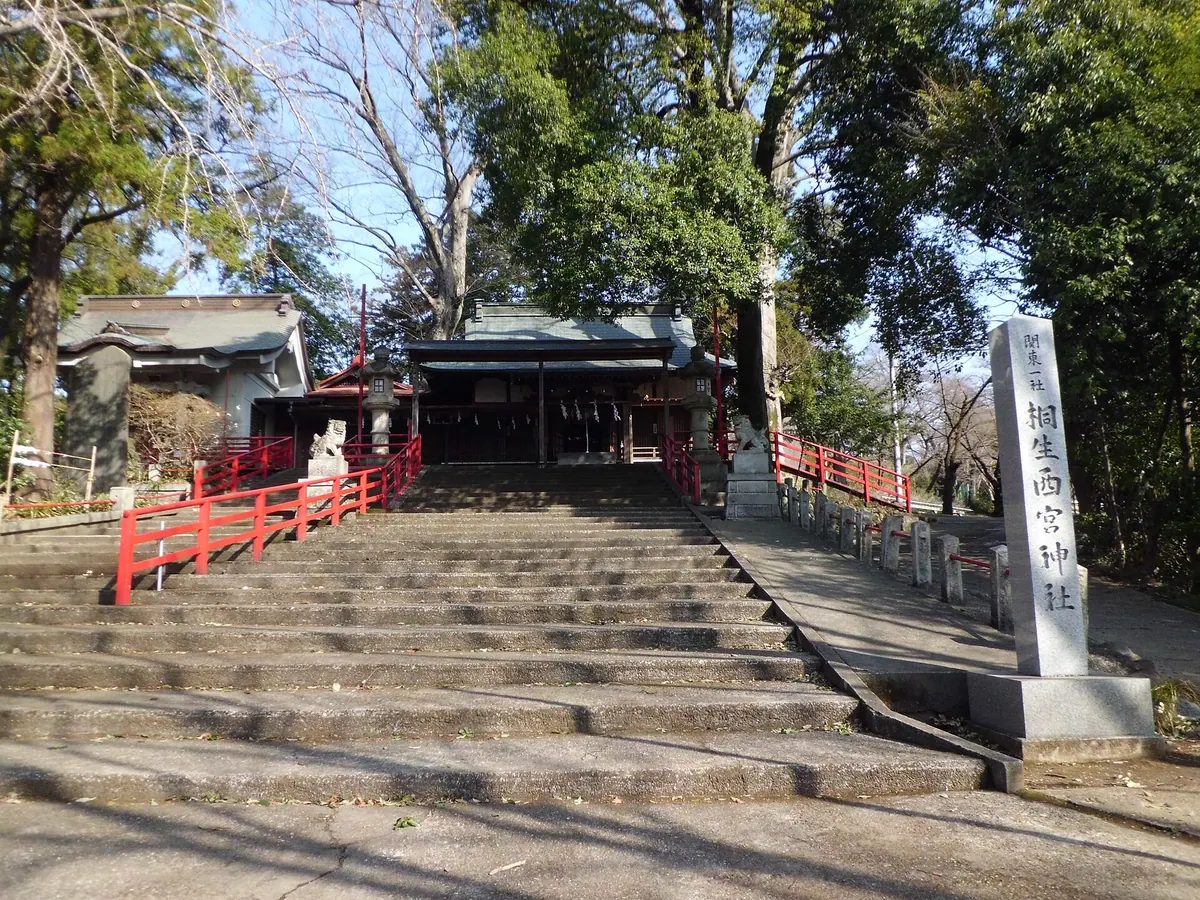
Kiryū Nishinomiya Shrine is a unique Kanto branch of Nishinomiya Shrine, worth visiting for its grand architecture and local festivals.
What it is
- A subsidiary shrine of Miwa Shrine.
- Enshrines the deity Hiruko Okami.
- The only direct branch of Nishinomiya Shrine in Kanto.
- Also known as "Kanto Issha."
What to see
- Shrine building completed in May 1905.
- Shrine building is larger than Miwa Shrine's.
When to go
- Hatsumatsuri (Hatsu Ebisu) is on January 20th.
- Reitaisai (Kiryū Ebisu-kō) is on November 19th and 20th.
Getting there
- 10-minute walk from Kiryū Station North Exit.
- Nishi-Kiryū Station is closer.
- Address
- 群馬県桐生市宮本町2丁目1番1号 Map
11
Kawasukune Shrine (Higashiagatsuma)
GUNMA · SHRINE 甲波宿禰神社
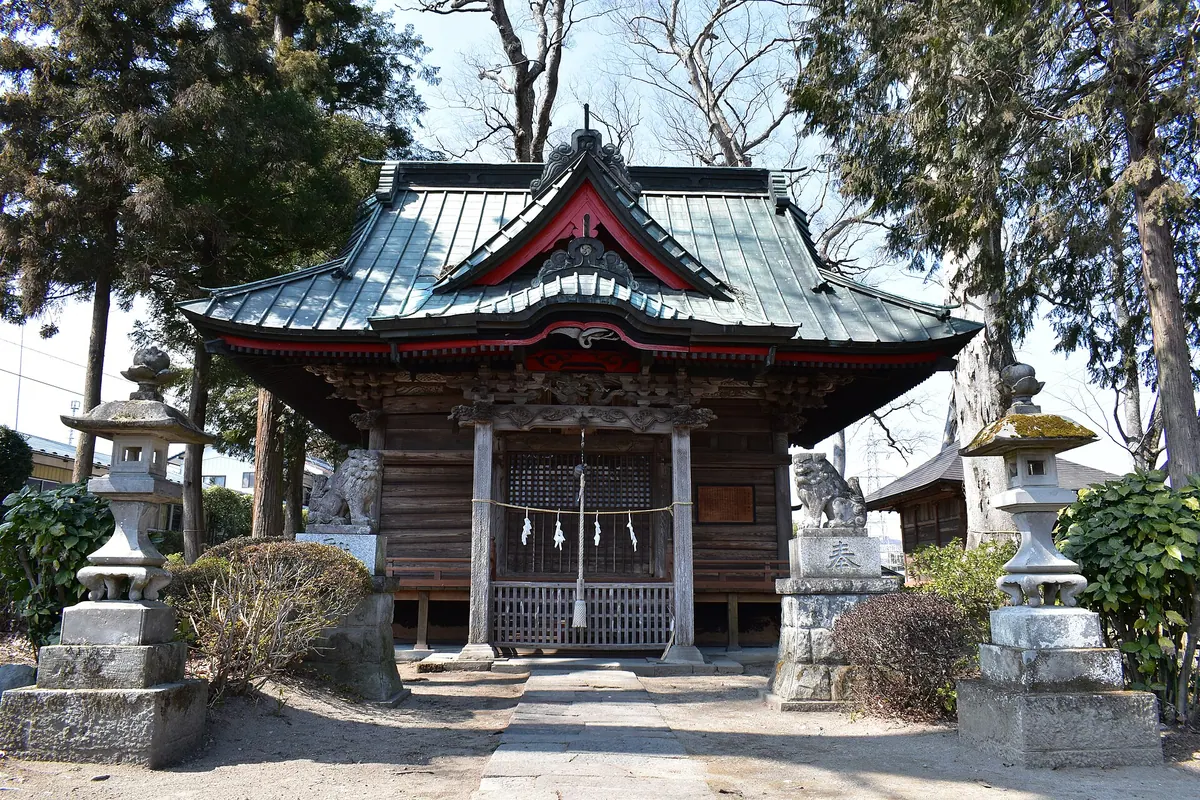
Ancient shrine in Gunma, dedicated to purification deities, with a history spanning over 1200 years.
What it is
- Established in 785 by Ono Kinzen.
- Dedicated to Hayaakitsuhiko-no-kami and Hayaakitsuhime-no-kami.
- Revered by the Nagao clan during the Sengoku period.
- Renamed Kawasukune Shrine in the Meiji period.
What to see
- Main hall built in the early 18th century.
- Worship hall built in the late 18th century.
- Fifty-eight auxiliary shrines on the grounds.
- Sword dedicated by Nagao Kageharu.
When to go
- Spring festival held on April 15th.
- Autumn festival held on the last Saturday of September.
- Address
- 群馬県吾妻郡東吾妻町箱島1136 Map
12
Takeuchi Shrine
GUNMA · SHRINE 武内神社

A historic shrine dedicated to Takenouchi no Sukune no Mikoto, offering a glimpse into local religious heritage.
What it is
- Dedicated to Takenouchi no Sukune no Mikoto.
- A Shikinaisha of Kozuke Province.
- Branched off from Kawa no Sukune Shrine in 1444.
- Renamed Takeuchi Shrine in 1869.
What to see
- The main hall, built in 1711.
- The shrine building on Ubazuka hill.
When to go
- Spring Annual Festival on April 3rd.
- Gion Festival on July 25th.
- Autumn Annual Festival on October 9th.
Getting there
- 10-minute walk from Sobashima Station.
- Sobashima Station is on the JR Agatsuma Line.
- Address
- 群馬県渋川市祖母島499 Map
13
Aoume Shrine
GUNMA · SHRINE 青梅神社
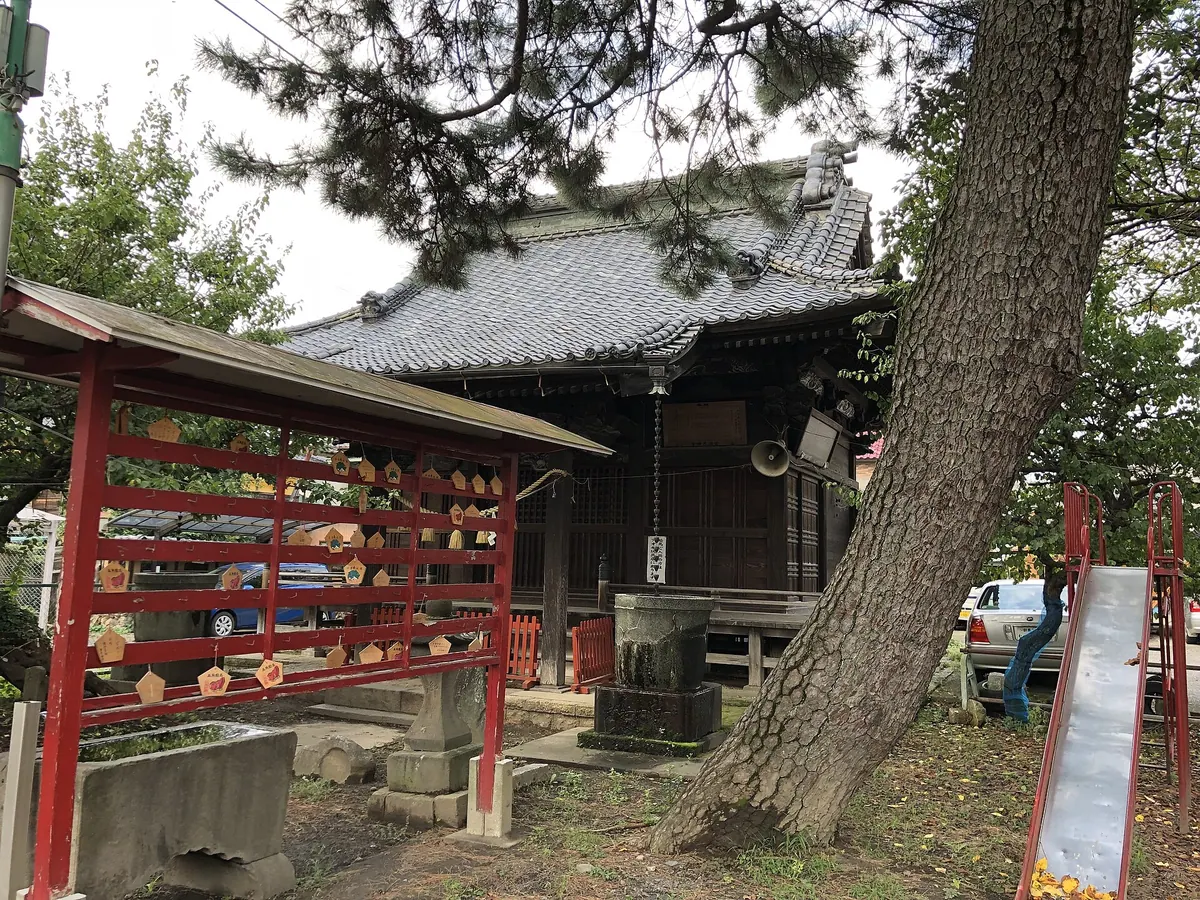
Aoume Shrine is a historic site with unique artwork, worth visiting for its cultural significance.
What it is
- One of Japan's four shrines, also called Aoume Tenmangu.
- Dedicated to Sugawara Michizane, Susanoo-no-Mikoto, and Sarutahiko-no-Kami.
- Yagami Shrine merged into it in 1910.
What to see
- Main hall rebuilt in 1641.
- Worship hall built in 1631, renovated in 1862.
- Worship hall's coffered ceiling has 77 animal and plant paintings.
- Votive tablet hall built in 1631, rebuilt in 1794.
- Sub-shrines dedicated to Amaterasu, Omononushi-no-Kami, and Hachiman.
- Stone pillar at entrance says 'Japan Shisha Aoume Tenmangu'.
- Address
- 群馬県館林市本町2-8-22 Map
14
Kōzuke-no-kuni Issha Hachimangū
GUNMA · SHRINE 上野國一社八幡宮
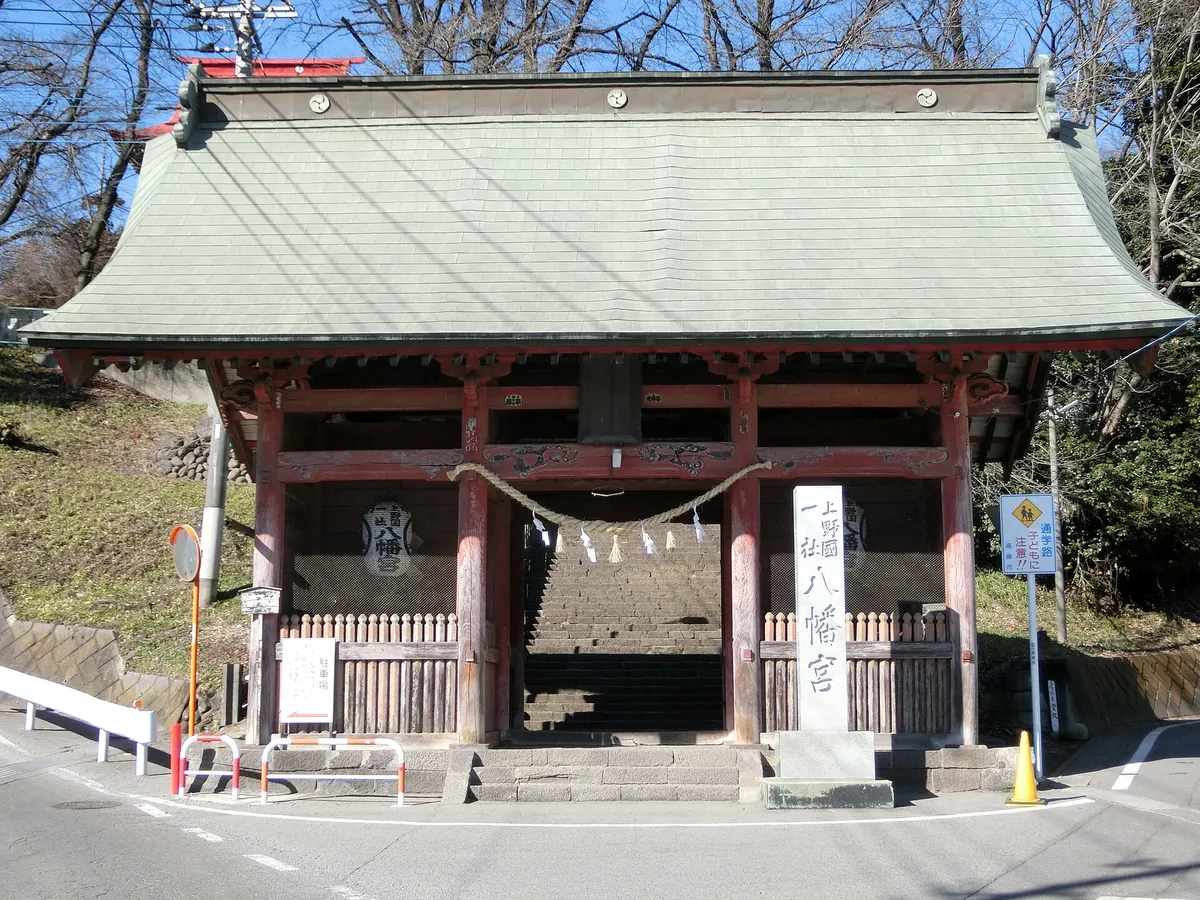
Ancient shrine founded in 957, with important cultural properties and unique architecture.
What it is
- Founded in 957 by Minamoto no Yorinobu.
- Dedicated to Hondawake-no-mikoto and two other deities.
- Commonly known as Yawata Hachiman-gu.
- Covers about 9,000 tsubo of grounds.
What to see
- Current main shrine buildings rebuilt in 1750 or 1757.
- Main hall built in the Tenchi Gongen-zukuri style.
- Nine buildings are designated important cultural properties.
- Multiple subsidiary shrines within the precincts.
- Sangaku are designated cultural properties.
- Dōmaru is a designated cultural property.
- Official site
- kouzukenokuni-hachimanguu.jimdofree.com
15
Fujitake Shrine
GUNMA · SHRINE 富士嶽神社
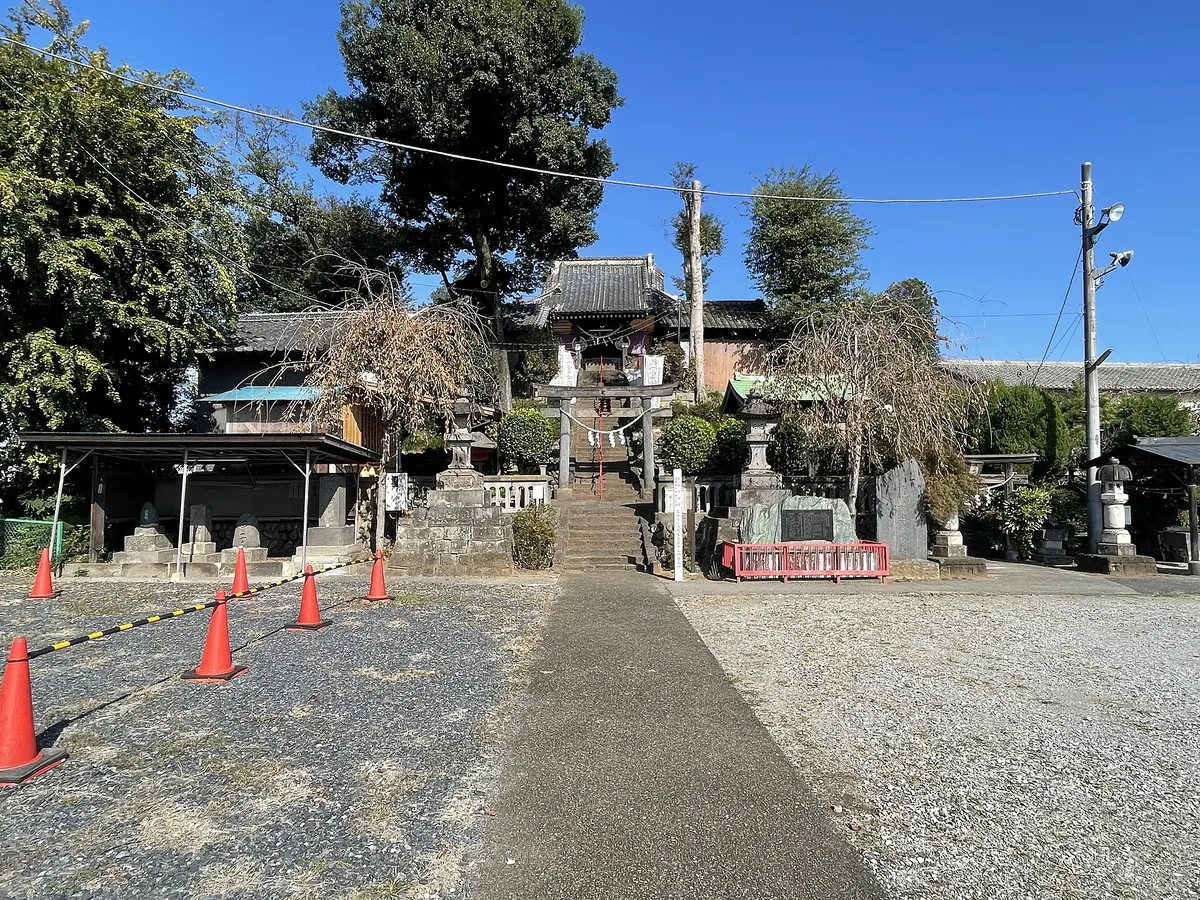
Fujitake Shrine is a historic Shinto shrine, worth visiting for its cultural properties and unique location.
What it is
- A Shinto shrine in Tatebayashi City, Gunma Prefecture.
- Rebuilt by Sakakibara Yasumasa during the Tensho era.
- Protected by lords of the Tatebayashi domain.
- Sixteen nearby shrines were merged into it in 1910.
What to see
- Shrine building on a 7-meter high hill.
- The hill is likely an ancient burial mound.
- Fujiwara no Asamatsuka is a cultural property.
- Hatsuyama related materials are cultural properties.
Getting there
- 22-minute walk from Tatebayashi Station.
- Address
- 群馬県館林市富士原町1127 Map
16
Kanmuri Inari Shrine
GUNMA · SHRINE 冠稲荷神社
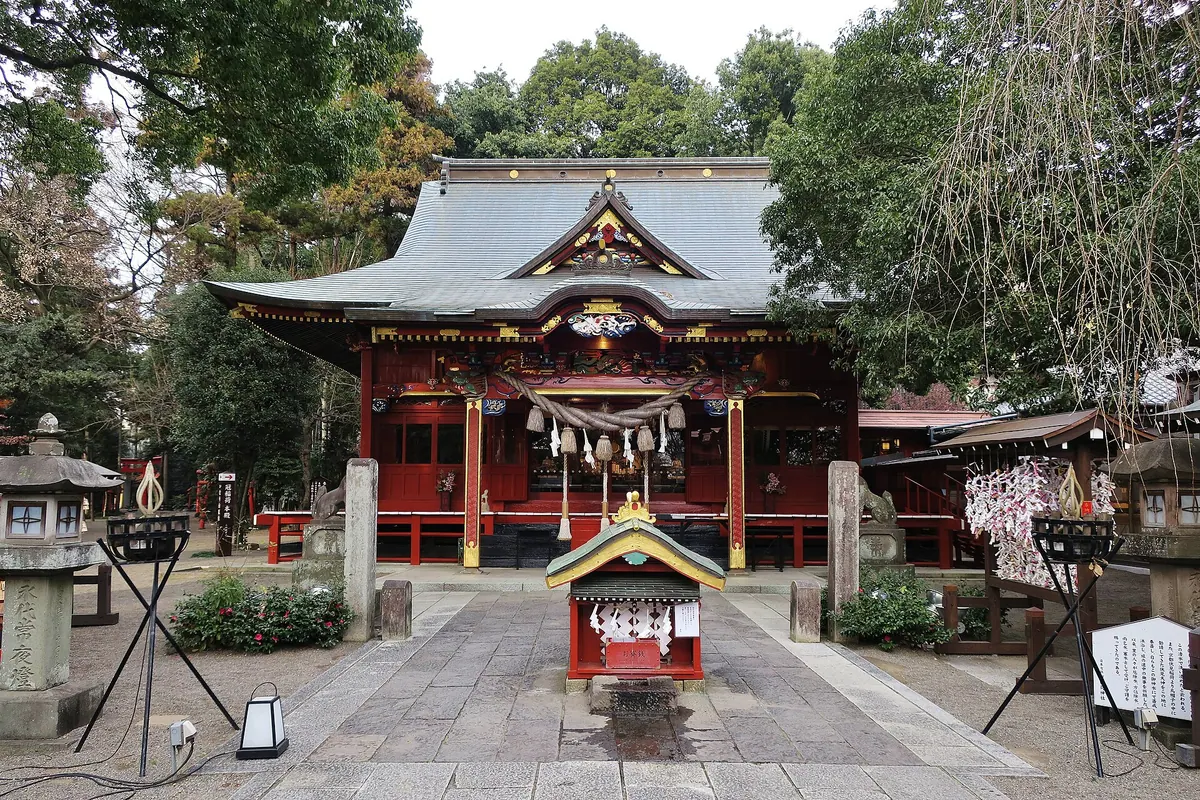
One of Japan's Seven Inari Shrines, founded in 1125, with important cultural properties.
What it is
- One of Japan's Seven Inari Shrines.
- Founded in 1125 by Minamoto no Yoshikuni.
- Once revered as a god of sericulture.
- Minamoto no Yoshitsune enshrined a分霊 from Fushimi Inari Taisha.
What to see
- Main hall and Shoten-gu built in 1767 and 1857.
- Main hall and Shoten-gu are Important Cultural Properties.
- Worship hall built in 1799.
- Worship hall is an Important Cultural Property.
- Three sangaku (mathematical tablets) are dedicated.
- Kanmuri Inari's quince is a Natural Monument.
- Address
- 群馬県太田市細谷町1 Map
- Official site
- kanmuri.com
17
Okuni Shrine
GUNMA · SHRINE 大國神社
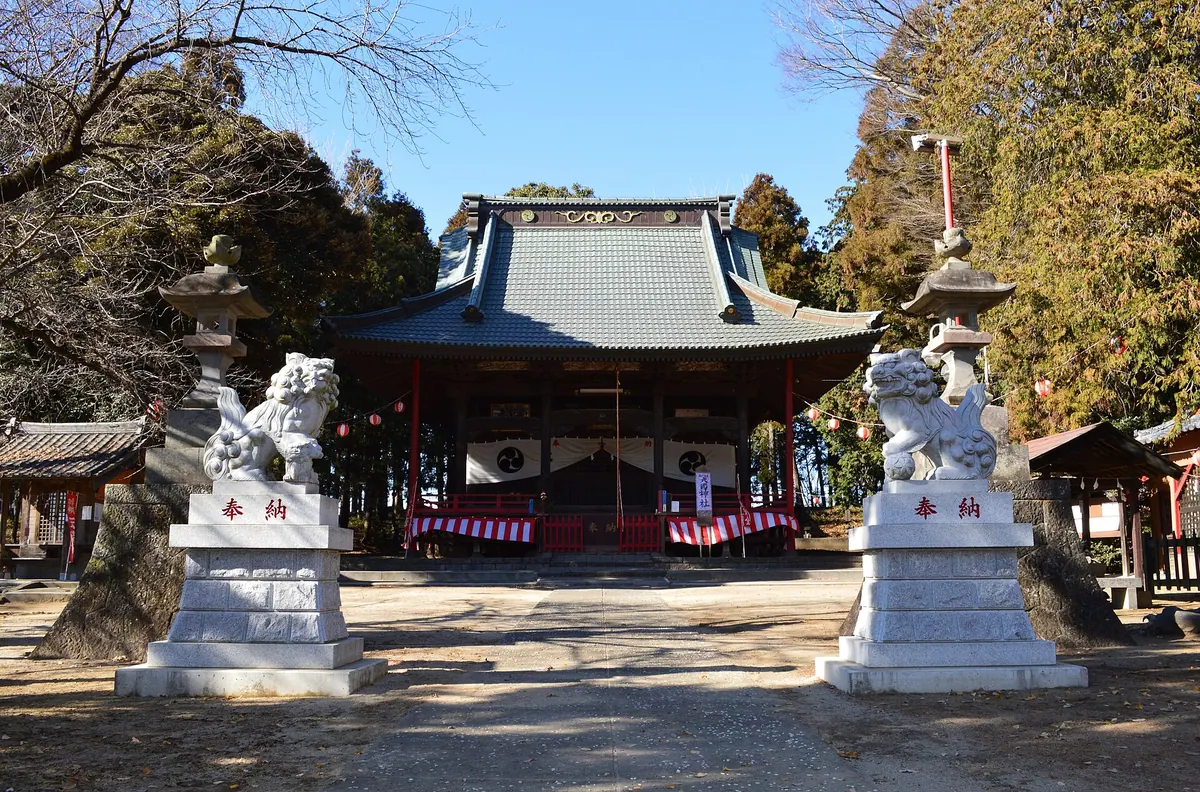
Okuni Shrine is a historic Shikinaisha shrine with important cultural properties.
What it is
- A Shikinaisha shrine in Isesaki City, Gunma Prefecture.
- Dedicated to the deity Okuninushi-no-mikoto.
- Also enshrines five princesses, daughters of Tanba-no-michinushi-no-kimi.
What to see
- Main hall, constructed in 1793.
- Worship hall, constructed in 1804.
- Stone stupa from 1490, a city important cultural property.
When to go
- Autumn festival features the Shimonafuchi-no-shishimai lion dance.
- Lion dance is a city important intangible folk cultural property.
- Address
- 群馬県伊勢崎市境下渕名2827 Map
18
Hitsuji Shrine
GUNMA · SHRINE 羊神社
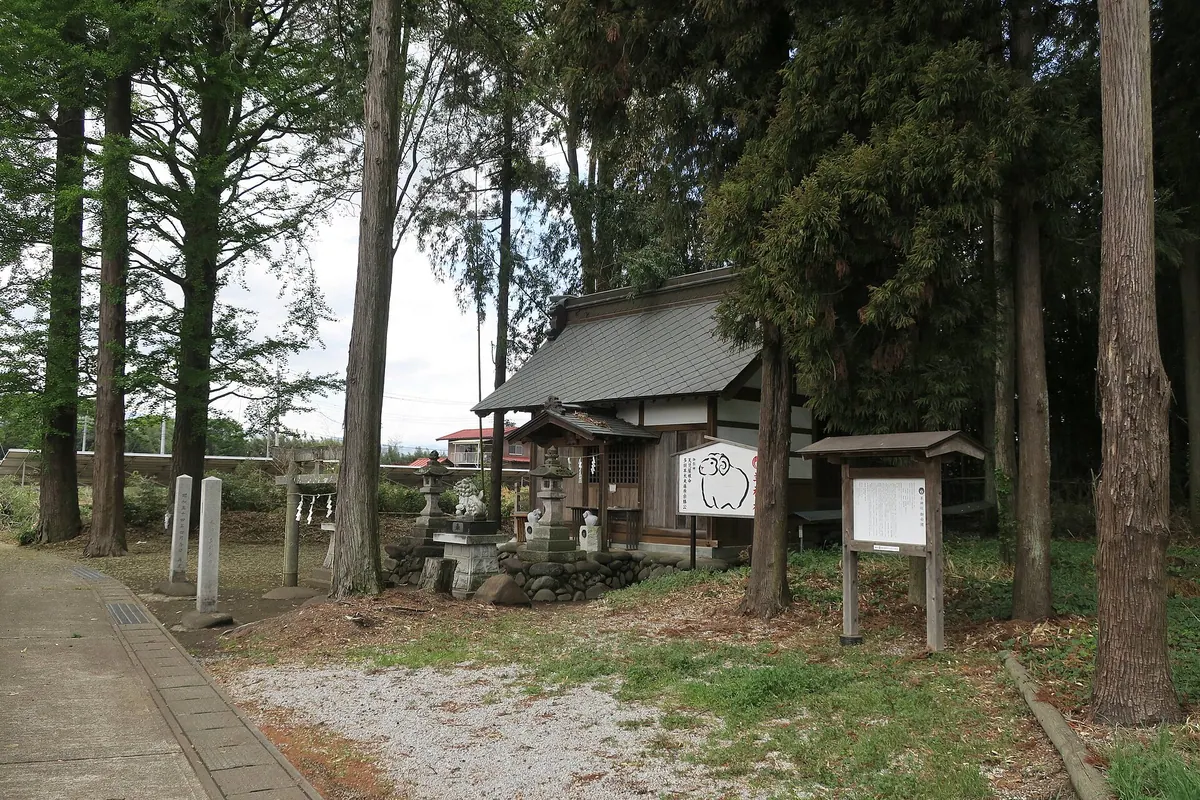
Hitsuji Shrine honors local ancestors and offers a glimpse into traditional Japanese worship.
What it is
- Shrine dedicated to Amenokoyane-no-mikoto and Tago Hitsujidayu.
- Founded to worship ancestor Hitsujidayu.
What to see
- Shrine buildings constructed in 1997.
- Komainu (guardian dogs) erected in 1998.
- Shrine crest features a wisteria and a gorinto.
- Mitsumine-sha established in 1998.
When to go
- Spring Festival is held on March 15th.
- Autumn Festival is held on October 15th.
Getting there
- 2.2 kilometers southeast of JR Isobe Station.
- Address
- 群馬県安中市中野谷1751番地 Map
- Official site
- www.sakisaki.net
19
Tōgō Shrine
GUNMA · SHRINE 当郷神社
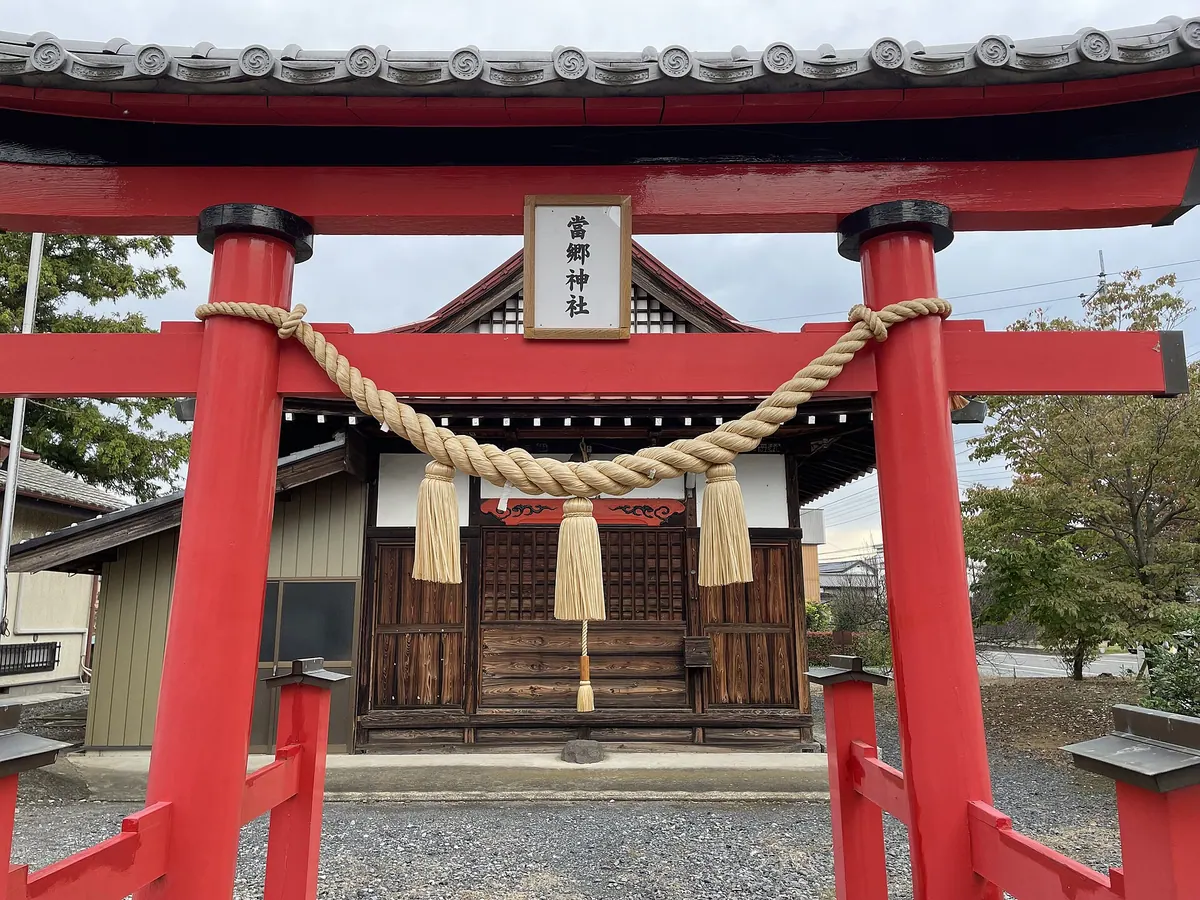
A historic shrine in Gunma founded in 992, dedicated to Sugawara no Michizane and housing a 19th-century votive tablet.
What it is
- A Shinto shrine founded in 992 and originally named Sugawara Shrine.
- The primary deity enshrined here is the scholar and politician Sugawara no Michizane.
- Nagara Shrine was merged into this location in 1906.
- The current name is derived from the local place name in Tatebayashi City.
What to see
- A historic votive tablet donated to the shrine grounds in 1843.
Getting there
- The shrine is an eighteen minute walk from the Azeria Mall bus stop.
20
Sōja Shrine
GUNMA · SHRINE 総社神社
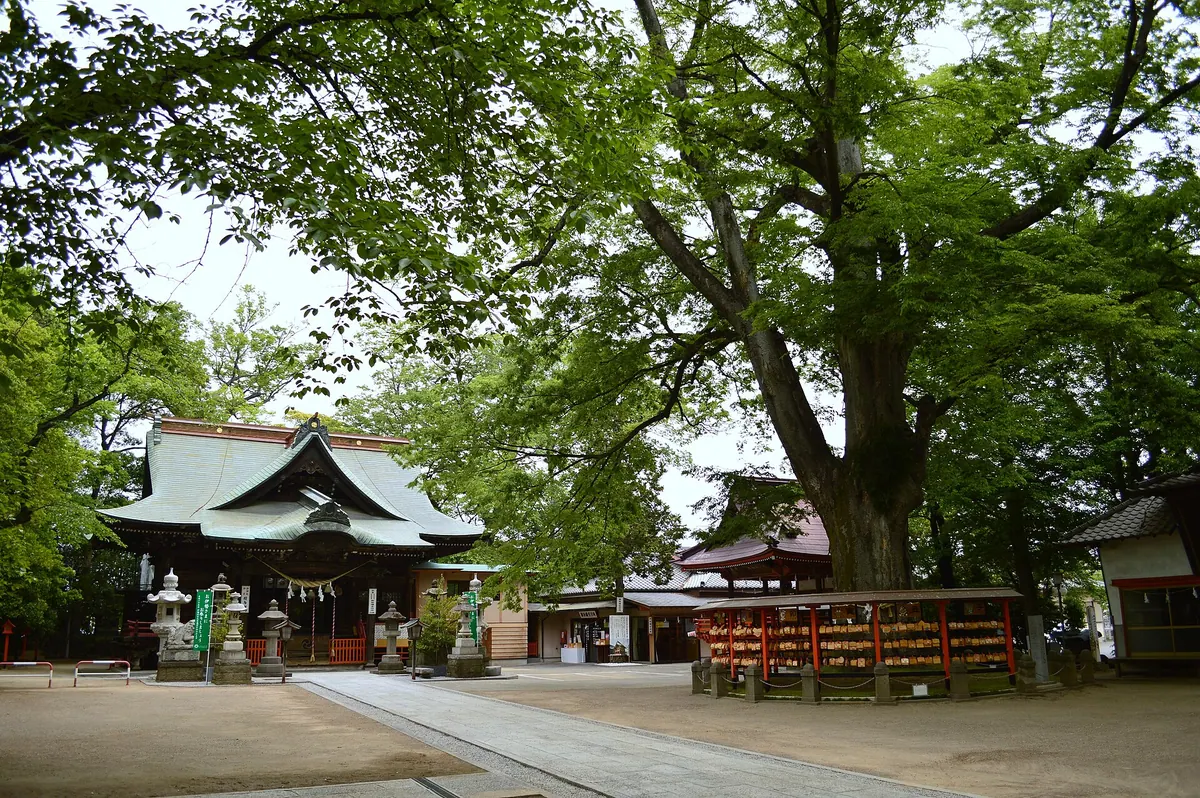
Sōja Shrine is a historic provincial shrine in Maebashi with important cultural properties.
What it is
- It was the Sōja of Kōzuke Province.
- The official name is Sōja Jinja.
- It is also called Kōzuke Sōja Jinja.
- Main deities include Iwa Tsutsuo no Mikoto and Uka no Mitama no Mikoto.
What to see
- The main hall is a prefectural important cultural property.
- The main hall was repaired in 1616.
- The worship hall was rebuilt in 1843.
- The worship hall is a city important cultural property.
- The Kōzuke-no-kuni Jinmyōchō is a prefectural important cultural property.
- Address
- 〒371-0846 群馬県前橋市元総社町1丁目31−45 Map
- Official site
- www.net-you.com