

20 Shrines in Niigata worth your time
Japan Gems
Niigata Prefecture is home to 44 shrines, including Kira Shrine and Shirayamahime Shrine. Visitors can find a wide variety of spiritual sites across the region.
Niigata has 45 shrines on Japan Gems. Below are the 20 we can tell you the most about — each one written up in English from Japanese sources, with what to see and how to get there. See all shrines in Niigata.
01
Hotokusan Inari Taisha Shrine
NIIGATA · SHRINE 宝徳山稲荷大社
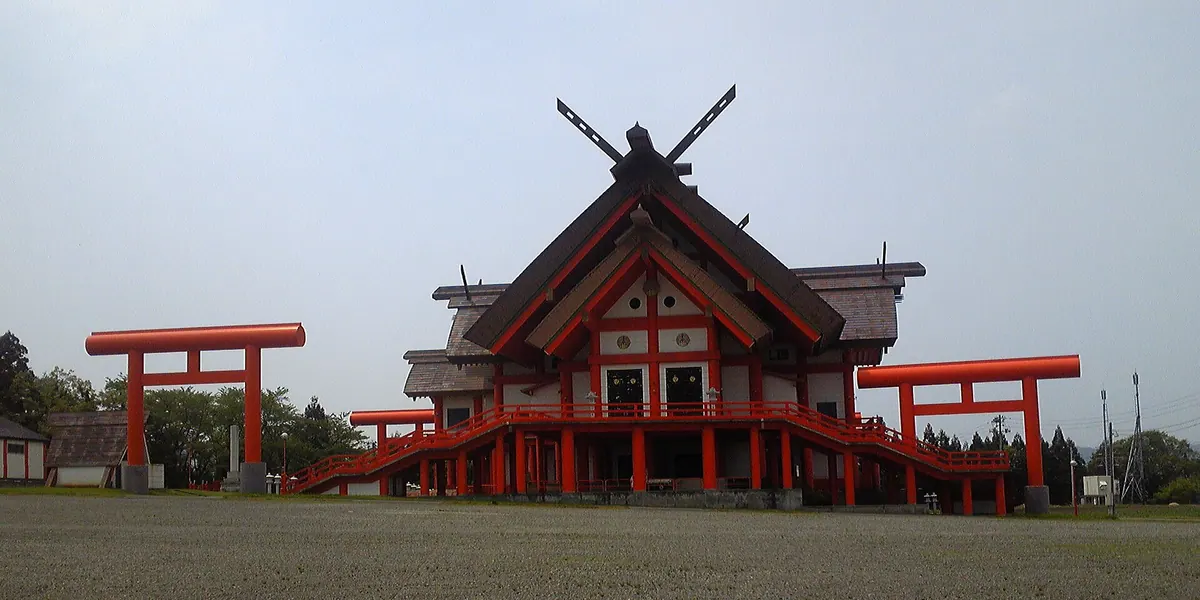
This concrete shrine offers a unique candle ritual for blessings and good fortune, visible from a distance.
What it is
- Commanding shrine visible from a distance on a hillside.
- Dedicated to the "God of Commerce."
- Oldest part, a stone shrine, predates records from 1,500 years ago.
What to see
- Black gabled roofs and vermillion-and-white features.
- Concrete construction, unusual for this type of shrine.
- Two complexes: a larger lower one and a smaller hilltop one.
- Small stone shrine next to the hilltop complex.
- Ring-shaped gateway of tightly bound rope (late June to early July).
- Gold-adorned shrine and altar inside the main building.
When to go
- Late June to early July for the rope gateway.
- Yomatsuri night festival with 50,000-60,000 red candles.
- Twice a year for local festivals at the hilltop complex.
Getting there
- 25 minutes from Nagaoka Station by car.
- Take Shinetsu Line from Nagaoka Station to Echigo-Iwatsuka Station.
- 10-minute walk from Echigo-Iwatsuka Station.
- Address
- 新潟県長岡市飯塚859番地 Map
- Official site
- www.houtoku.or.jp
02
Shirayamahime Shrine
NIIGATA · SHRINE 白山媛神社
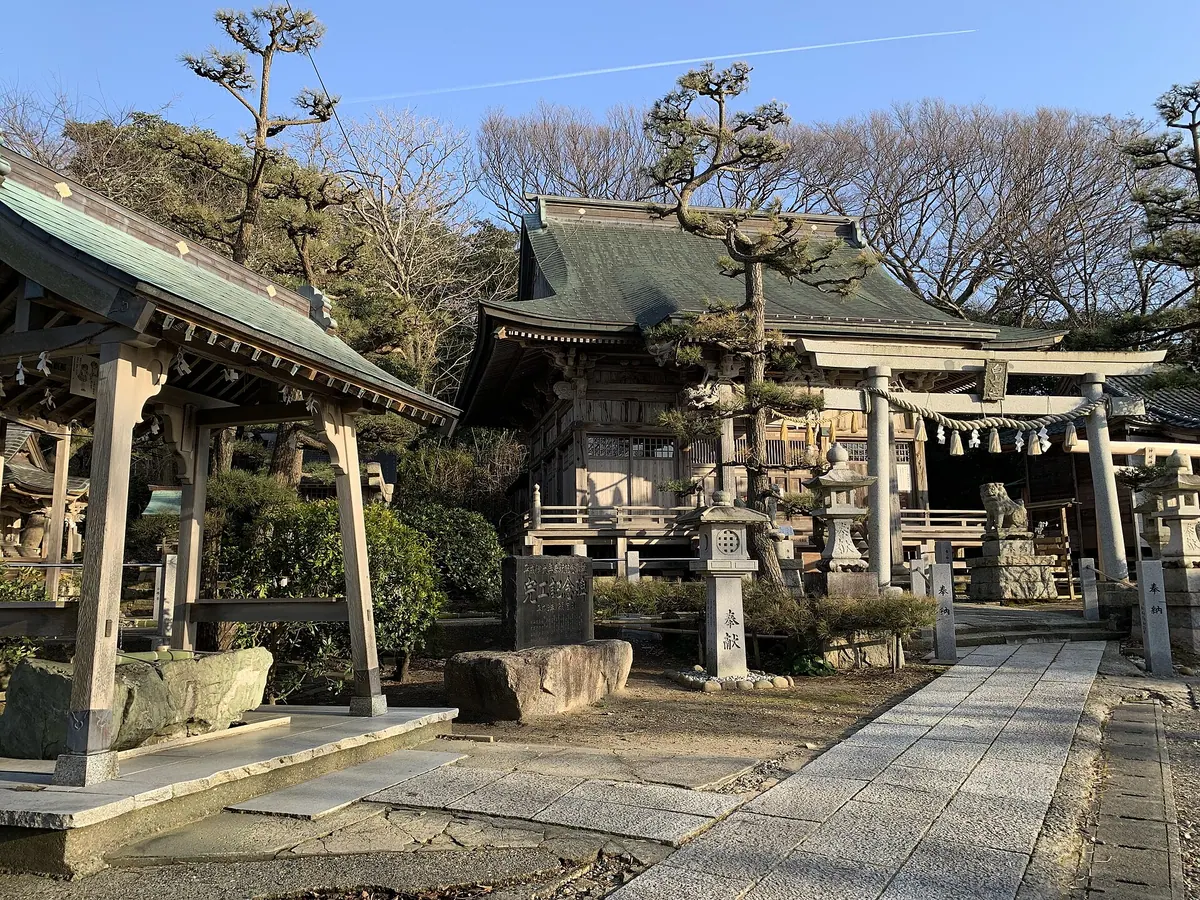
This shrine offers unique cultural properties and a spring festival, dedicated to maritime safety and prosperity.
What it is
- Shrine dedicated to female deities Izanami no Mikoto and Kukurihime no Mikoto.
- Associated with maritime safety, country protection, and regional prosperity.
- Located on a hill overlooking the village and the Sea of Japan.
- Original founding date is unknown, but has been here for centuries.
What to see
- Main shrine building from 1771 with carvings of dragons, flowers, and a tiger.
- Coffered ceiling with colorful flower paintings and a dragon ink painting.
- Valuable collection of 52 funa-ema (votive tablets) from 1774–1889.
- Nimen Jinja Shrine, dedicated to a unique two-faced deity.
- Wooden figure of a two-sided Western-looking person in Nimen Shrine.
- Gold-covered portable shrine and wooden sacred white horse.
When to go
- Annual spring festival on May 3 and 4 with a procession and sacred dances.
- October and November for blooming tsuwabuki (Japanese silverleaf) flowers.
- Address
- 新潟県長岡市寺泊大町2768 Map
03
Matsuo Shrine
NIIGATA · SHRINE 松苧神社
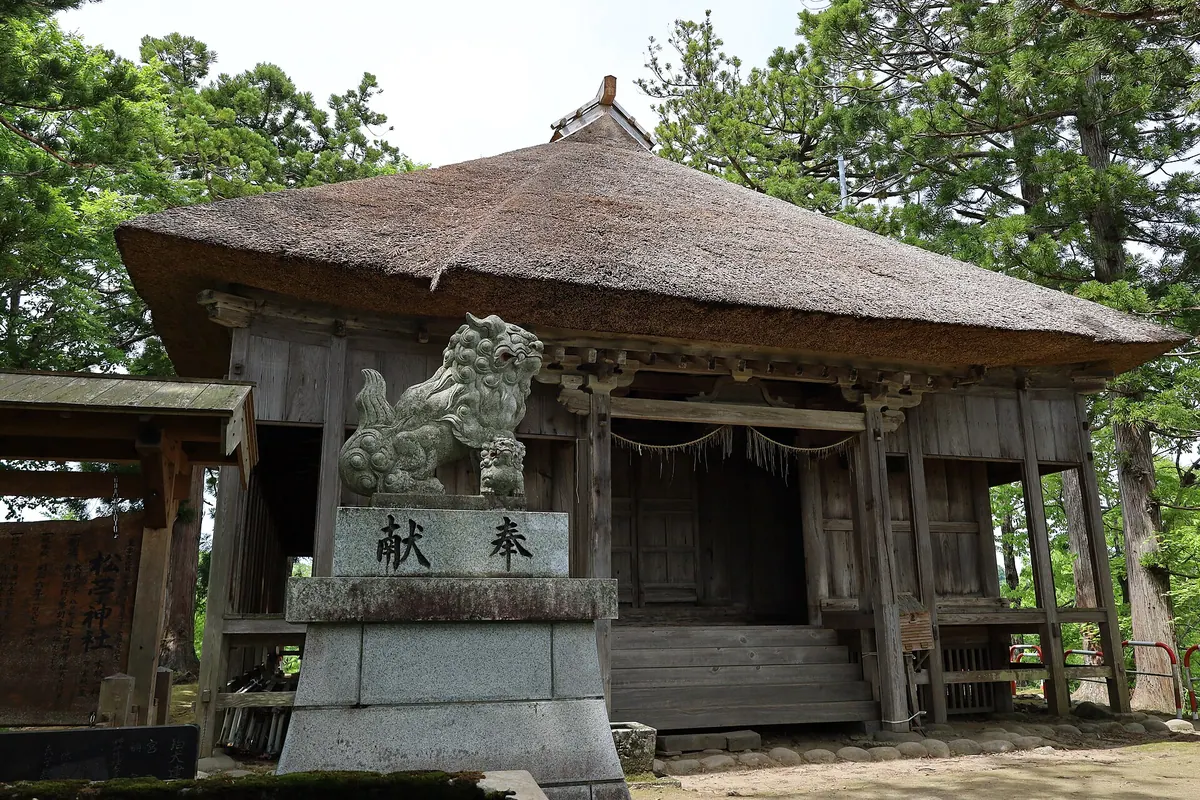
This ancient Shinto shrine on Mt. Matsuo offers a challenging hike and a unique coming-of-age ceremony.
What it is
- Isolated Shinto shrine on top of Mt. Matsuo.
- Founded in 807 to honor deity Nunakawa-hime.
- Key part of Tokamachi's religious and cultural life.
- Hosts a significant coming-of-age ceremony each spring.
What to see
- Current sanctuary dates to 1497.
- Oldest thatched-roofed wooden structure in Niigata Prefecture.
- Registered an Important Cultural Property of Japan.
- Steep thatched roof designed for snow country winters.
- Numerous thick support columns for snow and thatch weight.
- Replicas of a short sword and signaling fan at Matsudai History Museum.
When to go
- Nanatsu Mairi festival annually on May 8.
- Coming-of-age ceremony for young boys each spring.
Getting there
- From village of Inubushi, at foot of the mountain.
- Climb of 360 meters over about 3 kilometers.
- Narrow mountain path, no road to the shrine.
- Address
- 新潟県十日町市犬伏(松苧山) Map
04
Mononobe Shrine
NIIGATA · SHRINE 物部神社
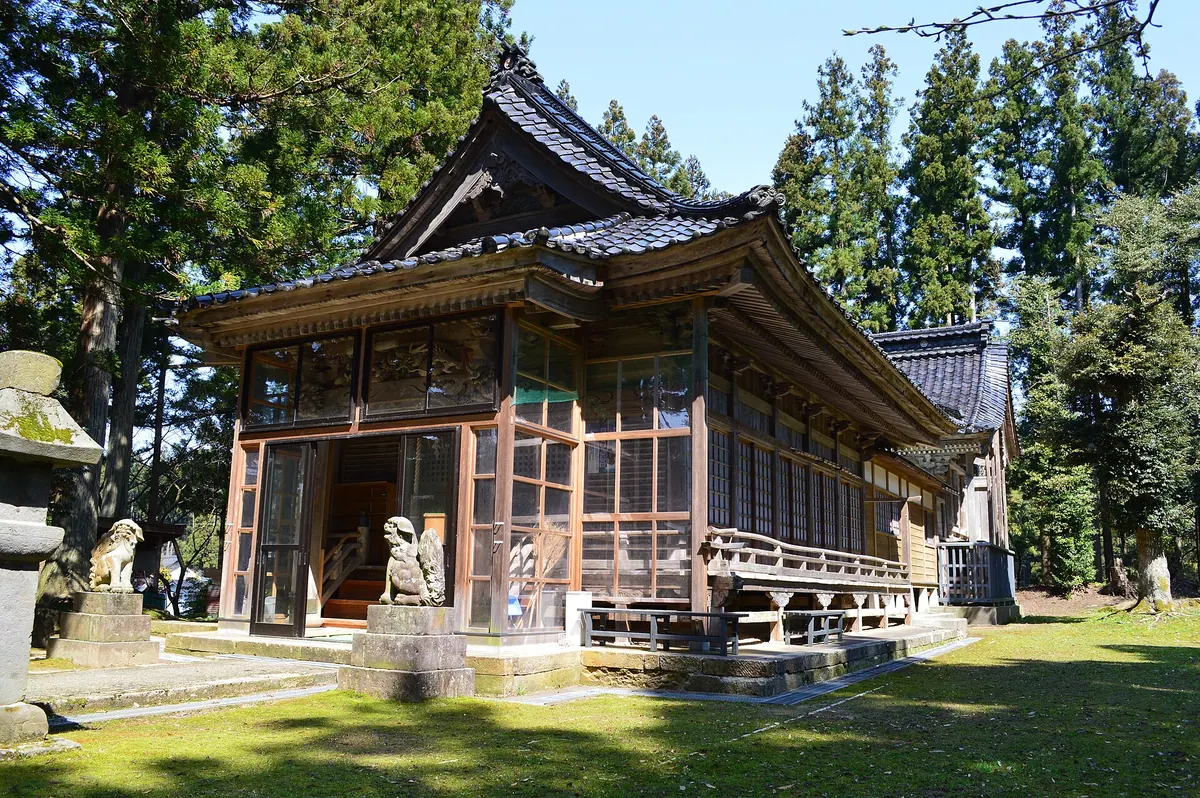
Mononobe Shrine is an ancient, historically significant shrine with unique cultural properties.
What it is
- An ancient Shikinaisha and Echigo-no-kuni Ninomiya shrine.
- Dedicated to Futata-no-Ame-no-Mononobe-no-Mikoto.
- Also known as Futata Mononobe Shrine or Futata Shrine.
What to see
- Main hall is a three-bay nagare-zukuri style building.
- Main hall is a Niigata Prefecture designated cultural property.
- Two wooden komainu statues are cultural properties.
- Shrine possesses 443 scrolls of the Great Prajnaparamita Sutra.
- Associated with the Futata Castle ruins.
When to go
- Spring and autumn festivals are held annually.
- Special ritual called O-yumi-hajime-sai.
Getting there
- Nearest station is Raihai Station on the JR Echigo Line.
- Address
- 新潟県柏崎市西山町二田602 Map
05
Fujimoto Shrine
NIIGATA · SHRINE 藤基神社
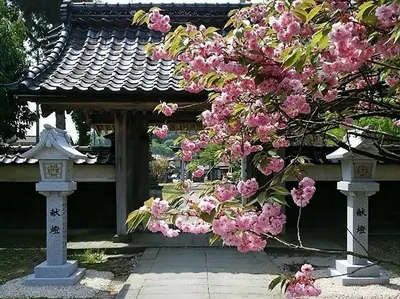
Fujimoto Shrine honors Murakami lords and offers historical architecture and art.
What it is
- Shinto shrine in Murakami City, Niigata Prefecture.
- Founded in 1717 as a mausoleum for Naito Nobunari.
- Enshrines Naito Nobunari and Murakami domain lords.
- Naito Nobunari was a half-brother of Tokugawa Ieyasu.
What to see
- Shrine grounds are National Historic Site, Murakami Castle Ruins.
- Current shrine buildings established in 1849.
- Buildings are Murakami City designated cultural properties.
- Shrine buildings are in Gongen-zukuri architectural style.
- Carvings by master craftsman Ariso Shusai.
- Ten portraits of successive Naito family heads.
Getting there
- About a 20-minute walk from Murakami Station.
- Address
- 新潟県村上市三之町11番12号 Map
06
Kanbara Shrine
NIIGATA · SHRINE 蒲原神社
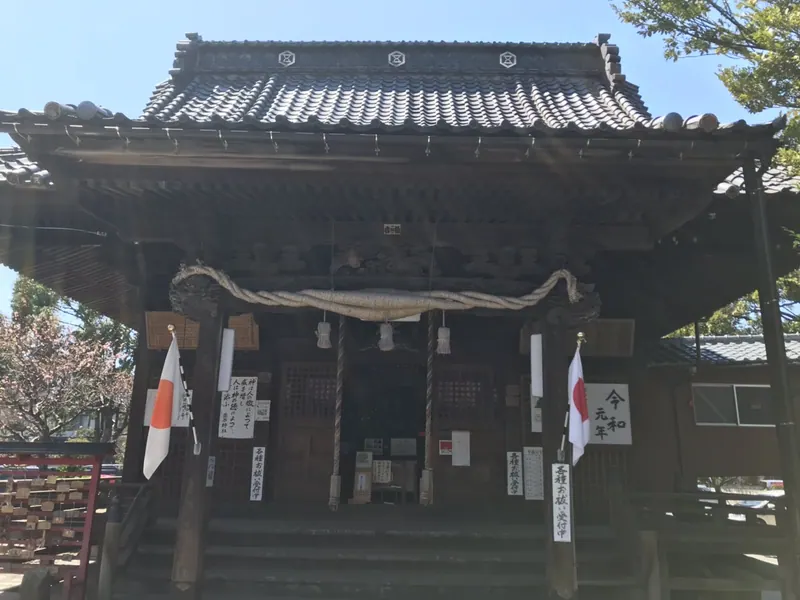
Kanbara Shrine is a historic shrine in Niigata City, known for its unique festival and cultural properties.
What it is
- Shrine dedicated to Shiinetsuhiko no Mikoto and other deities.
- Also known as "Rokuro-sama" after Hatakeyama Rokuro Shigemune.
- Estimated to be founded after the Taika Reform.
- Moved to its current location in 1688.
What to see
- Main hall is a 30-tsubo wooden building with a tiled roof.
- Two wooden seated statues of Hatakeyama Shigemune and his wife.
When to go
- Kanbara Festival is one of Niigata Prefecture's largest festivals.
- Otakusen ritual predicts the rice harvest with 830 years of tradition.
Getting there
- 15-minute walk from JR Niigata Station.
- Address
- 新潟県新潟市中央区長嶺町3-18 Map
07
Kingyoku Shrine
NIIGATA · SHRINE 金玉神社
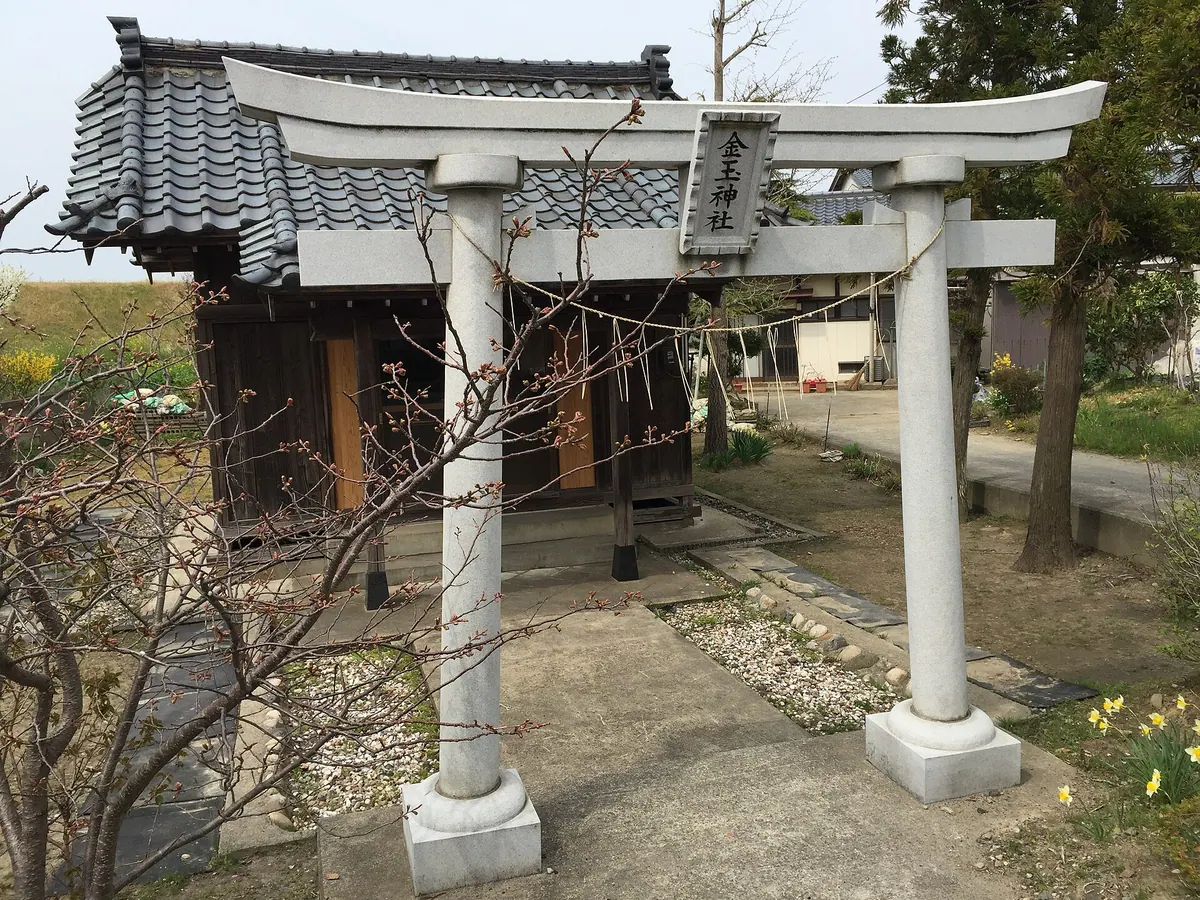
A unique Niigata shrine founded in the 1950s after a divine vision, famous for its name and seasonal stamp seals.
What it is
- A Shinto shrine established between 1951 and 1953 in Niigata City.
- Founded by a local resident following a divine vision.
- Built on land that was previously wasteland.
- Frequently featured in media due to its unique name.
What to see
- Three types of seasonal stamp seals offered monthly to visitors.
- Kingyoku Inari Shrine located in the immediate vicinity.
- The surrounding Sakura Promenade Park area.
Getting there
- Five-minute walk from the Ono-nakamachi bus stop.
- Ten-minute drive from the Niigata-nishi Interchange.
08
Sekiyama Shrine
NIIGATA · SHRINE 関山神社
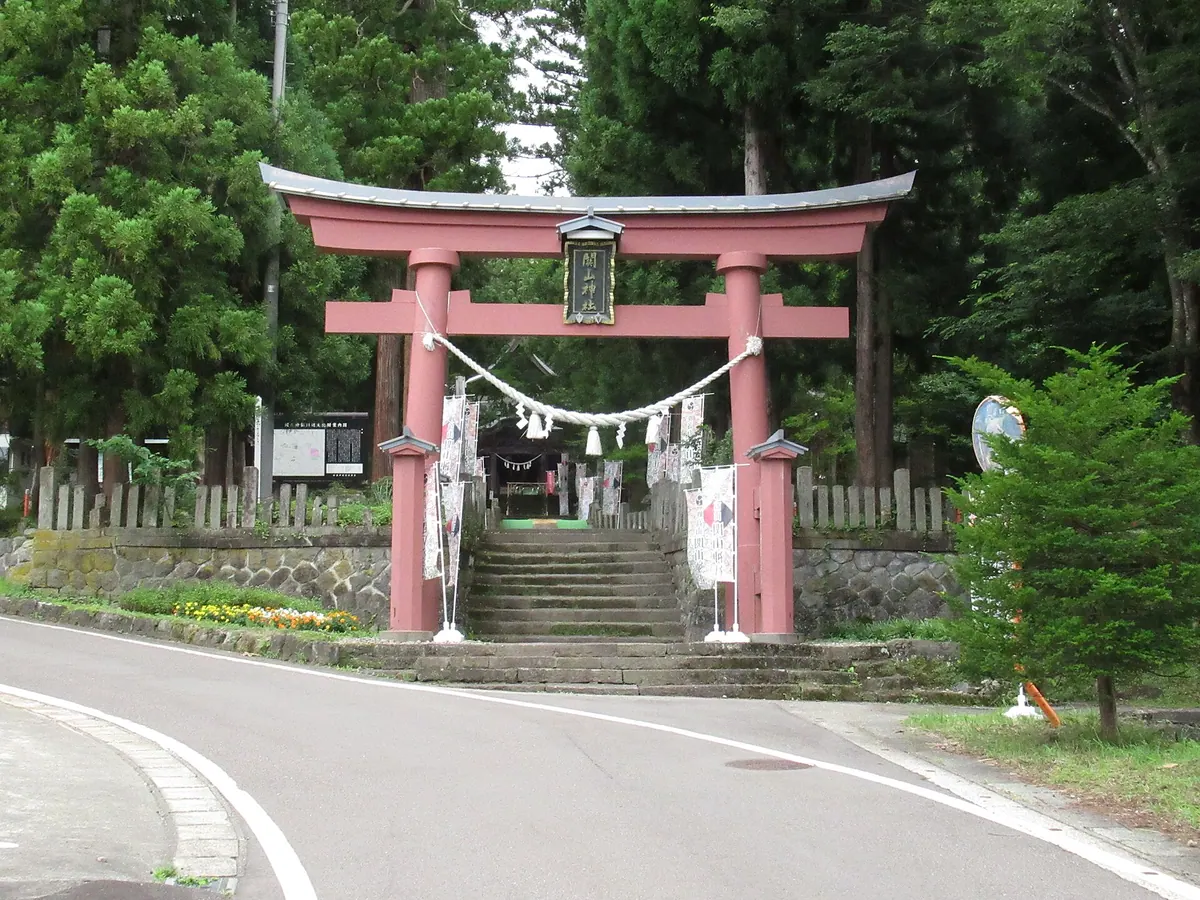
Ancient mountain shrine with important Buddhist statues, a short walk from Sekiyama Station.
What it is
- Founded in 708.
- Was a Shugendo base until the Meiji period.
- Possesses Buddhist statues.
What to see
- Bronze standing Bodhisattva statue, oldest in Niigata Prefecture.
- Bodhisattva statue is a National Important Cultural Property.
- Shrine palace is a Registered Tangible Cultural Property.
- Main hall is a Registered Tangible Cultural Property.
- Bronze standing Amitabha statue is a Niigata Prefecture Cultural Property.
- Dragon flag is a Myoko City Cultural Property.
Getting there
- 21-minute walk from Sekiyama Station.
- Address
- 新潟県妙高市関山4804 Map
09
Aoshi Shrine
NIIGATA · SHRINE 蒼柴神社
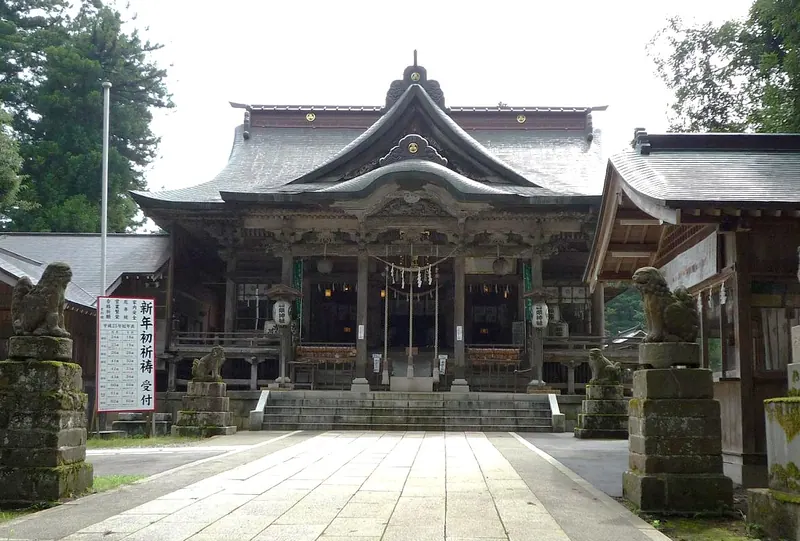
This shrine, mostly original since 1781, survived WWII and is a spiritual and social center.
What it is
- Shrine built in 1781 by the Makino family.
- Modeled after Nikko Tosho-gu, a famous shrine.
- Survived World War II air raid devastation.
What to see
- Original appearance mostly retained for 250 years.
- Gravestones of Nagaoka domain lords behind the shrine.
- Memorial for civil war casualties nearby.
- Preserved torpedo casing at the memorial.
- Fortunes and votive tablets available.
When to go
- November 15 for Shichi-Go-San children's festival.
- April to October for weddings.
- Year-round for fortunes and votive tablets.
- Address
- 新潟県長岡市悠久町707番地 Map
- Official site
- www.aoshijinja.or.jp
10
Kota Shrine
NIIGATA · SHRINE 居多神社
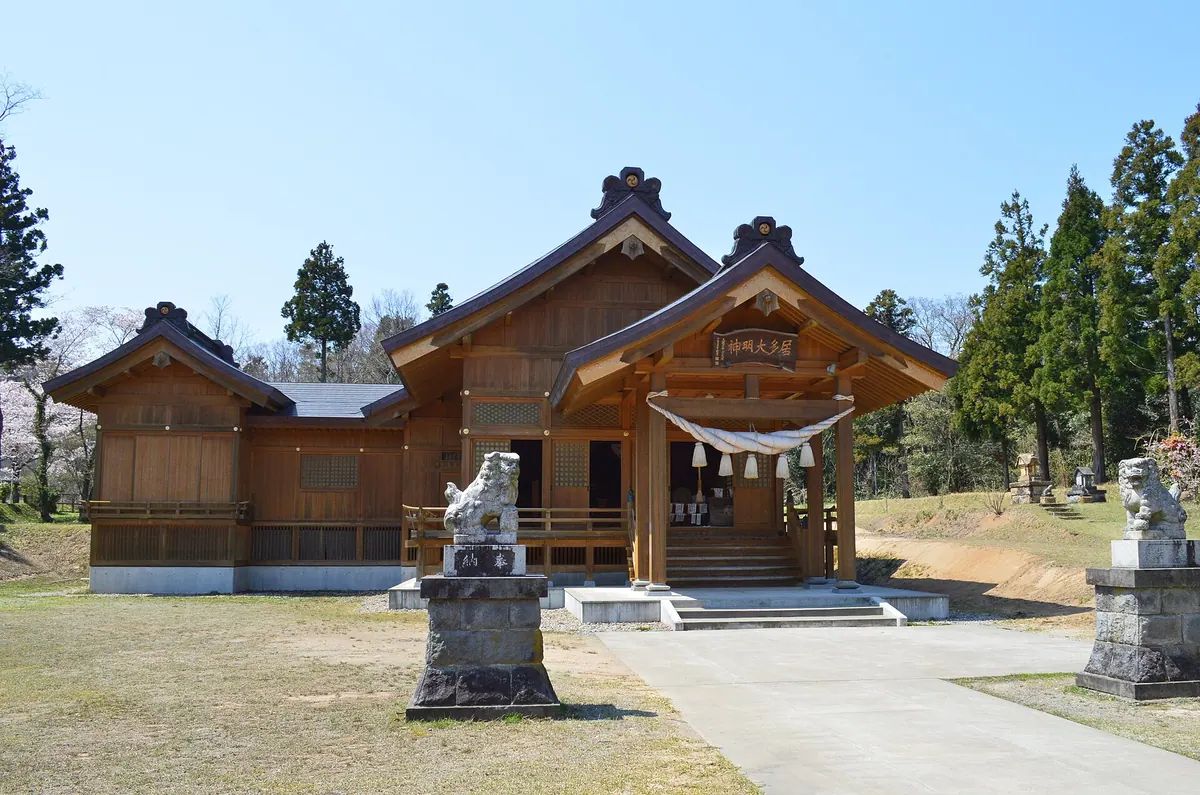
Visit this historic shrine, an Echigo Province Ichinomiya, to see unique reeds and ancient artifacts.
What it is
- A Shikinaisha and Ichinomiya of Echigo Province.
- Dedicated to Okuninushi-no-kami and other deities.
- Moved to its current site in 1879.
- Formerly held the rank of Prefectural Shrine.
What to see
- The main shrine building, constructed in 2008.
- A cluster of one-sided reeds on the grounds.
- Wooden komainu statues, a cultural property.
- Ancient documents, also a cultural property.
When to go
- Annual festival is held on May 3rd.
Getting there
- A 25-minute walk from Naoetsu Station.
- Address
- 新潟県上越市五智六丁目1-11 Map
11
Honai Shrine
NIIGATA · SHRINE 穂奈伊神社
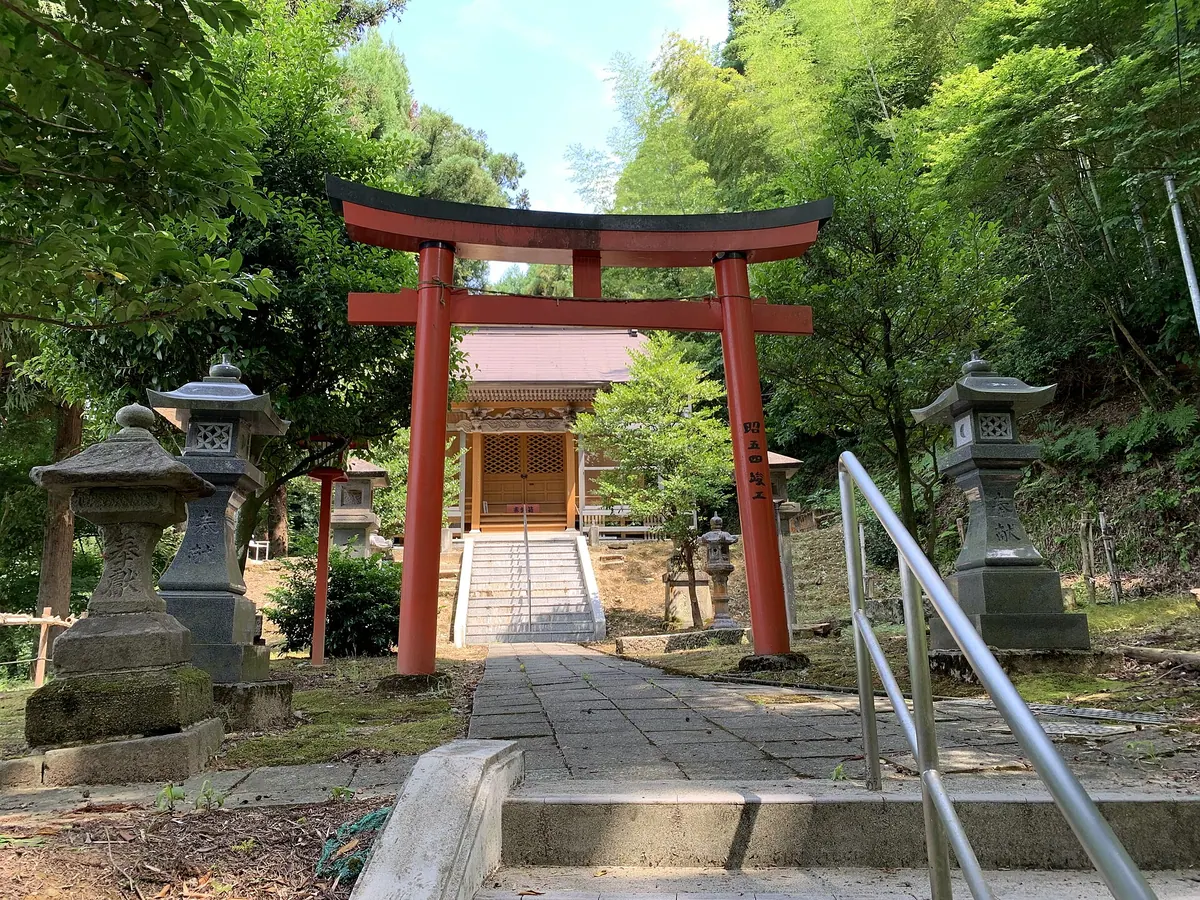
Honai Shrine is a historic site in Sanjo City, dedicated to multiple deities, offering a glimpse into ancient Japanese beliefs.
What it is
- Founded approximately 700 years ago, in the late Kamakura period.
- Originally a Suwa Shrine, it was renamed Honai Shrine in 1909.
- Seven companies were merged into this single shrine.
- Dedicated to multiple deities including Takeminakata-no-mikoto.
What to see
- The original enshrined deity was Takeminakata-no-mikoto.
- The original shrine building was a stone shrine.
- Enshrined deities include Ukanomitama-no-mikoto and Hayatamao-no-mikoto.
- Also enshrines Sokotsutsunoo-no-mikoto, Oyamatsumi-no-mikoto, Onamuchi-no-mikoto.
- Address
- 新潟県三条市下保内3282 Map
12
Shinmei Shrine
NIIGATA · SHRINE 神明神社
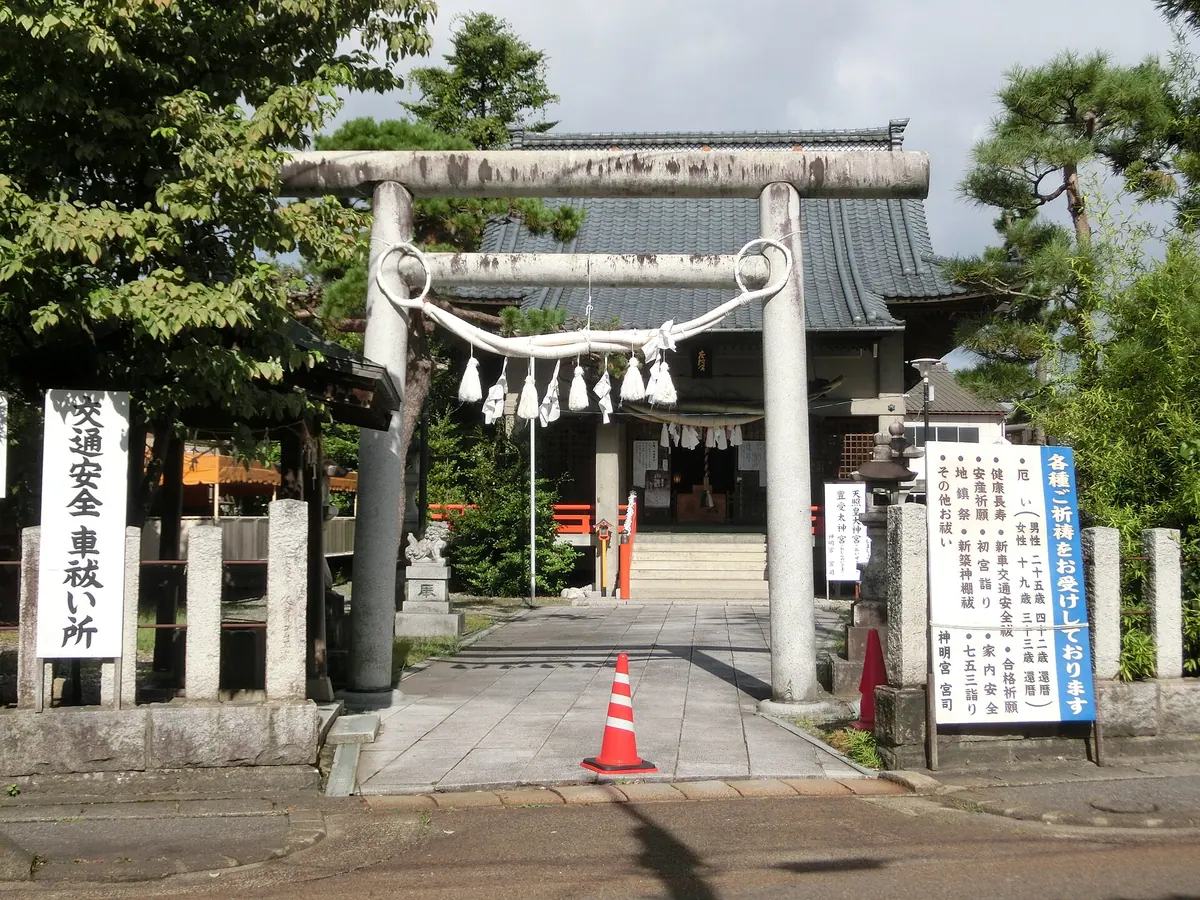
Shinmei Shrine, founded in 1661, enshrines important deities and hosts a vibrant autumn festival.
What it is
- Shrine founded in 1661 by Mizoguchi Naonao.
- Relocated in 1748 by Mizoguchi Naoharu.
- Main deity is Toyouke-Ōmikami.
- Amaterasu-Ōmikami is also enshrined here.
What to see
- Current worship hall built in 1982.
- Main sanctuary built in 1988.
- Shibata Dashi float is stored here.
When to go
- Shinmei Festival on September 25th and 26th.
- Festival is now Shibata Hōnen Akimatsuri.
Getting there
- 20-minute walk west from JR Shibata Station.
- Parking lot is available.
- Address
- 新潟県新発田市大手町1丁目5-6 Map
- Official site
- sinmeigu.com
13
Aomi Shrine
NIIGATA · SHRINE 青海神社
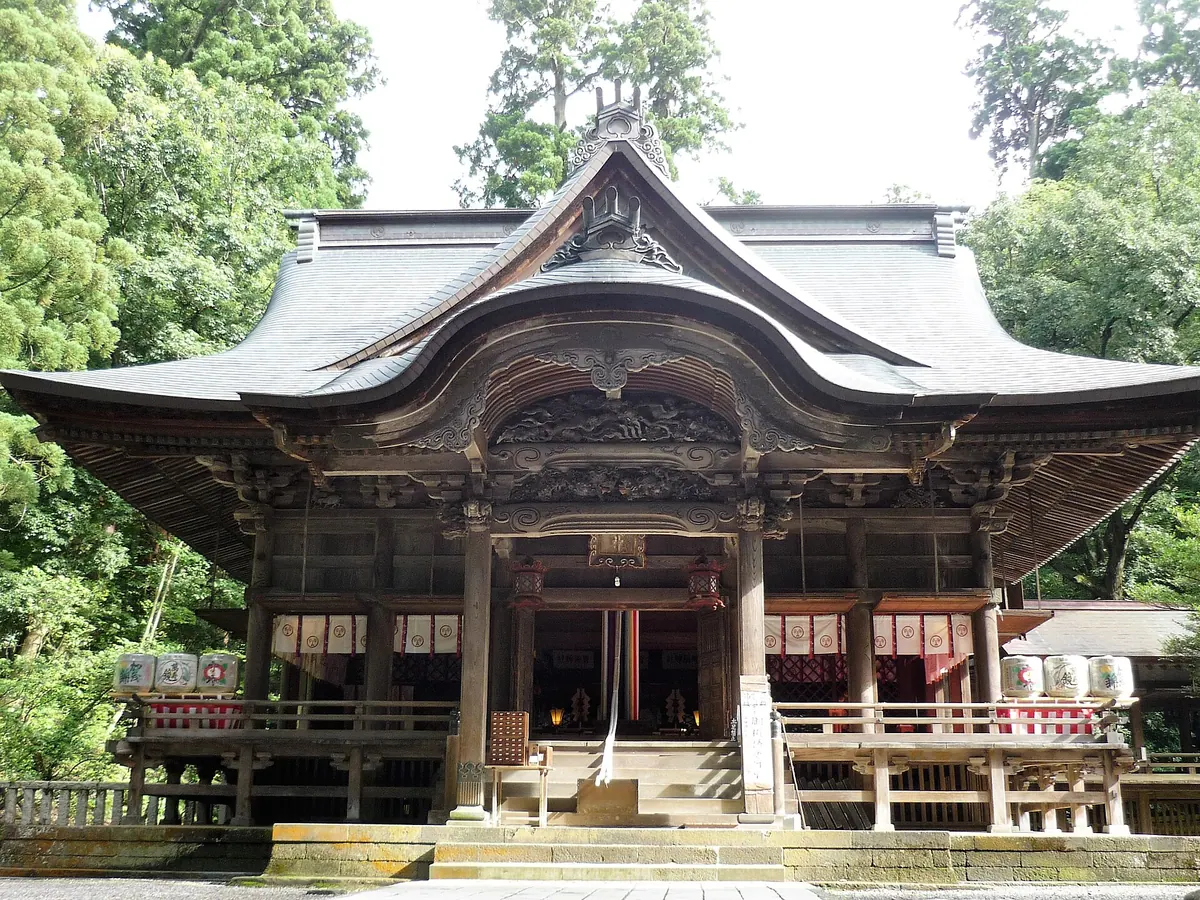
Aomi Shrine is an ancient shrine with unique architecture and cultural properties, easily accessible from Kamo Station.
What it is
- Founded in 726, it enshrines Shiinetsuhiko-no-mikoto and other deities.
- Located in Kamo City, Niigata Prefecture, within Kamo Mountain Park.
What to see
- Walk the nightingale floor corridor, built in 1757.
- View the shrine building, a Kamo City Cultural Property.
- See the Okinasugi cedar tree, a Kamo City Natural Monument.
- Visit the site of the imperial envoy's zelkova tree.
- Discover excavated artifacts, a Prefectural Cultural Property.
Getting there
- 8-minute walk from Kamo Station.
- Address
- 新潟県加茂市大字加茂229 Map
- Official site
- www.aomi-jinjya.or.jp
14
Ōgata Shrine
NIIGATA · SHRINE 大形神社
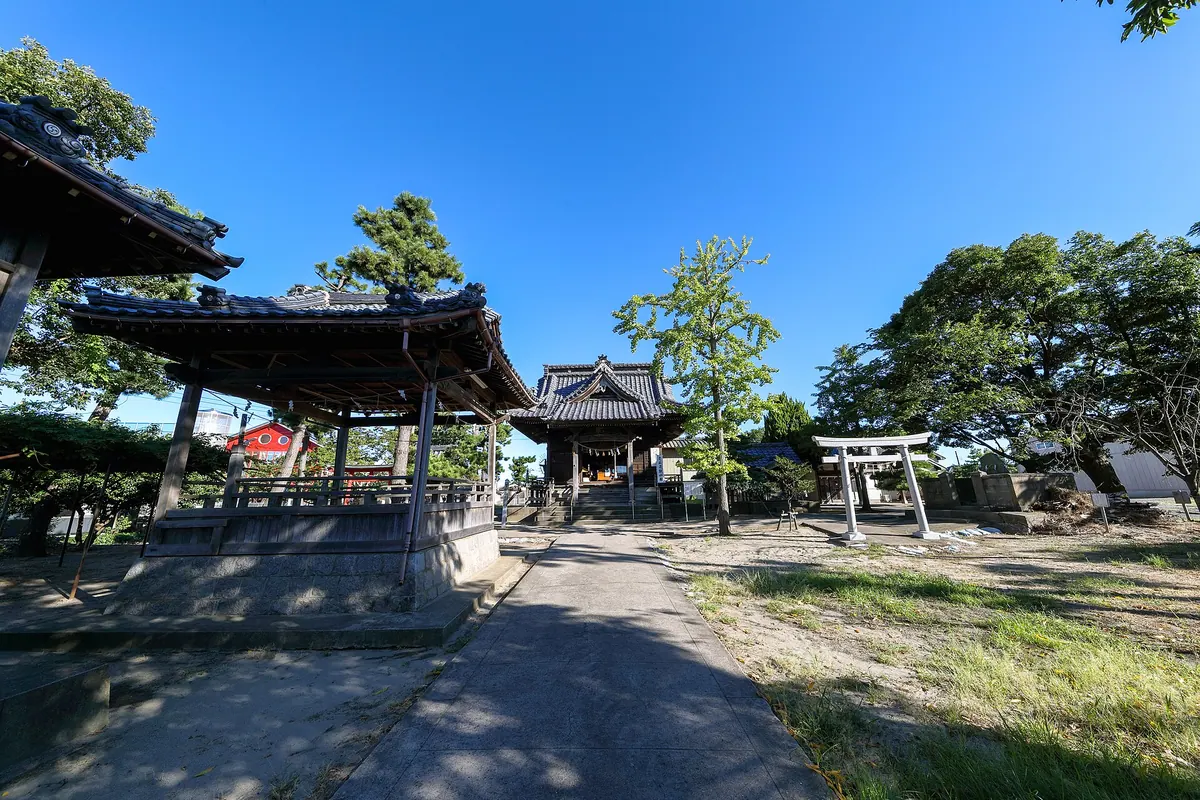
Ōgata Shrine is an ancient shrine in Niigata City, known for its traditional architecture and seasonal festivals.
What it is
- Ancient shrine in Niigata City, Niigata Prefecture.
- Founded during the Daidō era (806-810).
- Enshrines Ōnamuchi-no-kami.
- Listed in the Engishiki Jinmyōchō in 927.
What to see
- Main hall with an irimoya-zukuri style roof.
- Kaguraden building on the grounds.
- Three末社 (massha) sub-shrines.
- Taidai Kagura dance, performed by the Terayama family.
When to go
- Sainenokami event around January 15.
- Spring festival on April 17.
- Autumn festival in the first week of September.
- Address
- 新潟県新潟市東区河渡本町 Map
15
Suwa Shrine (Shibata)
NIIGATA · SHRINE 諏訪神社
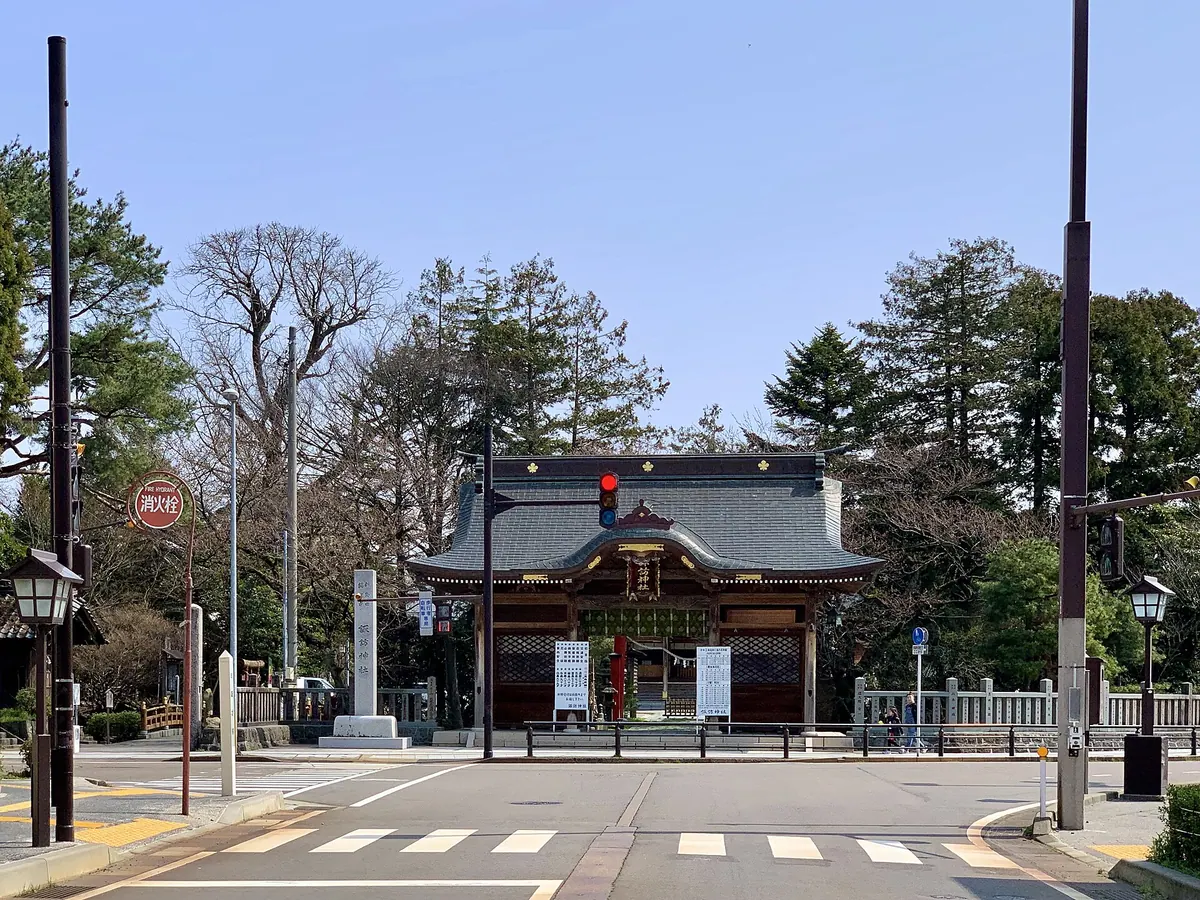
Suwa Shrine, founded in 648, is Shibata's guardian deity, offering unique architecture and festivals.
What it is
- Guardian deity of Shibata City.
- Main enshrined deity is Takeminakata-no-mikoto.
- Founded in 648.
- Moved to current location in 1688.
What to see
- Current shrine building rebuilt in 2004.
- Building combines main hall, offering hall, and worship hall.
- Onbashira pillars from Suwa Grand Shrine before worship hall.
- Onbashira pillars are replaced every six years.
When to go
- Annual festival from August 26th to 29th.
- Shibata Dainawa festival held during annual festival.
- Address
- 新潟県新発田市諏訪町1丁目8番9号 Map
16
Komachi Atago Shrine
NIIGATA · SHRINE 古町愛宕神社
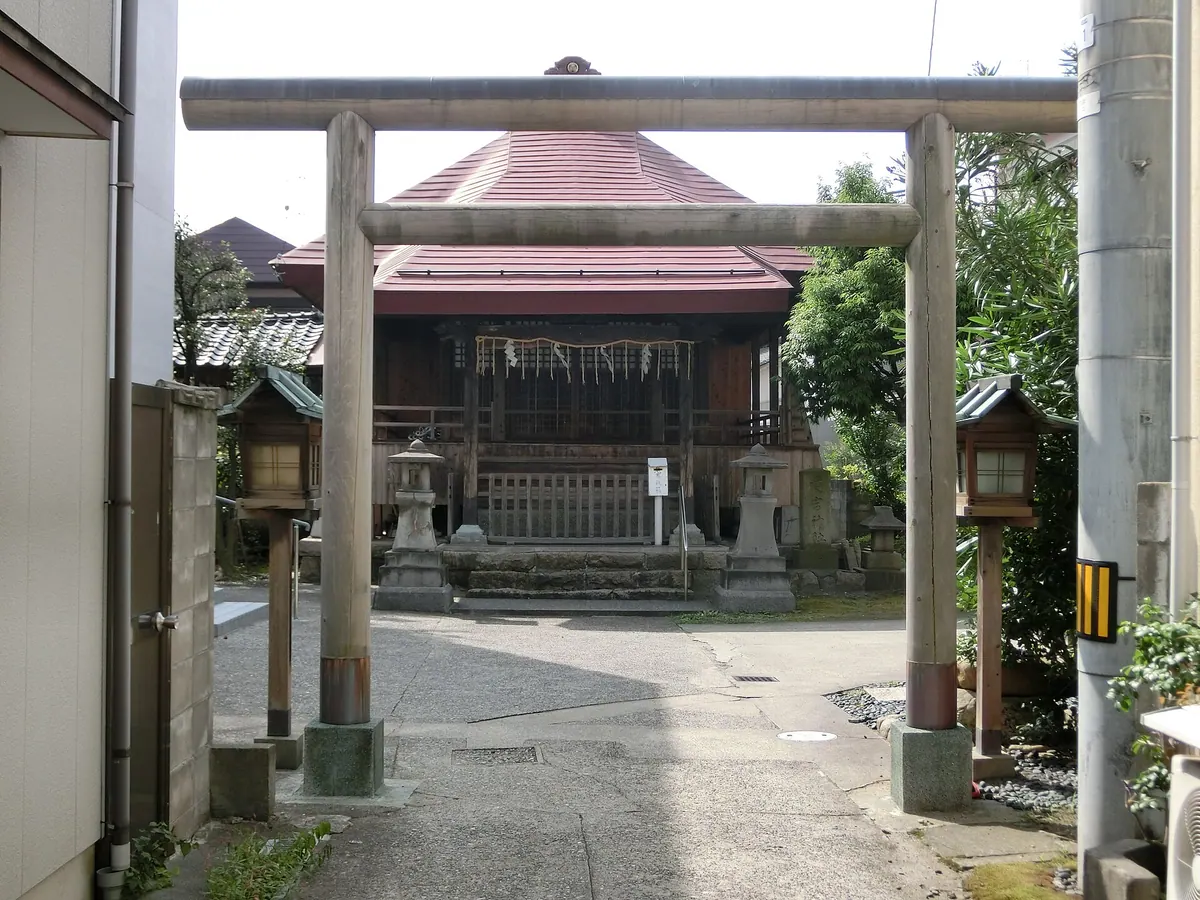
Komachi Atago Shrine is a historic shrine in Niigata City with important cultural properties.
What it is
- A shrine in Niigata City, Japan.
- Enshrined a分霊 from Kyoto's Atago Shrine in 1609.
- Moved to its current location between 1655 and 1657.
- Dedicated to Hono-Kagutsuchi-no-Kami and other deities.
What to see
- Worship hall and main hall are city cultural properties.
- Main hall dates to the early 18th century.
- Wooden guardian dogs dedicated in 1663.
- Kuchino Shrine and Inari Shrine are on the grounds.
Getting there
- 10-minute walk from the Shiyakusho-mae bus stop.
- Address
- 新潟市中央区古町通二番町495番地 Map
- Official site
- www.niigata-atago.jp
17
Asahara Shrine
NIIGATA · SHRINE 浅原神社
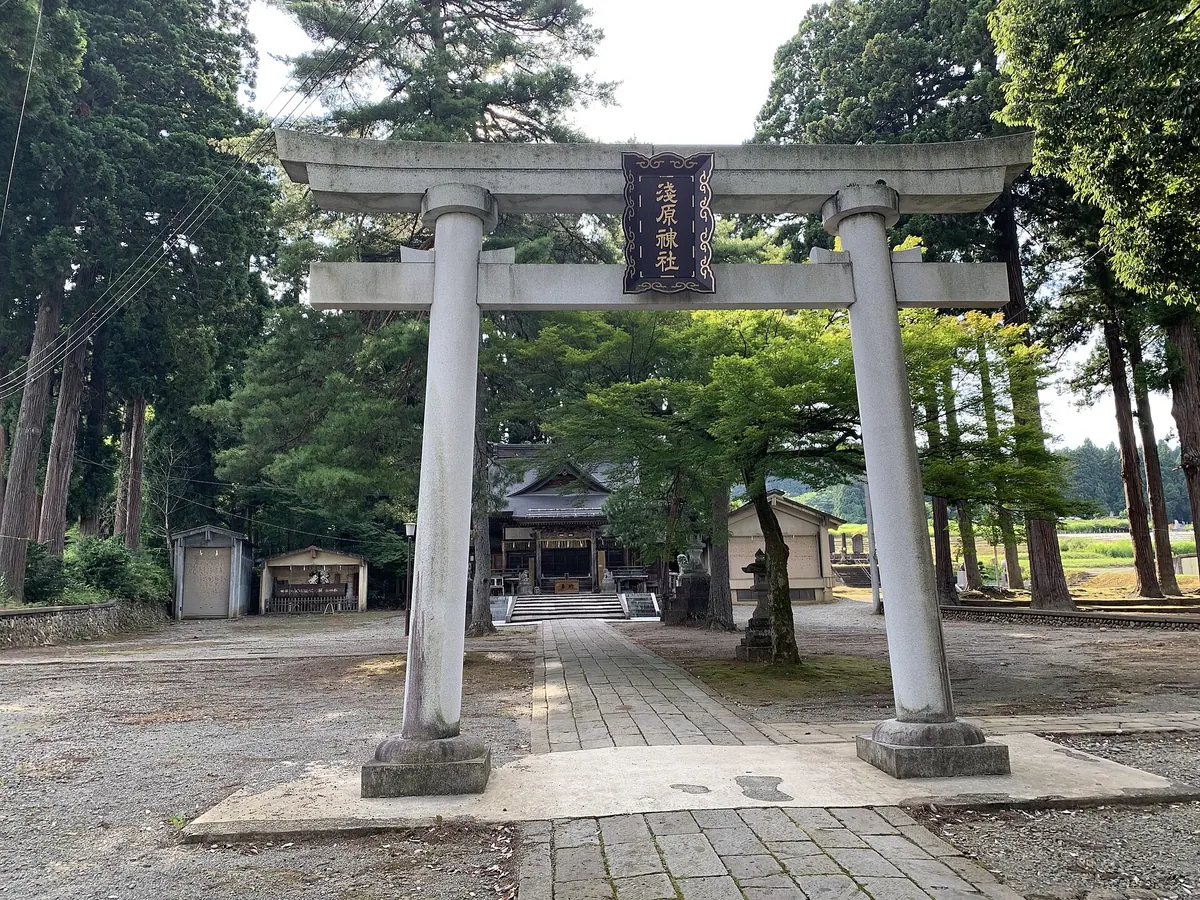
Asahara Shrine, a historic village shrine, offers unique sumo and firework events.
What it is
- Originally a private shrine for the Yoshiwara family.
- Became a village shrine in 1873.
- Several shrines merged into it in 1908.
What to see
- Niigata Prefecture's first authorized sumo ring.
When to go
- 108 fireworks launched on New Year's Eve.
- Spring festival held on April 25th.
- Sumo tournament held on September 10th mornings.
- Katakai Festival is the autumn festival.
Getting there
- 3-minute walk from Katakai Sannomachi bus stop.
- Address
- 新潟県小千谷市片貝町6548 Map
18
Amatsu Shrine
NIIGATA · SHRINE 天津神社
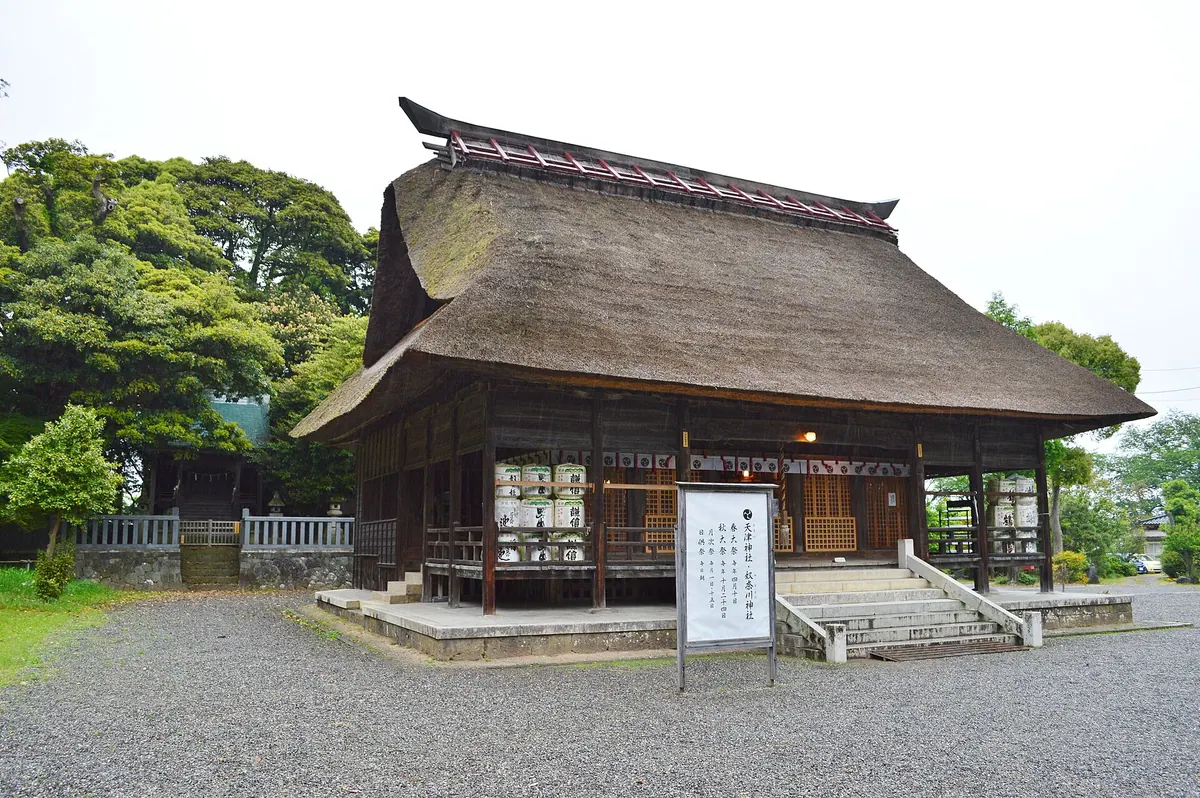
Amatsu Shrine is a historic site of worship with important cultural properties and traditional dance.
What it is
- A Shikinai-sha Ronsha shrine.
- Claims to be Echigo Province's Ichinomiya.
- Founded during Emperor Keiko's reign.
- An imperial prayer place for Emperor Kotoku.
What to see
- Main hall is a city designated cultural property.
- Wooden Nunasawa Hime statue is a prefectural cultural property.
- Nunasawa Shrine is a subordinate shrine on the grounds.
When to go
- Known for its bugaku dance.
- Bugaku dance is a nationally important intangible folk cultural property.
- Address
- 新潟県糸魚川市一の宮1-3-34 Map
19
Ime Shrine & Hachimangu
NIIGATA · SHRINE 伊米神社八幡宮
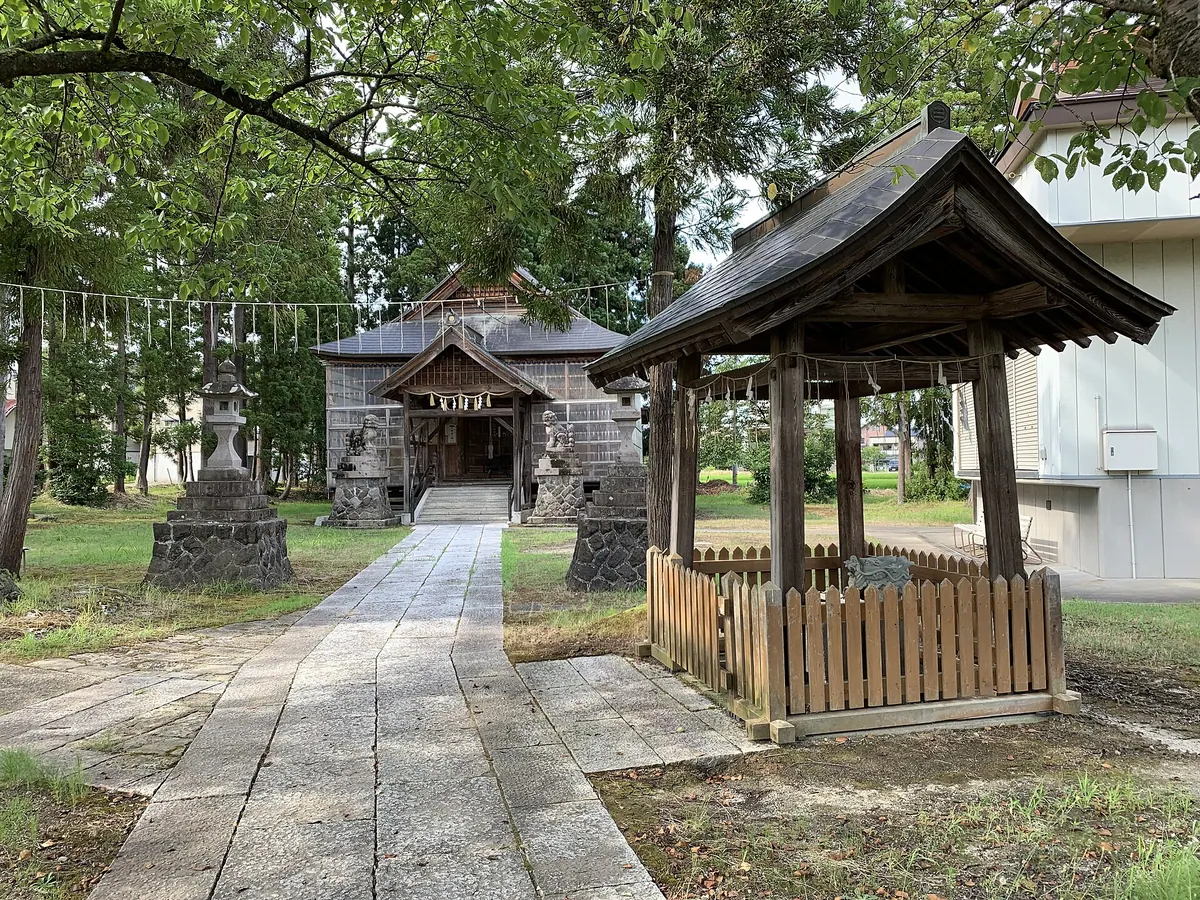
Visit Ime Shrine & Hachimangu to see rare Shinmei-zukuri architecture with thatched roofs.
What it is
- Ancient shrine, candidate for the Engishiki Jinmyocho list.
- Dedicated to Amenokaguyama-no-mikoto and Homudawake-no-mikoto.
- Hachimangu guardian deity enshrined by Minamoto no Yoshiie.
- Hachimangu was later combined with Ime Shrine.
What to see
- Honden built in rare Shinmei-zukuri style.
- Honden features a distinctive thatched roof.
- Haiden has unique round pillars and a thatched roof.
- Heiden also built in Shinmei-zukuri style with a thatched roof.
- Address
- 新潟県小千谷市桜町1314 Map
20
Nō Hakusan Shrine
NIIGATA · SHRINE 能生白山神社
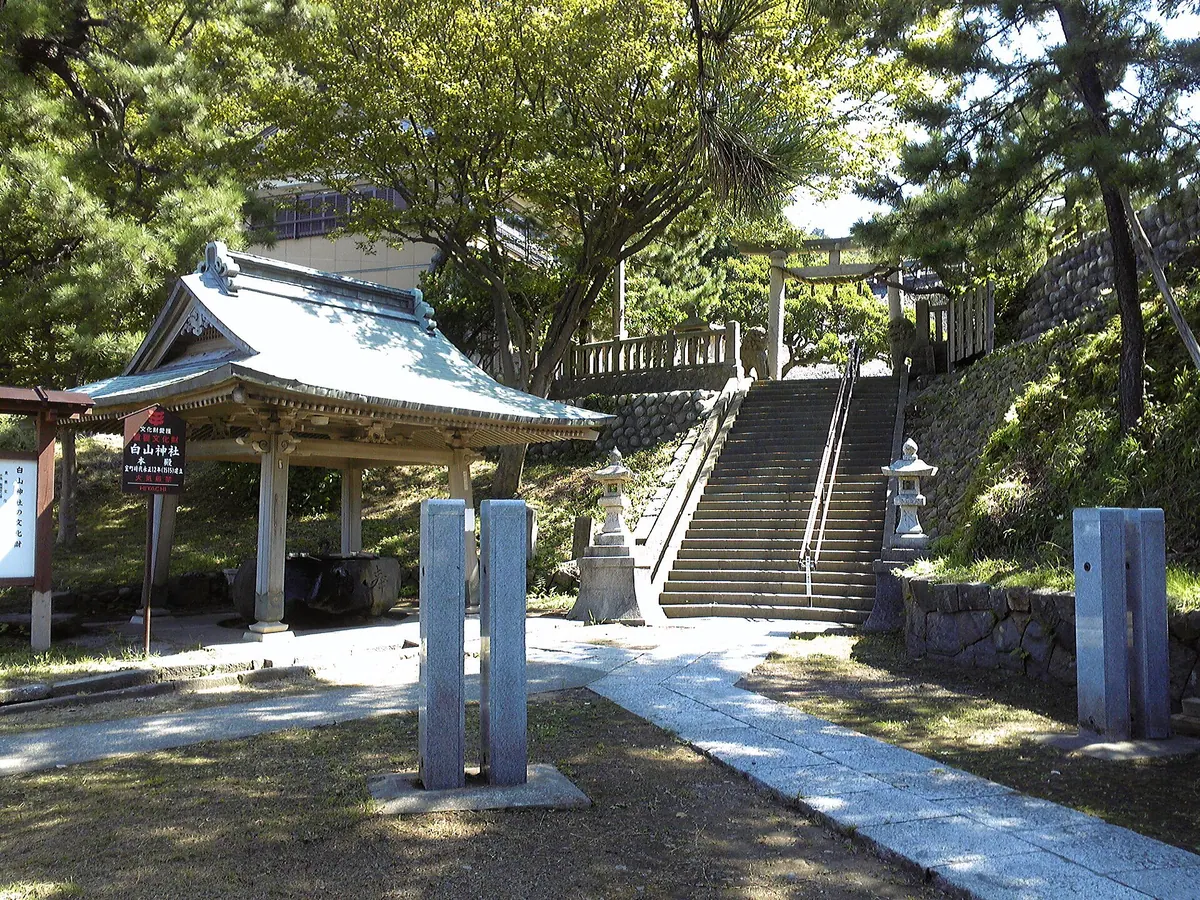
Nō Hakusan Shrine is an ancient shrine with important cultural and natural properties.
What it is
- One of the candidate shrines for Shikinaisha Nunakawa Shrine.
- Enshrines Nunakawahime-no-mikoto, Izanagi-no-mikoto, and Ōkuninushi-no-mikoto.
- Founded in the 11th year of Emperor Sujin's reign.
- Named Hakusan Gongen during Emperor Gensho's era.
What to see
- Main hall built in 1515.
- Main hall is a National Important Cultural Property.
- Treasure hall stores a wooden statue of Sho Kannon.
- Shrine forest is a National Natural Monument.
- Address
- 新潟県糸魚川市大字能生7239 Map
- Official site
- nouhakusan.jp