

20 Shrines in Kagawa worth your time
Japan Gems
Kagawa Prefecture is home to 36 shrines, including Nakano Tenman Shrine and Kameido Mizu Shrine. These shrines offer a glimpse into local spiritual traditions.
Kagawa has 36 shrines on Japan Gems. Below are the 20 we can tell you the most about — each one written up in English from Japanese sources, with what to see and how to get there. See all shrines in Kagawa.
01
Kandani Shrine
KAGAWA · SHRINE 神谷神社
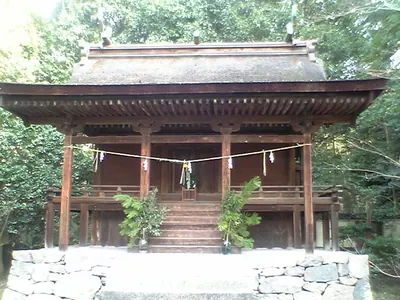
Kandani Shrine's Main Sanctuary, built in 1219, is one of Japan's oldest shrine buildings.
What it is
- Ancient shrine, records indicate founding in 812.
- Main Sanctuary constructed in 1219.
- Dedicated to Shinto deities.
What to see
- Bright red worship hall, rebuilt in 1930.
- Main Sanctuary, one of Japan's oldest shrine buildings.
- Main Sanctuary designated a National Treasure in 1955.
- Kamakura period architectural features on Main Sanctuary.
- Main Sanctuary roof covered with hinoki cypress bark shingles.
- Statue of a Shinto guardian deity, displayed on select occasions.
Getting there
- Located near the banks of the Kandani River.
- In the shadow of Mt. Shiramine.
- Between the cities of Takamatsu and Sakaide.
- Address
- 香川県坂出市神谷町621 Map
- Official site
- kandani.sakura.ne.jp
02
Kagawa Gokoku Shrine
KAGAWA · SHRINE 香川縣護國神社
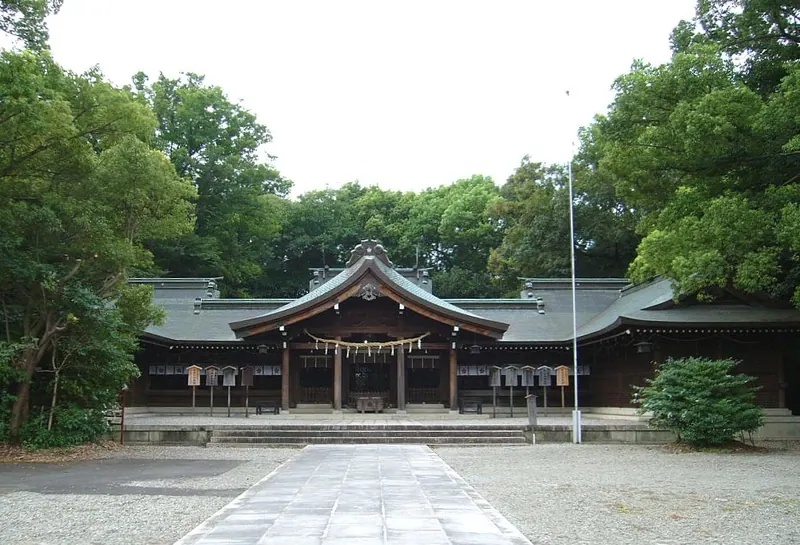
A large shrine in Kagawa dedicated to war dead, with a notable sub-shrine.
What it is
- Originated as a Shokonsha in 1898.
- Became a Gokoku Shrine in 1938.
- Enshrines over 35,700 war dead from Kagawa Prefecture.
- Its official name is Sanukigu.
What to see
- Shrine grounds cover 33,604 square meters.
- Nogi Shrine was built in 1933.
- Nogi Shrine enshrines Nogi Maresuke.
- Nogi Shrine's main hall is a registered cultural property.
- Nogi Shrine's worship hall is a registered cultural property.
- Nogi Shrine's torii is a registered cultural property.
When to go
- Mantou Natsu Matsuri is held annually in August.
Getting there
- 900m west of Zentsuji Station on the Dosan Line.
- Address
- 香川県善通寺市文京町四丁目5番5号 Map
- Official site
- sanukinomiya.org
03
Oominakami Shrine
KAGAWA · SHRINE 大水上神社
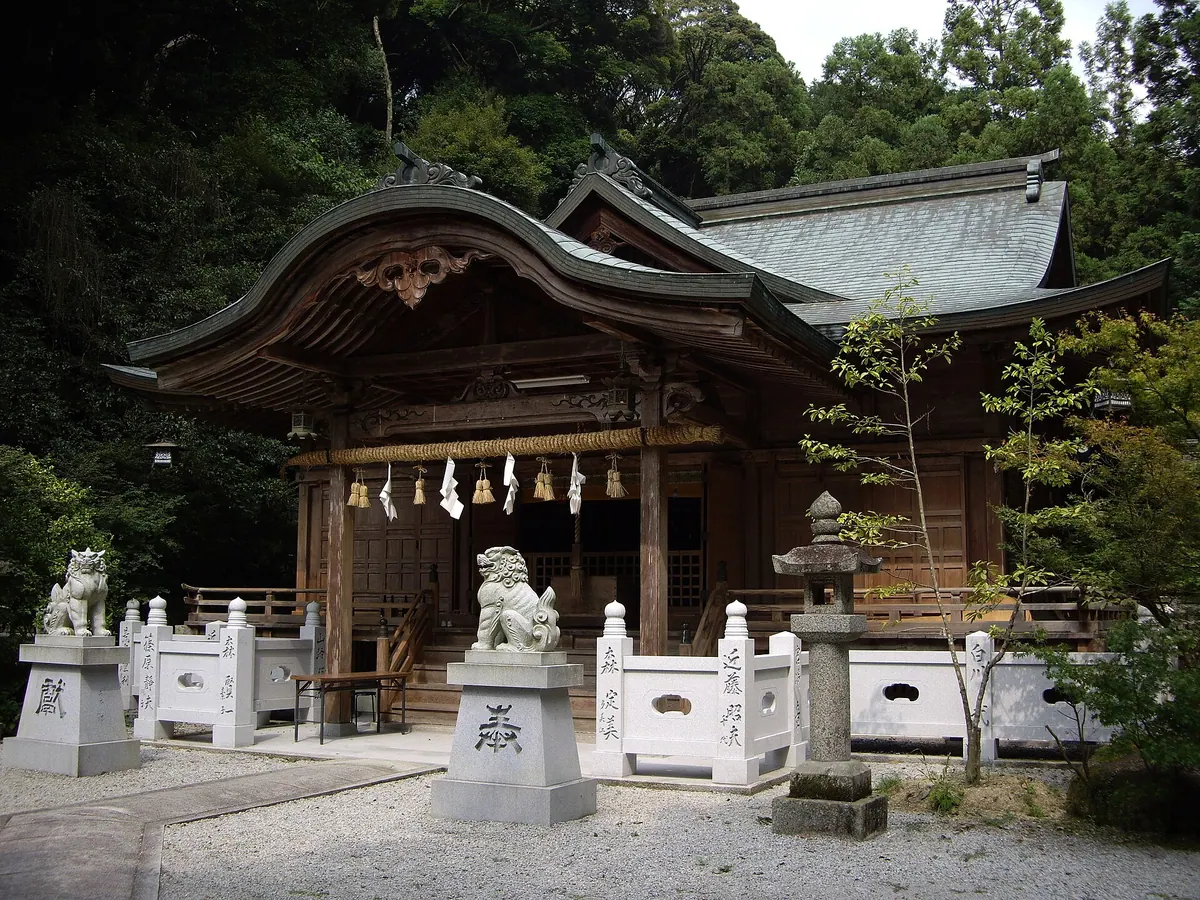
Ancient shrine in Kagawa with unique cultural properties and a historic kiln site.
What it is
- Ancient Shikinaisha shrine, dating to Yayoi or Kofun period.
- Formerly a Prefectural Shrine, Ninomiya of Sanuki Province.
- Dedicated to Oominakami Daimyojin, Homutawake no Mikoto, Munakata Okami.
- Historically a site for rainmaking rituals during droughts.
What to see
- Current shrine buildings, rebuilt during the Eiroku era.
- Shigure Lantern, a Prefectural Designated Cultural Property.
- Ninomiya Kiln Site, a National Historic Site.
- Juniper tree, designated as a Prefectural Natural Monument.
Getting there
- About 15 minutes from Sanuki Toyonaka IC.
- Address
- 香川県三豊市高瀬町羽方2677番地2 Map
04
Awai Shrine
KAGAWA · SHRINE 粟井神社
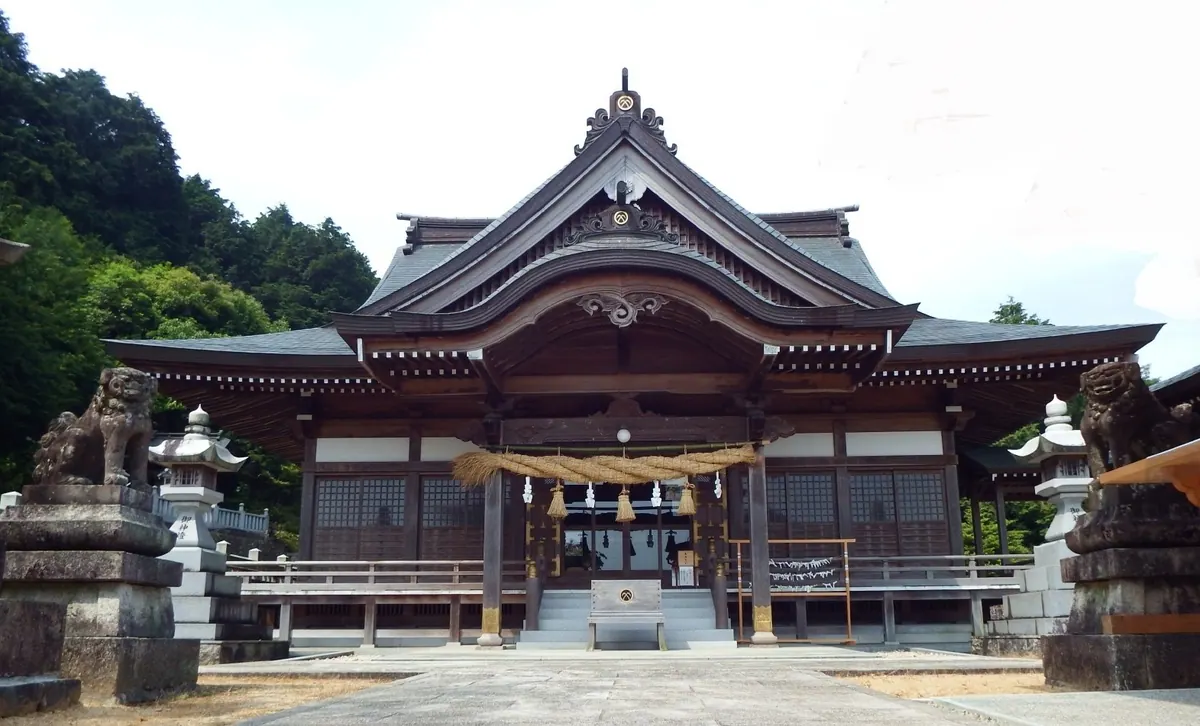
Awai Shrine is a historic site dedicated to Amenofutodama-no-mikoto, known for its beautiful hydrangeas.
What it is
- A Myojin Taisha-ranked Shikinaisha shrine.
- One of 24 Shikinaisha shrines in Sanuki Province.
- Dedicated to the deity Amenofutodama-no-mikoto.
- Rebuilt in 1620 by Ikoma Masatoshi.
What to see
- Shrine located at the foot of Mt. Fujime.
- Sits by the Iwabe Pond.
- Approximately 3,000 hydrangeas planted on grounds.
- Current shrine building constructed in 2001.
When to go
- Ajisai Festival held on the third Sunday of June.
Getting there
- 15-minute drive from JR Yosan Line Kanonji Station.
- Address
- 香川県観音寺市粟井町1716番地 Map
05
Takinomiya Tenmangū
KAGAWA · SHRINE 滝宮天満宮
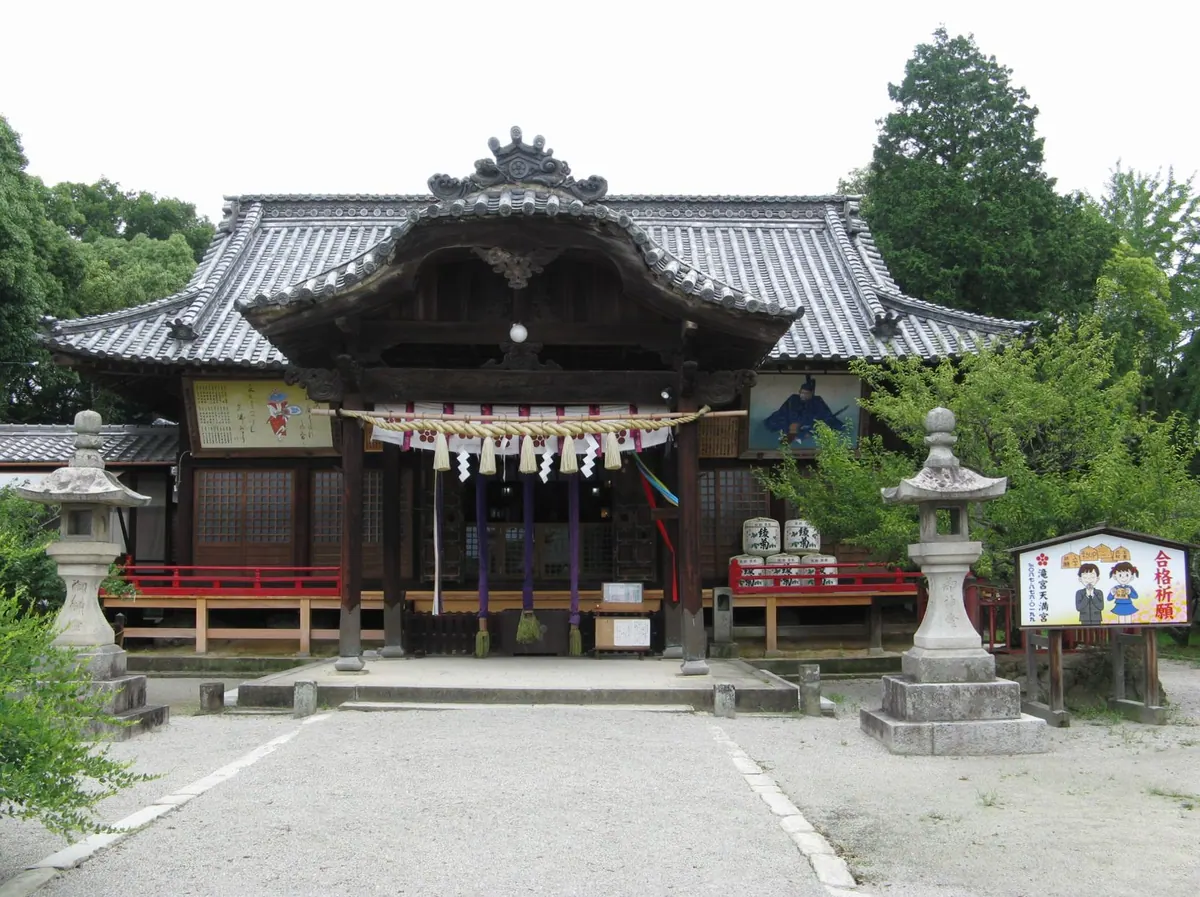
Historic shrine dedicated to Sugawara no Michizane, easily accessible for cultural events.
What it is
- A shrine in Ayagawa Town, Kagawa Prefecture.
- Founded in 948 to commemorate Sugawara no Michizane.
- Enshrines Sugawara no Michizane and Nomi no Sukune no Mikoto.
- Site of the former Sanuki provincial governor's official residence.
What to see
- Main shrine building, rebuilt in 1888.
- Treasure hall, built in 1977.
- Sacred gate, built in 1977.
When to go
- Takinomiya no Nenbutsu Odori on August 25.
- Usokae Shinto ritual on April 24.
Getting there
- 5-minute walk from Takinomiya Station.
- Address
- 香川県綾歌郡綾川町滝宮1314 Map
- Official site
- takinomiyatenmangu.com
06
Takaya Shrine
KAGAWA · SHRINE 高屋神社
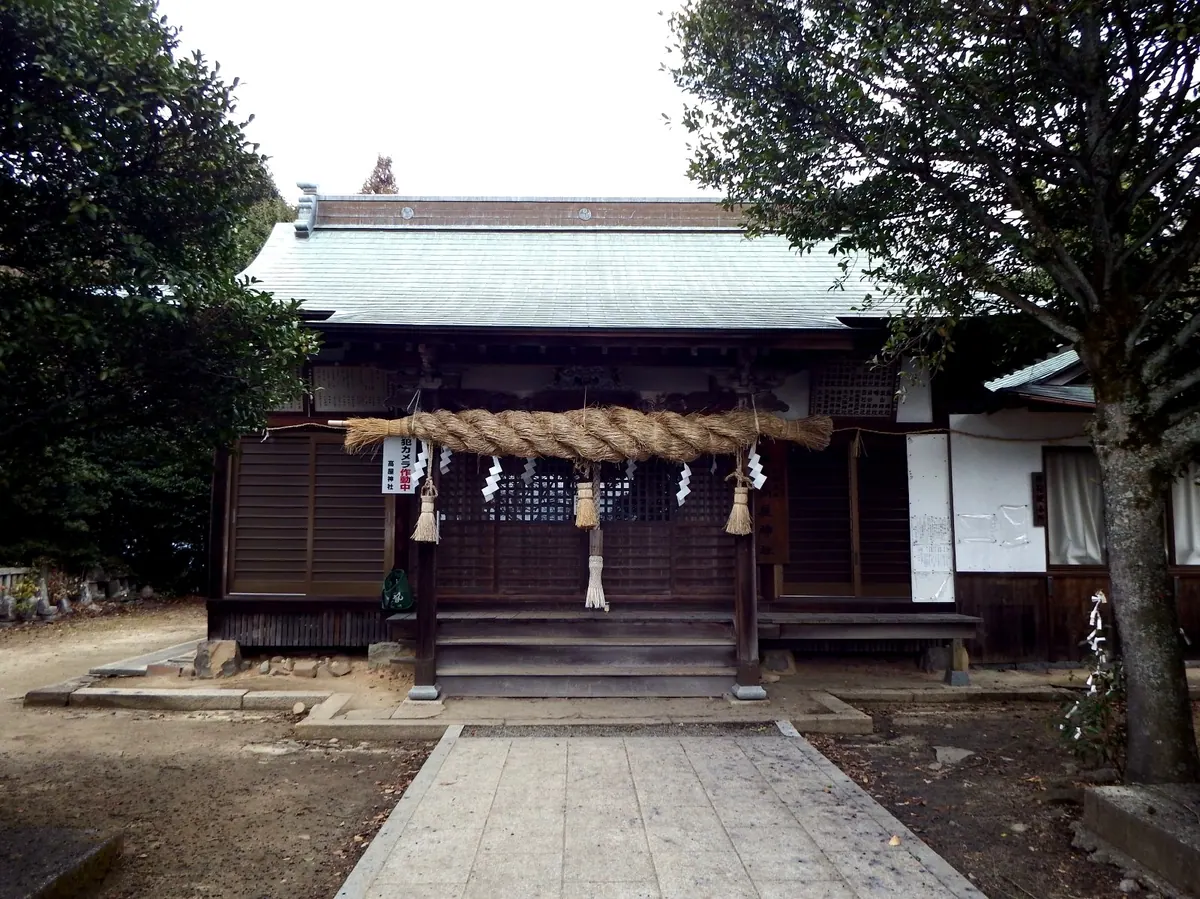
Takaya Shrine offers panoramic coastal views through its stone torii, accessible by car or a one-hour climb.
What it is
- Shinto shrine on Mt. Inazumi.
- Overlooks the coastal city of Kanonji.
- More than a thousand years of history.
- Mentioned in the Engishiki, completed in 927 CE.
What to see
- Bulky stone torii gate, erected in 2009.
- Torii frames view over Kanonji city.
- View includes islands of the Seto Inland Sea.
Getting there
- Accessible by car via a recently constructed road.
- Walk from the shrine's lower hall (gegu) at mountain foot.
- Climb takes about one hour.
- Ends with a steep 270-step stone approach.
- Address
- 香川県観音寺市高屋町2800 Map
07
Ōnohara Hachiman Shrine
KAGAWA · SHRINE 大野原八幡神社
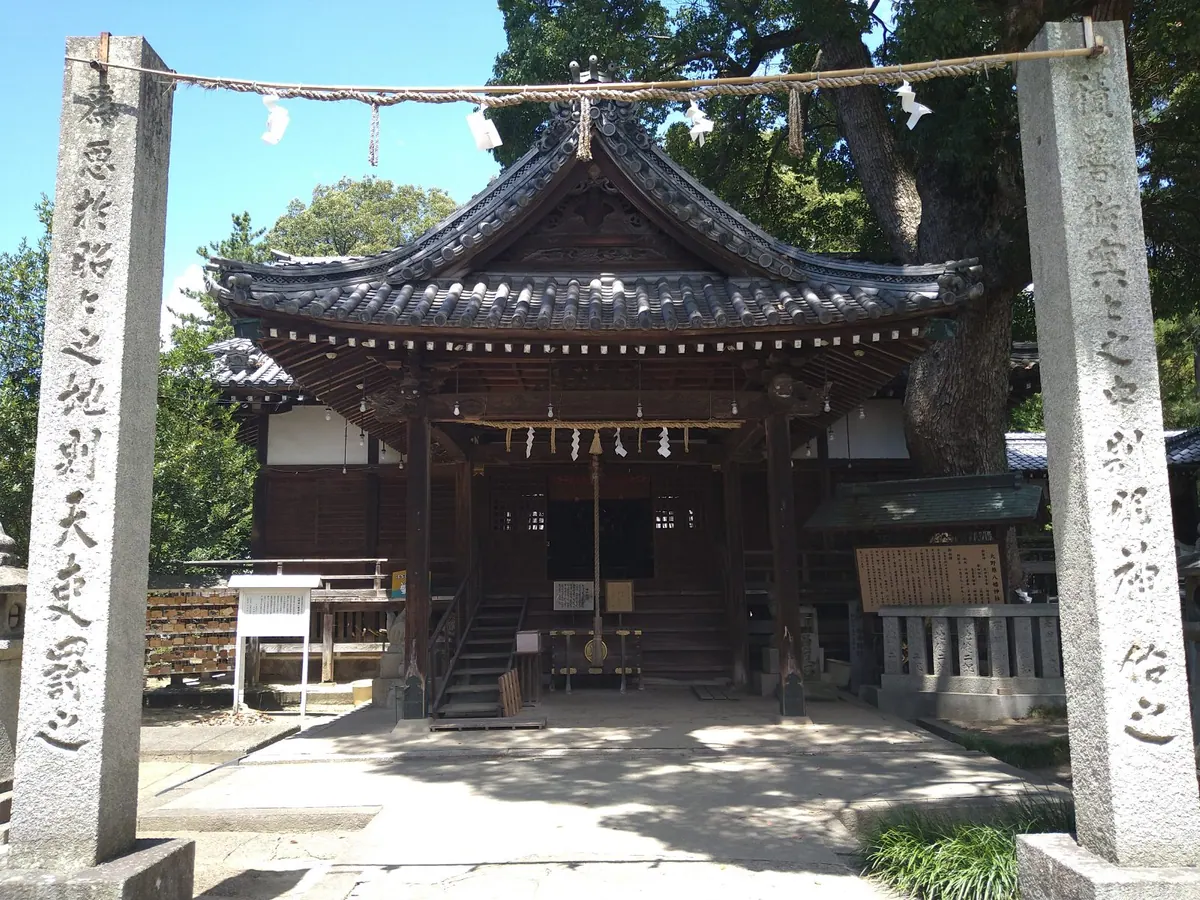
Ōnohara Hachiman Shrine is a historic site with unique architecture and an autumn festival.
What it is
- A Shinto shrine established in 1645.
- Originally named Ōjin-gū.
- Dedicated to three main deities.
- Also known as Ōnohara Hachiman-gū.
What to see
- Main hall and offering hall rebuilt in 1848.
- Thatch roof, one of four in Kagawa Prefecture.
- Main hall is a designated cultural property.
- Zuishinmon gate is a designated cultural property.
- Wan Kashizuka Kofun, a national historic site.
- Iwakurazuka Kofun, a national historic site.
When to go
- Autumn festival with drum floats in October.
- Address
- 香川県観音寺市大野原町大野原1913 Map
08
Ubushina Shrine
KAGAWA · SHRINE 宇夫階神社
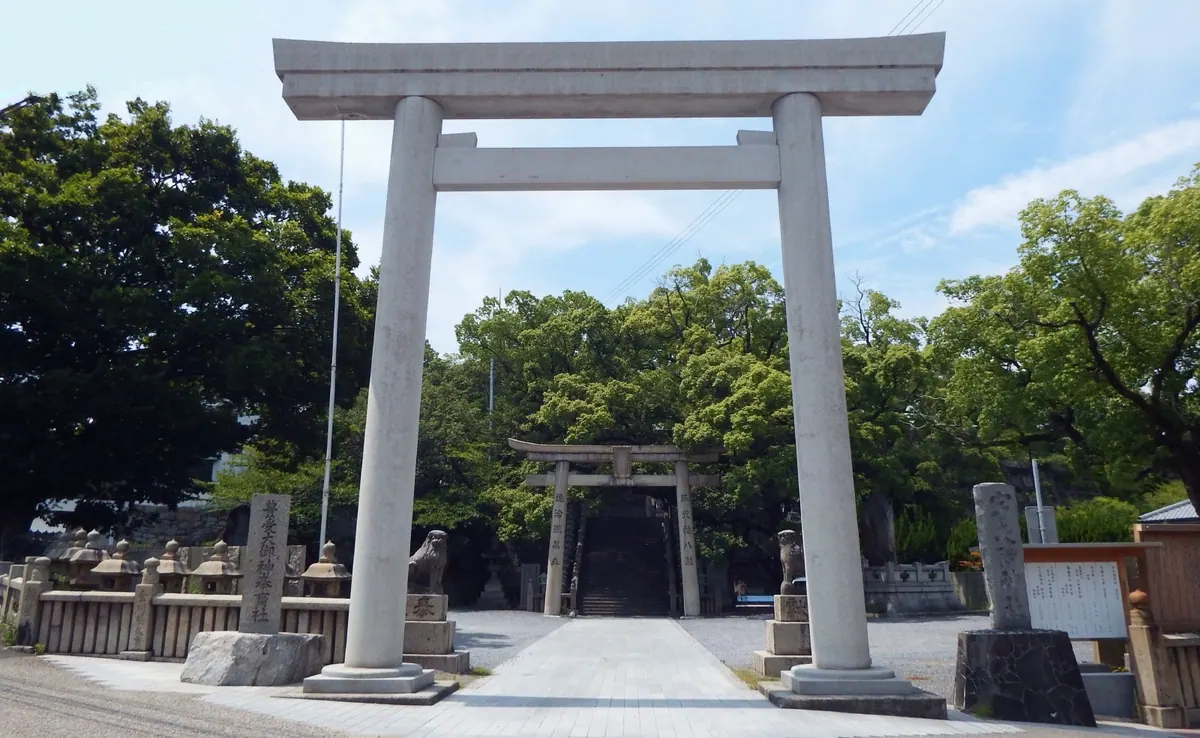
Ancient shrine in Utazu with a unique main sanctuary and a towering rock as its original object of worship.
What it is
- Ancient shrine on a hill in Komachi, Utazu.
- Records indicate it moved to current site in 807.
- Main sanctuary moved from Ise Grand Shrine in 1974.
- Original object of worship was a towering rock.
What to see
- Concrete worship hall (haiden).
- Wooden main sanctuary (honden) from Ise Grand Shrine.
- Main sanctuary is a registered Tangible Cultural Property.
- Towering rock 5.5 meters high, 4 meters wide.
- Variety of sub-shrines on the grounds.
- Udon noodle restaurant on the grounds.
- Address
- 香川県綾歌郡宇多津町1644 Map
09
Tsushima Shrine, Mitoyo
KAGAWA · SHRINE 津嶋神社 (三豊市)
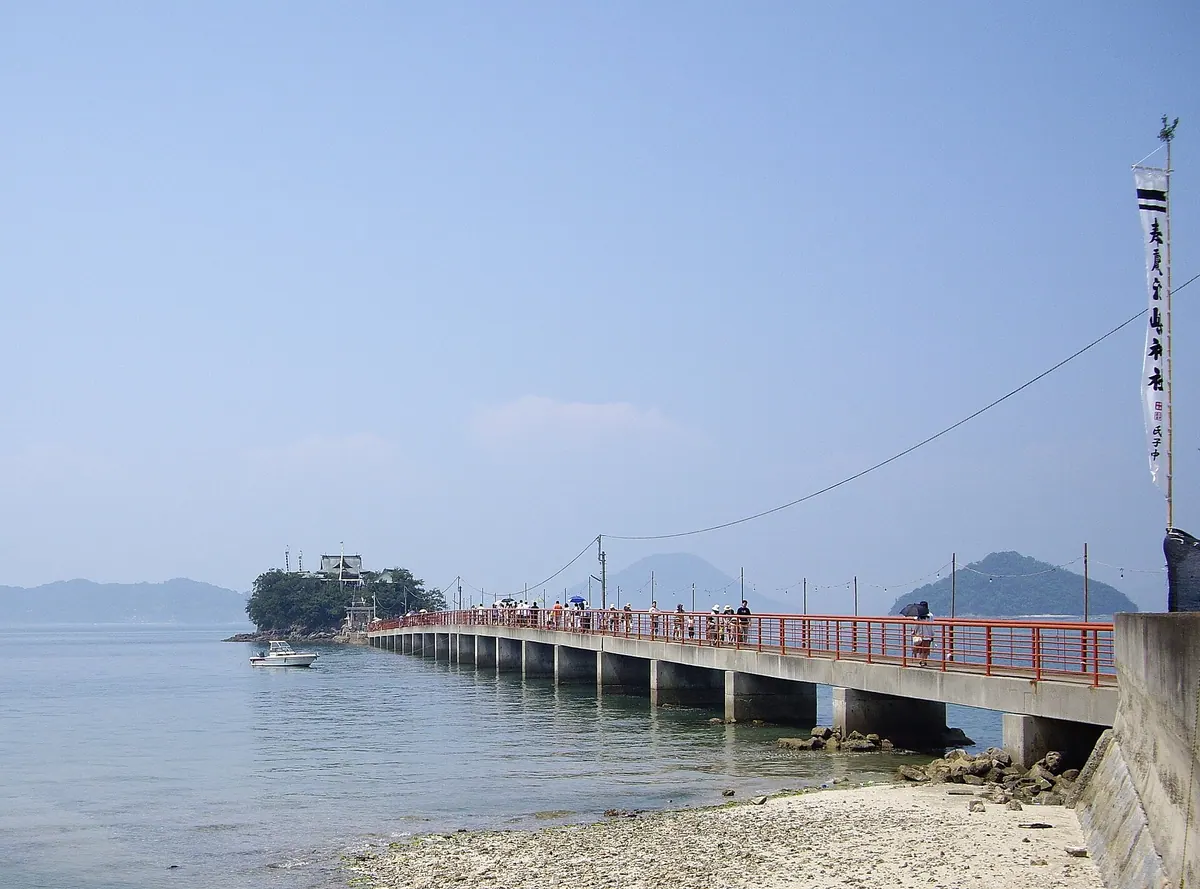
Tsushima Shrine is a unique island shrine dedicated to children's protection, accessible only a few days a year.
What it is
- Shrine on Tsushima Island, dedicated to Susanoo-no-Mikoto.
- Worshipped as a guardian deity of children.
- Main building constructed in 1706.
- Renamed Tsushima Shrine in 1952.
What to see
- The main shrine building.
- Tsushima Bridge, 250 meters long.
When to go
- Summer Grand Festival, August 3rd, 4th, and 5th.
- Tsushima Bridge is open only during the festival.
Getting there
- Tsushinomiya Station operates only on August 4th and 5th.
- Address
- 香川県三豊市三野町大見甲6816番地2 Map
10
Kotohiki Hachimangū
KAGAWA · SHRINE 琴弾八幡宮
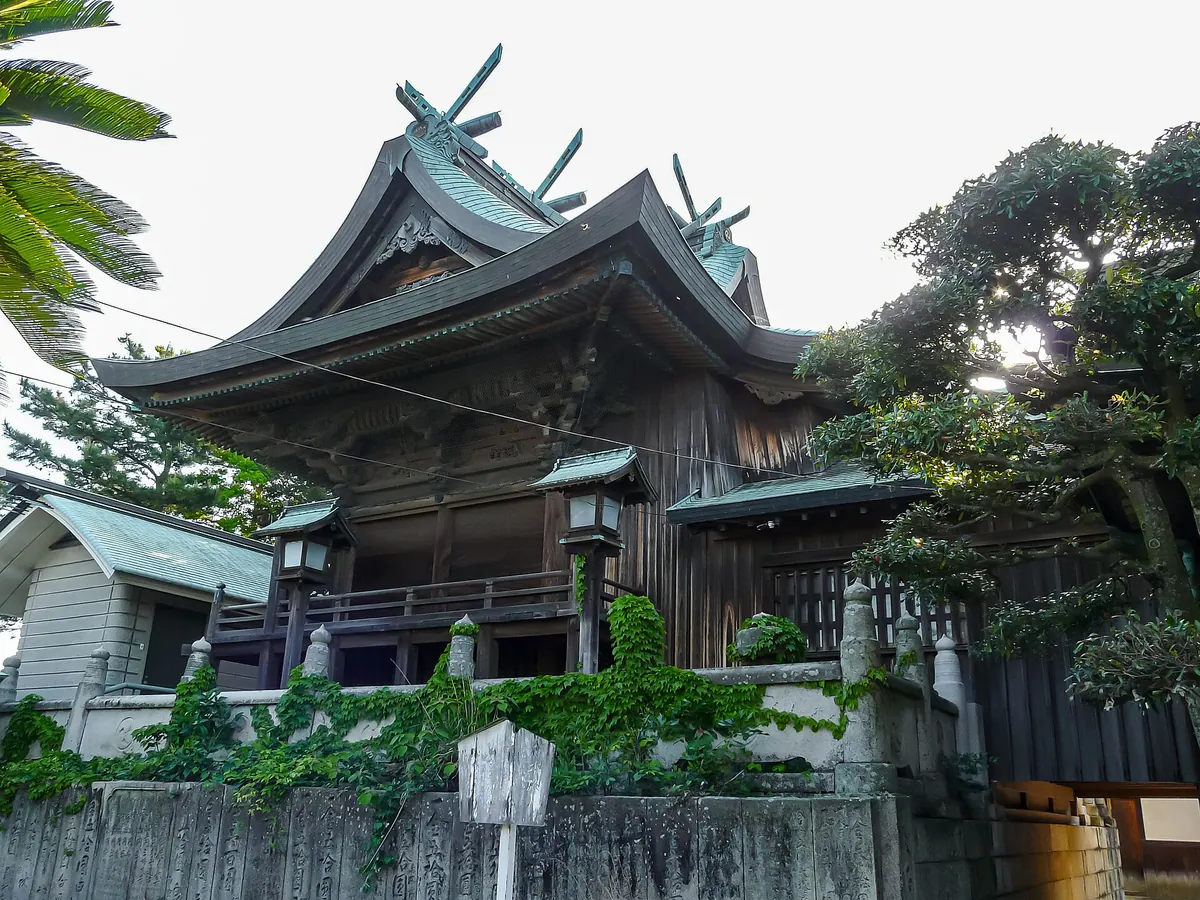
Kotohiki Hachimangū is an ancient mountaintop shrine with a rich history and a vibrant autumn festival.
What it is
- Ancient shrine founded in 703 AD.
- Dedicated to Emperor Ojin, Empress Jingu, and Tamayori-hime no Mikoto.
- Known for Minamoto no Yoshitsune's prayer for victory.
- Was the 68th sacred site of the Shikoku 88 Pilgrimage.
What to see
- A wooden torii gate dedicated by Minamoto no Yoshitsune.
- Views from the summit of Mt. Kotohiki.
When to go
- Kotohiki Hachimangu Grand Festival is held every October.
- Nine taikodai floats are dedicated during the festival.
- Address
- 香川県観音寺市八幡町1-1-1 Map
11
Kogarasu Shrine
KAGAWA · SHRINE 木烏神社
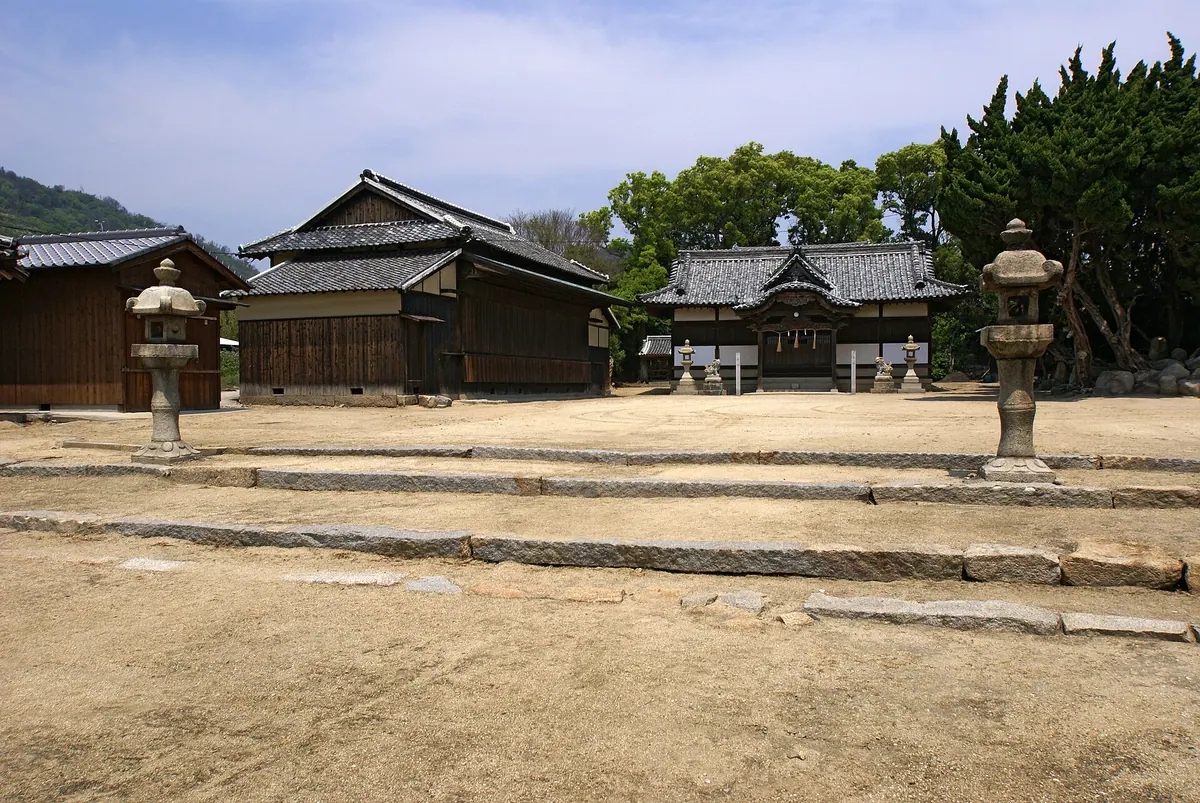
Kogarasu Shrine is an ancient shrine on Honjima island, home to a historic playhouse and gate.
What it is
- An old shrine on Honjima, Shiwaku Islands.
- Enshrines a legendary crow.
- Dedicated to Okuninushi-no-kami and other deities.
What to see
- Torii gate built in 1627.
- Chitoseza playhouse built in 1862.
- Seireiba, a designated cultural property.
- Torii gate and Chitoseza are city cultural properties.
When to go
- Annual festival held on October 8th and 9th.
Getting there
- Accessible by ferry from Marugame Port.
- Address
- 香川県丸亀市本島町泊670番地 Map
12
Kumano Shrine
KAGAWA · SHRINE 熊野権現桃太郎神社
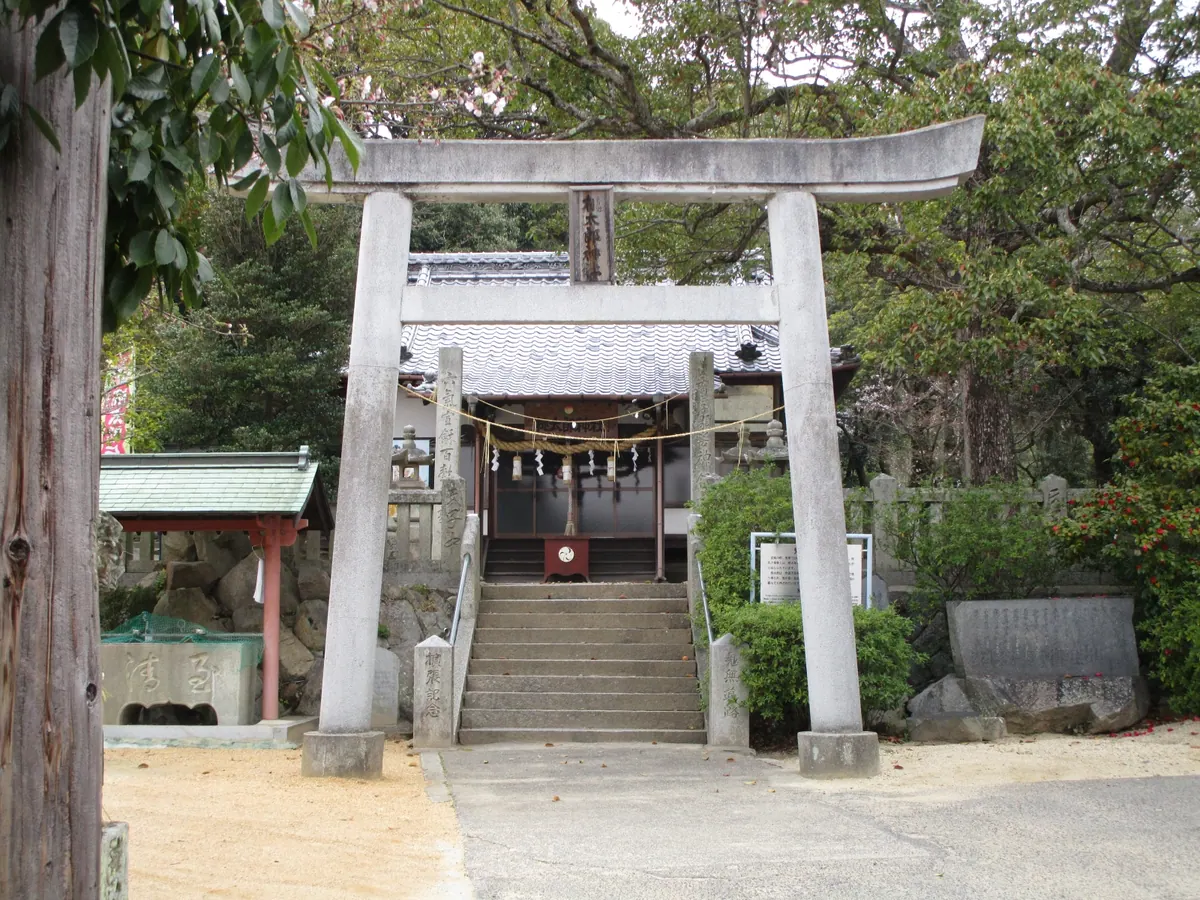
Kumano Shrine is a unique site dedicated to the Momotaro legend, worth visiting for its historical ties.
What it is
- A shrine dedicated to the Momotaro legend.
- Known officially as Kumano Gongen.
- Also called Kumano Gongen Momotaro Shrine.
- Associated with Momotaro defeating pirates from Onigashima.
What to see
- Graves for Momotaro and his animal companions.
- A monument donated by a Nippon Ham chairman.
When to go
- Kinashi Momotaro Festival is held annually in March.
Getting there
- 13-minute walk from JR Kinashi Station.
- Address
- 香川県高松市鬼無町鬼無848 Map
13
Kigumano Shrine
KAGAWA · SHRINE 木熊野神社
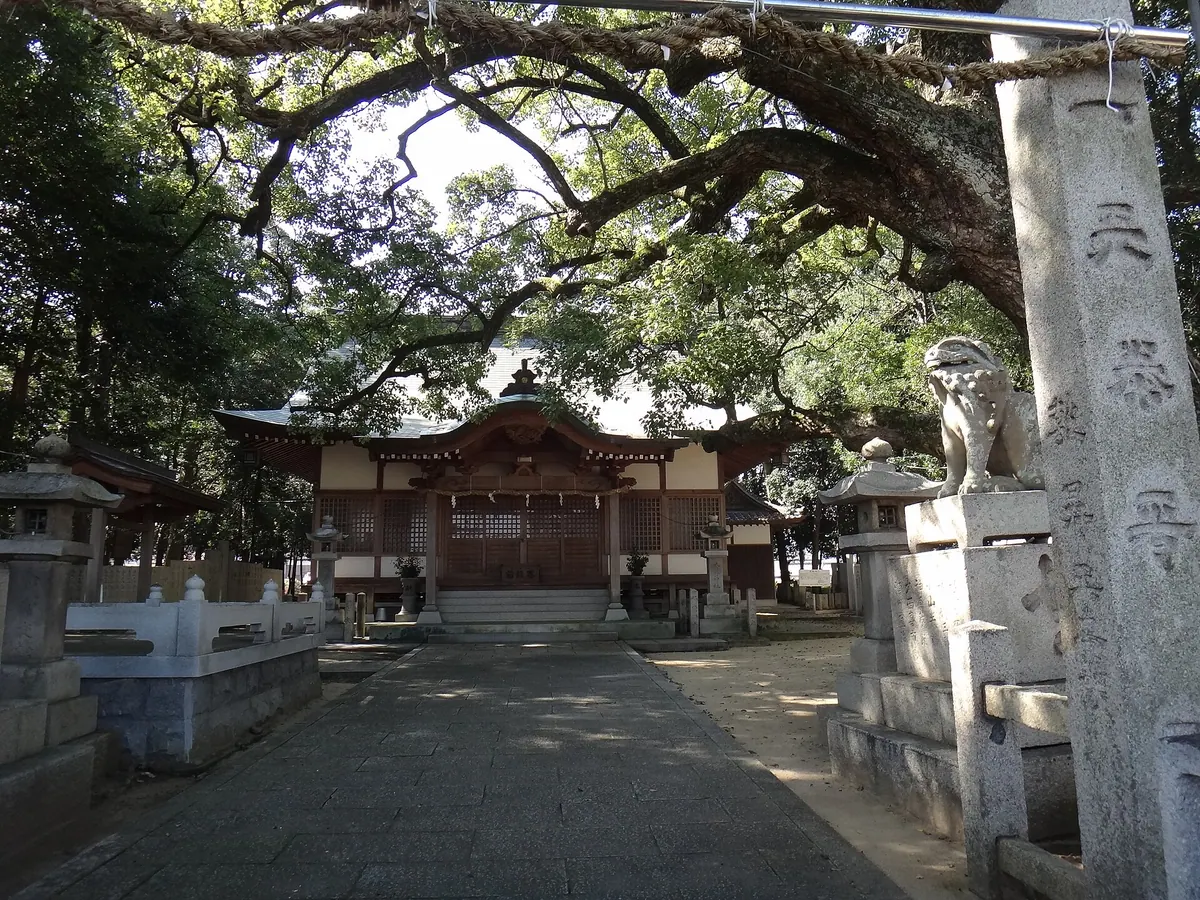
Kigumano Shrine: a historic site dedicated to Izanami-no-mikoto, known for its sacred rice and Nagi grove.
What it is
- Dedicated to the deity Izanami-no-mikoto.
- Kukai reportedly invited Kumano Junisha Gongen.
- Zentsuji was a branch temple of Toji in mid-Heian period.
What to see
- Sacred object: unhulled rice in a small桶 called Onyuruwa.
- Sacred object placed in the portable shrine by the priest.
- Shrine grove of Nagi is a natural monument.
Getting there
- 20-minute walk west from Konzoji Station.
- Konzoji Station is on the Dosan Line.
- Address
- 香川県善通寺市中村町138 Map
14
Shiratori Shrine
KAGAWA · SHRINE 白鳥神社
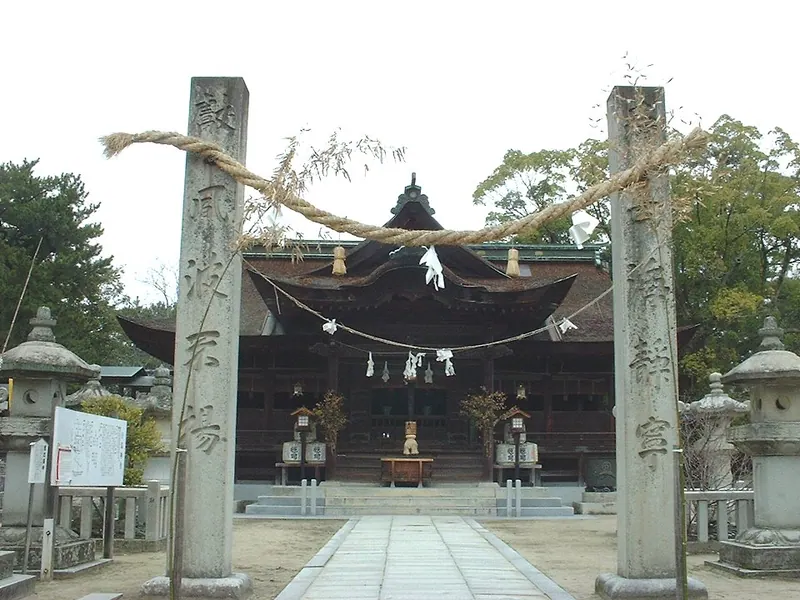
Shiratori Shrine honors Yamato Takeru, offering historical artifacts and a scenic pine grove.
What it is
- Shrine dedicated to the spirit of Yamato Takeru.
- Rebuilt in 1664 by Matsudaira Yorishige.
- Ranked as a prefectural shrine in 1872.
What to see
- Lanterns donated by feudal lords.
- Mount Miyama, a 3.6m tall mountain.
- 40,000 tsubo wide pine grove.
- Pine grove is part of Setonaikai National Park.
- Pine grove is one of Japan's 100 White Sand and Green Pines.
- Tachi sword with Masatsune signature is an Important Cultural Property.
- Address
- 香川県東かがわ市松原69番地 Map
15
Ōmi Shrine
KAGAWA · SHRINE 青海神社
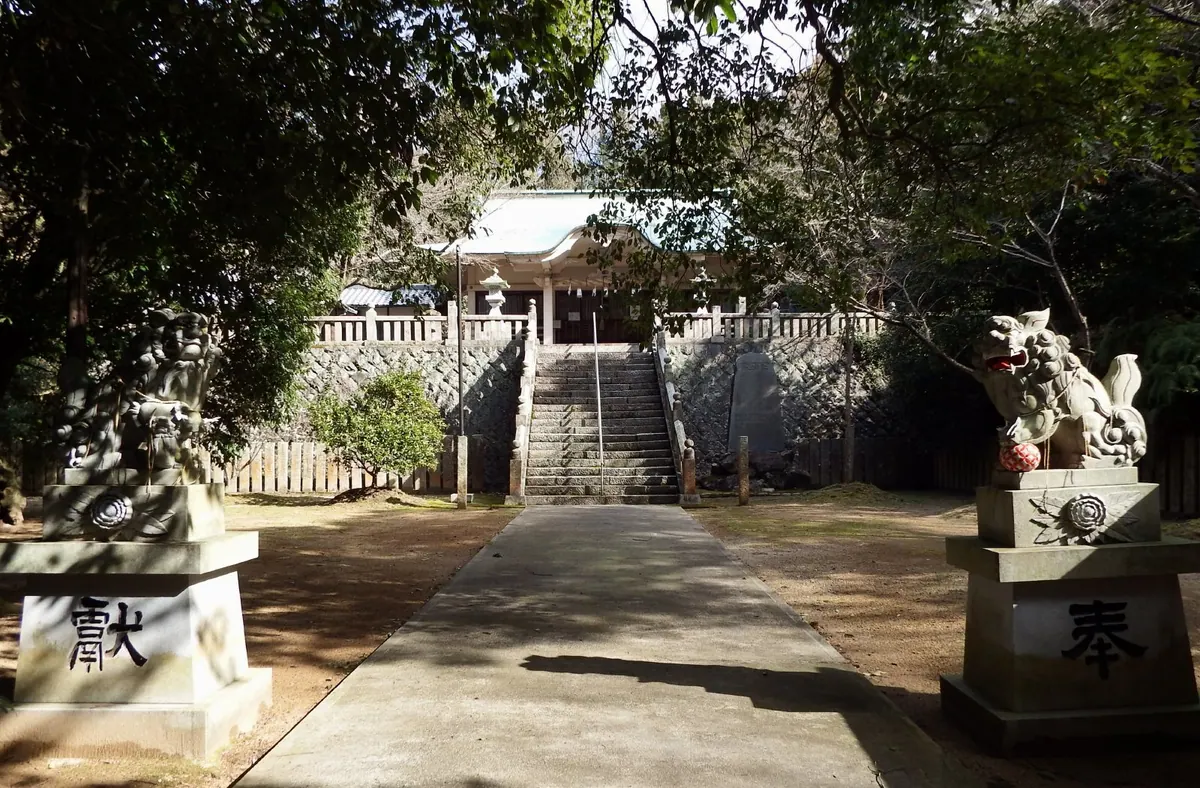
Ōmi Shrine honors Emperor Sutoku, offering a glimpse into historical reverence and a pilgrimage route.
What it is
- Also known as Kemuri-no-Miya.
- Dedicated to the spirit of Emperor Sutoku.
- Fuke Yasunori built a palace for the emperor's spirit.
- Designated a village shrine in 1872.
What to see
- Pilgrimage route to Shiramine-ryo on the grounds.
- Kasuga Shrine is located next door.
- Several subsidiary shrines, including Shiraki Shrine.
- Simple Yakushi-do hall near the parking area.
- Yakushi-do enshrines a main image carved into stone.
- Address
- 香川県坂出市青海町759番 Map
16
Tamura Shrine
KAGAWA · SHRINE 田村神社
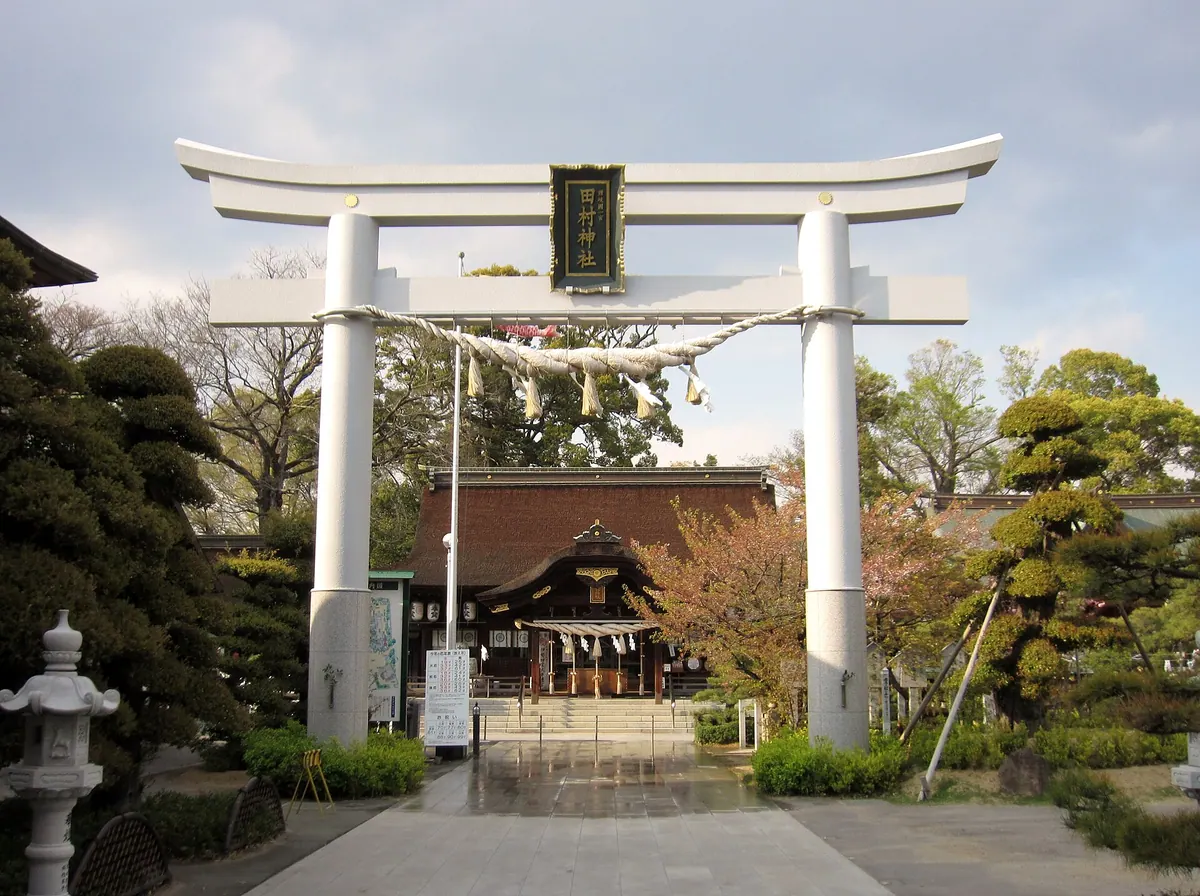
Tamura Shrine, founded in 709, is a significant shrine dedicated to water deities, worth visiting for its history and treasures.
What it is
- A Myojin Taisha and Sanuki Province Ichinomiya.
- Based on water deity worship.
- Founded in 709 by Gyoki.
- Main deities are collectively called Tamura Okami.
What to see
- Sacred treasures designated as National Important Cultural Properties.
- Current main hall and inner sanctuary built in 1710.
- Inner sanctuary built over a deep well called Sadamizu-i.
When to go
- Morning market held every Sunday.
- Address
- 香川県高松市一宮町字宮東286番地 Map
- Official site
- tamurajinja.com
17
Kotohira-gū
KAGAWA · SHRINE 金刀比羅宮
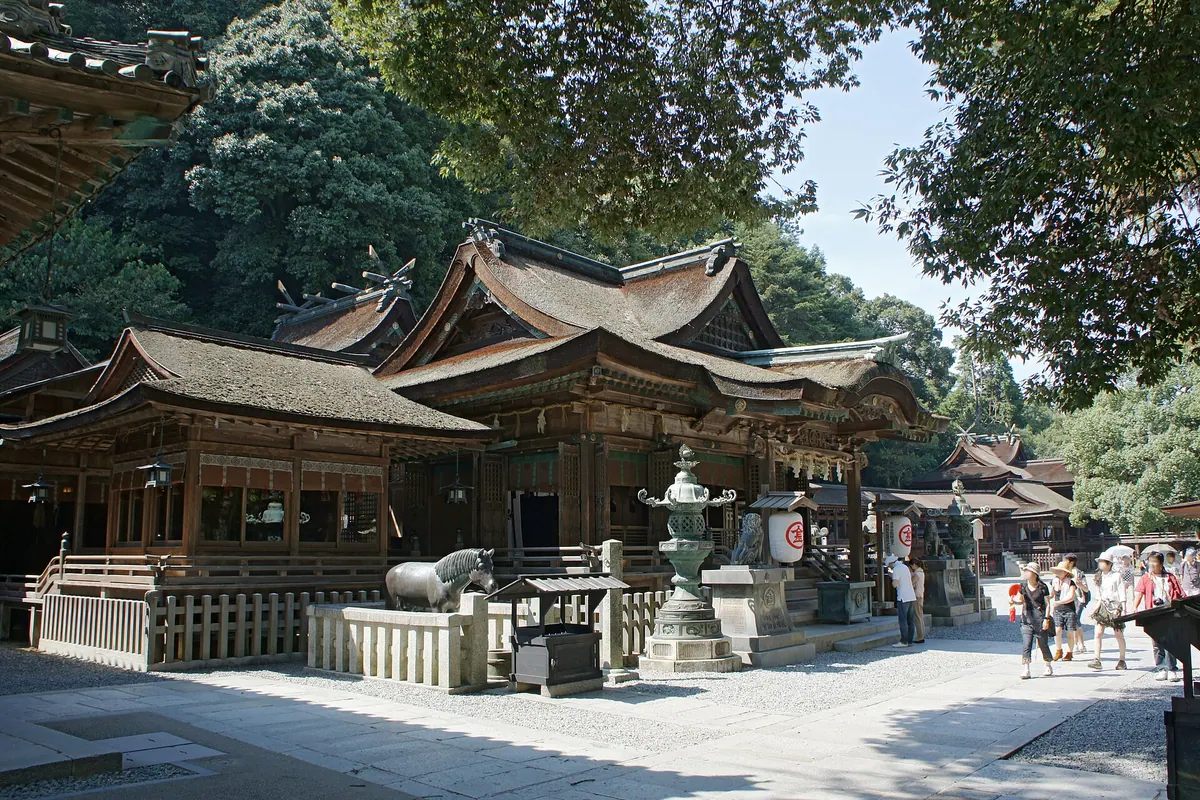
Kotohira-gū is a historic shrine dedicated to maritime safety, offering a rewarding climb and intricate carvings.
What it is
- A standalone shrine on the slopes of Mount Zōzu.
- Head shrine for about 600 Konpira shrines nationwide.
- Known as a guardian deity of maritime traffic.
- Main deity enshrined is Ōmononushi-no-Mikoto.
What to see
- The main approach has 1,368 stone steps.
- The current main hall was rebuilt in 1878.
- Asahi-sha building features many beautiful carvings.
- Inner shrine, Izutama Jinja, is at the top of 1,368 steps.
- Address
- 香川県仲多度郡琴平町892-1 Map
- Official site
- www.konpira.or.jp
18
Hakusan Shrine
KAGAWA · SHRINE 白山神社
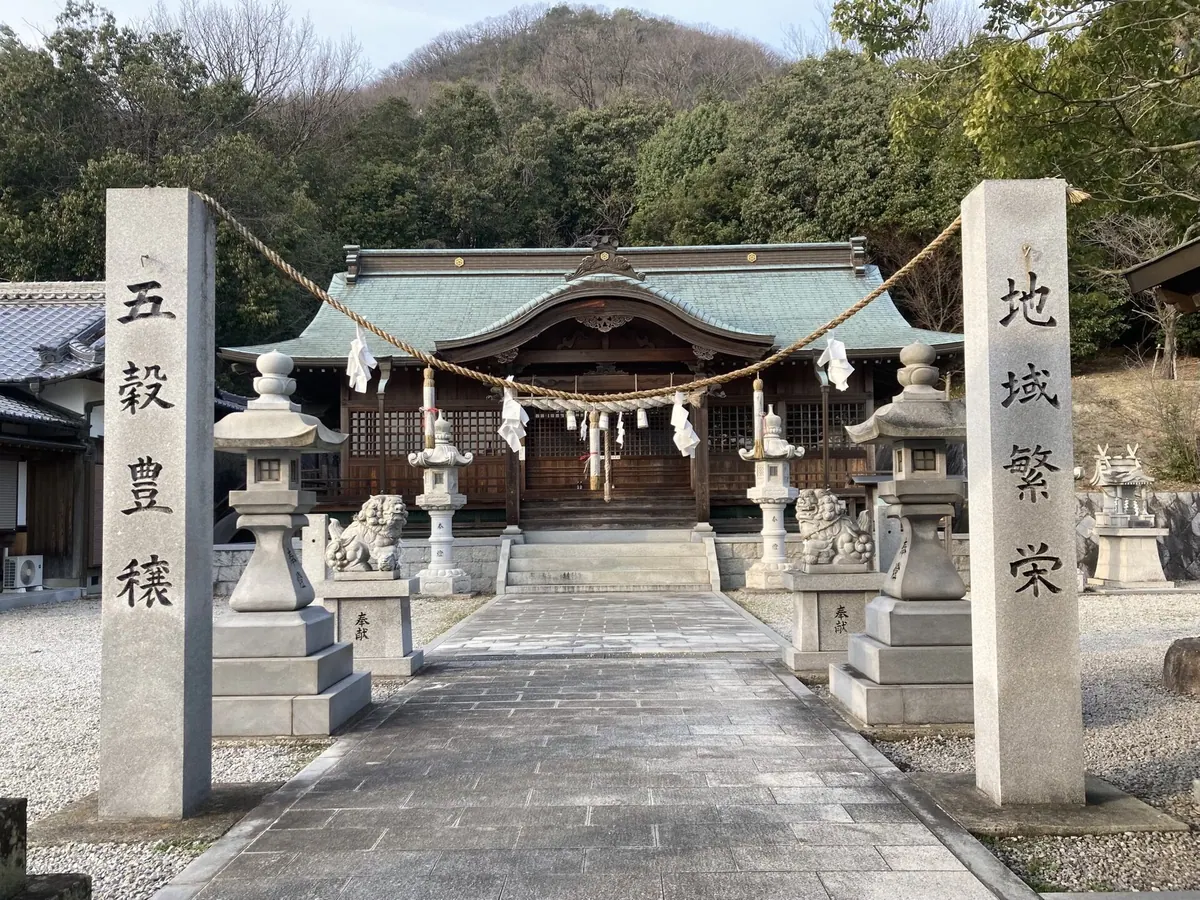
Hakusan Shrine, at the foot of Mt. Hakusan, offers cherry blossoms and ancient deity worship.
What it is
- A candidate for the Shikinaisha Wanigawa Shrine.
- Dedicated to Izanagi-no-Mikoto and Izanami-no-Mikoto.
- Relocated from the middle to the foot of the mountain.
What to see
- Shrine grounds famous for cherry blossoms.
- Ryuo-sha and Ishizuchi Shrine stone祠 on Mt. Hakusan summit.
Getting there
- 5-minute walk from Hakusan Station.
- Takamatsu-Kotohira Electric Railroad Nagao Line.
- Address
- 香川県木田郡三木町大字下高岡973番地 Map
19
Wanikawa Shrine
KAGAWA · SHRINE 鰐河神社
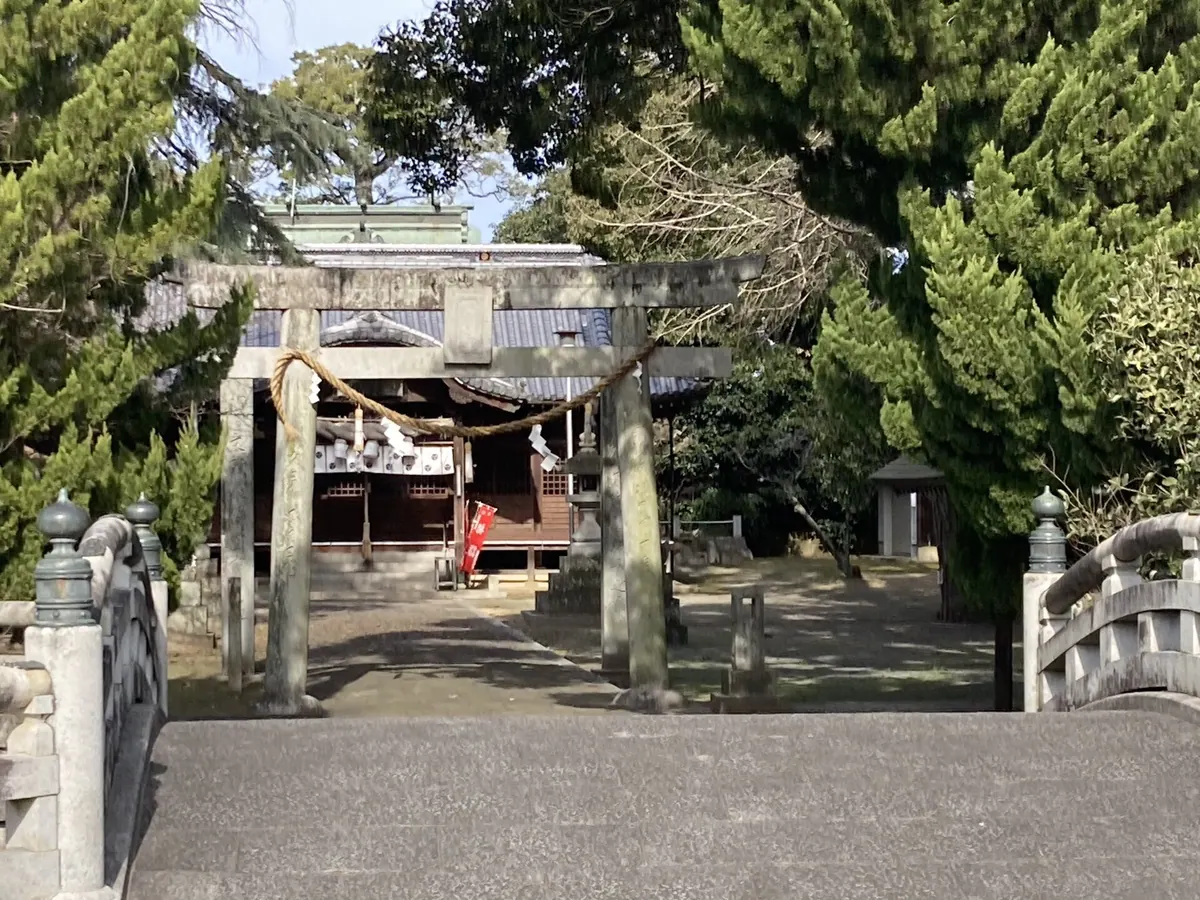
Wanikawa Shrine is a historic shrine in Kagawa Prefecture, known for its large lion dance.
What it is
- One of the fifteen shrines of Sanuki.
- Dedicated to Toyotama-hime no Mikoto and Emperor Ōjin.
- Renamed Wanikawa Shrine in 1872.
What to see
- Lion head: 63cm high, 90cm wide, 100cm long.
- The lion dance is a designated cultural property.
When to go
- See the lion dance at the Miki-cho Lion Dance Festa.
Getting there
- 20-minute walk from Hakusan Station.
- Address
- 香川県木田郡三木町大字下高岡1843番地 Map
20
Kanei Shrine
KAGAWA · SHRINE 冠纓神社
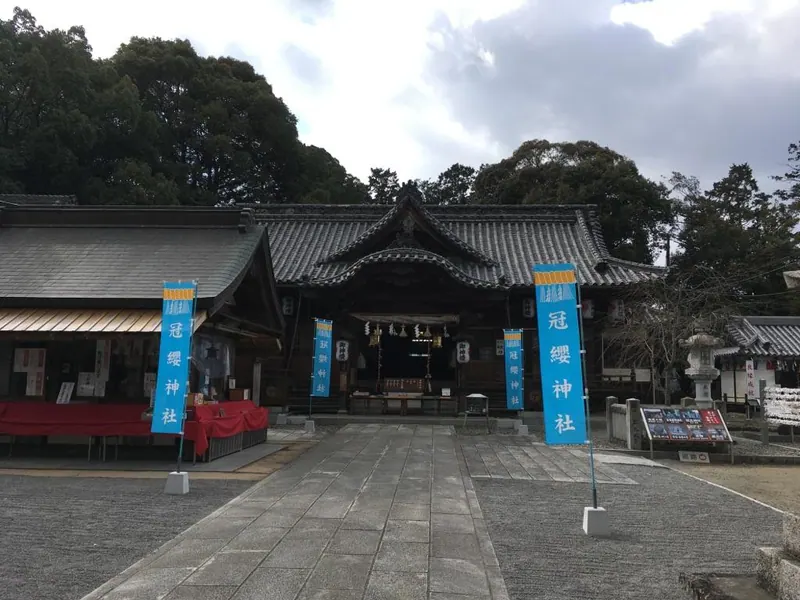
Kanei Shrine is a historic site with ancient trees and a giant lion dance prop.
What it is
- Also known as Kamuro Hachimangu.
- Founded in 861 as Hozoji Temple by Enchin.
- Designated a Prefectural Shrine in 1918.
- The 7th sacred site of Sanuki Jūgo Reijō.
What to see
- Japan's largest shishi lion dance prop.
- Over 100 plant species on the grounds.
- Camphor trees over 800 years old.
- A forest designated a Natural Monument.
- Man'yoshu Tenji-bon, an Important Cultural Property.
- Address
- 香川県高松市香南町由佐字三原1413番地 Map