

20 Shrines in Saga worth your time
Japan Gems
Saga Prefecture is home to many shrines, including Imari Shrine and Saga Shrine. Visitors can find a variety of spiritual sites across the prefecture.
Saga has 30 shrines on Japan Gems. Below are the 20 we can tell you the most about — each one written up in English from Japanese sources, with what to see and how to get there. See all shrines in Saga.
01
Chiriku Hachimangū
SAGA · SHRINE 千栗八幡宮
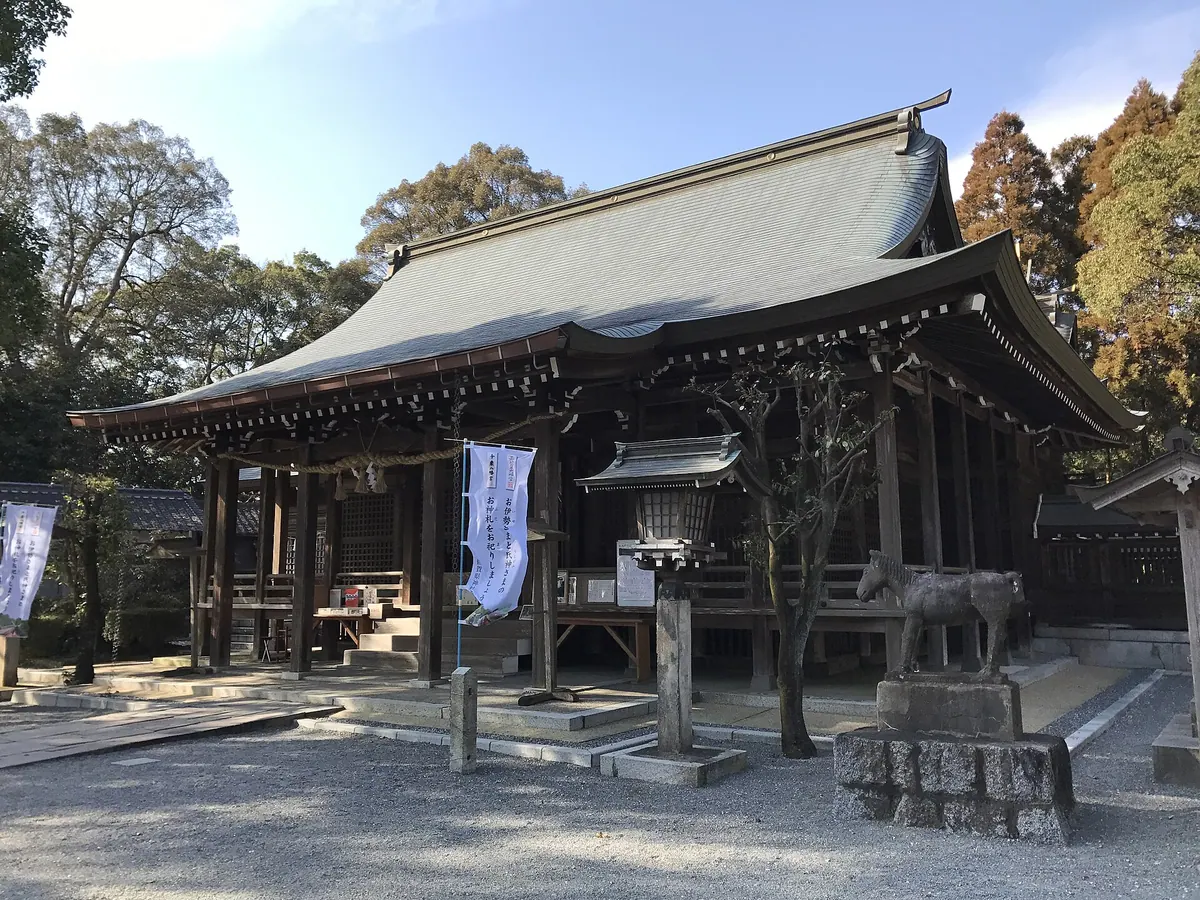
The highest-ranking shrine of Hizen Province, founded in 724 and known for its ancient harvest festivals and historic stone gates.
What it is
- The Ichinomiya or highest-ranking shrine of the former Hizen Province.
- Founded in 724 by Mibu no Harunari to enshrine Emperor Ojin.
- Became a branch of the famous Usa Hachiman-gu during the 930s.
- Current structures were rebuilt in 1583 by Ryuzoji Iemasa.
What to see
- A Hizen-style torii gate designated as a town cultural property.
- Historic shrine buildings dating back to the late sixteenth century.
- Site of a former castle built during the Nanboku-cho period.
When to go
- March 15 for the Kayu-sai festival to see harvest predictions.
- Autumn for the festival featuring the Gyoretsu Furyu parade.
- The year 2024 marks the 1300th anniversary of the founding.
Getting there
- Take the Nishitetsu Bus to the Chiriku Hachimangu-mae stop.
02
Ushijima Tenmangū
SAGA · SHRINE 牛嶋天満宮
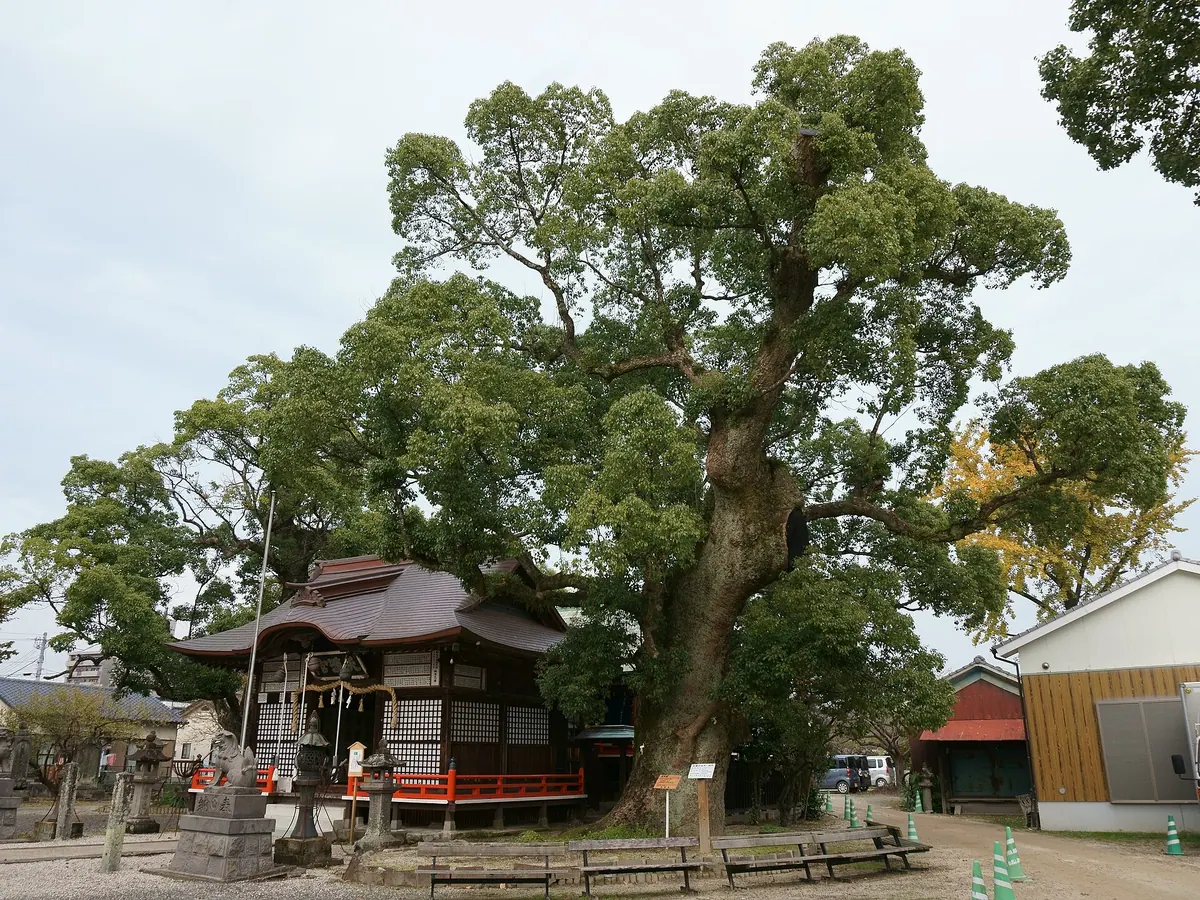
A historic shrine dedicated to Sugawara no Michizane, featuring a thousand-year-old camphor tree and traditional Hizen-style stone architecture.
What it is
- A shrine dedicated to the deity Sugawara no Michizane.
- Founded in 1151 by Ushijima Norimasa and later moved to its current site.
- Built to protect the northeastern direction of Saga Castle.
- Designated by the city as an Important Urban Landscape.
What to see
- A massive camphor tree estimated to be over 1000 years old.
- A mid-19th century two-story gate and a three-bay main hall with copper roofing.
- Traditional Hizen-style stone torii gates and guardian dog statues.
- Stone lanterns that show damage from the 2016 Kumamoto earthquake.
- The Hagakure Taiko Preservation Society practicing on the shrine grounds.
03
Tōzan Shrine
SAGA · SHRINE 陶山神社
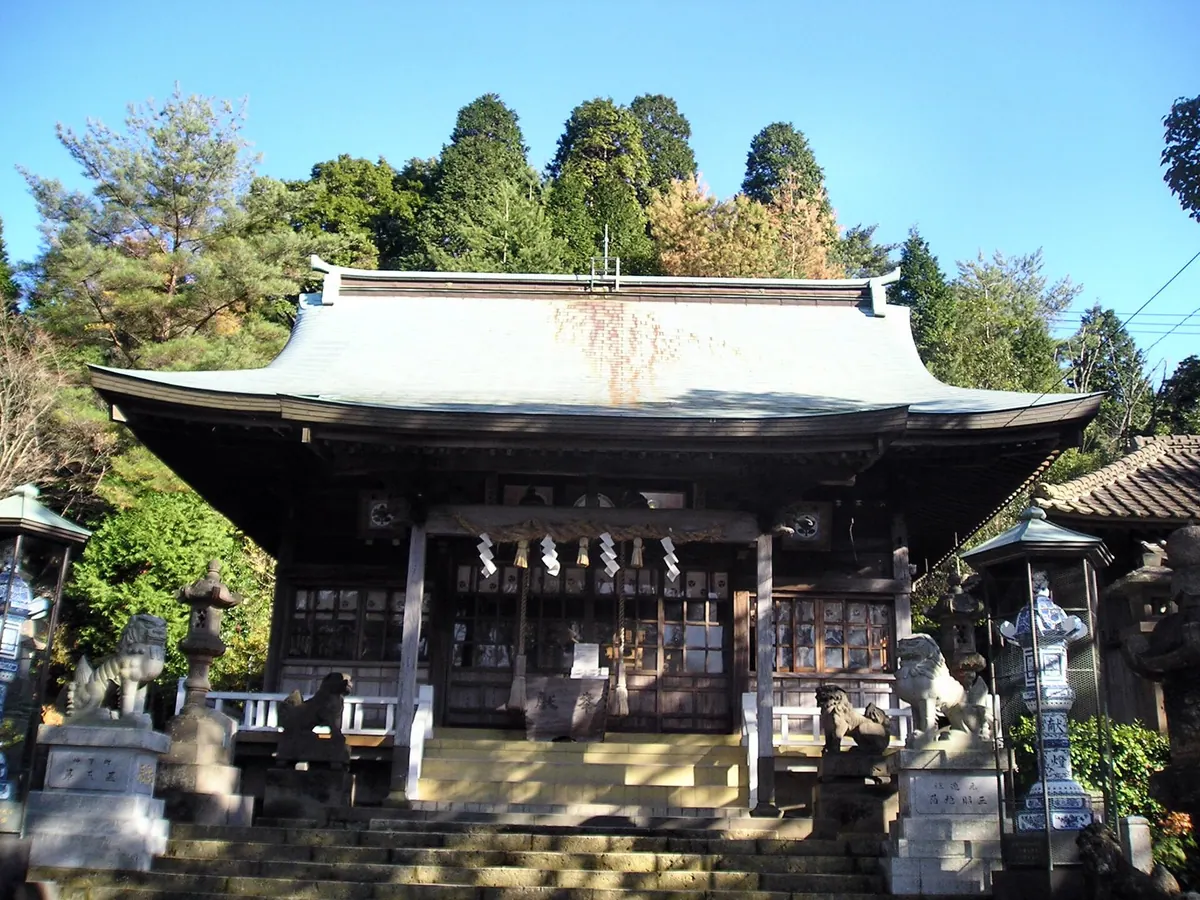
This shrine, built in the 1600s, is worth visiting for its unique porcelain structures and annual festivals.
What it is
- Shrine established in the second half of the 1600s.
- Venerates Emperor Ōjin and Nabeshima Naoshige.
- Renamed Sueyama-Jinja in 1871, nicknamed Tozan Shrine.
- Memorial to Korean potter Kanagae Sambe'e erected in 1917.
What to see
- Porcelain torii gate built in 1888.
- Pair of porcelain guardian dogs by Imaemon kiln.
- Memorial to Kanagae Sambe'e, discoverer of pottery stone.
When to go
- May 4 for annual celebration of Kanagae Sambe'e.
- October 16 for Arita Okunchi festival.
- During weeklong Arita Ceramics Fair in conjunction with May 4.
- Official site
- arita-toso.net
04
Kushida-gū
SAGA · SHRINE 櫛田宮
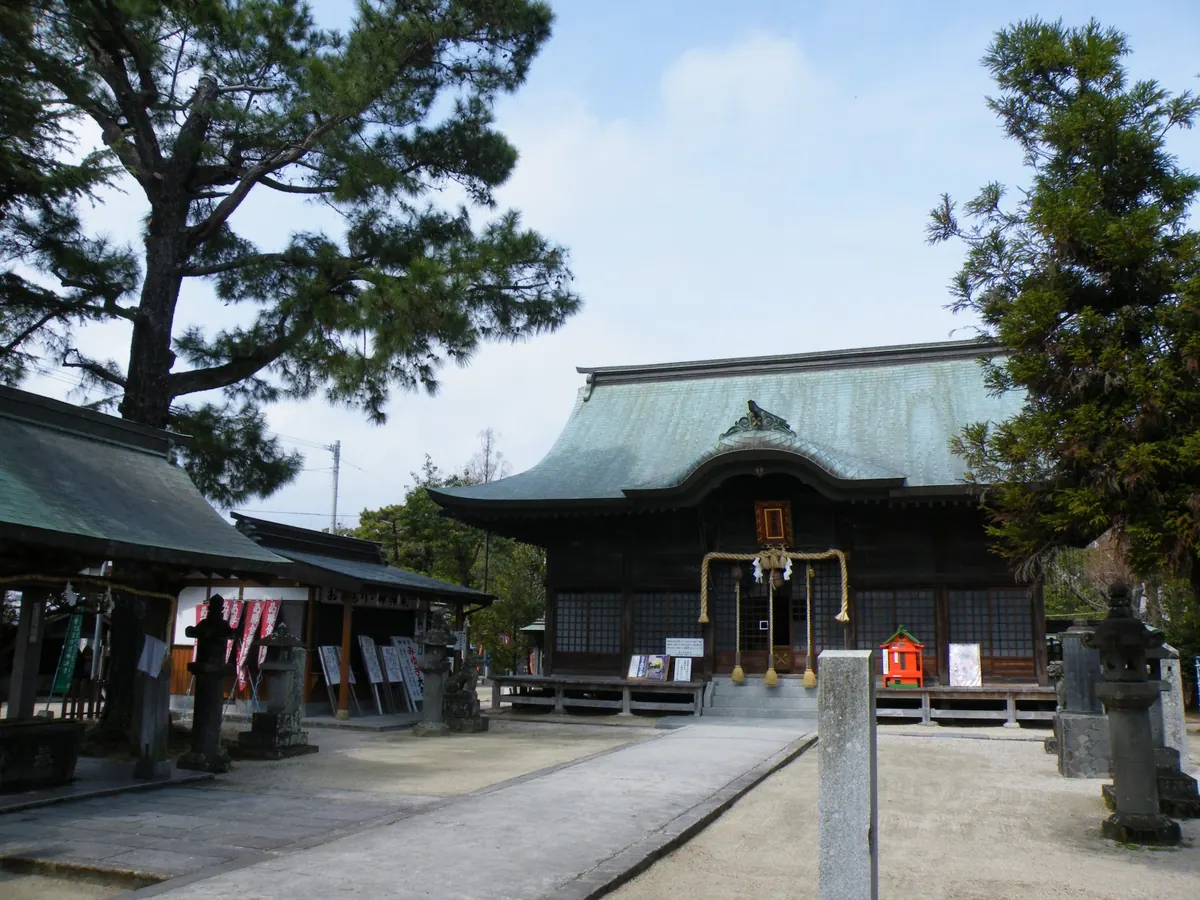
Kushida-gū is an ancient shrine with important cultural properties, easily accessible from Kanzaki Station.
What it is
- A shrine in Kanzaki City, Saga Prefecture.
- Origin attributed to Emperor Keiko.
- Enshrines Susanoo-no-Mikoto and other deities.
- Kushida Shrine in Hakata was established as a branch.
What to see
- First torii has a plaque with "Kushiyama Kushida-gu".
- Second torii built in 1602.
- Second torii is a prefectural cultural property.
- Stone Hizen torii is an important cultural property.
When to go
- Spring festival in April.
- Autumn festival in October.
Getting there
- 10-minute walk from Kanzaki Station.
- Address
- 佐賀県神埼市神埼町神埼419番地1 Map
05
Yodohime Shrine
SAGA · SHRINE 與止日女神社
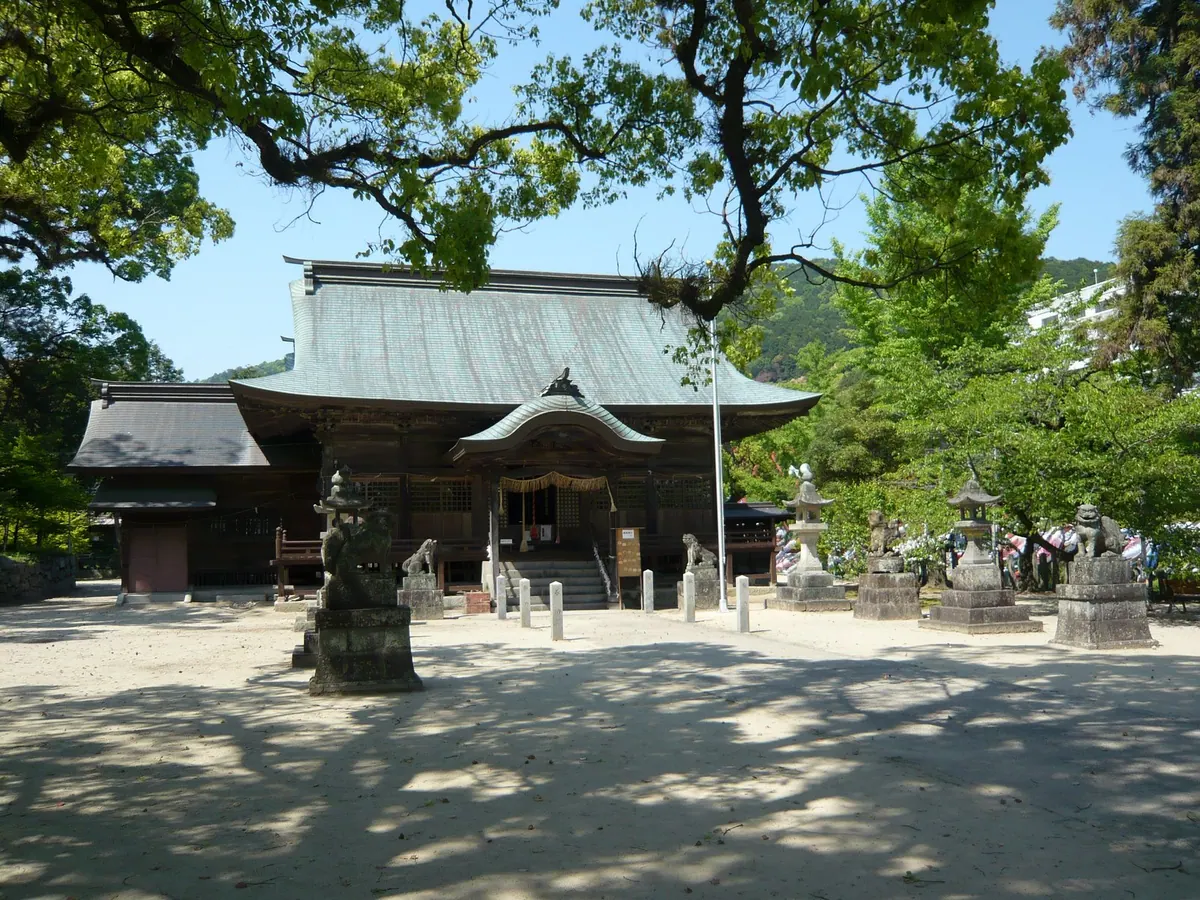
Yodohime Shrine is an ancient shrine dedicated to a powerful deity, with historic gates and buildings.
What it is
- An ancient Shikinaisha and Hizen Province Ichinomiya.
- Dedicated to the deity Yodohime-no-mikoto.
- Deity enshrined on November 1, 564 AD.
- Listed in the Engishiki Jinmyocho in 927 AD.
What to see
- The main hall, heiden, and worship hall rebuilt in 1816.
- West Gate built in 1573, a prefectural cultural property.
- Third torii gate built in 1608, a city cultural property.
- Located on the right bank of the Kase River.
When to go
- Spring festival.
- Autumn festival.
- Niiname festival.
- Address
- 佐賀県佐賀市大和町大字川上1 Map
- Official site
- yodohime.area9.jp
06
Ayabe Shrine
SAGA · SHRINE 綾部神社
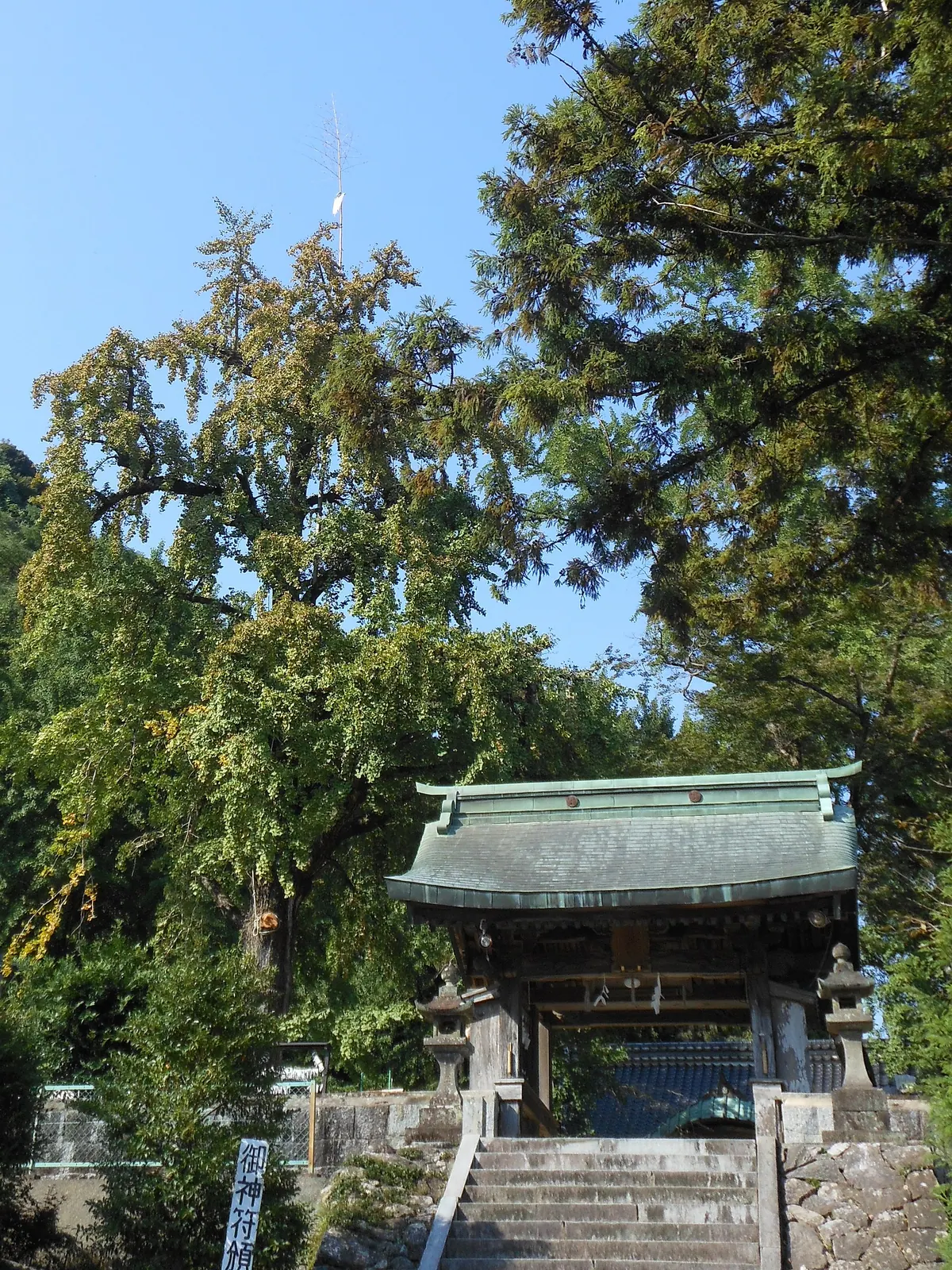
Ayabe Shrine is Japan's oldest weather station, known for its unique wind divination rituals.
What it is
- Also known as Ayabe Hachimangu or Ayabe Hachiman Shrine.
- Called "Japan's oldest weather station."
- Enshrines the god of wind.
- Established in 1205.
What to see
- A torii gate from 1701 with an inscription about the flag.
- Sacred ginkgo tree, one of Saga's 100 famous trees.
- Botamochi sold at the approach to the shrine.
When to go
- July 15th for the Hataage Shinji (flag raising ritual).
- Wind divination ritual is an intangible folk cultural property.
- Address
- 佐賀県三養基郡みやき町原古賀2338 Map
07
Ryūzōji-hachinamgū
SAGA · SHRINE 龍造寺八幡宮
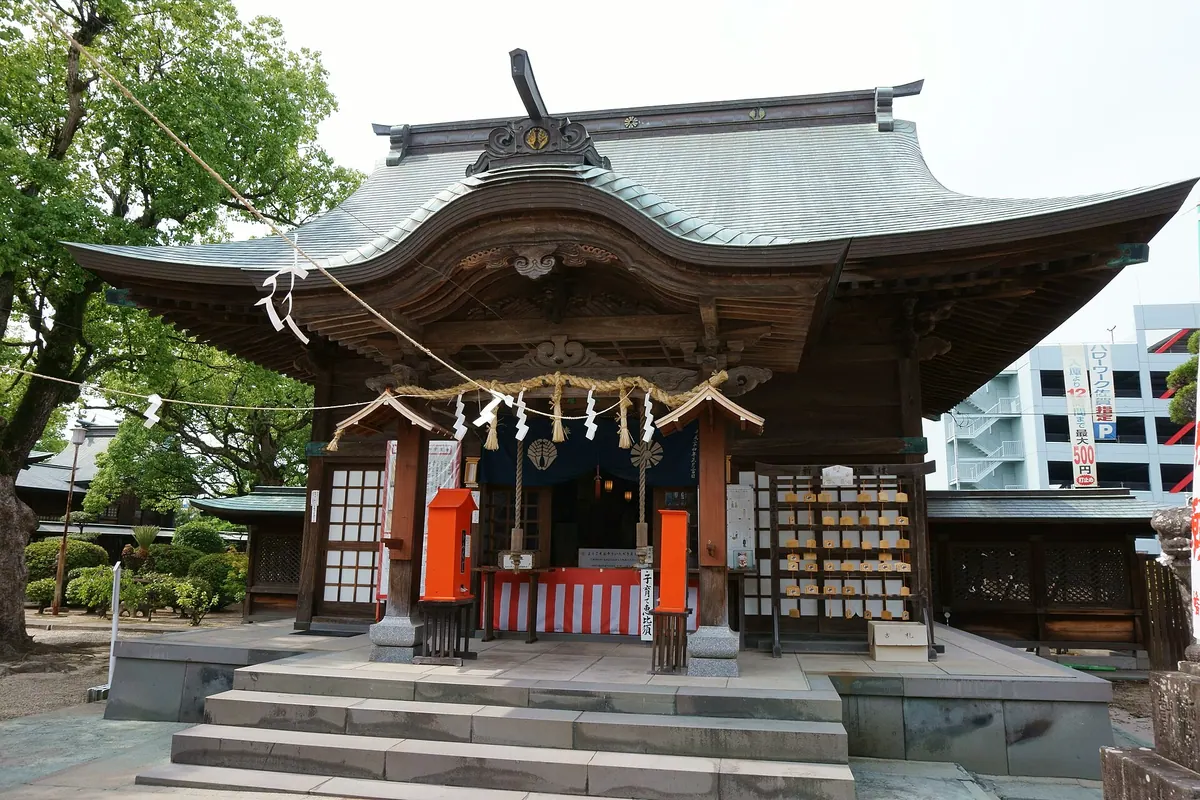
Historic shrine in Saga City with unique torii gate and important cultural properties.
What it is
- A Shinto shrine in Saga City, founded in 1187.
- Dedicated to Emperor Ōjin, a deified emperor.
- Moved during the construction of Saga Castle.
- Invited a divided spirit from Tsurugaoka Hachimangū.
What to see
- Hizen Torii, inscribed in 1604, dedicated by Nabeshima Naoshige's wife.
- Hizen Torii is a Saga City Important Cultural Property.
- Main sanctuary built in the mid-1800s.
- Worship hall constructed around 1901.
- Kusunoki Shrine enshrines Kusunoki Masashige and Masatsura.
- Address
- 佐賀県佐賀市白山一丁目 Map
08
Suwa Shrine
SAGA · SHRINE 諏訪神社
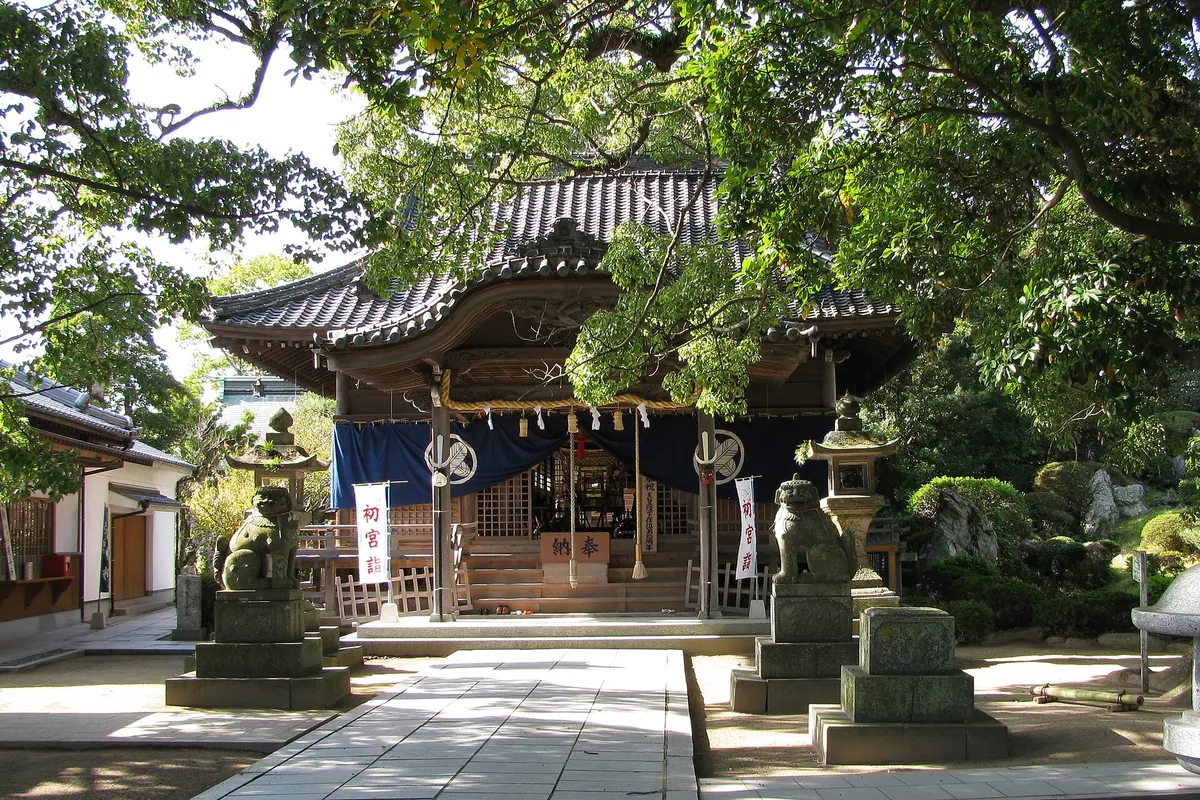
Suwa Shrine is an ancient shrine in Karatsu City, offering a glimpse into Japanese history and culture.
What it is
- Ancient shrine founded in 784 AD.
- Dedicated to Takeminakata-no-kami, Yasakatome-no-kami, and Suwamae-no-mikoto.
- Visited by Toyotomi Hideyoshi to pray for victory.
- Modern sports teams also pray for victory here.
What to see
- A subsidiary shrine, Suga Shrine, is on the grounds.
- Keiran rice cakes, once offered to Hideyoshi, are sold nearby.
When to go
- Spring Festival is held in May.
- Autumn Grand Festival is held on November 23rd.
- Address
- 佐賀県唐津市浜玉町浜崎1181 Map
09
Tashima Shrine (Imari)
SAGA · SHRINE 田嶋神社
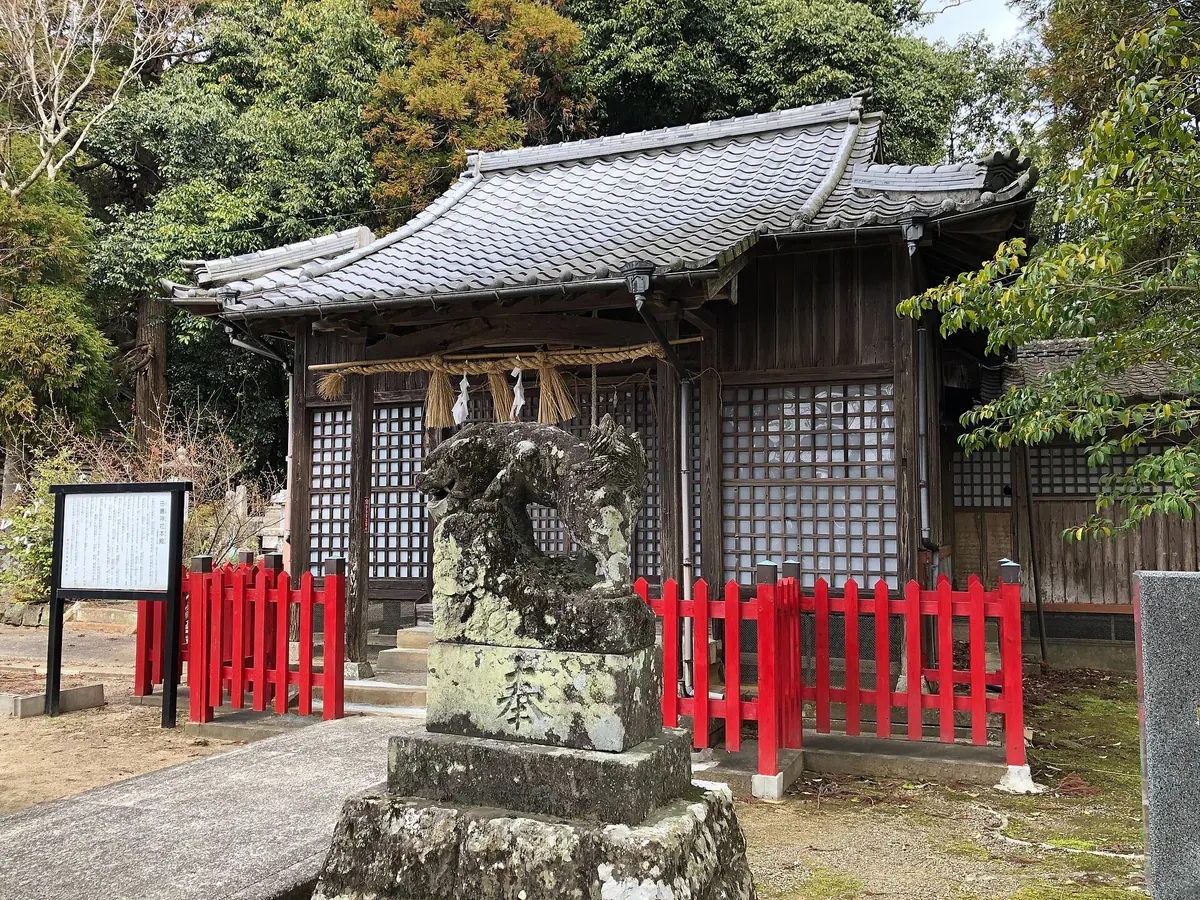
Visit Kyushu's oldest shrine building, a 15th-century National Important Cultural Property.
What it is
- A shrine dedicated to Munakata Sanjojin and eight other gods.
- Rebuilt in 1334, it guards the Hatazu region.
- Its main hall is Kyushu's oldest existing shrine building.
What to see
- The main hall, built in the 15th century.
- The main hall is a National Important Cultural Property.
- An ooiya (covering structure) protects the main hall.
- The main hall was once a vermilion-lacquered building.
- Main hall built in Sanmensha Nagaremisetana-zukuri style.
- Address
- 〒848-0102 佐賀県伊万里市波多津町畑津1260 Map
10
Takeo Shrine
SAGA · SHRINE 武雄神社
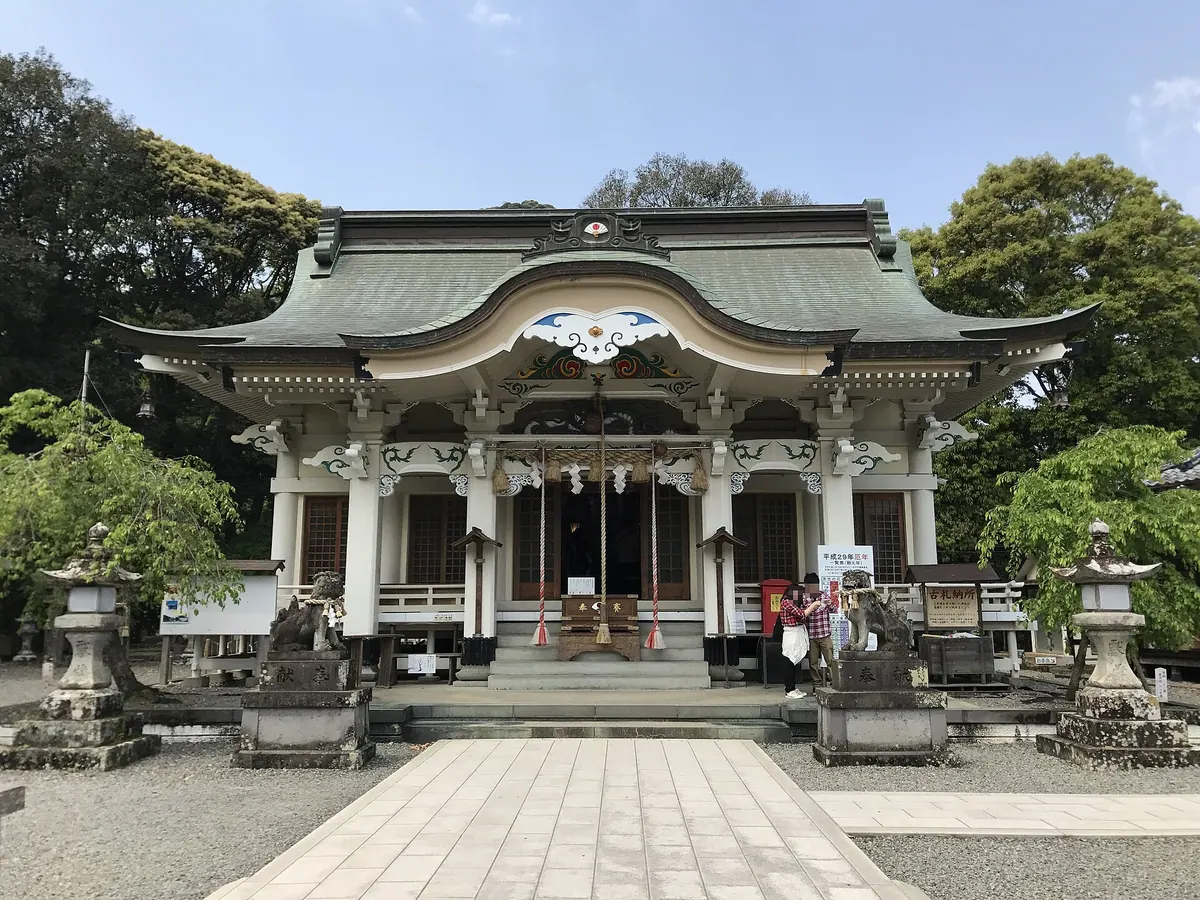
Takeo Shrine is an ancient shrine with a 3000-year-old camphor tree, worth visiting for its history.
What it is
- Founded in 735 AD by Tomo no Yukiyori.
- Main deity is Takeuchi no Sukune.
- Relocated to current site around 1118-1120.
- Performed prayers for the defeat of the Taira clan in 1185.
What to see
- Sacred camphor tree, estimated to be 3000 years old.
- 255-meter-long yabusame horse-riding ground.
- First torii gate built in 1641.
- Second torii gate built in 1672.
- Third torii gate rebuilt in 1617.
- 218 ancient documents, important cultural properties.
- Address
- 佐賀県武雄市武雄町大字武雄5335 Map
11
Yoka Shrine
SAGA · SHRINE 與賀神社
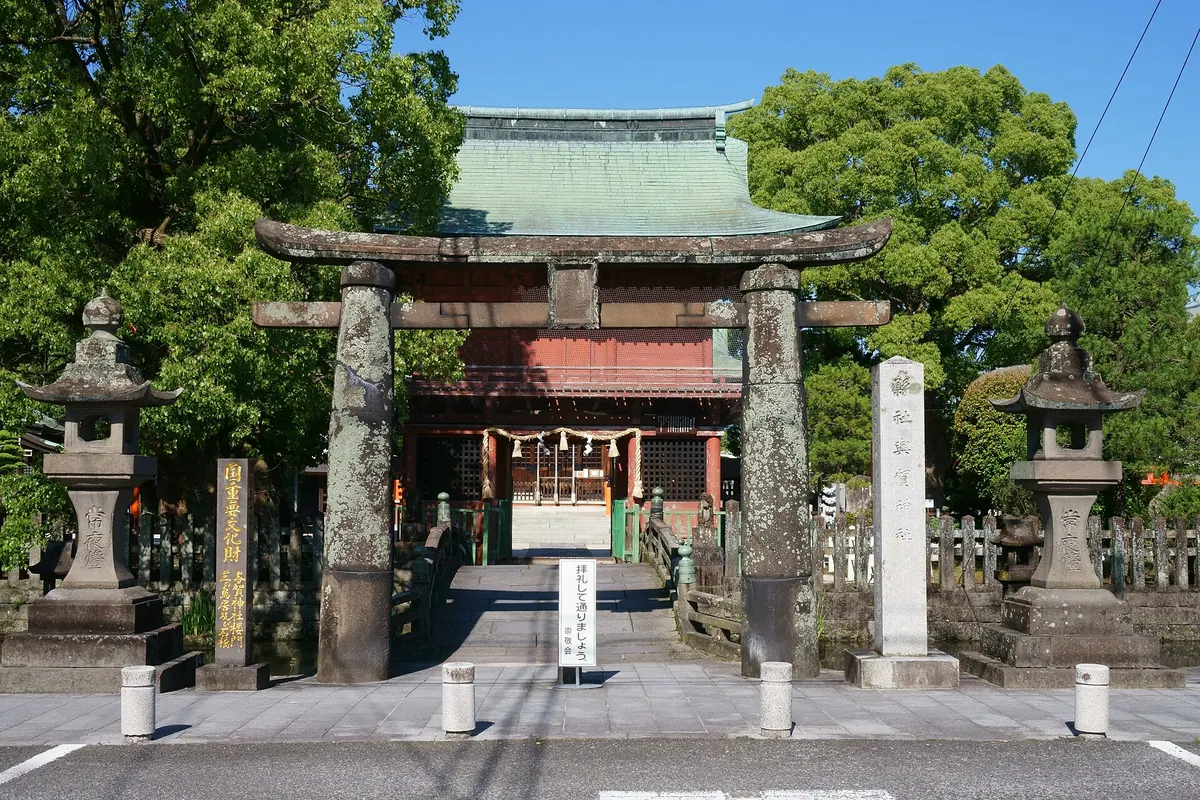
Yoka Shrine, founded in 564 AD, offers ancient architecture and historical artifacts.
What it is
- Ancient shrine in Saga City, Saga Prefecture.
- Founded in 564 AD.
- Dedicated to the deity Yodohime-no-kami.
What to see
- Romon gate, Saga Prefecture's oldest building, a National Important Cultural Property.
- Three torii gates, one is a National Important Cultural Property.
- Main hall and worship hall, built in 1758 and 1759.
- Stone bridge with 10 finials, dating to 1606.
- Bronze bell, donated in 1251.
- Sword attributed to Osafune Yasumitsu.
- Address
- 佐賀県佐賀市与賀町2-50 Map
- Official site
- yokajinjya.sagafan.jp
12
Nikita Shrine
SAGA · SHRINE 新北神社
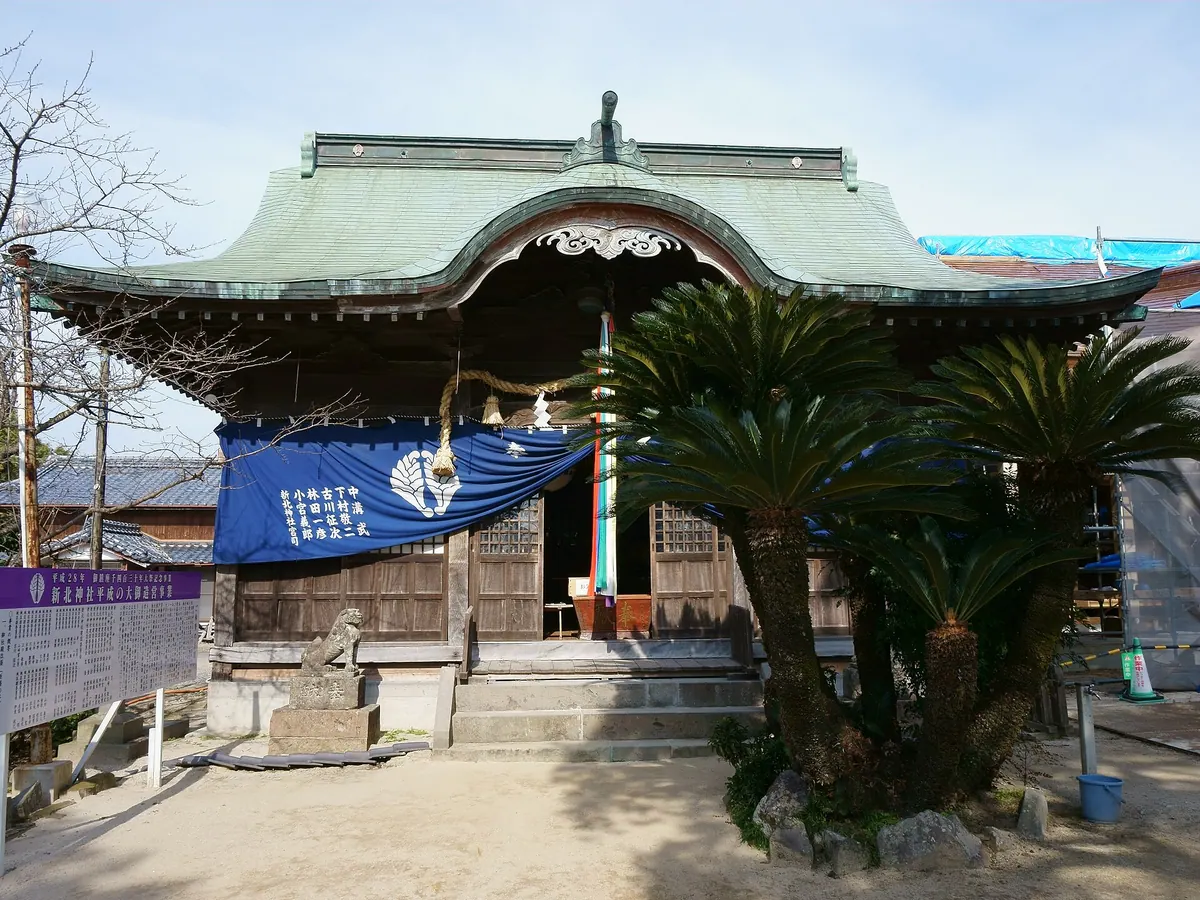
Nikita Shrine offers ancient trees and unique festivals, including a lion dance.
What it is
- Shinto shrine in Saga City, Saga Prefecture.
- Originally a sacred forest (chinju no mori).
What to see
- A 1600-year-old camphor tree.
- A 2200-year-old Chinese juniper sacred tree.
- Legend of Xu Fu landing in Morodomi-cho.
When to go
- Hatsuka Ebisu Festival on January 20th.
- Kinen-sai Festival on February 21st.
- Spring Festival on April 19th.
- Ofuri Festival on October 19th features Mie no Shishimai lion dance.
- Address
- 佐賀県佐賀市諸富町大字為重1073番地 Map
13
Inasa Shrine
SAGA · SHRINE 稲佐神社
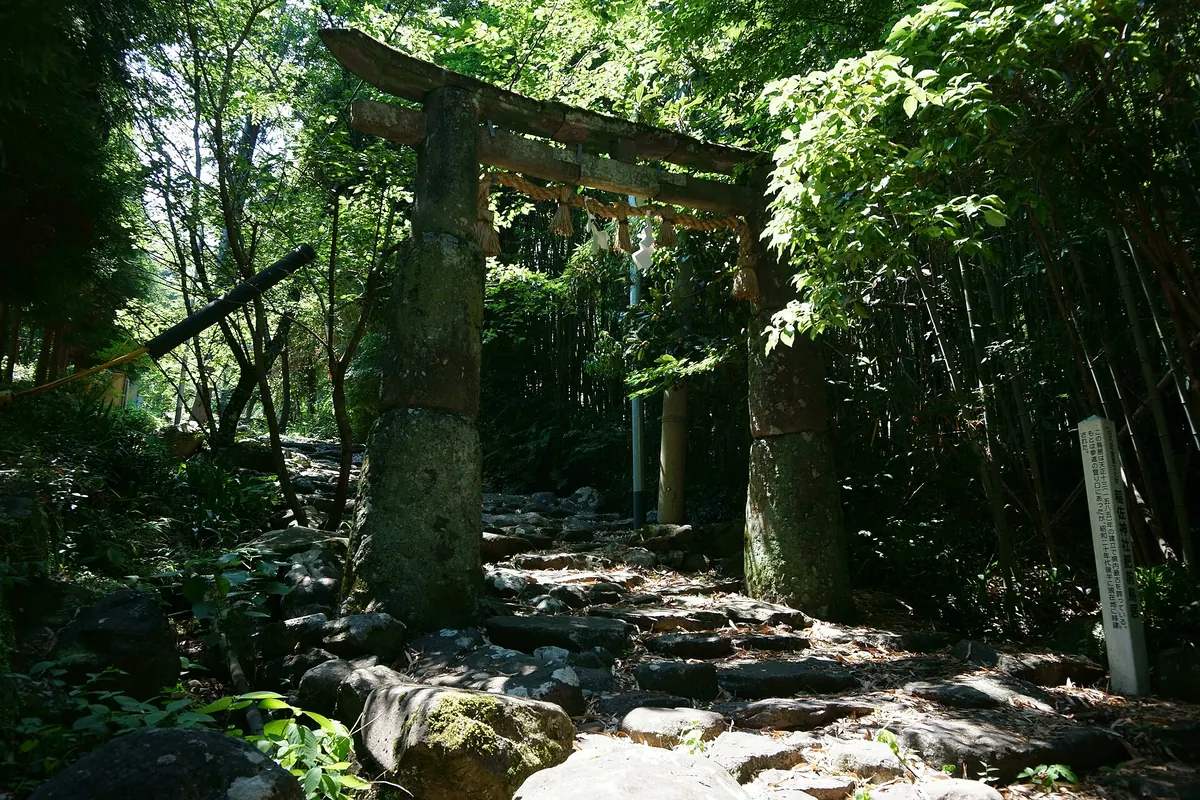
Inasa Shrine is a historic site with ancient roots, notable for its unique architecture and natural monuments.
What it is
- Shrine dedicated to Itakeru-no-mikoto and Oyatsuhime-no-mikoto.
- Granted Junior Fifth Rank, Lower Grade in 861.
- Main hall rebuilt in 1721.
What to see
- Stone Hizen Torii, an important cultural property.
- Several subsidiary shrines.
- Two camphor trees, designated natural monuments.
- One camphor tree is the tallest in the prefecture.
When to go
- Autumn festival on October 19th.
- Yabusame event is held.
- Address
- 佐賀県杵島郡白石町辺田 Map
14
Hōtō Shrine
SAGA · SHRINE 宝当神社
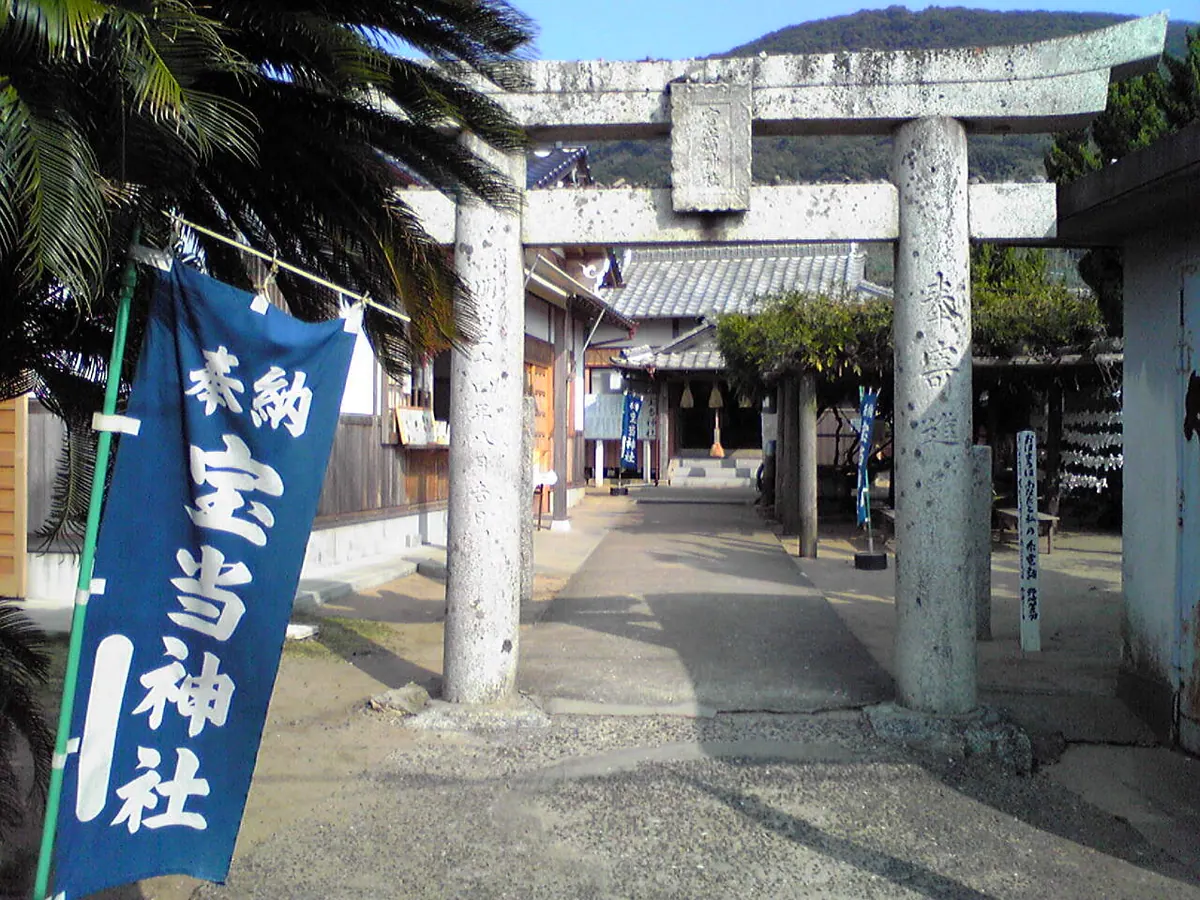
Hōtō Shrine, founded in 1586, is a unique shrine on Takashima Island known for lottery winnings.
What it is
- A shrine on Takashima island in Karatsu Bay.
- Founded in 1586, originally named Tsunayoshi Shrine.
- A subsidiary shrine of Shioya Shrine.
- Known for lottery winnings and related items.
What to see
- Lottery-related items sold at the shrine.
- A cat at Nozaki Shoten known for praying for lottery wins.
- A lottery ticket sales point on the island.
Getting there
- About 2km north of Karatsu Castle.
- Address
- 佐賀県唐津市高島523 Map
15
Imari Shrine
SAGA · SHRINE 伊萬里神社
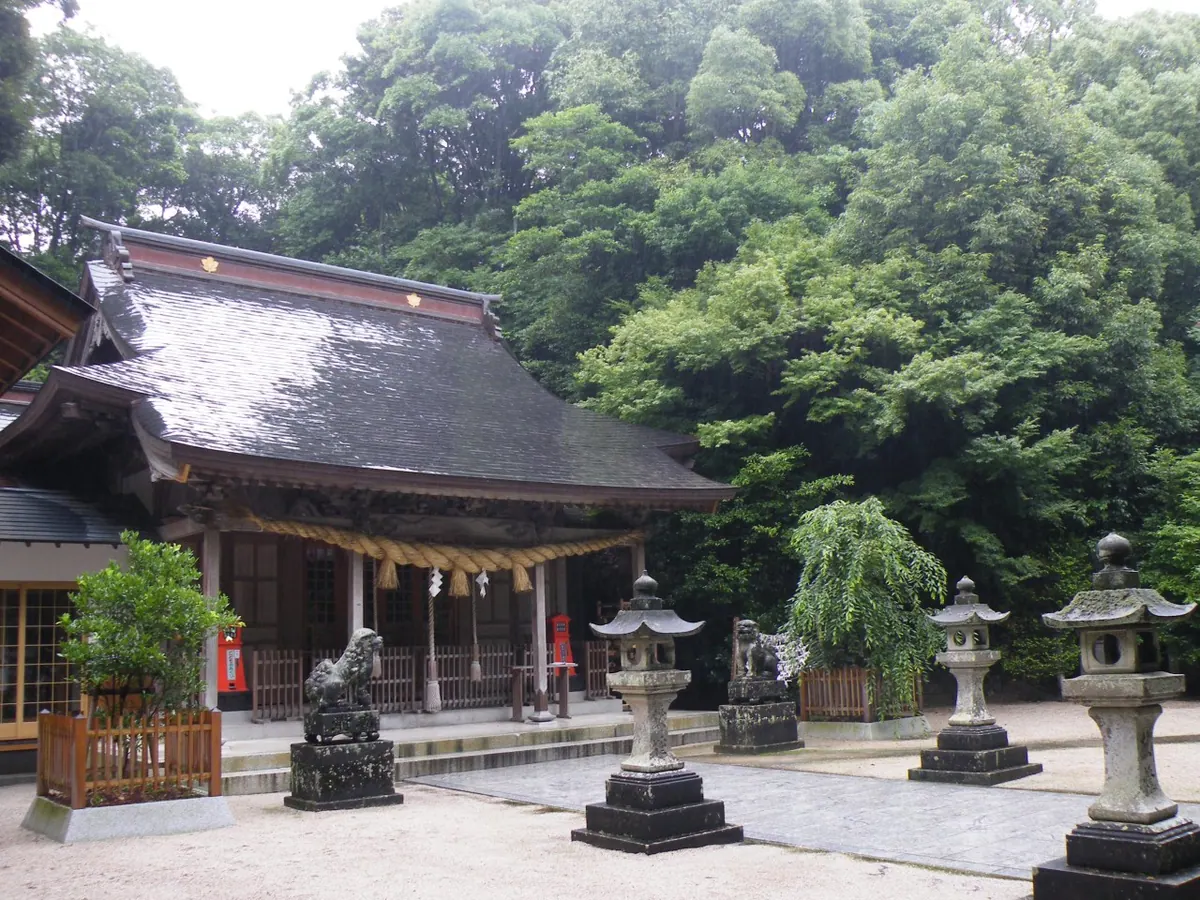
Imari Shrine: a modern shrine with ancient roots, home to historic gates and a unique bust.
What it is
- Established in 1962 by merging three shrines.
- Kōkitsu Shrine founded by Tachibana no Shimadamaro.
- Kōkitsu Shrine enshrined Tachibana no Moroe.
- Iwakuri Shrine began in 740.
What to see
- Old torii gates from two former shrines.
- A bust of Taichiro Morinaga.
When to go
- Annual festival is held on July 19th.
Getting there
- 15-minute walk from Imari Station.
- Address
- 佐賀県伊万里市立花町84 Map
16
Ōuo Shrine
SAGA · SHRINE 大魚神社
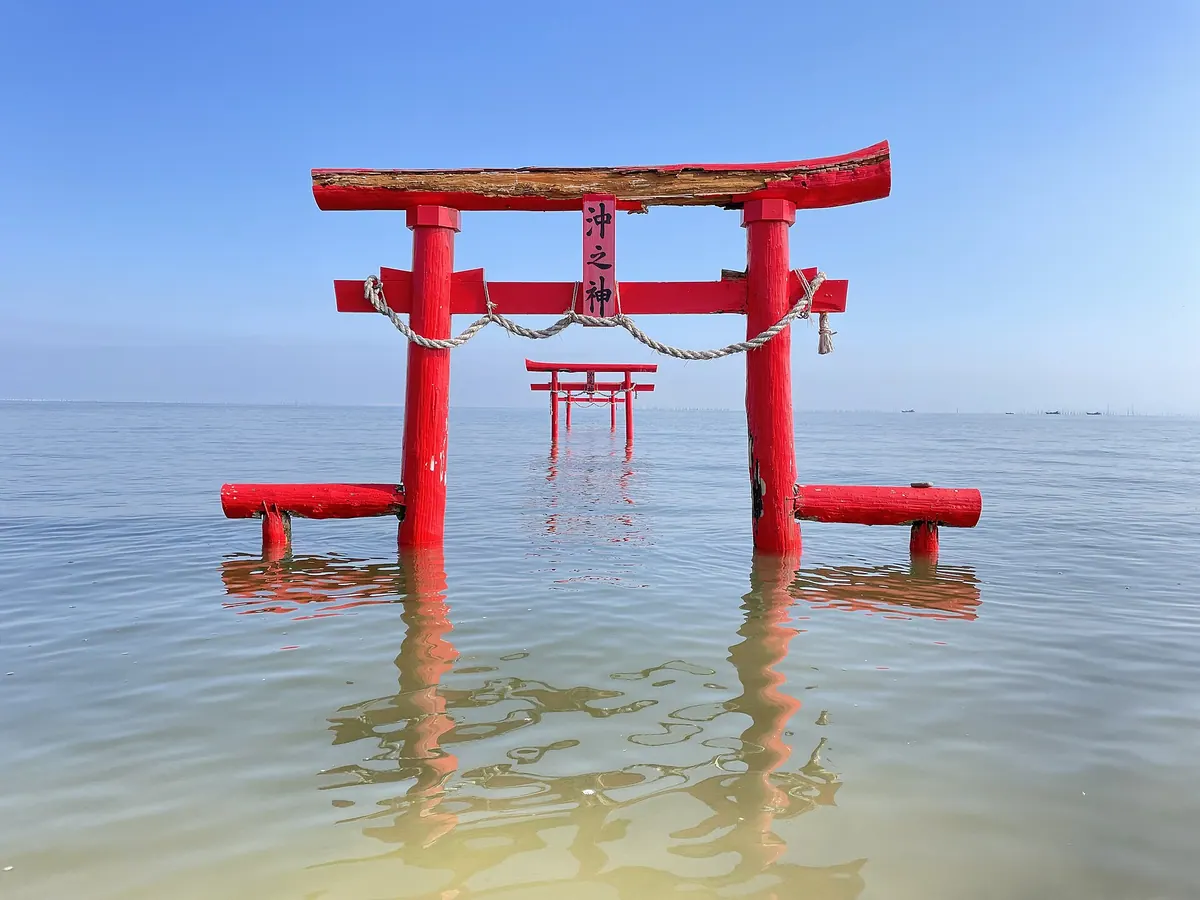
Ōuo Shrine features iconic torii gates in the sea, offering unique coastal views and a rich history.
What it is
- A Shinto shrine dedicated to Ōuo Daimyōjin.
- Re-established in 1682 after a deputy official was saved by a large fish.
What to see
- Multiple torii gates built in the sea.
- The main hall stands between Mount Tara and Okinoshima.
- The sea torii gates have a plaque that reads "Okinokami."
- Six Jizo statues and a Kagodo.
When to go
- Torii gates are rebuilt every 30 years.
- Address
- 佐賀県藤津郡太良町多良1897 Map
17
Shiga Shrine
SAGA · SHRINE 志賀神社
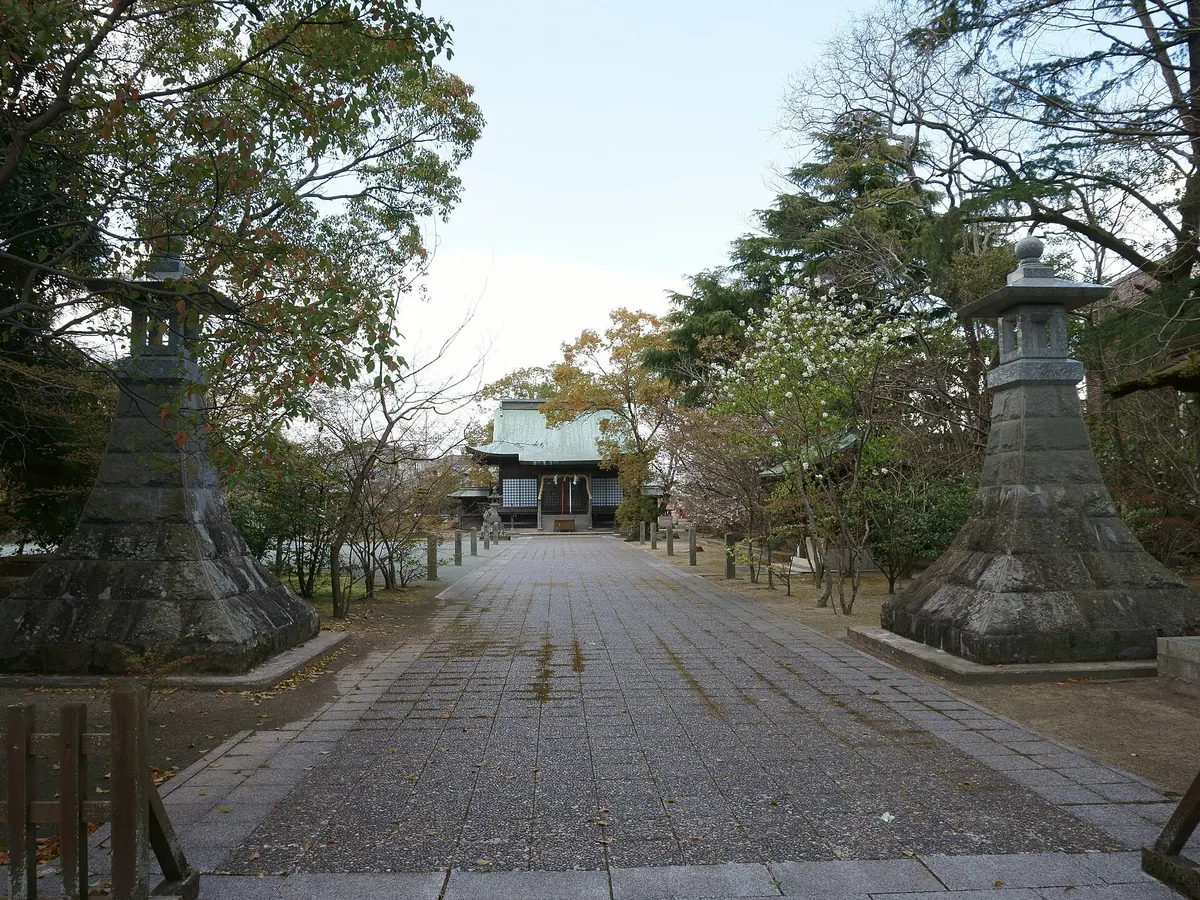
Shiga Shrine is a historic shrine dedicated to sea gods, notable for its ancient camphor tree.
What it is
- Founded in 859, a branch of Shikaumi Shrine.
- Dedicated to the Sumiyoshi Sanjin, gods of the sea.
- Also enshrines Amenominakanushi no Mikoto, Emperor Ojin, Sugawara no Michizane.
- Considered the birthplace of the Japanese Navy.
What to see
- Main hall donated by Nabeshima Mitsushige in 1658.
- An 800-year-old camphor tree on the grounds.
- The shrine was once submerged at high tide.
- Address
- 佐賀県佐賀市川副町大字早津江津400 Map
18
Karatsu Shrine
SAGA · SHRINE 唐津神社
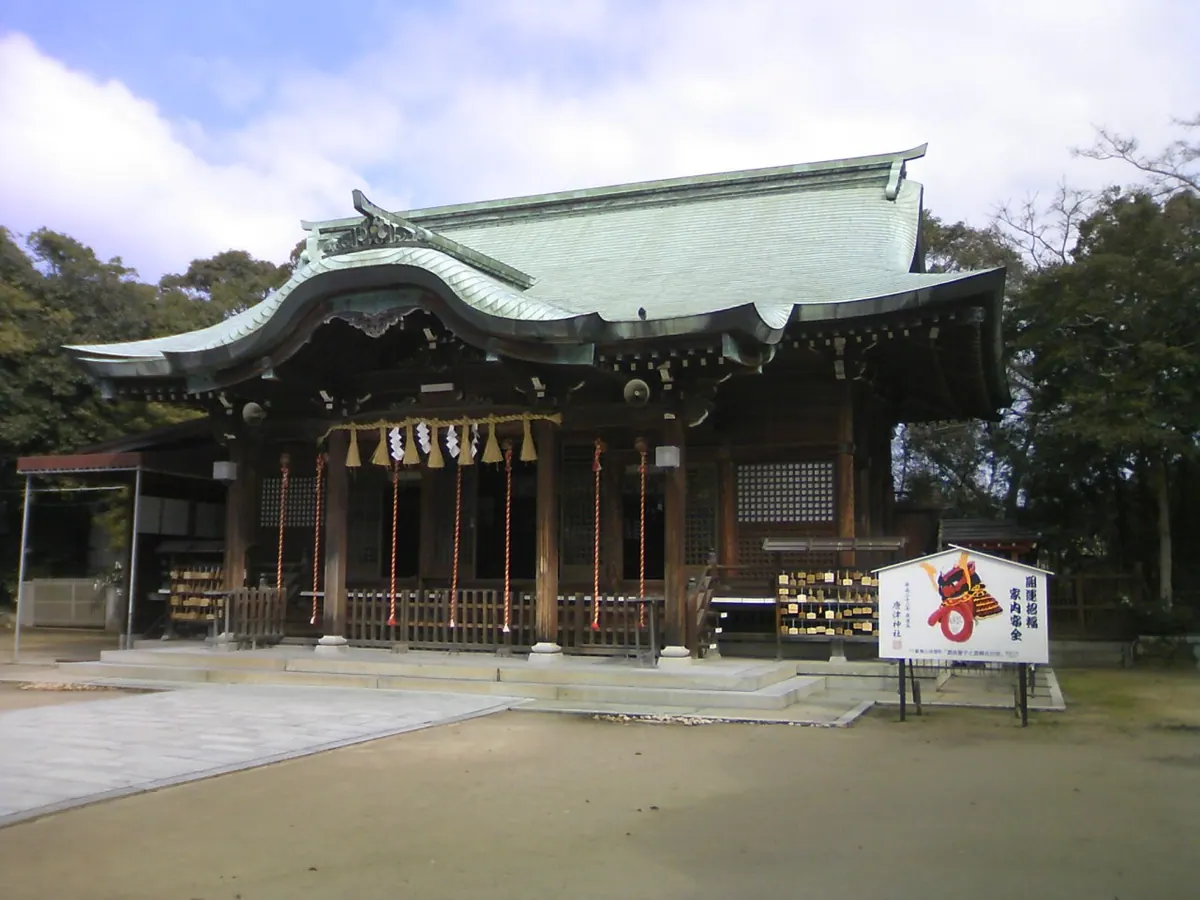
Karatsu Shrine, founded in 1186, is a historic site with important cultural properties.
What it is
- Founded in 1186 by Koda Munetsugu.
- Dedicated to Sumiyoshi Sanjin, Koda Munetsugu, and Mizuhanome no Mikoto.
- Origin linked to Empress Jingu.
- Formerly a prayer place for Karatsu domain lords.
What to see
- Karatsu Kunchi is an Important Intangible Folk Cultural Property.
- Karatsu Hikiyama is a Prefectural Important Tangible Folk Cultural Property.
- Address
- 佐賀県唐津市南城内3-13 Map
- Official site
- www.karatsu-jinja.org
19
Tashima Shrine
SAGA · SHRINE 田島神社
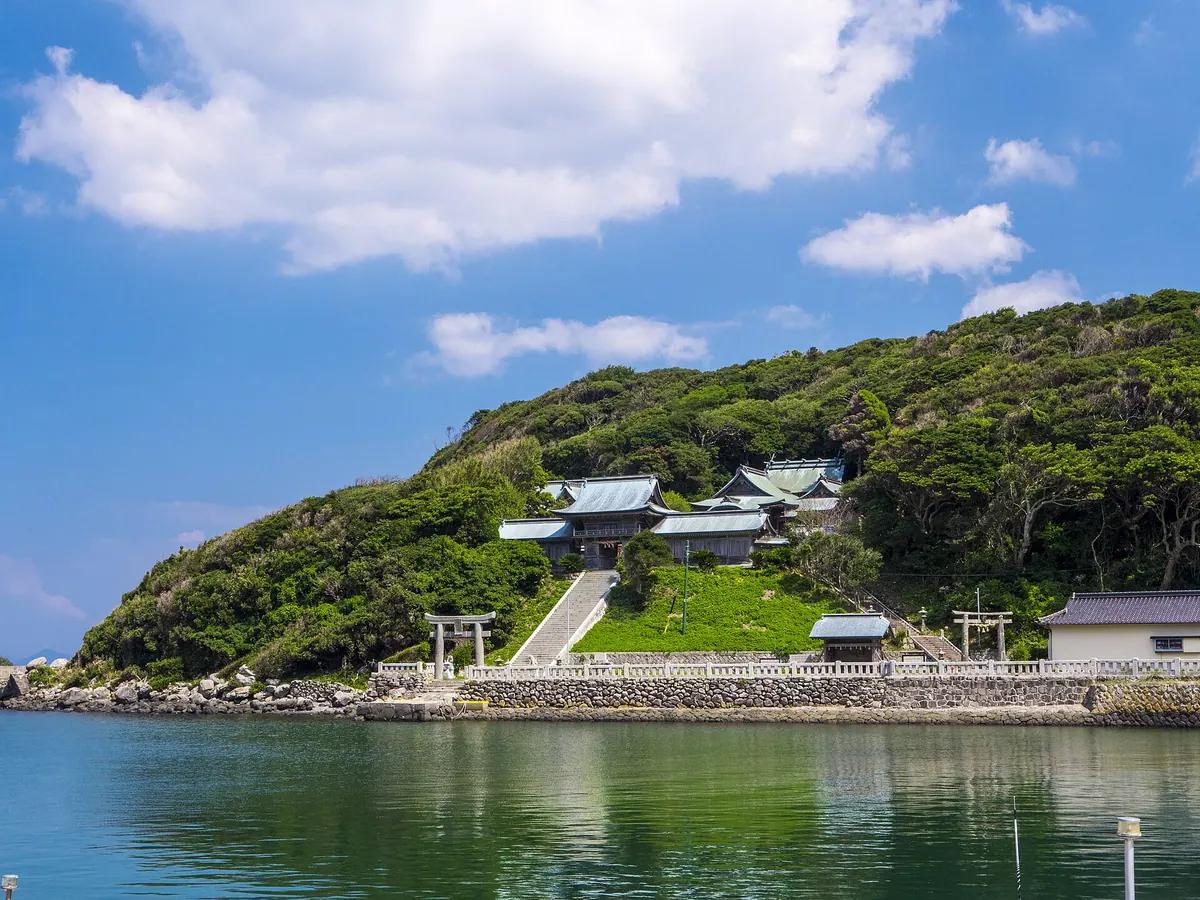
Tashima Shrine: an ancient shrine on an island, home to important cultural properties.
What it is
- Ancient shrine on Kabeshima island, Karatsu City.
- Dedicated to Tagorihime, Ichikishimahime, and Takitsuhime.
- Known as Tajima Niimasu Kami no Yashiro in ancient times.
- Designated a Kokuhei Chusha in the Meiji era.
What to see
- A tachi sword, an important national cultural property.
- Kabeshima Warm-Climate Plant Community, a natural monument.
- Address
- 佐賀県唐津市呼子町加部島3965 Map
20
Suga Shrine
SAGA · SHRINE 須賀神社
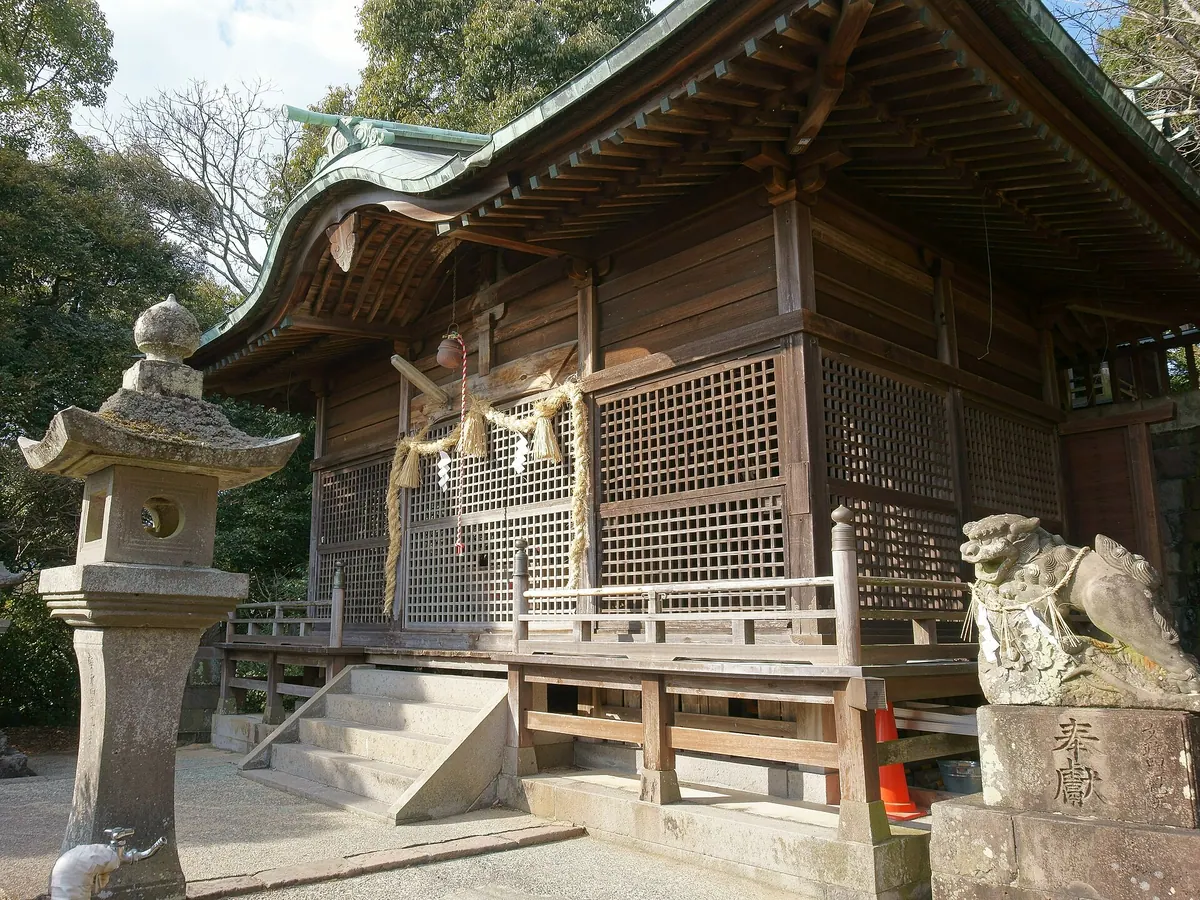
Suga Shrine is a historic shrine with a summer festival, worth visiting for its ancient roots.
What it is
- Founded in 803 CE.
- Built by Chiba Tanetsada in 1316.
- Enshrines a spirit from Kyoto's Yasaka Shrine.
- Name changed from Gion-sha to Suga-sha in 1876.
What to see
- Stone steps used as a filming location.
When to go
- Gion-e festival has three annual events.
- Ogi Gion Summer Festival is on fourth Sunday of July.
- Address
- 佐賀県小城市小城町松尾3594 Map